Margherita Pizza.
Neapolitan Style in a Home Oven
Pizza margherita · say it: PEET-tsah mar-geh-REE-tah
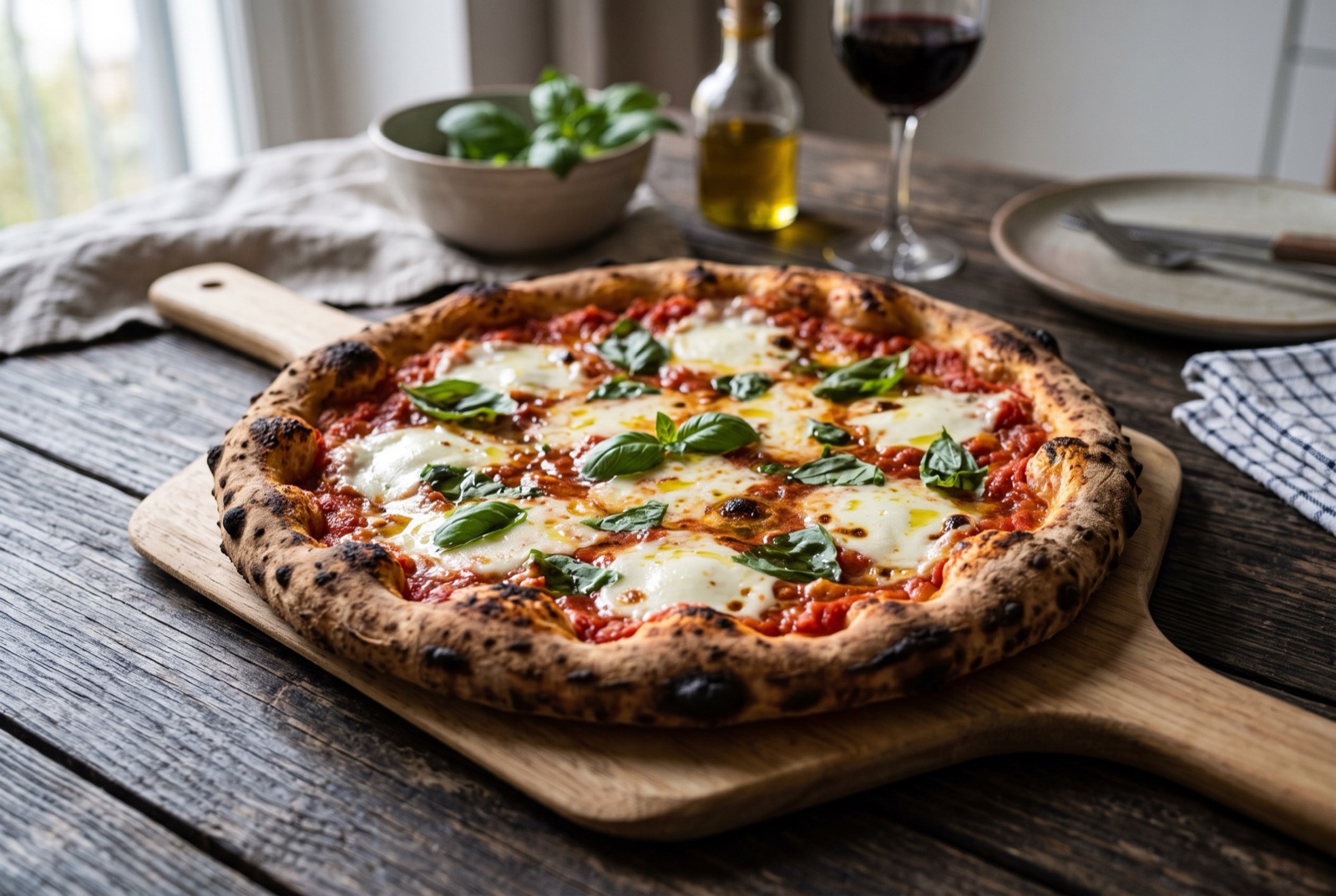
Pizza margherita is the benchmark pizza of Naples: a thin, soft, blistered crust with a puffed rim, topped with nothing but crushed tomatoes, fresh mozzarella, basil leaves and olive oil. Done right, it tastes clean and almost bright — sweet-acid tomato, milky cheese, peppery oil, and a crust with real char and chew from a long, slow fermentation. A Neapolitan wood oven runs at 450°C and no home oven comes close, but a pizza steel or stone parked under a screaming broiler gets a domestic oven surprisingly near: this version bakes in four to five minutes with genuine leopard-spotted blisters. The dough needs a day of mostly hands-off fermentation, and everything else takes under an hour.

- Gate
- ItalyNaples, Campania
- Prep
- 40 min
- Cook
- 15 min
- Total time
- 8 hr 55 min incl. 8 hr rest
- Serves
- 3
- Status
- Medium
- Nutrition / serving · estimated
- Calories 780 kcal
- Protein 32 g
- Carbs 110 g
- Fat 24 g
- Fiber 6 g
- Sodium 1400 mg
Why this recipe works.
- A slow, high-hydration fermentation gives real Naples-style flavor and blistering without special flour.
- The steel-plus-broiler method reaches genuine char in a 4–5 minute home bake.
- Uncooked crushed-tomato sauce, the true Neapolitan way — no simmering, no sugar, no herbs boiled to death.
- The dough schedule is flexible: 8 hours minimum, 24 for the best flavor, all mostly hands-off.
Ingredients.
10 itemsFor the dough
For the topping
Equipment
- Pizza steel or stone (or cast-iron skillet)
- Pizza peel or inverted sheet pan
- Large mixing bowl
- Kitchen scale
- Broiler
Instructions.
Mix the dough
Stir the yeast into the lukewarm water, then mix it into 500 g of flour with the salt until no dry patches remain — a shaggy, sticky mass is exactly right. Cover and rest 20 minutes, then knead in the bowl for 3–4 minutes until the dough turns smooth and pulls away from the sides in one piece.
Ferment slowly
Cover the bowl and leave the dough at cool room temperature for 8 hours, or refrigerate for up to 24 for deeper flavor. It is ready when it has roughly doubled and the surface is domed and dotted with bubbles.
Tip Longer and colder is better: a 24-hour fridge ferment gives the crust its bready, faintly tangy depth.
Ball and proof
Divide the dough into 3 equal pieces and shape each into a tight ball by dragging it toward you on the counter until the surface is taut. Cover and proof at room temperature until puffy and relaxed, about 2 hours — a gentle poke should spring back slowly, leaving a slight dimple.
Preheat hard and make the sauce
An hour before baking, set the steel or stone on an upper rack and heat the oven at its maximum for 45–60 minutes. Meanwhile crush the tomatoes by hand with a good pinch of salt until saucy but still slightly chunky — the sauce stays uncooked.
Tip The preheat is non-negotiable: the stored heat in the steel is what sets the base in the first seconds.
Stretch the dough
On a floured counter, press one ball flat with fingertips from the center outward, leaving a 2 cm rim untouched, then drape it over your knuckles and rotate, letting gravity stretch it to about 28 cm. The center should be thin enough to see light through, the rim still fat and airy.
Top lightly and launch
Move the round onto a well-dusted peel and shake to check it slides freely. Spread a thin layer of sauce to the rim, scatter a third of the drained mozzarella and a few basil leaves, and drizzle with olive oil. Switch the oven to broil, then launch the pizza onto the steel with one confident forward-and-back snap.
Bake until blistered
Broil for 4–5 minutes, rotating once halfway, until the rim puffs and picks up dark leopard-spot blisters and the cheese is melted with a few browned patches. If the top colors faster than the base, switch the broiler off for the final minute.
Finish and repeat
Slide the pizza onto a rack or board, add fresh basil leaves and a last thread of olive oil, and cut only when the steam has settled, about a minute. Return the oven to broil for a few minutes before stretching and baking the next ball.
Tips from our kitchen.
- Drain the mozzarella seriously: tear it an hour ahead, and let it sit in a sieve or on paper towels. Wet mozzarella is the number one cause of soggy home margherita.
- Preheat the steel or stone for a full 45–60 minutes at maximum temperature. A half-hearted preheat bakes bread, not pizza.
- Switch to the broiler right before launching the pizza — top heat is what a home oven lacks compared to a wood-fired dome.
- Stretch the dough with fingertips from the center outward, leaving a 2 cm rim untouched. A rolling pin crushes the gas bubbles that become the charred, puffy cornicione.
- Top lightly. A Neapolitan margherita carries roughly 80 g of sauce and 80 g of cheese — more than that and the center never sets.
- Add half the basil before the bake for roasted aroma and half after for fresh perfume; whole leaves, never chopped.
Substitutions.
- Pizza steel or stone → Heavy cast-iron skillet, preheated upside down — or the skillet-broiler method: start the pizza in a ripping-hot skillet on the stovetop, finish under the broiler
- The skillet-broiler method is the best steel-free option and produces a genuinely blistered crust; it just limits you to skillet-sized pizzas.
- 00 flour → Bread flour
- Bread flour is a fully honest substitute in a home oven — slightly chewier crumb, equally good char. In fact, at home-oven temperatures some bakers prefer it.
- Fior di latte mozzarella → Mozzarella di bufala, or low-moisture mozzarella
- Bufala is richer but wetter — drain it very well. Low-moisture blocks melt safely but taste flatter; a compromise, not a crime.
Variations.
- Marinara
- The older Neapolitan pizza: tomato, garlic, oregano and oil, no cheese at all. Try it once and you understand the crust is the point.
- Margherita con bufala
- Buffalo mozzarella added in torn pieces only after the bake, so it warms without melting flat — a common upgrade in Naples itself.
- Double-proof weekend dough
- Ferment the dough 48 hours in the fridge instead of 24 — the crust gets a deeper, almost sourdough-like tang and better blistering.
Storage & reheating.
The baked pizza keeps 2 days refrigerated; reheat slices in a dry skillet over medium heat with a lid for the last minute — the base recrisps and the cheese remelts (a microwave turns the crust to leather). Dough balls keep 3 days in the fridge in oiled containers and freeze well for a month; thaw overnight in the fridge and bring to room temperature 2 hours before stretching.
Serve with
Nothing but a simple arugula salad and something cold to drink — in Naples a margherita is a complete meal, one per person.
The story behind Margherita Pizza.
Pizza was Naples street food long before it had famous names. By the eighteenth century, the city's poor were buying flatbreads from street vendors, topped with whatever was cheap — garlic, lard, small fish, and eventually the tomato, the New World fruit that southern Italy adopted while much of Europe still eyed it with suspicion. Pizza was working-class fuel, sold by the slice from stalls and eaten folded, and polite society looked down on it.
The famous origin story arrives in 1889: pizzaiolo Raffaele Esposito of the pizzeria now called Brandi is said to have made three pizzas for Queen Margherita of Savoy during a royal visit, and the queen supposedly favored the one dressed in the colors of the new Italian flag — red tomato, white mozzarella, green basil. The pizza took her name, and a legend was born. It should be said plainly that this is a legend, and a disputed one: food historians have questioned the authenticity of the thank-you letter the pizzeria displays, and pizzas topped with tomato and mozzarella appear in Neapolitan accounts decades before 1889. Most likely the visit popularized a name for a combination Naples already ate. The story is charming; treat it as marketing with a crown on it.
What is not disputed is what Naples built afterwards. The margherita became the measure of a pizzaiolo — with so few ingredients, there is nowhere to hide — and Neapolitan pizza-making grew into a codified craft, with associations defining the dough, the tomatoes and the 60-to-90-second bake. In 2017, UNESCO added the art of the Neapolitan pizzaiuolo to its intangible cultural heritage list. Meanwhile pizza conquered the world so thoroughly that the margherita now serves as a kind of passport photo: wherever you eat one, it tells you exactly how seriously that kitchen takes the original.
Questions, answered.
Did Queen Margherita really inspire the pizza margherita?
That is the legend, and it should be labeled as one. The story says Naples pizzaiolo Raffaele Esposito created the tomato-mozzarella-basil pizza for Queen Margherita of Savoy in 1889 to mirror the Italian flag. Historians dispute it: the pizzeria's royal thank-you letter has been questioned, and tomato-and-mozzarella pizzas were recorded in Naples decades earlier. The 1889 visit most plausibly popularized the name, not the pizza.
Can I make a real margherita without a pizza oven?
You can get honestly close. A Neapolitan oven bakes at around 450°C in 60–90 seconds; a home oven with a well-preheated pizza steel or stone plus the broiler bakes in 4–5 minutes with real char and a puffed rim. The result is a touch crisper and less floppy than in Naples, but it is recognizably the same pizza. Without a steel, a preheated cast-iron skillet finished under the broiler is the next best method.
Why did my pizza come out soggy in the middle?
Almost always excess water: undrained fresh mozzarella, too much sauce, or both. Tear the mozzarella an hour ahead and let it drain, keep the sauce to a thin layer that lets the dough show through, and make sure the steel or stone had a full 45–60 minute preheat so the base sets instantly on contact.
What tomatoes should I use for margherita sauce?
Good canned whole peeled tomatoes, crushed by hand with salt — that is the entire Neapolitan sauce, uncooked, because it cooks on the pizza. San Marzano tomatoes are the classic choice, but any quality canned plum tomato beats a mediocre can with a famous name. Skip fresh tomatoes out of season and skip cooked, herbed pizza sauces entirely.
How wet should Neapolitan-style pizza dough be?
This recipe runs about 65% hydration (325 g water to 500 g flour) — soft and slightly tacky but manageable by hand, which suits home ovens: the extra moisture steams into an open, tender crumb during the longer bake. Traditional Naples dough is often drier (55–60%) because a 450°C oven needs less help. If the dough sticks badly, flour your hands, not the dough.
You might also like.
All recipes →
Keep exploring Italy.
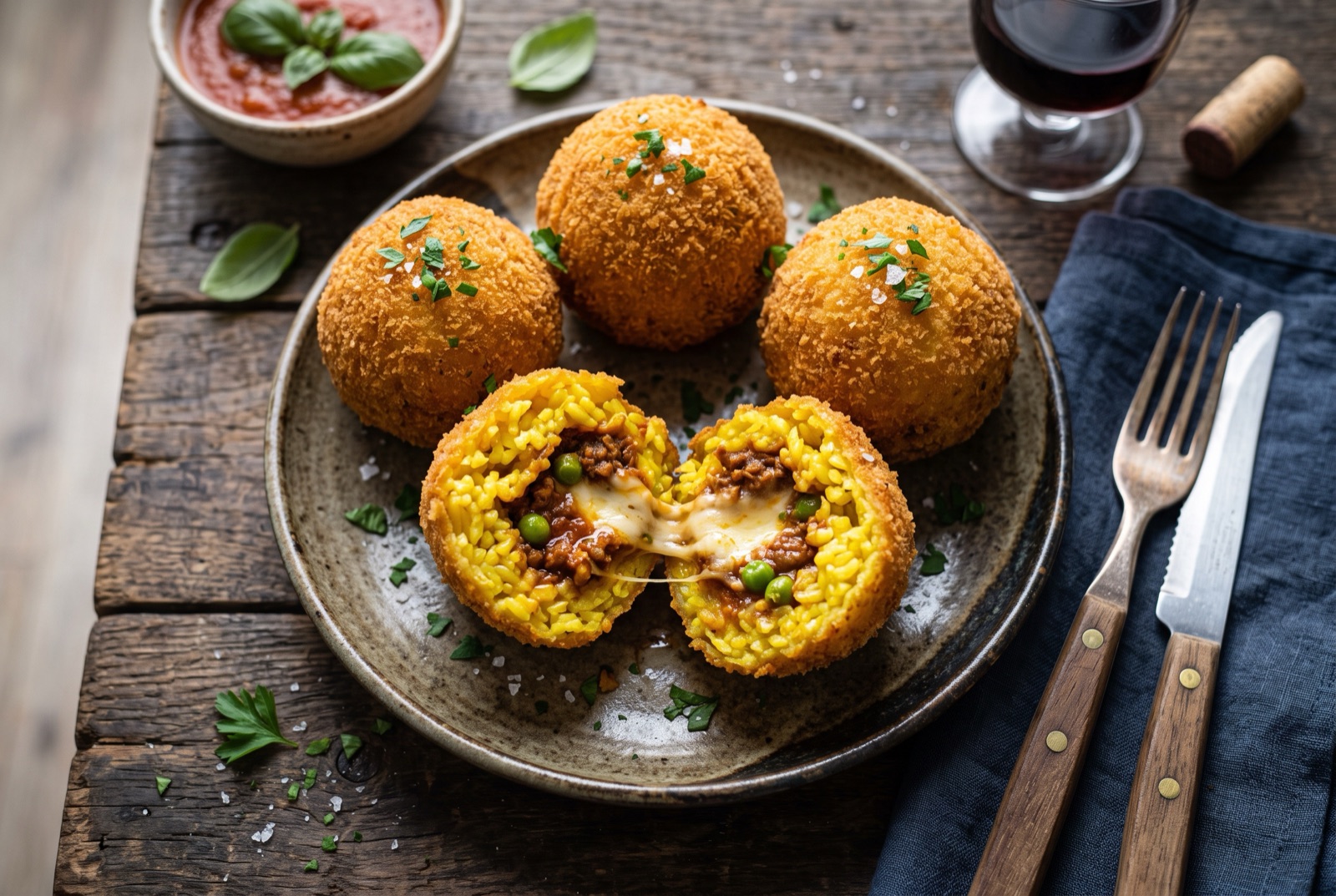
Italy has 9 more dishes in the atlas — Arancini and Classic Tiramisu, and 7 more.
Recipe by The DishRoute Kitchen · published August 18, 2026 · updated August 18, 2026