Mohinga.
Burmese Catfish Rice Noodle Soup
မုန့်ဟင်းခါး · say it: moh-HIN-gah
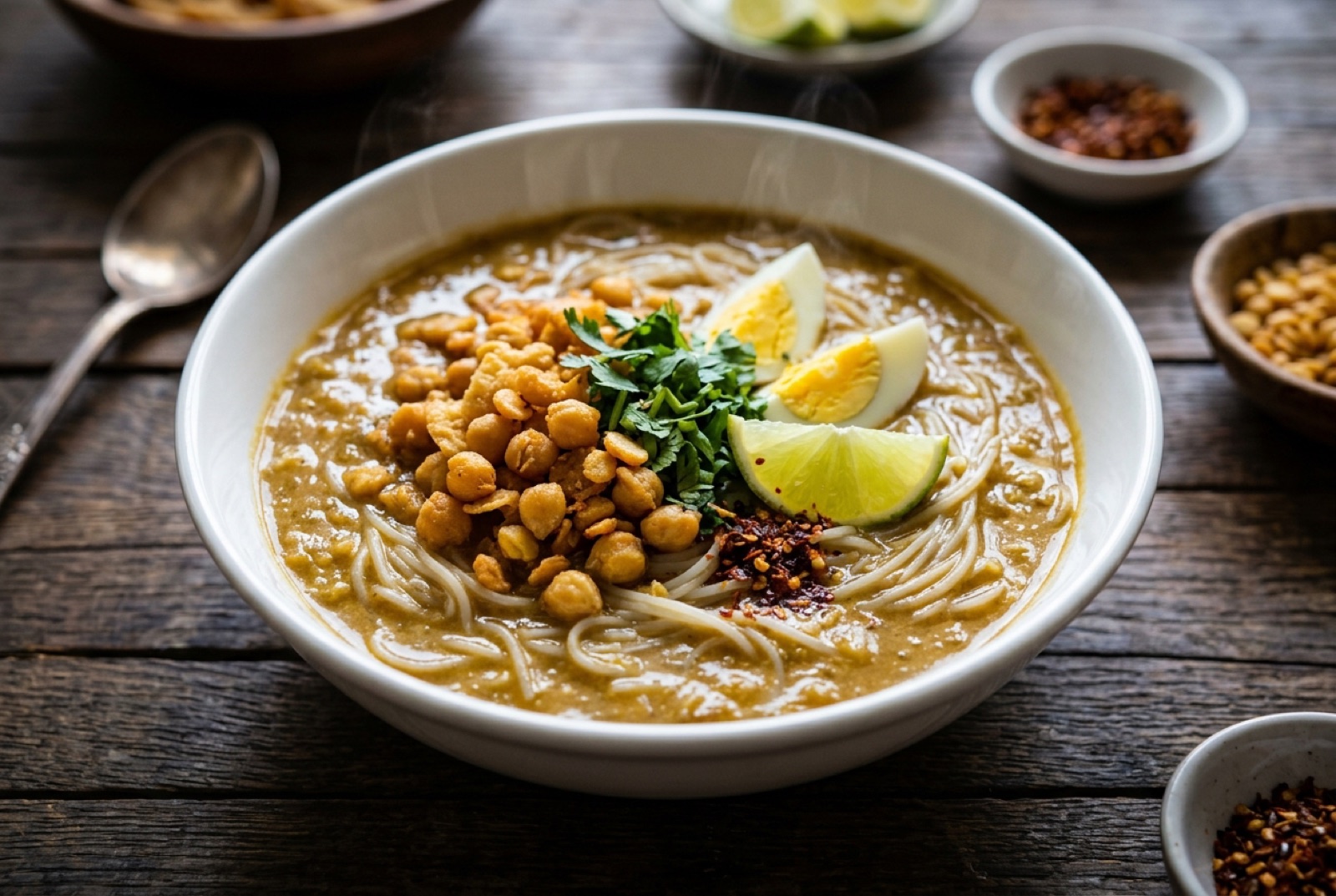
Mohinga is a thick, savory fish soup poured over thin rice vermicelli and eaten for breakfast across Myanmar. The broth is unlike any other noodle soup in Southeast Asia: catfish is boiled until it falls apart and then whisked back into the pot, so the liquid is cloudy and full-bodied rather than clear, and it is thickened further with toasted rice flour and chickpea flour until it coats the noodles like a loose gravy. The flavor is deep and faintly funky from fish sauce and shrimp paste, lifted by lemongrass, ginger and turmeric, and finished at the table with lime, chile, cilantro and a crumbled split-pea fritter for crunch. It is filling, warm and mildly sour, and most Burmese eat it standing at a stall before the day gets hot.

- Gate
- MyanmarYangon and the Irrawaddy Delta
- Prep
- 35 min
- Cook
- 1 hr 10 min
- Total time
- 1 hr 45 min
- Serves
- 6
- Status
- Takes skill
- Nutrition / serving · estimated
- Calories 520 kcal
- Protein 32 g
- Carbs 62 g
- Fat 16 g
- Fiber 4 g
- Sodium 1400 mg
Why this recipe works.
- Uses the real thickening method — toasted rice flour plus chickpea flour — instead of faking body with cornstarch.
- The fish is cooked twice: simmered whole for the broth, then flaked back in, which is what makes mohinga cloudy and rich.
- A full condiment tray is treated as part of the recipe, not an afterthought, because that is how the dish is actually eaten.
- Honest about banana stem and how to skip it without wrecking the soup.
Ingredients.
20 itemsFor the broth
For the paste
To thicken
To season
To serve
Equipment
- Large stockpot
- Dry skillet for toasting rice flour
- Fine sieve or slotted spoon
- Whisk
Instructions.
Simmer the fish
Put the fish, lemongrass, ginger and one halved onion in a stockpot with the water. Bring to a bare simmer and cook for 20 minutes, until the fish is opaque and pulls away from the bone. Lift the fish out onto a plate and leave the aromatics simmering.
Flake the fish
When the fish is cool enough to handle, discard skin and bones and flake the flesh into coarse shreds with your fingers. Break about half of it down finer — this half will dissolve into the broth and give it body.
Build the paste
Blend the chopped onion, garlic, turmeric, paprika and shrimp paste into a rough paste. Fry it in the oil over medium heat for 10–12 minutes, stirring, until it darkens to a rusty brick color and the oil visibly separates and pools at the edges of the pan.
Tip Wait for the oil to break out. This is the same doneness signal as in a Burmese curry, and rushing it leaves a raw onion taste in the broth.
Combine and thicken
Fish the lemongrass and ginger out of the broth and stir in the fried paste and all the flaked fish. Whisk the toasted rice flour and chickpea flour with 250 ml of cold water until smooth, take the pot off the boil, pour the slurry in while whisking, then return to a gentle simmer.
Simmer to a gravy
Cook uncovered at a lazy bubble for 25–30 minutes, stirring often so the bottom does not catch. The broth is ready when it coats a spoon like thin gravy and no longer tastes floury. Add the banana stem, if using, for the last 10 minutes.
Season hard
Stir in the fish sauce and taste. It should be assertively salty and savory on its own, because the unsalted noodles will mute it. Adjust with more fish sauce, never plain salt, so the fermented depth stays in balance.
Cook the noodles
Soak or boil the rice vermicelli according to the packet until just tender, then drain and rinse under cold water so they stop cooking and stay separate. Divide into six deep bowls.
Assemble the bowls
Ladle the hot broth generously over the noodles until they are submerged. Top each bowl with egg halves, cilantro and scallions, and bring the chile flakes, extra fish sauce and lime wedges to the table so everyone finishes their own bowl.
Tips from our kitchen.
- Toast the rice flour in a dry pan until it smells like popcorn and turns sandy beige — untoasted flour makes the broth taste pasty.
- Whisk the flour slurry into the broth off the boil, then bring it back up, or you will get lumps that never dissolve.
- Catfish is traditional because it is oily and holds flavor; any firm, slightly fatty white fish works, but avoid delicate flakes like sole.
- Do not cook the rice vermicelli in advance and let it sit dry — rinse it in cold water and toss with a drop of oil so it does not clump.
- Season the broth saltier than seems right; the noodles are unsalted and will pull the seasoning down once the bowl is assembled.
- Make the broth a day ahead if you can. It thickens overnight and tastes noticeably deeper — just loosen with hot water when reheating.
Substitutions.
- Banana stem → Sliced tender celery hearts, or drained canned bamboo shoots
- Neither is a true match, but both give the same mild vegetal crunch suspended in the broth. Leaving it out entirely is also completely acceptable at home.
- Catfish → Mackerel, tilapia or any firm white fish
- Mackerel gives the closest richness. If using lean white fish, add an extra tablespoon of fish sauce to compensate for the missing oiliness.
- Shrimp paste → An extra tablespoon of fish sauce plus a teaspoon of dried shrimp, ground
- You lose some of the fermented depth, but the broth stays savory rather than flat.
Variations.
- Rakhine mohinga
- The Rakhine State version is thinner, much hotter with chile, and often uses a different local fish. It is closer to a clear fish soup than to the thick delta style.
- Chicken mohinga
- Common in households that do not eat fish: chicken thighs replace the catfish and the broth is built the same way, though the result is milder and less distinctly Burmese.
- Mohinga with extra fritters
- Some stalls serve the soup with whole baya kyaw and split-pea crackers stacked on top rather than crumbled in, so the crunch survives longer.
Storage & reheating.
The broth keeps 3 days refrigerated and freezes well for 2 months; store it separately from the noodles, which turn to mush if left sitting in liquid. Reheat gently and expect to thin it with hot water, since the rice flour keeps thickening as it cools. Cook or refresh the noodles just before serving, and never refrigerate an assembled bowl.
Serve with
A crowded condiment tray: crumbled baya kyaw fritters, hard-boiled egg halves, chile flakes, fish sauce, chopped cilantro and scallions, and lime wedges.
The story behind Mohinga.
Mohinga is the closest thing Myanmar has to a national dish, and its home territory is the Irrawaddy Delta, where catfish is abundant and cheap. The traditional broth also carries chunks of banana stem — the tender inner core of the banana plant, which cooks to something between celery and bamboo shoot and gives the soup a vegetal backbone. In Myanmar it is sold from dawn carts and shoulder-pole vendors who set down two baskets, one holding the pot of broth over coals and the other holding coils of noodles, bowls, condiments and a stool for the customer. The whole transaction takes four minutes.
The soup varies more by region than most outsiders expect. Delta and Yangon versions lean thick and heavily thickened with rice flour; upper Burma and Mandalay versions tend to be thinner and lighter on the fish; in Rakhine State, near the Bangladeshi border, the local noodle soup is chile-hot in a way the rest of the country is not. Some cooks add pounded roasted rice for body, some rely on chickpea flour, many use both. Every household argues that its own ratio of fish to broth is the correct one, and stall regulars are extremely loyal to one vendor.
What makes mohinga distinctive is that the soup is only half the dish. The other half is the table: crisp baya kyaw fritters to crumble in, hard-boiled or duck eggs, dried chile flakes, fish sauce, chopped cilantro and scallions, fried garlic, and wedges of lime that get squeezed hard. Diners build their own bowl, and a bowl assembled by a Burmese regular looks nothing like the plain soup that came out of the pot. This home version uses fresh catfish where available, keeps the toasted-rice-flour thickening that gives the broth its character, and is honest about banana stem: outside Southeast Asia you will not find it, and the soup is still very good without it.
Questions, answered.
Why is my broth thin instead of thick?
Either the rice flour slurry was not enough for the volume of liquid, or it was added and served immediately. The flour needs a good 10 minutes of gentle simmering to swell and thicken properly. Make another slurry with 2 tablespoons of toasted rice flour and a little cold water, whisk it in, and simmer another 10 minutes.
Can I make mohinga without banana stem?
Yes, and most cooks outside Myanmar do. Banana stem adds a mild vegetal crunch rather than a strong flavor, so the soup still tastes like mohinga without it. Sliced celery hearts or canned bamboo shoots give a similar texture if you want something in that role.
Which noodles should I use?
Thin round rice vermicelli, the kind sold dried in nests. They should be about the thickness of spaghetti or slightly thinner. Flat rice noodles change the dish substantially, and wheat noodles push it toward ohn no khao swè, which is a different soup entirely.
Is mohinga really a breakfast food?
Yes. In Myanmar it is sold from early morning carts and eaten before work or school, though shops in bigger cities now serve it all day. There is nothing odd about eating it for lunch or dinner — it is simply that the classic time is dawn.
Can I make it ahead for a crowd?
Mohinga is ideal for this. Make the broth a day or two ahead, keep it refrigerated, and reheat with extra water to loosen it. Set out the noodles and condiments in separate bowls and let people assemble their own, which is exactly how it is served in Myanmar.
You might also like.
All recipes →
Keep exploring Myanmar.
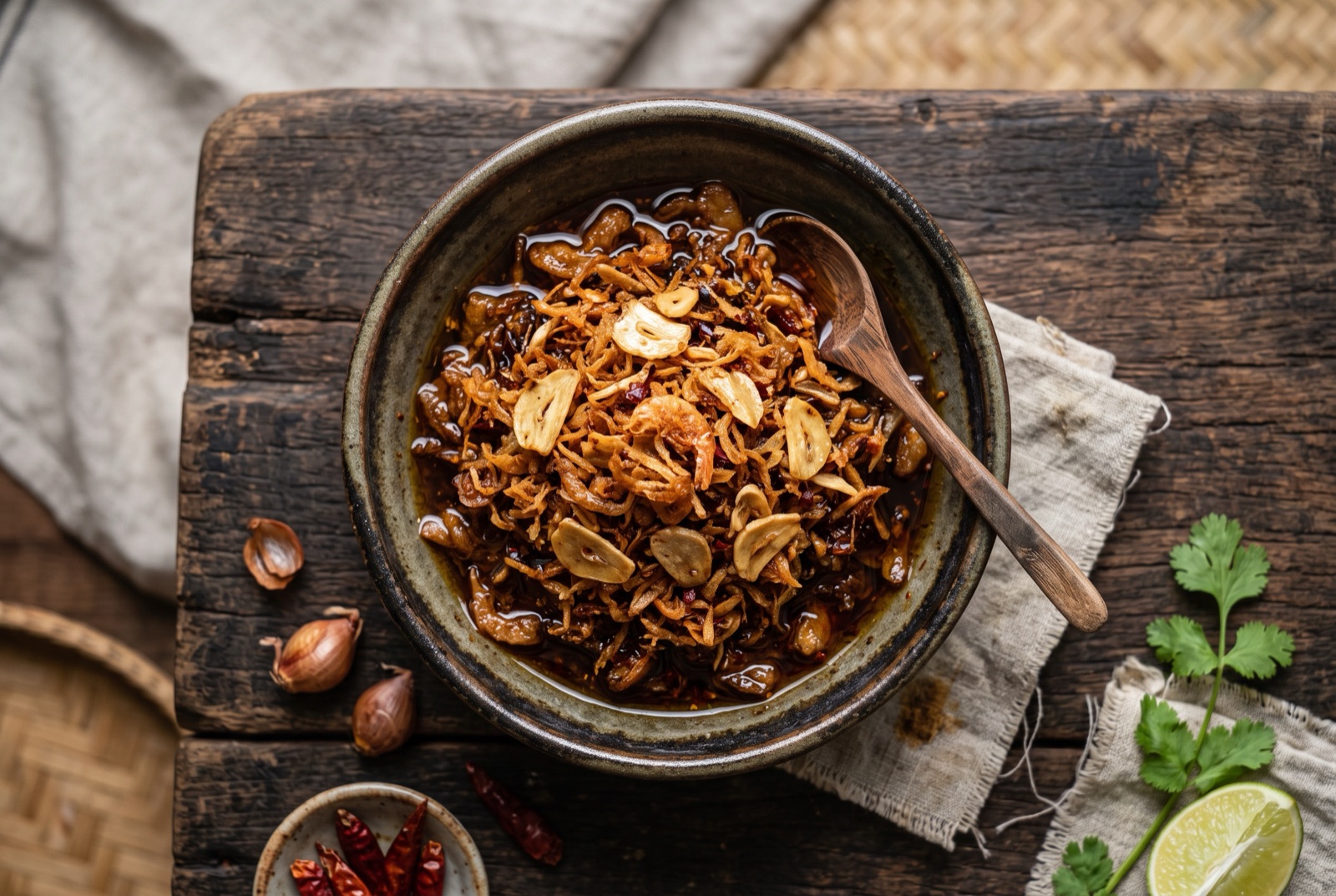
Myanmar has 9 more dishes in the atlas — Balachaung and Danbauk, and 7 more.
All Myanmar recipes White fish recipes Rice noodles recipes Lemongrass recipes soupbreakfastpescatariandairy freeRecipe by The DishRoute Kitchen · published August 20, 2026 · updated August 20, 2026