Nyama Choma.
Kenyan Charcoal-Grilled Goat
Nyama choma · say it: NYAH-mah CHOH-mah
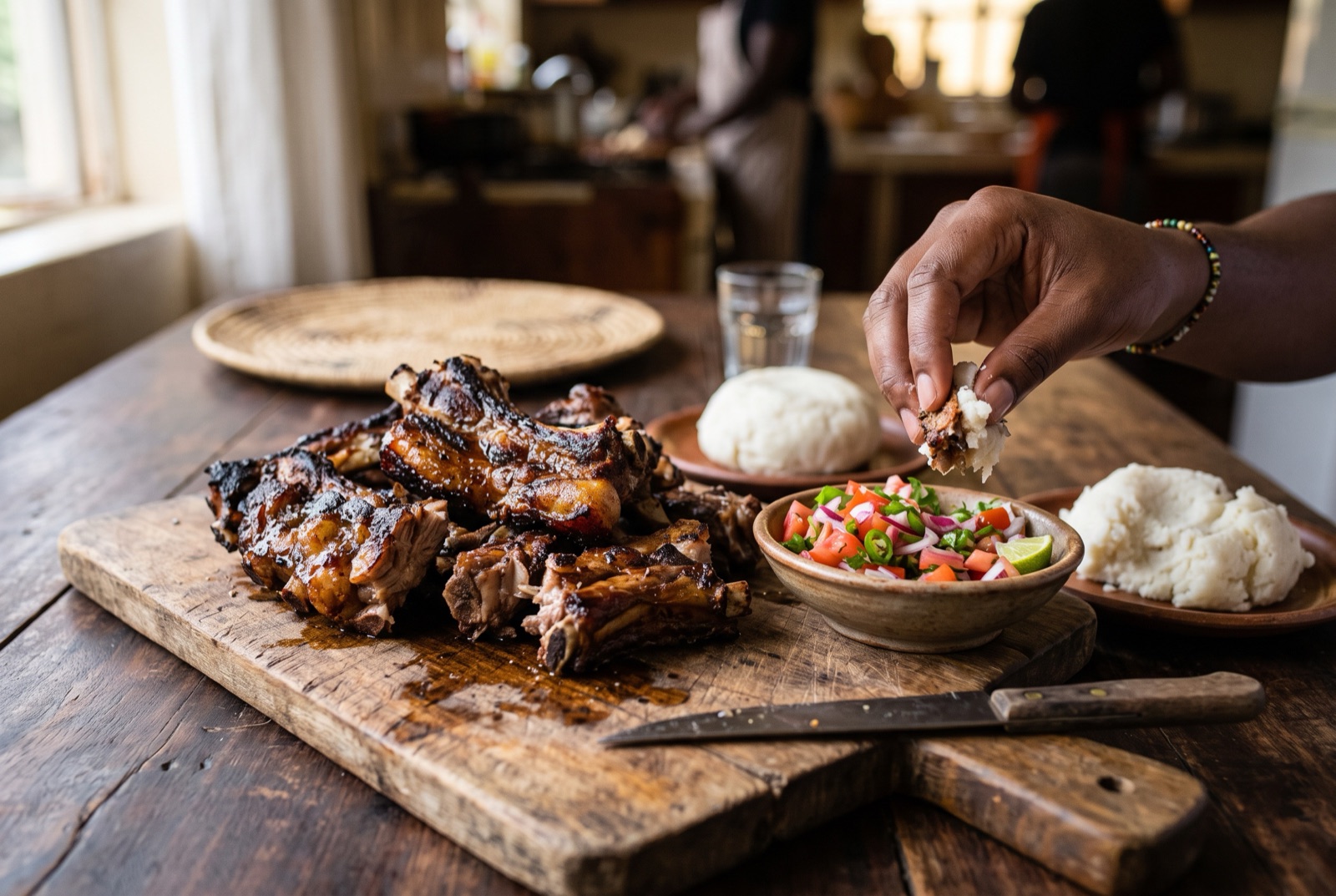
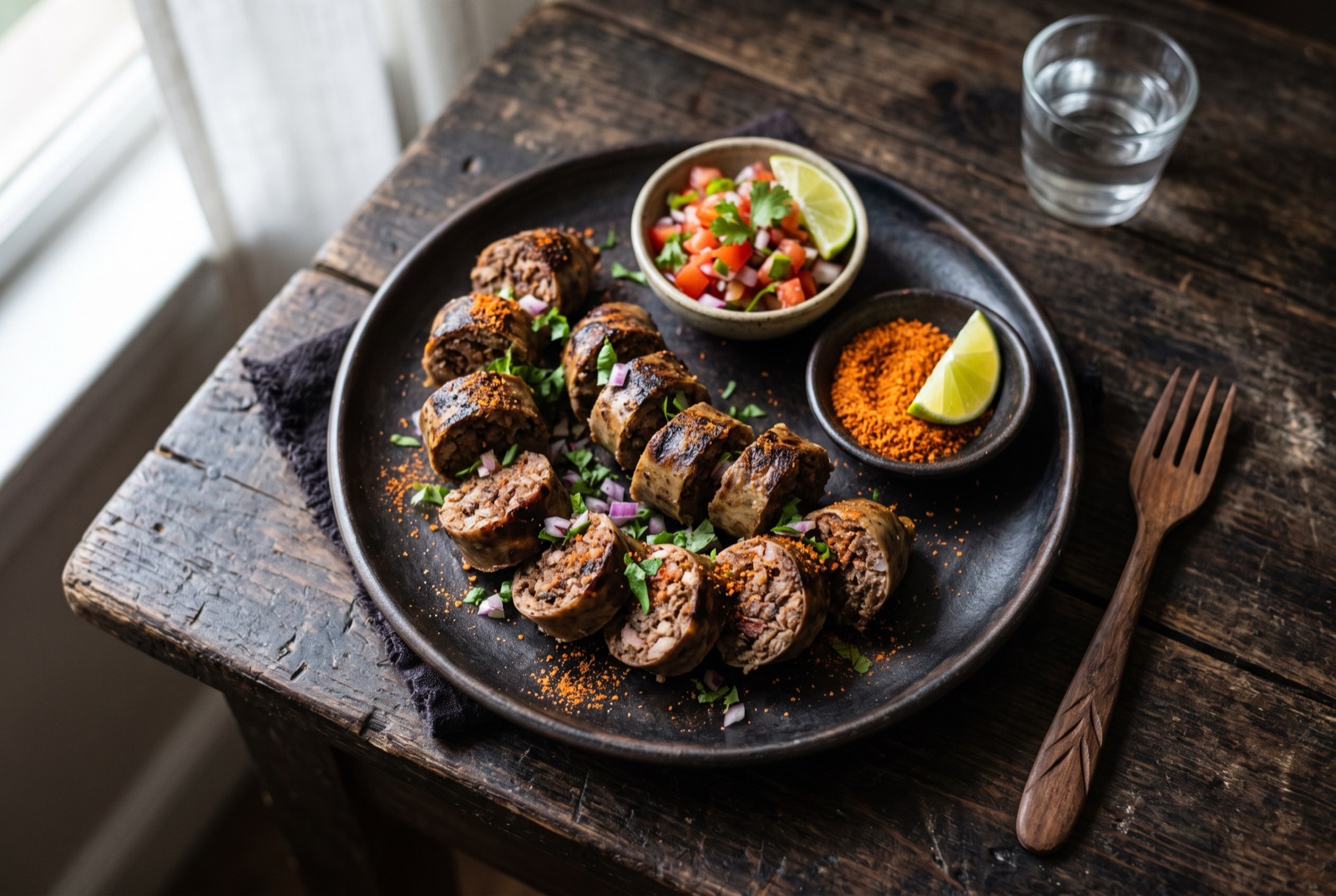
Nyama choma is goat cooked over charcoal with almost no seasoning and almost no hurry — the name simply means roasted meat in Swahili, and the recipe is closer to a method than a formula. Ribs and shoulder are salted, laid over coals that have burned down past their flames, and turned patiently for an hour or more until the fat renders out, the outside dries into a chewy crust and the meat comes away from the bone with a tug. It tastes of goat, smoke and salt in that order, and nothing else is trying to compete. The counterweight comes from the table: raw kachumbari, a wedge of lime, a mound of ugali and a small pile of salt for dipping each bite.

- Gate
- Kenya
- Prep
- 20 min
- Cook
- 1 hr 30 min
- Total time
- 2 hr incl. 10 min rest
- Serves
- 6
- Status
- Easy
- Nutrition / serving · estimated
- Calories 420 kcal
- Protein 44 g
- Carbs 6 g
- Fat 24 g
- Fiber 1 g
- Sodium 940 mg
Why this recipe works.
- Uses the real technique — long, gentle charcoal cooking rather than a quick sear that leaves goat tough.
- Explains what to ask a butcher for, since the cut matters far more than any marinade here.
- Includes proper kachumbari with the onion salted and rinsed, so it cuts the fat instead of overpowering it.
- Gives a workable oven-plus-grill route for cooks who have no charcoal, and is honest about what is lost.
Ingredients.
10 itemsFor the meat
For the kachumbari
To serve
Equipment
- Charcoal grill with an adjustable or high grate
- Wooden chopping board
- Heavy knife or cleaver
- Tongs
Instructions.
Salt the goat
Pat 1.5 kg of goat dry with paper towel and rub it all over with the coarse salt and pepper. Leave it at room temperature for 40 minutes — the surface should look damp at first, then dry again as the salt is drawn in.
Tip Meat that goes on the fire wet steams instead of colouring, so this waiting time does real work.
Build the fire
Light the charcoal and let it burn until every piece is coated in grey ash and no flames are licking up. Rake the coals into a bed on one side of the grill only, leaving the other side empty for the meat to sit away from direct heat.
Grill slowly on the cool side
Set the goat over the empty side of the grill, cover if your grill has a lid, and cook for about 70 minutes, turning every 8 to 10 minutes. The fat should melt and glisten rather than spit, and the surface should gradually darken from pink to a dry bronze.
Tip If fat drips onto the coals and flares up, move the meat further away — soot in the crust tastes bitter and cannot be scraped off.
Make the kachumbari while it cooks
Toss the diced onion with a good pinch of salt, leave it 10 minutes, then rinse under cold water and squeeze dry — this strips out the raw burn. Mix it with the tomato, chilli, coriander and lime juice, season, and keep it cool until the meat is ready.
Tip Seeding the tomatoes keeps the relish sharp and spoonable instead of turning it into a puddle.
Finish over the coals
Move the goat directly over the charcoal for the last 6 to 8 minutes, turning often, until the edges catch and blister in patches and the ribs smell strongly of smoke. Twist a rib bone to check: it should rotate freely and the meat should shrink back from the tip.
Rest, chop and serve
Rest the meat on a wooden board for 10 minutes, then chop it across the grain into thick bite-sized pieces, bone and all, and scatter over any salt left on the board. Bring the whole board to the table with kachumbari, lime wedges, chilli salt and ugali, and let everyone pick with their hands.
Tips from our kitchen.
- Ask for goat ribs and shoulder on the bone from a young animal. Boneless leg dries out long before the connective tissue has softened.
- Wait until the charcoal is covered in grey ash with no visible flame. Meat set over live flames scorches outside while the inside is still raw.
- Keep the grate high — a hand held at grate level should stay there five to six seconds. If you flinch after two, the fire is far too hot.
- Salt the meat 40 minutes before it goes on, not at the last second, so it has time to draw in rather than sit on the surface.
- Resist basting with oil or sauce. Fat dripping onto coals causes flare-ups that leave a sooty, acrid taste on the crust.
- Chop across the grain into short, thick pieces after resting; long strips pull stringy no matter how well the goat was cooked.
Substitutions.
- Goat ribs and shoulder → Lamb shoulder or beef short ribs on the bone
- Lamb is the closest match and cooks slightly faster. Beef short ribs need a longer, gentler stretch over the coals to soften.
- Charcoal grill → Oven at 150°C for 75 minutes, then 8 minutes under a hot grill
- The texture comes out right and the meat is genuinely good, but the charcoal smoke is the flavour that makes it nyama choma. Do not pretend liquid smoke replaces it.
- Fresh green chilli in the kachumbari → A pinch of chilli flakes stirred through, or leave it out
- Kachumbari is meant to be sour and fresh rather than hot; the chilli salt served alongside carries the heat.
Variations.
- Kuku choma
- The same charcoal treatment applied to chicken, usually spatchcocked and rubbed with salt, lemon and a little garlic. Cooks in around 40 minutes.
- Mbuzi choma na pilipili
- Grilled goat served with a fierce dip of crushed bird's eye chilli, salt and lime instead of the plain salt saucer.
- Coastal marinated version
- On the coast the meat is sometimes rubbed with garlic, ginger and lime before grilling — a Swahili habit that upcountry purists consider unnecessary.
Storage & reheating.
Grilled goat keeps 3 days refrigerated once cooled and wrapped. Reheat it covered in a low oven, around 140°C, with a splash of water in the dish so it steams rather than dries — a microwave turns the crust rubbery. Leftovers are genuinely better repurposed than reheated whole: chop the meat small and fry it with onion, tomato and a little of its own fat to make a quick stew for ugali. Kachumbari does not keep; the tomato weeps and the onion turns limp within a few hours, so make only what the table will eat.
Serve with
Ugali torn by hand, kachumbari, and a saucer of salt mixed with ground chilli for dipping each piece.
The story behind Nyama Choma.
The Kenyan version of grilled meat is inseparable from the butchery that sells it. Across the country, a nyama choma joint is usually a butcher shop with a grill out back and plastic chairs in front — you look at the carcasses hanging behind the counter, point at the cut you want, agree on a weight, and the meat is priced by the kilo, grilled while you wait and brought to the table already chopped on a wooden board. There is no menu of preparations. There is goat, sometimes beef, occasionally chicken or ribs of mutton, and the only real decisions are how much and how well done.
Goat, mbuzi, is the meat with the highest standing, and the animal shapes the technique. Kenyan goat is lean, well-exercised and full of connective tissue, so it punishes fast, hot cooking and rewards a long stretch over dying coals. That slowness is also what makes nyama choma a social meal rather than a dish. An order takes forty minutes to an hour to arrive, which is the point — people drink, talk, and wait, and the food lands in the middle of the group to be picked at with fingers instead of served in portions.
It has become the closest thing Kenya has to a national dish precisely because it crosses lines that most Kenyan food does not. Coastal, highland and lakeside kitchens all cook differently, but a goat over charcoal is understood everywhere, and weekend grilling is as common in Nairobi suburbs as in rural homesteads. Politicians campaign over it, families mark occasions with it, and the accompaniments are fixed by habit rather than rule: ugali, kachumbari, and a saucer of salt mixed with ground chilli for anyone who wants their bite sharper.
Questions, answered.
Why is my grilled goat tough and dry?
Almost always heat, not time. Goat is lean and full of connective tissue, so it needs a long stretch over moderate coals — roughly an hour — to let that tissue soften. Cooked fast over a hot fire, the muscle fibres tighten and squeeze out moisture before anything has a chance to break down. Raise the grate, let the coals ash over, and turn the meat every eight to ten minutes.
What cut of goat should I buy?
Ribs and shoulder on the bone are the standard choice, ideally from a young animal. Bone and fat both protect the meat during long cooking and add flavour to the crust. Leg works but is much leaner and needs watching, while boneless cubes are the wrong shape entirely for this method and are better used in a stew.
Can I make nyama choma without a charcoal grill?
Yes, with an honest compromise. Roast the salted meat covered at 150°C for about 75 minutes, then finish it uncovered under a hot grill for eight minutes to dry and colour the surface. The texture will be right and it will taste good, but charcoal smoke is a real ingredient here and its absence is noticeable.
What is kachumbari and can I make it ahead?
Kachumbari is the raw relish of diced tomato, onion, chilli and coriander dressed with lime and salt that accompanies most Kenyan grilled meat. Make it no more than an hour ahead. Salt draws water out of the tomatoes, so an early batch turns into a watery bowl, and the onion loses its crunch. You can chop everything in advance and dress it just before serving.
How do I know when it is done without a thermometer?
Twist a rib bone — on properly cooked nyama choma it turns freely and the meat retracts slightly from the tip. The outside should look dry and burnished rather than wet, and juices from a poked piece should run clear. Kenyan grilled goat is served fully cooked through, not pink, so do not aim for medium here.
You might also like.
All recipes →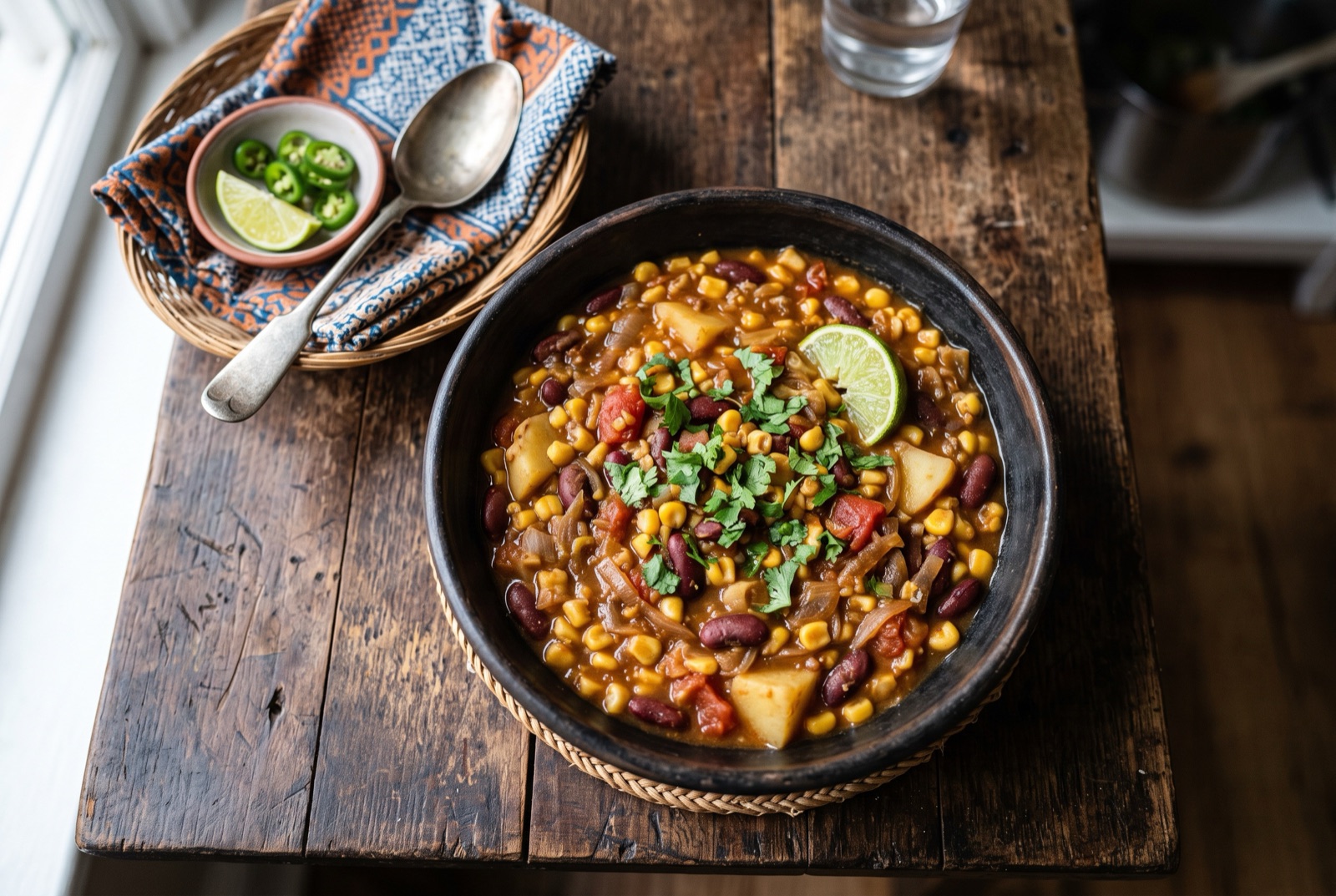
Keep exploring Kenya.
Kenya has 9 more dishes in the atlas — Githeri and Kenyan Chapati, and 7 more.
All Kenya recipes Goat recipes Tomato recipes Onion recipes maingluten freedairy freehalal friendlynut freeRecipe by The DishRoute Kitchen · published August 20, 2026 · updated August 20, 2026