Rødgrød med Fløde.
Danish Red Berry Compote with Cream
Rødgrød med fløde · say it: RUHL-groadh meth FLUH-thuh
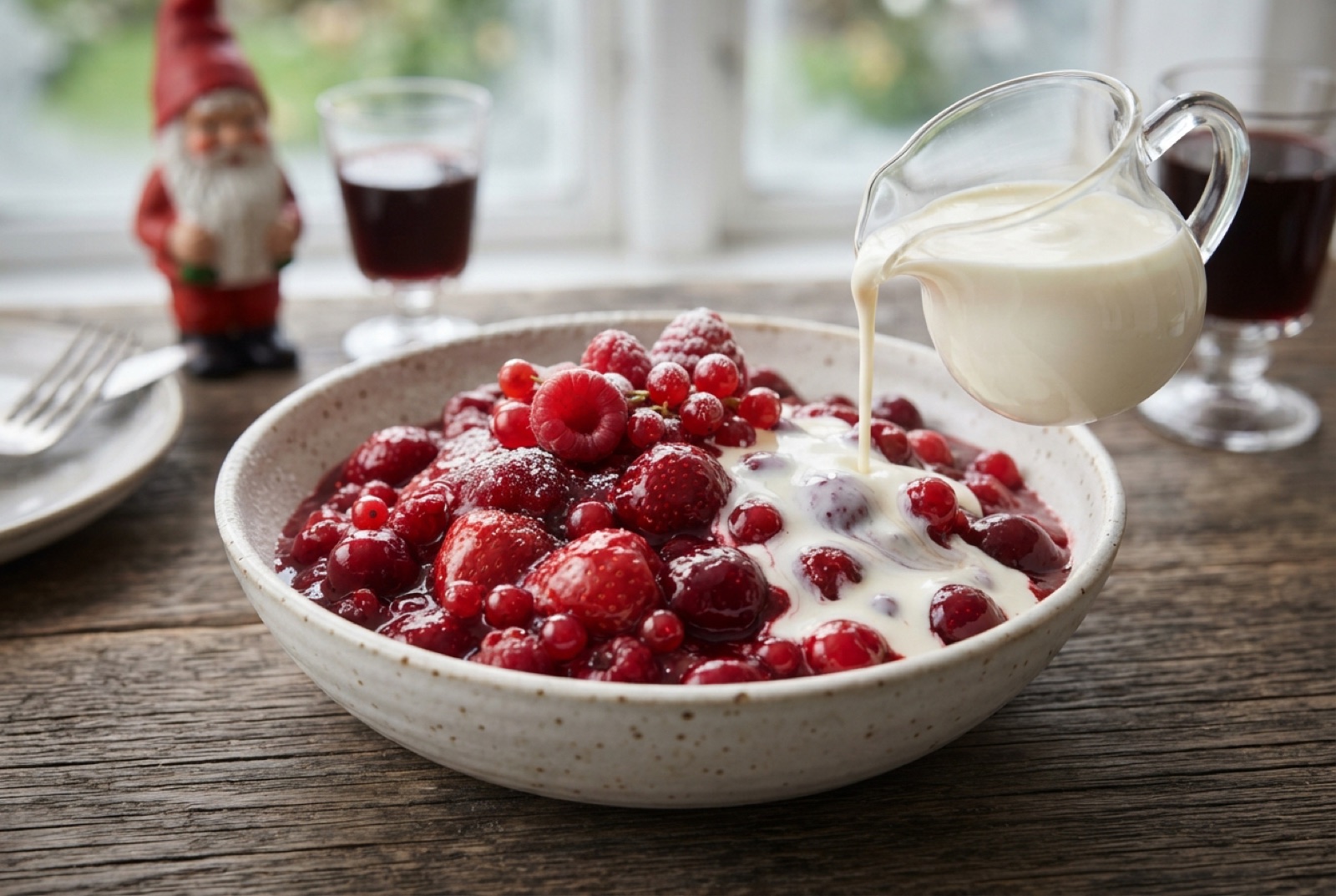
Rødgrød is red summer fruit — redcurrants, raspberries, strawberries, sour cherries — cooked just long enough to release its juice, sweetened, and thickened with a little potato starch until it sets to a glossy, spoonable compote somewhere between a coulis and a jelly. It is served cold in a bowl with cold single cream poured over the top and not stirred in, so each spoonful gets both. The flavour is sharp before it is sweet, which is the point: this is a dessert built to taste of fruit rather than sugar. It takes twenty minutes to make and needs three hours in the fridge.

- Gate
- Denmark
- Prep
- 15 min
- Cook
- 10 min
- Total time
- 3 hr 25 min incl. 3 hr rest
- Serves
- 6
- Status
- Easy
- Nutrition / serving · estimated
- Calories 260 kcal
- Protein 3 g
- Carbs 42 g
- Fat 10 g
- Fiber 5 g
- Sugar 34 g
- Sodium 15 mg
Why this recipe works.
- Uses potato starch off the heat, the way Danish kitchens do, so the compote sets glossy and clear instead of cloudy or slack.
- The fruit is cooked briefly and mostly left whole, so it still tastes like summer berries rather than jam.
- Sugar sprinkled on the surface while cooling — the traditional trick that stops a rubbery skin forming on top.
- Scales up easily and keeps for several days, which is how it is actually used in Denmark during berry season.
Ingredients.
10 itemsThe fruit
To thicken
To serve
Equipment
- Medium saucepan
- Small bowl for the starch slurry
- Serving bowl or individual glasses
Instructions.
Cook the fruit briefly
Put the redcurrants, raspberries, strawberries and sour cherries in a saucepan with the water, sugar and lemon juice. Bring to a gentle simmer and cook for 5 minutes, until the fruit has given up its juice and the liquid runs deep red, but the berries still hold some shape.
Tip Taste now and adjust the sugar. It should still be clearly tart — the cream will soften it later.
Mix the starch slurry
Stir the potato starch into the cold water in a small bowl until completely smooth, with no grains sitting at the bottom. Do this while the fruit cooks so the slurry is ready the moment the pan comes off the heat.
Thicken off the heat
Take the pan off the heat entirely and wait 30 seconds, then pour in the slurry in a thin stream while stirring steadily. Within a few seconds the compote turns glossy and thickens enough to coat the back of the spoon. Do not return it to the heat.
Tip If it looks too thin at this stage, wait — potato starch keeps setting as the compote cools.
Pour and dust
Pour the compote into a serving bowl or individual glasses while it is still hot, and sprinkle a thin, even layer of caster sugar across the surface. This is what stops a rubbery skin forming as it cools.
Chill until set
Cool to room temperature, then refrigerate for at least 3 hours. The compote should set to the point where a spoon leaves a clean edge but the fruit still slumps back slowly — not a firm jelly.
Serve with cold cream
Bring the bowl to the table straight from the fridge and pour the cold cream over the surface at the last moment. Do not stir it in — each spoonful should pick up both the cream on top and the fruit beneath.
Tips from our kitchen.
- Taste the fruit before you sweeten. Redcurrants and sour cherries need considerably more sugar than ripe strawberries, and the finished compote should still be tart.
- Simmer the fruit for only 5 minutes. Longer and it turns to jam — the berries should still be recognisable in the bowl.
- Mix the starch with cold water into a smooth slurry before it goes anywhere near the pan. Dry starch dropped into hot juice lumps instantly.
- Take the pan off the heat before adding the slurry, and do not boil it afterwards. Boiled potato starch breaks down and the compote goes thin and slippery.
- Sprinkle a thin layer of sugar over the surface as it cools to stop a skin forming, and cover only once it is completely cold.
- Pour the cream over cold, straight from the fridge, and do not stir it in. The contrast between cold cream and cold fruit is the whole dessert.
Substitutions.
- Potato starch → Cornflour, using about a third more
- Cornflour works but gives a slightly cloudier, softer set and needs a brief simmer to cook out, unlike potato starch which thickens off the heat. Danish recipes almost always specify potato starch.
- Fresh summer berries → Frozen mixed red fruit, straight from the freezer
- Genuinely fine here, and what most Danes use outside the short berry season. Frozen fruit releases more liquid, so add a little extra starch and expect a slightly looser set.
- Single cream to serve → Cold whole milk, or a spoonful of vanilla ice cream
- Milk is the everyday version served to children. Whipped cream is not traditional — the cream is meant to be liquid and to run into the fruit.
Variations.
- With rhubarb
- A third of the fruit replaced with rhubarb, cut into short lengths and added at the start. Much sharper, and the earliest version of the year in a Danish garden.
- Rødgrød with elderflower
- A splash of elderflower cordial stirred in at the end, which lifts the whole bowl with a floral note. Common in modern Danish kitchens rather than traditional.
- Koldskål accompaniment
- Spoon rødgrød into koldskål, the cold buttermilk soup Danes eat all summer, instead of serving it with cream. The tang of buttermilk against the red fruit is excellent.
Storage & reheating.
Rødgrød keeps 4 days refrigerated in a covered bowl and is arguably better on the second day once the flavours settle. Keep the sugar layer on top and cover only after it has cooled completely, or condensation will thin the surface. It does not freeze well — the starch set breaks on thawing and the compote separates into juice and fruit, though the result is still fine stirred into yogurt or poured over ice cream. Never reheat it: warming the compote breaks the starch and it goes permanently runny.
Serve with
Cold single cream poured over at the table, with a plain butter biscuit or a small crisp kammerjunker on the side.
The story behind Rødgrød med Fløde.
Rødgrød belongs to a family of northern European fruit puddings — the German rote Grütze, the Swedish and Norwegian versions — that all solved the same problem: a short, intense summer glut of soft red fruit and no reliable way to keep it. Cooking it briefly with sugar and a starch made something that lasted a few days in a cold larder and stretched to feed a table. In Denmark it became the standard summer dessert, made in whatever combination of fruit the garden produced that week, and it still is.
The dish is also, improbably, Denmark's most famous linguistic export. "Rødgrød med fløde" contains a run of Danish vowel and soft-d sounds that almost nobody can produce without having grown up with them, and Danes ask foreigners to say it the way other countries offer a tongue twister — with the difference that this one is a real thing people eat. Getting it approximately right earns genuine delight; the phrase turns up in language classes, on tea towels and in every list of Danish things visitors should attempt.
The technique is simple but has one real trap: the starch. Potato starch, which is what Danish cooks use, thickens on contact with hot liquid and then breaks down if you keep boiling it, going thin and slightly slimy. You take the pan off the heat, stir the slurry in, and let the residual heat do the work — a rolling boil after the starch goes in undoes the whole thing. The traditional finish is a sprinkling of sugar over the surface while it cools, which stops a skin forming, and a good grandmother will still do it without being asked.
Questions, answered.
Why did my rødgrød turn out runny?
Almost certainly because it boiled after the starch went in. Potato starch thickens on contact with hot liquid and then breaks down under continued heat, leaving you with thin, slightly slippery juice. Take the pan off the heat, stir the slurry through, and let residual warmth set it.
Can I use frozen berries?
Yes, and most Danes do for ten months of the year. Cook them from frozen without thawing. They release noticeably more liquid than fresh fruit, so increase the starch by about a quarter or accept a looser set — the flavour is barely affected.
Why is the phrase "rødgrød med fløde" famous?
Because it strings together several of the sounds that make Danish hard for foreigners — the soft d, the ø vowel and the glottal stød — in one short phrase. Danes traditionally ask visitors to attempt it, and near-success is treated as an achievement. It is a real dessert, not just a tongue twister.
How sweet should it be?
Noticeably tart, with the sugar rounding the fruit rather than dominating it. The cream poured over adds richness and reads as sweetness, so a compote that tastes correct on its own will end up too sweet in the bowl. Taste the fruit before sweetening and add sugar in stages.
What stops a skin forming on top?
A thin, even sprinkle of sugar over the surface as soon as it goes into the serving bowl, while still warm. The sugar dissolves into the top layer and prevents the starch from drying into a rubbery film. Cover the bowl only once it is completely cold.
You might also like.
All recipes →
Keep exploring Denmark.
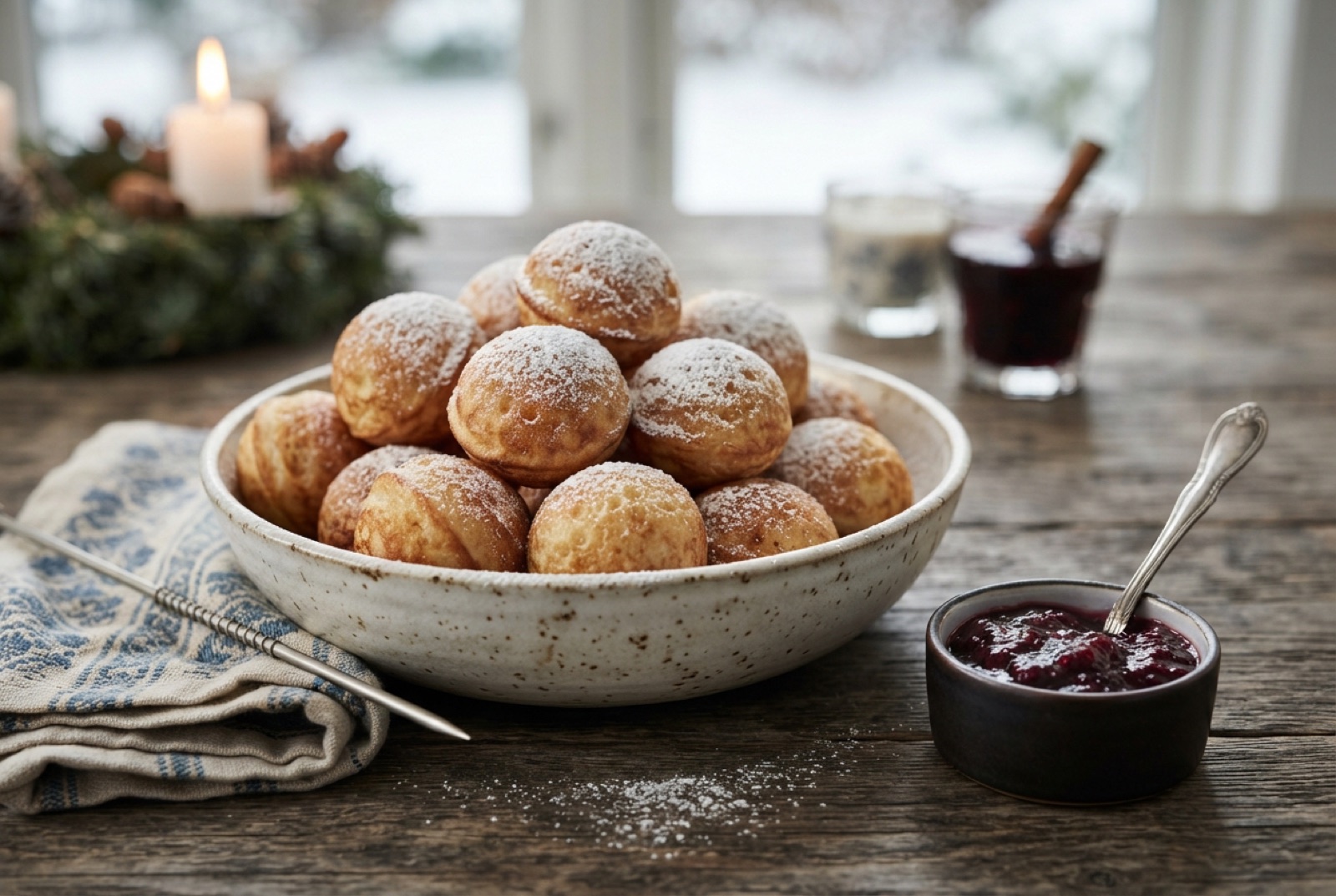
Denmark has 9 more dishes in the atlas — Æbleskiver and Flæskesteg, and 7 more.
All Denmark recipes Sour cherry recipes Heavy cream recipes Cornstarch recipes dessertvegetariangluten freenut freeRecipe by The DishRoute Kitchen · published August 19, 2026 · updated August 19, 2026