Spaghetti Carbonara.
Roman Guanciale and Egg Pasta
Spaghetti alla carbonara · say it: spah-GET-tee ah-lah kar-boh-NAH-rah
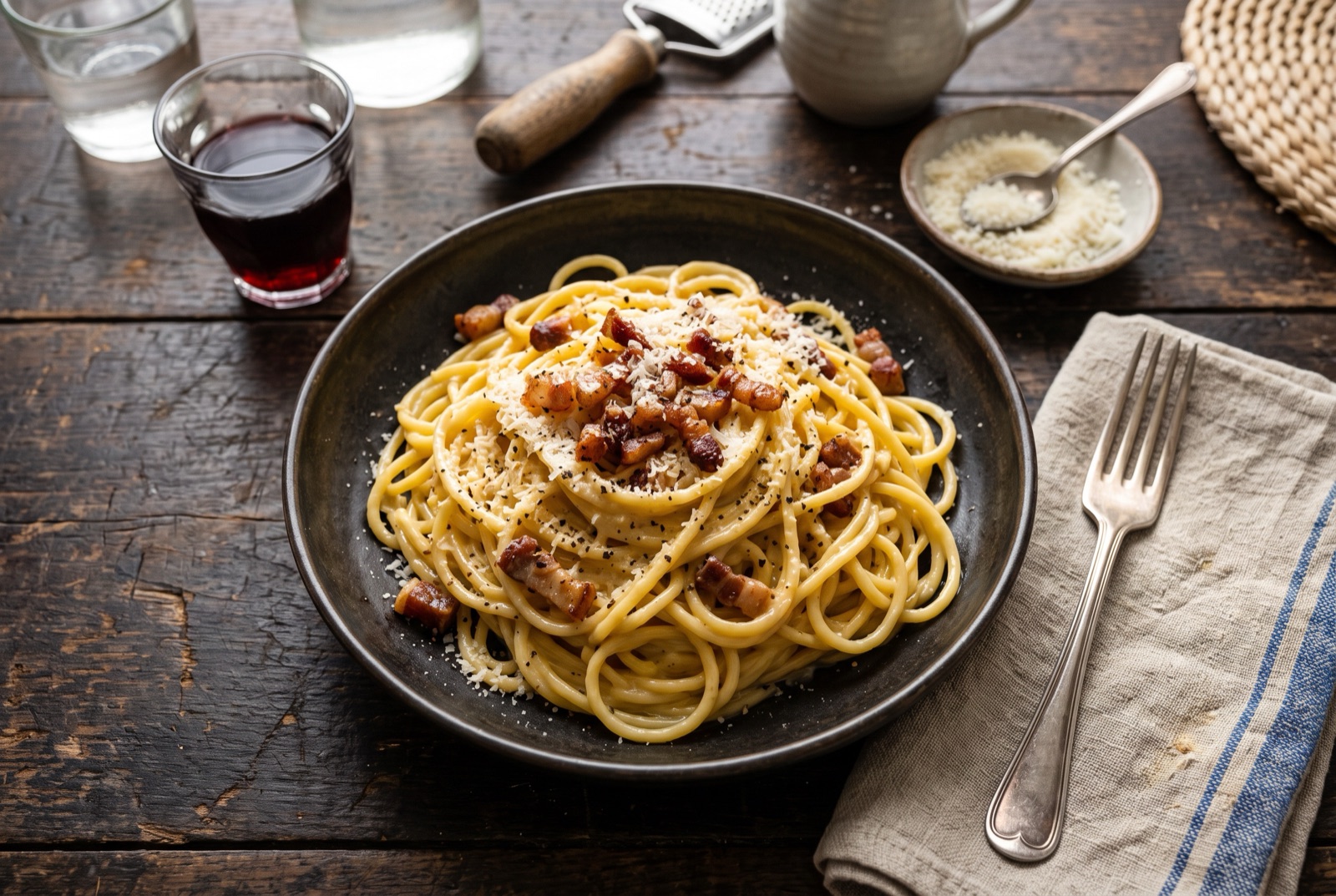
Spaghetti carbonara is Rome's most famous pasta and one of the shortest recipes in Italy: spaghetti, guanciale (cured pork jowl), eggs, pecorino romano and black pepper. There is no cream. The sauce is nothing but egg and cheese, loosened with starchy pasta water and cooked only by the residual heat of the noodles, so it comes out glossy and silky rather than heavy — salty from the pecorino, faintly funky and smoky from the rendered pork fat, with black pepper doing the work a chile would do elsewhere. The whole dish takes about as long as boiling the spaghetti. The only real skill is temperature control, and this version builds the sauce off the heat in a wide bowl, which makes scrambled eggs nearly impossible.

- Gate
- ItalyRome, Lazio
- Prep
- 10 min
- Cook
- 15 min
- Total time
- 25 min
- Serves
- 4
- Status
- Medium
- Nutrition / serving · estimated
- Calories 690 kcal
- Protein 30 g
- Carbs 76 g
- Fat 29 g
- Fiber 3 g
- Sodium 950 mg
Why this recipe works.
- True Roman method — guanciale, egg, pecorino and pepper only, no cream and no shortcuts.
- The sauce is built off the heat in a warm bowl, so the eggs emulsify instead of scrambling.
- Uses whole eggs plus extra yolks for a sauce that is silky but not gluey.
- On the table in 25 minutes with one pan and one pot.
Ingredients.
7 itemsEquipment
- Large pot for pasta
- Large skillet
- Large mixing bowl
- Fine grater (Microplane)
- Tongs
Instructions.
Toast the pepper and prep
Crush the peppercorns coarsely and toast them in a dry, large skillet over medium heat until fragrant and lightly smoking, about 1 minute. Tip half into a large mixing bowl and leave the rest in the pan.
Render the guanciale
Cut the guanciale into batons about 1 cm thick and add them to the skillet over medium-low heat. Cook, stirring occasionally, until the fat has rendered into a pool and the pieces are deep golden and crisp at the edges but still slightly chewy in the middle, 8–10 minutes. Turn off the heat and leave everything in the pan.
Tip Starting in a cold-ish pan is the trick: the fat melts out before the surface can burn.
Boil the spaghetti
Meanwhile, bring a large pot of lightly salted water to a rolling boil and cook 400 g of spaghetti until just shy of al dente — it should still have a firm, pale core when you bite a strand, about 1 minute less than the packet says.
Tip Lightly salted, not sea-salty: guanciale and pecorino will finish the seasoning.
Make the egg and cheese base
While the pasta cooks, whisk the whole eggs and yolks into the bowl with the toasted pepper, then whisk in 100 g of finely grated pecorino until you have a thick, grainy paste. Loosen it with a tablespoon of the hot guanciale fat, whisking constantly — the paste should turn glossy and pourable.
Marry pasta and sauce off the heat
Scoop out a full cup of pasta water, then use tongs to transfer the spaghetti straight into the skillet with the guanciale and toss for 30 seconds. Tip everything into the egg bowl and toss hard, adding pasta water a splash at a time, until the sauce turns from streaky to uniformly glossy and coats every strand like thin custard, about 1 minute.
Tip The bowl, warmed by the pasta, cooks the eggs gently — never return the mixture to the burner.
Adjust and serve immediately
The sauce should flow lazily when you lift the pasta; if it clumps or drags, toss in more pasta water until it loosens and shines. Plate at once, topping each portion with the reserved crisp guanciale, more pecorino and a last grind of pepper.
Tips from our kitchen.
- Cut the guanciale into thick batons, not thin dice — you want pieces with a crisp outside and a chewy, fatty middle, the way Roman trattorias serve it.
- Render the guanciale over medium-low heat so the fat melts out before the outside browns. That liquid fat is a core ingredient of the sauce, not a byproduct.
- Undersalt the pasta water slightly. Guanciale and pecorino are both aggressively salty, and the dish needs no extra salt beyond them.
- Grate the pecorino as finely as possible — powder-fine cheese melts into the egg smoothly, while coarse shreds seize into clumps.
- Keep back a full cup of pasta water before draining. The sauce will tighten as it cools on the plate, and a splash more water at the end rescues it.
- Work fast at the finish: hot pasta into the egg mixture, toss hard for a full minute, serve immediately. Carbonara does not wait for anyone.
Substitutions.
- Guanciale → Pancetta
- The standard fallback outside Italy and completely respectable. It is leaner and less funky than guanciale, so the dish loses a little depth. Smoked bacon works in a pinch but pushes the flavor noticeably American.
- Pecorino romano → Parmesan (Parmigiano-Reggiano)
- Pecorino is the Roman original — sharper and saltier because it is sheep's milk. Parmesan is milder and widely accepted; many Roman cooks quietly use a blend of the two.
- Spaghetti → Rigatoni or mezze maniche
- Both are common in Rome itself — the ridged tubes catch the sauce and guanciale beautifully. Cooking method is identical.
Variations.
- Rigatoni alla carbonara
- The same sauce on rigatoni, arguably more common than spaghetti in Roman trattorias today — the tubes trap pockets of sauce and crisp guanciale.
- Yolk-only carbonara
- Some cooks use 5–6 yolks and no whites for an even denser, custard-like coat. Richer, slightly trickier to loosen — add pasta water generously.
- Gricia
- Carbonara's older sibling: drop the eggs entirely and toss the pasta with guanciale, its fat, pecorino and pasta water. Worth knowing as a dish in its own right.
Storage & reheating.
Carbonara is genuinely best eaten the moment it is made — the emulsion breaks as it cools. Leftovers keep 2 days refrigerated; reheat gently in a pan with a splash of water over low heat, stirring constantly, and accept that the texture will be denser than fresh. Do not microwave on full power (the egg curdles) and do not freeze.
Serve with
A simple green salad dressed with olive oil and a glass of dry white from Lazio (Frascati) — Romans keep the plate the star.
The story behind Spaghetti Carbonara.
Carbonara is the youngest of Rome's four canonical pastas — gricia, cacio e pepe, amatriciana, carbonara — and the one with the murkiest birth certificate. The name hints at the carbonari, the Apennine charcoal burners who supposedly cooked eggs, cheese and cured pork over their fires, but that is folk etymology: no written trace of the dish exists before the mid-twentieth century. The first appearances of "carbonara" in print date to around 1950, and the most seriously argued theory ties the dish to the end of the Second World War, when American soldiers in liberated Rome had rations full of eggs and bacon and Roman cooks had pasta and pecorino. Somewhere in that exchange, the theory goes, the dish crystallized. Italian food historians treat the American connection as plausible; Roman traditionalists bristle at it. Neither side can prove its case, so the honest statement is that carbonara's origin is genuinely disputed — and that its earliest printed recipes were wildly inconsistent, calling variously for gruyère, garlic, and yes, sometimes cream.
What happened next is the more interesting story. Over the second half of the twentieth century, Rome's trattorias sanded the dish down to four ingredients — guanciale, eggs, pecorino romano, black pepper — and that spare version hardened into orthodoxy. Today, cream in a carbonara is treated in Rome as somewhere between a joke and an insult, which is ironic given the dish's loose early history. But the orthodoxy earned its place on merit: cream blunts exactly what makes carbonara worth eating — the bite of the pecorino and the weight of an egg sauce that is barely, precisely cooked.
In Rome, carbonara is everyday food, a primo you order at a paper-tablecloth trattoria without ceremony, and it has become the dish by which visiting cooks are judged. Italy now even marks Carbonara Day every April 6th, mostly as an excuse to argue about it online — proof that a seventy-something-year-old recipe can carry the weight of a much older tradition.
Questions, answered.
Does authentic carbonara contain cream?
No. Roman carbonara is made from guanciale, eggs, pecorino romano and black pepper — the creaminess comes entirely from eggs emulsified with cheese, pork fat and starchy pasta water. Some early printed recipes from the 1950s did include cream, but the dish as codified in Rome for decades rejects it, and adding cream mutes the pecorino's sharpness that defines the flavor.
Can I use bacon instead of guanciale?
Yes, and the result will still be good. Guanciale (cured pork jowl) is the Roman original — fattier and more intensely porky. Pancetta is the closest substitute; smoked bacon works too but adds a smoky, American flavor the original does not have. Whichever you use, render it slowly so the fat melts out, because that fat is part of the sauce.
Why did my carbonara turn into scrambled eggs?
The eggs met too much direct heat. Carbonara sauce must be finished off the burner: the mixed eggs and cheese go into a bowl (or a pan removed from the heat), and only the residual heat of the just-drained pasta cooks them into a glossy coating. If the pan is still on the flame, or the pasta sits in the eggs without tossing, they curdle at around 70°C and cannot be rescued.
Is carbonara safe to eat if the eggs are barely cooked?
The eggs in carbonara are gently cooked by the hot pasta to roughly custard temperature rather than left raw, which deals with most risk. For extra caution — pregnancy, young children, weakened immunity — use pasteurized eggs, which behave identically in the recipe. Tossing the pasta thoroughly while it is piping hot is both the texture trick and the safety measure.
What is the difference between carbonara, cacio e pepe and gricia?
They are siblings in Rome's pasta canon, built from the same pantry. Cacio e pepe is just pecorino, black pepper and pasta water; gricia adds guanciale to that; carbonara adds eggs to gricia. Amatriciana, the fourth of the family, swaps the eggs for tomato. Learn one and you are two ingredients from the others.
You might also like.
All recipes →
Keep exploring Italy.
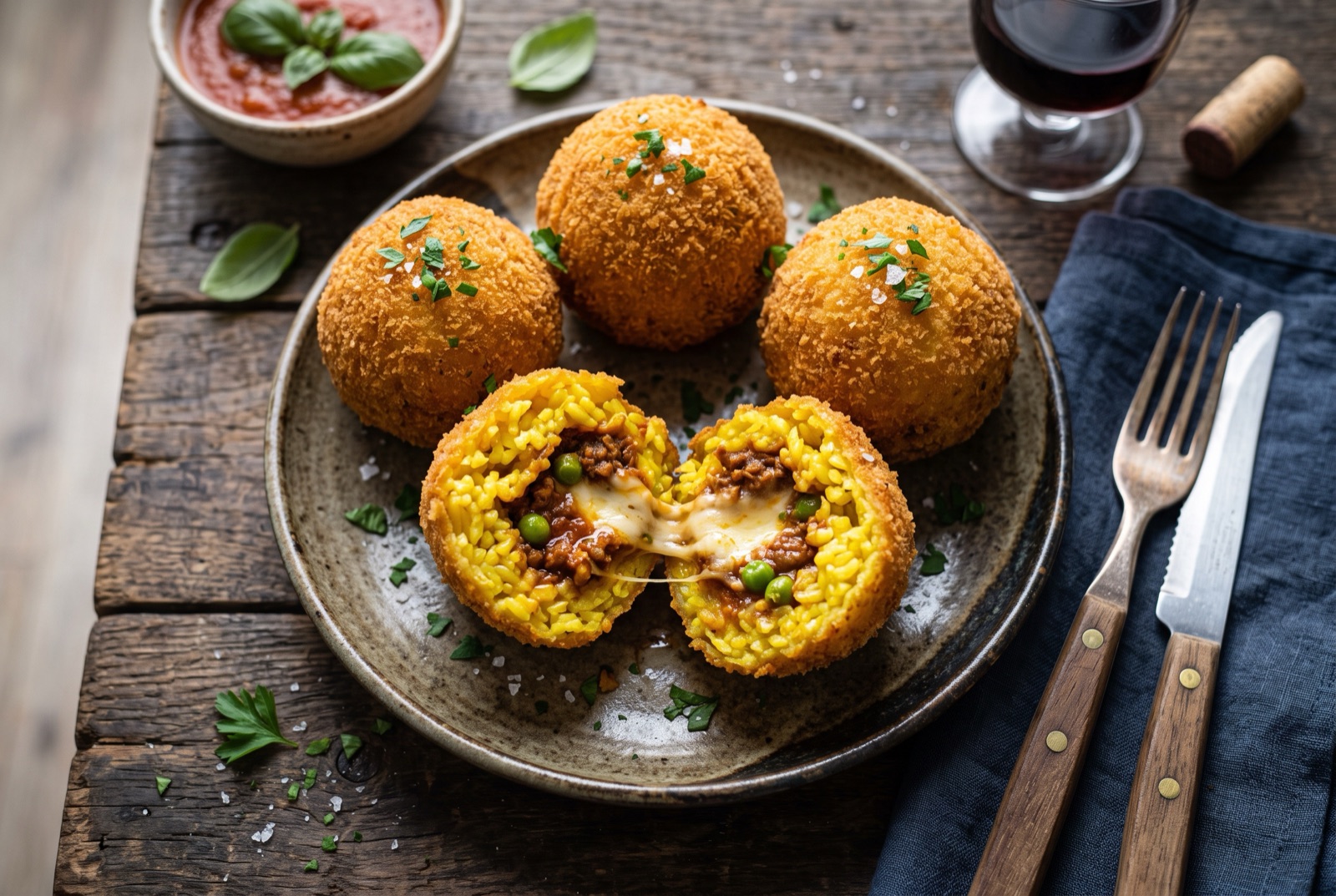
Italy has 9 more dishes in the atlas — Arancini and Classic Tiramisu, and 7 more.
Recipe by The DishRoute Kitchen · published August 18, 2026 · updated August 18, 2026