Tej.
Ethiopian Honey Wine Fermented with Gesho
ጠጅ · ṭejj · say it: TEDGE
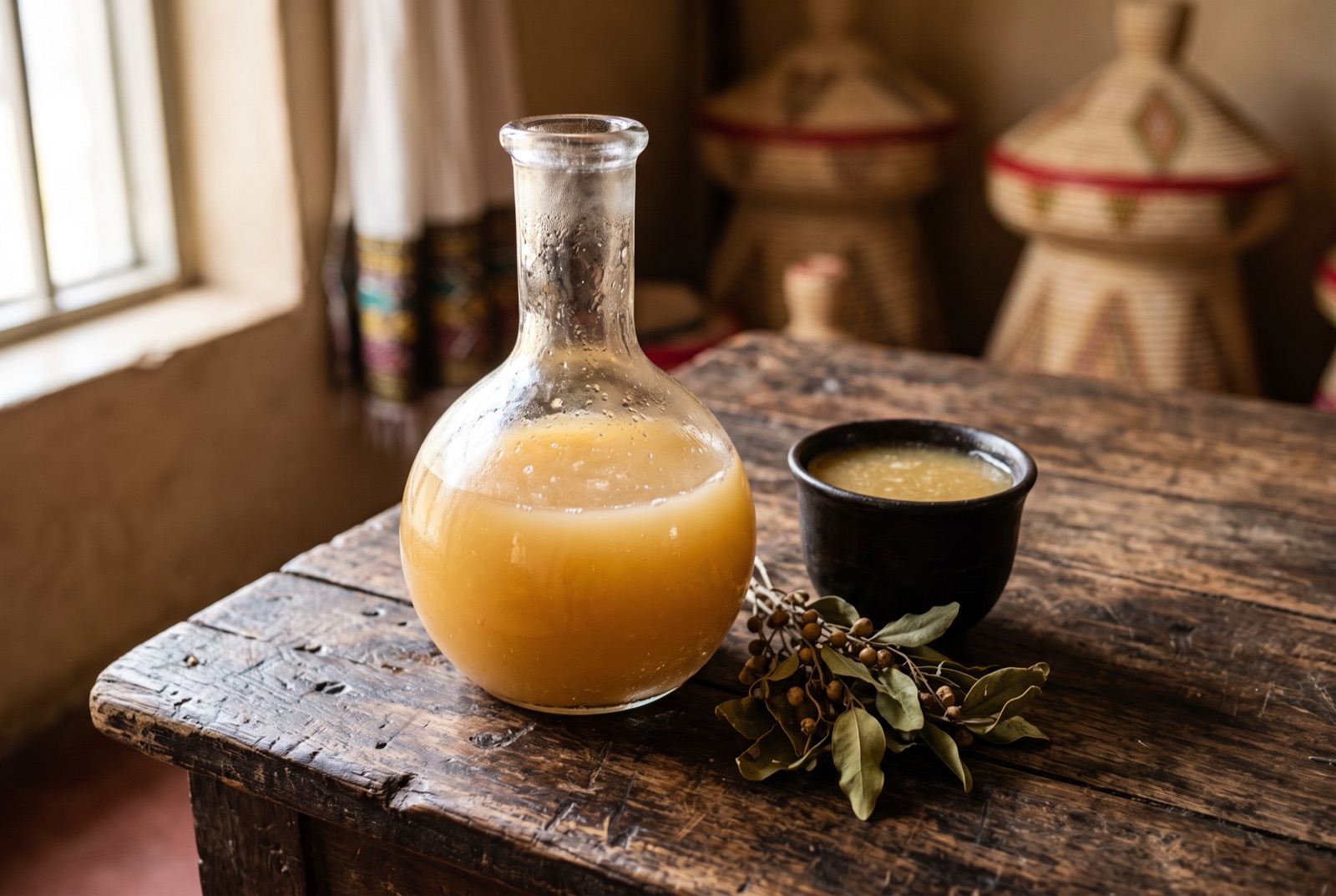
Tej is Ethiopian honey wine: nothing but honey, water and gesho, the dried stems and leaves of Rhamnus prinoides, left to ferment for a couple of weeks until it turns cloudy, gently fizzy and unmistakably alcoholic. It pours the colour of raw honey held up to a lamp and tastes sweeter than you expect on the first sip, then dries out sharply as the gesho bitterness arrives, the way hops close a beer. Strength depends entirely on how long you leave it, which is why one glass can be soft and juice-like and the next batch will quietly flatten you. It is drunk from a berele, a round-bottomed glass flask you cannot put down until it is empty.

- Gate
- Ethiopia
- Prep
- 30 min
- Cook
- 10 min
- Total time
- 336 hr 40 min incl. 336 hr rest
- Serves
- 12
- Status
- Medium
- Nutrition / serving · estimated
- Calories 210 kcal
- Protein 0 g
- Carbs 32 g
- Fat 0 g
- Sugar 31 g
- Sodium 5 mg
Why this recipe works.
- Gives honey-to-water ratios that land in the traditional range instead of turning into modern high-alcohol mead.
- Adds the gesho after the ferment has visibly started, which is how the bitterness ends up balanced rather than harsh.
- Describes what active fermentation looks, smells and sounds like, since there is no yeast packet to reassure you.
- Explains how to stop at the sweetness you want, including the near-alcohol-free berz version.
Ingredients.
5 itemsFor the must
For the ferment
To finish
Equipment
- 4 litre glass jar or food-grade fermenting vessel
- Clean cloth and string, or an airlock
- Long-handled spoon
- Sieve and bottles
Instructions.
Mix the must
Warm about a litre of the water to body temperature, whisk in the honey until no strands sink to the bottom, then pour it into your jar with the remaining cold water. Rinse the honey jar with a little water so nothing is wasted.
Tip Test the temperature on your wrist — if it feels hot rather than neutral, wait. Heat drives off the honey aroma.
Cover and wait for the start
Cover the jar with a cloth tied at the neck and leave it at 20 to 24°C, out of direct sunlight. Stir vigorously with a clean spoon twice a day. Within one to three days it should foam at the surface and hiss faintly when the jar is disturbed.
Tip If nothing is happening on day four, stir in the optional wine yeast rather than waiting hopefully.
Add the gesho
Once fermentation is clearly active, rinse the dried gesho under cold water and push the stems down into the liquid. Cover again and keep stirring daily for the next four days, at which point the aroma should carry a distinct bitter, green note under the honey.
Ferment out
Move the jar somewhere undisturbed, fit a loose lid or an airlock, and let it work for 10 to 14 more days. The liquid gradually clears from the top down, a pale sediment builds on the base, and the bubbling slows from a steady stream to the occasional lazy rise.
Taste and decide when to stop
From day ten, draw a spoonful every couple of days. Stop when the balance is where you want it: sweet and juice-like early, dry and noticeably stronger later. Bear in mind that the sweetness falls away faster than the alcohol becomes obvious.
Tip Write the date on the jar. Two batches into this hobby you will want to know which timing gave you the glass you liked.
Strain and bottle
Lift out the gesho and strain the tej through a sieve into bottles, leaving the sediment behind in the last centimetre of the jar. If you want it sweeter, dissolve the extra honey in a little warm tej and stir it back in before bottling.
Chill and serve
Refrigerate at least overnight, which halts the ferment and settles the last of the haze. Serve cool in berele flasks or small tumblers, poured gently so the sediment stays in the bottle.
Tips from our kitchen.
- Use raw or minimally processed honey. Pasteurised supermarket honey ferments perfectly well but carries far less wild yeast, so the start can take days longer.
- Warm the water to blood temperature to dissolve the honey, never hot. Boiling drives off the aromatics that make tej taste of honey rather than of alcohol.
- Leave a third of your jar empty. Tej foams high in the first week and a full vessel will push its lid off and run down the shelf.
- Cover with cloth for the first week so carbon dioxide escapes, then switch to a loose lid or an airlock once the vigorous bubbling calms.
- Taste every couple of days from day ten. Sweetness falls fast at the end and the difference between a sweet tej and a dry one is about 48 hours.
- Keep the jar somewhere steady around 20 to 24°C. A cold room stalls the ferment entirely and a hot one gives sour, solvent flavours.
Substitutions.
- Dried gesho → 3 g whole dried hops, added for the same stage
- Honest answer: this is not tej, it is hopped mead. Hops give bitterness but a completely different aroma. Ethiopian and Eritrean grocers and several online spice sellers stock gesho, and it keeps for years dry.
- Wild fermentation → 3 g champagne or ale yeast, sprinkled in after 24 hours
- Far more reliable and much faster, at the cost of the variability that gives traditional tej its character. Worth using if a previous batch failed to start or you are working in a cold kitchen.
- Mixed-flower honey → Any single-flower honey you like the taste of
- The honey is most of the flavour, so use one you would happily eat. Very dark honeys such as buckwheat overpower the gesho and taste medicinal.
Variations.
- Berz
- The same must strained and drunk after two or three days, while it is still sweet and barely fermented. Cloudy, honey-forward and essentially non-alcoholic — made for children and for fasting periods.
- Dry tej
- Let the ferment run three to four weeks and rack it off the sediment once. Sharper, stronger and much closer to what most tej bet actually serve.
- Spiced tej
- Some households add a few crushed seeds of korarima (Ethiopian cardamom) or a strip of orange peel with the gesho, giving a perfumed lift over the honey.
Storage & reheating.
Once the tej tastes the way you want it, strain out the gesho, bottle it and refrigerate. Cold slows the ferment to a crawl, so a bottle holds its sweetness for around two weeks before drifting drier. Use bottles that can take pressure, or leave the caps slightly loose for the first day, because residual yeast keeps producing gas and sealed bottles of young tej can burst. The cloudiness is normal and settles into a soft sediment; pour gently and leave the last centimetre in the bottle. Tej does not improve with long ageing in the way grape wine does.
Serve with
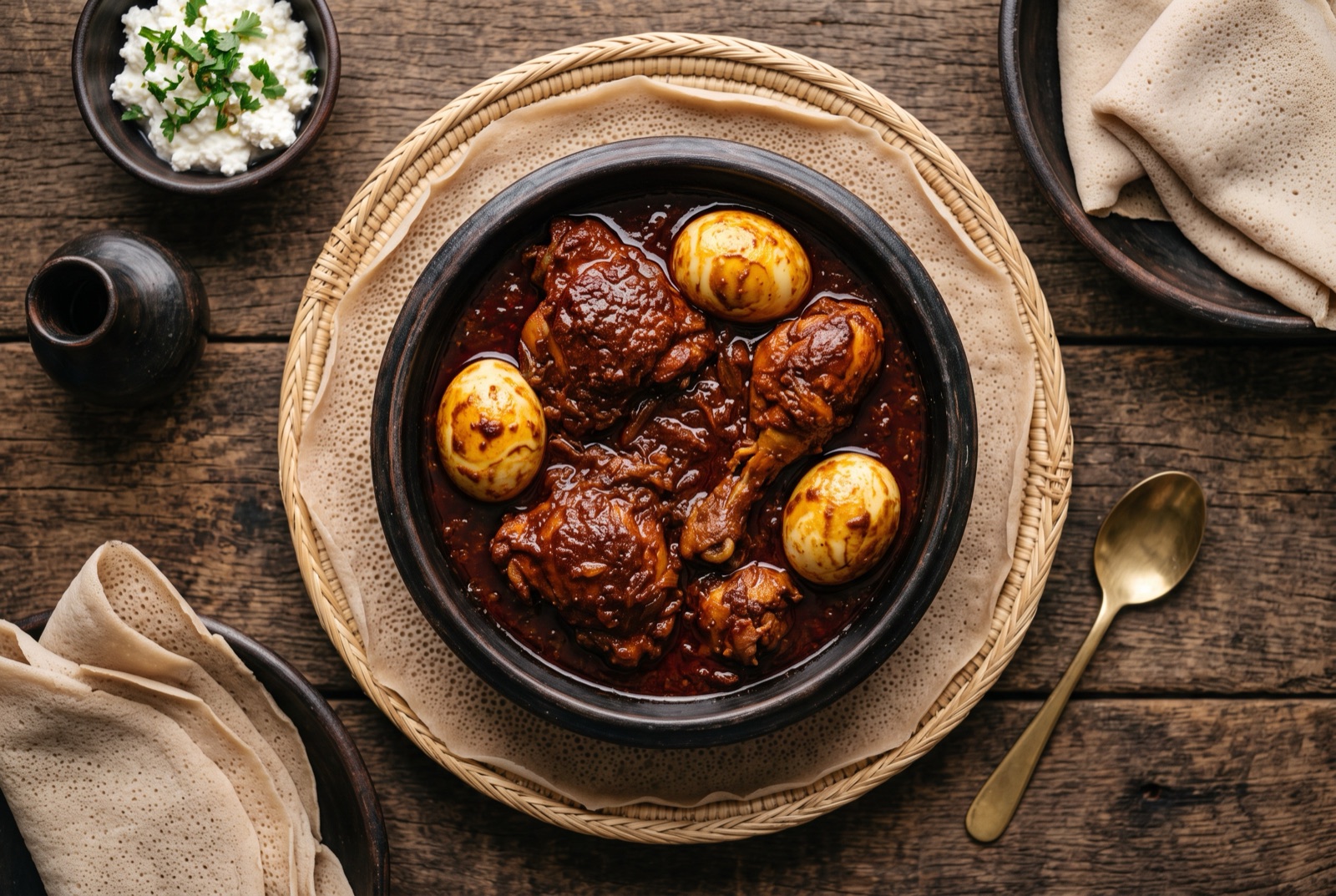
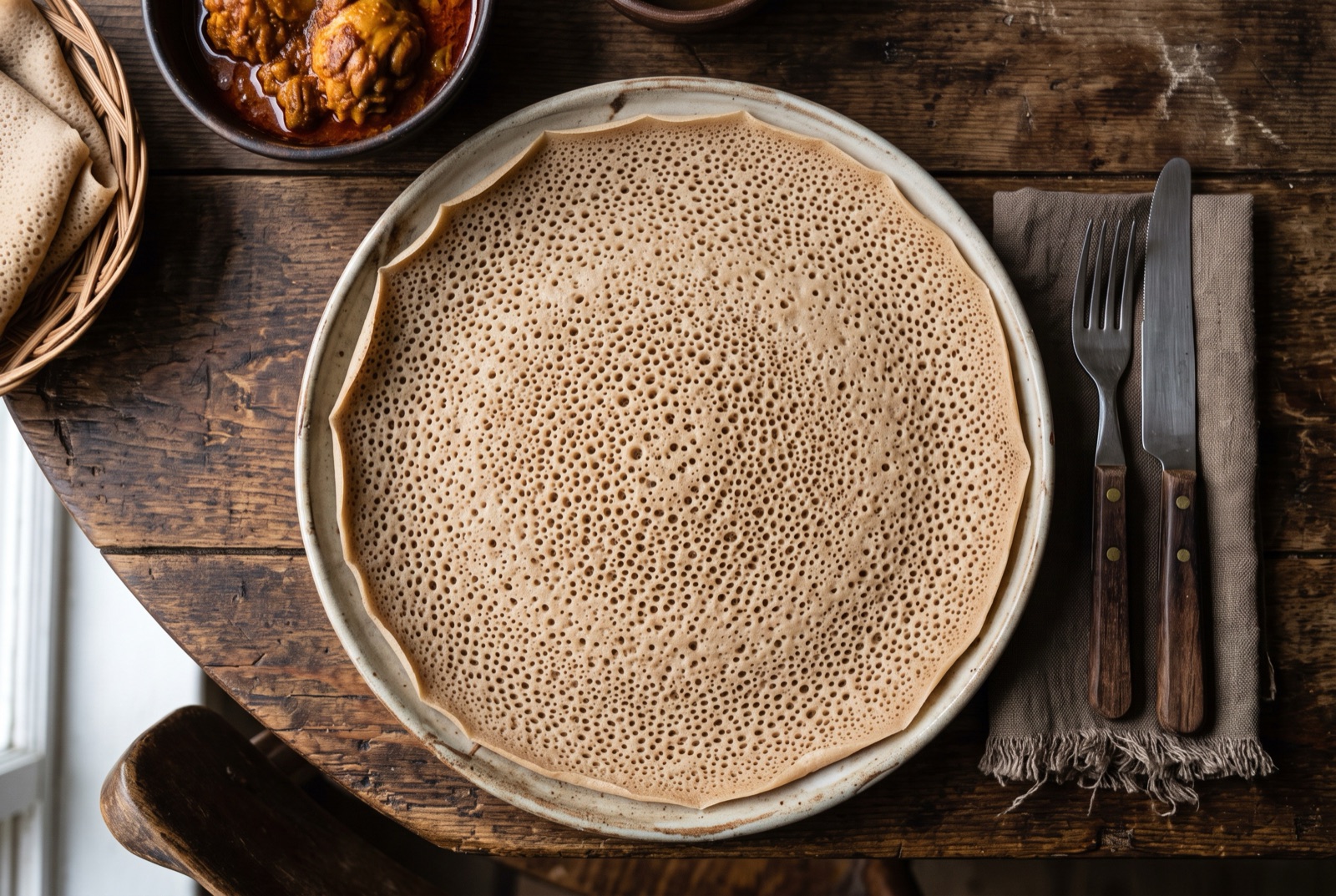
Doro wat and injera — the sweetness is exactly what berbere heat asks for.
The story behind Tej.
Honey wine is old in the Ethiopian highlands, where beekeeping has been practised for a very long time and honey was historically both currency and tribute. Tej belonged first to courts and clergy — a drink of status served at feasts, weddings and religious holidays — and it later spread into commercial tej bet, the tej houses that still operate across Addis Ababa and provincial towns, recognisable by a bottle or a tin can hung above the door as a sign. Inside, the wine arrives in berele flasks, the food is spicy, and the tej is measured by the house rather than by any label.
Gesho is what separates tej from mead made anywhere else. The dried twigs and leaves of the shiny-leaf buckthorn are the Ethiopian equivalent of hops: bitter, mildly antimicrobial, and responsible for the resinous finish that keeps the honey from cloying. The same plant flavours tella, the everyday barley-and-maize beer, and its supply is a small agricultural business of its own. Fermentation is spontaneous — no packet of yeast is added — so what actually ferments a traditional batch is wild yeast from the honey, the gesho and the vessel, which is also why the character of tej varies noticeably from house to house and from season to season.
Strength is the running joke and the genuine warning. Tej served young and sweet drinks like honeyed lemonade and is dangerously easy to keep ordering; the same batch three weeks later is dry, strong and closer to a serious wine. A lightly fermented, essentially non-alcoholic version called berz is made for children, guests who abstain, and the fasting periods of the Orthodox calendar. Recipes vary by region and by household, and any Ethiopian will tell you that homemade tej and tej bet tej are two different drinks — the home version sweeter, cloudier and made to whatever taste the family keeps.
Questions, answered.
What is gesho and do I need it?
Gesho is the dried leaves and twigs of Rhamnus prinoides, the shiny-leaf buckthorn, used in Ethiopia as a bittering and preserving agent much as hops are used in beer. It gives tej its dry, faintly resinous finish and stops the honey tasting cloying. Without it you have a plain mead rather than tej, though hops make a reasonable stand-in for bitterness alone.
How strong is tej?
It varies enormously, which is the main thing to know before drinking it. Young, sweet tej served after a week can be around 3 to 5 percent alcohol, while a batch fermented three or four weeks commonly reaches 8 to 12 percent — comparable to wine, but it does not taste like it. Ethiopians warn visitors about this for good reason.
How do I know fermentation has started?
Within one to three days the surface develops a fine foam, small bubbles rise steadily when you disturb the jar, and it smells yeasty and slightly sharp rather than purely of honey. Bring your ear to the jar in a quiet room and you should hear faint crackling. If nothing has happened after four days, the room is too cold or the honey was heavily processed — move the jar somewhere warmer or add a pinch of wine yeast.
Can I make a non-alcoholic version?
Yes. Berz is the traditional answer: strain and refrigerate the must after two or three days, while it is still sweet and has produced only a trace of alcohol. It will not be entirely alcohol-free, since fermentation has begun, but it is close and it is what Ethiopian households serve to children and to guests who do not drink.
Why is my tej sour or vinegary?
Sourness means acetic bacteria have taken hold, usually because the jar was too warm, left open too long, or the surface was exposed to air after the vigorous phase ended. Keep the vessel loosely covered rather than wide open, hold the room between 20 and 24°C, and once the foaming settles switch to an airlock or a loose lid so less oxygen reaches the surface. A batch that already tastes of vinegar cannot be rescued.
You might also like.
All recipes →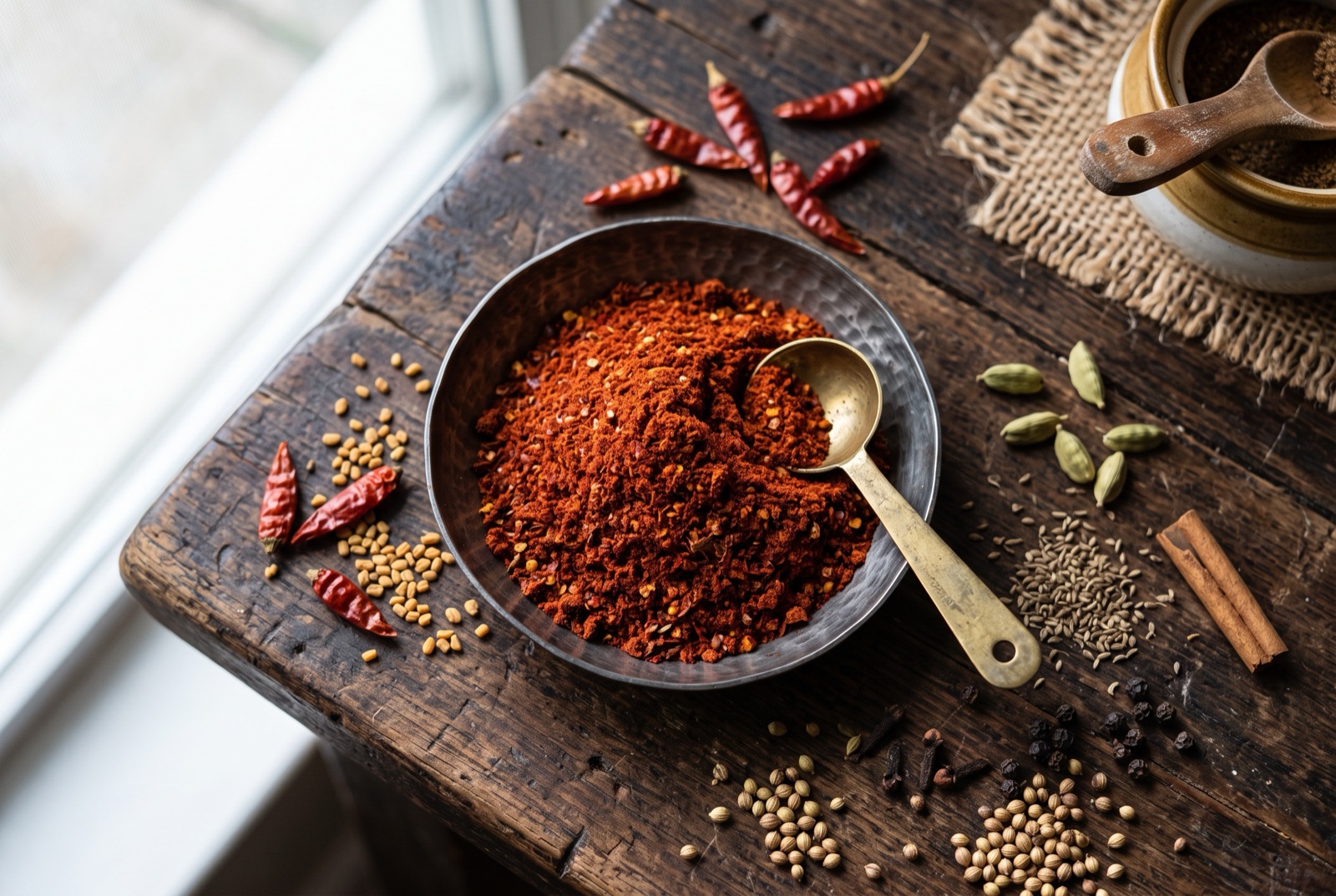
Keep exploring Ethiopia.
Ethiopia has 9 more dishes in the atlas — Berbere and Doro Wat, and 7 more.
Recipe by The DishRoute Kitchen · published August 20, 2026 · updated August 20, 2026