Doro Wat.
Ethiopian Berbere Chicken Stew
ዶሮ ወጥ · Doro wet · say it: DOH-roh WUHT
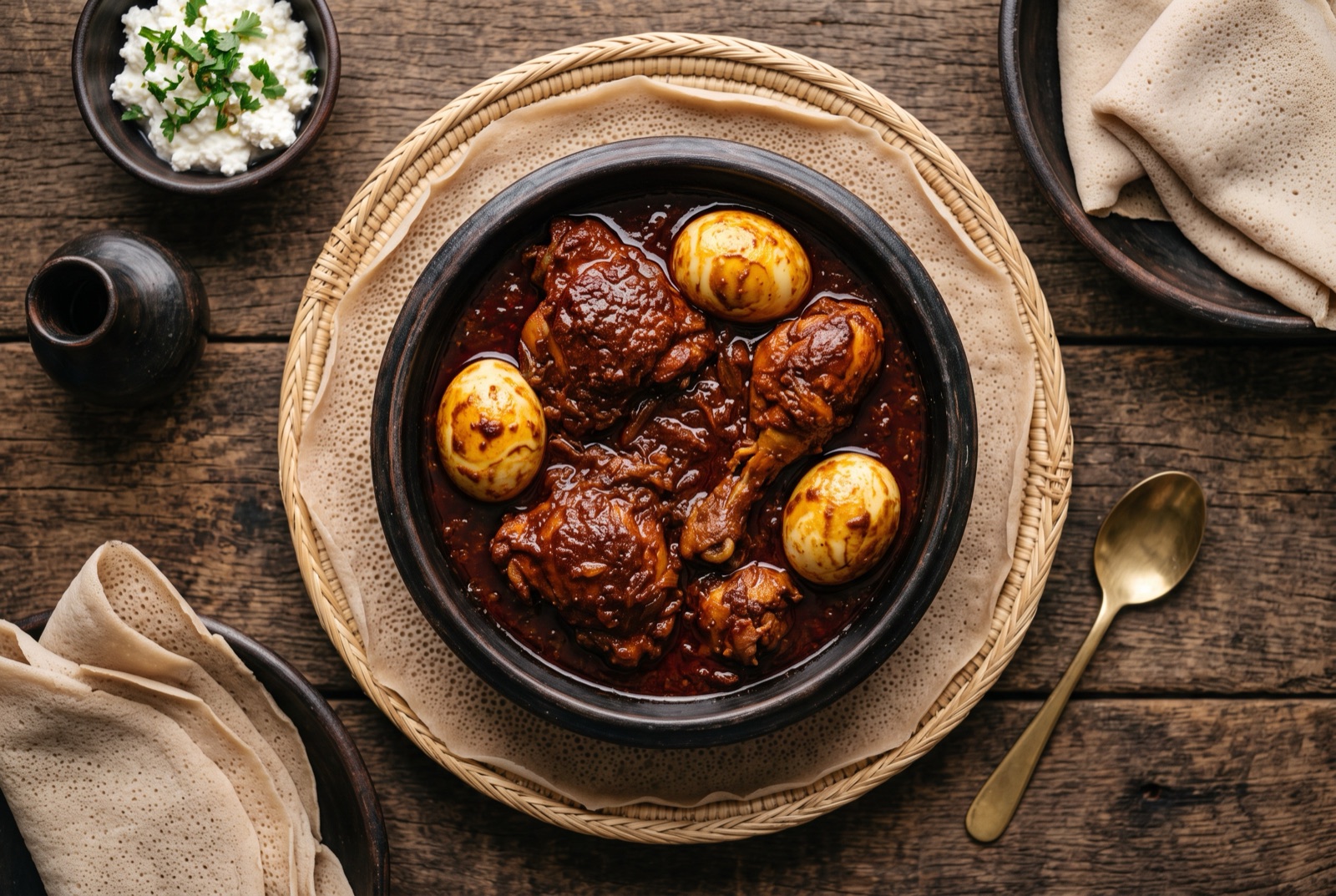
Doro wat is a slow chicken stew whose real main ingredient is onion — an enormous quantity of it, chopped fine and cooked down in a dry pan long before any fat appears, until it turns into a sweet brown paste. Berbere and niter kibbeh go in next, and the stew simmers until the sauce is thick enough to hold a spoon upright and dark red oil pools at the edges. The taste is deep and layered rather than simply hot: chilli warmth underneath, fenugreek and cardamom above it, and a background sweetness from the onions that keeps everything in balance. Chicken pieces and whole hard-boiled eggs, scored so the sauce gets in, finish it. This is celebration food, and it is what breaks the fifty-five-day Lenten fast.

- Gate
- Ethiopia
- Prep
- 40 min
- Cook
- 2 hr 30 min
- Total time
- 3 hr 10 min
- Serves
- 6
- Status
- Medium
- Nutrition / serving · estimated
- Calories 620 kcal
- Protein 44 g
- Carbs 22 g
- Fat 40 g
- Fiber 5 g
- Sodium 890 mg
Why this recipe works.
- Keeps the long dry-onion stage that separates real doro wat from a quick berbere chicken curry.
- Berbere is bloomed in the spiced butter and cooked out properly, so no raw chilli-powder taste survives.
- The eggs are scored before they go in, which is why they take on colour and seasoning instead of staying bland.
- Includes a workable niter kibbeh recipe rather than telling you to buy a jar of it.
Ingredients.
17 itemsFor the niter kibbeh
For the stew
Equipment
- Large heavy pot or Dutch oven
- Sharp knife for the onions
- Wooden spoon
- Small saucepan for the niter kibbeh
Instructions.
Make the niter kibbeh
Melt the butter in a small saucepan over the lowest heat with the chopped onion, crushed garlic, sliced ginger, fenugreek, cardamom, turmeric and oregano. Let it bubble very gently for 25 minutes without browning, until the milk solids sink and the fat above them turns clear gold and smells strongly of spice. Strain into a jar.
Tip If it starts to sizzle audibly, the heat is too high — you want lazy bubbles at the edge and nothing more.
Season the chicken
Rub 1.5 kg of chicken pieces with the lemon juice and a generous teaspoon of salt, and set aside while the onions cook. Removing the skin matters here: it will not crisp in a stew and leaves the sauce greasy.
Cook the onions dry
Put the chopped onions into a large heavy pot with no fat and no water. Cook over medium-low heat, stirring every few minutes, for 45–50 minutes, until they have released and reboiled off all their liquid, collapsed to about a third of their volume and turned a soft golden brown that smells sweet rather than sharp.
Tip They will look alarmingly dry around the 20-minute mark. Lower the heat, keep stirring, and they come back together.
Add the spiced butter and berbere
Stir in 120 g of the niter kibbeh and let it melt into the onions, then add the garlic and ginger and cook for 2 minutes until fragrant. Add two thirds of the berbere and fry it in the fat for 5–6 minutes, stirring constantly, until the paste darkens to brick red and the raw, dusty smell of the spice is gone.
Tip Berbere burns quickly at this stage. If the pot looks dry, add a spoonful of water rather than more heat.
Build the sauce
Pour in the water or stock a little at a time, stirring each addition in until smooth. Simmer uncovered for 20 minutes so the sauce thickens and the flavours settle, then taste and add the remaining berbere and salt as needed.
Simmer the chicken
Slide the chicken pieces into the sauce, spooning it over to coat, and cook covered over low heat for 35–40 minutes, turning once. It is ready when the meat pulls easily from the bone and red oil has risen and pooled around the edge of the pot.
Add the eggs and rest
Cut three or four shallow slits into each peeled egg and settle them into the sauce. Cook uncovered for a final 10 minutes so they take on colour, then turn off the heat and let the pot stand for 10 minutes before serving over injera.
Tips from our kitchen.
- Chop the onions by hand as finely as you can bear. A food processor releases too much water and turns them to slush, which then steams instead of caramelising.
- Nothing goes into the pot before the onions except the onions. No oil, no water, no salt — the dry stage is what builds the body of the sauce.
- Berbere brands vary enormously in salt and heat. Start with two thirds of the quantity given, taste after it has fried for a few minutes, and add the rest if the sauce can carry it.
- Use bone-in thighs and drumsticks. Breast meat dries out and shreds long before the sauce has finished thickening.
- The stew is finished when a spoon dragged across the bottom leaves a channel that fills back slowly and red oil sits on the surface. Under that point, keep going.
- Made a day ahead it is measurably better — the chilli settles and the onion sweetness comes forward. Reheat gently and add the eggs only when serving.
Substitutions.
- Niter kibbeh → Plain clarified butter or ghee, plus an extra ½ tsp each of ground cardamom and fenugreek added with the berbere
- You lose the wild-herb note from koseret and besobela, which is real but not fatal. Ethiopian and Eritrean grocers sell niter kibbeh in jars, and it keeps for months.
- Berbere → Homemade berbere from the blend recipe in this atlas
- Supermarket berbere is often heavy on paprika and salt and light on the aromatic spices. If yours tastes flat, grinding your own makes more difference here than in any other dish.
- Tej for deglazing → Dry white wine, or simply water
- Some cooks splash in tej or dry wine as the onions finish; plenty use only water. Water is the safe default and nothing is lost that you will notice.
Variations.
- Alicha doro
- The mild version: no berbere at all, with turmeric, ginger and slit green chillies instead. Pale gold rather than red, and what is cooked for children and anyone avoiding heat.
- Sega wat
- The same onion-and-berbere base built with cubed beef instead of chicken, simmered until the meat gives. Common at gatherings where two wats are served side by side.
- Doro alicha firfir
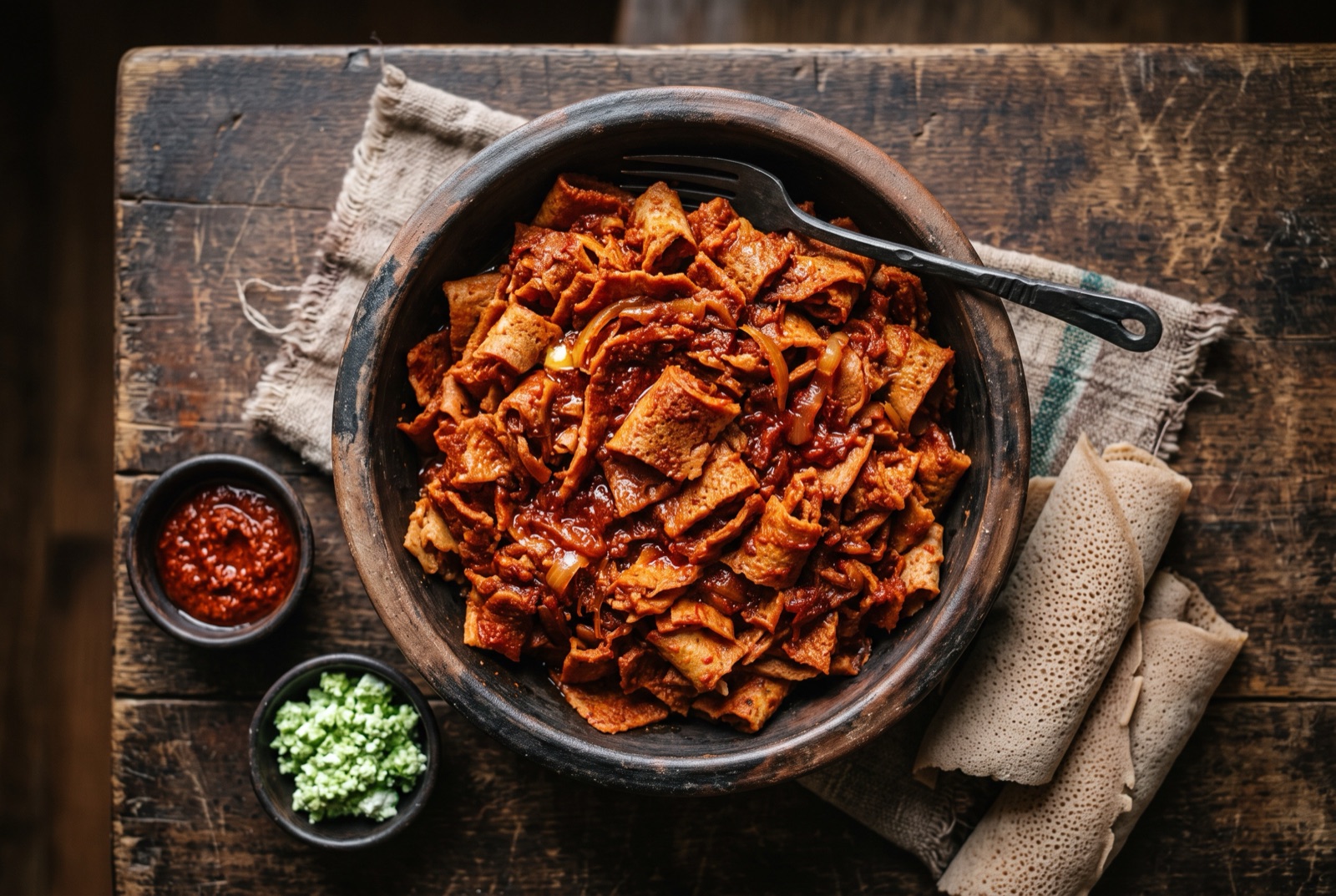
- Leftover doro wat torn together with injera the next morning, so the bread soaks up every trace of sauce. A breakfast that exists specifically because doro wat is made in quantity.
Storage & reheating.
Doro wat keeps 4 days refrigerated and improves for the first two of them. Store the eggs in the sauce or separately — either works, though eggs left in take on more colour. Reheat over low heat with a splash of water, stirring, until it steams; a hard boil breaks the emulsion and the butter separates out unpleasantly. It freezes well for 3 months without the eggs, which turn rubbery once frozen — boil fresh ones when you reheat. Thaw overnight in the fridge before warming.
Serve with
Injera, with ayib or fresh curd cheese on the side and a mild vegetable dish such as gomen to cool the heat.
The story behind Doro Wat.
In the Ethiopian Orthodox Tewahedo calendar, the Great Fast before Easter runs fifty-five days with no meat, no dairy and no eggs. Doro wat is what appears on the table when it ends. The same stew is cooked for Genna at Christmas, for weddings, and for guests a household wants to honour, which means most Ethiopians associate its smell with a specific kind of day rather than with dinner generally.
The cooking method is unusually demanding for a home dish, and deliberately so. The onions — traditionally chopped by hand into a very fine dice, never blitzed — go into a dry pot with no oil at all and are stirred over low heat for the better part of an hour, until their water has driven off and they have gone soft, sweet and golden-brown. Only then does the niter kibbeh melt in, followed by berbere, which is fried in that fat until it loses its raw, dusty edge. Skipping or shortening the dry-onion stage is the single most common way the dish goes wrong: the sauce ends up thin, sharp and tasting of raw spice, because the sweetness that was supposed to counterweight the chilli never developed.
The chicken is traditionally butchered into twelve pieces, a division with symbolic weight in Ethiopian custom, and rubbed with lemon and salt before it goes in. The eggs are boiled separately, peeled, and slashed a few times with a knife so the sauce penetrates rather than sliding off the shell-smooth white; they arrive at the table half-stained red. Alongside comes ayib, a mild fresh cheese whose coolness cuts the heat, and the whole thing is served over injera with more injera rolled up on the side. The generosity of the dish is the point — nobody makes doro wat for two people.
Questions, answered.
Why do the onions go into a dry pot with no oil?
Cooking onions dry drives off their water and concentrates their sugars before any fat is involved, which produces a thick, sweet base that later carries the chilli. If you start with oil, the onions fry rather than collapse, they hold their shape and their water, and the finished sauce stays thin and tastes sharp. The dry stage takes 40 minutes or more and is not optional in any traditional version.
How hot is doro wat supposed to be?
Genuinely hot, but built on aroma rather than raw burn. Berbere carries fenugreek, korarima, ajwain, ginger and a dozen other spices alongside the chilli, so a well-made doro wat tastes complex first and fiery second. Home versions vary widely by family, and reducing the berbere by a third gives a stew that is still recognisably itself.
What is niter kibbeh and do I have to use it?
Niter kibbeh is butter simmered gently with onion, garlic, ginger and Ethiopian aromatics — korarima, koseret, besobela, fenugreek — then strained, which leaves a clarified, deeply perfumed cooking fat. It is what gives Ethiopian stews their particular smell. Plain ghee with extra cardamom and fenugreek stirred in is a serviceable stand-in, and the stew will still be good, just less specifically Ethiopian.
Why are the eggs slashed before going into the stew?
A peeled hard-boiled egg has a smooth, sealed surface that sauce slides straight off. Cutting three or four shallow slits into each one lets the berbere sauce work into the white, so the eggs come out stained red and seasoned all the way through instead of tasting like plain boiled eggs sitting in a stew.
Can I make doro wat with chicken breast?
It is not recommended. The sauce needs 30 to 40 minutes of simmering to thicken and for the chicken to give up its flavour, and breast meat is dry and stringy long before that. Bone-in thighs and drumsticks stay moist through the whole cook and the bones add body to the sauce. If breast is all you have, add it in the final 15 minutes only.
You might also like.
All recipes →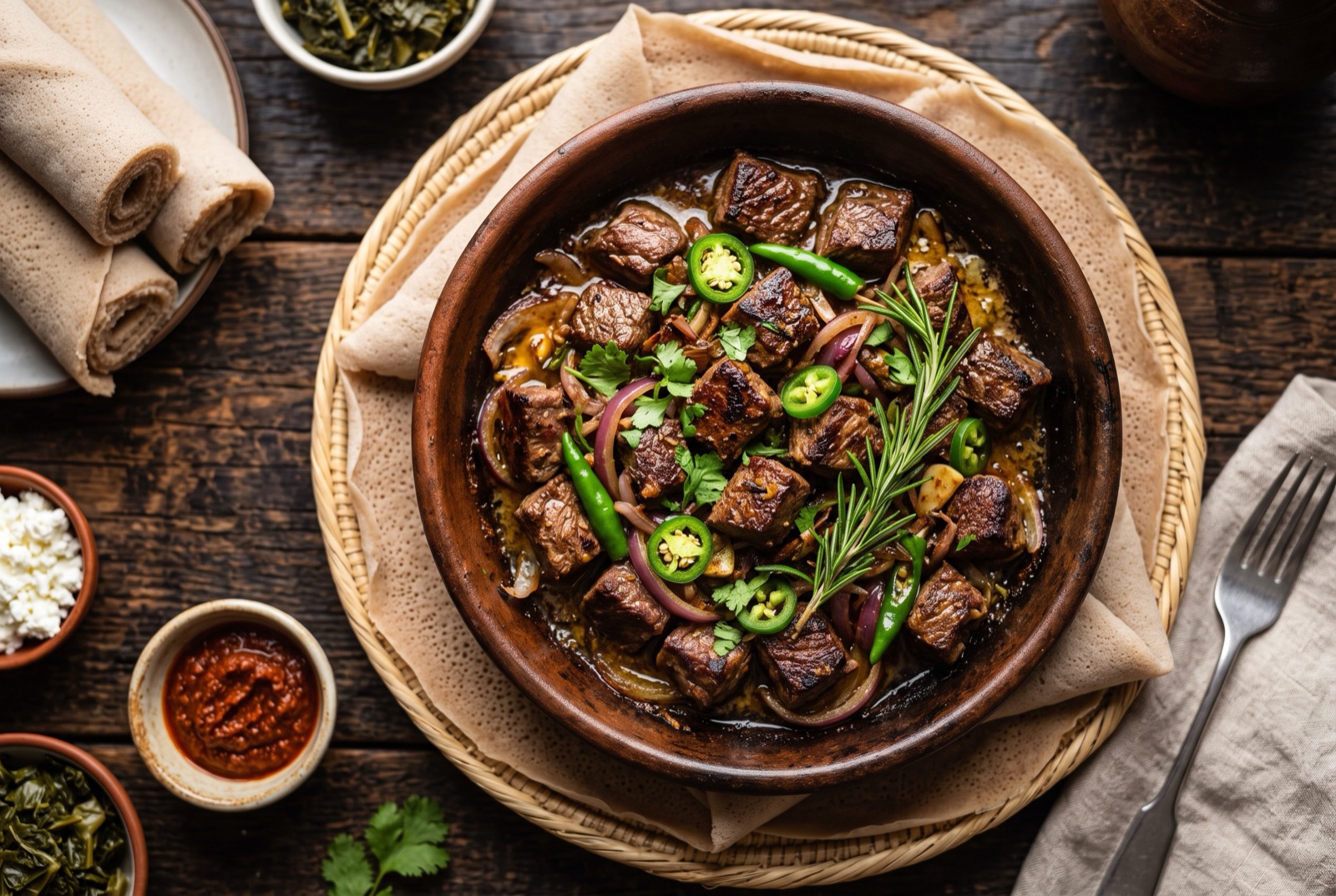
Keep exploring Ethiopia.
Ethiopia has 9 more dishes in the atlas — Berbere and Firfir, and 7 more.
Recipe by The DishRoute Kitchen · published August 20, 2026 · updated August 20, 2026