Begova Čorba.
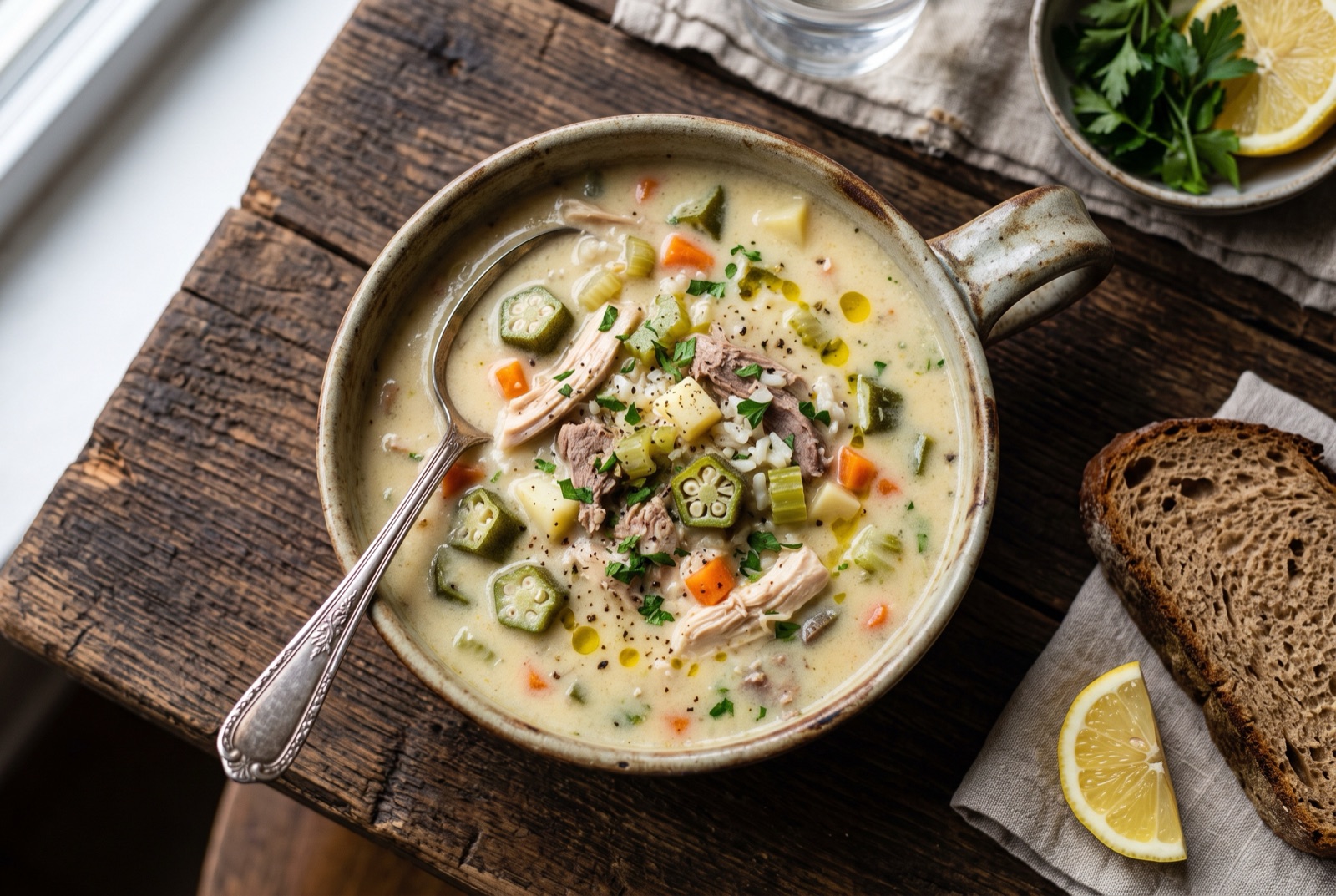
Bosnian Bey's Chicken and Okra Soup
Begova čorba · say it: BEH-go-va CHOR-ba
Begova čorba is a thick, pale, gently sour soup of shredded chicken and veal, root vegetables, rice and okra, finished with an egg-yolk and cream liaison that turns the broth velvety without making it heavy. The name means "the bey's soup", and it eats like something built for a household that could afford both meats at once: mild, rich and deeply savoury, with the okra dissolving just enough to give the broth a soft body and lemon juice at the end cutting cleanly through the cream. It is the standard opening course of a formal Bosnian meal and the first thing served at iftar tables through Ramadan. Nothing about it is spicy, and that is deliberate — this is a soup that gets its interest from texture and from the last-minute squeeze of lemon.

- Gate
- Bosnia and HerzegovinaSarajevo
- Prep
- 25 min
- Cook
- 1 hr 20 min
- Total time
- 1 hr 45 min
- Serves
- 6
- Status
- Easy
- Nutrition / serving · estimated
- Calories 340 kcal
- Protein 28 g
- Carbs 18 g
- Fat 17 g
- Fiber 3 g
- Sodium 820 mg
Why this recipe works.
- Meat poached first to build the broth, then shredded back in, so the soup tastes of chicken and veal rather than of stock powder.
- A tempering method for the egg and cream liaison that reliably avoids curdling, explained by what you should see in the bowl.
- Okra handled with acid so it thickens the broth without turning it slippery.
- Balanced for a first course: rich enough to matter, light enough that dinner still happens afterwards.
Ingredients.
16 itemsFor the broth
For the soup
For the roux
To finish
Equipment
- Large soup pot
- Fine sieve or skimmer
- Whisk
- Ladle
Instructions.
Poach the meats
Put the chicken and veal in a large pot with the cold water and bring slowly to a bare simmer. Skim off the grey foam as it rises for the first 10 minutes, until the surface stays clear, then add the salt and the tied parsley stalks.
Tip Start in cold water, not boiling. It draws more flavour out of the meat and gives you a cleaner broth.
Simmer with the roots
Add the carrot, celeriac and onion and simmer gently, uncovered, for 45 minutes, until the veal gives easily to a fork and the chicken pulls away from the bone. Lift the meat out onto a board and discard the parsley stalks.
Cook the rice and okra
Toss the okra with a spoonful of the lemon juice, then add it to the pot with the rinsed rice and simmer for 15 minutes, until the rice is tender and the okra has softened enough to give slightly under the back of a spoon.
Shred the meat back in
Pull the chicken off the bones and shred it along with the veal into short strands rather than cubes, discarding skin, bone and gristle, and return it all to the pot.
Thicken with a blond roux
Melt the butter in a small pan, stir in the flour and cook over medium heat for 2 minutes, until it smells toasted and looks like wet sand but has not taken on colour. Whisk in a ladle of hot broth until smooth, then stir the mixture into the soup.
Temper the liaison
Whisk the egg yolks with the sour cream in a bowl, then add three ladles of hot broth one at a time, whisking hard after each, until the mixture is thin, warm and smooth. Take the pot off the heat before going any further.
Tip If the bowl feels hot to the back of your hand, it is tempered enough.
Finish off the heat
Stir the tempered liaison into the pot and keep stirring for a minute as the soup thickens to the consistency of single cream. Season with the remaining lemon juice, black pepper and more salt if needed, and serve hot without letting it boil again.
Tips from our kitchen.
- Poach the meat gently and skim the grey foam in the first ten minutes. Skipping this leaves a cloudy broth that no amount of cream will fix.
- Cut the okra into short lengths and toss it with a little lemon juice or vinegar before it goes in — this keeps its texture from taking over.
- Cook the flour roux until it smells toasted and nutty rather than raw and pasty, but keep it blond; browning it turns the soup grey.
- Temper the liaison with at least three ladles of hot broth, added one at a time while whisking, before it goes anywhere near the pot.
- Once the liaison is in, the soup must not boil again. Keep it below a simmer and stir until it thickens.
- Add the lemon juice at the very end and taste as you go — it should read as brightness, not as sourness.
Substitutions.
- Veal → More chicken, or a piece of beef shin
- An all-chicken version is common and lighter. Beef shin needs an extra 40 minutes of poaching, but gives a broth with more body than veal does.
- Fresh okra → Frozen okra, or dried okra soaked in warm water for an hour
- Frozen is the easiest option and works well. Dried okra is what Bosnian households actually keep through winter and gives a more concentrated, slightly smoky flavour.
- Sour cream → Heavy cream, or thick yoghurt whisked with a spoon of flour
- Heavy cream is milder and more stable. Yoghurt is sharper and splits more easily, so the flour helps it hold together off the heat.
Variations.
- Without okra
- Some Sarajevo households leave the okra out entirely, letting the root vegetables and rice carry the body. Purists disapprove, but it is widely made.
- With soup noodles
- Fine noodles replacing the rice, which gives a lighter soup that thickens less as it stands. More typical in northern Bosnia.
- Ramadan iftar version
- Made a little thicker and richer, with extra cream and a scattering of chopped parsley, since it is the first food after a full day of fasting.
Storage & reheating.
Keeps 2 days refrigerated and thickens noticeably as the rice swells — loosen it with a little water or stock when reheating. Warm it gently over low heat and never let it boil, since the egg-and-cream liaison will separate. It is best not to freeze it: the yolks curdle on thawing and the texture never fully recovers. If you want to get ahead, make the broth with meat, vegetables and rice a day early and add the liaison and lemon just before serving.
Serve with
Warm somun or any soft flatbread, and lemon wedges on the table so people can sharpen their own bowl.
The story behind Begova Čorba.
The soup carries its Ottoman origins in its name. A beg (bey) was a landowning notable of the Ottoman administration, and begova čorba is what the term implies: a dish from the top of the social ladder, using two kinds of meat, imported rice, cream and okra in a place and period where a village soup would have contained whatever the garden gave up that week. It belongs firmly to Sarajevo's urban Muslim tradition, and it survives today as celebration food rather than everyday food.
Okra is the ingredient that makes it recognisably Bosnian rather than Central European. Called bamija, it arrived in the Balkans through Ottoman trade and stayed, and Bosnia uses it more than any of its neighbours — dried strings of it hang in Sarajevo markets and are reconstituted through winter. In this soup it plays a structural role: as it softens, it releases just enough of its natural thickening to give the broth a rounded texture, which the flour roux and the cream then build on. Cooks who dislike its slipperiness cut it small and add lemon juice or vinegar, which tempers it considerably.
The last step is the one that separates a good pot from a broken one. A liaison of egg yolks and sour cream is whisked with hot broth, tempered slowly, and stirred back into the pot after it has come off the boil. Bring the soup back to a simmer afterwards and the yolks curdle into threads, which is not a disaster but is not what anyone is aiming for. Done properly the soup thickens to the consistency of single cream, tastes faintly of lemon, and is ladled out over pieces of chicken and veal that have been shredded rather than cubed — a detail that Bosnian cooks insist on, on the grounds that a spoon should never have to fight anything.
Questions, answered.
Why is it called the bey's soup?
A beg, or bey, was a landowning notable in the Ottoman administration, and the name signals that this was a wealthy household's soup — two kinds of meat, rice, cream and okra together, at a time when most soups were made from whatever was cheap and local. It is still treated as celebration food in Bosnia rather than an everyday pot.
My soup curdled when I added the egg and cream. What went wrong?
Either the liaison went into liquid that was too hot, or the soup was brought back to a boil afterwards. Whisk the yolks and cream together, then add three or four ladles of hot broth one at a time while whisking constantly so the mixture warms gradually. Take the pot off the heat before stirring it in, and keep the soup below a simmer from then on.
Can I make begova čorba without okra?
Yes, and plenty of households do — the soup still works, carried by the rice, root vegetables and the cream liaison. You lose the soft body that okra contributes as it breaks down, so consider a slightly heavier roux to compensate. Okra is the traditional ingredient and the one that marks the soup as Bosnian rather than generically Central European.
How do I stop okra going slimy?
Cut it into short pieces rather than slicing it into thin rounds, avoid stirring it aggressively once it is in the pot, and toss it with lemon juice or a splash of vinegar beforehand. Acid keeps the texture in check. In this soup a certain amount of that thickening quality is wanted anyway — it is part of how the broth gets its body.
Is this a starter or a main course?
Traditionally a first course, served before roast meat or a stuffed vegetable dish, and always the opening dish at iftar during Ramadan. It is substantial enough to eat as a light meal on its own with bread, but a Bosnian table would consider that an incomplete dinner.
You might also like.
All recipes →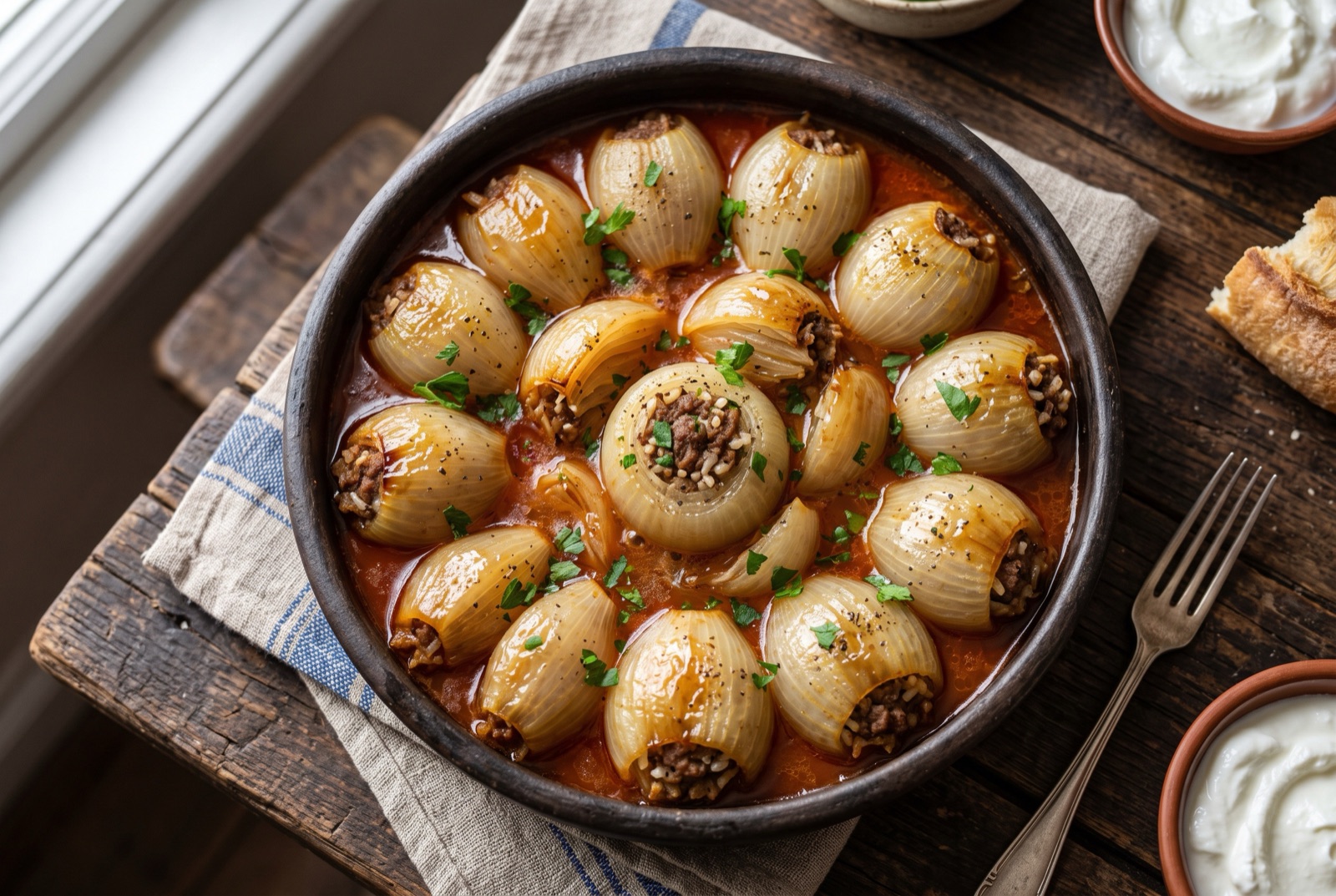
Bosnia and Herzegovina2 hr 15 min
Sogan-Dolma
Sarajevo Stuffed Onions in Tomato Broth
Bosnia and Herzegovina3 hr 45 min
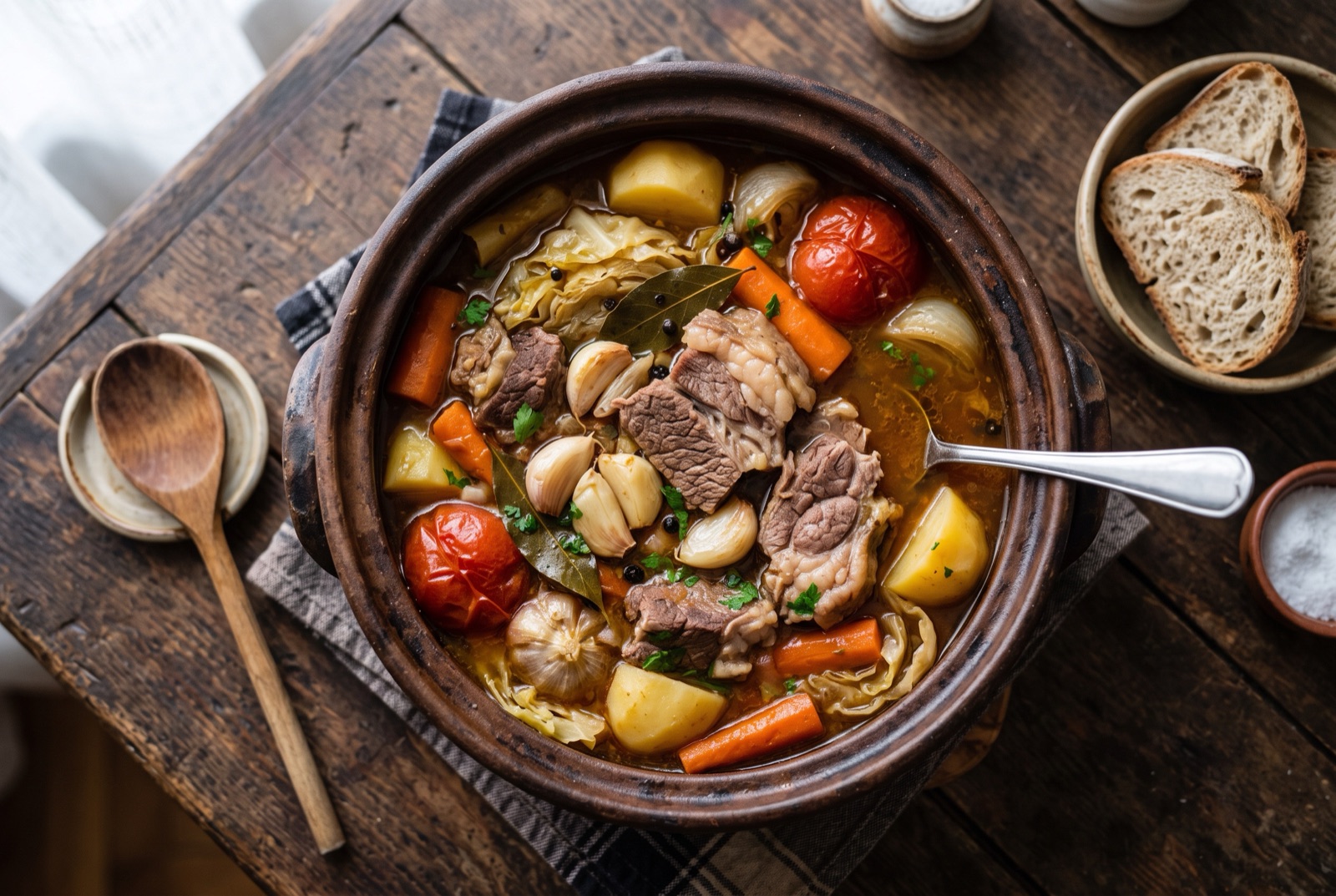
Bosanski Lonac
Layered Bosnian Meat and Vegetable Pot
Bosnia and Herzegovina2 hr 5 min
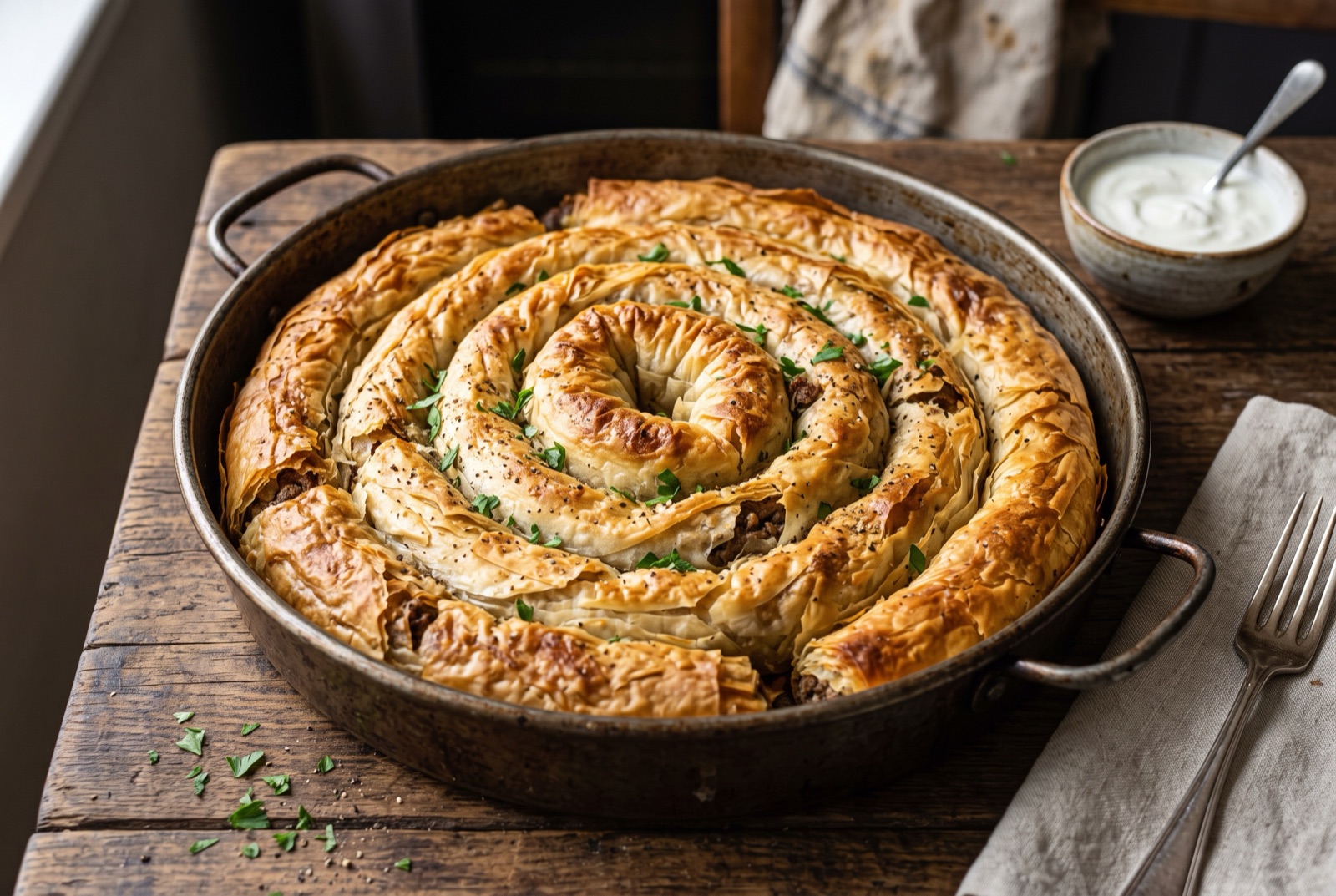
Burek
Bosnian Coiled Filo Pie with Minced Beef
Bosnia and Herzegovina4 hr 55 min
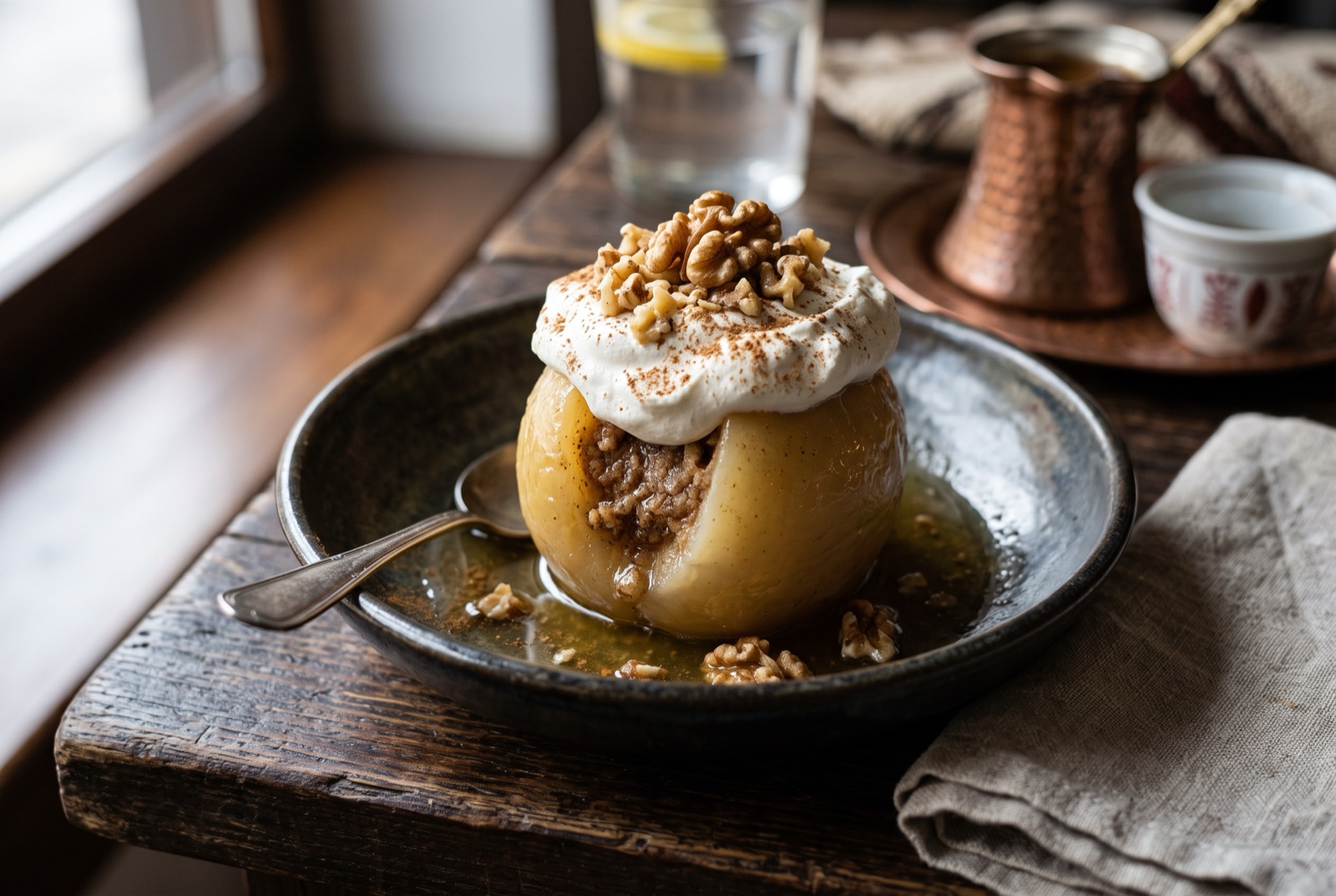
Tufahije
Bosnian Walnut-Stuffed Poached Apples
Keep exploring Bosnia and Herzegovina.
Bosnia and Herzegovina has 9 more dishes in the atlas — Bosanski Lonac and Burek, and 7 more.
Recipe by The DishRoute Kitchen · published August 20, 2026 · updated August 20, 2026