Burek.
Bosnian Coiled Filo Pie with Minced Beef
Burek · say it: BOO-rek
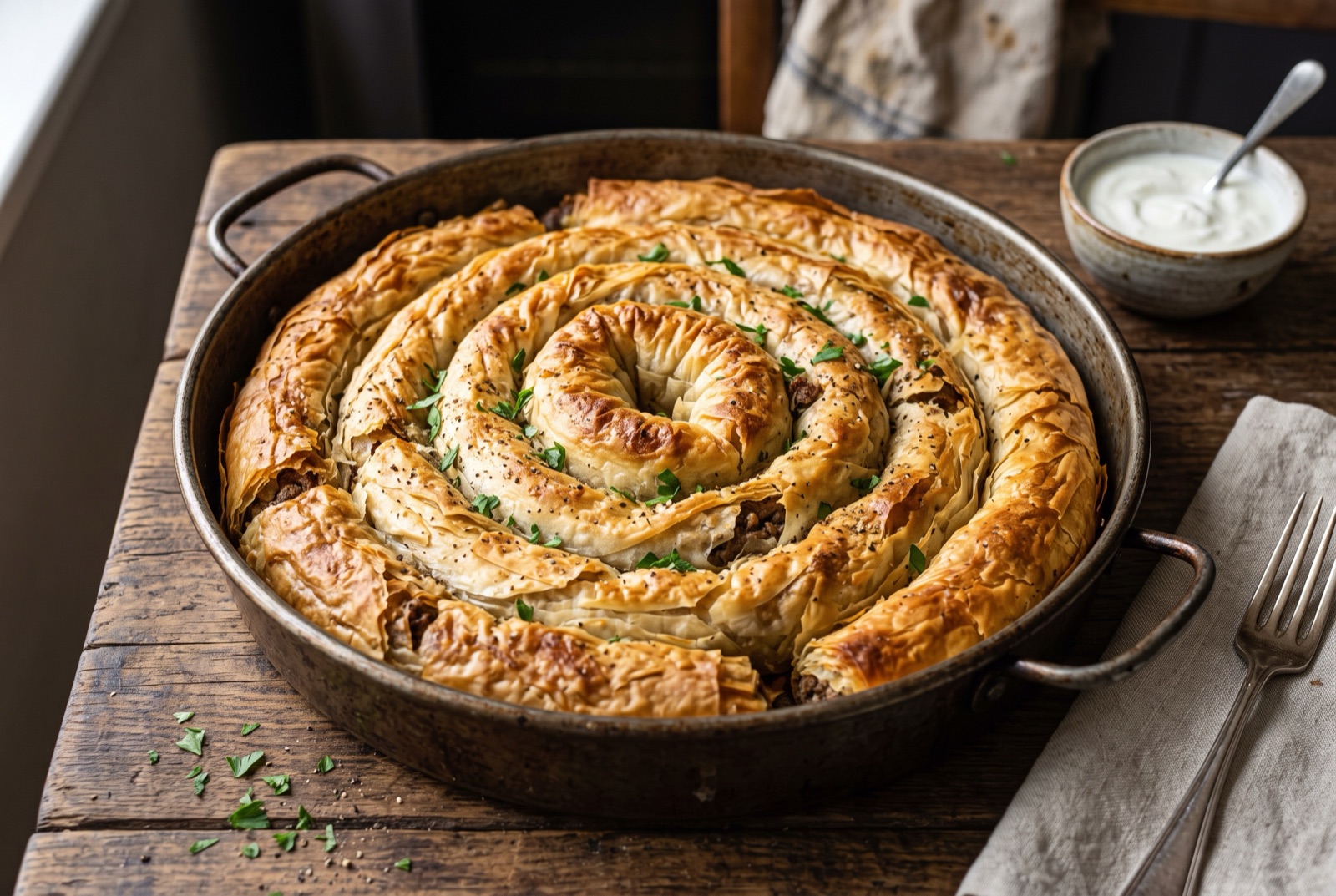
Burek is a long rope of thin pastry filled with raw minced beef and onion, wound into a snail-shell spiral in a round metal pan and baked hot until the top blisters into brittle brown ridges. The seasoning is deliberately bare — salt, black pepper, a lot of onion — because the point is the juice: the meat cooks inside its own steam and soaks the inner layers while the outside stays crisp, so a single slice gives you crackle and gravy in the same bite. It is bakery food eaten from paper at eight in the morning, cut with a wedge of kajmak or a glass of drinkable yoghurt, and it is the dish Bosnians are least willing to compromise on. Making it at home is an afternoon of stretching dough, and the reward is that the first tray never survives to the table intact.

- Gate
- Bosnia and HerzegovinaSarajevo
- Prep
- 50 min
- Cook
- 45 min
- Total time
- 2 hr 5 min incl. 30 min rest
- Serves
- 6
- Status
- Takes skill
- Nutrition / serving · estimated
- Calories 620 kcal
- Protein 27 g
- Carbs 52 g
- Fat 34 g
- Fiber 3 g
- Sodium 980 mg
Why this recipe works.
- Raw filling, the way Bosnian bakeries do it — the meat steams inside the coil instead of drying out in a pan first.
- Full hand-stretching method explained by feel and by look, with an honest shop-bought filo fallback for a weeknight.
- The post-bake oil-and-water flick that Sarajevo pie shops use to keep the top from shattering into dust when you cut it.
- Deliberately under-seasoned filling, because burek is about meat juice and onion, not about spice.
Ingredients.
13 itemsFor the dough
For the filling
For assembly
To serve
Equipment
- Round metal baking pan or tepsija, about 32 cm
- Large table you can cover with a clean cotton tablecloth
- Pastry brush
- Rolling pin
Instructions.
Make and rest the dough
Mix 500 g of flour with the salt, then work in the lukewarm water, 3 tablespoons of oil and the vinegar until you have a soft, slightly sticky dough. Knead 8–10 minutes until it stops tearing and pulls away from the bowl in one smooth mass, divide into 3 balls, coat each in oil and rest under an upturned bowl for 30 minutes.
Tip The dough should feel softer than bread dough — closer to an earlobe than a fist. Too firm and it will never stretch thin.
Mix the filling raw
Combine the minced beef with the grated onion, salt, black pepper and the cold water, working it with your hands only until evenly mixed. It should look loose and wet rather than compact; do not brown it, do not add paprika, garlic or herbs.
Stretch the jufka
Cover a large table with a floured cloth. Roll one ball out with a pin as far as it will go, then slide the backs of your hands underneath and work outward from the centre, walking around the table, until the sheet is translucent enough to see the weave of the cloth through it. Brush the whole sheet generously with oil.
Tip Thick edges are normal — tear them off at the end and use them in soup or discard them.
Fill and roll the rope
Lay a finger-thick line of filling along one long edge, about 3 cm in, then lift the cloth and let the pastry roll itself over the meat into a loose rope. Do not compress it: a tightly rolled rope bursts in the oven.
Coil into the pan
Oil the pan, then lay the rope in as a spiral starting from the outside edge, leaving a finger-width gap between turns. Repeat with the remaining dough, joining each new rope where the last one ended. Brush the whole coil with oil.
Bake until the ridges brown
Bake in the lower third of the oven at 200°C for 40–45 minutes, until the coil is deep golden, the raised ridges are dark brown and crackling, and you can hear fat sizzling at the edge of the pan. Lift a turn with a knife to check the underside is browned, not pale.
Flick, cover and rest
Whisk 3 tablespoons of water with 1 tablespoon of oil and flick it over the hot pastry, then cover the pan with a cloth or lid for 5 minutes so the very top softens. Cut into wedges through the coils and serve hot, with cold yoghurt and kajmak alongside.
Tips from our kitchen.
- Grate the onion or chop it very fine. Coarse pieces stay crunchy and puncture the pastry when you roll it.
- Add a few spoonfuls of cold water to the meat. It seems wrong, but it is what keeps the filling juicy instead of tight and grainy.
- Rest the dough at least 30 minutes at room temperature under an oiled bowl. Unrested dough springs back and tears the moment you stretch it.
- Stretch on a cloth-covered table, working from underneath with the backs of your hands. Fingertips make holes; knuckles do not.
- Do not coil the rope tightly against itself — leave a finger-width gap so each turn has room to puff and crisp on both sides.
- Bake in the lower third of a properly hot oven. The base needs direct bottom heat or the underside turns pale and soggy.
Substitutions.
- Hand-stretched jufka → Shop-bought filo, two sheets overlapped and brushed with oil per rope
- Genuinely useful on a weeknight, but filo is drier and more brittle than jufka, so brush generously and expect a lighter, flakier pie rather than a chewy one.
- Minced beef → Half beef, half lamb, or beef with 20 percent minced veal
- Lamb makes a richer, more assertive burek and is common in Herzegovina. Avoid very lean mince altogether — under 15 percent fat and the filling turns dry no matter what you do.
- Kajmak to serve → Thick sour cream, or plain drinkable yoghurt
- Kajmak is sold by Balkan and Turkish grocers. Sour cream is the closest supermarket stand-in for the fat; drinkable yoghurt is what most people actually have with it.
Variations.
- Sirnica
- The same coil filled with young curd cheese, egg and a little sour cream instead of meat. In Bosnia this is its own dish with its own name, never called burek.
- Krompiruša
- Thinly sliced or grated potato with onion, black pepper and oil — the cheapest pie in the shop and, in the Krajina region, often the most loved.
- Burek na oklagiju
- The village method: dough rolled with a long thin pin rather than stretched by hand, giving a slightly thicker, chewier pastry that stands up to reheating.
Storage & reheating.
Burek keeps 2 days covered at room temperature and up to 4 days refrigerated, though the pastry softens as the meat juice migrates outward. Revive it in a 180°C oven for 8–10 minutes, uncovered, until the top crackles again; a microwave turns it into a damp towel. Unbaked coiled trays freeze well: freeze on the tray, then bake from frozen at 190°C for about an hour. Baked burek can also be frozen in portions and reheated straight from the freezer at 180°C for 20 minutes.
Serve with
Cold drinkable yoghurt, a spoon of kajmak on the side, and nothing else — burek is not a dish that wants a salad.
The story behind Burek.
The pie belongs to the börek family that spread with the Ottoman Empire, and its deeper roots are contested rather than settled — Anatolian and Central Asian Turkic layered-dough traditions are the usual candidates, and the confident origin stories you find online, complete with dates and named bakers, are folklore rather than record. What is documented is the shape the tradition took in Bosnia after four centuries of Ottoman rule: a whole family of pies called pita, all made from the same hand-stretched jufka, distinguished only by filling and by the pan they coil into.
That family is also the reason for the region's most enjoyable food argument. In Bosnia the word burek is reserved strictly for the meat version; cheese is sirnica, greens and curd are zeljanica, potato is krompiruša. Ask for a cheese burek in Sarajevo and you will be corrected politely but firmly, sometimes with a short lecture. In Serbia, Croatia, North Macedonia and Slovenia the same word is used loosely for any filled pie, which Bosnians treat as an error and everyone else treats as normal usage. Nobody is trying to win, and nobody is willing to concede either.
What separates a Bosnian burek from an industrial one is that the meat goes in raw. Pre-cooked filling gives a dry, crumbly pie; raw minced beef mixed with grated onion releases its liquid slowly during baking, steaming the inner coils while the exposed surface dehydrates and crisps. Bakers finish the tray by flicking oiled water over the hot pastry and covering it for a few minutes, which softens the very top just enough to cut cleanly. The classic accompaniment is drinkable yoghurt, sharp and cold, poured straight from the bottle — a pairing that is treated less as a suggestion than as a rule.
Questions, answered.
Why is cheese burek not called burek in Bosnia?
In Bosnian usage, burek specifically means the meat-filled pie, and the other fillings have their own names — sirnica for cheese, zeljanica for greens and curd, krompiruša for potato. All of them belong to the same family, called pita. Elsewhere in the former Yugoslavia the word burek covers any of them, which is why the disagreement keeps resurfacing; both usages are established in their own countries.
Can I use shop-bought filo instead of stretching dough?
Yes, and plenty of home cooks do. Overlap two sheets so the rope does not split, brush them well with oil or melted butter, and handle them fast because filo dries out within minutes of being uncovered. The result is flakier and more fragile than hand-stretched jufka, which has more chew and holds the meat juices better, but it is a real burek and takes an hour off the work.
Should the meat be cooked before filling?
No. Bosnian burek is always filled with raw minced meat and onion. The filling cooks in the sealed coil, releasing juice into the surrounding pastry as it goes, which is exactly what makes the inner layers soft and savoury. Pre-frying the meat drives that liquid off and gives a dry, crumbly pie that tastes like a meat pastry rather than burek.
Why did my pastry tear while stretching?
Usually the dough has not rested long enough, so the gluten is still tight and fights back. Give it at least 30 minutes covered with oil on the surface. Tearing also happens when you pull with fingertips instead of the backs of your hands, or when one patch is already much thinner than the rest. Small holes are not fatal — patch them with a scrap of dough and keep going, since they end up buried in the coil.
What is the water and oil flick at the end for?
Straight from the oven, the top of a burek is so dry it shatters into splinters when cut. Bakeries flick a mixture of water and oil over the hot surface and cover the pan for five minutes, letting the steam soften just the outermost layer. The pie stays crisp underneath but slices cleanly and does not scatter crumbs everywhere.
You might also like.
All recipes →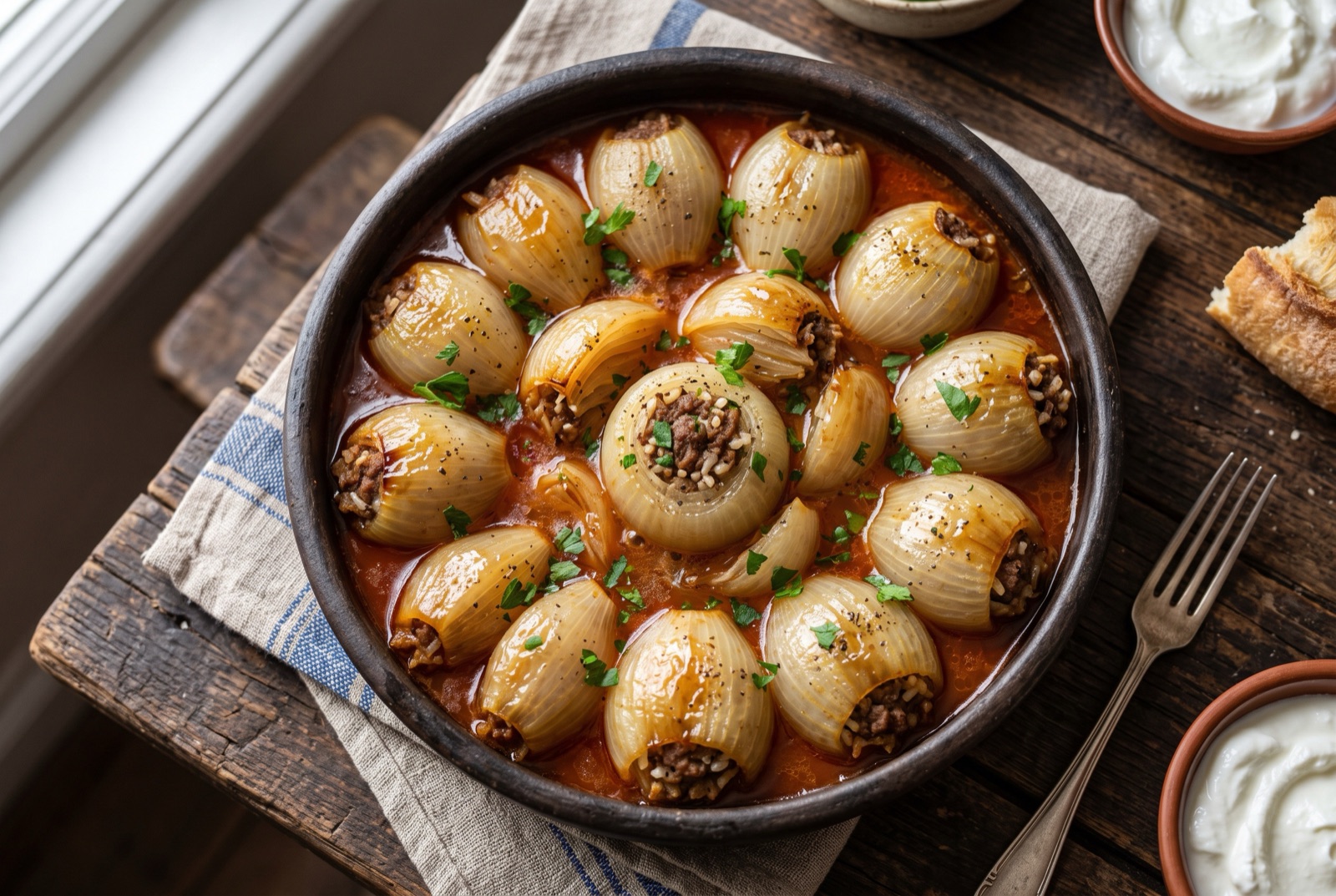
Bosnia and Herzegovina2 hr 15 min
Sogan-Dolma
Sarajevo Stuffed Onions in Tomato Broth
Bosnia and Herzegovina1 hr 45 min
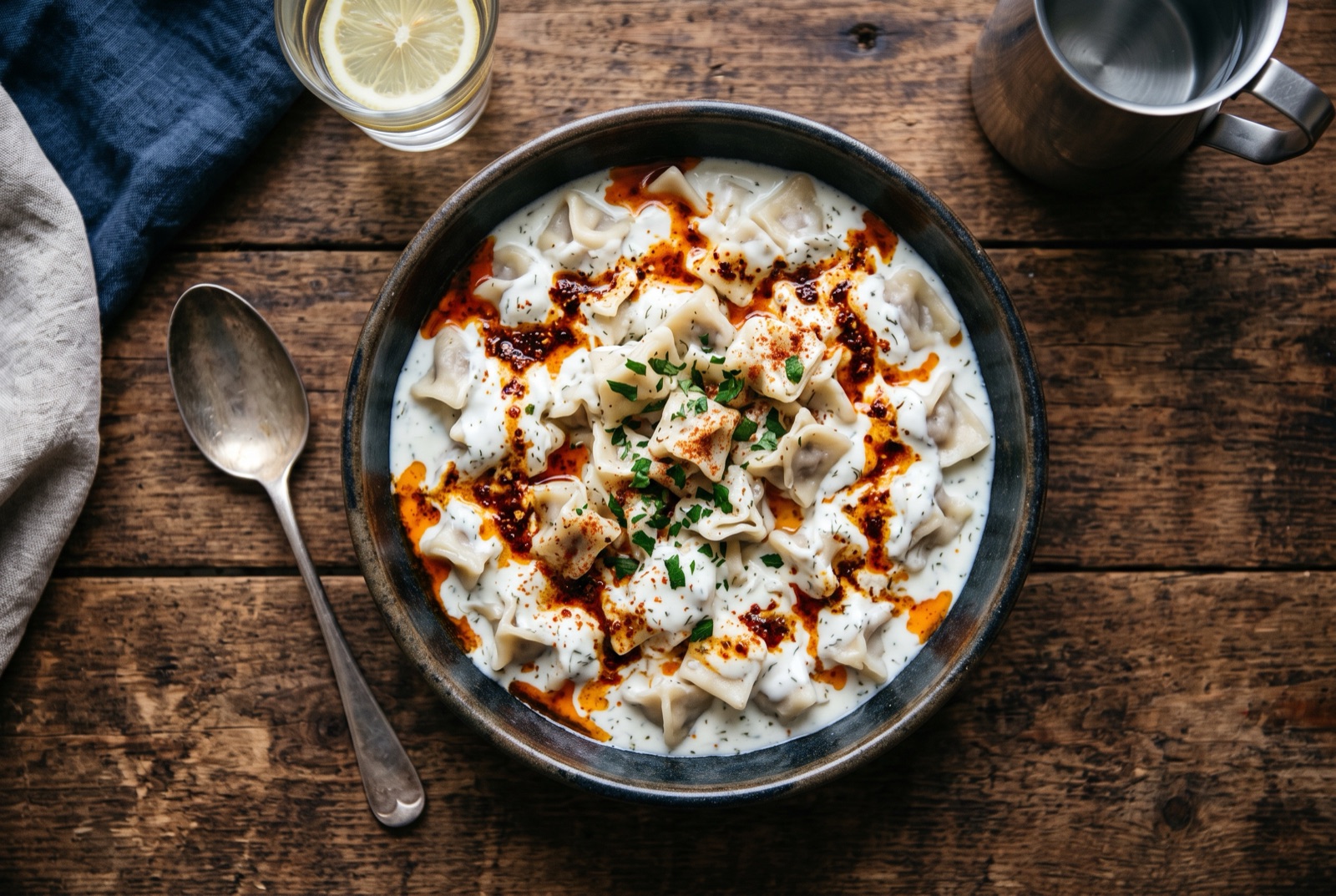
Klepe
Bosnian Beef Dumplings in Garlic Yoghurt
Bosnia and Herzegovina1 hr 10 min
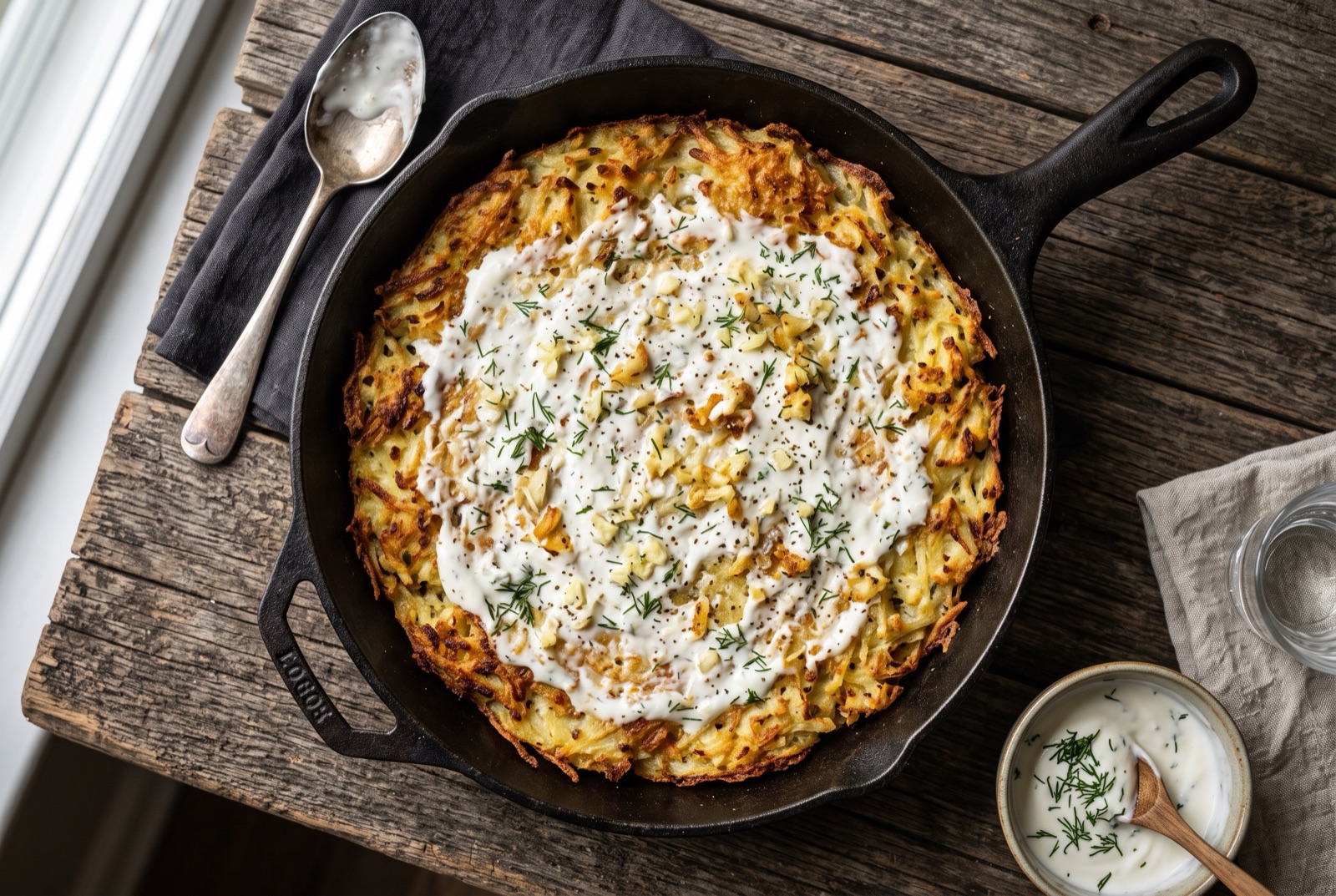
Kljukuša
Bosnian Grated Potato Bake with Garlic Cream
Bosnia and Herzegovina2 hr 55 min
Hurmašice
Bosnian Semolina Cookies in Lemon Syrup
Keep exploring Bosnia and Herzegovina.
Bosnia and Herzegovina has 9 more dishes in the atlas — Begova Čorba and Bosanski Lonac, and 7 more.
Recipe by The DishRoute Kitchen · published August 20, 2026 · updated August 20, 2026