Kljukuša.
Bosnian Grated Potato Bake with Garlic Cream
Kljukuša · say it: klyoo-KOO-sha
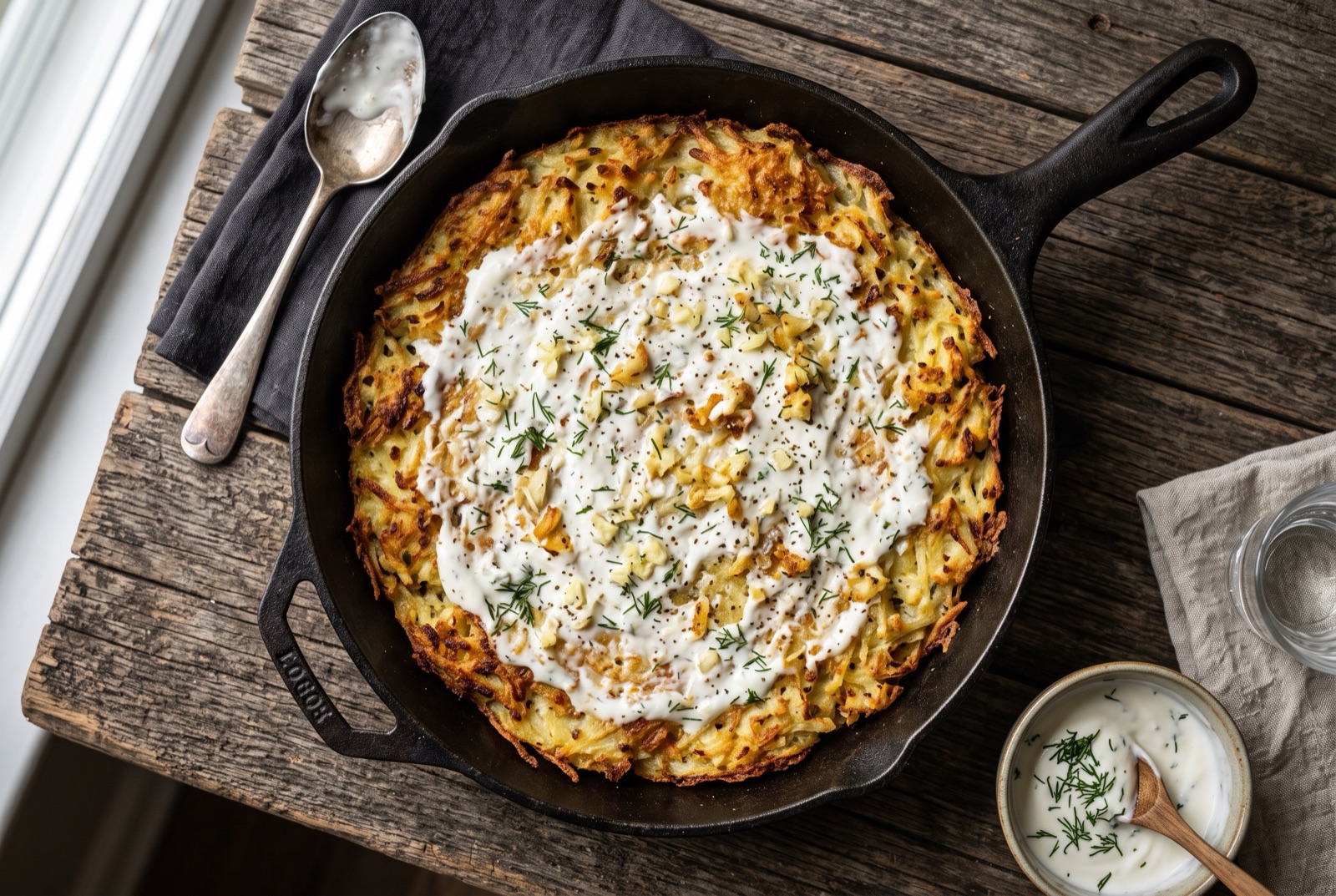
Kljukuša is grated raw potato, a handful of flour and an egg, spread thin in an oiled pan and baked until the surface crackles and the base turns golden. Hot from the oven it gets doused in sour cream beaten with raw garlic, which sinks into the cracks and turns the whole thing into something between a potato bake and a savoury pudding — crisp at the edges, soft and slightly chewy in the middle, sharp with garlic on top. It costs almost nothing, uses four ingredients, and is one of those dishes whose entire quality depends on technique rather than shopping. In the Bihać region it is a house standard, made for a quick lunch or as a side to grilled meat, and eaten straight from the pan with a spoon.

- Gate
- Bosnia and HerzegovinaBosanska Krajina
- Prep
- 20 min
- Cook
- 45 min
- Total time
- 1 hr 10 min incl. 5 min rest
- Serves
- 4
- Status
- Easy
- Nutrition / serving · estimated
- Calories 470 kcal
- Protein 10 g
- Carbs 52 g
- Fat 25 g
- Fiber 5 g
- Sodium 720 mg
Why this recipe works.
- Coarse grating and a light hand with flour, so the finished bake tastes of potato rather than of dough.
- A hot, well-oiled pan preheated before the mixture goes in, which is what gives the crisp underside.
- Garlic cream added while the pan is still hot so it soaks in instead of sitting on the surface.
- Four cheap ingredients and no special equipment, with clear signs for when it is actually done.
Ingredients.
10 itemsFor the bake
For the garlic cream
To finish
Equipment
- Coarse box grater
- Shallow metal baking pan, about 30 cm
- Large mixing bowl
Instructions.
Heat the pan first
Set the oven to 210°C, pour 3 tablespoons of the oil into the baking pan and put it in to heat for 5 minutes. The pan must be hot enough that the potato hisses the moment it touches it.
Grate the potatoes
Grate 1 kg of potatoes on the coarse side of a box grater straight into a bowl, working fast so they do not discolour. Tip off any clear water that gathers on the surface, but keep the thick milky starch at the bottom.
Bind the mixture
Stir in the flour, egg, salt and black pepper until the strands are evenly coated. The mixture should look wet and loose, not like a dough — if it holds a firm shape, you have added too much flour.
Spread and bake
Tip the mixture into the hot pan and spread it out to an even layer no more than 2 cm deep, then drizzle the remaining oil over the top. Bake for 40–45 minutes, until the surface is patchy golden brown, the edges have pulled away from the pan and lifted into crisp curls, and a knife slides through the centre without resistance.
Beat the garlic cream
While the pan bakes, whisk the sour cream with the grated garlic and salt until smooth and pourable. Leave it at room temperature so it does not chill the bake when it goes on.
Douse and rest
Pour the garlic cream over the kljukuša the moment it comes out of the oven, spreading it to the edges, and add the melted butter if using. Let it stand 5 minutes so the cream sinks into the cracks, then cut into squares and serve straight from the pan.
Tips from our kitchen.
- Use starchy potatoes such as Maris Piper, King Edward or russet. Waxy potatoes stay separate and never bind.
- Do not squeeze the grated potato dry — the starch in that liquid is what holds the bake together. Just pour off any water that pools on top.
- Keep the layer thin, no more than 2 cm. Anything deeper steams in the middle and never crisps.
- Preheat the oiled pan in the oven for five minutes before spreading in the mixture; you should hear it sizzle on contact.
- Work quickly once the potato is grated. Left standing it turns grey and weeps, and the finished bake looks dull.
- Pour the garlic cream on while the pan is still steaming, then let it stand five minutes before cutting so it settles in.
Substitutions.
- Sour cream → Thick Greek yoghurt, or crème fraîche
- Crème fraîche is richer and less likely to look thin against the hot potato. Yoghurt is sharper and lighter — thin it with a little milk so it still pours.
- Plain flour → Cornmeal, or a gluten-free flour blend
- Cornmeal gives a grainier, slightly sweeter bake that is genuinely made in some villages. Gluten-free blends work fine here since there is no gluten structure to lose.
- Neutral oil → Melted butter, or rendered beef dripping
- Dripping is the old way and gives the best crust by a clear margin. Butter browns faster, so drop the oven by 10°C if you use it alone.
Variations.
- With onion
- A grated onion worked into the mixture, which makes it sweeter and softer. Common further east, and the version most likely to be served as a side with roast meat.
- Cream baked on
- The sour cream poured over halfway through baking rather than at the end, so it sets into a browned skin over the potato instead of soaking in.
- Krajina breakfast style
- Cut into squares and served with kajmak and a fried egg, which turns a side dish into a full morning meal.
Storage & reheating.
Best eaten within an hour of baking — this is a dish with a short window, and it stiffens as it cools. Leftovers keep 2 days refrigerated and are better fried than reheated: cut into slabs and crisp them in butter in a hot pan until the outside is brown, which gives a different but genuinely good result. Do not freeze it; the potato turns watery and grainy on thawing and the texture never recovers.
Serve with
A bowl of soured milk or drinkable yoghurt, and pickled peppers or a sharp cabbage salad to cut the richness.
The story behind Kljukuša.
The name comes from kljukati, to stuff or cram, which describes both the method — potato and flour crammed together into a pan — and the effect on the person eating it. It is Krajina food, from the northwest around Bihać and the Una valley, where potato has been the second staple after bread for generations, and it belongs to the same peasant logic as boxty in Ireland or rösti in Switzerland: grate the potato raw, use its own starch to hold it together, and put something rich on top afterwards.
What makes it distinctly Bosnian is that finish. The pan comes out of the oven and is immediately flooded with pavlaka — thick soured cream — beaten with a good amount of raw grated garlic, sometimes with melted butter poured over as well. The heat of the bake makes the cream loosen and seep down through the surface, so what starts as a topping ends up partly inside the dish. In some households it goes back into the oven for a few minutes afterwards, which sets the cream into a lightly browned skin.
Beyond the Krajina, similar things appear across Bosnia and into Croatia and Serbia under other names and with slight differences — more flour here, added onion there, sometimes cut into squares like a pie and sometimes served in a single round. Households disagree about whether the potato should be finely grated to a mush or coarsely grated so the strands stay visible, and about whether an egg belongs in it at all. What nobody argues about is the sour cream and garlic on top, or that it must be eaten hot: kljukuša left to go cold turns dense and gluey, and reheating never quite brings it back to what it was ten minutes out of the oven.
Questions, answered.
Should I squeeze the water out of the grated potato?
No. Unlike potato pancakes or rösti, kljukuša relies on the starchy liquid to bind the mixture, since there is very little flour and no breadcrumb. Pour off any clear water that separates on top of the bowl, but leave the thick, milky liquid at the bottom — that is pure starch and it is what holds the bake together.
Why did mine turn out gummy in the middle?
Almost always because the layer was too thick or there was too much flour. Spread the mixture no deeper than about 2 cm so the heat reaches the centre before the edges burn, and keep the flour to a few tablespoons per kilo of potato. An oven that is too cool has the same effect — it needs 200°C or above.
Can I make kljukuša on the hob instead of in the oven?
Yes, in a heavy frying pan with a lid, cooked over medium heat for about 20 minutes per side and flipped onto a plate to turn it. The result is closer to a thick potato cake with two crisp faces and a softer middle. The oven version gives a drier, more evenly crisp surface, which is what the garlic cream is designed to meet.
What kind of potatoes work best?
Starchy, floury varieties — russet, King Edward, Maris Piper or any potato sold for baking and mashing. They release the starch that binds the mixture and they collapse into a soft interior. Waxy salad potatoes hold their shape stubbornly, give off little starch, and produce a bake that falls apart when you cut it.
Is this the same as rösti or boxty?
They share a starting point — raw grated potato held together by its own starch — but the finished dishes differ. Rösti is fried in a pan into a crisp cake with no flour or egg; Irish boxty combines raw and mashed potato with buttermilk and is usually cooked as a pancake. Kljukuša is baked flat in the oven and then soaked in garlic sour cream, which no version of the other two does.
You might also like.
All recipes →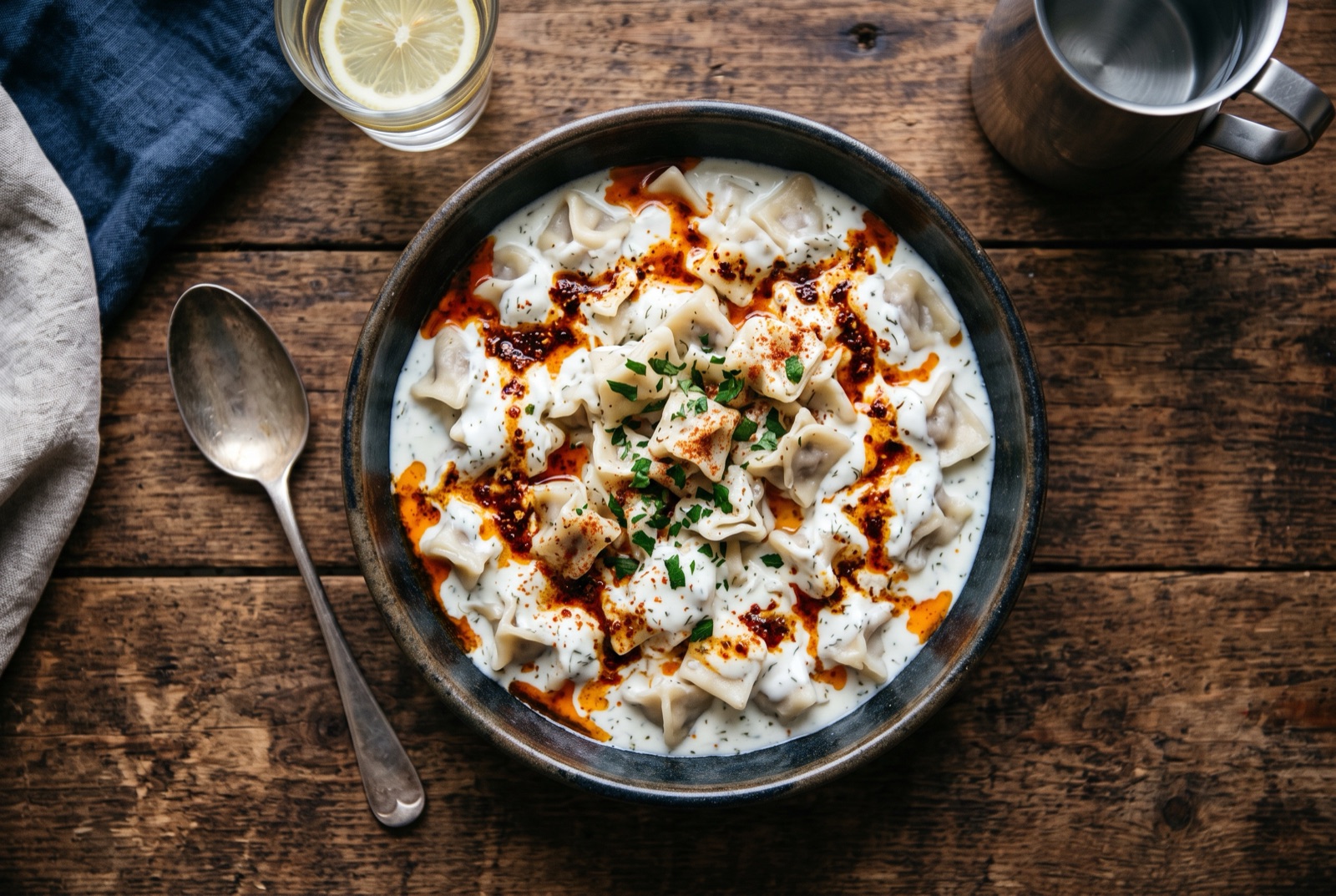
Bosnia and Herzegovina1 hr 45 min
Klepe
Bosnian Beef Dumplings in Garlic Yoghurt
Bosnia and Herzegovina3 hr 45 min
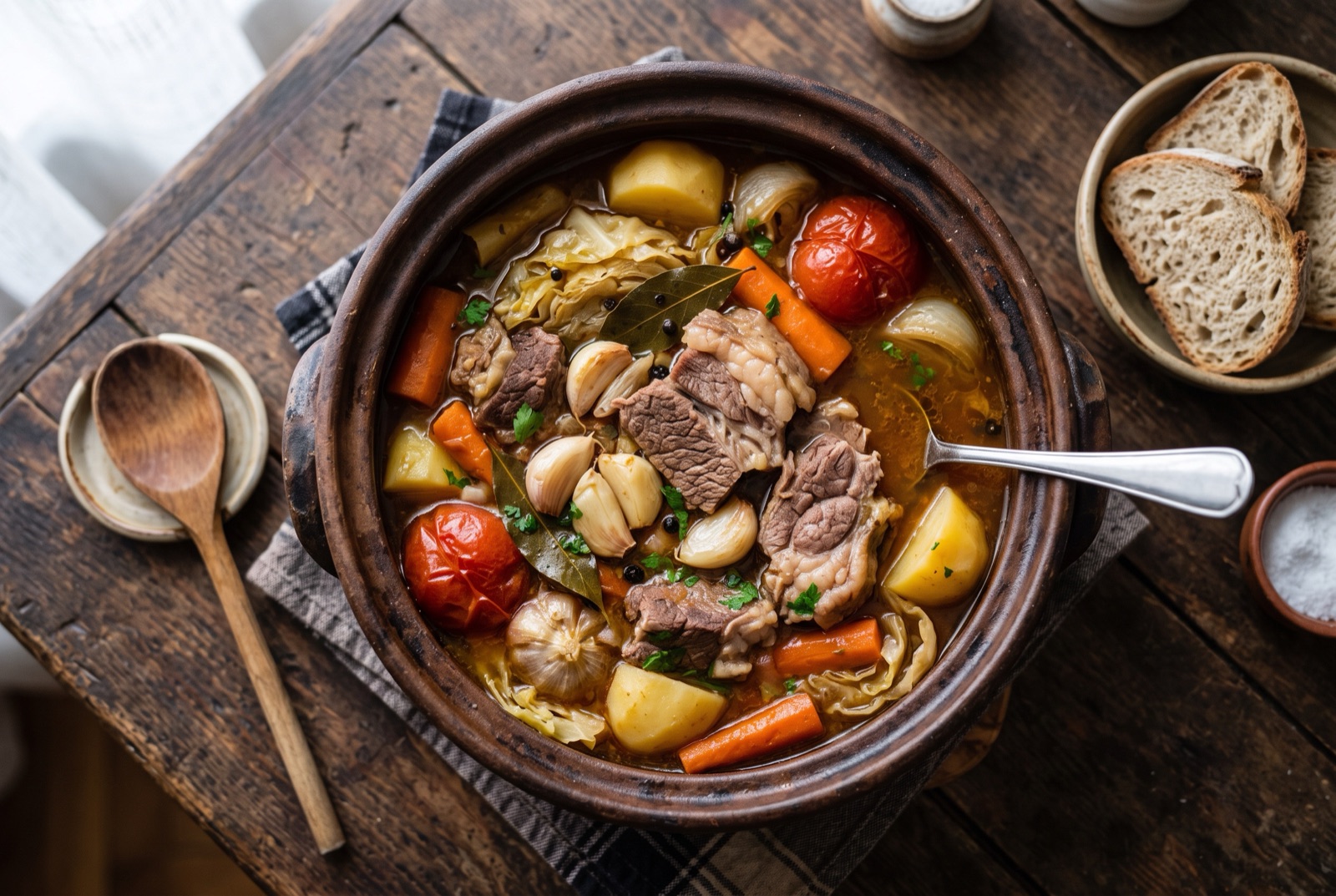
Bosanski Lonac
Layered Bosnian Meat and Vegetable Pot
Bosnia and Herzegovina2 hr 5 min
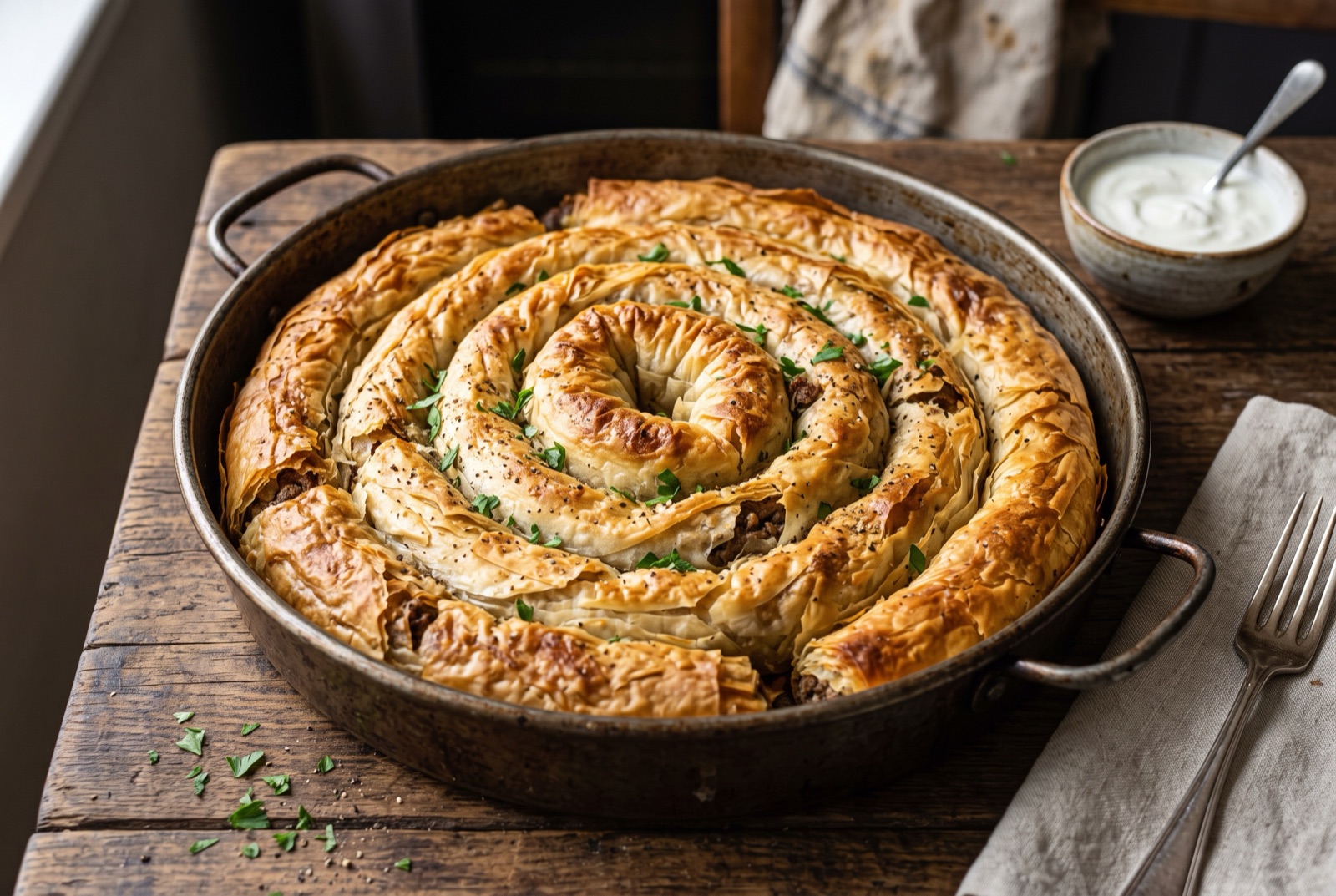
Burek
Bosnian Coiled Filo Pie with Minced Beef
Bosnia and Herzegovina2 hr 55 min
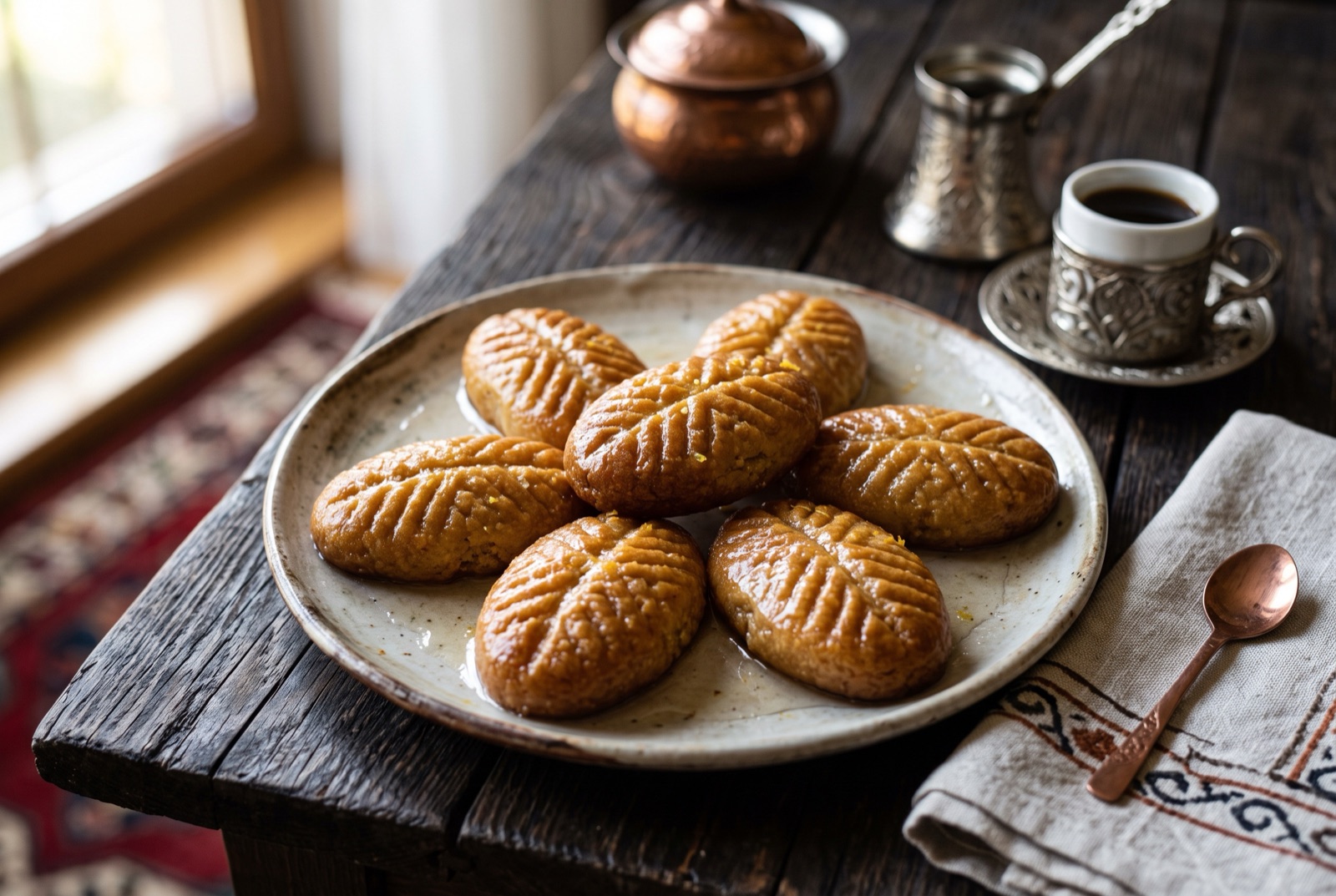
Hurmašice
Bosnian Semolina Cookies in Lemon Syrup
Keep exploring Bosnia and Herzegovina.
Bosnia and Herzegovina has 9 more dishes in the atlas — Begova Čorba and Bosanski Lonac, and 7 more.
All Bosnia and Herzegovina recipes Potato recipes Sour cream recipes Garlic recipes sidemainvegetarianRecipe by The DishRoute Kitchen · published August 20, 2026 · updated August 20, 2026