Hurmašice.
Bosnian Semolina Cookies in Lemon Syrup
Hurmašice · say it: hoor-MAH-shi-tseh
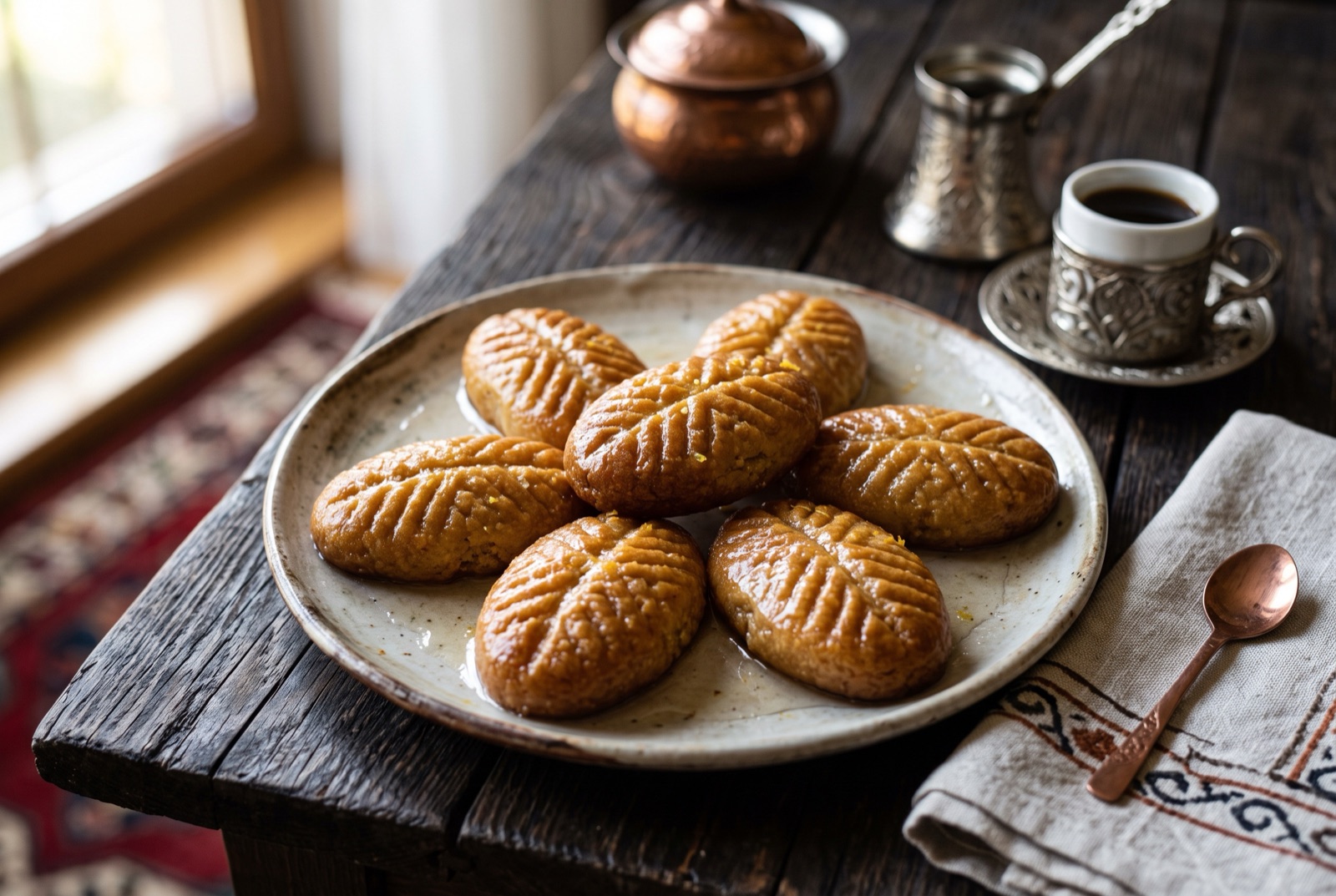
Hurmašice are small, ridged oval cookies made from semolina, flour and a generous amount of butter, baked until dry and sandy and then flooded with cold lemon syrup while they are still hot from the oven. Over the next couple of hours they absorb almost their own weight in syrup, turning from crumbly biscuits into something dense, damp and heavy that gives under a fork. They are sweet — unapologetically so — with a clear lemon edge that keeps them from being sickly, and a faint graininess from the semolina that separates them from any Western butter cookie. Bosnian households make them for Bajram, for weddings, for guests and for funerals, usually in quantities that fill more than one tray, and they keep for a week without losing anything.

- Prep
- 30 min
- Cook
- 25 min
- Total time
- 2 hr 55 min incl. 2 hr rest
- Serves
- 8
- Status
- Easy
- Nutrition / serving · estimated
- Calories 560 kcal
- Protein 8 g
- Carbs 92 g
- Fat 21 g
- Fiber 2 g
- Sugar 62 g
Why this recipe works.
- The hot-cookie, cold-syrup rule explained by what it actually does, since it is the difference between soaked and merely sticky.
- A semolina-to-flour ratio that gives cookies firm enough to survive the soak without turning to porridge.
- Ridged shaping that gives the syrup more surface to enter through, not just a decorative pattern.
- Syrup quantity and resting time set so the cookies end up saturated rather than swimming.
Ingredients.
13 itemsFor the syrup
For the dough
Equipment
- Baking tray with a raised edge
- Fork or fine grater for the ridges
- Small pot for the syrup
Instructions.
Make the syrup and chill it
Bring 500 g of sugar, the water and the lemon peel to a boil, simmer for 8 minutes until slightly thickened but still runny, then stir in the lemon juice and take it off the heat. Cool it completely and refrigerate — it must be properly cold later.
Rub the fat into the dry mix
Combine the semolina, flour, 100 g sugar, baking powder, bicarbonate of soda and salt, then rub in the softened butter with your fingertips until the mixture looks like damp sand and no lumps of butter remain.
Bring the dough together
Beat the eggs with the yoghurt and pour them into the dry mixture, folding just until a soft dough forms. Stop the moment it holds together — do not knead it, or the cookies will bake hard and refuse the syrup.
Tip The dough should feel soft and slightly greasy, not elastic.
Shape the ovals
Take walnut-sized pieces, roll them into small ovals in your palms and press each one against the back of a fork or a fine grater to ridge one side. Set them ridged side up on the tray with a finger-width between them, pressing a walnut piece into each if using.
Bake until dry, not brown
Bake at 180°C for 20–25 minutes, until the cookies are firm to the touch, dry underneath and a pale gold — the colour of sand rather than of toast. Deeper browning means they will stay tough at the centre.
Drench them hot
The moment the tray comes out of the oven, pour the cold syrup evenly over the hot cookies. They should hiss and fizz loudly on contact; if the tray goes quiet, the syrup was not cold enough.
Soak, turn and serve
Leave them in the syrup for at least 2 hours, turning each one over after the first hour so both sides absorb evenly. They are ready when they feel heavy on a fork and are the same damp colour all the way through. Lift them out and serve with coffee.
Tips from our kitchen.
- Make the syrup first and get it into the fridge. It needs to be properly cold when the trays come out of the oven.
- Rub the butter into the dry ingredients well before adding liquid — the fat coating the semolina is what keeps the crumb tender.
- Do not knead the dough. Bring it together just until it holds, or the cookies bake hard and refuse to absorb syrup.
- Bake until dry and pale gold, not brown. Overbaked hurmašice turn tough at the centre and never soften properly.
- Pour the syrup over the cookies in the tray as soon as they leave the oven, and listen — a loud hiss and fizz means the temperature difference is right.
- Leave them in the syrup at least 2 hours, turning them once, before you decide whether they need more.
Substitutions.
- Fine semolina → Coarse semolina, or half semolina and half ground almonds
- Coarse semolina gives a grainier, sturdier cookie. Ground almonds make them richer and softer, which is closer to some Turkish relatives than to the Bosnian standard.
- Butter → Neutral oil, or half butter and half oil
- Oil is genuinely traditional in many households and gives a slightly lighter, more porous cookie that drinks syrup faster. You lose some of the buttery flavour.
- Lemon syrup → Syrup flavoured with orange peel, or with a spoon of honey stirred in at the end
- Honey should go in off the heat, since boiling it changes the flavour. Orange gives a rounder, less sharp result than lemon.
Variations.
- Walnut-filled
- A piece of walnut pressed into the centre of each oval before baking, which stays crunchy against the soft soaked dough.
- Coconut hurmašice
- Desiccated coconut worked into the dough and scattered over the syruped cookies. A modern household variation, popular with children.
- Chocolate-dipped
- The soaked cookies drained thoroughly and half-dipped in melted dark chocolate. Not traditional, but common on Bosnian celebration tables now.
Storage & reheating.
They keep 5 to 7 days in a covered container at room temperature and stay moist throughout, since the syrup acts as a preservative. Do not refrigerate them: the cold makes the butter firm and the texture goes waxy. They freeze surprisingly well once fully soaked and drained — layer them between baking paper, freeze for up to 2 months and thaw at room temperature for a couple of hours. Any syrup left in the tray keeps in a jar in the fridge and can be reused for the next batch.
Serve with
Small cups of unsweetened Bosnian coffee — the bitterness is the point, against how sweet these are.
The story behind Hurmašice.
The name comes from hurma, the word for date, borrowed through Ottoman Turkish from Persian — a reference to shape and colour rather than ingredients, since there are no dates anywhere in the recipe. They belong to the wide family of Middle Eastern and Ottoman syrup pastries in which something baked dry is soaked in a sugar solution afterwards, the same principle as baklava, basbousa or Greek melomakarona. The Bosnian version is plainer than most of its relatives: no nuts inside, no rose water, no spice beyond a hint of lemon.
The rule everyone repeats is about temperature. Hot cookies, cold syrup — or the reverse, but never both hot and never both cold. If the temperatures match, the syrup sits on the surface and the cookies stay dry inside, which is the single most common failure. The physics is simple enough: a hot, porous cookie meeting cold liquid pulls it inward as the trapped air contracts, and the difference in temperature is what drives the soak. Bosnian cooks make the syrup first precisely so it has time to chill while the trays are in the oven.
Shaping is the other part that carries tradition. The dough is rolled into small ovals and pressed against the tines of a fork or a fine grater to give ridged sides, which is not decorative but functional — the ridges increase surface area and give the syrup more routes in. Households have their own preferred shape and their own opinion on how much semolina to use: more semolina gives a firmer, grainier cookie that holds up to a long soak, more flour gives a softer one that turns almost cake-like. They are served in small paper cases with coffee, and it is standard practice at Bajram to send guests home with a box of them, alongside baklava, on the reasonable assumption that the household still has plenty.
Questions, answered.
Why do the cookies have to be hot and the syrup cold?
The temperature difference is what drives absorption. A cookie straight from the oven is full of hot air, and as it meets cold syrup that air contracts and pulls liquid into the crumb. If both are hot, or both cold, the syrup simply coats the outside and the middle stays dry. Some cooks do it the other way round — cooled cookies and hot syrup — which works for the same reason.
My hurmašice stayed hard in the middle. What happened?
Usually the dough was overworked or the cookies were overbaked. Kneading develops gluten and makes a tight crumb that syrup cannot penetrate, and extra minutes in the oven dry out the centre past the point of rescue. Bake only until they are set and pale gold, handle the dough as little as possible, and give them a full two hours in the syrup before judging.
How long should they soak?
At least two hours, and overnight does no harm. Turn them once during the first hour so both sides drink evenly. They are ready when one lifts heavily on a fork, gives softly when pressed, and shows an even damp colour all the way through when broken open rather than a pale dry core.
Can I make them with oil instead of butter?
Yes, and many Bosnian households do. Use the same weight of a neutral oil. The cookies come out slightly lighter and more porous, which means they absorb syrup faster and can turn very soft if left overnight. The trade-off is flavour, since butter contributes a lot to what these taste like.
Is there any date in hurmašice?
No. The name comes from hurma, meaning date, but it refers to the shape and colour of the finished cookies rather than to an ingredient. The recipe is semolina, flour, butter, egg and sugar syrup, with no dried fruit involved at all.
You might also like.
All recipes →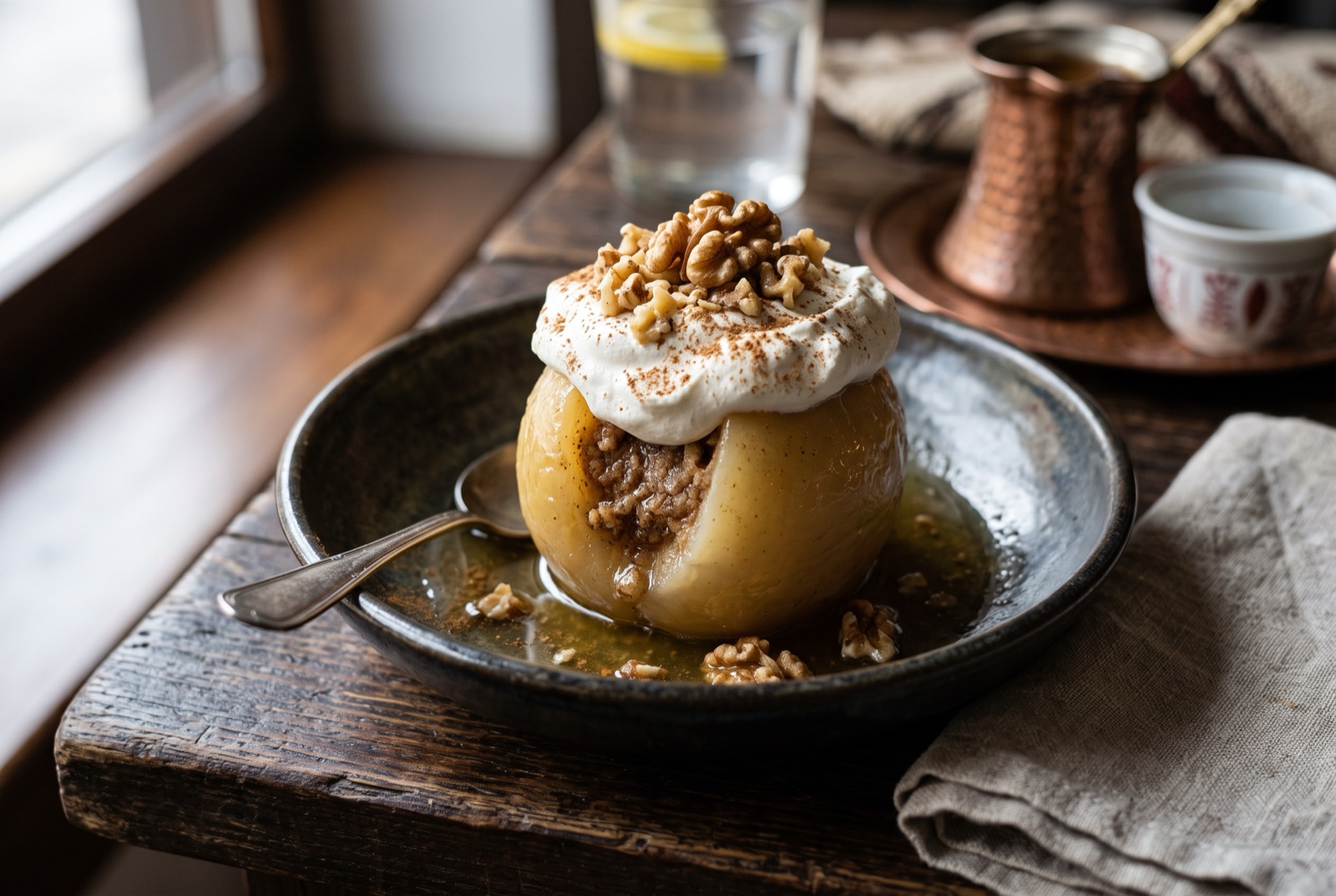
Bosnia and Herzegovina4 hr 55 min
Tufahije
Bosnian Walnut-Stuffed Poached Apples
Bosnia and Herzegovina1 hr 35 min
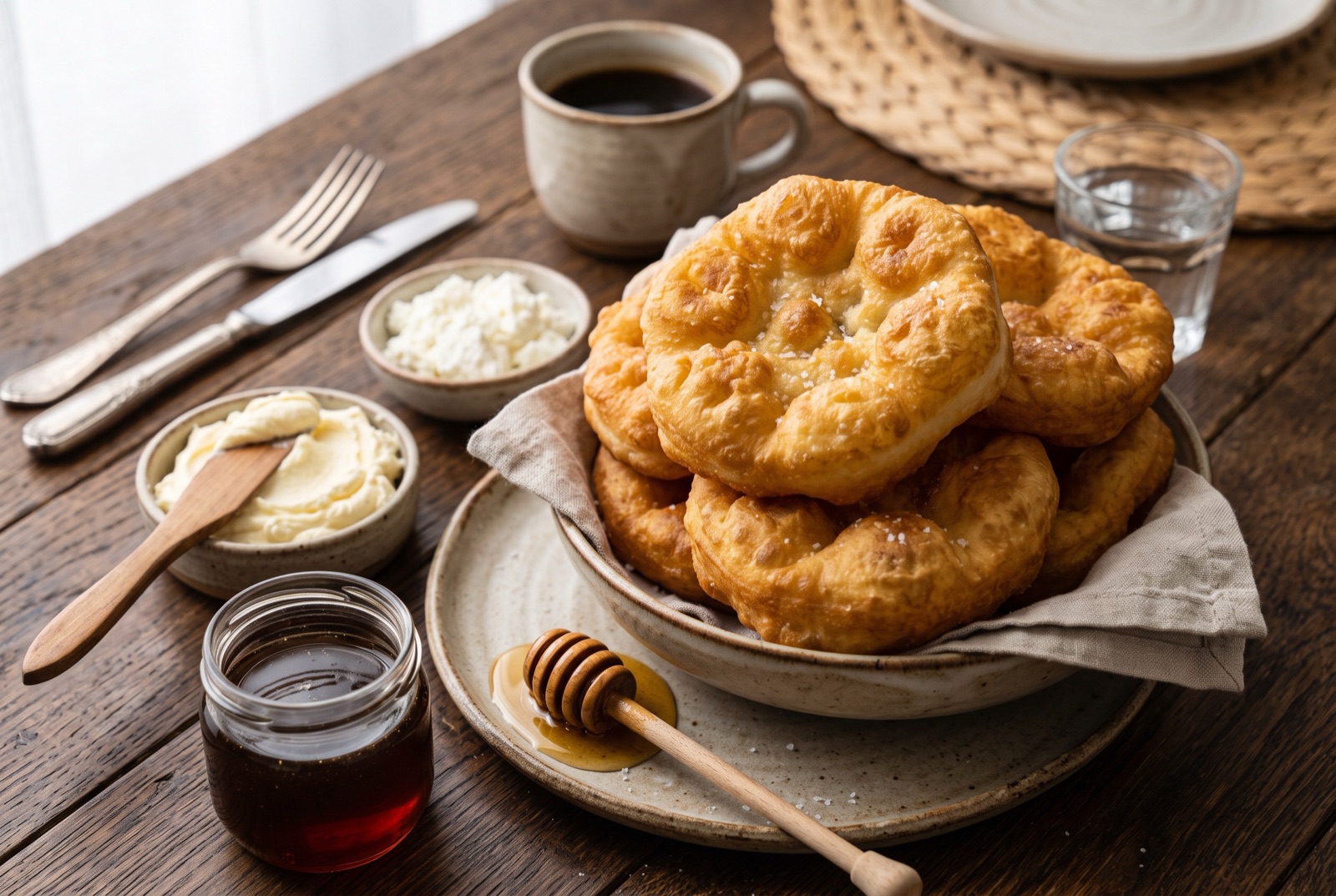
Uštipci
Bosnian Fried Dough Puffs with Kajmak
Bosnia and Herzegovina2 hr 5 min
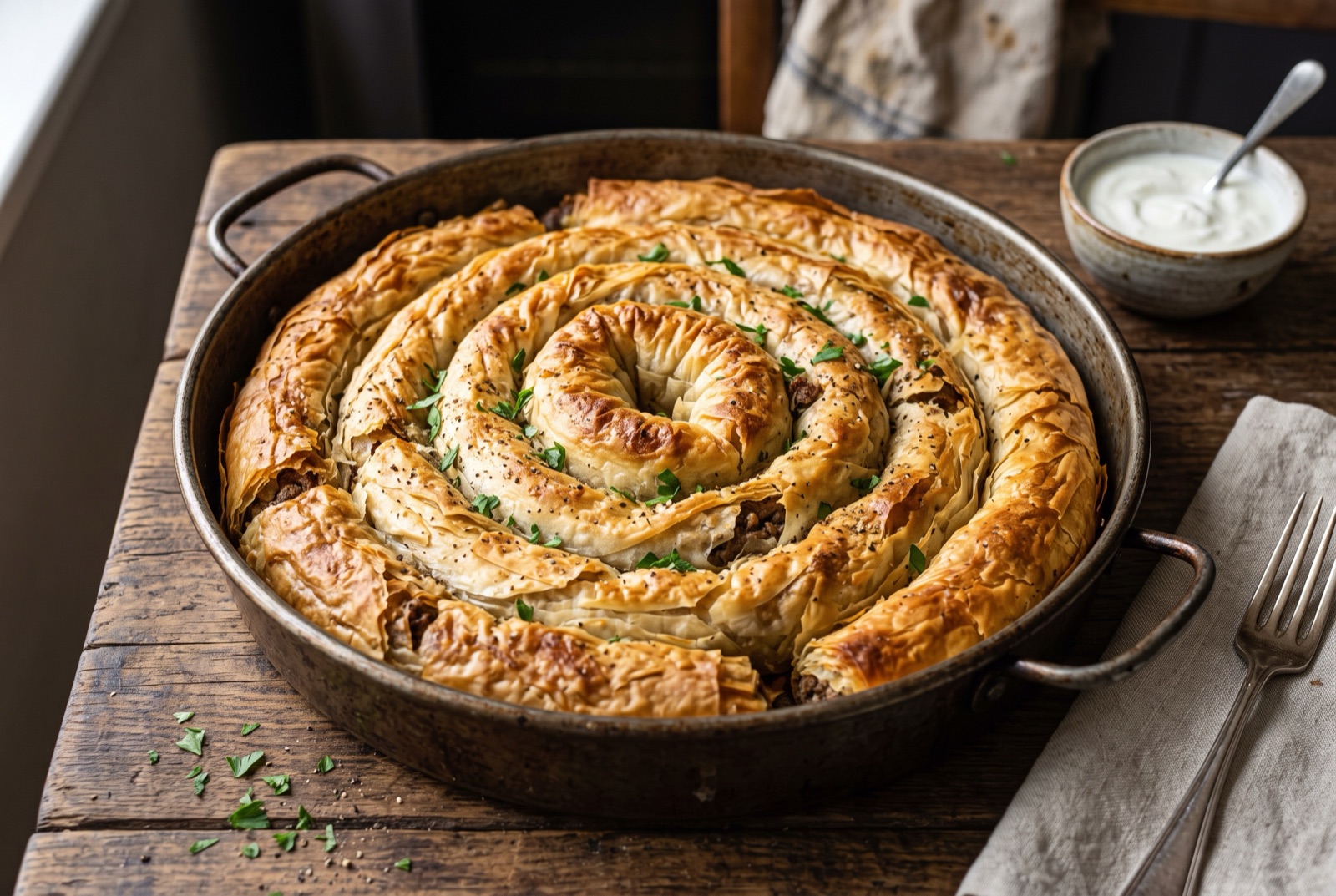
Burek
Bosnian Coiled Filo Pie with Minced Beef
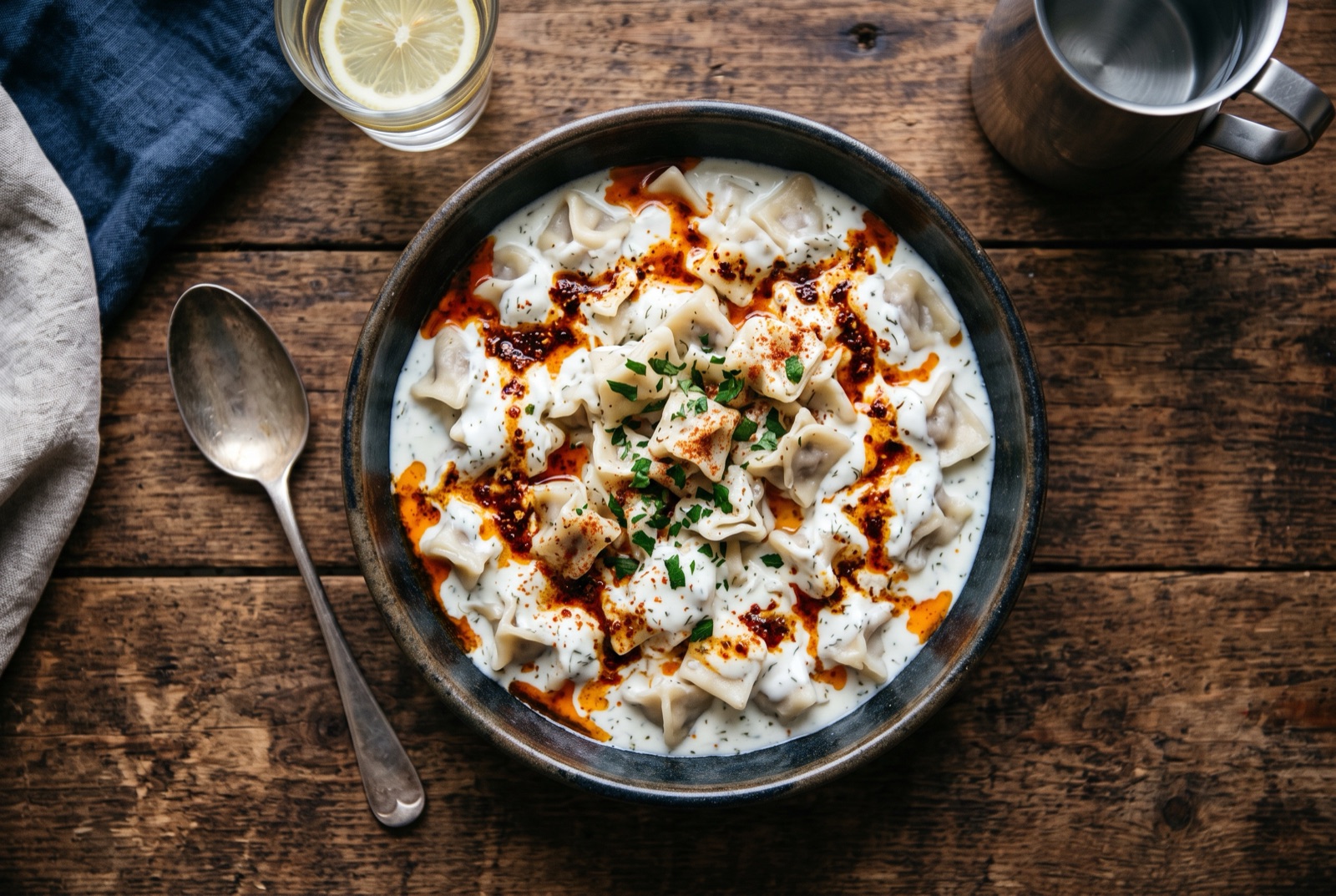
Bosnia and Herzegovina1 hr 45 min
Klepe
Bosnian Beef Dumplings in Garlic Yoghurt
Keep exploring Bosnia and Herzegovina.
Bosnia and Herzegovina has 9 more dishes in the atlas — Begova Čorba and Bosanski Lonac, and 7 more.
All Bosnia and Herzegovina recipes Semolina recipes Flour recipes Butter recipes dessertsnackvegetarianRecipe by The DishRoute Kitchen · published August 20, 2026 · updated August 20, 2026