Beignets Haricots.
Cameroonian Fritters with Bean Stew
Beignets-haricots · say it: ben-YAY ah-ree-KOH
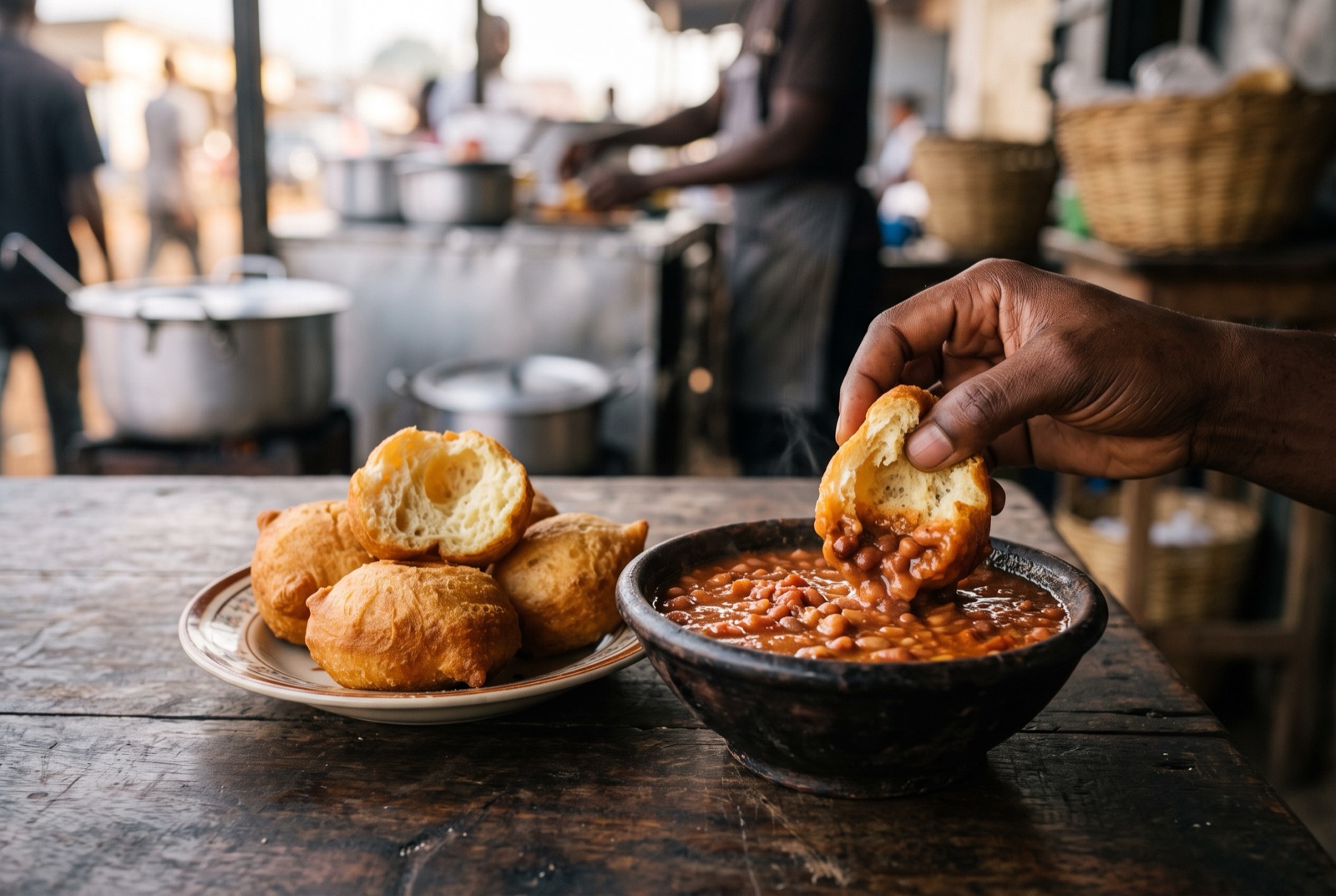
Beignets haricots is a breakfast pairing rather than a single recipe: soft yeasted fritters, fried until they balloon and turn deep gold, served with a loose stew of red beans cooked down with onion, tomato and red palm oil. The beignets are barely sweet, chewy inside and crisp only at the surface, and they exist to be dunked. The beans are soft to the point of collapse, a little peppery, and thin enough to soak into the dough without falling off it. Together with a mug of bouillie — sweet corn porridge — they make the trio Cameroonians call beignet-haricot-bouillie, sold from dawn at street stalls across every city in the country.

- Gate
- CameroonNationwide, especially Douala and Yaoundé
- Prep
- 30 min
- Cook
- 1 hr 35 min
- Total time
- 3 hr 35 min incl. 1 hr 30 min rest
- Serves
- 5
- Status
- Easy
- Nutrition / serving · estimated
- Calories 640 kcal
- Protein 19 g
- Carbs 92 g
- Fat 21 g
- Fiber 13 g
- Sugar 10 g
- Sodium 620 mg
Why this recipe works.
- Treats the dough as a wet batter rather than a kneadable bread, which is why the fritters come out hollow and light.
- Thickens the beans by crushing them rather than with flour, keeping the stew clean-tasting and loose enough to dip into.
- Gives frying temperatures and a visual test, so the beignets cook through instead of browning raw.
- Explains where bouillie fits, so you can put together the full Cameroonian breakfast rather than half of it.
Ingredients.
14 itemsFor the beans
For the beignets
Equipment
- Deep heavy pan for frying
- Kitchen thermometer
- Large mixing bowl
- Slotted spoon
Instructions.
Boil the beans
Drain the soaked beans, cover with fresh water by 5 cm, add the bay leaves and boil hard for 10 minutes, then simmer for 60 to 75 minutes until a bean squashes to a paste against the roof of your mouth with no firm core. Drain, keeping 400 ml of the cooking water.
Start the dough
Whisk the yeast and sugar into 100 ml of the warm water and leave 10 minutes until it foams and smells yeasty. Stir it into the flour and salt with the remaining water, beating with a wooden spoon into a thick, sticky batter that falls from the spoon in ribbons.
Tip This is not bread dough. If it holds its shape in the bowl, beat in another 30 ml of water.
Prove
Cover the bowl and leave in a warm place for 90 minutes, until the dough has roughly doubled, domed at the top, and the surface is visibly pocked with bubbles that pop as you watch.
Build the bean stew
Heat the palm oil in a wide pan and cook the chopped onions over medium heat for 8 minutes until soft and just beginning to colour at the edges. Stir in the tomato paste, fry 2 minutes until it darkens, then add the tomatoes and scotch bonnet and cook 8 minutes until the mixture thickens and the oil separates.
Finish the beans
Tip in the drained beans with 300 ml of their cooking water. Crush about a quarter of them against the side of the pan with the back of a spoon and simmer for 15 minutes until the stew is soupy but coats a spoon. Season with salt and keep warm.
Tip It should be loose enough to dip into. Add more bean water if it tightens as it sits.
Heat the oil
Heat 6 cm of neutral oil in a deep pan to 170C. Test with a teaspoon of dough: it should sink briefly, rise within 3 seconds and start colouring at the edges within 15.
Fry the beignets
Scoop dough with a wet hand or two wet spoons and drop rounds the size of a golf ball into the oil, six at a time. Fry for 4 to 5 minutes, turning once if they do not roll over by themselves, until they are deep golden all round and sound hollow when tapped with the slotted spoon.
Serve hot
Drain the beignets on a rack for a minute and serve immediately with a bowl of the bean stew for dipping and, if you are doing it properly, a mug of hot bouillie alongside.
Tips from our kitchen.
- The dough should be too slack to knead — it drops off a spoon in a thick ribbon. If you can shape it with your hands, add water until you cannot.
- Let the dough rise until it is domed and visibly bubbling on the surface. Underproved batter fries dense and doughy in the middle.
- Keep the oil at 170 to 175C. Hotter and the outside browns while the centre stays raw; cooler and the beignets drink oil and sag.
- Scoop with a wet hand or two wet spoons. Dough sticks to dry metal and you end up with ragged shapes.
- A properly proved beignet turns itself once in the oil. If yours sit there stubbornly, the dough was too stiff.
- Crush about a quarter of the cooked beans against the pot with a spoon. That is all the thickening the stew should get.
Substitutions.
- Dried red kidney beans → 2 tins of cooked kidney beans, drained
- A genuine time saver that removes the overnight soak and over an hour of boiling. Tinned beans hold their shape more firmly and give a slightly less silky stew, so crush a few more of them and simmer 10 minutes longer to make up for it.
- Unrefined red palm oil → Groundnut or sunflower oil with 1 tsp sweet paprika
- You get the colour but not the earthy aroma that makes the bean stew taste Cameroonian rather than generically stewed. The beignets themselves are unaffected, since they are fried in neutral oil either way.
- Fresh yeast or dried active yeast → Instant yeast, used at the same weight and mixed straight into the flour
- Instant yeast skips the activation step entirely. The dough may rise slightly faster, so judge by the domed, bubbling surface rather than by the clock.
Variations.
- Beignet soufflé
- A slightly sweeter dough with a little more sugar and sometimes nutmeg, eaten on its own with coffee rather than with beans.
- Beans with smoked fish
- Flaked smoked mackerel stirred into the stew near the end, turning breakfast into something substantial enough for lunch.
- The full trio
- Served with bouillie, a sweet maize porridge cooked with a little sugar and sometimes lemon zest, drunk hot from a mug alongside.
Storage & reheating.
Beignets are a same-hour food and go leathery within a few hours; if you must keep them, refresh in a 180C oven for 5 minutes rather than reheating in a microwave. The bean stew is the opposite and keeps 4 days refrigerated, thickening as it sits — loosen with hot water when reheating. The beans also freeze for 3 months. Proved dough can be refrigerated overnight and fried straight from cold in the morning, which is the practical way to serve this for breakfast without getting up at five.
Serve with
Bouillie, the sweet corn porridge that completes the traditional beignet-haricot-bouillie breakfast. Strong sweet coffee or hot ginger tea.
The story behind Beignets Haricots.
The stalls that sell this open early and are gone by mid-morning. A woman works two pans, one of frying oil and one of beans on a low fire, scooping dough with her hand into the hot oil and serving into paper or plastic while the queue forms behind. The full order is all three items: beignets, haricots and a cup of bouillie, the sweet maize porridge that finishes it. Ordering only two of the three is possible but slightly disappointing, and Cameroonians will tell you so.
The beignet came with French colonial baking, but what is sold in Douala is not a French beignet in any meaningful sense. It is a wet yeasted dough, closer to a doughnut batter, scooped rather than rolled and cut, and only lightly sweetened because it is going to meet a savoury bean stew. Similar fried dough exists all over West Africa — puff puff in Nigeria, mikate in Congo, bofrot in Ghana — and Cameroon's version sits comfortably in that family while keeping its French name.
The beans are the older half of the plate. Red kidney or similar beans are boiled to complete softness, then finished with a base of onion and tomato fried in red palm oil, some of the beans crushed against the side of the pot so the liquid thickens without any flour. The stew is deliberately loose — this is a dipping consistency, not a side dish — and it is generously peppered, which is what makes the plain fried dough worth eating. It is inexpensive food that feeds a working day, and it is one of the few things that tastes exactly the same whether you buy it in Bamenda or on a corner in Yaoundé.
Questions, answered.
What is bouillie and do I need it?
Bouillie is a sweetened maize porridge, thin enough to drink from a mug, cooked with sugar and sometimes a little lemon or vanilla. It is the third element of the traditional Cameroonian street breakfast alongside beignets and beans. You do not need it to enjoy the other two, but the combination of savoury beans, plain fried dough and something sweet and hot to drink is the point of the trio.
Why are my beignets raw in the middle?
The oil was too hot, so the outside set and browned long before heat reached the centre. Drop the temperature to around 170C and check with a thermometer or by dropping in a small piece of dough, which should rise and sizzle steadily rather than fizzing violently. Smaller scoops also cook through more reliably than large ones.
Can I make the dough the night before?
Yes, and it is the sensible approach for a breakfast dish. Mix the dough, let it start rising for 30 minutes at room temperature, then cover and refrigerate overnight. In the morning let it sit out for 20 minutes while the oil heats and fry it straight from there. The slow cold rise also improves the flavour.
Are beignets haricots sweet or savoury?
Both, mildly. The dough contains only a small amount of sugar, enough to help browning and to hint at sweetness without turning it into a doughnut, and the bean stew is savoury and peppery. Eaten together they land somewhere in the middle, which is why the sweet porridge served alongside works rather than clashing.
What beans should I use?
Red kidney beans are the most common choice and hold up well to long cooking. Small red beans, pinto or borlotti all work and are used interchangeably in Cameroonian homes depending on what is in the market. Avoid delicate beans like cannellini, which break down completely into a purée rather than staying partly whole in the stew.
You might also like.
All recipes →
Keep exploring Cameroon.
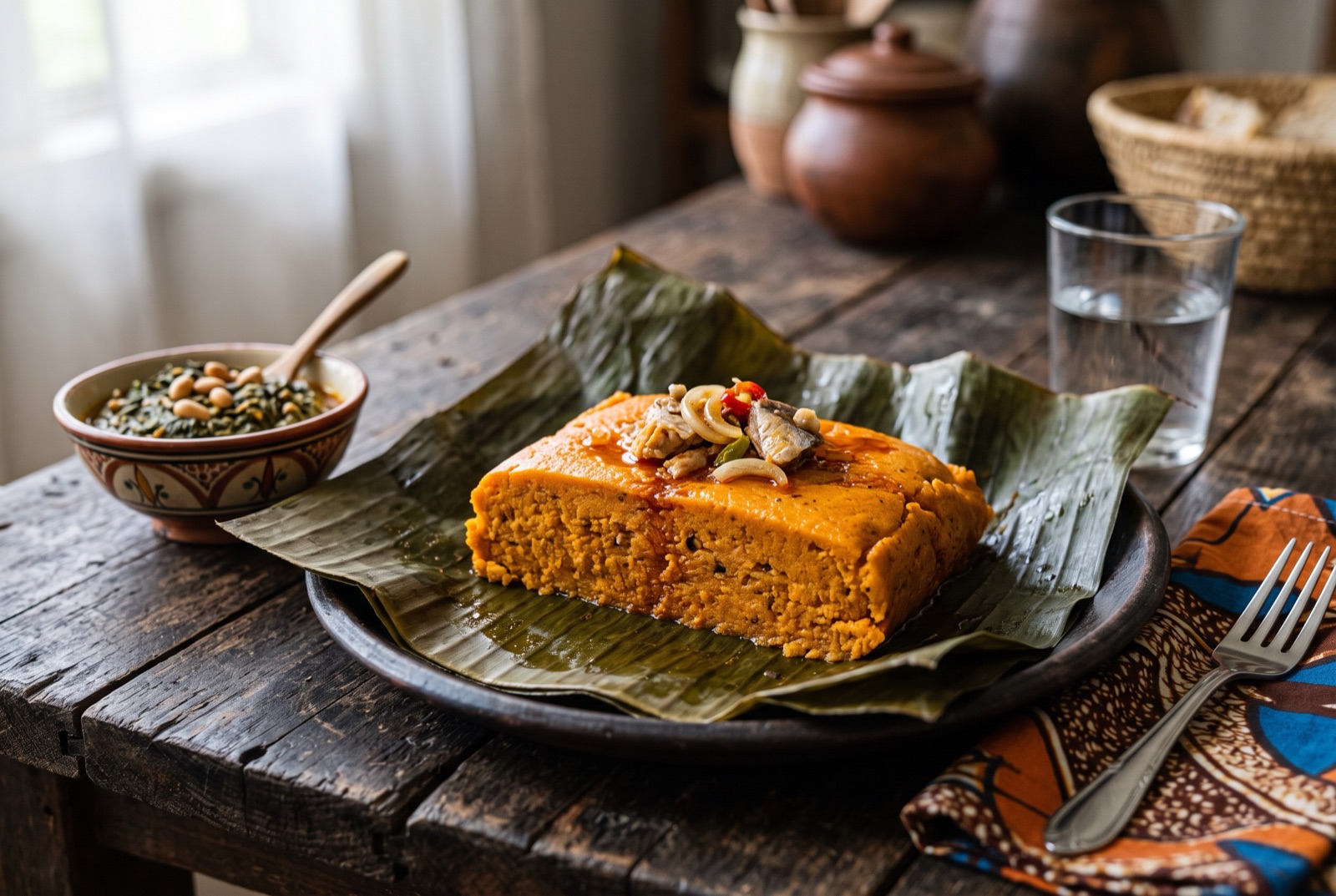
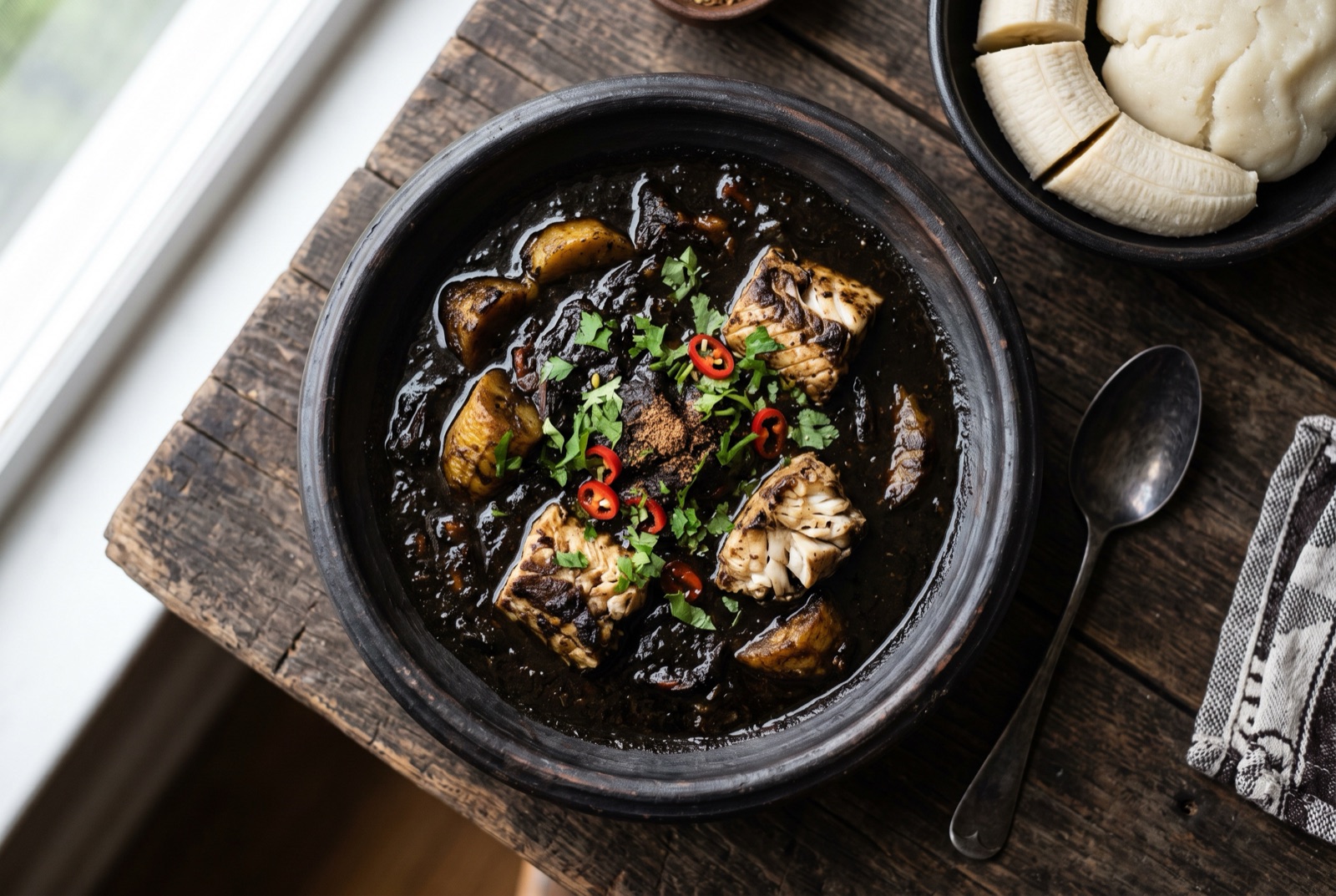
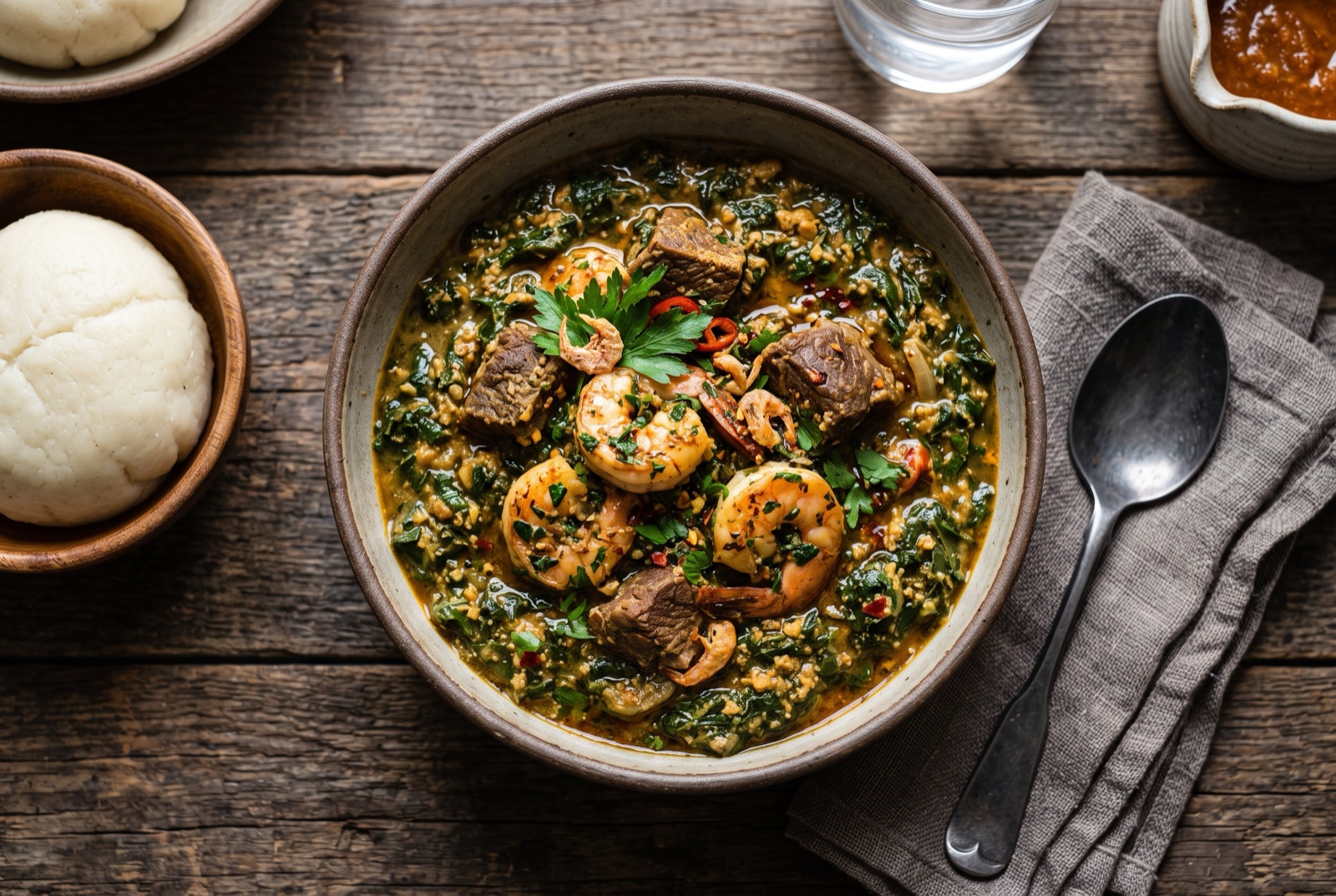
Cameroon has 9 more dishes in the atlas — Achu Soup and Eru, and 7 more.
All Cameroon recipes Flour recipes Yeast recipes Onion recipes breakfaststreet foodvegetarianvegandairy freenut freeRecipe by The DishRoute Kitchen · published August 20, 2026 · updated August 20, 2026