Caipirinha.
Brazilian Cachaça and Lime Cocktail
Caipirinha · say it: kai-pee-REEN-yah
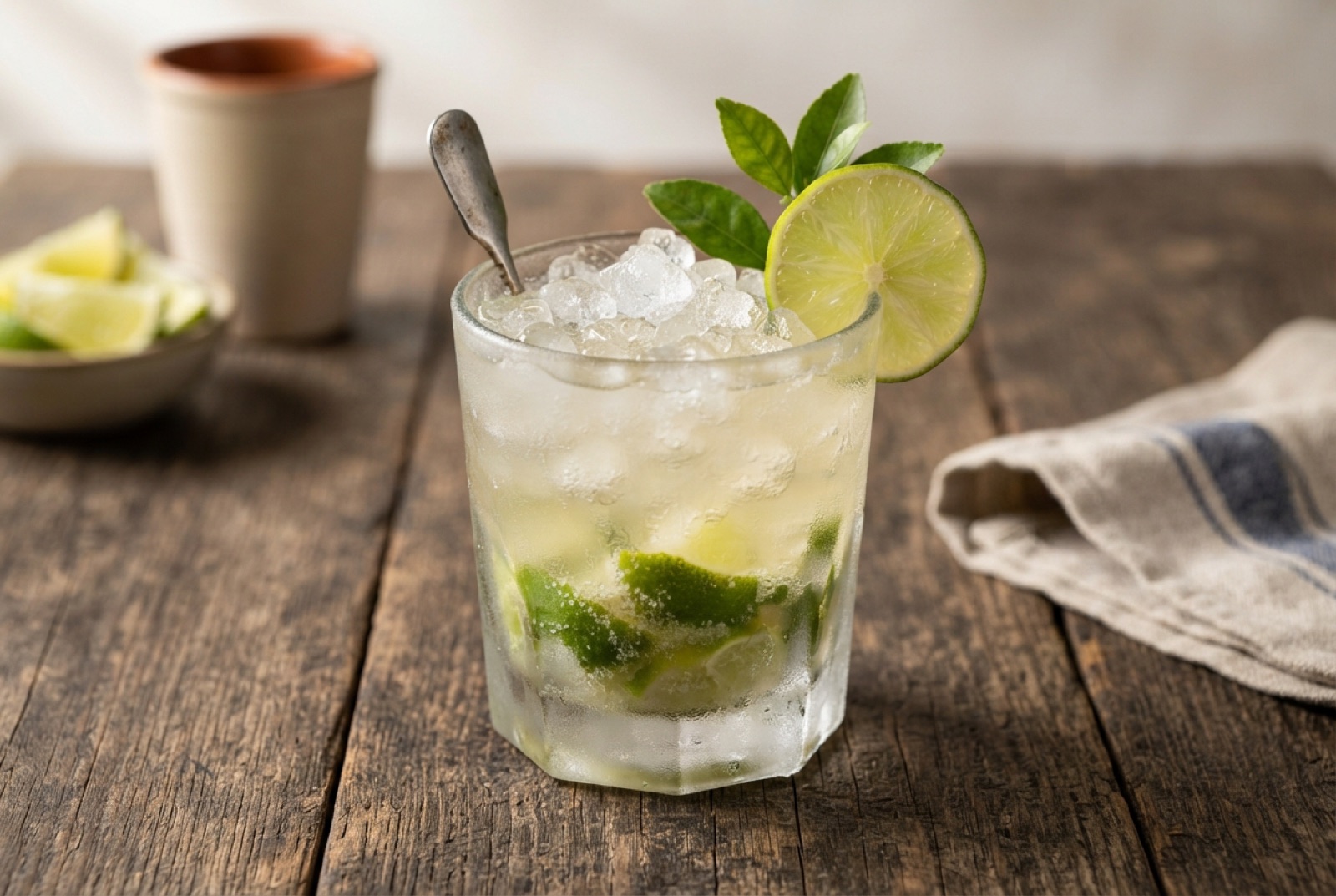
A caipirinha is lime, sugar and cachaça in a short heavy glass, and there is nowhere to hide. It should taste bracingly sour first, then sweet, with the grassy, slightly funky bite of cachaça underneath and a citrus-oil perfume coming off the top. Made badly it is a bitter, pulpy mess, and the reason is almost always technique: the limes get pulverised instead of pressed, and the white pith releases its bitterness into the glass. Get the pressing right and it is one of the best three-ingredient drinks in existence, built directly in the glass in under two minutes.

- Gate
- BrazilNationwide
- Prep
- 6 min
- Cook
- 0 min
- Total time
- 6 min
- Serves
- 2
- Status
- Easy
- Nutrition / serving · estimated
- Calories 220 kcal
- Protein 0 g
- Carbs 18 g
- Fat 0 g
- Sugar 16 g
Why this recipe works.
- Explains the pressing technique in detail, since bitterness from over-muddled pith is what ruins most homemade caipirinhas.
- Removes the bitter central core of the lime before muddling — a small step Brazilian bartenders take and most recipes omit.
- Uses crushed ice rather than cubes, so the drink chills and dilutes at the rate the balance actually needs.
- Gives a proper sour-to-sweet ratio and tells you how to adjust it for limes of different acidity.
Ingredients.
5 itemsEquipment
- Two short heavy tumblers
- Wooden muddler
- Long bar spoon
- Sharp knife
Instructions.
Prepare the limes
Roll each lime firmly under your palm on the worktop to loosen the juice, then cut it in half lengthwise and slice away the pale pithy core running down the centre of each half. Cut each half into four chunky wedges.
Tip That white core is the bitterest part of the fruit. Thirty seconds of knife work saves the drink.
Muddle with sugar
Divide the lime wedges between two short heavy glasses and add 2 teaspoons of sugar to each. Press down and twist with the muddler eight to ten times, until the juice runs, the sugar looks wet and grainy against the peel, and the glass smells strongly of lime oil.
Tip Press and turn. Pounding shreds the peel and turns the drink bitter and pulpy.
Fill with crushed ice
Pack each glass to the brim with crushed ice, mounding it slightly above the rim. The ice should sit tight enough that the lime wedges stay suspended rather than floating to the top.
Add the cachaça and stir
Pour 60 ml of cachaça into each glass and stir with a long spoon, dragging from the bottom upward for about fifteen seconds until the outside of the glass frosts and any sugar left at the base has dissolved.
Taste and serve
Taste with a straw and add a little more sugar if the limes were very sharp, stirring it through. Top up with a spoonful of crushed ice, add a lime wheel if you like, and serve immediately while the glass is still cold.
Tips from our kitchen.
- Cut the lime in half lengthwise and slice out the white core running down the middle. That pithy strip is the single biggest source of bitterness.
- Press and twist the muddler; never pound. You want to bruise the peel so the oils release, not shred it into the drink.
- Add the sugar before muddling, not after. The crystals act as an abrasive against the peel and pull the oils out far more effectively.
- Crushed ice is not optional in a good caipirinha — cubes chill too slowly and leave the drink sweet and warm at the top.
- Stir from the bottom up with a long spoon so the sugar that settled under the limes actually dissolves into the spirit.
- Taste before serving. Limes vary enormously in acidity, so treat the sugar as a range and adjust it every time.
Substitutions.
- Cachaça → Vodka (caipiroska) or white rum (caipiríssima)
- Both are common in Brazilian bars and perfectly good drinks, but they are different cocktails with their own names. Cachaça's grassy, vegetal edge is the point of a caipirinha.
- White caster sugar → Demerara sugar, or 2 teaspoons of sugar syrup per glass
- Demerara adds a faint molasses note that suits aged cachaça. Syrup dissolves instantly but gives you nothing to muddle against, so press the limes with a pinch of dry sugar first.
- Fresh limes → Nothing — bottled lime juice does not work here
- Half the drink is the oil from the peel, which bottled juice cannot supply. If you have no limes, make a different cocktail.
Variations.
- Caipirinha de maracujá
- Passion fruit pulp muddled in with the lime, which is how it is most often sold on Brazilian beaches. Sweeter, tropical, and it needs less added sugar.
- Caipirinha de cachaça envelhecida
- Made with cachaça aged in Brazilian hardwood, which brings vanilla and spice notes. Use slightly less lime so the wood is not buried.
- Batida
- The blended cousin: cachaça shaken or blended with fruit juice and sweetened condensed milk. Creamy, sweet, and a whole family of drinks in itself.
Storage & reheating.
A caipirinha is built to order and does not keep: the crushed ice dilutes it within twenty minutes and the muddled peel turns bitter as it sits in alcohol. For a crowd, muddle limes and sugar in each glass in advance and add ice and cachaça only when you serve. If you want something batched, mix lime juice and sugar syrup ahead, keep it refrigerated for up to 2 days, and pour it over ice with cachaça — closer to a lime daiquiri, but it holds.
Serve with
Petiscos — pão de queijo, coxinha, bolinho de bacalhau — or a plate of acarajé at the beach.
The story behind Caipirinha.
Cachaça is the oldest distilled spirit in the Americas, made in Brazil since the sixteenth century when sugarcane plantations began fermenting and distilling the juice pressed from their own cane. That detail matters: cachaça is distilled from fresh sugarcane juice, while most rum is made from molasses, the byproduct left after sugar is crystallised. Brazilian law defines it narrowly — sugarcane spirit, distilled in Brazil, bottled between 38 and 48 percent alcohol — and the country has fought long trade battles to keep cachaça recognised as its own category rather than a type of rum. Unaged cachaça is clear and grassy; aged versions rest in barrels of Brazilian woods like amburana or jequitibá and pick up flavours no oak-aged spirit has.
The cocktail itself is younger and its origins are murkier than the internet suggests. The most repeated account has it evolving from a lime, garlic and honey remedy taken during the 1918 influenza epidemic in São Paulo state, with the medicinal ingredients dropping away and the sugar and ice staying. It is a good story and it may well be true, but it is not documented in any way that would settle the question, so treat it as tradition rather than fact. The name is clearer: caipira means someone from the rural interior, a country person, and caipirinha is its diminutive — the little country drink.
What is certain is how thoroughly it belongs to everyday Brazilian life. It is beach food as much as bar food, made at kiosks along the sand with a wooden muddler and a bag of ice, drunk with acarajé or with nothing at all. Brazilians are also relaxed about variations, up to a point: swap cachaça for vodka and you have a caipiroska, for white rum and you have a caipiríssima, and both are widely sold. They are simply not caipirinhas, and anyone will tell you so.
Questions, answered.
What is cachaça and how is it different from rum?
Cachaça is a Brazilian spirit distilled from fresh-pressed sugarcane juice, while most rum is distilled from molasses left over from sugar production. That gives cachaça a grassier, more vegetal and slightly funky character. Brazilian regulations require it to be produced in Brazil and bottled between 38 and 48 percent alcohol, and the category is legally protected as distinctly Brazilian.
Why does my caipirinha taste bitter?
Because the lime pith has been crushed into the drink. The white layer beneath the peel and the core running through the middle are both bitter, and pounding the wedges with a muddler releases that bitterness into the alcohol. Cut out the central white core, and press and twist the wedges rather than smashing them.
Should I use crushed ice or ice cubes?
Crushed ice. It chills the drink almost instantly and dilutes at a rate that softens the alcohol without watering it down over a long sit, which is exactly the balance a caipirinha needs. Cubes leave the top of the glass warm and sweet while the bottom stays sharp. Crush cubes in a bag with a rolling pin if you have no ice crusher.
How much sugar should go in a caipirinha?
About 2 teaspoons per glass is the standard starting point for one lime and 60 ml of cachaça, but limes vary a great deal in acidity and sweetness. Taste after stirring and adjust — the drink should read as sour first with the sugar arriving behind it, never as a sweet drink with lime in it.
Can I make a caipirinha without alcohol?
You can make a very good drink with the same method — muddled lime and sugar, crushed ice, topped with sparkling water — often sold in Brazil as a limonada suíça variant. It will not taste like a caipirinha, since cachaça supplies most of the flavour, but the lime-oil technique is what makes it worth drinking.
You might also like.
All recipes →
Keep exploring Brazil.
Brazil has 9 more dishes in the atlas — Acarajé and Bolo de Fubá, and 7 more.
Recipe by The DishRoute Kitchen · published August 19, 2026 · updated August 19, 2026