Chakhokhbili.
Georgian Chicken and Tomato Herb Stew
ჩახოხბილი · say it: cha-khokh-BEE-lee
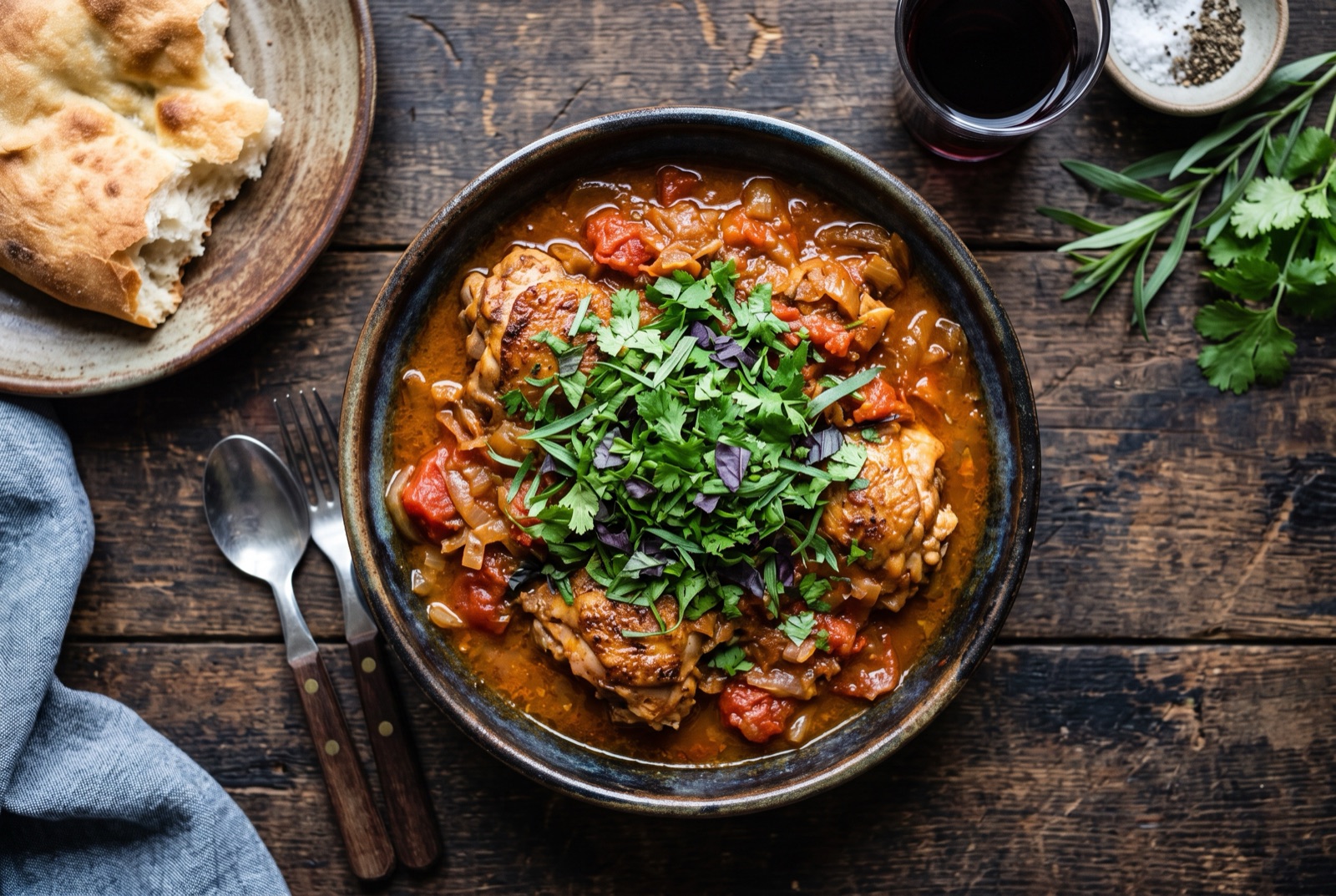
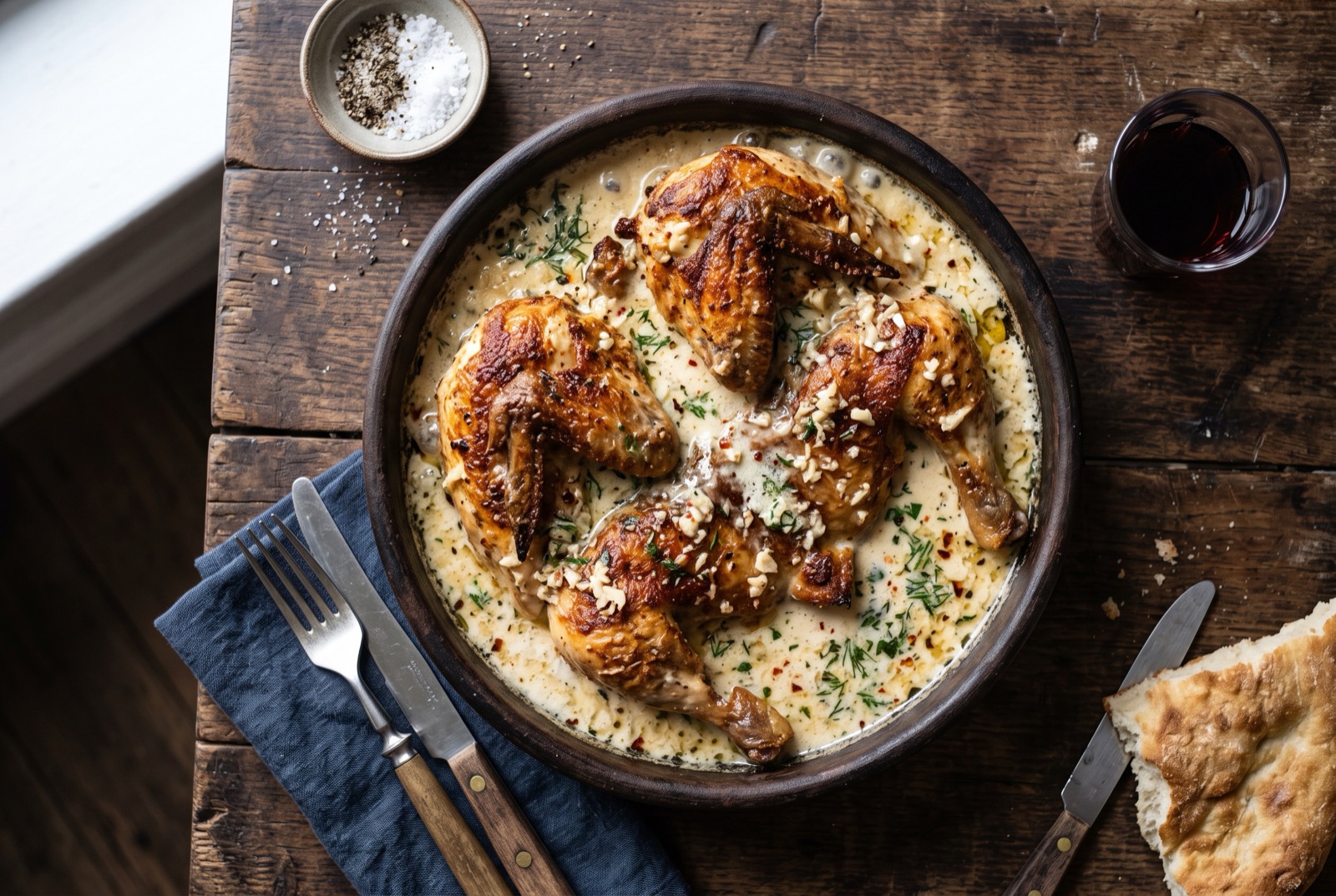
Chakhokhbili is the Georgian answer to a weeknight chicken stew, and its trick is that almost no liquid goes into the pot. Chicken pieces are browned in a dry pan until they render their own fat, then buried under sliced onions and chopped tomato and left to collapse into a thick, orange, garlicky sauce that comes entirely from the ingredients themselves. The flavour is bright and tomato-forward with a warm base of coriander seed, and then at the very end an almost unreasonable quantity of fresh herbs goes in off the heat — coriander leaf, basil and tarragon — so the whole pot smells green and raw over the deep cooked sweetness underneath. It is done in under an hour and needs only bread.

- Gate
- GeorgiaKartli
- Prep
- 20 min
- Cook
- 45 min
- Total time
- 1 hr 5 min
- Serves
- 4
- Status
- Easy
- Nutrition / serving · estimated
- Calories 520 kcal
- Protein 42 g
- Carbs 18 g
- Fat 31 g
- Fiber 4 g
- Sugar 11 g
Why this recipe works.
- Dry-browning the chicken first renders enough fat to cook the onions, which is where the depth in the sauce actually comes from.
- No added stock or water — the recipe is timed so the onion and tomato give up exactly enough liquid.
- The herbs go in off the heat, in the quantity Georgian cooks actually use rather than a token sprinkle.
- Ready in about 50 minutes from a cold pan, with one pot to wash.
Ingredients.
13 itemsFor the stew
To finish
Equipment
- Wide heavy pan or Dutch oven with a lid
- Sharp knife
- Wooden spoon
Instructions.
Brown the chicken dry
Lay the chicken pieces skin down in a cold, dry heavy pan and set it over medium heat. Leave them 8–10 minutes without moving until the skin is deep gold and releases itself from the pan, then turn and brown the second side for 4 minutes.
Tip If a piece sticks, it is not browned yet. Wait — it will let go on its own.
Sweat the onions in the chicken fat
Lift the chicken to a plate. Tip the sliced onions into the rendered fat with a good pinch of salt and cook over medium-low heat for 12 minutes, stirring occasionally, until they are limp, translucent and just starting to catch gold at the edges.
Add tomato and spice
Stir in the tomato paste and cook it out for a minute until it darkens, then add the chopped tomatoes, ground coriander, khmeli suneli and chilli. Raise the heat and cook 5 minutes, mashing the tomatoes with the spoon, until they break down into a rough sauce.
Return the chicken and stew
Nestle the chicken back in skin-up along with any juices from the plate, cover, and simmer over low heat for 25 minutes. Do not add water — the onions and tomatoes will release plenty. Turn the pieces once halfway through.
Reduce until the fat separates
Uncover, add the garlic, and simmer 8–10 more minutes until the sauce is thick enough to hold the mark of a spoon and small pools of orange fat rise at the edges. The chicken should be pulling away from the bone. Season with salt and plenty of black pepper.
Finish with the herb storm
Take the pan off the heat completely, drop in the butter if using, and pile in the coriander, basil and tarragon. Stir once, clap the lid on, and leave 5 minutes so the herbs wilt in the residual heat. Serve straight from the pan with bread.
Tip Cooking the herbs is the single most common mistake here — off the heat, always.
Tips from our kitchen.
- Use bone-in, skin-on thighs and drumsticks. Breast meat dries out over the long onion stew and gives the sauce nothing back.
- Start the chicken in a completely dry heavy pan, skin down, over medium heat. It will stick briefly and then release itself once the skin is properly browned.
- Slice the onions thick rather than dicing them. They should melt into soft strands you can still see in the finished sauce, not disappear.
- If your tomatoes are pale and out of season, use good tinned plum tomatoes plus a spoon of tomato paste — flat winter tomatoes make a watery, sour stew.
- Chop the herbs coarsely and at the last minute. Finely minced coriander bruises and turns muddy before it ever reaches the pan.
- Let the finished stew stand off the heat for five minutes with the lid on. The sauce tightens and the herbs perfume the whole pot.
Substitutions.
- Fresh tomatoes → 800 g tinned plum tomatoes, crushed by hand, plus 1 tbsp tomato paste
- Drain off some of the tin juice or the stew will need an extra 10 minutes of uncovered simmering to thicken.
- Fresh tarragon → A little extra basil plus a pinch of fennel seed
- Tarragon is very Georgian and hard to replace exactly, but the anise note is what you are after. Dried tarragon is a poor stand-in — it tastes of hay.
- Khmeli suneli spice blend → 1 tsp ground coriander seed + ½ tsp ground fenugreek + ½ tsp dried marjoram
- Khmeli suneli is the standard Georgian blend and worth buying, but this approximation covers its main notes for a single pot.
Variations.
- Chakhokhbili with tkemali
- Replace a third of the tomato with sour plum sauce for the older, sharper version. The sauce goes darker and the sweetness drops away almost entirely.
- Pheasant or guinea fowl
- The original bird, if you can get it. Both are leaner than chicken, so cover the pan for the whole stew and check for tenderness rather than time.
- Chakhokhbili with potatoes
- A home cook's stretch: add halved waxy potatoes with the tomatoes so they cook in the sauce. Not restaurant tradition, but common on Georgian kitchen tables.
Storage & reheating.
Chakhokhbili keeps 3 days refrigerated and genuinely improves overnight, as the tomato sweetness and the coriander settle into each other. Reheat gently in a covered pan, and stir in a fresh handful of chopped herbs at the end — the first batch will have faded to almost nothing. It freezes well for 2 months, though the herbs do not survive the process at all, so freeze it before the herb stage if you can and finish it after thawing.
Serve with
Torn shoti bread or any crusty loaf for the sauce, plus a bowl of pickled green tomatoes or cucumbers to cut the richness.
The story behind Chakhokhbili.
The name gives away an older dish. Khokhobi is the Georgian word for pheasant, and chakhokhbili began as a way of cooking wild game birds brought back from the hunt — birds too lean and too tough for roasting, better broken down and stewed with onion and whatever fruit or tomato was around. Domestic chicken replaced pheasant over the last century as hunting declined and poultry became cheap, and the name simply stayed put, the way dishes often keep the name of an ingredient they no longer contain.
Tomatoes are the newer part of the story. They only became common in Georgian kitchens in the nineteenth century, and older versions of this stew leaned instead on sour plums or the dried fruit leather called tklapi for acidity. You can still find cooks in Kakheti who add tkemali plum sauce to the pot rather than extra tomato, and the result is sharper and less sweet. Both are considered correct; the tomato version simply won on availability.
What has not changed is the herb finish, which is the part visitors most often get wrong when they try to reproduce the dish. Georgian cooking treats fresh herbs as a bulk ingredient rather than a garnish, and chakhokhbili takes a genuinely large handful — coriander leaf above all, with basil and tarragon behind it — stirred in after the pan comes off the heat so their volatile oils are not cooked away. Add them five minutes early and you get a pleasant tomato chicken. Add them at the end, cover the pan, and let them wilt in the residual heat for two minutes, and you get the dish Georgians recognise. It arrives at the table in the pan it was cooked in, with bread for the sauce and nothing else required.
Questions, answered.
Why do you brown the chicken without any oil?
Skin-on chicken carries plenty of its own fat, and browning it dry over medium heat renders that fat out to cook the onions in. It gives a cleaner, more chicken-tasting sauce than adding a neutral oil, and it is how the dish is traditionally started. If your chicken is skinless, add a tablespoon of oil to get things moving.
Can I use chicken breast?
You can, but it is a compromise. Breast meat has no connective tissue or skin to enrich the sauce and goes stringy over the 25 minutes the onions need. If breast is what you have, brown it, remove it, cook the sauce fully, and return it for only the last 8 minutes.
What is khmeli suneli and do I need it?
Khmeli suneli is the standard Georgian dried spice blend, built around coriander seed, blue fenugreek, marigold petals and summer savory. It is what makes many Georgian dishes taste specifically Georgian rather than generically Mediterranean. It is not essential here — the fresh herbs do most of the work — but a jar transforms the background of the sauce.
My stew came out watery. How do I fix it?
Take the lid off and simmer harder for 8–10 minutes before adding the herbs, until the sauce coats a spoon and small pools of orange fat separate at the edges. Watery chakhokhbili almost always means out-of-season tomatoes or too much liquid from a tin; next time drain the tomatoes or increase the onion slightly.
Is chakhokhbili spicy?
Not usually. It is warm and aromatic rather than hot, and heat is added at the table with ajika paste or fresh chilli if anyone wants it. The recipe includes an optional chilli for background warmth; leaving it out changes nothing important about the dish.
You might also like.
All recipes →
Keep exploring Georgia.
Georgia has 9 more dishes in the atlas — Adjarian Khachapuri and Badrijani Nigvzit, and 7 more.
Recipe by The DishRoute Kitchen · published August 20, 2026 · updated August 20, 2026