Chiftele Marinate.
Fried Meatballs Stewed in Tomato Sauce
Chiftele marinate · say it: keef-TEH-leh mah-ree-NAH-teh
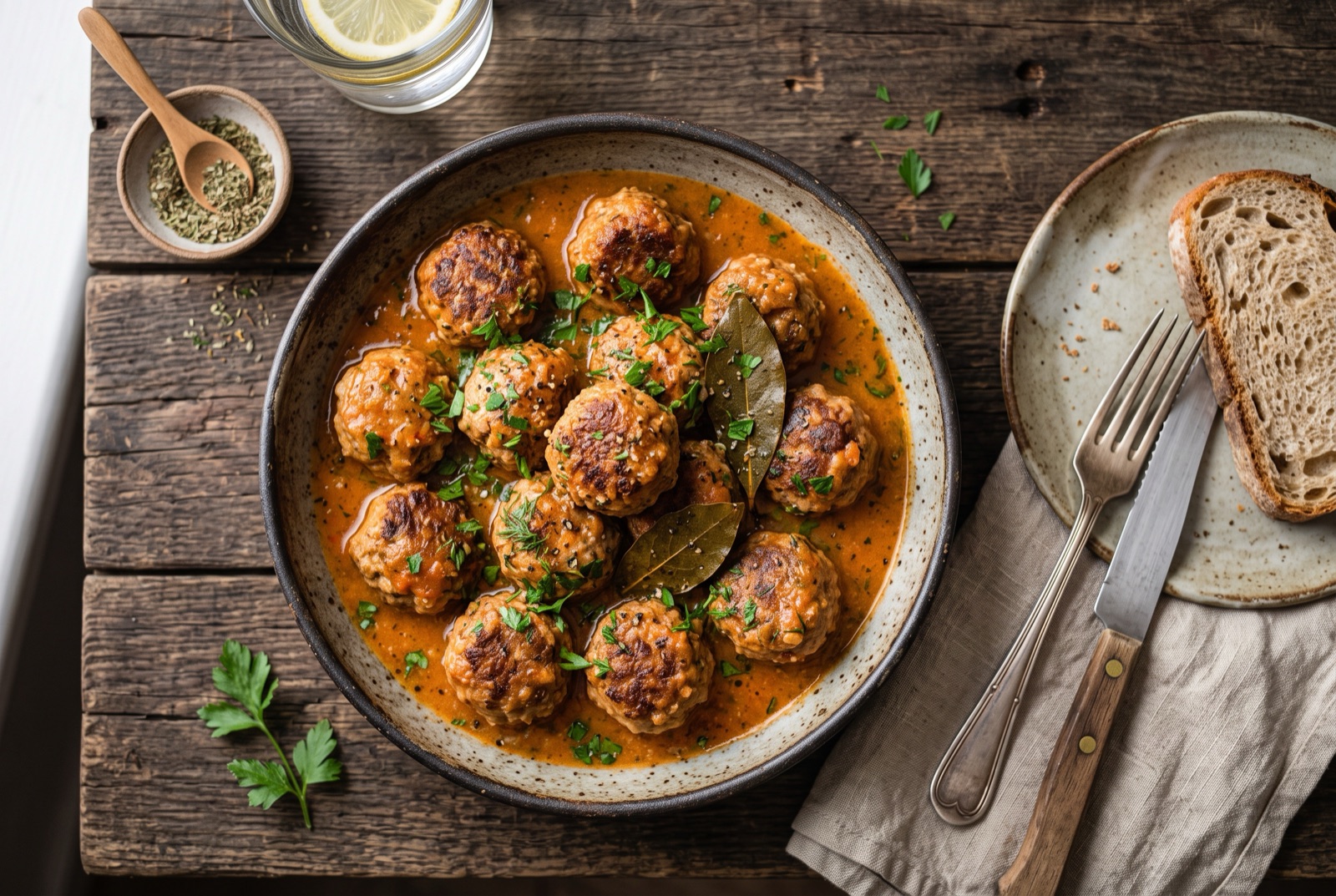
Chiftele marinate are fried meatballs given a second life in sauce. The mix is pork and beef with bread soaked in milk, grated onion and garlic — soft enough that the finished meatballs are tender rather than bouncy — rolled in flour, fried until the crust is properly brown, then dropped into a thin tomato sauce with bay and left to simmer. The point is the exchange: the crust softens and soaks up sauce, and the sauce takes on the fried meat flavour. Eaten hot with polenta or cold from the fridge the next day, when many Moldovans quietly prefer them.

- Gate
- Moldova
- Prep
- 25 min
- Cook
- 40 min
- Total time
- 1 hr 25 min incl. 20 min rest
- Serves
- 4
- Status
- Easy
- Nutrition / serving · estimated
- Calories 590 kcal
- Protein 36 g
- Carbs 28 g
- Fat 37 g
- Fiber 3 g
- Sodium 950 mg
Why this recipe works.
- Milk-soaked bread rather than dry breadcrumbs, which is what makes the meatballs tender instead of springy.
- A proper hard fry before stewing, so the crust flavours the sauce instead of the meatballs poaching pale.
- Sauce kept deliberately thin so the meatballs absorb it and swell rather than sitting in paste.
- Better on day two, which makes it a real make-ahead dish rather than one that merely survives reheating.
Ingredients.
17 itemsFor the meatballs
For frying
For the sauce
To finish
Equipment
- Large frying pan
- Wide pot or deep sauté pan with a lid
- Grater
Instructions.
Soak the bread
Tear the bread into a bowl and pour the milk over it. Leave it five minutes until it has gone completely soft, then squeeze it gently so it is damp rather than dripping and break it up with your fingers.
Mix and chill
Combine both minces with the soaked bread, grated onion, garlic, egg, parsley, salt and pepper and work it with your hands for a minute until it is uniform and slightly tacky. Cover and chill for 20 minutes so it firms up.
Tip Fry a teaspoon of the mix now and taste it — this is your only chance to fix the seasoning.
Roll and coat
With damp hands, roll the mixture into walnut-sized balls, about 24 of them, and flatten each one very slightly. Roll them through the flour and tap off the excess so only a thin dusting remains.
Fry until crusted
Heat the oil until a pinch of flour sizzles immediately, then fry the meatballs in batches for about 6 minutes, turning them, until they are deep brown all over and firm when pressed. Drain them on paper.
Tip They do not need to be cooked through here — the simmer finishes them.
Make the sauce
Pour off most of the oil, leaving a tablespoon and the browned bits behind. Fry the tomato paste for a minute until it darkens, then add the passata, bay leaves and water and simmer for 10 minutes, until the raw metallic edge is gone.
Stew the meatballs
Slide the meatballs into the sauce in a single layer, shake the pan to settle them, and simmer gently uncovered for 20 minutes. They are ready when they have swelled slightly, the crust has softened and the sauce has thickened just enough to cling.
Finish and rest
Scatter over the dill, take the pan off the heat and let it stand ten minutes before serving — the meatballs keep absorbing sauce as they cool slightly. Taste the sauce and correct with salt or a pinch of sugar if the tomatoes were sharp.
Tips from our kitchen.
- Squeeze the soaked bread out only lightly — some milk should stay in it. Wringing it dry defeats the point of soaking it.
- Grate the onion rather than chopping it. Chopped onion stays crunchy inside the meatball and makes it fall apart at the seams.
- Chill the mixture for 20 minutes before rolling. Cold mince holds its shape in the pan and is far less sticky to handle.
- Fry a test meatball first, taste it and adjust salt in the raw mix. It is the only chance you get to season the inside.
- Get the oil properly hot before the first batch — a lukewarm pan absorbs oil into the flour coating and turns it greasy.
- Once the meatballs go into the sauce, simmer gently and do not stir hard. Nudge the pan instead, or they break up.
Substitutions.
- Pork and beef mix → All beef, all pork, or turkey thigh mince
- All beef is firmer and needs an extra spoonful of soaked bread; turkey works but wants extra fat, so add a grated spoon of butter to the mix.
- Milk-soaked bread → Breadcrumbs soaked in stock or water
- Makes the dish dairy-free. Use two thirds the volume of crumbs, since they absorb more than torn bread.
- Flour coating → Cornstarch or fine semolina
- Both brown well; semolina gives a slightly grainier crust that holds sauce nicely.
Variations.
- Chiftele cu mărar
- A generous handful of chopped dill worked into the mince — very common in Moldovan homes and completely changes the aroma.
- With vegetables in the sauce
- Sliced carrot and red pepper softened in the pan before the tomatoes go in, turning it into a one-pot meal.
- Chiftele reci
- Served cold the next day, set in their own lightly jellied sauce, as a starter with bread and pickles.
Storage & reheating.
Refrigerate up to four days in the sauce — the flavour improves noticeably by day two. Reheat covered over low heat with a splash of water, since the meatballs keep drinking the sauce as they sit. They freeze well in sauce for three months; thaw overnight and reheat slowly so the meatballs do not toughen.
Serve with
Mămăliguță or plain bread, with pickled cucumbers and a spoon of sour cream on the side.
The story behind Chiftele Marinate.
The word chiftea comes through Turkish köfte from Persian kufta, and the meatball is one of the Ottoman Empire's most successful exports across the Balkans. Every country on the route kept it and bent it: Greek keftedes, Bulgarian kyufte, Serbian ćufte, Romanian and Moldovan chiftele. The distinguishing local moves are the milk-soaked bread that makes them soft, the generous grated onion, and — in this version — the second cooking in sauce, which is what marinate means here. Not marinated in the modern sense of soaking raw meat, but stewed in a seasoned liquid after frying.
This two-step method has a practical origin. Fried meatballs alone go dry and firm within an hour; meatballs sitting in sauce stay moist for days and can be stretched to feed more people by adding more sauce. In a household economy where meat was expensive and guests arrived unannounced, that mattered. It also produces a dish that is genuinely better reheated, which is why chiftele marinate turn up so often at family gatherings — they can be made the day before without any loss.
Moldovan tomato sauce for this is deliberately light: passata or grated fresh tomato thinned with water or stock, bay leaves, black pepper, sometimes a spoonful of flour to give it body, occasionally a splash of vinegar or a little sugar to balance a sharp batch of tomatoes. It should be pourable, not thick like an Italian ragù, because the meatballs need liquid to absorb. Some households add sliced carrot and pepper to the sauce, some finish it with dill, and almost all serve it with mămăliguță or bread. The cold version — chiftele set in their own jellied sauce, straight from the fridge — is a genuine Moldovan pleasure and a standard part of the day-after table.
Questions, answered.
Why do my meatballs fall apart in the sauce?
Usually the mixture was too wet, or they were not fried long enough to form a crust before going into the liquid. Squeeze the bread lightly, chill the mixture before rolling, and fry each meatball until it is browned all over and firm to a gentle press.
Do I have to fry them first?
For this dish, yes. Frying builds the crust that flavours the sauce and holds the meatballs together during the simmer. Baking them at 200°C for 20 minutes is a lower-fat alternative that works, but the sauce ends up noticeably less rich.
What does marinate mean here?
In Romanian and Moldovan usage it refers to the second cooking in a seasoned tomato liquid after frying, not to soaking raw meat beforehand. The meatballs sit and absorb the sauce, which is where the dish gets its name and most of its character.
Can I make them the day before?
Yes, and it is the better plan. Cook the dish completely, cool it and refrigerate overnight — the meatballs absorb the sauce and the bay and pepper spread through everything. Reheat gently with a splash of water to loosen the thickened sauce.
My sauce tastes sharp and metallic — how do I fix it?
That is under-cooked tomato, common with tinned tomatoes or a very acidic batch. Simmer the sauce five minutes longer before adding the meatballs, and if it is still sharp, stir in half a teaspoon of sugar or a small grated carrot to round it out.
You might also like.
All recipes →
Keep exploring Moldova.
Moldova has 9 more dishes in the atlas — Alivenci and Colaci Moldovenești, and 7 more.
Recipe by The DishRoute Kitchen · published August 20, 2026 · updated August 20, 2026