Chushki Byurek.
Bulgarian Cheese-Stuffed Fried Peppers
Чушки бюрек · say it: CHOOSH-kee byoo-REK
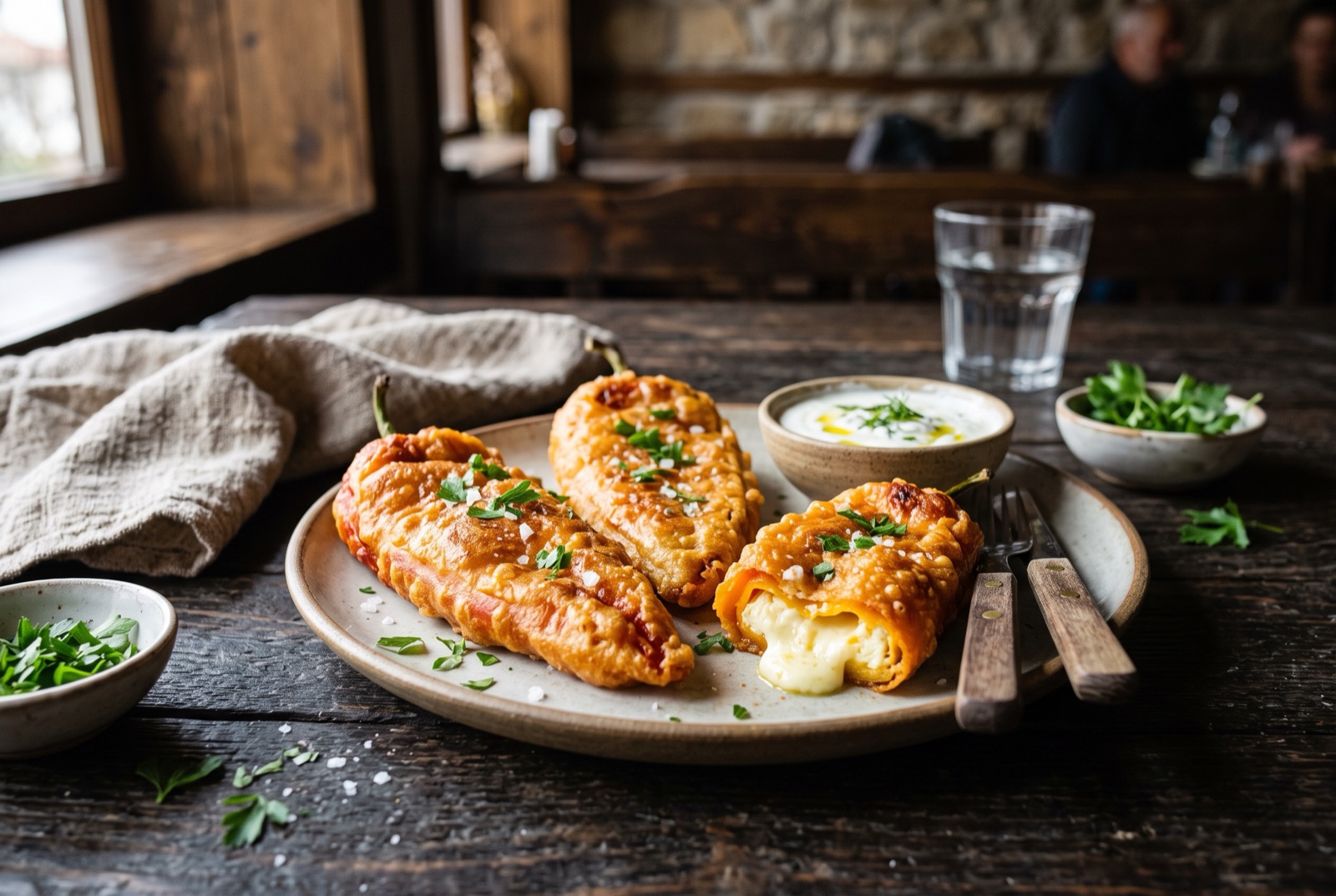
Chushki byurek is a whole roasted red pepper, peeled, filled with a mixture of crumbled sirene and egg, then floured, dipped in batter and shallow-fried until the coating blisters into a crisp golden shell. Cutting into one releases steam and a soft, salty, slightly molten cheese filling against the sweet collapsed flesh of the pepper. The contrast is the whole dish: sweet and sour pepper, sharp salty cheese, and a fried crust that goes soft within minutes, which is why it is always served immediately. It is a fixture of Bulgarian taverns and one of the reasons vegetarians eat surprisingly well there.

- Gate
- Bulgaria
- Prep
- 40 min
- Cook
- 25 min
- Total time
- 1 hr 25 min incl. 20 min rest
- Serves
- 4
- Status
- Medium
- Nutrition / serving · estimated
- Calories 520 kcal
- Protein 22 g
- Carbs 24 g
- Fat 37 g
- Fiber 4 g
- Sugar 10 g
- Sodium 980 mg
Why this recipe works.
- Roasts and peels the peppers properly rather than using jarred ones, which are too soft to hold a filling.
- Binds the cheese with egg and a spoonful of flour so the filling sets instead of leaking into the frying oil.
- A double coating — flour then batter — that actually sticks to a slippery peeled pepper.
- Fries at a specified oil temperature, because too cool means greasy and too hot means raw filling.
Ingredients.
11 itemsFor the peppers
For the filling
For the coating
For frying
To serve
Equipment
- Grill or gas flame for roasting
- Deep frying pan
- Two shallow bowls for coating
- Kitchen tongs
Instructions.
Roast the peppers
Char the peppers whole over a gas flame or under a hot grill, turning every couple of minutes, until the skins are black and blistered on every side but the flesh still holds its shape — about 12 minutes. Move them into a bowl and cover it tightly with a plate or clingfilm.
Peel carefully
After 10 minutes of steaming, rub the blackened skin away with your fingers, leaving the stem attached. Make a single lengthways slit down one side of each pepper and lift out the seed cluster without tearing the walls or splitting the pepper in two.
Tip Work over a bowl and never under a running tap — rinsing washes off the roasted juices along with the skin.
Mix and stuff the filling
Mash the crumbled cheese with the egg, the tablespoon of flour, the black pepper and the herbs until it holds together like a thick paste. Spoon it into each pepper through the slit, filling to about three-quarters, then press the opening closed with your fingers.
Chill before coating
Lay the stuffed peppers on a plate, seam side down, and refrigerate for 20 minutes. The filling firms up and stays where it belongs once it hits hot oil.
Coat and fry
Beat the eggs with the milk in one bowl and put the dredging flour in another. Heat the oil to 170°C in a wide pan — a cube of bread should turn gold in about 40 seconds. Roll each pepper in flour, shake off the excess, dip it fully in egg, and lower it seam side down into the oil.
Tip Fry no more than three at a time. Crowding drops the oil temperature and the coating soaks up fat instead of setting.
Fry until blistered
Cook for about 2 minutes per side, turning once with tongs, until the coating is deep gold and covered in small blisters and the filling has swelled slightly. Lift onto a rack rather than kitchen paper so the underside stays crisp.
Serve at once
Take the peppers to the table straight from the pan with a bowl of cold thick yoghurt for dipping. Warn everyone that the filling is much hotter than it looks — the first bite catches people out.
Tips from our kitchen.
- Use long, thick-fleshed red peppers — kapiya, ramiro or similar. Thin-walled peppers tear as soon as you try to stuff them.
- Steam the roasted peppers in a covered bowl for ten minutes before peeling. The trapped steam lifts the skin off in sheets instead of shreds.
- Leave the stem on. It gives you something to hold while stuffing, coating and turning the pepper in the pan.
- Do not overfill. The cheese expands as it heats, and a pepper packed tight will split along its seam and empty itself into the oil.
- Chill the stuffed peppers for 20 minutes before coating. A cold, firm filling stays inside far more reliably than a warm one.
- Fry in oil at about 170°C — hot enough that the batter sets in the first ten seconds, cool enough that the cheese has time to soften through.
Substitutions.
- Bulgarian sirene → Feta, or feta mixed with a little ricotta or curd cheese
- Straight feta can be very salty and slightly rubbery when hot. Cutting it with a third ricotta gives a softer filling closer to Bulgarian sirene.
- Fresh roasted peppers → Good-quality jarred whole roasted peppers, drained and dried very well
- It works in an emergency, but jarred peppers are softer and wetter, so handle them gently and expect a less structured result.
- Egg-and-flour batter → Beaten egg alone, with the pepper simply floured and egged
- This is the lighter, more common home version — less crisp, but easier and less likely to slide off during frying.
Variations.
- Baked chushki byurek
- Stuffed peppers arranged in a dish, brushed with oil and baked at 200°C for 25 minutes. Less crisp, considerably less oil, and what most Bulgarian households do on a weekday.
- With egg and dill
- A whole beaten egg and plenty of chopped dill mixed into the cheese, which puffs slightly in the pan and makes the filling lighter and greener.
- Chushki with rice and mince
- The non-vegetarian relative, filled with minced pork and rice and stewed in tomato sauce rather than fried — closer to stuffed peppers than to this dish.
Storage & reheating.
These are a serve-immediately dish. The crisp coating starts softening within five minutes and is completely gone after twenty, so plan to fry them as the table sits down. Leftovers keep 2 days refrigerated and are pleasant cold, eaten as they are rather than reheated. If you must reheat, use a 200°C oven for 8 minutes on a rack so the base does not steam — never a microwave. You can roast, peel and stuff the peppers up to a day ahead and keep them covered in the fridge, coating and frying just before serving.
Serve with
Thick yoghurt for dipping, a slice of bread, and a cold tarator if the weather deserves it.
The story behind Chushki Byurek.
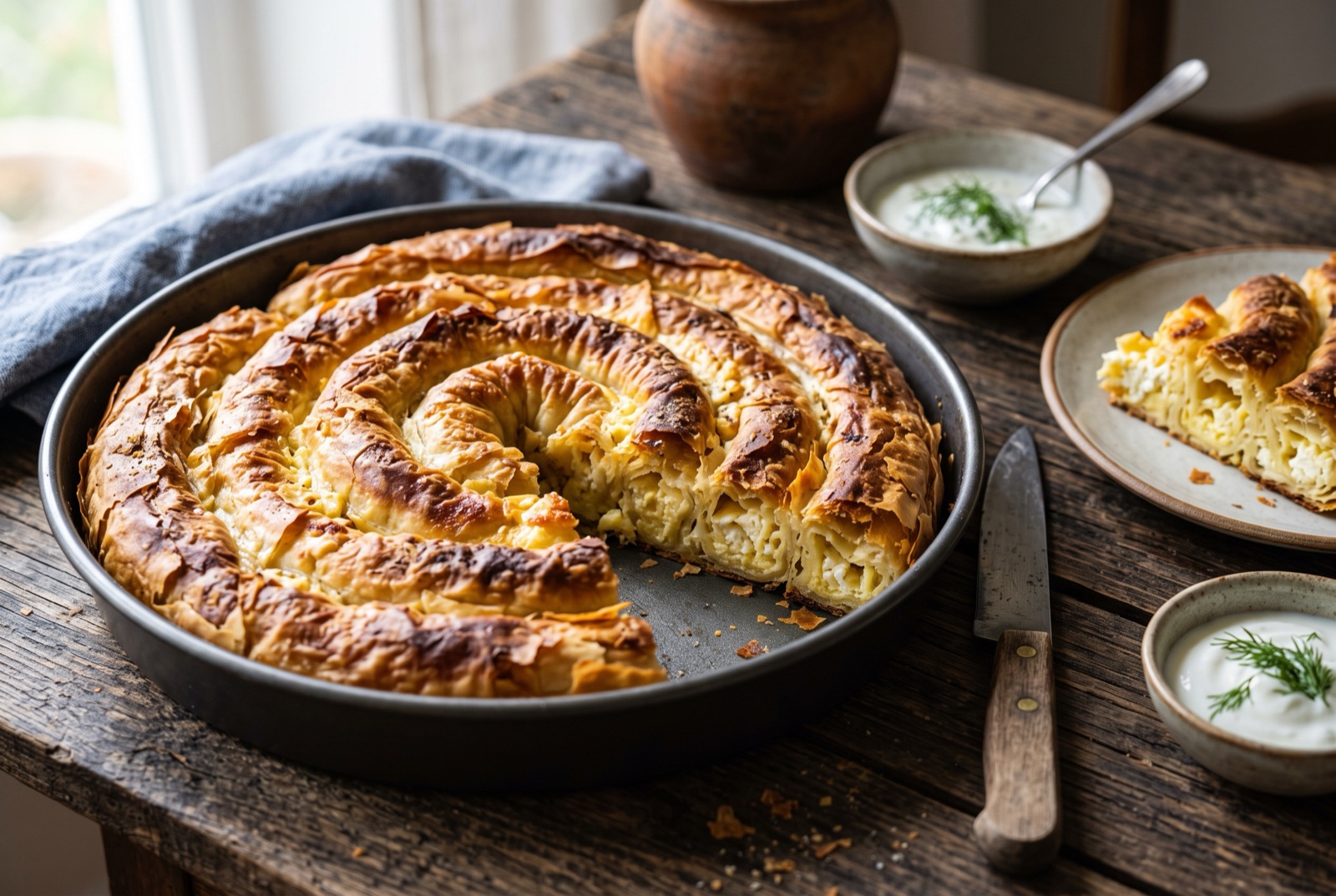
Despite the name, this has nothing to do with filo. Byurek here comes from the same Turkish börek root as banitsa's cousins, but Bulgarians attached it to the idea of a stuffed, fried thing rather than to pastry specifically — a linguistic drift that regularly confuses visitors who order it expecting a pie. What arrives is a pepper.
The dish belongs to the Bulgarian pepper season, which is a genuine national event. From late August the markets fill with red kapiya peppers — long, thick-fleshed, pointed and sweet — and the smell of them roasting on outdoor drums drifts through every neighbourhood. Most of that harvest is destined for lyutenitsa, the pepper and tomato relish canned by the crateful, or for peeled peppers frozen in bags for winter. Chushki byurek is what happens to some of them on the day they are roasted, when the flesh is at its sweetest and the skins slip off in whole sheets.
It is also a quietly important dish in the Orthodox calendar sense. Bulgaria has long fasting periods where dairy and eggs are also excluded, so chushki byurek is not a fasting dish — but outside those weeks it is one of the main things a vegetarian orders in a mehana, alongside sirene po shopski and fried courgettes with garlic yoghurt. Tavern menus list it under a heading that translates roughly as "without meat", and it holds its own on a table full of grilled pork. Variations run from the plain cheese filling given here to versions with egg, dill, spring onion or a spoonful of tomato, and every household considers its own the sensible one.
Questions, answered.
Why does the filling leak out during frying?
Usually because the peppers were overfilled or the filling was too loose. Bind the cheese with egg and a spoonful of flour so it sets rather than melts, fill each pepper only about three-quarters, and press the opening closed. Chilling the stuffed peppers for twenty minutes before coating helps a lot, and so does making sure the seam side goes into the oil first so it seals immediately.
What kind of peppers should I use?
Long, pointed, thick-walled sweet red peppers — kapiya in Bulgaria, ramiro or corno di toro elsewhere. They roast to a sweet, meaty texture and their walls are strong enough to hold a filling. Round bell peppers are workable but awkward to stuff and coat, and thin-skinned frying peppers tear apart during peeling.
Can I bake these instead of frying them?
Yes, and many Bulgarian households do exactly that on ordinary days. Skip the batter, brush the stuffed peppers with oil, and bake at 200°C for about 25 minutes until the cheese is bubbling and the edges have caught colour. You lose the crisp shell entirely, so treat it as a different, lighter dish rather than a substitute for the fried version.
Why is a fried pepper called byurek?
The word comes from the same Turkish börek root as the region's filo pies, but in Bulgarian it drifted to mean something stuffed and fried rather than something made of pastry. There is no filo in chushki byurek at any point. Visitors who order it expecting a pie are a running joke in Bulgarian restaurants.
Can I prepare them in advance for guests?
Partly. Roast, peel and stuff the peppers up to 24 hours ahead and keep them covered in the fridge — this is the slow part of the work. The flouring, battering and frying must happen right before serving, because the coating goes soft within minutes of leaving the pan and cannot be crisped up again convincingly.
You might also like.
All recipes →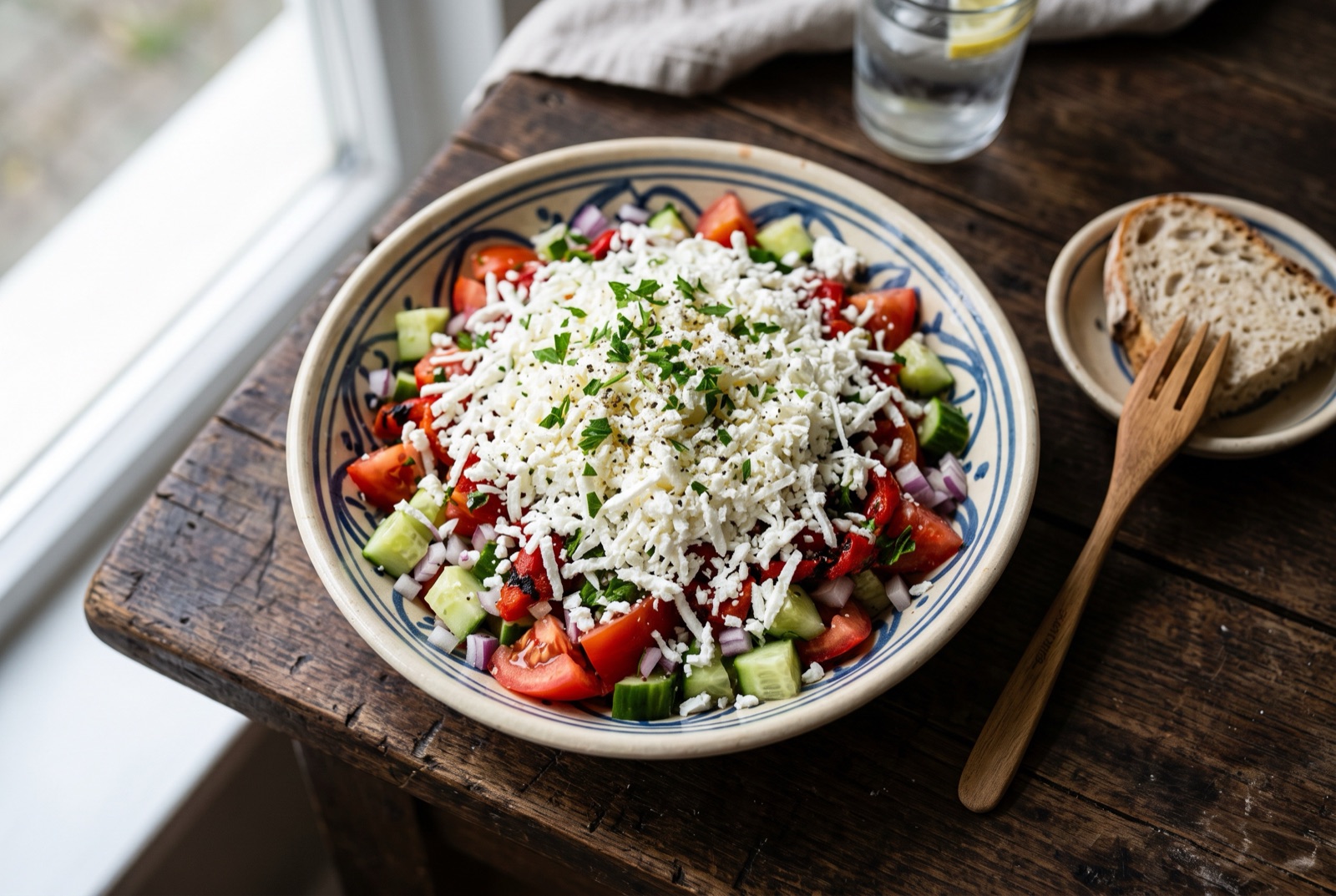
Keep exploring Bulgaria.
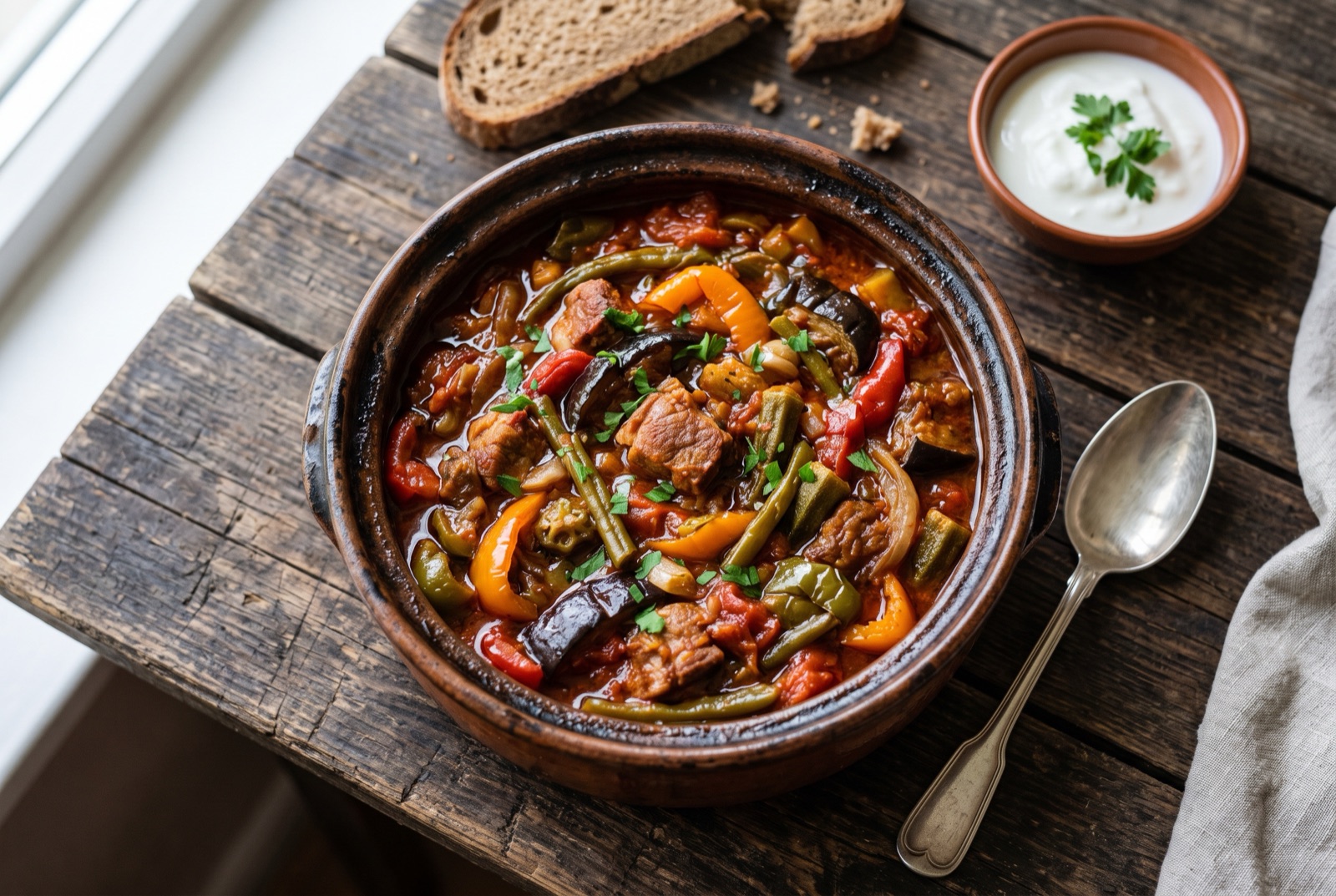
Bulgaria has 9 more dishes in the atlas — Banitsa and Bob Chorba, and 7 more.
Recipe by The DishRoute Kitchen · published August 20, 2026 · updated August 20, 2026