Banitsa.
Bulgarian Coiled Filo Pie with Sirene
Баница · say it: BAH-nee-tsah
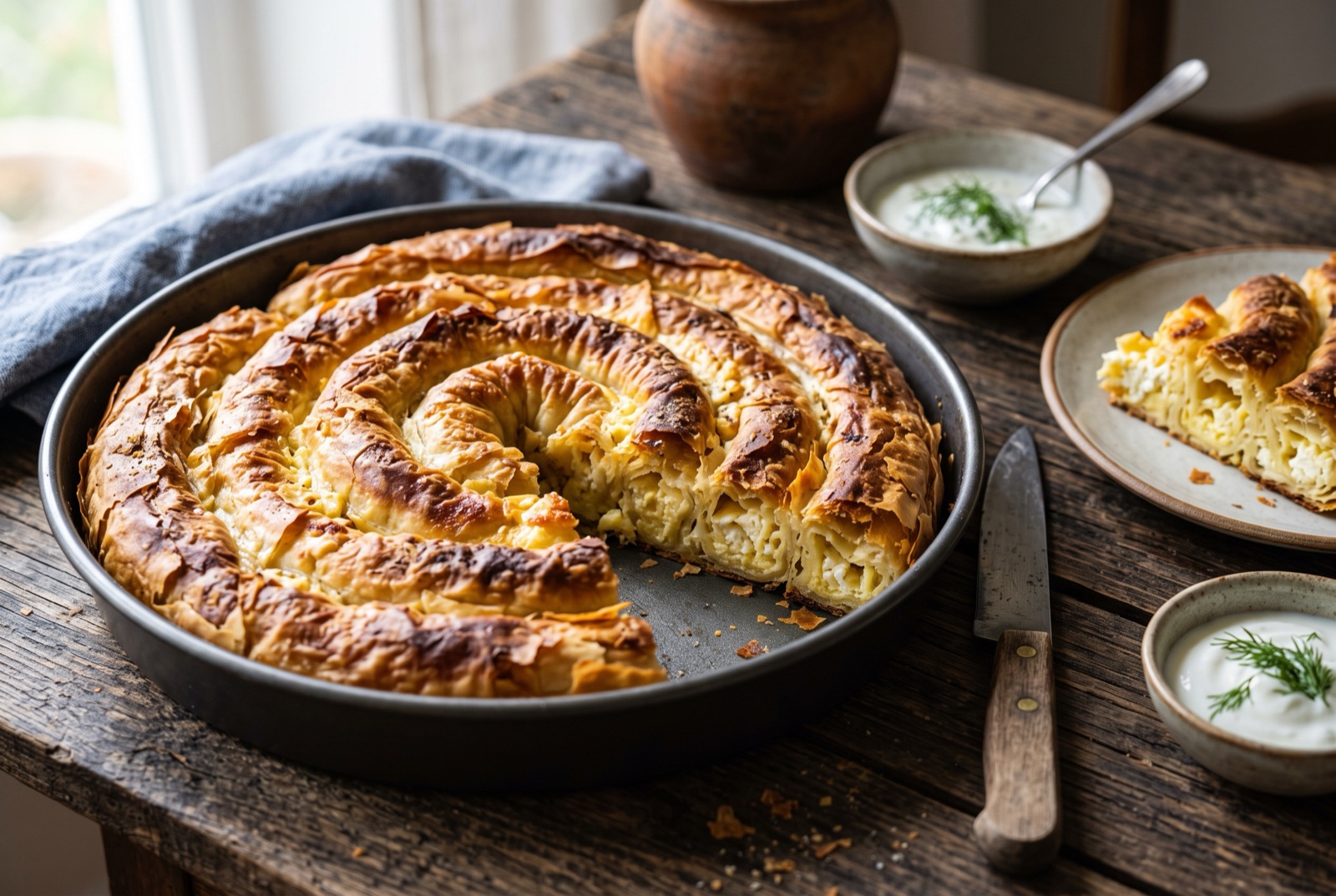
Banitsa is a coiled cheese pie: sheets of filo smeared with a wet mixture of eggs, thick yoghurt and crumbled sirene, rolled into loose ropes and wound into a spiral in a round tin. Baked, it comes out with two completely different textures in the same slice — brittle, blistered, deep-gold pastry on top, and a soft, almost savoury-custard interior where the filling has soaked into the layers. The taste is salty and tangy rather than rich; sirene brings the salt, yoghurt brings a sour edge that keeps the whole thing from feeling heavy. Bulgarians eat it warm for breakfast with boza or ayran, buy it by the wedge from bakery windows, and make an oversized version with fortune notes hidden inside for New Year.

- Gate
- Bulgaria
- Prep
- 30 min
- Cook
- 45 min
- Total time
- 1 hr 30 min incl. 15 min rest
- Serves
- 8
- Status
- Medium
- Nutrition / serving · estimated
- Calories 430 kcal
- Protein 16 g
- Carbs 34 g
- Fat 26 g
- Fiber 1 g
- Sugar 3 g
- Sodium 780 mg
Why this recipe works.
- Uses the real Bulgarian binder — yoghurt plus egg, not béchamel — so the filling tastes tangy instead of merely rich.
- Coiled in a round tin, which gives you crisp outer rings and a soft centre in the same pie.
- A short soaking rest before baking stops the classic problem of dry, papery filo layers in the middle.
- Works with supermarket filo and feta, with honest notes on what changes when you use them.
Ingredients.
10 itemsFor the pie
For the filling
For brushing
Equipment
- Round 26–28 cm baking tin or ovenproof dish
- Pastry brush
- Large mixing bowl
Instructions.
Make the filling
Beat the eggs in a large bowl until smooth, then whisk in the yoghurt and baking soda — it will froth slightly at the edges. Fold in the crumbled cheese and the black pepper. The mixture should pour thickly off the spoon; if it clumps, loosen it with the milk a splash at a time.
Tip Taste before salting. Between the cheese and the pastry, most banitsa needs no extra salt at all.
Prepare the tin and pastry
Oil a round 26–28 cm tin and heat the oven to 190°C. Unroll the filo onto a clean work surface and cover it with a barely damp tea towel, pulling out one or two sheets at a time so the rest cannot dry out and crack.
Fill and roll the ropes
Lay one filo sheet flat, brush it lightly with melted butter, and spoon a line of filling along the long edge, spreading it thinly across roughly half the sheet. Roll the sheet up loosely into a long, floppy rope — loose enough that you can see the layers at the ends.
Tip Do not overfill. Two heaped tablespoons per sheet is plenty; more and the rope splits as you coil it.
Coil the pie
Curl the first rope into a spiral in the centre of the tin, then wrap each new rope around the outside of the last, leaving about a finger's width between the rings. Keep going until the tin is filled to the edge, tucking any loose ends underneath.
Soak and rest
Whisk any leftover filling with a splash of milk and pour it into the gaps between the coils, then brush the whole surface generously with the remaining butter. Leave the pie to stand for 15 minutes so the filling seeps into the layers instead of sitting on top.
Bake
Bake for 40–45 minutes, until the top is deep gold and blistered, the coils have pulled apart slightly, and a skewer pushed into the centre comes out hot and clean rather than wet. If the surface colours too fast in the first 20 minutes, lay a sheet of foil loosely on top.
Rest before cutting
Let the pie settle in its tin for at least 10 minutes before cutting — straight from the oven the filling is still loose and the slices collapse. Cut wedges through the coils so each portion has both crisp outer rings and soft centre.
Tips from our kitchen.
- Keep the filo you are not working with under a barely damp tea towel — uncovered sheets go brittle in about three minutes and tear when you roll them.
- The filling should be pourable, like thick pancake batter. If it holds its shape on the spoon, loosen it with a splash of milk or it will not soak into the pastry.
- Roll the ropes loosely, not tightly. A tight coil bakes into a dense spiral; a loose one traps steam and stays layered.
- Leave finger-width gaps between the coils in the tin. They close up as the pastry expands, and the gaps let the filling bubble up instead of pooling underneath.
- Bake until the top is genuinely dark gold, not pale beige. Underbaked banitsa is soggy in the middle and tastes of raw flour.
- Sprinkle the hot pie with a few drops of water and cover it with a towel for five minutes after baking if you prefer a softer top — this is the traditional finish, and it is a matter of taste rather than correctness.
Substitutions.
- Bulgarian sirene → Greek feta, or half feta and half drained cottage cheese
- Sirene is saltier and crumblier than most feta. If your feta is very salty, rinse it briefly; if it is mild and creamy, add a pinch more salt to the filling.
- Thick Bulgarian yoghurt → Full-fat Greek yoghurt, or plain yoghurt strained for an hour
- Runny supermarket yoghurt makes a filling that leaks to the bottom of the tin and steams the base. Thickness matters more than brand.
- Melted butter for brushing → Sunflower oil, or half butter and half oil
- Sunflower oil is what most Bulgarian home cooks actually use, and it crisps very well. Butter tastes better; oil is more forgiving if you work slowly.
Variations.
- Banitsa s kusmeti
- The New Year pie: small foil-wrapped fortunes and a coin are tucked between the coils before baking, and each person reads their own from their slice.
- Tikvenik
- The sweet cousin, coiled the same way but filled with grated pumpkin, sugar, walnuts and cinnamon, and dusted with icing sugar.
- Banitsa sas spanak
- Wilted, squeezed spinach and chopped spring onions folded into the cheese filling — lighter, greener, and common through Lent when made without egg.
Storage & reheating.
Banitsa is at its best two hours out of the oven, warm rather than hot. It keeps 2 days covered at room temperature; refrigerating it makes the pastry leathery. Revive slices in a 180°C oven for 8–10 minutes — never in a microwave, which turns crisp filo into a damp cloth. You can assemble the whole coil, cover it and refrigerate overnight, then bake straight from cold with an extra 5 minutes. Baked banitsa freezes acceptably in portions; reheat from frozen at 170°C for about 20 minutes.
Serve with
Ayran or boza for breakfast, and a plate of raw peppers or tomatoes alongside if you are eating it as a light lunch.
The story behind Banitsa.
Banitsa belongs to the wide family of filo pies that stretches across the former Ottoman world — burek in Bosnia, börek in Turkey, tiropita in Greece, placinta in Romania. Arguing about which came first is a Balkan pastime with no winner: thin stretched pastry travelled with the empire, and every kitchen it landed in already had cheese, eggs and an oven. What makes the Bulgarian version its own thing is the filling. Where a Bosnian burek is meat and a Greek tiropita is cheese bound with béchamel or egg, banitsa is bound with yoghurt, and Bulgarian yoghurt is sharp enough to be tasted. It is the difference between a rich pie and a tangy one.
The shape matters too. The classic banitsa is vita — coiled — rather than layered flat, which means every slice cuts through pastry and filling in alternating rings, and the outer coils crisp while the centre stays yielding. Village cooks stretched their own dough, korа, on a floured table until it was thin enough to read through; the sheet was then torn rather than cut. Bought filo is now standard even in Bulgaria, and nobody sensible apologises for it.
The pie carries one genuinely important ritual. On New Year's Eve, and in some households on Christmas Eve, a banitsa is baked with small paper fortunes wrapped in foil pushed between the coils, along with a coin and often a cornel-cherry twig. Everyone takes a slice, unfolds their note, and reads out the year they have been dealt — health, love, travel, money. The coin means luck. It is the one night when a badly written fortune is a family event, and it explains why almost every Bulgarian can describe the smell of banitsa coming out of the oven at eleven at night.
Questions, answered.
Why is my banitsa soggy in the middle?
Almost always too much liquid or too little heat. The yoghurt must be thick, not pouring yoghurt, and the pie needs a properly hot oven — 190°C or so — so the pastry sets before the filling soaks all the way through. Baking in a dark metal tin rather than glass also helps the base cook through, and letting the finished pie sit for ten minutes lets the centre firm up.
Can I make banitsa without eggs?
Yes, and Bulgarians do it every Lent. Leave out the eggs, use a little more yoghurt, and the pie becomes softer and more crumbly rather than custardy. For a fully vegan version, skip the dairy entirely and fill the coils with wilted spinach, spring onion, rice and plenty of black pepper, brushing the filo with sunflower oil.
What is the difference between banitsa and burek?
They are close relatives from the same Ottoman pastry tradition, and the names are used loosely across the Balkans. In practice, Bulgarian banitsa is bound with yoghurt and egg and is most often a cheese pie coiled in a round tin, while Bosnian burek specifically means the minced-meat version, with other fillings getting their own names. Which one came first is disputed and not worth settling.
Do I need to make my own filo?
No. Hand-stretched kora is thinner and slightly chewier and it is a genuine pleasure to eat, but shop-bought filo makes a very good banitsa and is what most Bulgarian households now use on an ordinary weekday. Buy the thinnest sheets you can find, and thaw frozen filo fully in the fridge so the sheets separate without tearing.
Can I assemble it the night before?
Yes. Coil the pie in its tin, cover tightly and refrigerate for up to 12 hours, then bake straight from the fridge with roughly 5 extra minutes. Do not leave it assembled at room temperature for hours, because the wet filling will dissolve the bottom sheets and the base will never crisp.
You might also like.
All recipes →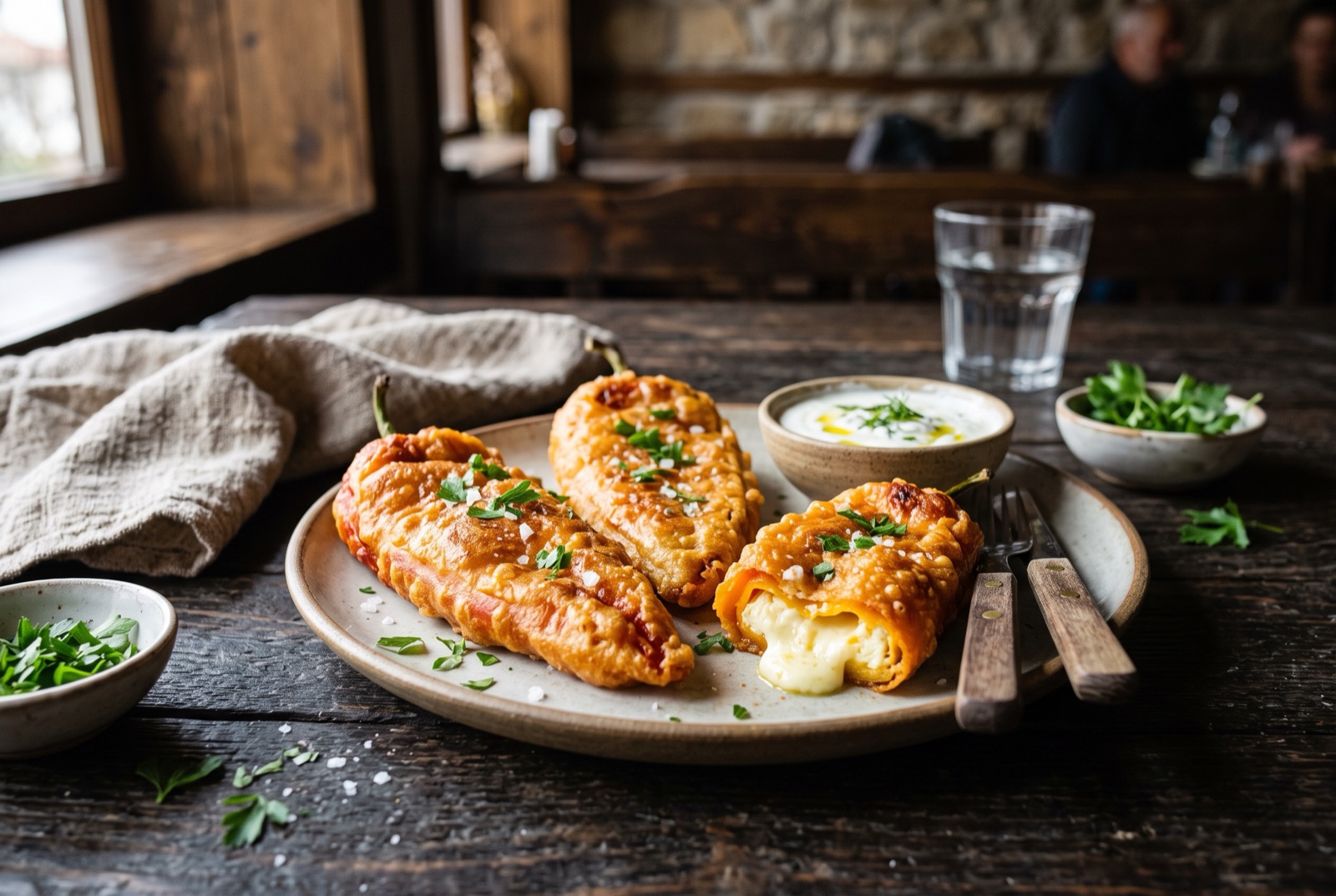
Bulgaria1 hr 25 min
Chushki Byurek
Bulgarian Cheese-Stuffed Fried Peppers
Bulgaria25 min
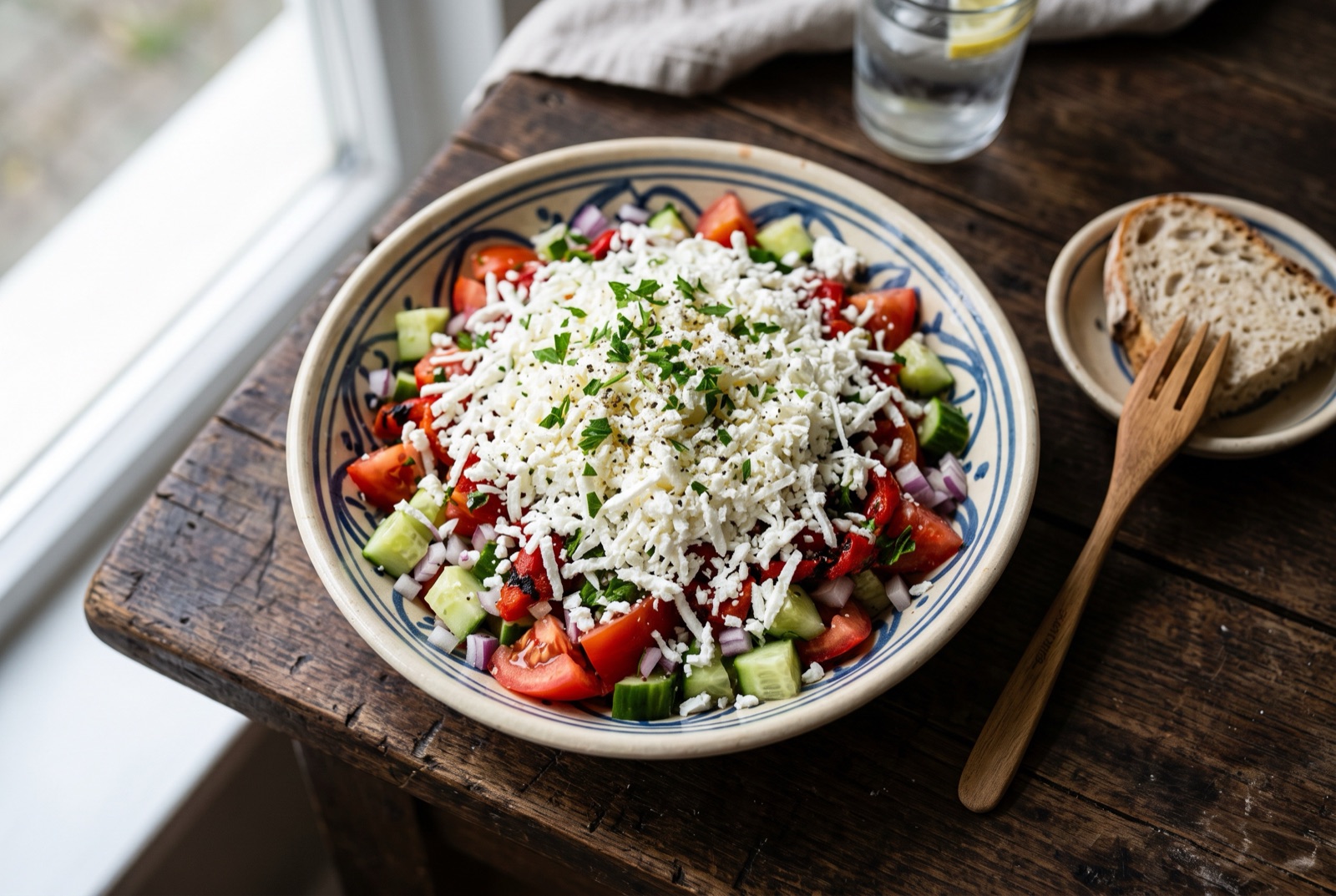
Shopska Salata
Bulgarian Tomato, Cucumber and Sirene Salad
Bulgaria1 hr 20 min
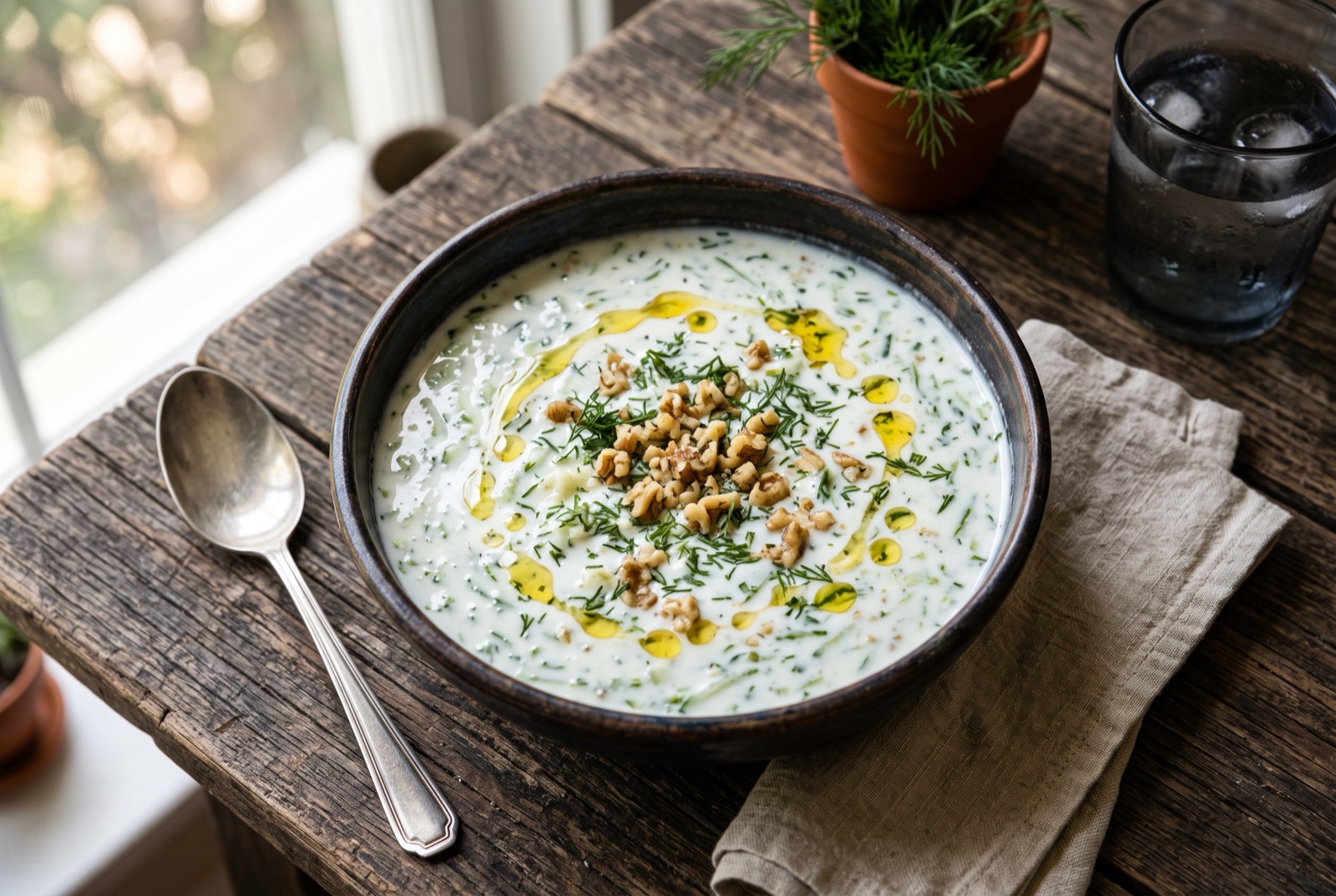
Tarator
Bulgarian Chilled Cucumber Yoghurt Soup
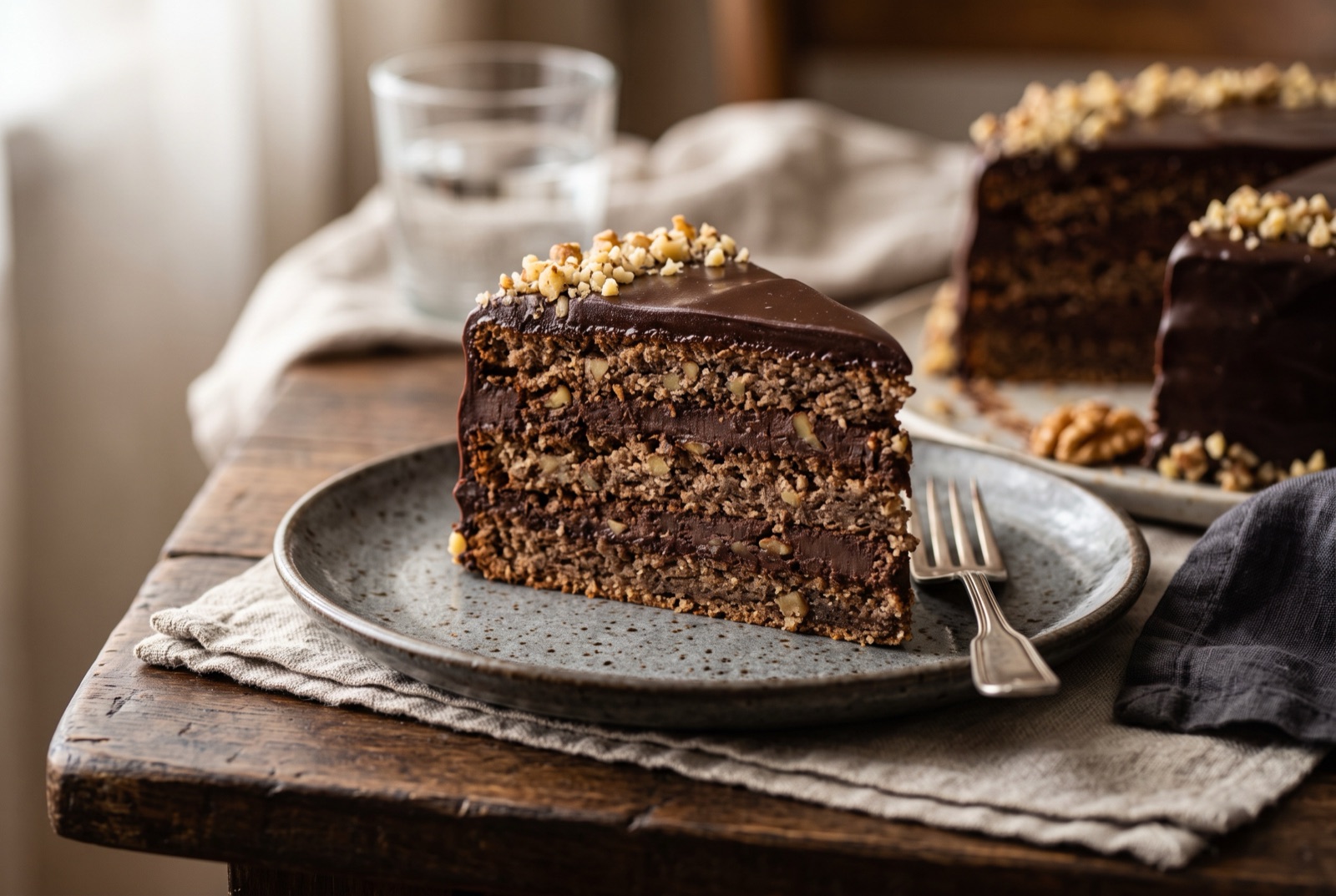
Bulgaria14 hr
Garash Torta
Bulgarian Flourless Walnut Chocolate Cake
Keep exploring Bulgaria.
Bulgaria has 9 more dishes in the atlas — Bob Chorba and Chushki Byurek, and 7 more.
Recipe by The DishRoute Kitchen · published August 20, 2026 · updated August 20, 2026