Sandwich Cubano.
Pressed Ham and Roast Pork Sandwich
Sándwich cubano · say it: SAHND-weech koo-BAH-noh
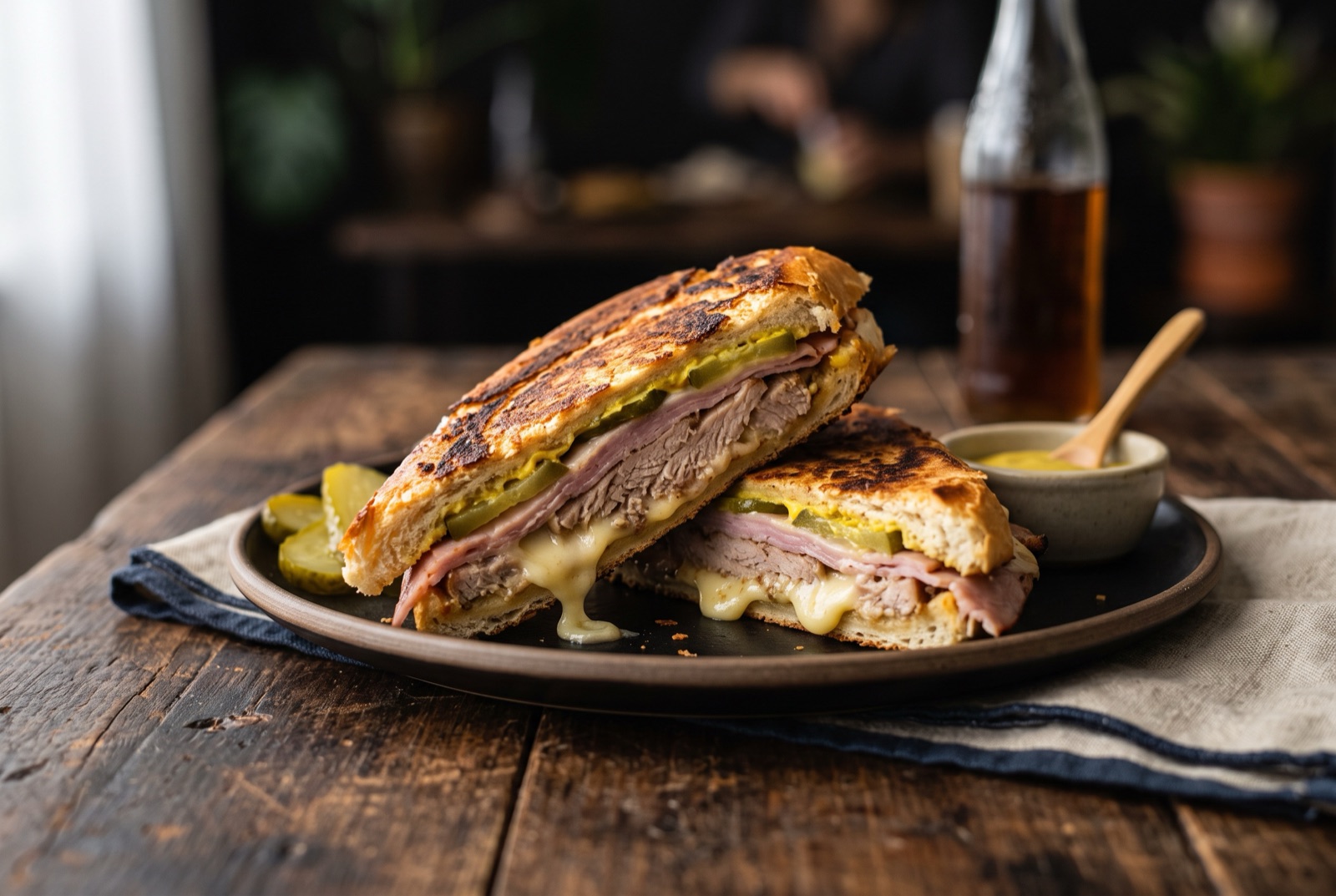
A Cuban sandwich is five ingredients stacked in a soft-crusted loaf and then crushed flat against a hot griddle until the outside is thin, buttery and brittle and the inside has melted into one thing. Roast pork brings garlic and sour orange, ham brings sweetness and salt, Swiss cheese binds it, dill pickles and yellow mustard cut through all of it. There is no lettuce, no tomato and no mayonnaise, and adding them is the fastest way to get corrected by a Cuban. It is a leftovers sandwich by design — it exists because somebody roasted a pork shoulder — and it is at its best about fifteen seconds after it comes off the press.

- Gate
- CubaHavana and Tampa
- Prep
- 15 min
- Cook
- 10 min
- Total time
- 25 min
- Serves
- 4
- Status
- Easy
- Nutrition / serving · estimated
- Calories 720 kcal
- Protein 47 g
- Carbs 52 g
- Fat 36 g
- Fiber 3 g
- Sodium 1880 mg
Why this recipe works.
- Built the way a Cuban lunch counter builds it: mustard on both faces, cheese against the bread on both sides so it seals as it melts.
- A real weighted press method for a home kitchen, using two pans, not a special appliance.
- Straight about the bread problem, with the substitutions that actually work and the ones that do not.
- Uses leftover mojo roast pork exactly as the sandwich was designed to.
Ingredients.
7 itemsFor the sandwiches
For the filling
Equipment
- Sandwich press or plancha, or two heavy pans and something to weigh one down
- Bread knife
- Pastry brush
Instructions.
Split and dress the bread
Cut each length of bread horizontally almost all the way through, leaving a hinge, and open it out flat. Spread yellow mustard thinly over both cut faces, right to the edges.
Layer in order
On each sandwich lay cheese on the bottom slice, then roast pork, then ham, then the dried pickle slices, then a second layer of cheese against the top slice. Cheese on both faces melts into a seal that keeps the pickle juice out of the crust.
Tip Keep the layers flat and even. A mound in the middle presses into a sandwich that is crisp at the centre and pale at the edges.
Butter the outside
Close each sandwich and brush or spread softened butter over the top and bottom crusts. The butter goes on the outside only; the inside should stay dry apart from the mustard.
Press it flat
Heat a sandwich press or a heavy pan over medium heat. Put the sandwich in, weigh it down with a second heavy pan loaded with tins, and cook for 4 minutes. It should compress to about a third of its original height.
Turn and finish
Flip the sandwich, replace the weight and cook another 3 to 4 minutes, until both crusts are deep golden and crackle audibly when pressed and the cheese has begun to run out at the sides.
Tip If the crust is browning before the cheese melts, the heat is too high — drop it and give it another minute or two.
Cut and eat immediately
Slice each sandwich in half on a sharp diagonal and serve at once, while the crust is still brittle. It softens noticeably within a couple of minutes, which is why nobody makes these in advance.
Tips from our kitchen.
- Cuban bread or a soft Italian loaf only. Baguette and sourdough are too tough and turn the pressed sandwich into a jaw workout.
- Butter the outside of the bread, not the inside — the fat on the crust is what makes it crisp rather than merely toasted.
- Put cheese against the bread on both the top and bottom slices, so it melts into a seal and stops the pickle juice soaking the crust.
- Press with real weight and moderate heat. High heat browns the outside before the cheese has any chance to melt.
- Slice the pork thin or shred it fine; thick slabs of pork slide out of the sandwich the moment anyone bites it.
- Yellow mustard is correct here. Dijon and wholegrain are both too assertive and fight the sour orange in the pork.
Substitutions.
- Cuban bread → Soft Italian loaf, bolillo, or a soft sub roll
- What you need is a thin crust and a light crumb. Avoid baguette, ciabatta and sourdough — all of them are too chewy once pressed.
- Mojo roast pork → Any leftover roast pork rubbed with garlic, lime and oregano; at a pinch, good deli-sliced roast pork
- Deli pork is noticeably blander, so brush it with a spoonful of mojo before it goes in.
- Swiss cheese → Emmental or a mild Gruyère
- Any mild cheese that melts smoothly works. Cheddar is too sharp and splits into oil under the press.
Variations.
- Tampa style
- Add a layer of Genoa salami between the ham and the pork. Historic in Tampa, considered a mistake in Miami, and genuinely good either way.
- Medianoche
- The same filling in a soft, slightly sweet egg-and-butter roll, traditionally eaten after midnight when the clubs let out — softer, sweeter and less crisp.
- Pan con lechón
- Strip it back to bread, roast pork, mojo and raw onion, with no cheese, ham or pickle. This is the older street version the sandwich probably grew out of.
Storage & reheating.
A Cuban sandwich is best within a minute of leaving the press and does not keep well assembled — the pickles and mustard soak into the crust within an hour. Prepare the components ahead instead: roast pork keeps 4 days refrigerated and slices better when cold, and cheese, ham and pickles hold for the same. If you must reheat a made sandwich, put it back in a dry pan under weight over low heat for 3 to 4 minutes rather than using a microwave, which turns the crust to leather.
Serve with
Plantain chips or a bowl of black bean soup, and a cafecito afterwards.
The story behind Sandwich Cubano.
The sandwich belongs to two cities and neither will concede. Cuban workers moved between Havana and the cigar factories of Key West and Ybor City in Tampa in the late nineteenth century, and the sandwich took its recognisable form somewhere along that route, in the mixed café culture at either end. Tampa's version includes Genoa salami, a layer credited to the Italian immigrants who worked alongside Cubans and Spaniards in the same factories; Miami's does not, and Miami Cubans generally regard the salami as an error rather than a regional variant. Tampa passed a city resolution declaring its salami version the historic one, which tells you how seriously the argument is taken and settles nothing.
What is not in dispute is the bread. Cuban bread is a long, wide loaf with a papery crust and a soft, almost fluffy crumb, traditionally made with a little lard and baked with a palm frond laid along the top to produce a split down the middle. It is engineered to be pressed — a baguette is too tough and too dense, and it will tear the roof of your mouth once it is flattened and crisp. This is the single ingredient that most often makes a homemade Cuban sandwich fall short, and it is worth seeking out a Latin bakery or substituting a soft Italian loaf rather than reaching for a rustic sourdough.
The press is the other half. A plancha is a flat griddle with a heavy weighted top; it flattens the sandwich to a third of its height while toasting both faces at once, which is why the finished thing is crisp all the way across rather than just at the edges. Cuban lunch counters run them all day. At home, a sandwich press works, and so does a heavy pan pressed down with a second pan and a couple of tins — Cubans have been improvising this for as long as they have been making the sandwich, so nobody should feel bad about it.
Questions, answered.
What bread is used for a Cuban sandwich?
Cuban bread, a long wide loaf with a thin, papery crust and a soft, airy crumb, traditionally made with a small amount of lard. It is designed to be pressed flat without becoming tough. If you cannot find it, a soft Italian loaf or a sub roll is the best substitute; baguette and sourdough are too dense and chewy once flattened.
Does a Cuban sandwich have salami?
It depends on the city. The Tampa version includes Genoa salami, a legacy of Italian immigrants working alongside Cubans in the Ybor City cigar factories, while the Miami version does not and Miami Cubans generally consider it wrong. Both traditions are long-standing and the argument between them is unresolved and enthusiastically maintained.
Can I make a Cuban sandwich without a press?
Yes. Heat a heavy pan over medium heat, put the sandwich in, set a second heavy pan on top and weigh it down with a couple of tins or a filled kettle. Cook 4 minutes per side. The goal is to flatten the sandwich to about a third of its height while the cheese melts, and any weight that achieves that will do.
What goes on a Cuban sandwich?
Roast pork, sweet ham, Swiss cheese, dill pickles and yellow mustard on Cuban bread, buttered outside and pressed flat. That is the complete list. Lettuce, tomato and mayonnaise are not part of the sandwich in either the Havana or the Miami tradition and their absence is the point rather than an oversight.
Why is my sandwich soggy in the middle?
Usually wet pickles or too much mustard against bare bread. Pat the pickle slices dry before they go in, and lay cheese against both the top and bottom slices so it melts into a barrier between the bread and the wet fillings. Pressing at too low a heat for too long also steams the inside instead of crisping the outside.
You might also like.
All recipes →
Keep exploring Cuba.
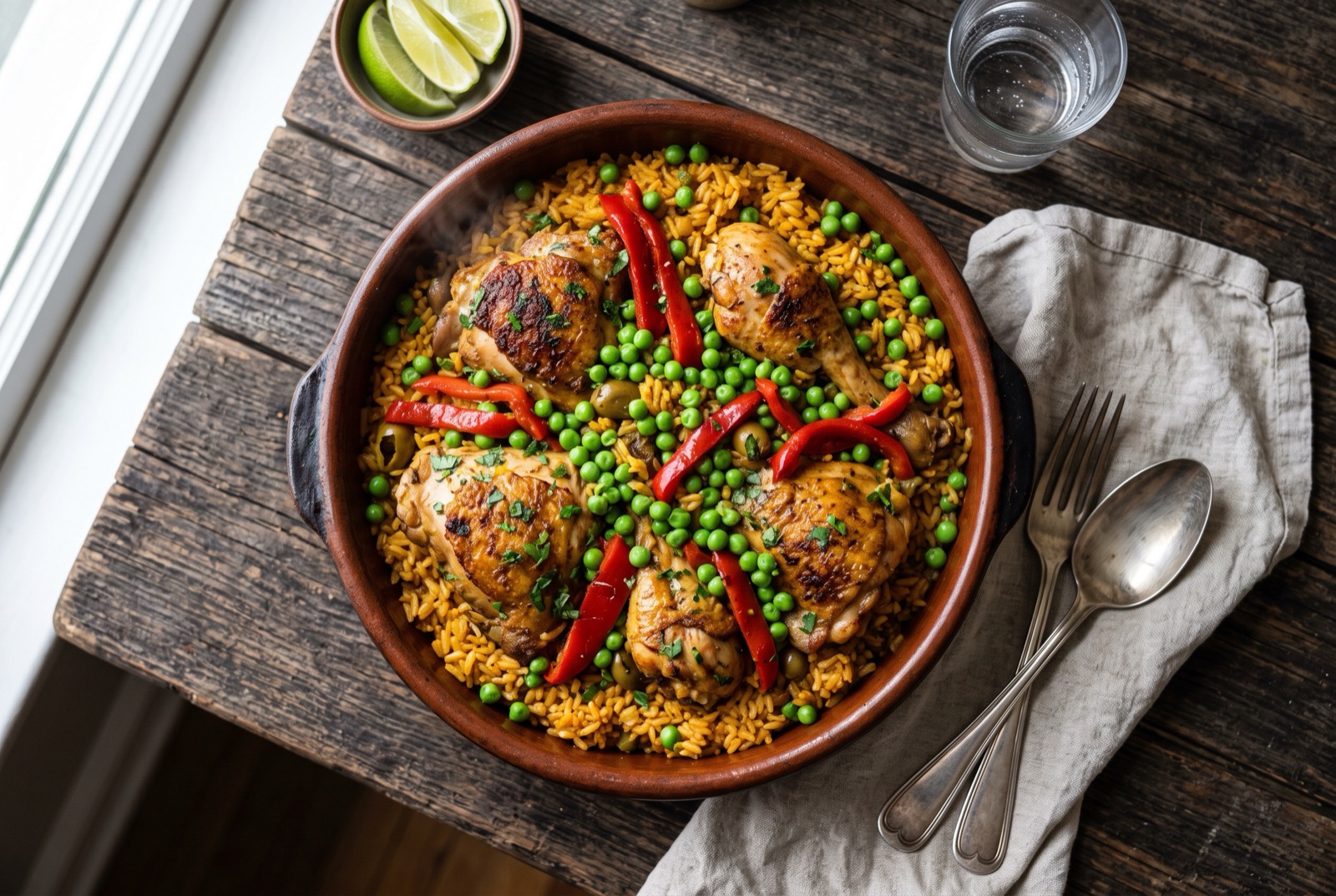
Cuba has 9 more dishes in the atlas — Cuban Arroz con Pollo and Flan Cubano, and 7 more.
Recipe by The DishRoute Kitchen · published August 20, 2026 · updated August 20, 2026