Dhido.
Nepali Buckwheat and Millet Mush
ढिँडो · say it: DHEE-doh
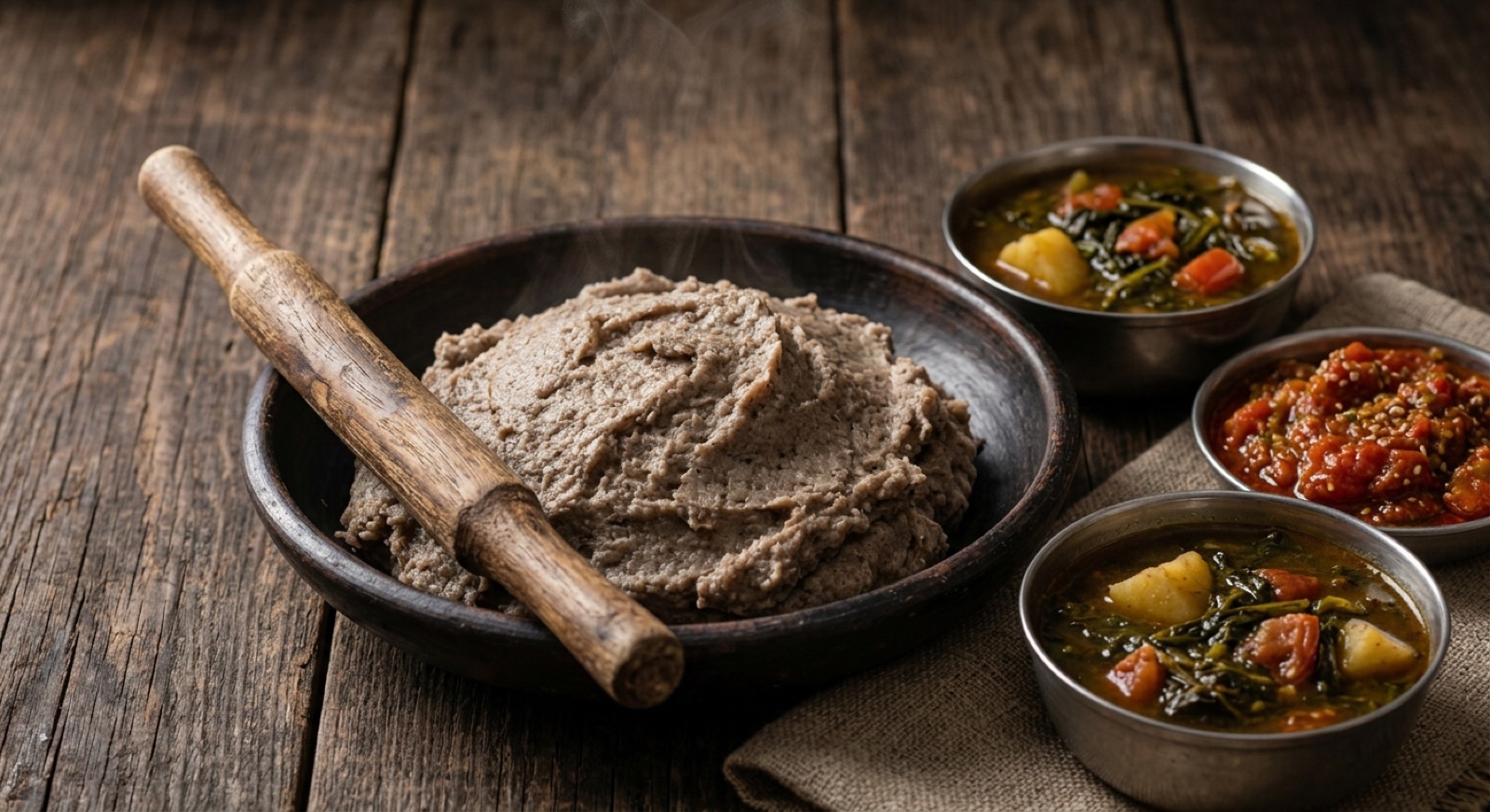
Dhido is flour cooked into water until it becomes a firm, glossy mush you eat with your hands. There is no leavening, no fat and almost no seasoning: buckwheat or millet flour, boiling salted water, and about ten minutes of hard stirring with a flat wooden stick. The taste is nutty and faintly bitter from the buckwheat, the texture somewhere between polenta and stiff dough, and it is never eaten alone — you pinch off a piece, roll it briefly between your fingers, dent it with your thumb and use it to scoop gundruk soup, dal or a hot pickle. It is one of the oldest foods in the Nepali hills and remains the everyday alternative to rice above the rice line.

- Gate
- NepalMiddle hills
- Prep
- 5 min
- Cook
- 15 min
- Total time
- 20 min
- Serves
- 4
- Status
- Easy
- Nutrition / serving · estimated
- Calories 300 kcal
- Protein 9 g
- Carbs 61 g
- Fat 3 g
- Fiber 8 g
- Sodium 480 mg
Why this recipe works.
- A flour-to-water ratio that reliably gives dough you can pinch, not a pourable porridge.
- Describes the beating technique physically, so the mush comes out lump-free the first time.
- Explains what to serve it with, since dhido eaten alone makes no sense.
- Covers the buckwheat, millet and maize versions and how each one tastes different.
Ingredients.
5 itemsEquipment
- Heavy-bottomed pot
- Flat wooden paddle or sturdy wooden spoon
- Kettle for extra boiling water
Instructions.
Boil the water
Bring the water and salt to a hard rolling boil in a heavy-bottomed pot. Keep a kettle of extra boiling water within reach — you may need a splash if the dough seizes up too stiff to beat.
Make a slurry starter
Whisk two heaped tablespoons of the mixed flour into the boiling water and let it bubble for a minute. This thin starter stops the bulk of the flour from clumping the moment it hits the water.
Tip Skip this and you will fight lumps for the next ten minutes.
Add the flour in stages
Turn the heat to low. Add a third of the remaining flour and beat hard with a flat wooden paddle, pressing the mixture against the side of the pot to crush any lumps. Repeat with the next third, then the last, working the dough until it is uniform.
Beat and cook out the flour
Keep beating and folding over low heat for 8 to 10 minutes. The mass will darken slightly, turn glossy, stop smelling of raw flour and begin pulling away from the pot in one lump instead of smearing on the sides.
Tip If it becomes too stiff to move, add boiling water a tablespoon at a time — never cold water, which makes it grainy.
Check the texture
Press a thumb into the surface. It should hold the print without slumping and should feel dense and elastic rather than sticky or wet. If it slumps, cook another two minutes; if it cracks, beat in a little boiling water.
Shape and serve hot
Beat in the ghee if using. With a wet spoon, scoop the dhido into warm bowls and shape each portion into a smooth mound. Serve immediately with soup, dal and pickle, while it is still soft enough to pinch.
Tips from our kitchen.
- Add the flour in three or four stages, not all at once — a single dump guarantees dry lumps in the centre.
- Press the dough against the side of the pot with the back of the spoon between stirs; that is what breaks lumps, not stirring alone.
- Keep the heat low once the flour is in, or the layer against the pot bottom scorches and turns the whole batch bitter.
- It is done when the mass pulls cleanly away from the pot sides and holds a thumbprint without slumping.
- Wet your serving spoon and your hands before shaping; dhido sticks to everything dry.
- Serve immediately in a warm bowl. Dhido stiffens as it cools and becomes hard to pinch within about fifteen minutes.
Substitutions.
- Buckwheat flour → Finger millet flour, or maize flour
- Millet dhido is darker, denser and slightly sweet; maize is the mildest and closest to polenta. All three are traditional depending on the region.
- Mixed buckwheat and millet → All of one flour
- The mix balances buckwheat bitterness against millet earthiness. A single flour works fine — just expect a more pronounced version of that grain.
- Wooden dhido paddle → A sturdy flat-ended wooden spoon or a small rolling pin
- You need something stiff enough to press hard against the pot. A silicone spatula bends and will not break lumps.
Variations.
- Kodo ko dhido
- Made entirely from finger millet flour — nearly black, denser and the most common version in the eastern hills.
- Makai ko dhido
- Maize-flour dhido, milder and yellow, closest in taste to soft polenta and popular in the mid-hills where maize dominates.
- Dhido with ghee
- A spoonful of ghee beaten in at the end for richness and a glossier surface — a festival or guest version, not everyday food.
Storage & reheating.
Dhido is meant to be eaten within minutes of cooking and does not store well: it sets hard and dry within an hour and reheats poorly. If you do have leftovers, refrigerate them for a day and slice the set block into fingers to pan-fry in a little oil until crisp on the outside, which is a real hill-kitchen use rather than a rescue. Do not freeze it — the texture turns crumbly and grainy.
Serve with
Gundruk ko jhol, a bowl of dal, a meat curry and at least one sharp achar — dhido needs something wet and strongly flavoured.
The story behind Dhido.
Long before rice reached the hill villages of Nepal in any quantity, people there ate what grew on steep, dry, unirrigated terraces: buckwheat, finger millet, barley and later maize. Dhido is what you make from those flours when you have a pot, water and fire and nothing else — no oven, no oil, no grinding stone for dough. It belongs to a family of grain mushes found across mountain agriculture worldwide, from Italian polenta to East African ugali to Tibetan tsampa, and like all of them it is defined by the flour available at that altitude rather than by any recipe.
For most of the twentieth century dhido carried a class stigma inside Nepal. Rice was the aspirational grain, bought from the lowlands, served to guests and eaten at festivals; dhido was what hill families ate the rest of the time because rice was expensive. Families who could afford rice ate it, and dhido quietly became shorthand for a poor village upbringing. That has flipped in the last couple of decades. Nutritionists pointed out what hill families already knew — that millet and buckwheat have far more fibre and minerals than polished white rice and release their energy slowly — and dhido moved onto Kathmandu restaurant menus as a heritage dish, often served in a small brass bowl with gundruk, a meat curry and several achars.
The cooking is genuinely a physical skill. The tool is a dhido-hurpi, a flat wooden paddle, and the technique is to add flour to boiling water in stages while beating and pressing it against the side of the pot so no lumps survive. Done properly the mass pulls away from the pot in one glossy lump and holds a fingerprint. Done impatiently it stays lumpy and tastes of raw flour. Traditionally dhido is not chewed much — pieces are swallowed after a quick dip — which is why the surface texture matters more than the crumb.
Questions, answered.
What does dhido taste like?
Nutty and earthy with a faint bitterness from the buckwheat, and almost no salt or fat of its own. On its own it is deliberately plain. All the flavour on the plate comes from what you dip it into, which is why it is always served with soup, curry or pickle rather than eaten by itself.
Why is my dhido lumpy?
The flour went in too fast or the heat was too high. Add it in three or four stages, beating and pressing the mixture against the pot wall between each addition, and keep the flame low once the flour is in. Existing lumps can usually be crushed out with the back of a wooden spoon if you keep working the dough.
How do I eat dhido properly?
With your right hand. Pinch off a walnut-sized piece, roll it once or twice against your fingers to smooth it, press a dent into it with your thumb, then scoop soup or curry and swallow it without much chewing. Nepalis generally do not cut it with a spoon, and it is not meant to be chewed like bread.
Is dhido gluten-free?
Buckwheat, finger millet and maize are all naturally gluten-free, so a dhido made from any of them is too. Check the packaging for cross-contamination warnings if you are cooking for someone with coeliac disease, since these flours are often milled in facilities that also handle wheat.
Can I make dhido in advance?
Not really. It sets firm and dry within about an hour and does not soften back with reheating. The cook time is only around fifteen minutes, so make it last, while the soup or curry is already hot and waiting. Set leftovers can be sliced and fried the next day instead.
You might also like.
All recipes →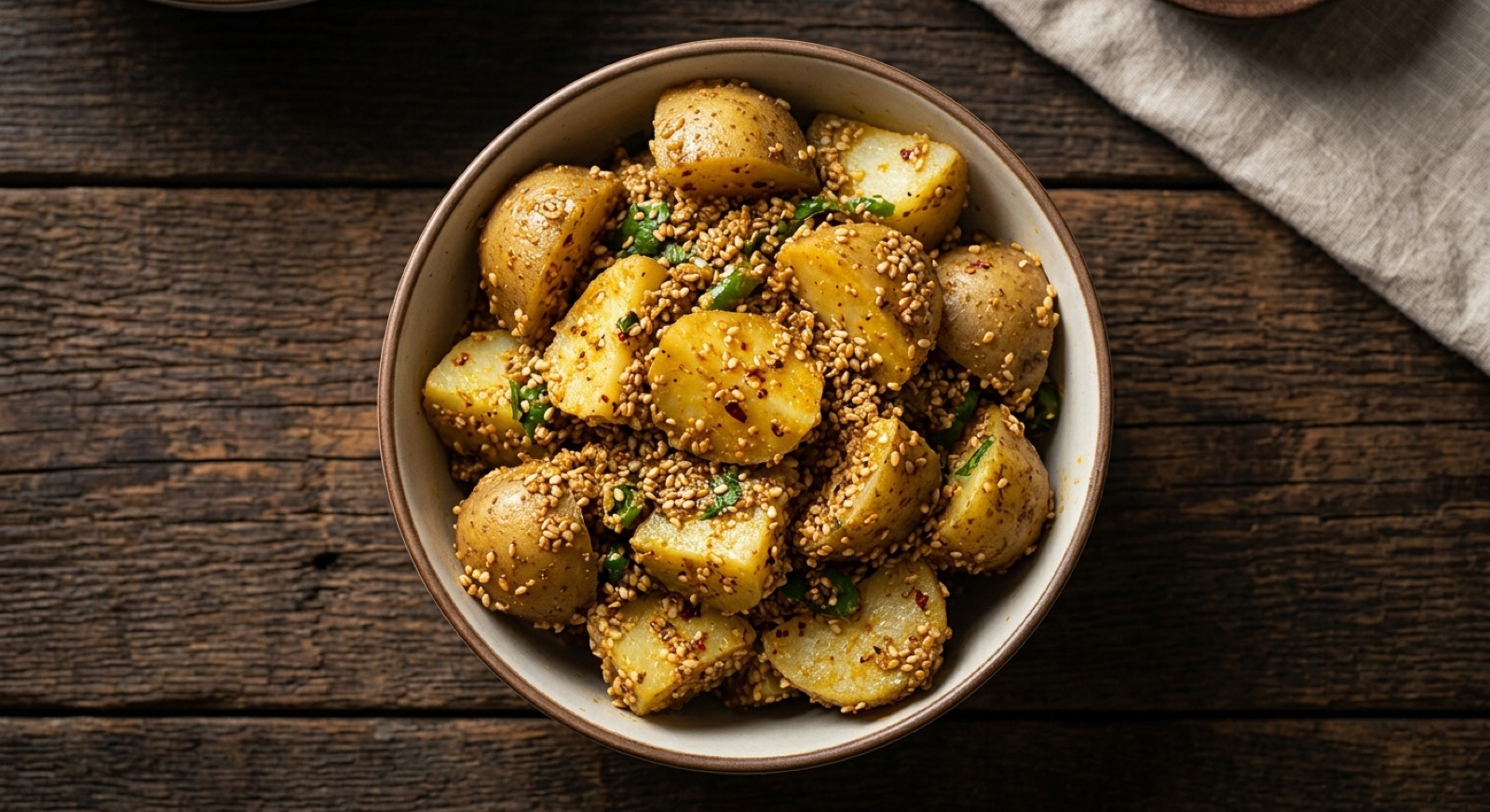
Keep exploring Nepal.
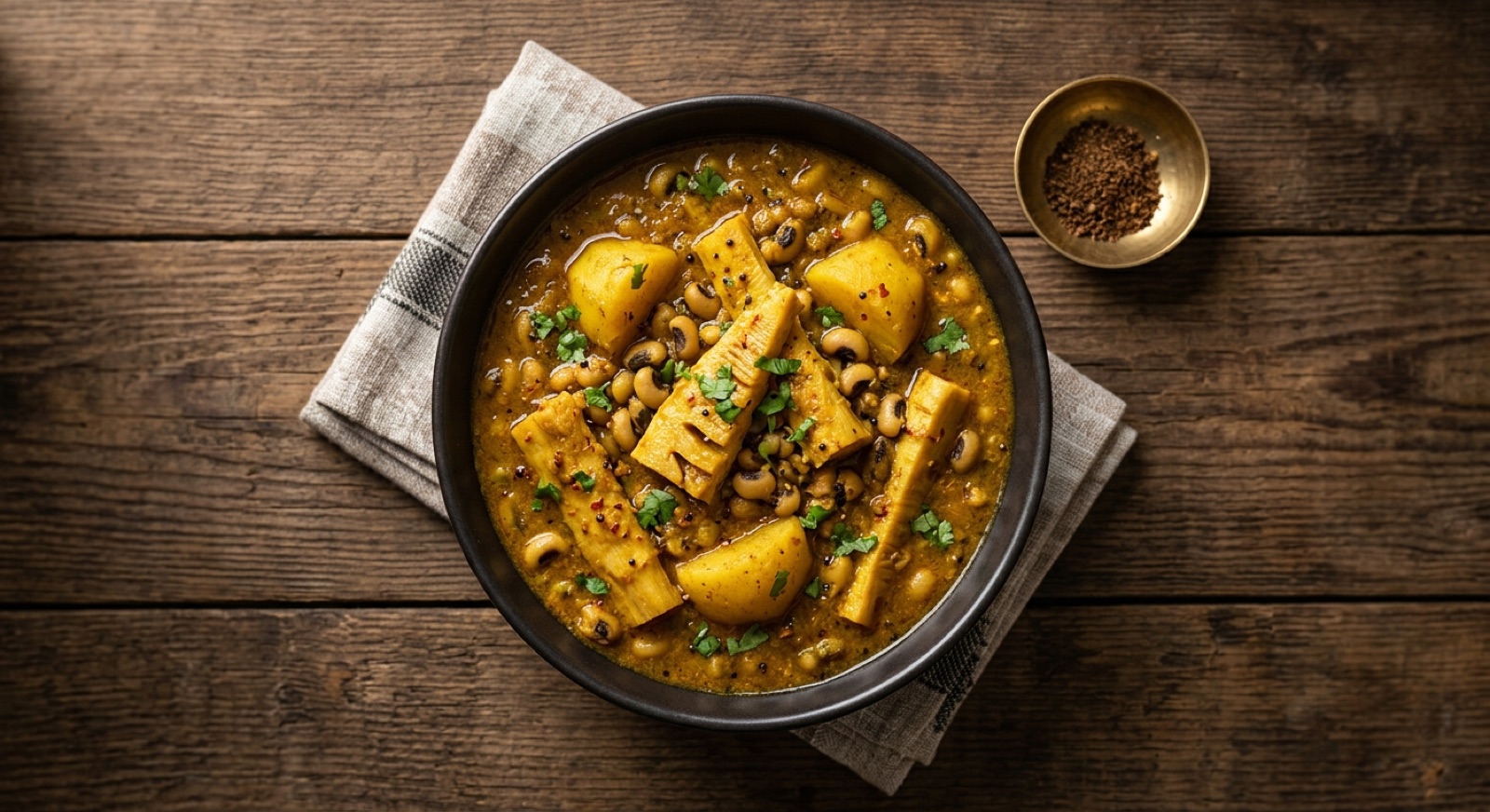
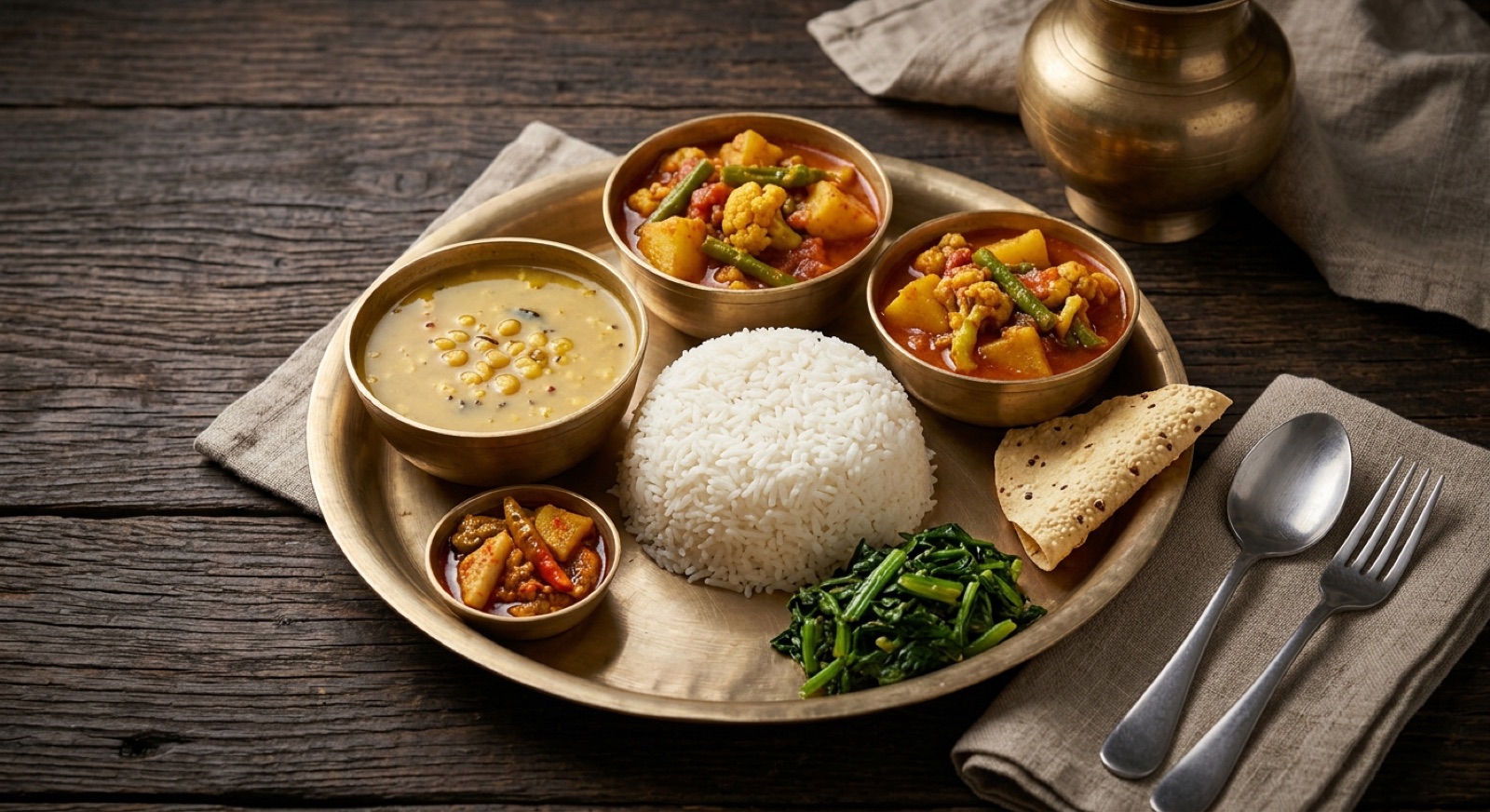
Nepal has 9 more dishes in the atlas — Aloo ko Achar and Aloo Tama, and 7 more.
Recipe by The DishRoute Kitchen · published August 20, 2026 · updated August 20, 2026