Dal Bhat Tarkari.
Nepali Lentils, Rice and Vegetable Curry
दाल भात तरकारी · say it: dahl BHAHT tar-KAH-ree
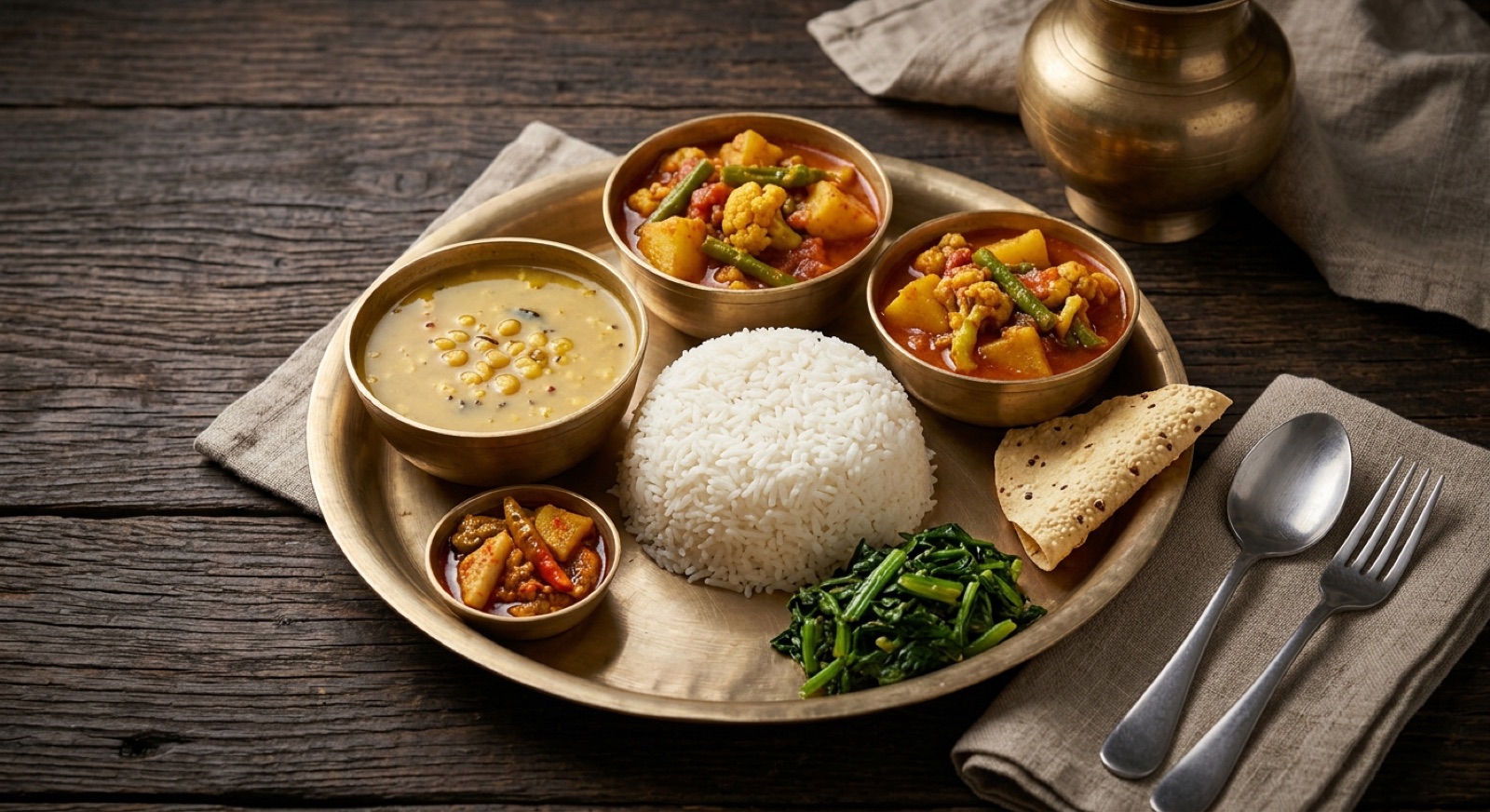
Dal bhat tarkari is not a dish so much as a plate architecture. Bhat is rice, dal is a thin lentil soup poured over it, and tarkari is whatever vegetable is in season, cooked dry with turmeric, cumin and chile. The dal is deliberately soupy rather than thick — its job is to soak into the rice, not sit beside it — and the finishing tadka of ghee, cumin, garlic and dried chile goes in at the last second so the aroma is still alive when the plate reaches the table. Eaten together, it is savoury, gently sour and mildly hot, filling without being heavy, and it is genuinely the everyday food of most of the country rather than a restaurant showpiece.

- Gate
- Nepal
- Prep
- 20 min
- Cook
- 45 min
- Total time
- 1 hr 5 min
- Serves
- 4
- Status
- Medium
- Nutrition / serving · estimated
- Calories 610 kcal
- Protein 21 g
- Carbs 104 g
- Fat 13 g
- Fiber 12 g
- Sodium 860 mg
Why this recipe works.
- Builds all three components on one timeline so the rice, dal and tarkari finish together.
- Keeps the dal at true Nepali consistency — pourable, not the thick dal of restaurant menus.
- The tadka is timed to go in at the last moment, where its aroma actually survives.
- Explains the seasonal logic of the tarkari so you can swap vegetables without a new recipe.
Ingredients.
20 itemsFor the dal
For the tadka
For the bhat
For the tarkari
To finish
Equipment
- Medium saucepan for the dal
- Small pan or ladle for the tadka
- Rice pot with a tight lid
- Wide sauté pan for the tarkari
Instructions.
Start the dal
Put 250 g of rinsed lentils in a saucepan with the water, turmeric and grated ginger. Bring to a boil, skim off the grey foam that rises in the first minutes, then simmer partly covered for 25 minutes until the lentils have completely lost their shape.
Tip Skim properly. That foam is what makes an unskimmed dal taste muddy.
Cook the rice
Rinse the rice until the water runs almost clear, then cook it with the measured water in a tightly covered pot: full boil, then the lowest heat for 12 minutes, then 10 minutes off the heat without lifting the lid. Fluff with a fork.
Build the tarkari
Heat the mustard oil in a wide pan until it just smokes, then drop the heat and fry the onion until soft and golden at the edges. Add the green chiles, turmeric and ground coriander and stir for 30 seconds, until the pan smells toasted rather than raw.
Cook the vegetables dry
Add the potato, cauliflower, tomato and a teaspoon of salt. Stir to coat, cover and cook over medium-low heat for 15 to 18 minutes, stirring occasionally, until the potato yields to a knife and the spices cling to the vegetables with no liquid left in the pan.
Tip If it looks wet at the end, uncover and raise the heat for two minutes. Tarkari should be dry, not saucy.
Finish and season the dal
Salt the dal now that the lentils are soft, then whisk it hard for a few seconds until it turns smooth and slightly glossy. Adjust with hot water until it pours in a thin stream off the spoon.
Make the tadka
Heat the ghee in a small pan until it shimmers. Add the cumin and fenugreek and wait for the cumin to darken and crackle, about 20 seconds, then add the sliced garlic and dried chiles and fry until the garlic is pale gold — not brown, which turns it bitter.
Tip Fenugreek burns fast and goes acrid. It should turn one shade darker, no more.
Pour and serve
Tip the dal into a serving bowl and pour the sizzling tadka straight over the surface so it hisses. Scatter cilantro over the tarkari. Serve each plate with a mound of rice in the centre, dal poured over it, tarkari alongside and pickle at the edge.
Tips from our kitchen.
- Do not add salt to the lentils until they are fully soft; early salt slows the skins from breaking down.
- Whisk the cooked dal briskly for a few seconds — it emulsifies and turns from grainy to velvety without any thickening.
- The tarkari should be dry, with the spices clinging to the vegetables. If liquid pools in the pan, raise the heat and cook it off.
- Pour the tadka over the dal in the serving bowl, not into the pot, so everyone hears and smells it arrive.
- Rinse the rice until the water runs nearly clear, or the grains clump instead of staying separate under the dal.
- Season the dal a touch saltier than seems right on its own — it is diluted by a large amount of plain rice.
Substitutions.
- Masoor dal (red lentils) → Split mung dal, toor dal, or a mix
- Red lentils collapse fastest and are the easiest starting point. Toor dal needs about 15 minutes longer and gives a fuller, earthier soup.
- Ghee for the tadka → Mustard oil, or any neutral oil
- Mustard oil is common in Nepali kitchens and gives a sharper edge; heat it to smoking first to burn off its raw bite. Neutral oil makes the dish fully vegan.
- Cauliflower and potato tarkari → Green beans, pumpkin, cabbage, or bitter gourd
- The spice base does not change. Adjust cooking time only — pumpkin needs less, beans about the same.
Variations.
- Dhido bhat
- Swap the rice for dhido, the hill-country buckwheat or millet mush, and eat the dal and tarkari with torn pieces of it instead of by the spoonful.
- Festival thali
- Add a meat curry, a piece of fried fish, yogurt and two or three achars to turn the everyday plate into a celebration spread.
- Kalo dal
- The Newar version built on whole black lentils, simmered far longer until the soup turns dark, thick and faintly smoky.
Storage & reheating.
Dal keeps 3 days refrigerated and thickens considerably as it sits — loosen it with hot water and re-temper with a fresh tadka rather than reheating the old one, which tastes tired. Tarkari keeps 2 days and reheats well in a covered pan with a splash of water. Cooked rice should be cooled quickly, refrigerated within an hour and eaten within 2 days. Dal freezes for a month; the tarkari does not, as the potato goes grainy.
Serve with
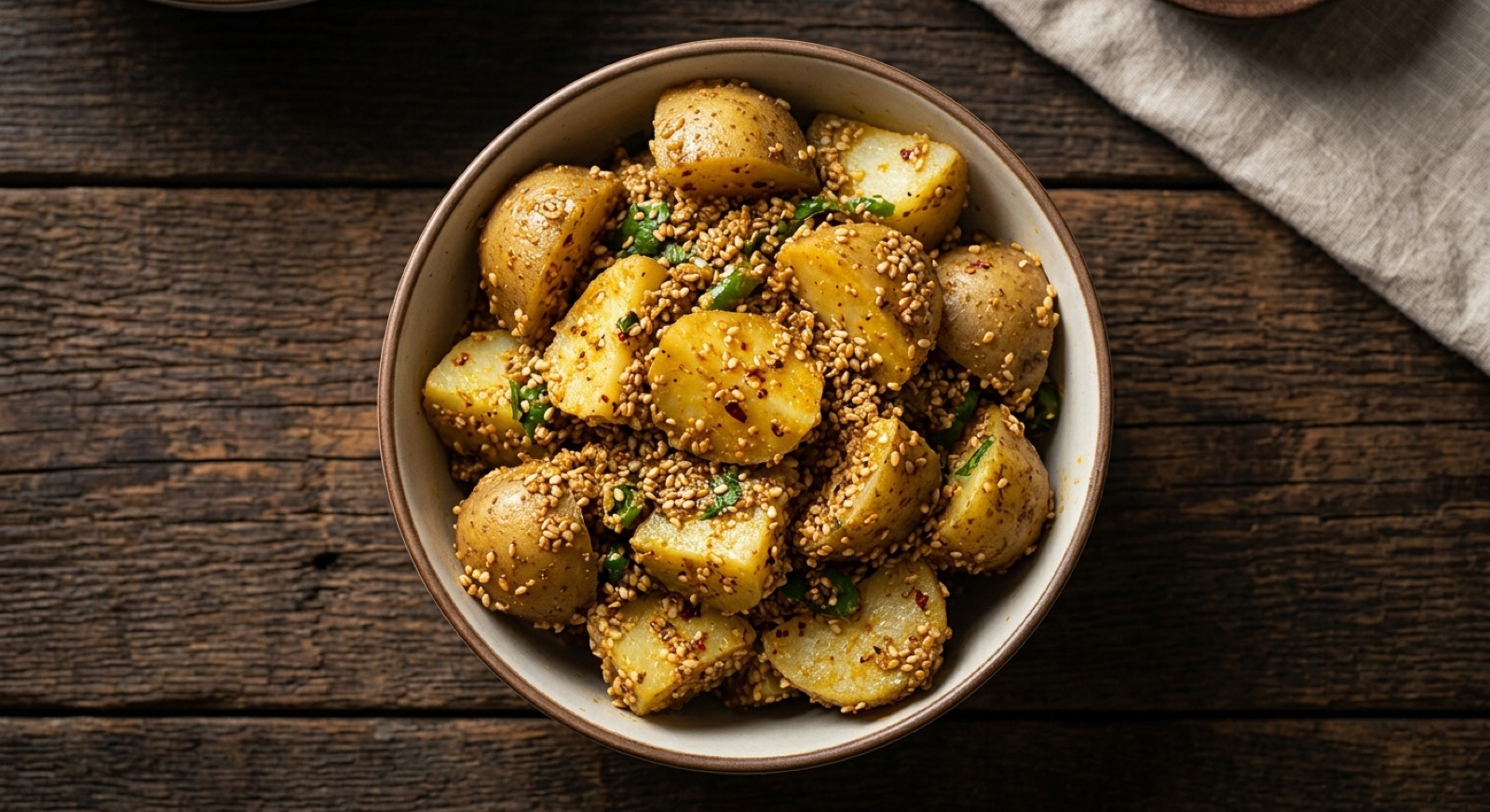
Aloo ko achar, a spoonful of sautéed mustard greens, sliced cucumber and a wedge of lemon.
The story behind Dal Bhat Tarkari.
Ask a Nepali what they had for lunch and the answer is usually dal bhat, because the meal is eaten twice a day across most of the country — once in the mid-morning, once in the evening — and has been for generations. It is the reason for the trekking-trail saying about dal bhat power, and the reason porters and guides on the mountain routes eat it rather than anything else: it is cheap, it refills endlessly, and the combination of rice and lentils supplies a complete set of amino acids without any meat at all. The refill is part of the deal. In a bhojanalaya, a serving is not a portion but a starting point, and the server will come around with more rice, more dal and more tarkari until you cover your plate with your hand.
The plate changes with altitude and with the calendar. In the Terai lowlands, where rice grows, bhat means rice without argument. Higher in the hills, rice was historically expensive and imported from below, so the same meal was built on dhido — a stiff buckwheat or millet mush — and rice was reserved for festivals and guests. The tarkari follows the season completely: potato and cauliflower in winter, bitter gourd and beans in the monsoon, pumpkin, radish greens, fiddlehead ferns from the hillsides in spring. Alongside sit the small non-negotiables — a spoonful of achar, a heap of sautéed greens, sometimes yogurt or a piece of fried fish or curried meat on a festival day.
The dal itself varies by household and region. Newar kitchens lean on black lentils, hill families use split pigeon peas or masoor, and mixed-lentil dal is common when the shop has odds and ends. What stays constant is the consistency and the tadka. Nepali dal is poured, not spooned, and it arrives smelling of ghee, fried garlic and cumin because the tempering hits the hot surface of the soup just before serving — the same gesture found across South Asia, but here the dal it lands on is far thinner than its Indian relatives.
Questions, answered.
How thin should Nepali dal actually be?
Pourable, roughly the consistency of a thin cream soup. It should run off the back of a spoon in a stream rather than dropping in blobs. This is the main difference from many Indian dals, and it matters because the dal is meant to be poured over rice and absorbed, not eaten as a separate thick dish.
Do I need to soak the lentils first?
Not for red or split lentils, which soften in 20 to 25 minutes without soaking. A 30-minute soak shortens that by roughly a third and is worth it for whole black lentils or older pulses that have sat in the cupboard for a year, since ageing pulses take much longer to break down.
What is a tadka and can I skip it?
A tadka is whole spices sizzled in hot fat and poured over the finished dal so their aromatics dissolve into it. Skipping it gives you seasoned lentil soup that tastes noticeably flat and one-dimensional. It takes 60 seconds and is the single step that makes the difference between passable and proper dal.
Is dal bhat vegan?
The version here is vegan if you make the tadka with oil instead of ghee, which many Nepali households do anyway. Everyday dal bhat is usually vegetarian by default; meat, egg or fish appear as an extra item on the plate on better days rather than being cooked into the dal or tarkari.
Can I make the whole meal ahead of time?
Cook the dal and tarkari up to two days ahead and keep them refrigerated, then make fresh rice and a fresh tadka on the day. Reheated rice and a re-fried tempering are the two components that suffer most, and both take under twenty minutes, so making them fresh costs little.
You might also like.
All recipes →
Keep exploring Nepal.
Nepal has 9 more dishes in the atlas — Aloo ko Achar and Aloo Tama, and 7 more.
Recipe by The DishRoute Kitchen · published August 20, 2026 · updated August 20, 2026