Gundruk ko Jhol.
Nepali Fermented Greens Soup
गुन्द्रुक को झोल · say it: GUN-drook koh JHOL
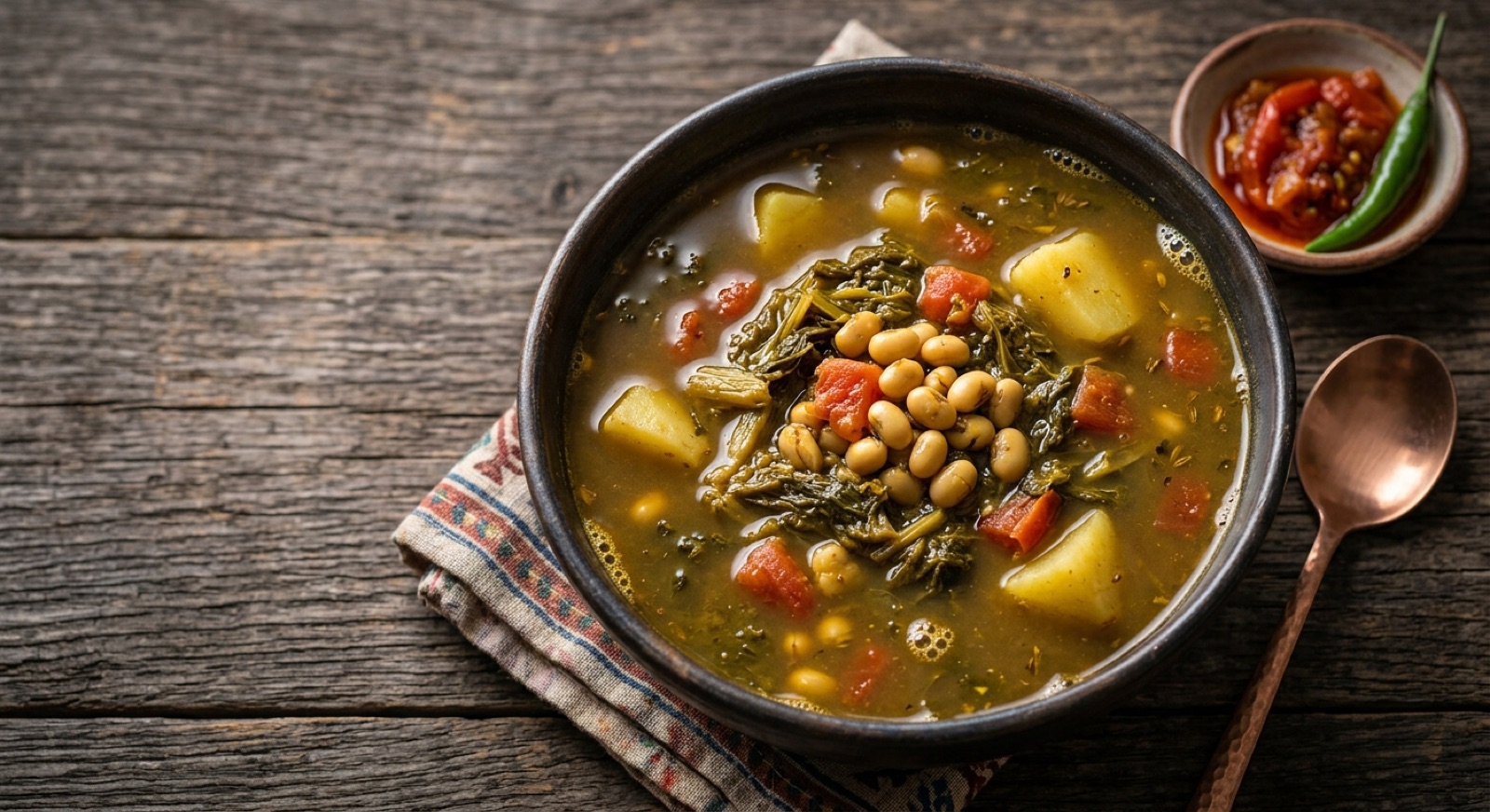
Gundruk ko jhol is a sour broth built on gundruk, mustard or radish leaves that have been wilted, packed airtight to ferment for a couple of weeks, then dried in the sun until they are brittle and almost black. Rehydrated and simmered with potato, tomato and roasted soybeans, they release a deep, lactic sourness and a savoury weight that tastes closer to a good sauerkraut broth than to anything else in South Asia. The soup itself is thin and drinkable, faintly oily from the mustard-oil tempering, and hot with dried chile. Poured over rice or eaten alongside dhido, it is the flavour most Nepalis in the hills grew up with.

- Gate
- NepalMiddle hills
- Prep
- 20 min
- Cook
- 35 min
- Total time
- 55 min
- Serves
- 4
- Status
- Medium
- Nutrition / serving · estimated
- Calories 290 kcal
- Protein 14 g
- Carbs 28 g
- Fat 14 g
- Fiber 9 g
- Sodium 590 mg
Why this recipe works.
- Rehydrates the gundruk properly so it softens without washing away the sourness that defines the soup.
- Uses roasted soybeans the way hill kitchens do, for body and protein rather than as a garnish.
- A tempering built on mustard oil, fenugreek and dried chile — the actual Nepali flavour base, not a generic one.
- Tells you where to buy gundruk and how to judge a good batch from a stale one.
Ingredients.
15 itemsBase
Tempering
To finish
Equipment
- Medium pot
- Small dry pan for roasting soybeans
- Bowl for soaking the gundruk
Instructions.
Soak the gundruk
Cover the dried gundruk with warm water and leave 15 minutes until the strands soften and turn pliable. Lift it out and squeeze gently, keeping 200 ml of the sour soaking water — that liquid carries a lot of the flavour.
Roast the soybeans
Dry-roast the soybeans in a heavy pan over medium heat for 8 to 10 minutes, shaking often, until they darken a shade, smell toasted and a few split open with a crack. Set aside.
Tip They should be nutty, not burnt. Bitter beans will make the whole soup bitter.
Temper the oil
Heat the mustard oil in a pot until it smokes lightly, then drop the heat and add the fenugreek and dried chiles. Count five seconds, then add the garlic and onion and fry until the onion is soft and just starting to brown at the edges.
Fry the greens
Add the squeezed gundruk with the turmeric and cumin and fry for 3 to 4 minutes, stirring, until the greens darken slightly and the smell shifts from sharply sour to deep and savoury.
Simmer the soup
Add the tomatoes and cook until they collapse, then add the potato, roasted soybeans, water and the reserved soaking liquid. Bring to a boil and simmer uncovered for 20 to 25 minutes, until the potato is tender and the soybeans have softened but still have bite.
Season and finish
Taste before adding salt, since gundruk varies in saltiness. The broth should be thin, clearly sour and savoury with a chile burn behind it. Stir in the ground timur off the heat, scatter cilantro over and serve hot, poured over rice.
Tips from our kitchen.
- Soak the gundruk in warm water for 15 minutes, then squeeze it out — but keep the soaking water and use some of it in the soup for extra sourness.
- Dry-fry the rehydrated greens in the oil for a couple of minutes before adding liquid; it deepens the flavour from sour to savoury-sour.
- Roast the soybeans in a dry pan until they smell nutty and a few split — undertoasted beans stay hard and squeaky in the broth.
- Keep the soup thin. Gundruk ko jhol is meant to be poured over rice, not spooned like a thick stew.
- Add the timur at the very end so its citrus tingle survives.
- Taste before salting. Some gundruk is salted during fermentation and some is not, and the difference is large.
Substitutions.
- Gundruk → Well-drained sauerkraut, or dried Chinese suan cai
- Sauerkraut gives the right lactic sourness but is wetter and milder; use about three times the weight and skip the soaking. It is a genuine approximation, not the same dish.
- Roasted soybeans (bhatmas) → Cooked white beans or chickpeas
- You lose the crunch and the roasted note but keep the protein and body. Add them in the last five minutes.
- Mustard oil → Neutral oil or ghee
- Ghee makes the soup rounder and less pungent, which some households prefer. Mustard oil is the hill standard and gives the sharper edge.
Variations.
- Gundruk ko achar
- The dry counterpart — gundruk pounded with roasted tomato, chile, garlic and timur into a fierce relish rather than simmered into soup.
- Gundruk with pork
- A few pieces of fatty pork simmered in from the start, common in eastern hill and Kirat households. The sourness cuts the fat perfectly.
- Sinki ko jhol
- The same soup made with sinki, fermented dried radish root instead of leaves — sharper, more pungent, and made the same way.
Storage & reheating.
The soup keeps 4 days refrigerated and, unusually, holds its sourness well — the ferment is already stable. Reheat gently and add water if the potato starch has thickened it. It freezes for a month, though the potato goes slightly mealy. Dry gundruk itself keeps in a sealed jar for a year or more in a dark cupboard; discard it if it smells musty or shows any fuzzy mould rather than simple dryness.
Serve with
Steamed rice or dhido, with a dry vegetable tarkari and a spoonful of achar.
The story behind Gundruk ko Jhol.
Gundruk exists because of arithmetic. In the middle hills of Nepal, mustard, radish and cauliflower greens all come in at once in the autumn, and then nothing green grows for months. So the surplus is wilted in the sun for a day, pressed hard into an earthen pot or a clay-lined pit so no air remains, weighted, and left to ferment for one to three weeks until it smells sharply sour. The fermented mass is then pulled apart and dried in the sun until it is dark, brittle and effectively imperishable. It is a household technology, done by women in nearly every hill village, and versions of it are made across Nepal, Sikkim, Darjeeling and Bhutan.
Nutritionally it turns out to have been a very good idea. Fermentation raises the availability of iron and other minerals in the greens and adds lactic acid bacteria to a winter diet that would otherwise be rice, lentils and potato. In practice hill families ate gundruk for months of the year in two main forms: as this jhol, a thin soup, and as a dry, chile-hot achar pounded with tomato and timur. Both are still everyday food, and gundruk is one of the few Nepali products with formal recognition as a national food item.
Bhatmas — dried soybeans, dry-roasted until crunchy — go into the soup in many hill households, both for protein and because they soften into little savoury nuggets in the broth. Some versions add a handful of them roasted and crushed on top instead. The dish tolerates whatever else is around: a few pieces of pork, a handful of green beans, a bone from yesterday. What it does not tolerate is over-simmering, which flattens the sourness that is the whole reason for eating it.
Questions, answered.
What is gundruk made from?
Leafy greens — usually mustard greens, radish tops or cauliflower leaves — wilted in the sun, packed airtight to ferment for one to three weeks, then dried until brittle. It is a Nepali hill preservation method, not a spice or a seasoning, and the finished product looks like dark shredded straw and smells strongly sour.
Where can I buy gundruk?
Nepali, Tibetan, Bhutanese and Northeast Indian grocers stock it in bags, and it is easy to find online. Good gundruk is dark greenish-brown, dry and brittle with a clean sour smell. Avoid bags that smell musty or dusty, or that have gone pale grey, which means it has been sitting for a long time.
How sour should the soup be?
Clearly and deliberately sour — enough to make you salivate, similar in intensity to a sauerkraut soup. It should not be mouth-stripping like vinegar. If your batch comes out too sharp, add a peeled potato and simmer ten minutes, or serve it with more rice, which dilutes it on the plate.
Can I make gundruk at home?
Yes, though it takes weeks. Wilt mustard greens in the sun for a day, shred them, pack them extremely tightly into a jar so no air is trapped, seal and keep somewhere warm for one to two weeks until it smells sour, then dry the greens completely in the sun or a very low oven. The airtight packing is the step people get wrong.
Is this soup vegan?
As written, yes — gundruk, potato, tomato, soybeans, spices and oil, with nothing animal-derived. Many hill versions add pork or a leftover bone, so if you are eating it out in Nepal it is worth asking. The vegan version is the more common everyday one.
You might also like.
All recipes →
Keep exploring Nepal.
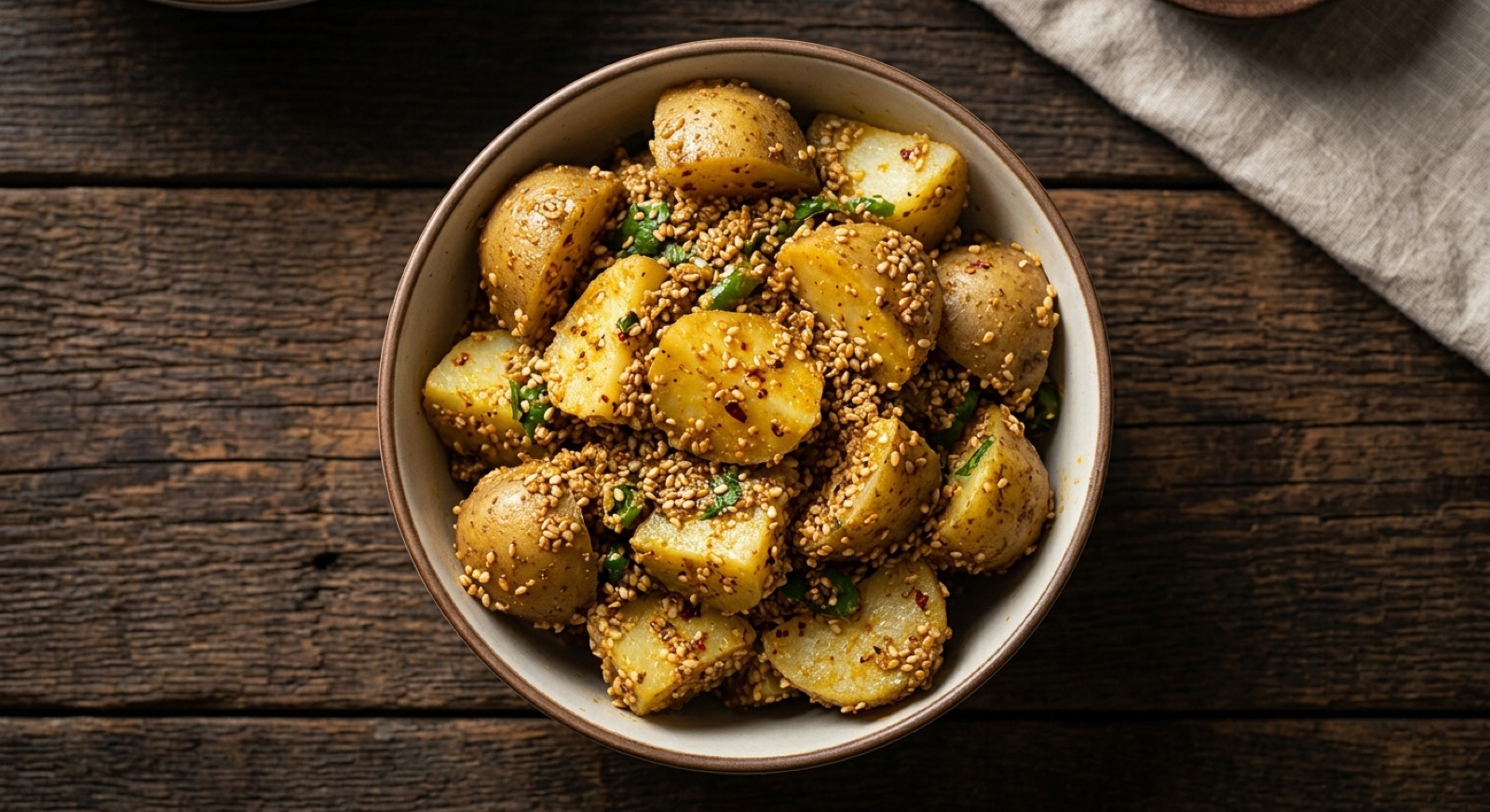
Nepal has 9 more dishes in the atlas — Aloo ko Achar and Aloo Tama, and 7 more.
All Nepal recipes Potato recipes Tomato recipes Turmeric recipes soupveganvegetariangluten freedairy freenut freeRecipe by The DishRoute Kitchen · published August 20, 2026 · updated August 20, 2026