Foutou Banane.
Pounded Plantain and Cassava
Foutou banane · say it: foo-TOO bah-NAHN
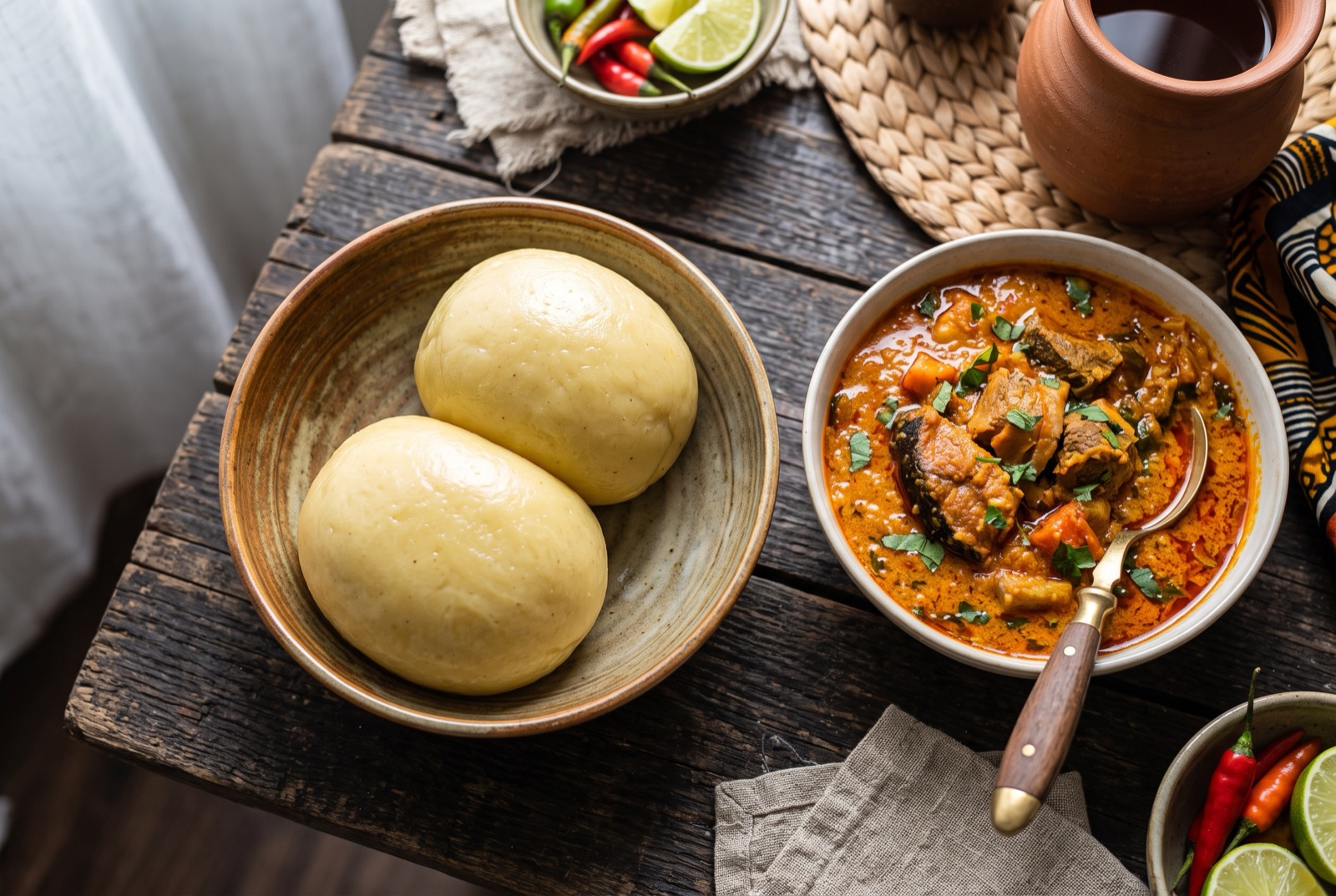
Foutou banane is plantain and cassava boiled soft, then pounded together while still hot until they fuse into a single dense, springy mass with no lumps and a faint sheen. It is not seasoned and it is not meant to be eaten alone — a piece is pinched off, dipped into sauce, and swallowed rather than chewed, which is a genuinely different eating experience from anything in European cooking. The flavour is mild and slightly sweet from the plantain, with cassava supplying the stretch. Making it is physical work: the pounding is what develops the elasticity, and there is no shortcut that fully replaces the mortar. This is the starch that sits beside the country's richest sauces, and it is the reason those sauces are kept loose.

- Gate
- Ivory CoastSouthern and central Côte d'Ivoire
- Prep
- 20 min
- Cook
- 40 min
- Total time
- 1 hr
- Serves
- 4
- Status
- Takes skill
- Nutrition / serving · estimated
- Calories 420 kcal
- Protein 4 g
- Carbs 101 g
- Fat 1 g
- Fiber 7 g
- Sugar 26 g
Why this recipe works.
- Boils the two starches separately, because cassava and plantain do not soften at the same rate.
- Explains the fold-and-pound rhythm that turns mashed starch into a proper elastic mass.
- Gives an honest assessment of the food-processor route rather than pretending it is identical.
- Ratios tuned so the ball holds together without being so dense it fights the sauce.
Ingredients.
5 itemsEquipment
- Tall wooden mortar and pestle, or a stand mixer with a dough hook
- Large pot
- Bowl of warm water for wetting hands
Instructions.
Boil the cassava first
Put the cassava chunks into a large pot of water, bring to the boil and cook for 20 minutes. Test with a knife tip: it must go in without any resistance, because underdone cassava is the main cause of lumpy foutou.
Add the plantain
Slide in 6 of peeled plantain halves and boil for a further 15 minutes, until they are soft enough to break under gentle pressure from a spoon and have turned a deeper yellow.
Drain and start pounding
Drain everything, reserving a cup of the cooking water, and tip the hot pieces into a wooden mortar. Pound with steady vertical strokes, letting the pestle's weight do the work rather than swinging it, until the pieces break down into a coarse mass.
Tip Work fast while the starch is steaming. This is the window where it will fuse.
Fold and pound
Between strokes, wet one hand in warm water and fold the mass over on itself, turning it a quarter each time. Keep pounding and folding for 10 to 15 minutes, adding warm water a tablespoon at a time whenever it feels stiff or tears rather than stretches.
Tip If you are working with someone, one person pounds and the other folds — and the folder pulls their hand clear before every stroke.
Check the texture
Stop when the surface is smooth and slightly glossy, no flecks of unbroken cassava remain, and a pinched piece stretches a good few centimetres before it snaps. It should feel heavy and springy, not sticky.
Shape and serve
With wet hands, divide the mass into four smooth balls and set them in a shallow bowl. Bring them to the table straight away with sauce alongside, since foutou firms up quickly as it cools.
Tips from our kitchen.
- Use plantain that is yellow with black patches — ripe enough to be sweet, firm enough to hold up. Fully black fruit collapses into a sticky paste that will not form a ball.
- Pound while everything is genuinely hot. Cooled starch stops stretching and no amount of work will bring the elasticity back, so reheat if you have to pause.
- Keep a bowl of warm water beside the mortar and wet your hands and the pestle head constantly. Dry contact is what makes foutou stick and tear.
- Add water in tiny amounts, a tablespoon at a time. Too much at once and the mass slackens into porridge with no way back.
- It is ready when a pinched piece stretches before it breaks and the surface looks smooth and slightly glossy, with no visible flecks of unbroken cassava.
- Shape the balls with wet hands and serve straight away — foutou stiffens noticeably within twenty minutes of leaving the mortar.
Substitutions.
- Wooden mortar and pestle → Stand mixer with a dough hook, or a sturdy food processor
- It will get you a smooth, workable mass, and plenty of Ivorian households abroad use exactly this. The texture is slightly denser and less springy than pounded foutou, which is a real difference rather than a snobbish one.
- Fresh cassava → Frozen cassava chunks, or cassava flour cooked into a thick paste
- Frozen works well. Flour-based versions are quicker but produce a stickier, more uniform mass closer to instant fufu than to foutou.
- Plantain → White yam, for foutou igname
- A different dish with the same technique, and the more prestigious one in central Côte d'Ivoire. Yam needs longer boiling and slightly more water during pounding.
Variations.
- Foutou igname
- Made entirely from boiled white yam, whiter and firmer than the plantain version, and the one served at celebrations in Baoulé country.
- Foutou with more cassava
- Shifting the ratio toward cassava gives a stretchier, more elastic ball that suits very thin sauces.
- Placali
- The fermented alternative — cassava dough cooked and stirred smooth, sourer than foutou and served with the same sauces.
Storage & reheating.
Foutou is best within the hour and hardens as it cools. Wrap leftover balls tightly in cling film and refrigerate up to 2 days, then steam for 8 to 10 minutes and knead briefly with wet hands to bring back some softness — it will never be quite as elastic as fresh. It freezes for a month wrapped individually. Do not microwave uncovered; the surface dries into a skin that will not soften again.
Serve with
Sauce graine, sauce claire, or any loose Ivorian sauce with enough liquid to carry each piece.
The story behind Foutou Banane.
Pounded starches are the backbone of cooking from Côte d'Ivoire through Ghana, Togo, Benin and Nigeria, and the mortar-and-pestle technique is shared right across that belt. What changes is the raw material. Ghanaian and Nigerian fufu leans on cassava with plantain or yam; Ivorian foutou comes in several named versions depending on what goes in the mortar — foutou banane from plantain and cassava, foutou igname from yam, and foutou made with cocoyam in some areas. The yam version carries the most prestige in the centre of the country, where yam is the ceremonial crop, while plantain foutou is the everyday southern default.
The pounding is done in a tall wooden mortar with a heavy pestle, and in most households it is a two-person job: one pounds while the other turns and folds the mass between strokes, hand wetted so it does not stick. Getting the rhythm wrong is how people get their fingers hit, and watching someone who has done it since childhood is the fastest way to understand why the technique matters. The point is not to mash. Mashing gives you a lumpy purée; repeated compression and folding of hot starch is what aligns it into something smooth and elastic that holds its shape as a ball.
Foutou also sets the rules for everything served with it. Because it is swallowed rather than chewed, the accompanying sauce has to be liquid enough to carry each piece down — which is precisely why sauce claire is deliberately thin and why sauce graine is loosened rather than reduced to a paste. At the table it arrives as smooth pale balls in a communal bowl, with the sauce alongside, and eating it correctly means using the right hand, working a small piece, denting it with the thumb, and dipping. Newcomers almost always take too big a piece the first time.
Questions, answered.
Is foutou chewed or swallowed?
Swallowed. A small piece is pinched off with the right hand, dented with the thumb, dipped in sauce and swallowed whole without chewing. This is why the pieces are kept small and the sauce kept liquid. Chewing it is not wrong exactly, but it is not how the dish is designed to be eaten, and the texture makes more sense once you try it the intended way.
What is the difference between foutou and fufu?
They belong to the same family of pounded starches eaten across West Africa. Foutou is the Ivorian term and usually refers to plantain with cassava, or to yam, pounded in a mortar. Fufu is the Ghanaian and Nigerian name, with its own regional formulas and, increasingly, instant flour versions. The technique and the eating method are essentially shared across the whole region.
Can I make foutou in a food processor?
Yes, and many people do. Work in batches with the starch still hot, pulse rather than run it continuously, and add warm water a spoonful at a time until the mass climbs the blade in one piece. The result is smooth and perfectly good, but slightly denser and less springy than pounded foutou, because the folding action of a pestle does something a blade cannot.
Why is my foutou lumpy?
Almost always because the cassava was not fully cooked. Cassava is denser than plantain and needs longer boiling — it should be soft enough that a knife slides through with no resistance before it goes in the mortar. Lumps can also come from letting the starch cool mid-pounding, at which point it stops fusing.
Is foutou seasoned?
Traditionally no salt is added. All the seasoning comes from the sauce it is eaten with, which is heavily seasoned precisely because the starch is not. A small pinch of salt in the boiling water is a harmless modern habit, but a salted, seasoned foutou would taste wrong against a properly made sauce graine.
You might also like.
All recipes →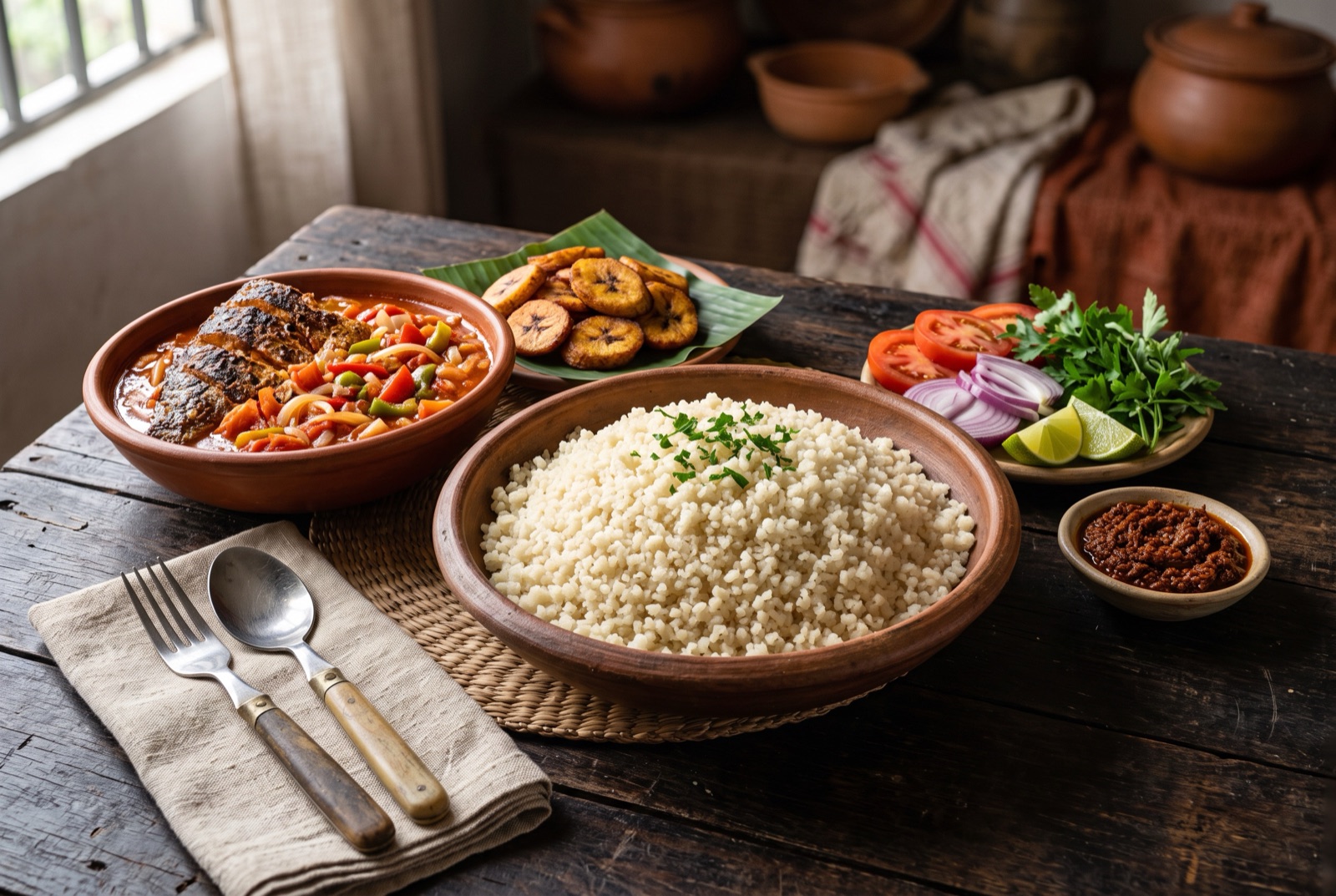
Keep exploring Ivory Coast.
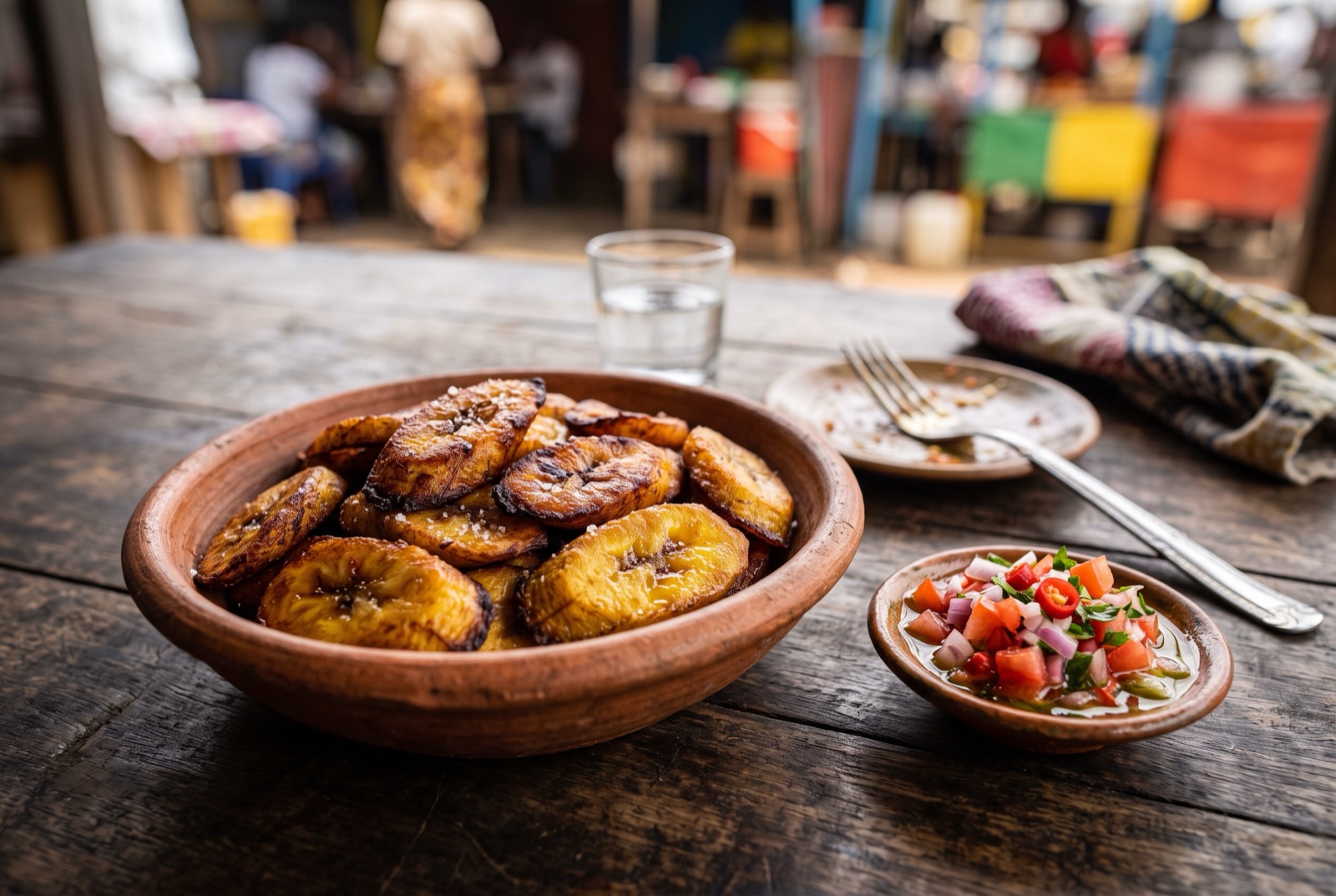
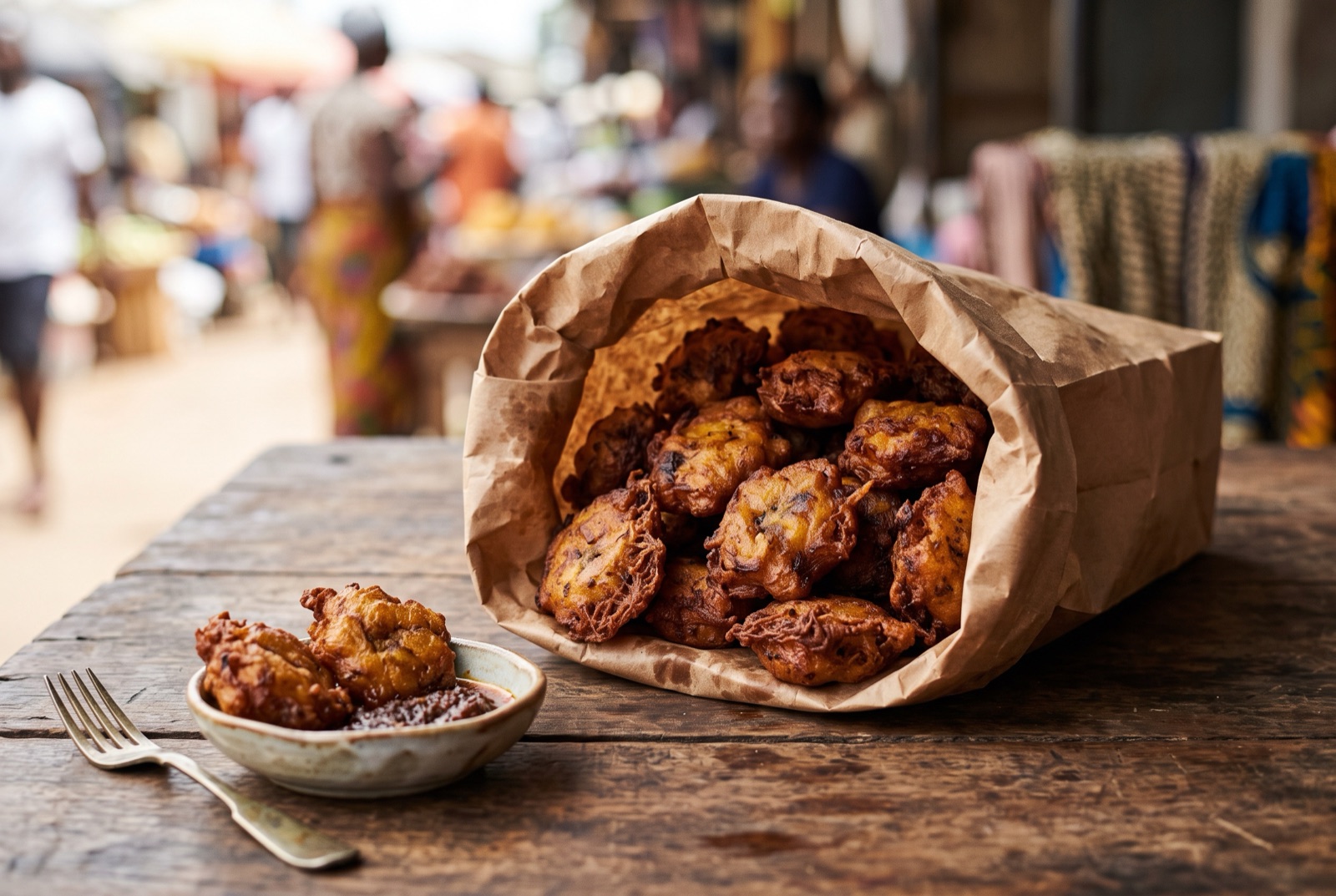
Ivory Coast has 9 more dishes in the atlas — Alloco and Attiéké, and 7 more.
All Ivory Coast recipes Plantain recipes Cassava recipes sideveganvegetariangluten freedairy freenut freeRecipe by The DishRoute Kitchen · published August 20, 2026 · updated August 20, 2026