Gnamankoudji.
Ivorian Spiced Ginger Juice
Gnamankoudji · say it: nya-man-KOO-jee
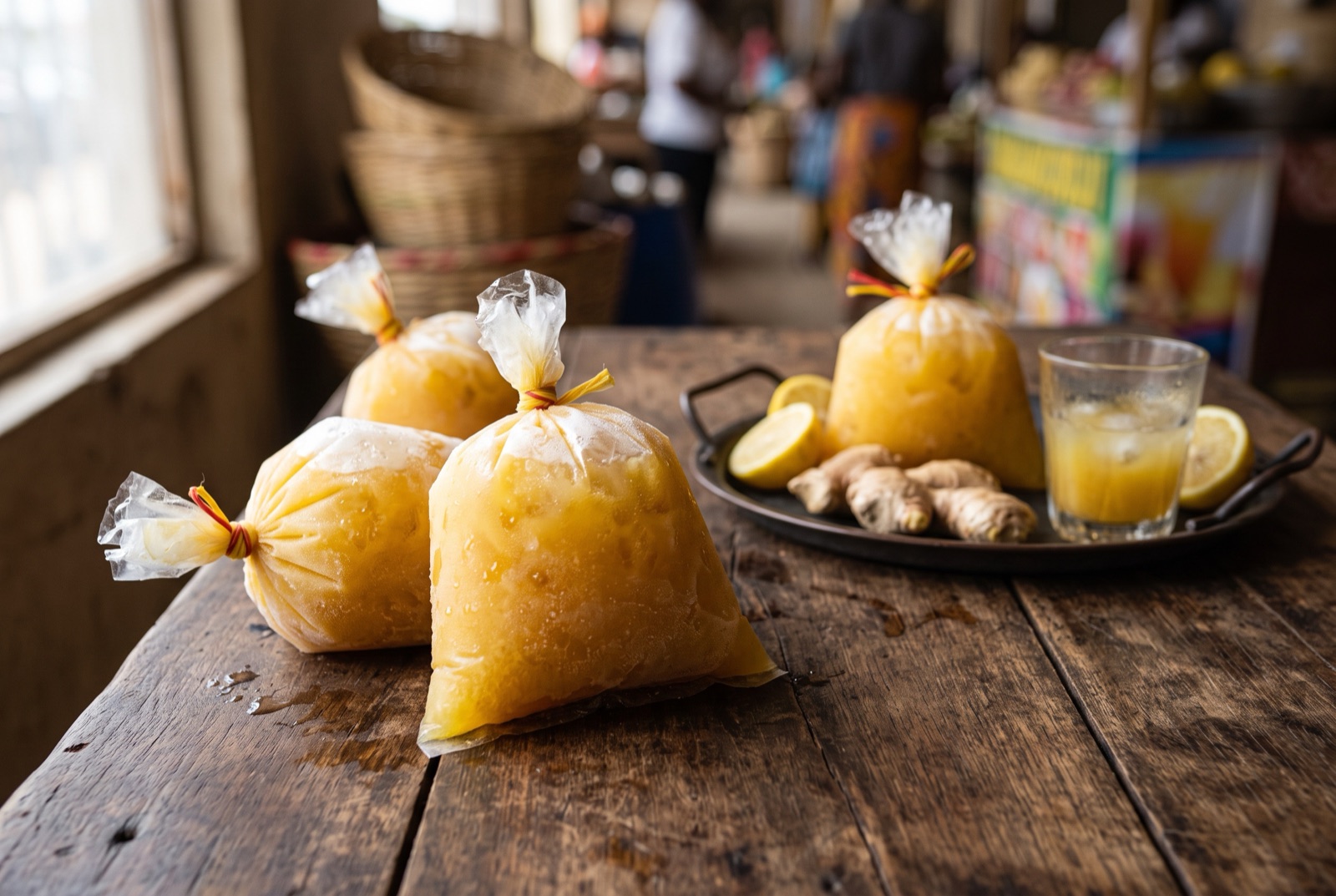
Gnamankoudji is uncooked ginger juice: a large quantity of fresh root blended with water, sharpened with lemon and softened with pineapple, strained through cloth and sweetened to taste. Because nothing is boiled, the ginger keeps its full pungency, and the drink arrives cold and sweet before delivering a genuine heat at the back of the throat a second later. That double hit is the whole appeal, and Ivorians calibrate it carefully — too little ginger and it is just pineapple squash, too much and nobody can finish a glass. It is sold everywhere in small plastic sachets, frozen solid and sucked through a bitten corner, and it takes twenty minutes plus chilling time to make at home.

- Gate
- Ivory CoastNationwide
- Prep
- 20 min
- Cook
- 5 min
- Total time
- 4 hr 25 min incl. 4 hr rest
- Serves
- 6
- Status
- Easy
- Nutrition / serving · estimated
- Calories 120 kcal
- Protein 1 g
- Carbs 30 g
- Fat 0 g
- Fiber 1 g
- Sugar 27 g
- Sodium 5 mg
Why this recipe works.
- Blends the ginger raw so the heat stays sharp instead of mellowing the way boiled ginger does.
- Gives a ratio you can actually taste your way along, rather than one fixed level of burn.
- Double-strains through cloth, which is the difference between a clean drink and a fibrous one.
- Uses pineapple for sweetness and acid, so less sugar is needed than in most ginger cordials.
Ingredients.
7 itemsEquipment
- Blender
- Muslin cloth or fine sieve
- Large jug
- Bottles for chilling
Instructions.
Blend the ginger
Put 250 g of chopped ginger into a blender with 400 ml of the water and run it until the root is completely broken down and the liquid looks like pale, thick cloud with no visible chunks, about 90 seconds.
Tip Start with just enough water to let the blades catch, then add the rest — a full jug spins the pieces around without cutting them.
Add the fruit
Tip in the pineapple chunks and the mint, if using, along with another 400 ml of water, and blend again until smooth. The mixture will turn opaque yellow and smell sharply of ginger the moment you lift the lid.
Strain twice
Pour the mixture through a muslin cloth set over a jug, gather the corners and squeeze the pulp hard until it stops dripping. Rinse the cloth and pass the juice through a second time to catch the fine fibre that always slips past on the first pass.
Make the syrup
Warm the sugar with 150 ml of water and the cloves, if using, over low heat for about 5 minutes, stirring until the liquid is completely clear with no grains left on the base of the pan. Let it cool for a few minutes.
Combine and taste
Stir the syrup and the lemon juice into the strained juice, then top up with the remaining cold water. Taste: it should be sweet on the front of the tongue with the ginger heat arriving a second later. Add water if that heat is overwhelming.
Chill and serve
Bottle and refrigerate for at least 4 hours, then shake well and pour over plenty of ice. Check the sweetness once more when cold, since chilling flattens it, and serve in small glasses rather than tall ones.
Tips from our kitchen.
- Choose ginger with taut, shiny skin that snaps rather than bends. Old, wrinkled root is fibrous and much less pungent, and you will end up using twice as much.
- Do not peel it — just scrub the root well. A great deal of the aroma sits directly under the skin, and peeling 250 g of knobbly ginger is a waste of an afternoon.
- Blend in two stages with a little water first, so the blades actually grip the ginger instead of spinning around it.
- Squeeze the pulp hard in the cloth. The last third of the liquid is the most concentrated and it will not come out on its own.
- Sweeten after chilling, not before. Cold blunts sweetness noticeably, and juice that tasted balanced at room temperature will seem thin from the fridge.
- If it is too fierce, dilute with water or more pineapple juice rather than adding sugar — sugar masks the heat instead of reducing it.
Substitutions.
- Fresh pineapple → 400 ml unsweetened pineapple juice, or fresh mango
- Bottled juice works fine and saves the peeling. Mango gives a rounder, less acidic drink that needs an extra squeeze of lemon.
- Lemon → Lime
- Both are used. Lime is sharper and slightly more floral against the ginger.
- Sugar → Honey, or no sweetener at all
- Honey dissolves easily in the warm syrup step and adds its own flavour. Unsweetened, the drink is bracing and worth trying once.
Variations.
- Frozen sachets
- Pour into small sealable bags, freeze solid, and drink as it melts — the way it is actually sold on Ivorian streets.
- Spiced gnamankoudji
- A few cloves and a piece of cinnamon steeped in the warm syrup before it joins the juice, giving a rounder, more aromatic drink.
- Mint and ginger
- A handful of mint blended in with the ginger, which lifts the whole thing and makes it noticeably more cooling.
Storage & reheating.
Keeps 4 days in the fridge in a sealed bottle and separates as it stands, so shake before pouring. The heat actually intensifies over the first day, which is worth knowing if you made it mild on purpose. It freezes well for 3 months in bottles or small bags and can be drunk as it thaws. Do not leave it out at room temperature for long, since raw juice with sugar in it ferments quickly in warm weather.
Serve with
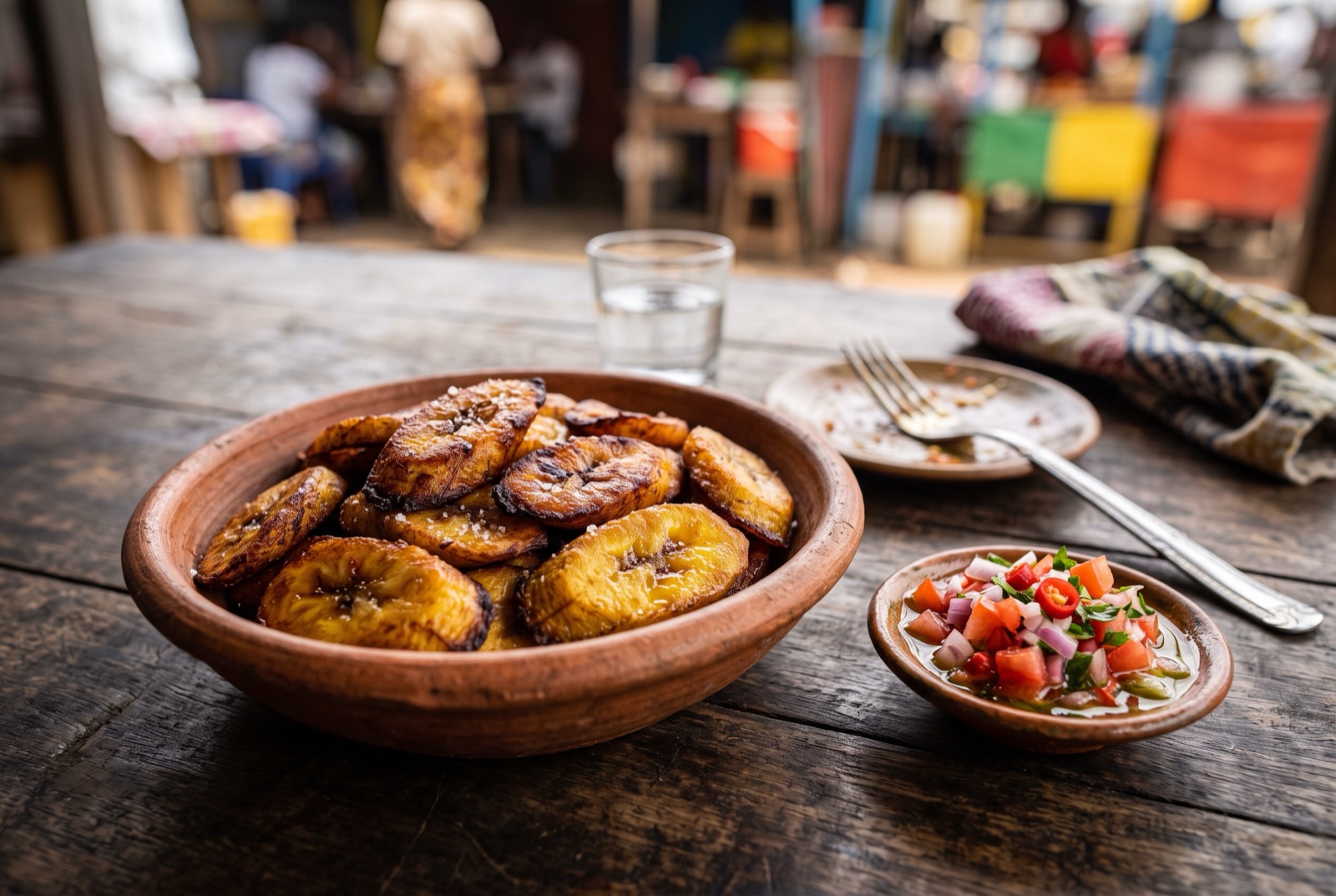
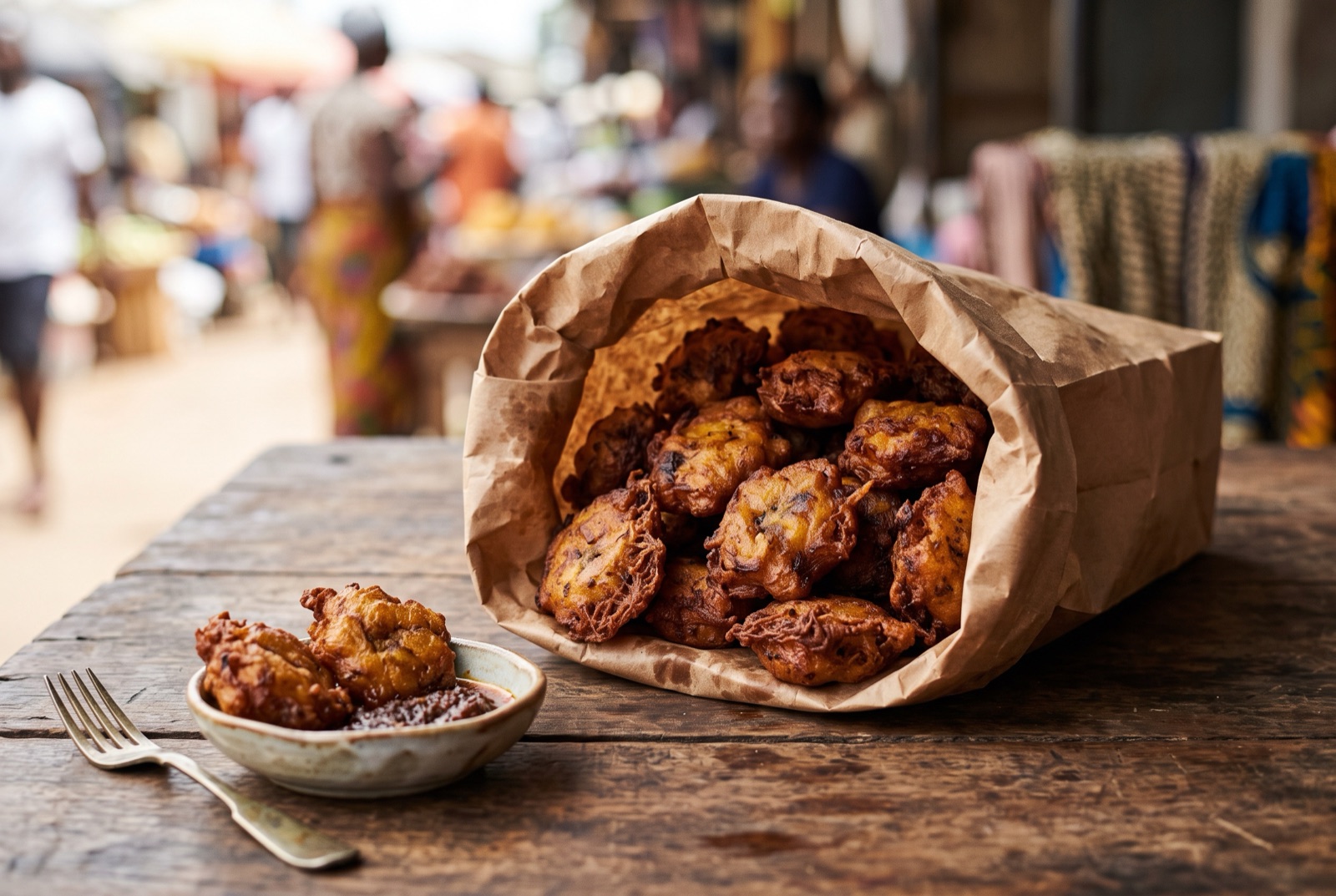
Alloco, grilled fish, or anything fried — the acidity cuts through oil better than water does.
The story behind Gnamankoudji.
The name comes from Dioula, one of the major trade languages of the region, and reads more or less as ginger water. Ginger drinks of this kind are made right across West Africa, and every country has its own name and proportions: Ghanaian and Nigerian versions often lean on cloves and pineapple skin, Senegalese ones on lemon and sometimes vanilla. Nobody invented this drink in a single place, and the shared reference point is simply that ginger grows well in the region and that a cold, sharp, sweet drink is very welcome in the climate.
What makes the Ivorian version recognisable is the packaging as much as the recipe. Gnamankoudji is one of the drinks sold in small heat-sealed plastic sachets, frozen hard in a chest freezer and handed over still icy — the same format used for bissap made from hibiscus and for baobab-fruit juice. Vendors sell them from cool boxes at roadsides, outside schools and in traffic, and buying one means biting a corner off and drinking as it melts. It is cheap, effective in the heat, and an entire small economy for the women who produce them at home.
It is also treated as more than refreshment. Ginger has a reputation across the region as a tonic and a stimulant, and gnamankoudji gets drunk for that as much as for the taste, sometimes with extra chilli or spice added by people who want it fiercer. Pineapple is the usual partner because Côte d'Ivoire grows a great deal of it, and its sweetness and acidity round off the raw ginger without dulling it. Straining matters: the fibre in blended ginger is unpleasant to drink and the juice is passed through a cloth, sometimes twice, until it pours cleanly.
Questions, answered.
How strong is gnamankoudji supposed to be?
Strong enough to feel it at the back of the throat, but not so strong that a glass becomes a challenge. The ratio here gives a firm burn behind the sweetness; taste after straining and dilute with water or pineapple juice if it is too much. Street versions vary enormously, and vendors will often tell you whether theirs is mild or fierce.
Should I peel the ginger?
No need. Scrub the root under running water with a brush to remove soil and any soft spots, then blend it skin and all. Much of the aromatic compound sits just beneath the skin, so peeling costs both flavour and a lot of time when you are working with a quarter kilo of knobbly root.
Why is my ginger juice cloudy and gritty?
It has not been strained enough. Blended ginger releases a lot of fine fibre and starch that stays suspended in the liquid. Pass it through a muslin cloth or a fine sieve lined with a clean tea towel, squeeze the pulp firmly, then strain a second time and let it settle in the fridge before decanting off the sediment.
Can I use ground ginger instead of fresh?
It is not a workable swap. Dried ground ginger has a warm, dusty heat but none of the volatile pungency of raw root, and it will not dissolve cleanly, leaving a gritty sediment. The whole character of the drink comes from ginger that has never been heated or dried, so fresh root is essential.
What is the pineapple for?
Sweetness, acidity and body. Côte d'Ivoire is a significant pineapple producer, and the fruit rounds off the raw ginger burn without smothering it, while its acid keeps the drink refreshing. You can leave it out and make a plain ginger and lemon version, but you will need more sugar and the result is harsher.
You might also like.
All recipes →
Keep exploring Ivory Coast.
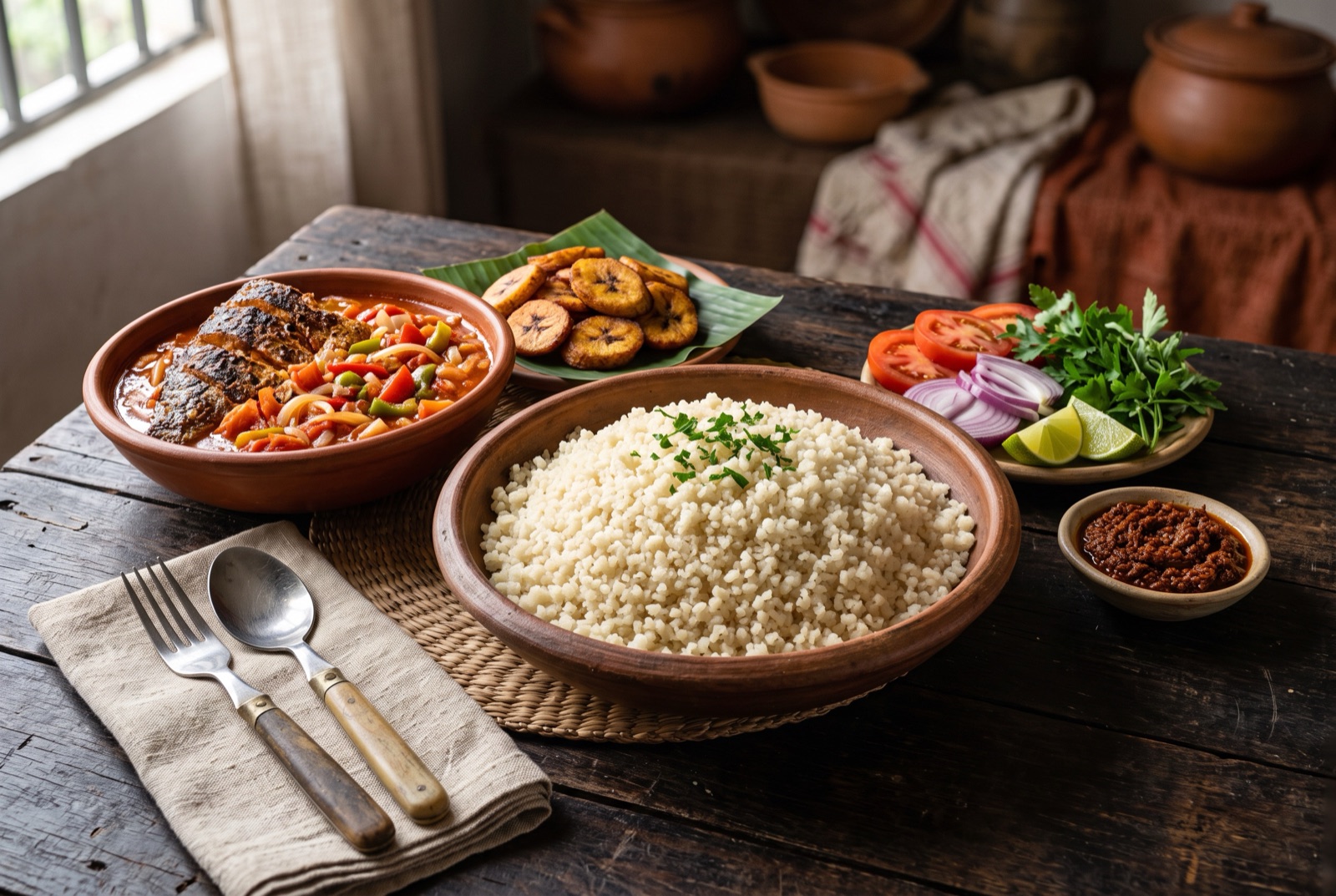
Ivory Coast has 9 more dishes in the atlas — Alloco and Attiéké, and 7 more.
All Ivory Coast recipes Ginger recipes Pineapple recipes Lemon recipes drinkveganvegetariangluten freedairy freenut freeRecipe by The DishRoute Kitchen · published August 20, 2026 · updated August 20, 2026