Harðfiskur.
Icelandic Wind-Dried Fish Snack
Harðfiskur · say it: HARTH-fis-kur
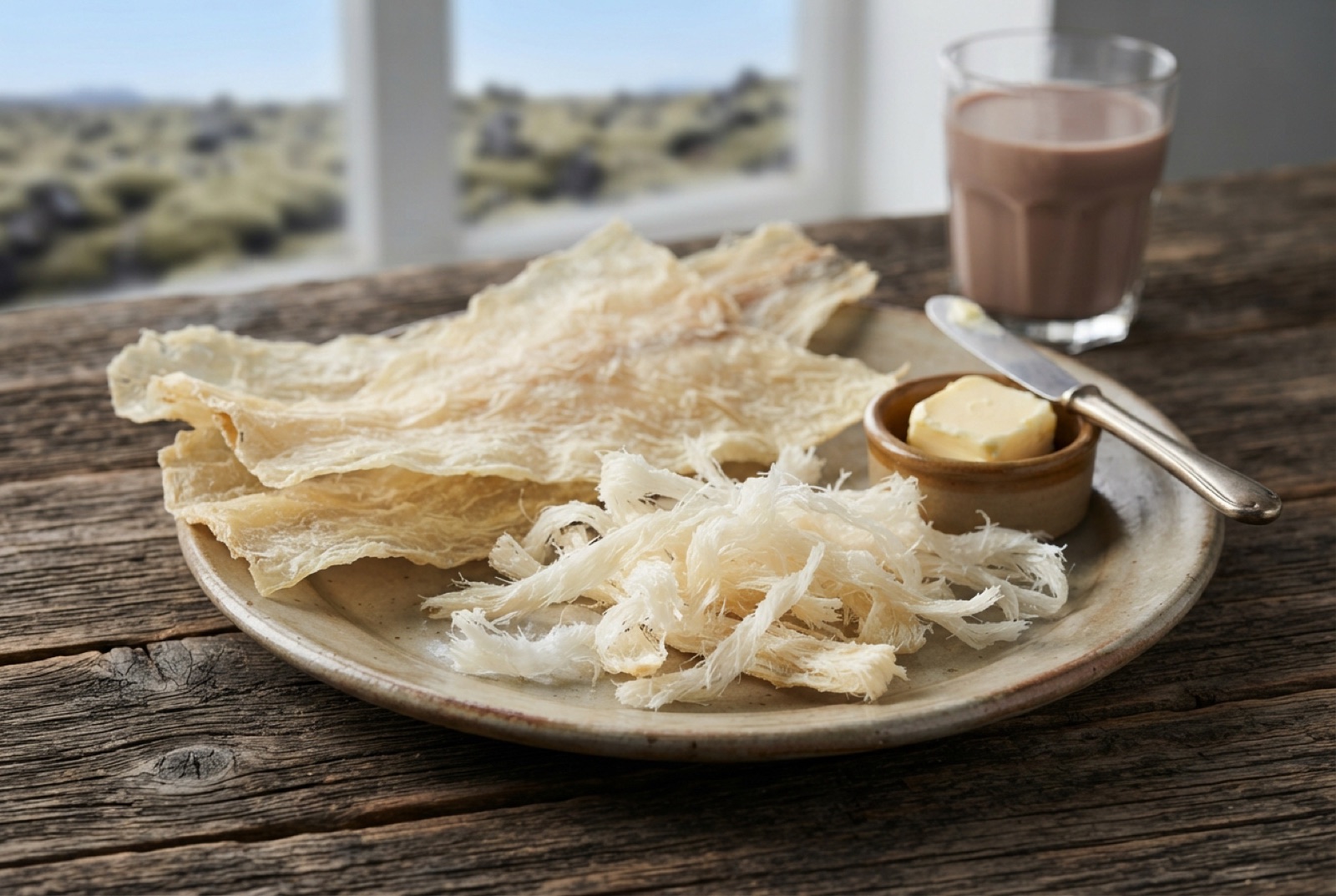
Harðfiskur is fish reduced to its essentials: cod, haddock or wolffish dried until almost all the water is gone, leaving a pale, brittle sheet of nearly pure protein that you tear along the grain into strips and eat with a thick smear of butter. It is chewy, mildly sweet, intensely savoury, and salty only because the sea was — traditional harðfiskur is not salted at all. Icelanders eat it the way other countries eat crisps, and it is sold in every supermarket and petrol station. Drying it properly takes weeks of cold wind, which no kitchen has; this recipe uses a dehydrator or a cold fridge instead and tells you exactly where that differs from the real thing.

- Gate
- IcelandThe Westfjords
- Prep
- 40 min
- Cook
- 0 min
- Total time
- 72 hr 40 min incl. 72 hr rest
- Serves
- 6
- Status
- Takes skill
- Nutrition / serving · estimated
- Calories 240 kcal
- Protein 32 g
- Carbs 0 g
- Fat 13 g
- Sodium 620 mg
Why this recipe works.
- Treats drying as a food-safety process, not a rustic experiment — freezing first, cold air, and clear signs of when it has gone wrong.
- Gives both a dehydrator route and a fridge-and-fan route, with realistic timings for each.
- Includes the beating step that Icelanders take for granted and that home-dried fish genuinely needs.
- States plainly what a kitchen cannot reproduce: weeks of near-freezing Atlantic wind and the fibre-loosening freeze-thaw cycles it causes.
Ingredients.
5 itemsFor drying
To serve
Equipment
- Dehydrator with racks, or a wire rack and a fridge with a small fan
- Very sharp filleting knife
- Rolling pin or meat mallet
- Airtight storage container
Instructions.
Freeze first
Freeze 800 g of fish solid at -20°C for at least 24 hours, then thaw it overnight in the fridge. This deals with parasite risk and starts breaking down the muscle fibres the way an Icelandic winter would.
Trim and cut
Pat the fish completely dry, pull out any pin bones, and trim off the thin belly flap and any dark membrane. Cut the fillet along its length into strips about 1 cm thick and no more than 4 cm wide, keeping them as even as you can.
Tip Uneven strips are the main cause of a batch where half is brittle and half is still damp inside.
Brine briefly, if you want
Traditional harðfiskur is unsalted, but a 15-minute soak in the cold salted water firms the surface and adds seasoning. Dissolve the salt in the water, submerge the strips, then rinse briefly and pat bone dry with a cloth.
Dry in a dehydrator
Lay the strips on the racks without touching and run the dehydrator at 40–45°C for 18–30 hours. Rotate the trays every few hours. The fish shrinks by more than half, turns pale ivory and stops feeling cool to the touch as the surface moisture goes.
Or dry in the fridge
If you have no dehydrator, set the strips on a wire rack over a tray in the fridge with a small fan blowing across them, and leave for 3–5 days, turning daily. It is slower but stays reliably cold, which is closer to the way it is actually done in Iceland.
Test for doneness
Bend a cooled strip: it should crack rather than fold. Tear one open and check the centre — any translucent, springy or damp patch means it goes back to dry for several more hours. Underdried fish will spoil in storage.
Beat it soft
Lay the dried pieces on a board and hit them firmly along their length with a rolling pin or the flat of a mallet until the fibres loosen and the surface takes on a slightly fluffy, frayed look. Home-dried fish needs this far more than the commercial kind.
Tear and butter
Tear the fish along the grain into bite-sized strips and spread each piece thickly with cold salted butter just before eating. Serve with rye bread and coffee, and keep the rest sealed in a dry container.
Tips from our kitchen.
- Use only lean white fish. Oily fish such as mackerel, salmon or herring goes rancid during drying and cannot be saved — the fat oxidises long before the flesh is dry.
- Freeze the fish solid for at least 24 hours at -20°C first, then thaw in the fridge. This handles parasite risk and also starts the fibre-loosening the wind would otherwise do.
- Cut strips of even thickness, around 1 cm. Thick and thin pieces on the same rack means some are brittle while others are still dangerously damp inside.
- Keep the drying air cold or barely warm and always moving. Fish left to dry in a warm still kitchen spoils rather than dries, and it will smell obviously wrong if it does.
- Beat the dried fish with a rolling pin or mallet before eating — it breaks the fibres apart and turns something jaw-breaking into something pleasantly chewy.
- Test doneness by bending a strip: it should crack rather than fold, and show no translucent or springy patches when you tear it open.
Substitutions.
- Cod → Haddock, wolffish, pollock or whiting
- Wolffish (steinbítur) is the connoisseur's choice in Iceland — thick, meaty and chewy. Haddock dries faster and finishes more delicate. All must be lean; no oily fish works.
- Home drying → Buying it — harðfiskur, Norwegian tørrfisk or stockfish from a Nordic grocer
- There is no shame in this. Commercial drying is done in conditions a kitchen cannot match, and the bought product is better than most home attempts. Buy it if you want to taste the real thing and dry your own to understand it.
- Butter → Cultured butter, or Icelandic-style skyr dip
- Salted butter is standard and cultured butter is better. Anything without fat leaves the fish tasting like dry rope, so do not skip this part.
Variations.
- Steinbítsroð
- Dried wolffish, thicker and chewier than cod, and the version many Icelanders rate highest. It needs longer drying and considerably more beating.
- Harðfiskur with skyr and rye
- Strips of dried fish on buttered rúgbrauð with a spoonful of skyr. A common Icelandic breakfast or hikers' lunch, and far more filling than it looks.
- Skreið (stockfish)
- The same drying method applied to whole split fish rather than strips, historically Iceland's great export. It is rehydrated by long soaking rather than eaten dry.
Storage & reheating.
Store fully dried fish in an airtight container or paper bag in a cool, dry cupboard for up to 3 months; the fridge adds moisture and is not needed. Check it after the first week — any softening means it was not dry enough, so return it to the dehydrator. Discard immediately and without debate if you see mould, if the surface turns slimy, or if it smells sour, ammoniac or rancid rather than cleanly of dried fish. Once opened and torn, it stales in a week or two and turns tough rather than unsafe.
Serve with
Cold salted butter and dark rye bread, with strong coffee.
The story behind Harðfiskur.
Drying fish is the oldest preservation technique in the North Atlantic and it needs no salt, no fuel and no equipment — only wind and cold, both of which Iceland has in surplus. Split fish was hung on slatted wooden racks in open sheds called hjallur, positioned to catch the prevailing wind, from late winter into spring. The temperature hovers around freezing, so the fish never spoils, and repeated freeze-thaw cycles rupture the muscle fibres, which is why properly wind-dried fish tears into soft threads instead of shattering like a cracker. Dried fish was also currency: for centuries Iceland exported stockfish to Europe, and the trade in dried cod shaped the country's economy and its relationships with Norwegian, Hanseatic and English merchants long before anyone thought of it as a snack.
It stayed a staple because it works. A dried fillet keeps for months without refrigeration, weighs almost nothing, and delivers protein in a place where bread was scarce and vegetables barely existed. Icelandic children were sent to school with it, sailors took it to sea, and it is still the standard hiking food. The butter is not decoration either: harðfiskur is almost entirely lean protein, and the butter supplies the fat that makes it satisfying rather than merely filling. Icelanders spread it on the way other people butter bread, which surprises visitors every single time.
What you can do at home is an honest approximation rather than a copy. Commercial producers still hang fish in wind, though many now finish it in temperature-controlled indoor drying rooms, and the wolffish version — steinbítur — is prized for its thickness and chew. A dehydrator running low and slow removes the water in a day or two, and a fridge with a fan does it in three to five days at safe temperatures. Neither gives you the freeze-thaw fibre breakdown of an Icelandic drying shed, so home harðfiskur comes out firmer and needs more beating with a mallet before it eats well. It is still very good, and it is still recognisably the same food.
Questions, answered.
What is harðfiskur?
Harðfiskur is Icelandic dried fish — lean white fish such as cod, haddock or wolffish air-dried until it is hard and brittle, with no salt, smoke or cooking involved. It is torn into fibrous strips and eaten as a snack, almost always with butter, and has been a staple food and export in Iceland for over a thousand years.
Is it safe to dry fish at home?
It can be, with care. Use very fresh lean white fish, freeze it at -20°C for at least 24 hours first, dry it in a dehydrator or in a cold fridge with air movement rather than in a warm room, and dry it fully so that it snaps rather than bends. Discard the batch if you see mould or slime, or if it smells sour or ammoniac at any point.
Why is traditional harðfiskur dried outdoors in winter?
Because the conditions do two jobs at once. Near-freezing temperatures keep bacteria from growing while the constant Atlantic wind pulls moisture out, and the repeated freezing and thawing bursts the muscle fibres so the finished fish tears into soft threads. Warm-weather drying spoils fish before it dries, which is why the season runs from late winter into spring.
How long does it take to dry fish in a dehydrator?
Around 18–30 hours at 40–45°C for 1 cm strips, depending on the thickness and the machine. Judge by feel rather than the clock: a finished piece is rigid, cracks when bent, and shows no translucent or springy patches when torn open. Anything still leathery in the middle needs more time.
Why do Icelanders eat dried fish with butter?
Because harðfiskur is nearly pure lean protein with almost no fat, and butter supplies what the fish lacks. It also softens the texture and carries the flavour. Icelanders spread it thickly, in the way other countries butter bread, and eating the fish plain is considered a mistake rather than a diet choice.
Can I make harðfiskur with salmon or mackerel?
No. Oily fish turns rancid during the long drying, developing a strong, unpleasant taste that no amount of butter hides, and the fat also slows moisture loss so the flesh stays wet for longer than is safe. Stick to lean white fish: cod, haddock, pollock, whiting or wolffish.
You might also like.
All recipes →

Keep exploring Iceland.
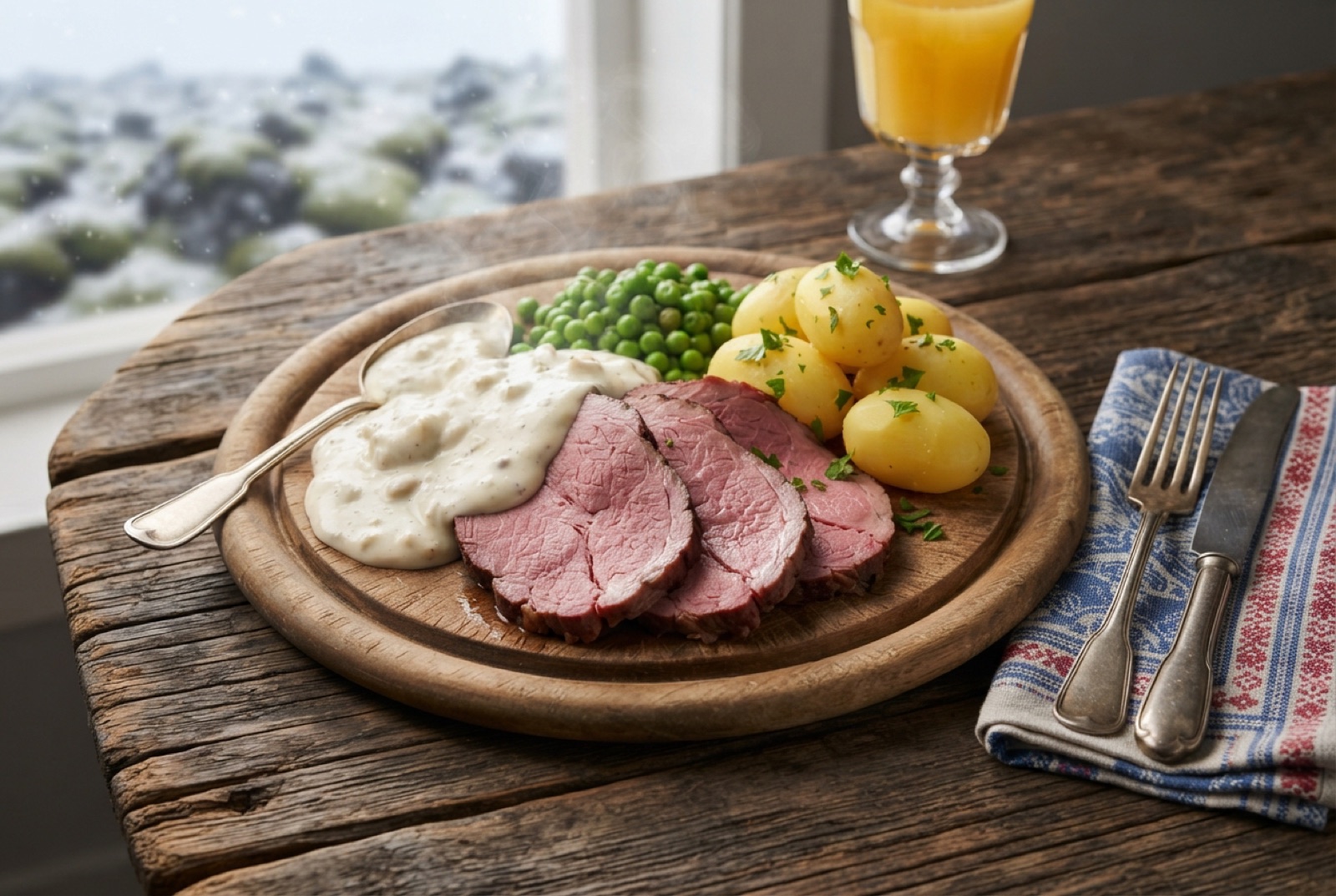
Iceland has 9 more dishes in the atlas — Fiskibollur and Hangikjöt, and 7 more.
Recipe by The DishRoute Kitchen · published August 19, 2026 · updated August 19, 2026