Plokkfiskur.
Icelandic Fish and Potato Mash
Plokkfiskur · say it: PLOHK-fis-kur
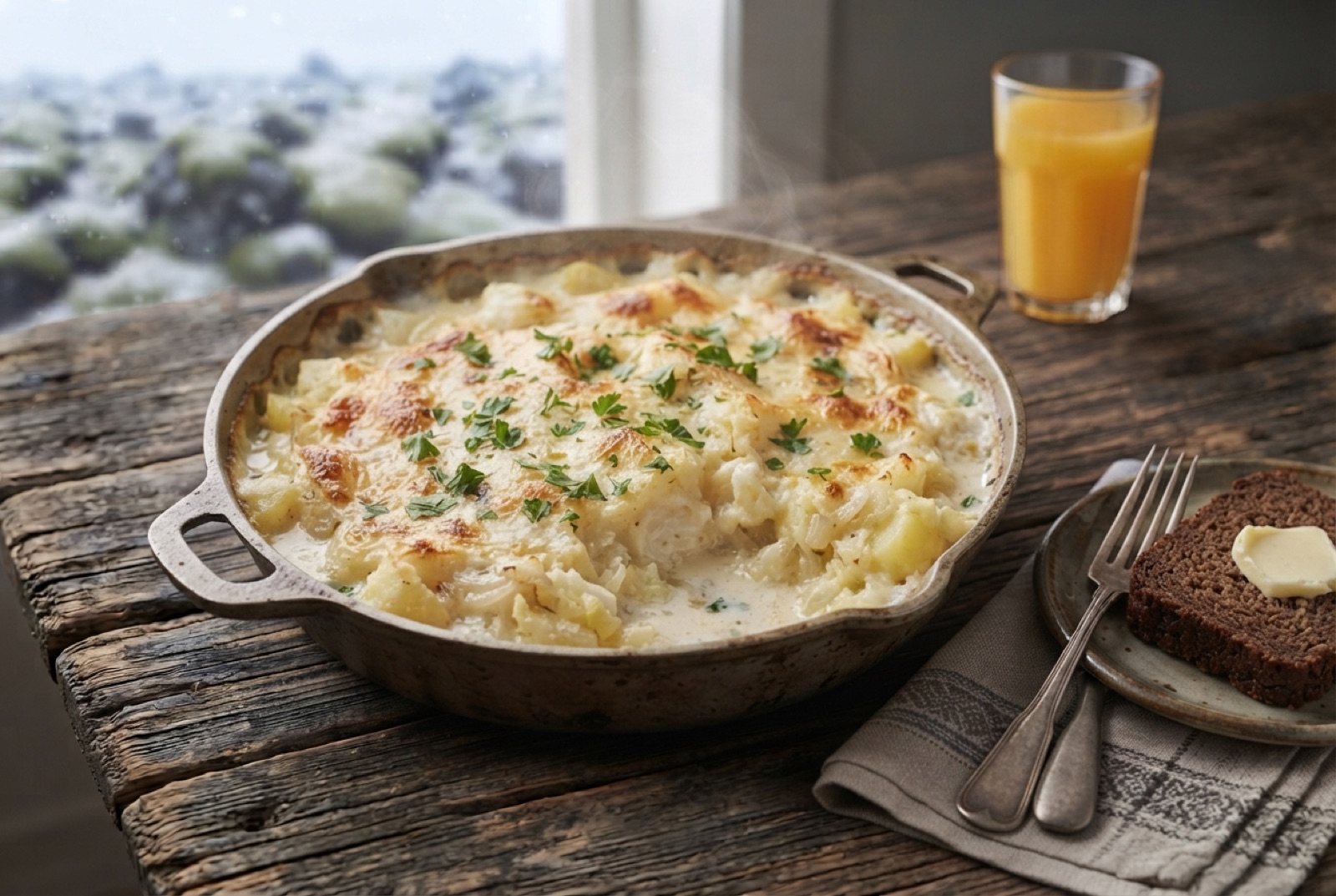
Plokkfiskur is a hot, savoury mash of poached white fish and boiled potato, bound with a milk-and-butter sauce and softened onion, then left in the pan long enough to catch a little colour underneath. It tastes gentle and deeply comforting rather than fishy: sweet cod, sweet onion, salt, white pepper and a lot of butter, with the potato doing what potato does and rounding everything off. The name comes from the verb to pluck — the fish is torn off the bone in flakes rather than cut — and the dish exists because Icelandic households routinely poached more fish than they could eat at one meal. It is the country's most reliable weeknight dinner and takes about half an hour.

- Gate
- IcelandReykjavík and the Southwest
- Prep
- 15 min
- Cook
- 30 min
- Total time
- 45 min
- Serves
- 4
- Status
- Easy
- Nutrition / serving · estimated
- Calories 470 kcal
- Protein 35 g
- Carbs 40 g
- Fat 19 g
- Fiber 4 g
- Sodium 980 mg
Why this recipe works.
- Poaches the fish gently in salted water first, so it flakes into proper chunks instead of dissolving into paste.
- A real onion roux sauce, folded through at the end — the mash stays loose and creamy rather than gluey.
- Browns the finished mash in the pan for a crust, the step most home versions skip and the one that makes it taste cooked rather than reheated.
- Works exactly as well with leftover cooked fish and cold boiled potatoes, which is what it was invented for.
Ingredients.
12 itemsFor the fish and potato
For the sauce
To finish
Equipment
- Wide saucepan for poaching
- Potato masher
- Heavy frying pan or skillet
Instructions.
Boil the potatoes
Put 700 g of halved potatoes into cold salted water, bring to the boil and cook for 18–20 minutes, until a knife slides in and out with no resistance. Drain and leave them in the hot dry pan for a minute so the surface steam dries off.
Poach the fish
Meanwhile bring 1 litre of water to a simmer with the salt and bay leaf, slide in the fish, and immediately drop the heat so the water only shivers. Poach 6–8 minutes, until the flesh turns from glassy to solid white and splits into flakes when nudged. Lift it out and reserve 150 ml of the poaching liquid.
Tip If the water bubbles, the outside of the fillet shreds before the middle is done. You want barely a tremble on the surface.
Pluck the fish
Break the warm fish into large flakes with your fingers, feeling for pin bones as you go and discarding any dark membrane. Keep the pieces generous — you want to meet whole flakes in the finished mash, not fish floss.
Make the onion sauce
Melt 60 g of butter in a wide pan over medium-low heat and cook the diced onion for 8 minutes, stirring, until it is completely soft and translucent with no colour. Stir in the flour and cook for a further minute, until it smells nutty rather than raw and coats the onion in a pale paste.
Build the white sauce
Pour in the warm milk in three additions, whisking smooth after each, then loosen with the reserved poaching liquid. Simmer 3–4 minutes until the sauce coats the back of a spoon and holds a clean line when you draw a finger through it. Season with white pepper and a little salt.
Fold everything together
Roughly mash the drained potatoes straight into the sauce with a masher, leaving some lumps for texture, then fold in the fish flakes with a spatula in as few movements as possible. The mixture should slump slowly off the spoon; add a splash more milk if it stands up stiffly.
Tip Never use a blender or food processor — the potato starch turns to glue in seconds.
Brown it in the pan
Level the mash in the pan, dot the extra butter over the surface and leave it undisturbed over medium heat for 5–6 minutes, until you can smell toasted butter and a golden crust has formed underneath. Fold the crust roughly through, scatter with chives, and serve straight from the pan with buttered rye bread.
Tips from our kitchen.
- Use floury potatoes — Maris Piper, russet or King Edward. Waxy potatoes stay in slippery lumps and refuse to absorb the sauce.
- Poach the fish at a bare shiver, never a boil. It is done when the flakes separate under gentle pressure and the centre has just turned from glassy to opaque.
- Break the fish by hand and check every flake for pin bones as you go — this is the whole reason the dish is called plucked fish.
- Keep the mash on the loose side; it firms up noticeably as it sits in the pan, and a stiff plokkfiskur is a sad one.
- Salt at the end, not the beginning. Poaching water, butter and the rye bread alongside all add salt, and it is easy to overshoot.
Substitutions.
- Cod → Haddock, pollock, hake or wolffish
- Haddock is arguably the more traditional choice in Iceland and holds slightly firmer flakes. Any lean white fish works; oily fish like salmon or mackerel does not — the flavour takes over completely.
- Fresh fish → Leftover cooked fish, or frozen fillets poached from frozen
- This is a leftovers dish by design. Around 500 g of already-cooked flaked fish replaces the raw quantity; skip the poaching step and use plain milk in the sauce.
- Rúgbrauð to serve → Any dense dark rye or German pumpernickel
- You want something sweet, close-grained and moist rather than a light sourdough rye. Butter it much more heavily than feels reasonable.
Variations.
- Plokkfiskur with curry
- A stir of mild curry powder into the roux, a Danish-influenced version common in Reykjavík lunch places. It turns the mash pale gold and divides Icelandic opinion sharply.
- Gratinated plokkfiskur
- Spread into a buttered dish, topped with grated cheese and baked until blistered. Restaurant-style, and a good way to make it ahead for a crowd.
- Smoked-fish plokkfiskur
- Made with smoked haddock instead of fresh, or half and half. Much more assertive, and best with a squeeze of lemon and extra potato to balance it.
Storage & reheating.
Refrigerate up to 2 days in a covered container. Reheat in a buttered frying pan over medium-low heat with a splash of milk, pressing it flat and letting the base crust before turning it — microwaving works but gives you a uniform, slightly rubbery texture. Freezing is not recommended: the potato goes grainy and the sauce weeps on thawing.
Serve with
Buttered dark rye bread, pickled beetroot, and a glass of cold milk — the standard Icelandic lunch plate.
The story behind Plokkfiskur.
Every fishing culture has a dish that turns yesterday's catch into today's dinner, and in Iceland it is plokkfiskur. Fish came into the house whole and was boiled simply in salted water; what remained went into a bowl in the cold pantry, and the next day it was plucked off the bones, mixed with whatever potatoes were left over, warmed through with milk and butter and eaten again. That thrift is not a historical curiosity here. Fish was the daily protein of a country that grew almost no grain, and stretching it with potatoes — which only became a serious Icelandic crop in the eighteenth and nineteenth centuries — turned one small fillet into a meal for a family.
The dish moved up in the world without changing much. It is now on the menu of harbour restaurants in Reykjavík, sold ready-made in supermarket tubs, and served in workplace canteens as a standard hot lunch. Icelanders argue about it in the way people argue about their own grandmother's cooking: whether it should be smooth and saucy or coarse and chunky, whether onion belongs in it at all, whether a béchamel is refinement or cheating on the original, which was often just fish, potato, milk and butter beaten together in the pot. A few Reykjavík kitchens add a spoonful of mild curry powder, a habit picked up from Danish cooking that older cooks consider heresy and younger ones consider dinner.
What nobody argues about is what goes beside it. Plokkfiskur is eaten with rúgbrauð, the dense sweet dark rye, spread thickly with cold butter — the sweetness of the bread against the salt of the fish is the whole point, and the pairing is so fixed that ordering one without the other looks like a mistake. Some households melt more butter over the top at the table, others put out a jar of pickled beetroot for sharpness. Neither is wrong.
Questions, answered.
What kind of fish should I use for plokkfiskur?
A lean white fish that flakes in big pieces: cod, haddock, pollock, hake or wolffish. Haddock and cod are the standard choices in Iceland. Avoid oily fish such as salmon or mackerel, whose flavour dominates the mild potato base, and avoid very thin delicate fillets, which shred into fibres during poaching.
Can I make plokkfiskur with leftover fish?
Yes — that is its original purpose. Icelandic households made it from the previous day's boiled fish and cold potatoes. Use about 500 g of cooked flaked fish for four people, skip the poaching stage, and make the white sauce with plain milk instead of poaching liquid. Check carefully for bones, since cold fish hides them well.
Why does my plokkfiskur turn out stodgy?
Usually one of three reasons: waxy potatoes instead of floury ones, over-mashing the potato so the starch turns gluey, or making the mixture too stiff. Mash lightly with a fork or masher — never a food processor or blender — and stop while the mixture still slumps slowly off the spoon, because it thickens as it sits over heat.
Is plokkfiskur served with anything specific?
Dark Icelandic rye bread, rúgbrauð, with cold butter spread thickly on it. The bread is sweet and dense, which contrasts with the salty fish mash, and the pairing is close to compulsory in Iceland. Pickled beetroot on the side is common, and some households melt extra butter over the top at the table.
Does plokkfiskur really contain béchamel?
It depends on whose kitchen you are in. The oldest versions simply beat fish, potato, milk and butter together in a pot. A butter-flour-milk sauce is the modern standard and gives a creamier, more stable result, especially if the dish will sit before serving. Both are considered genuine in Iceland.
You might also like.
All recipes →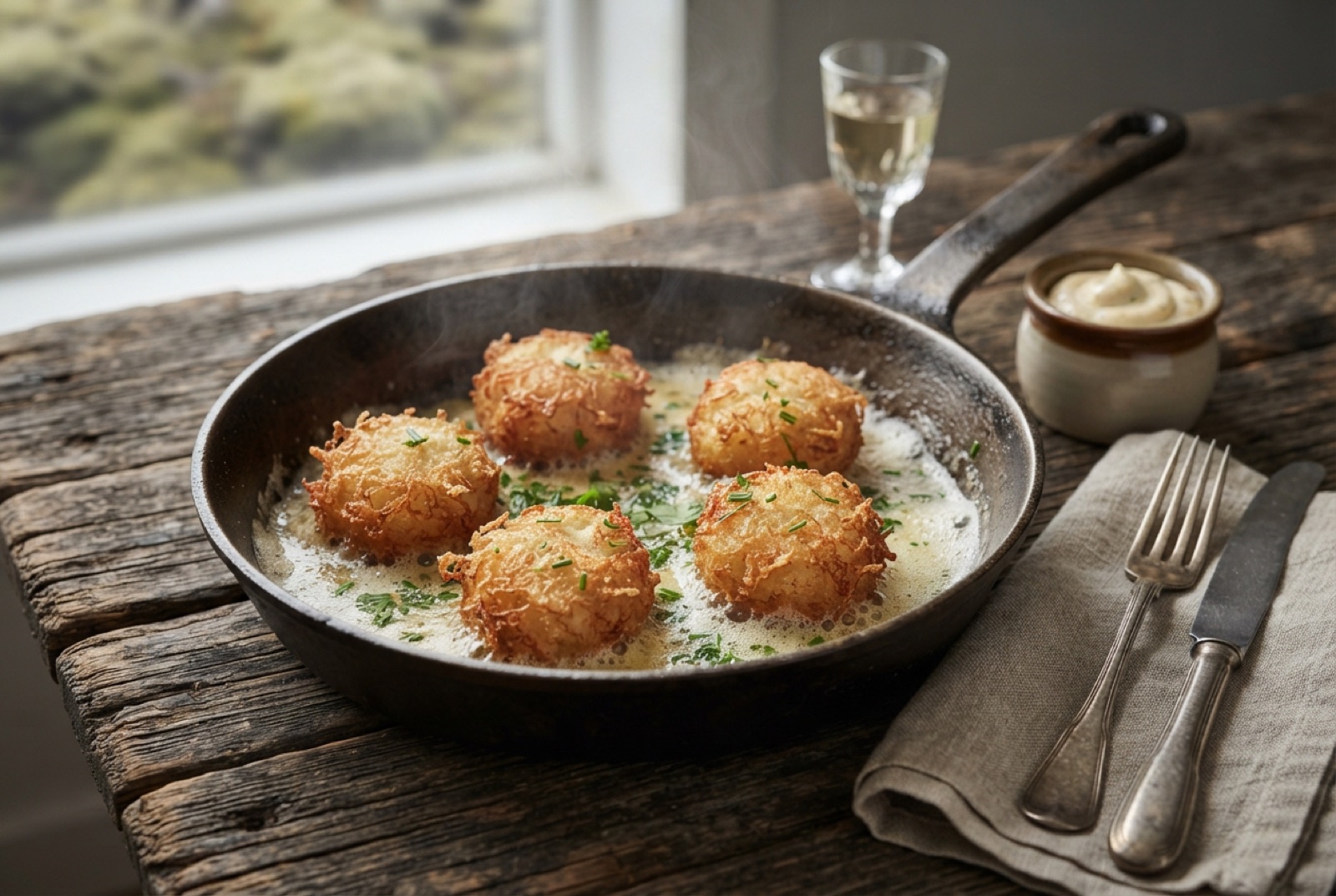
Keep exploring Iceland.
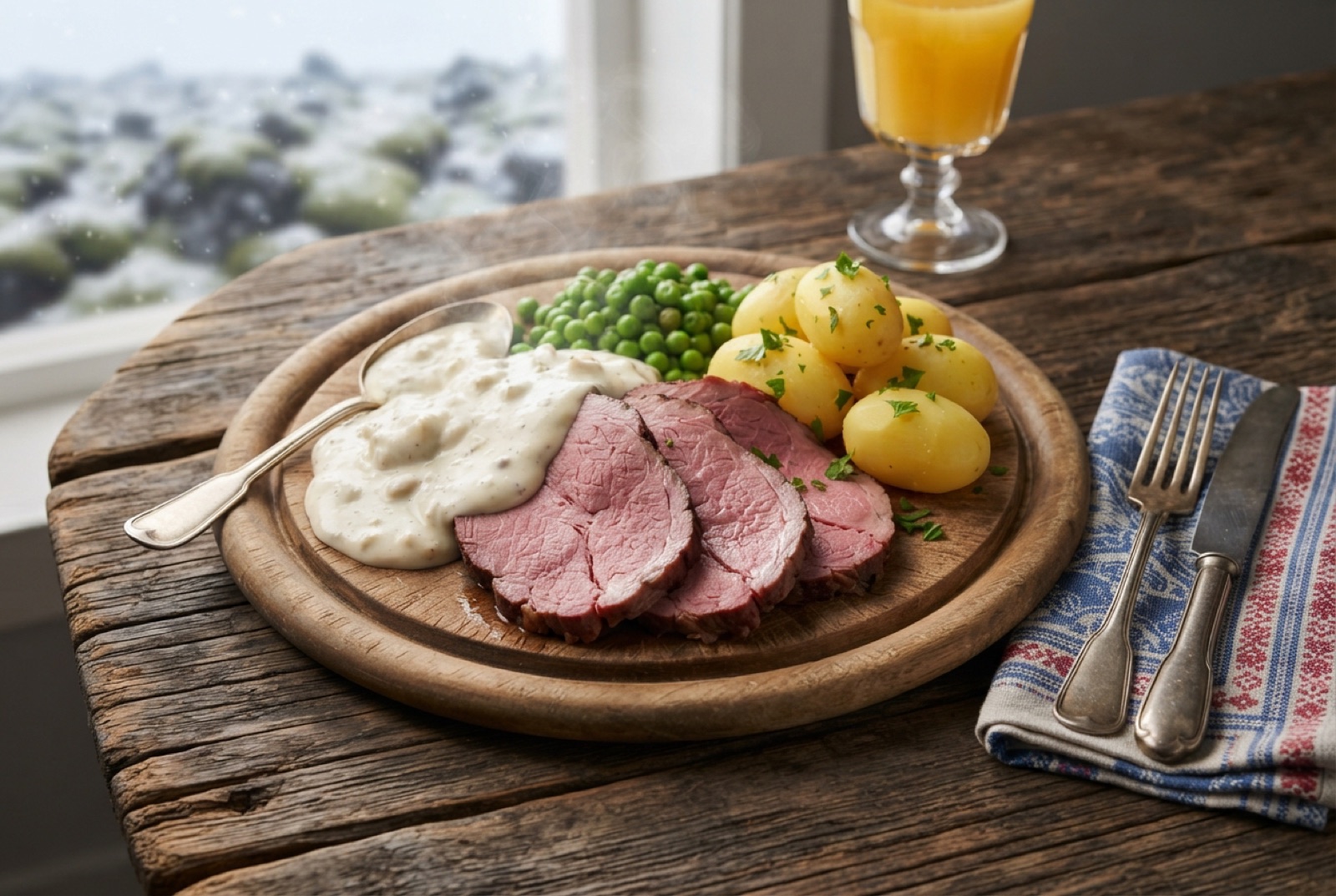
Iceland has 9 more dishes in the atlas — Fiskibollur and Hangikjöt, and 7 more.
Recipe by The DishRoute Kitchen · published August 19, 2026 · updated August 19, 2026