Silky Hummus bi Tahina.
Levantine Chickpea Dip
حمص · Hummus bi tahina · say it: HOOM-moos bee ta-HEE-nah
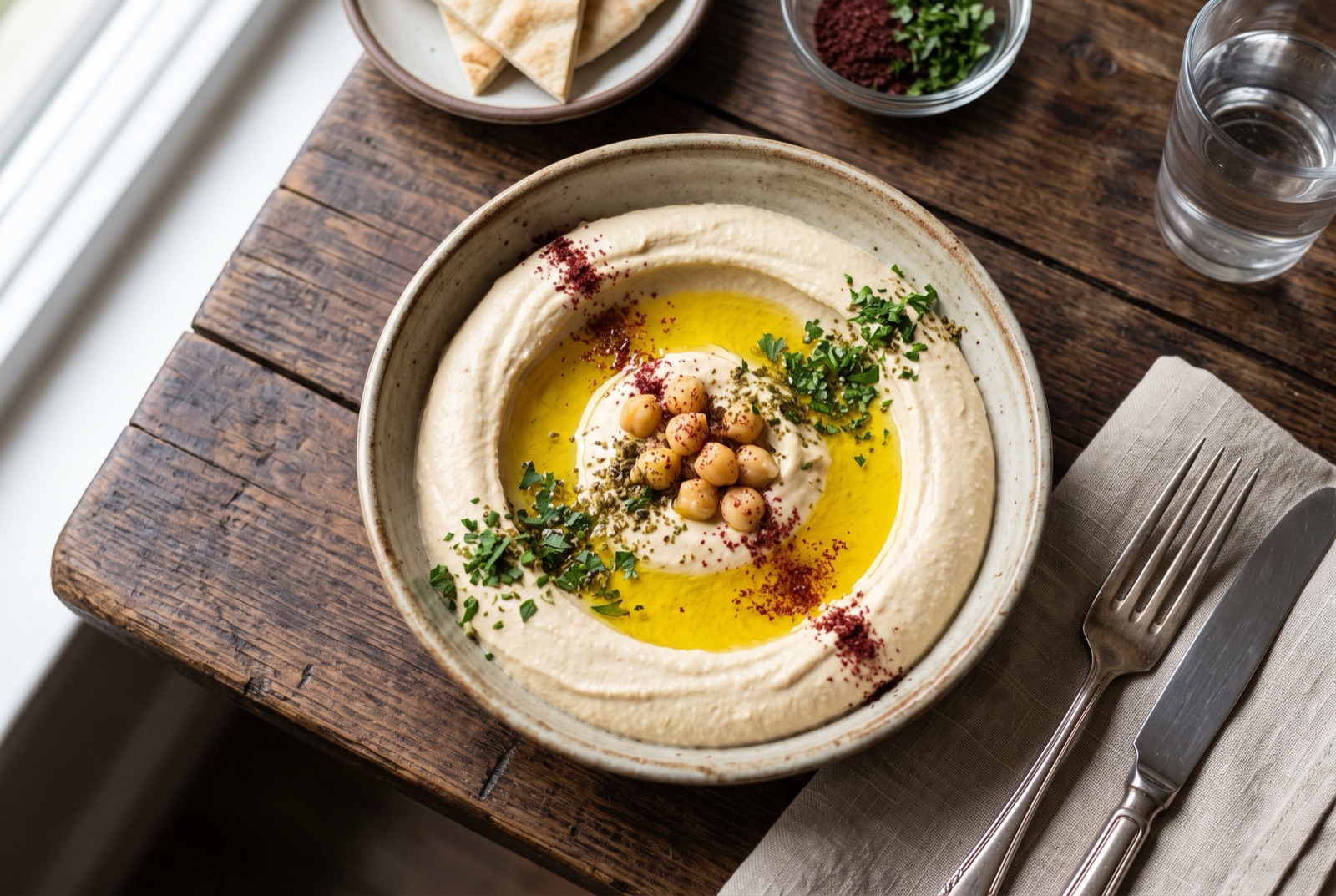
Hummus bi tahina is the Levant's chickpea and tahini purée — the anchor of every Lebanese mezze table — and at its best it is not a chunky dip but a light, almost mousse-like cream: nutty from good tahini, bright with lemon, warm with garlic, finished with a pool of olive oil. The gap between grainy homemade hummus and the silky restaurant kind comes down to two techniques, both used here: chickpeas cooked with a pinch of baking soda until they collapse at a touch, and tahini whipped with ice water until it turns pale and fluffy before the chickpeas ever meet it. No exotic equipment, no secret ingredient — just cooking the chickpeas further than feels reasonable.

- Gate
- Lebanon
- Prep
- 15 min
- Cook
- 1 hr 15 min
- Total time
- 9 hr 30 min incl. 8 hr rest
- Serves
- 6
- Status
- Easy
- Nutrition / serving · estimated
- Calories 320 kcal
- Protein 12 g
- Carbs 26 g
- Fat 20 g
- Fiber 8 g
- Sodium 620 mg
Why this recipe works.
- Baking soda in the cooking water breaks down the chickpea skins, so there is no tedious peeling and no graininess.
- The ice-water tahini emulsion — whipped pale before the chickpeas go in — is the actual restaurant secret for a fluffy texture.
- Generous tahini in the Levantine proportion, not the token spoonful of supermarket tubs.
- Blending the chickpeas while warm gives a cream that never comes together from cold ones.
Ingredients.
11 itemsFor the chickpeas
For the hummus
For serving
Equipment
- Food processor or strong blender
- Large pot
- Fine sieve or colander
Instructions.
Soak the chickpeas
Cover 250 g of dried chickpeas with plenty of cold water and half the baking soda, and soak at least 8 hours or overnight. They are ready when swollen to roughly double size and snap cleanly, not chalky, when you bite one.
Tip In a hot kitchen, soak them in the fridge so they do not start fermenting.
Cook until collapsing
Drain, then simmer the chickpeas in fresh water with the remaining baking soda, skimming the foam and loose skins that rise. Cook 60–75 minutes, until a chickpea crushes into paste between two fingers with no resistance and the skins are dissolving into the water.
Tip Overcooked is the goal here — chickpeas firm enough for a salad are too firm for hummus.
Tame the garlic
While the chickpeas cook, blend or crush the garlic into the lemon juice with the salt and let it stand at least 10 minutes, then strain out the solids if you want a milder bowl. The juice should smell garlicky but lose its raw, nose-prickling sharpness.
Whip the tahini emulsion
In the food processor, run the tahini with the garlicky lemon juice — it will seize and stiffen at first. Keep the machine running and stream in the ice water until the mixture loosens, lightens several shades toward ivory, and holds soft, mousse-like ripples.
Blend in the warm chickpeas
Drain the chickpeas, reserving a spoonful of whole ones for garnish, and add them warm to the emulsion with the cumin. Process a full 3–4 minutes, scraping down once, until the hummus is completely smooth and glossy with no visible speckling — patience here is the whole game.
Season and serve
Taste and adjust salt and lemon, adding cold water by the spoonful until the hummus slumps slowly off a spoon. Spread it in a shallow bowl, swirl a well with the back of the spoon, pour in the olive oil, and finish with the reserved chickpeas, paprika and parsley.
Tip Serve at room temperature — cold hummus tastes flat and reads stiffer than it is.
Tips from our kitchen.
- Cook the chickpeas past what looks done — they should crush into paste between two fingers with zero resistance. Undercooked chickpeas are the single biggest cause of grainy hummus.
- Use a good, pourable tahini with a roasted-sesame smell. A stale, bitter or cement-thick tahini will dominate the whole bowl no matter what you do downstream.
- Add the ice water gradually while the machine runs and stop when the hummus is a touch looser than you want — it firms up noticeably as it cools.
- Soak the garlic in the lemon juice for ten minutes before blending; the acid tames its raw burn and leaves the flavor without the sting.
- Serve at room temperature, never fridge-cold. Cold mutes the tahini and stiffens the texture — let it stand out of the fridge for thirty minutes.
Substitutions.
- Dried chickpeas → 2 × 400 g cans of chickpeas, drained
- Simmer them 20 minutes with the baking soda until mushy before blending. Very good; a shade less flavor than dried.
- Lemon juice → Half lemon juice, half citric acid solution (a pinch in water)
- Some Levantine cooks use a little citric acid for sourness without extra liquid. Pure lemon is the safer default.
- Ice water → Ice cubes added directly to the running processor
- Works the same and chills the purée faster; add one at a time so the texture does not go loose.
Variations.
- Msabbaha
- The loose breakfast cousin: whole warm chickpeas folded through a slack tahini-lemon sauce instead of puréed, eaten warm with raw onion and flatbread.
- Hummus bil lahme
- A mezze classic — the bowl of hummus topped with spiced minced lamb or beef fried with pine nuts, so the warm meat and its fat melt into the cream.
- Extra-lemony and garlicky
- Southern Levantine tables often push both lemon and garlic well past this recipe's levels. Taste and escalate — the tahini can absorb more sharpness than you expect.
Storage & reheating.
Keeps 4–5 days in the fridge in a sealed container with a film of olive oil pressed over the surface. Bring back to room temperature and re-whip with a spoonful of cold water before serving, as it stiffens when chilled. Freezes surprisingly well for up to 3 months — thaw overnight in the fridge and whip smooth again. Add the olive-oil pool and garnishes only at serving time.
Serve with
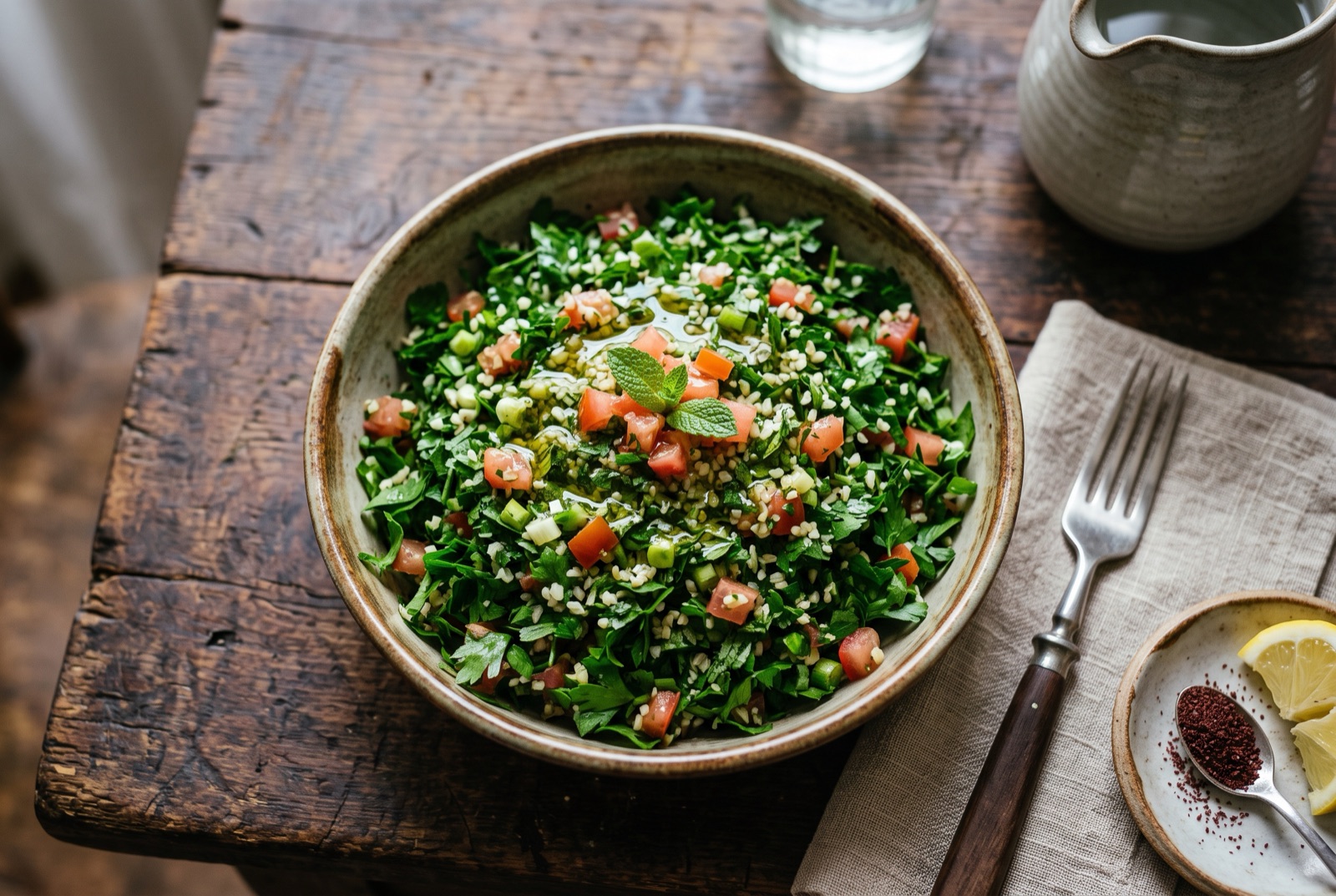
Warm flatbread, raw or pickled vegetables, and the rest of a mezze spread — tabbouleh alongside is the classic pairing.
The story behind Silky Hummus bi Tahina.
Start with the honest part: nobody knows where hummus comes from, and anyone who tells you otherwise is selling something. Chickpeas and sesame have been eaten around the eastern Mediterranean for thousands of years, and recipes recognizably related to hummus bi tahina appear in medieval Arabic cookbooks from the thirteenth century — cold chickpea purées worked with tahini, vinegar, herbs and spices, recorded in Cairo. But the modern dish — chickpeas, tahini, lemon, garlic — cannot be pinned to a single city or people. It is claimed with equal conviction across the whole Levant: Lebanon, Syria, Palestine, Jordan, and Israel all consider it their own, and the argument is genuinely unresolvable because the dish is older than every border involved.
Lebanon has been its loudest champion. In the late 2000s the country's chefs fought the so-called hummus wars — duelling Guinness World Record attempts against Israeli cooks, culminating in plates of hummus weighing about ten tonnes — and lobbied, unsuccessfully, for protected status. The theatrics made headlines, but they point at something real: in Lebanon hummus is not a supermarket condiment, it is table infrastructure. It opens the mezze, it sits under grilled meat, it gets scooped with raw onion and flatbread at breakfast in the msabbaha variation, warm and loose, on weekend mornings.
What sets the Levantine original apart from most tubs sold abroad is texture and proportion. Commercial hummus is heavy on chickpeas and light on tahini; the classic is generous with tahini and obsessive about smoothness — chickpeas boiled with baking soda until their skins dissolve and their starch turns to cream, then whipped while still warm. That version is worth the small extra effort, because it explains, in one spoonful, why an entire region refuses to stop arguing about who owns it.
Questions, answered.
Where does hummus actually come from?
Nobody knows precisely, and the origin is genuinely contested. Chickpea-and-tahini purées appear in 13th-century Arabic cookbooks from Cairo, but the modern dish is claimed across the whole Levant — Lebanon, Syria, Palestine, Jordan and Israel alike — and it predates all of those modern borders. The honest answer is that hummus is Levantine, not the property of any single country.
Why is my homemade hummus grainy instead of silky?
Almost always because the chickpeas were undercooked. For silky hummus, chickpeas must be simmered — ideally with a pinch of baking soda, which softens their skins — until they crush into paste with no resistance, then blended while still warm. Blending cold, firm chickpeas gives a stiff, grainy result no processor can fix.
Do I have to peel the chickpeas one by one?
No. Peeling works, but it is the slow route to the same place. Cooking the chickpeas with a little baking soda dissolves and loosens the skins so thoroughly that they break down in the blender, giving you the same silky texture without twenty minutes of pinching skins off individual chickpeas.
What does the ice water do in hummus?
Whipping ice-cold water into tahini and lemon juice creates a pale, fluffy emulsion — the fat in the tahini traps air and water into a mousse-like cream. Folding warm chickpea purée into that emulsion, rather than just blending everything together, is the main technique behind the light, whipped texture of good Levantine hummus.
Is hummus vegan and gluten-free?
Yes on both counts as written — chickpeas, tahini (sesame), lemon, garlic, olive oil and salt contain no animal products and no gluten. The usual gluten risk is on the side of the plate: flatbread for scooping contains wheat, so serve vegetable sticks or gluten-free bread if that matters at your table.
You might also like.
All recipes →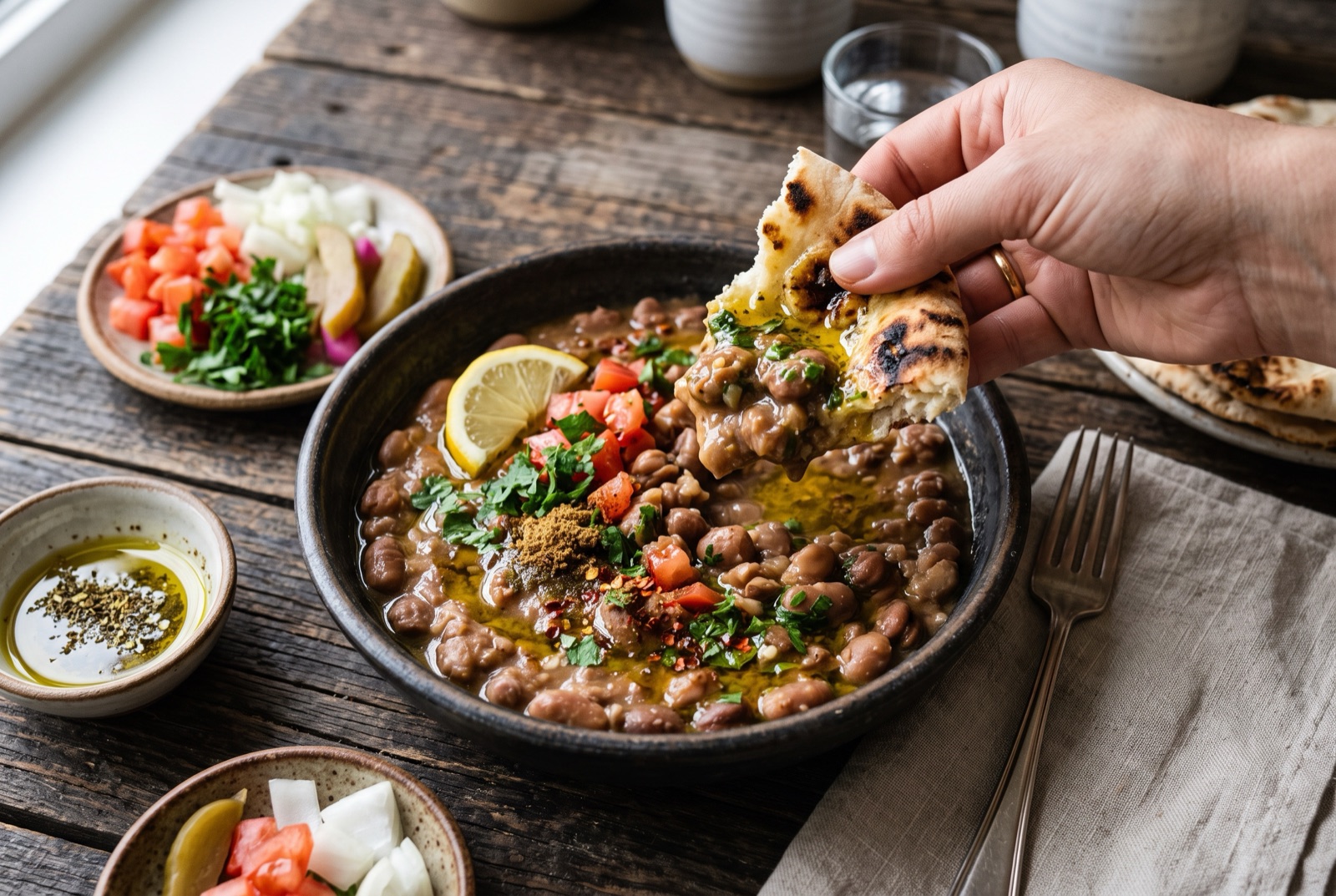
Keep exploring Lebanon.
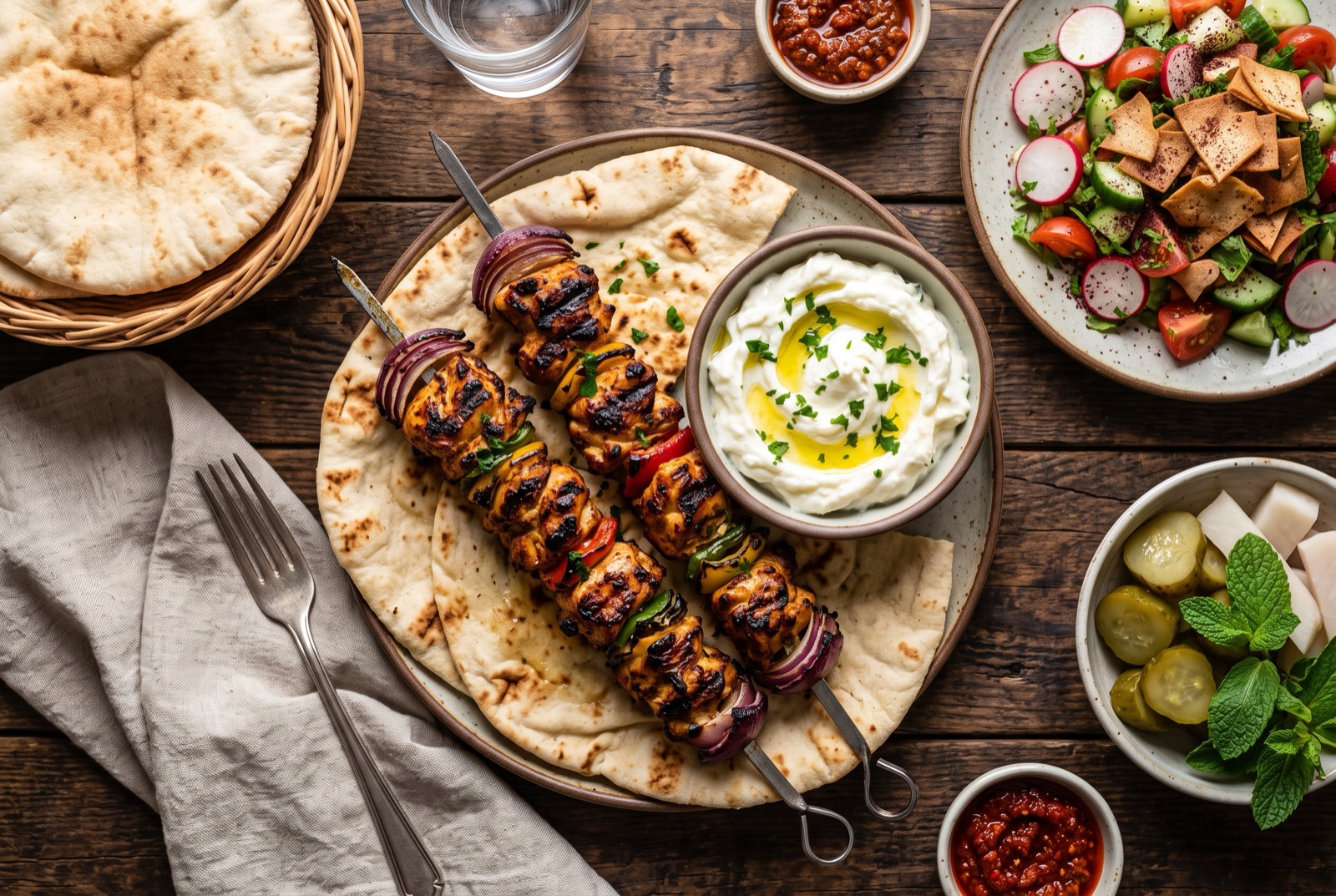
Lebanon has 9 more dishes in the atlas — Foul Mudammas and Kafta bil Sanieh, and 7 more.
Recipe by The DishRoute Kitchen · published August 18, 2026 · updated August 18, 2026