Lebanese Falafel.
Fried Chickpea Fritters in Flatbread
فلافل · say it: fa-LA-fel
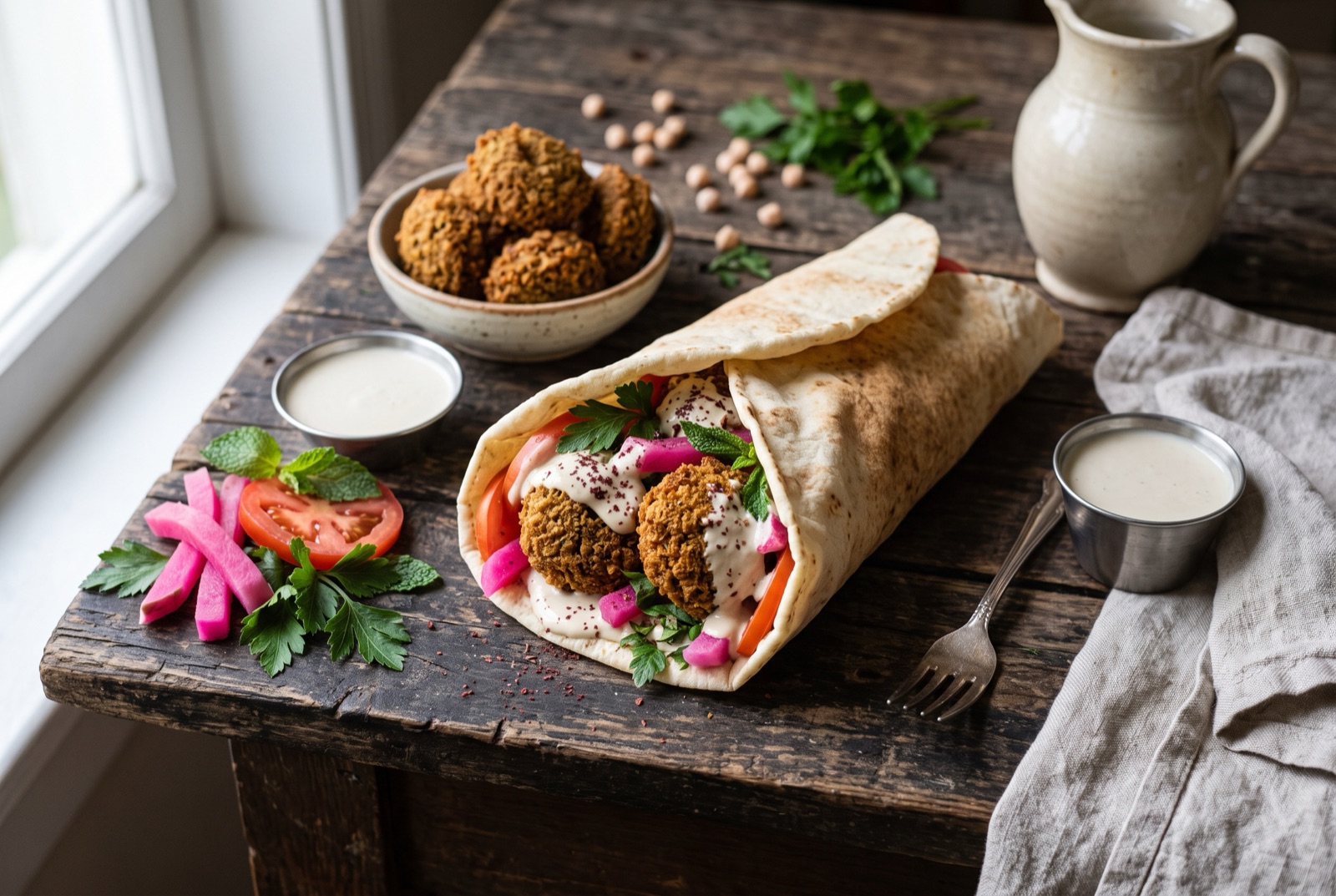
Falafel is a fritter of raw dried chickpeas — soaked overnight until swollen, then ground with onion, garlic and a serious quantity of parsley and cilantro, and deep-fried. That single detail is the whole recipe: the chickpeas are never cooked before grinding. Soaked raw, they hold together as a coarse, sandy paste that fries into a rough shell with a hot, green, almost fluffy interior. The flavor is nutty and grassy at once, sharpened by cumin and coriander, and it exists to be eaten in bread — flatbread smeared with lemony tahini sauce, packed with fritters, tomato, mint and shockingly pink pickled turnip. Cooked chickpeas or canned ones will not work, and knowing why is most of what separates good falafel from a pan of collapsing mush.

- Gate
- Lebanon
- Prep
- 35 min
- Cook
- 25 min
- Total time
- 13 hr incl. 12 hr rest
- Serves
- 4
- Status
- Medium
- Nutrition / serving · estimated
- Calories 660 kcal
- Protein 22 g
- Carbs 66 g
- Fat 34 g
- Fiber 13 g
- Sugar 7 g
- Sodium 820 mg
Why this recipe works.
- Built on soaked raw chickpeas with no flour crutch — the texture comes from the grind, not from a binder holding wet paste together.
- Herb quantity is deliberately high, which is what gives the interior its green color and grassy lift rather than a beige, dusty middle.
- The tarator sauce is emulsified properly with ice water, so it pours thick and creamy instead of splitting into oily grit.
- Every step names what to look for — crumb texture, oil temperature, the sound of the fry — so the first batch is not a sacrifice to guesswork.
Ingredients.
22 itemsFor the falafel
For the tarator sauce
To serve
Equipment
- Large bowl for soaking
- Food processor or meat grinder
- Deep heavy pot or wok for frying
- Kitchen thermometer
- Slotted spoon
Instructions.
Soak the chickpeas overnight
Cover 250 g of dried chickpeas with at least three times their volume of cold water and leave 12–24 hours at room temperature. They should roughly triple in size and split cleanly under a fingernail — if the center is still hard and glassy, keep soaking. Do not cook them at any point.
Drain and dry thoroughly
Drain the chickpeas in a colander, then spread them on a clean kitchen towel and pat until the surfaces look matte rather than glossy. Wash and dry the parsley and cilantro the same way — any water clinging to the herbs ends up as steam that blows the fritters apart.
Grind coarse, not smooth
Work in two or three batches so the processor is never more than half full. Pulse the chickpeas with the onion, garlic, herbs, cumin, coriander, pepper, chili flakes and salt in short bursts, scraping down between them, until you have a damp, sandy mixture the texture of coarse couscous. Stop while individual specks are still visible.
Tip Squeeze a small handful — it should just clump and hold its shape. If it smears like a paste, you have gone too far and the fritters will fry heavy.
Rest the mixture cold
Scrape the mixture into a bowl, press a sheet of plastic wrap onto the surface and refrigerate for at least 30 minutes. This lets the ground chickpea absorb the herb moisture and firms everything up so the fritters shape cleanly.
Make the tarator
Whisk the tahini with the garlic paste and lemon juice — it will seize into a stiff, grainy mass, which is exactly what should happen. Now trickle in ice-cold water a tablespoon at a time, whisking hard, until it slackens into a smooth cream that ribbons off the whisk. Season with salt and more lemon until it tastes sharp on its own.
Heat the oil and shape
Bring the frying oil to 170–175°C. Sprinkle the baking soda over the chilled mixture and work it through quickly with your hands, then shape walnut-sized balls or thick discs, pressing each one firmly between your palms. Roll in sesame seeds if using and fry one alone as a test.
Tip If the test fritter breaks apart, pulse a tablespoon of chickpea flour into the mixture and test once more before frying the batch.
Fry in small batches
Lower five or six fritters into the oil at a time and fry for 3–4 minutes, turning once, until they are deep chestnut brown with a rough, blistered crust and the frantic bubbling has calmed to a lazy fizz. Lift onto a rack, never onto paper flat, so the undersides stay crisp.
Build the sandwich
Warm the flatbreads briefly so they fold without cracking. Spread each generously with tarator, lay in four or five falafel and crush them lightly with the back of a spoon so the sauce grips, then add tomato, pickled turnip and a fistful of mint. Roll tight and eat immediately, while the fritters are still steaming.
Tips from our kitchen.
- Dried chickpeas only, soaked 12–24 hours. Canned or cooked chickpeas contain far too much water and will disintegrate in the oil no matter how much flour you add.
- Dry the soaked chickpeas properly on a towel before grinding. Surface water is the single most common reason falafel falls apart.
- Grind to the texture of coarse couscous or wet sand, not hummus. If you can smear it smooth with a fingertip, it has gone too far and will fry dense.
- Add the baking soda only in the last minute before shaping. Mixed in early, it starts working in the bowl and the fritters fry flat.
- Keep the oil at 170–175°C. Too cool and they drink oil; too hot and the shell darkens before the raw center cooks through.
- Fry one test fritter before committing the batch. If it breaks apart, pulse in a tablespoon of chickpea flour and test again.
Substitutions.
- Dried chickpeas → Half chickpeas, half dried skinless split fava beans
- A common Levantine blend that makes the interior lighter and softer. Fava beans need the same overnight soak and the same raw grind.
- Pickled turnip → Any sharp pickle — cucumber pickles, pickled cabbage, or a squeeze of extra lemon
- The turnip is dyed pink by a slice of beetroot in the brine. Its job is acidity against the fried richness, so any sour thing will hold the line.
- Deep frying → Shallow fry in 2 cm of oil, turning once
- Workable and much less oil, though the fritters come out with two flat sides instead of a fully craggy shell. Air fryers give a dry, cracked result — this is a fried food.
Variations.
- Ta'amiya
- The Egyptian version, made entirely from soaked split fava beans and usually rolled in sesame seeds before frying. Softer and greener inside than the chickpea version.
- Falafel bi loz
- Fritters stuffed with a small nugget of onion and toasted nuts pressed into the center before shaping, so the middle steams as it fries.
- Falafel plate
- Served open rather than rolled: fritters on a plate with hummus, tarator, pickles and fresh vegetables, with bread on the side for scooping.
Storage & reheating.
Fried falafel is at its best within minutes of leaving the oil and declines fast — the shell softens as the steam trapped inside works outward. Cooled fritters keep 3 days refrigerated and revive reasonably in a 200°C oven for 8 minutes; a microwave turns them to sponge. The uncooked ground mixture is the better make-ahead: it keeps 2 days refrigerated or 3 months frozen in a sealed bag, and fries straight from frozen after thawing in the fridge. Add the baking soda only after thawing, just before shaping.
Serve with
Warm flatbread, tarator sauce, pickled turnip, tomato, mint and a bowl of hummus alongside.
The story behind Lebanese Falafel.
Where falafel comes from is genuinely disputed, and anyone who tells you otherwise is picking a side rather than reporting a fact. The strongest thread of evidence runs through Egypt, where ta'amiya is made not from chickpeas but from split, skinned fava beans, and where Coptic Christian communities have long associated the fritters with fasting periods when meat is off the table. Somewhere between Egypt and the Levant the bean changed: Lebanon, Syria, Palestine and Jordan all make theirs with chickpeas, or with a chickpea-and-fava blend, and all of them have long-standing falafel houses that treat the recipe as inherited property. Which region fried it first is not settled, and probably cannot be.
What is not disputed is that falafel became a genuine political flashpoint in the twentieth century. As it was adopted as a national street food in Israel and marketed abroad under that label, Lebanese and Palestinian cooks objected loudly that a regional Arab dish was being claimed as someone's invention — an argument that has run through newspapers, lawsuits and academic papers for decades. The honest summary is that falafel belongs to a whole region rather than to one country in it, that every version has real local roots, and that the Lebanese version below is one branch of a shared tree, not the trunk.
Day to day, none of that matters much at the counter. In Beirut, falafel is fast, cheap food sold from narrow shopfronts where the fritters are shaped with a spring-loaded scoop called an aleb and dropped straight into oil, and the sandwich is built in seconds: bread, tarator, fritters crushed slightly so the filling grips them, pickles, tomato, mint, sometimes a smear of chile paste. It is Friday food, Lent food, fasting food, student food and hangover food. The queue is the review.
Questions, answered.
Can I use canned chickpeas for falafel?
No. This is the one rule that cannot be bent. Canned and home-cooked chickpeas are fully hydrated and starchy, so the mixture behaves like a wet purée and disintegrates the moment it hits hot oil. Falafel is made from dried chickpeas soaked in cold water for 12–24 hours and then ground raw — the frying is what cooks them.
Why does my falafel fall apart in the oil?
Three usual causes: the chickpeas were cooked rather than soaked raw, the soaked chickpeas were still wet when ground, or the mixture was ground too fine and then not rested cold. Dry the chickpeas on a towel, keep the grind coarse like damp sand, chill the mixture at least 30 minutes, and fry a single test fritter first. If it still breaks, work in a tablespoon of chickpea flour.
Where does falafel actually come from?
It is contested and unresolved. The oldest documented thread points to Egypt, where the fava-bean version ta'amiya is tied to Coptic fasting traditions, while Lebanon, Syria, Palestine and Jordan all have deep-rooted chickpea versions and long-established falafel houses. It later became a political argument when the dish was marketed internationally as an Israeli national food. The fair answer is that falafel is a shared regional food, not one country's invention.
What is tarator sauce?
Tarator is the Levantine tahini sauce that goes on falafel: tahini thinned with lemon juice, garlic and cold water until it turns pale and pourable. Tahini seizes into a stiff paste when liquid first hits it — this is normal and not a mistake. Keep adding cold water a spoonful at a time and it loosens into a smooth cream.
How do I get falafel green inside?
Herbs, and a lot more than most recipes suggest — a full large bunch of parsley plus a good handful of cilantro for 250 g of dried chickpeas. Use the tender upper stems as well as the leaves, dry them thoroughly, and grind them with the chickpeas rather than stirring them in afterwards so the color runs all the way through.
Can I bake falafel instead of frying?
You can, but be clear about the trade. Baked at 220°C with a brushing of oil for about 25 minutes, they come out dry and cracked with a crumbly interior — pleasant enough, but a different food. The craggy shell and steamy green middle exist because of hot oil hitting a rough surface, and nothing else reproduces it.
You might also like.
All recipes →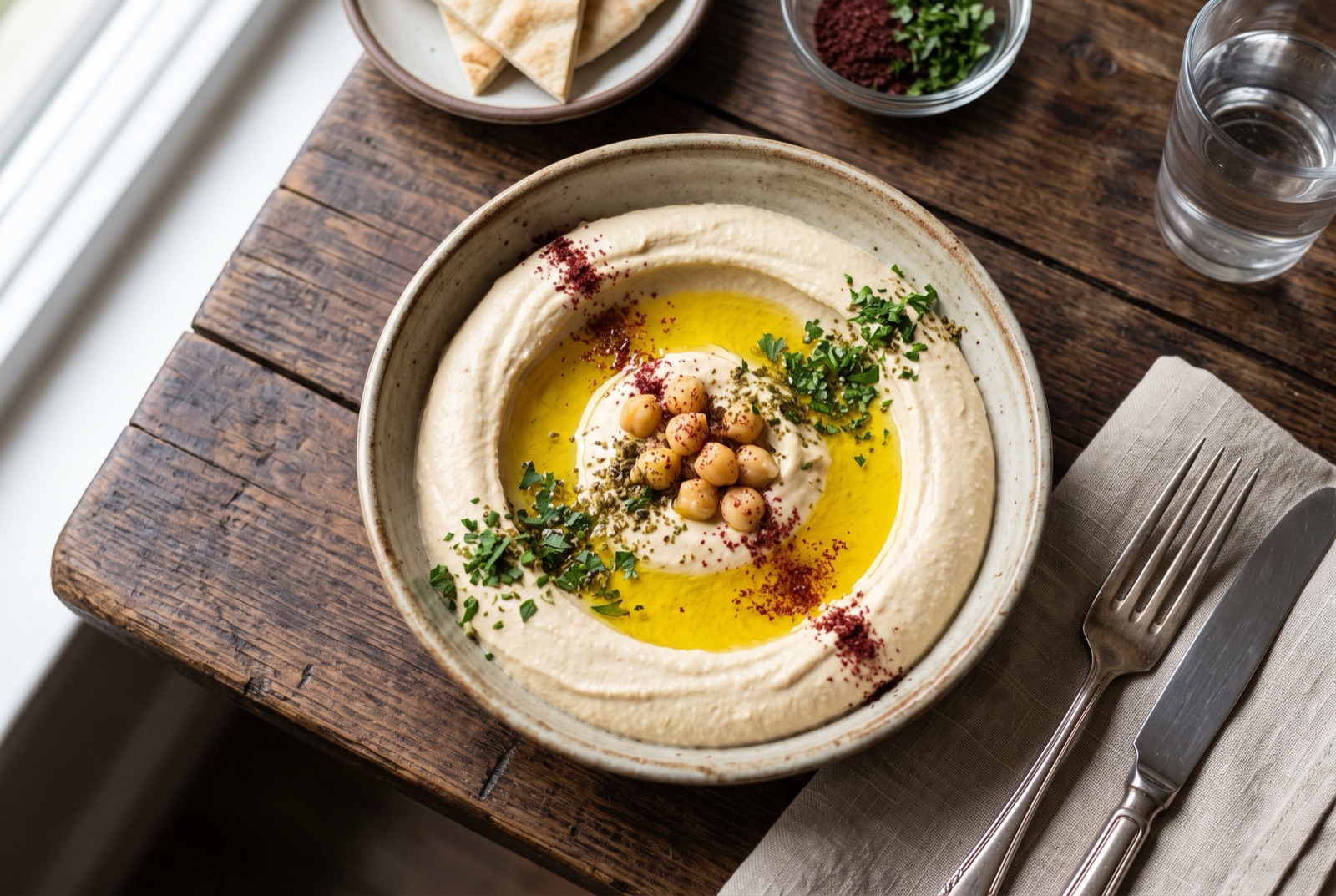
Keep exploring Lebanon.
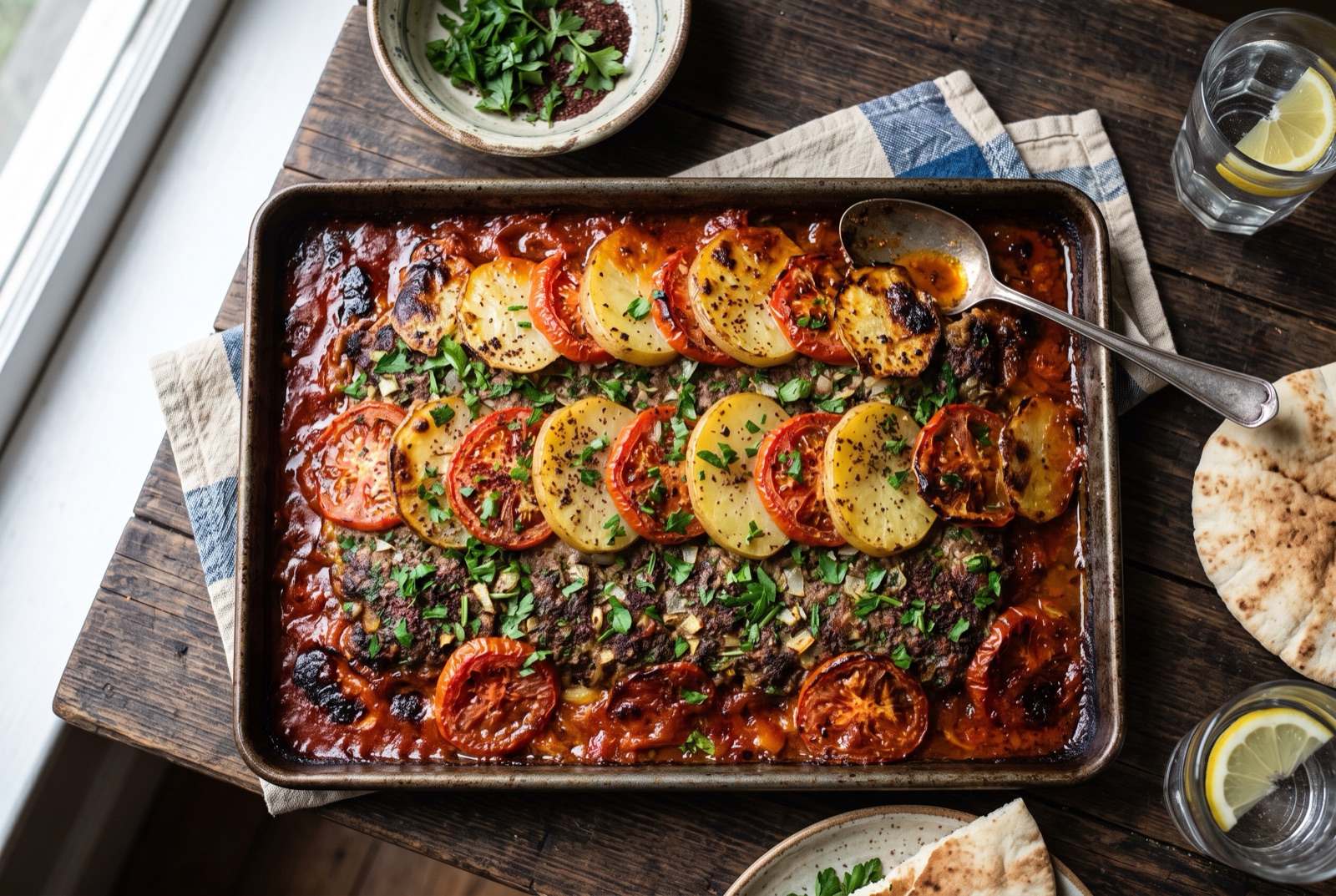
Lebanon has 9 more dishes in the atlas — Foul Mudammas and Kafta bil Sanieh, and 7 more.
All Lebanon recipes Chickpeas recipes Parsley recipes Cilantro recipes street foodmainveganvegetariandairy freehalal friendlyRecipe by The DishRoute Kitchen · published August 19, 2026 · updated August 19, 2026