Mujadara.
Lebanese Lentils and Rice with Caramelized Onions
مجدرة · Mujadara · say it: moo-JAH-da-ra
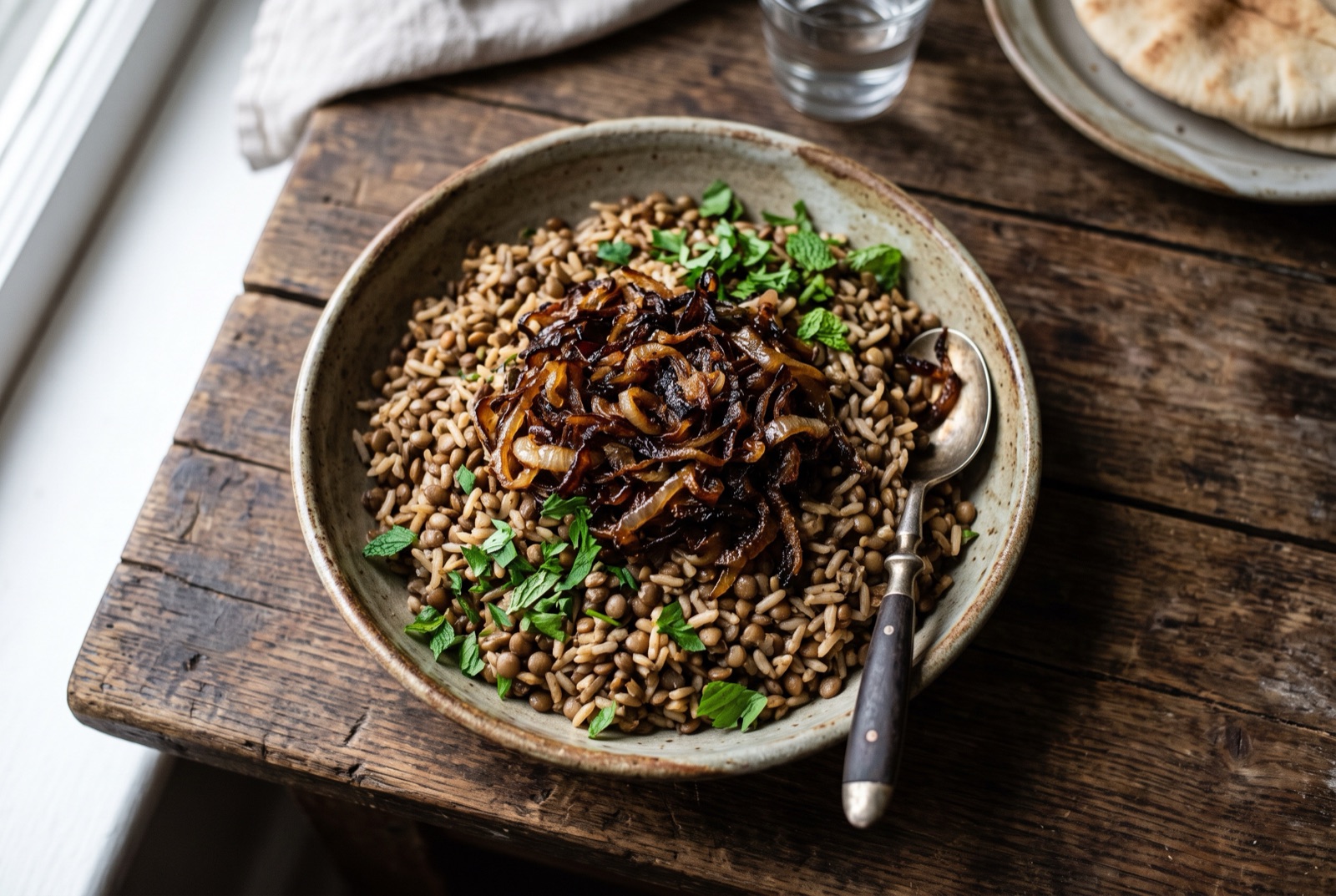
Mujadara is lentils and rice cooked together into a soft, cumin-scented pilaf — but the dish is really about the onions. A large pile of them is cooked slowly, then pushed further, until they collapse into sweet, dark, frizzled strands at the edge of bitterness; some melt into the pot to season everything, and the rest crown the plate as a crisp-chewy topping. The flavor is earthy, sweet and deeply savory in a way that seems impossible from four cheap ingredients. Eaten warm or at room temperature with yogurt or a sharp salad, it is one of the most satisfying meatless dishes in any cuisine, and this version gives the onions the time and respect they demand.

- Gate
- Lebanon
- Prep
- 15 min
- Cook
- 1 hr
- Total time
- 1 hr 25 min incl. 10 min rest
- Serves
- 4
- Status
- Easy
- Nutrition / serving · estimated
- Calories 480 kcal
- Protein 17 g
- Carbs 68 g
- Fat 16 g
- Fiber 12 g
Why this recipe works.
- Onions cooked in two stages — melted, then fried hard — so you get both deep flavor in the pot and crisp strands on top.
- Lentils par-cooked before the rice joins, so both land tender at the same moment.
- Cumin and the onion oil season the grain from inside, not sprinkled on as an afterthought.
- Four pantry ingredients, one pot and a pan — honest food that costs almost nothing.
Ingredients.
8 itemsEquipment
- Heavy pot with a lid
- Wide heavy skillet for the onions
- Slotted spoon
Instructions.
Start the onions
Warm the olive oil in a wide heavy skillet over medium heat and add all the sliced onions with a pinch of salt. Cook, stirring every few minutes, until they collapse, turn golden and smell sweet — about 20 minutes. Patience here, not heat.
Par-cook the lentils
Meanwhile, put the lentils in a pot with the water, bring to a boil and simmer, uncovered and unsalted, until they are tender at the edges but still clearly firm at the center — about 12–15 minutes. Do not drain.
Take the onions dark
Raise the heat under the onions to medium-high and cook, stirring almost constantly, until they turn deep mahogany with crisp, frizzled edges and the smell shifts from sweet to toasty — 5–8 more minutes. Immediately tip half the onions with their oil into the lentil pot; spread the rest on a plate to crisp.
Tip They will look almost too dark in the pan — that is correct. Pull them the moment any strand smells acrid rather than toasty.
Add the rice and season
Stir the 150 g of rinsed rice, cumin, salt and pepper into the lentil pot. The liquid should just cover everything by about a centimeter; top up with a splash of hot water if needed.
Simmer to tender
Bring back to a boil, then cover and cook on the lowest heat until the rice and lentils are tender and the water is fully absorbed — about 15 minutes. The surface should show small steam holes and no standing liquid.
Rest and serve
Rest off the heat, lid on, for 10 minutes, then fluff gently with a fork — the grains should separate rather than smear. Mound onto a platter, pile the reserved crisp onions on top, and serve warm or at room temperature with yogurt or a sharp salad.
Tips from our kitchen.
- Slice the onions thin and even, and use more than seems reasonable — they lose most of their volume, and the dish is starved without them.
- Take the onions darker than golden: deep mahogany with some frizzled, crisp edges. The last five minutes require constant attention, because the line between perfect and burnt is short.
- Do not salt the lentils until they are nearly tender; salting hard water early can keep them stubborn.
- Use the onion cooking oil in the pilaf — it carries most of the flavor. Pouring it away is pouring the dish away.
- Rest the finished pot 10 minutes off the heat, lid on, so the rice finishes steaming and the grains separate instead of smearing.
- Serve with something sharp — yogurt, a lemony salad, or pickles. Mujadara is rich-earthy and wants acid beside it.
Substitutions.
- White rice → Coarse bulgur
- The other traditional grain across the Levant. Add it with the same liquid ratio; the result is nuttier and slightly rustic.
- Brown or green lentils → Small black (beluga) lentils
- Hold their shape beautifully and look striking. Avoid red lentils — they dissolve and turn the dish to porridge.
- Olive oil → Neutral oil for the onions, olive oil to finish
- Neutral oil takes the high heat of the final onion fry more gracefully; finish the plate with raw olive oil for flavor.
Variations.
- Mdardara style
- The lentils and rice kept deliberately distinct and fluffy, with all the onions fried crisp and piled only on top.
- Porridge-style mujadara
- Lentils cooked soft and slightly mashed into the rice for a creamier, spoonable texture — common comfort-food form.
- With bulgur and extra cumin
- The bulgur version with a heavier hand of cumin and a pinch of allspice — a village style that pairs well with cabbage salad.
Storage & reheating.
Keeps 4 days refrigerated and reheats well with a splash of water in a covered pan, or eaten at room temperature the traditional way. Store the crisp onion topping separately if you can — it softens overnight but re-crisps in a dry pan. Freezes fine for 2 months in portions.
Serve with
Cool yogurt or a sharp cucumber-tomato salad with lemon, plus pickles on the side.
The story behind Mujadara.
Mujadara is eaten across the Levant — Lebanon, Syria, Palestine, Jordan — and it is old. A dish of lentils and grain by this name appears in the medieval Arabic cookbook tradition, including the celebrated Kitab al-Tabikh, which puts mujadara's lineage back many centuries; the name itself is usually explained as coming from the Arabic for "pockmarked," the lentils dotting the pale grain like marks on skin. Whatever the etymology, the idea has survived essentially unchanged because it is essentially perfect: legume, grain and allium, each doing what the others cannot.
In Lebanon, mujadara is the definition of home food — the dish of Fridays, of Lent among Christian communities (it is naturally meatless), of the end of the month when the budget is thin, and of nostalgia among everyone who grew up on it. There is an old association between lentil dishes and humility running through the region's food culture, and mujadara wears it proudly: it is sometimes called the food of the poor, and defended fiercely as tasting richer than that name implies.
Every family fixes its own variables. Rice or bulgur (the bulgur version is often called mujadara or mdardara depending on town and texture); lentils left whole or cooked toward a porridge; onions soft and melting or fried hard and crisp. What no version compromises on is the onions' color. Pale golden onions make a bland mujadara; the transformation happens in the last minutes, when they turn mahogany and their sugars edge toward bitter caramel. That is the flavor the whole dish is organized around — which is why the only real instruction in mujadara is patience at the onion pan.
Questions, answered.
What is mujadara made of?
Mujadara is a Levantine dish of lentils and rice (or bulgur) cooked into a soft pilaf, seasoned with cumin and crowned with a generous amount of slowly caramelized onions. The onions are the defining element — cooked dark and sweet, part stirred through the pot and part piled on top. It is naturally vegan and eaten warm or at room temperature.
How dark should the onions be for mujadara?
Much darker than standard "golden" — deep mahogany brown, collapsed and sweet, with some strands fried to a crisp frizzle. That near-burnt caramelization is where mujadara's signature flavor comes from; pale onions produce a flat, beige-tasting dish. Budget 25–30 unhurried minutes and hover over the pan for the final five.
Is mujadara rice or bulgur?
Both exist and both are traditional. Lebanese households make it with white rice or with coarse bulgur depending on family and region, and the bulgur version is sometimes distinguished by name (mdardara often refers to a fluffier rice version with crisp onions on top). The lentil-plus-caramelized-onion core is identical either way.
How old is mujadara?
Very old by any dish's standard. A lentil-and-grain preparation called mujadara is recorded in the medieval Arabic culinary literature, including the Kitab al-Tabikh cookbook tradition, which places the dish back to at least the medieval Islamic world. It has remained everyday food across the Levant ever since, essentially unchanged in concept.
What do you serve with mujadara?
Something cool and sharp to cut its earthiness: plain yogurt (or a cucumber-yogurt salad), a lemony tomato-cucumber salad, cabbage salad, or pickles. In Lebanon it commonly appears with a simple salad as a complete meatless meal, and it is just as good at room temperature as hot, which makes it excellent make-ahead food.
You might also like.
All recipes →
Keep exploring Lebanon.
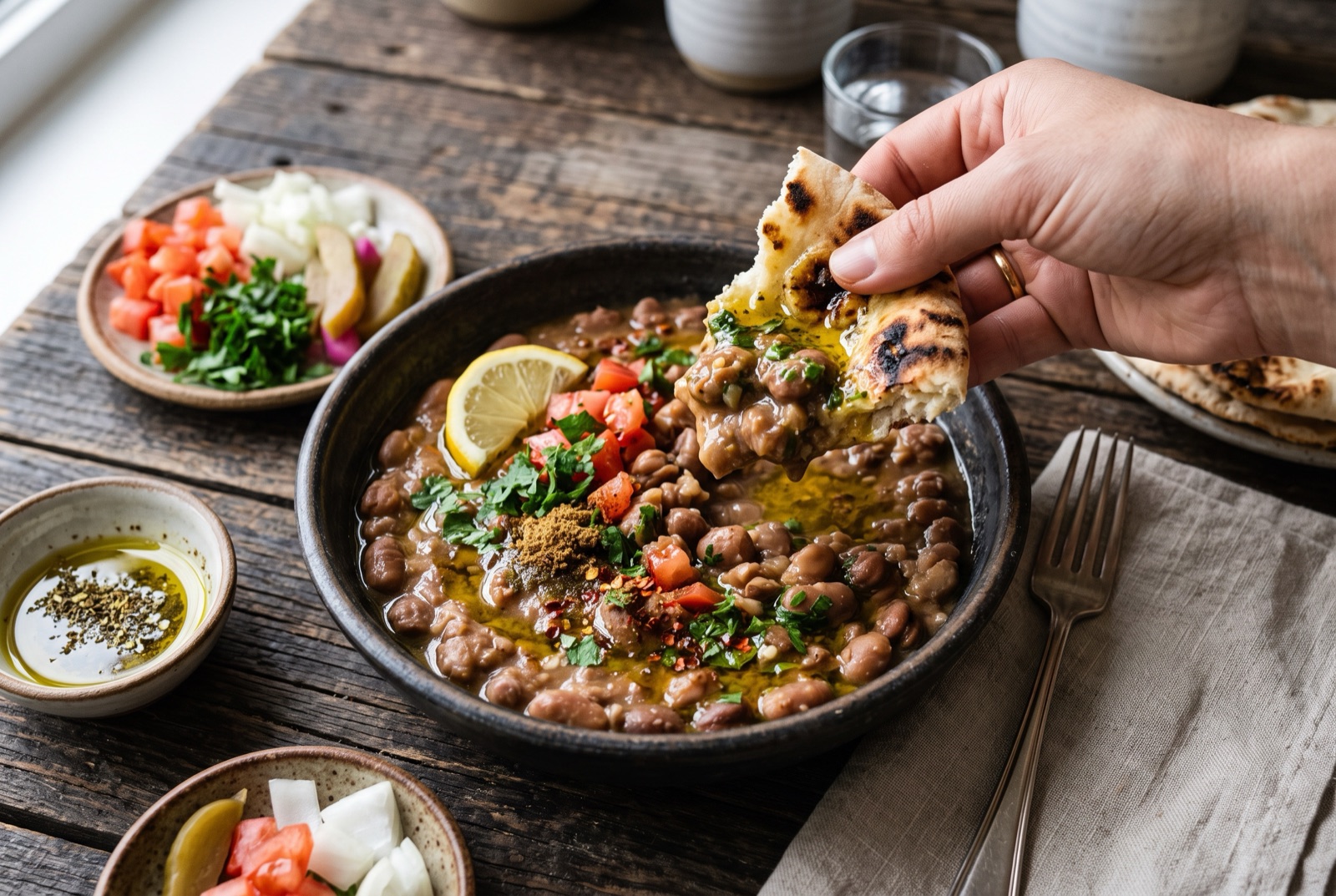
Lebanon has 9 more dishes in the atlas — Foul Mudammas and Kafta bil Sanieh, and 7 more.
All Lebanon recipes Lentils recipes Rice recipes Onion recipes mainsidevegangluten freedairy freenut freeRecipe by The DishRoute Kitchen · published August 18, 2026 · updated August 18, 2026