Hutspot.
Dutch Carrot, Onion and Potato Mash
Hutspot met klapstuk · say it: HUT-spot
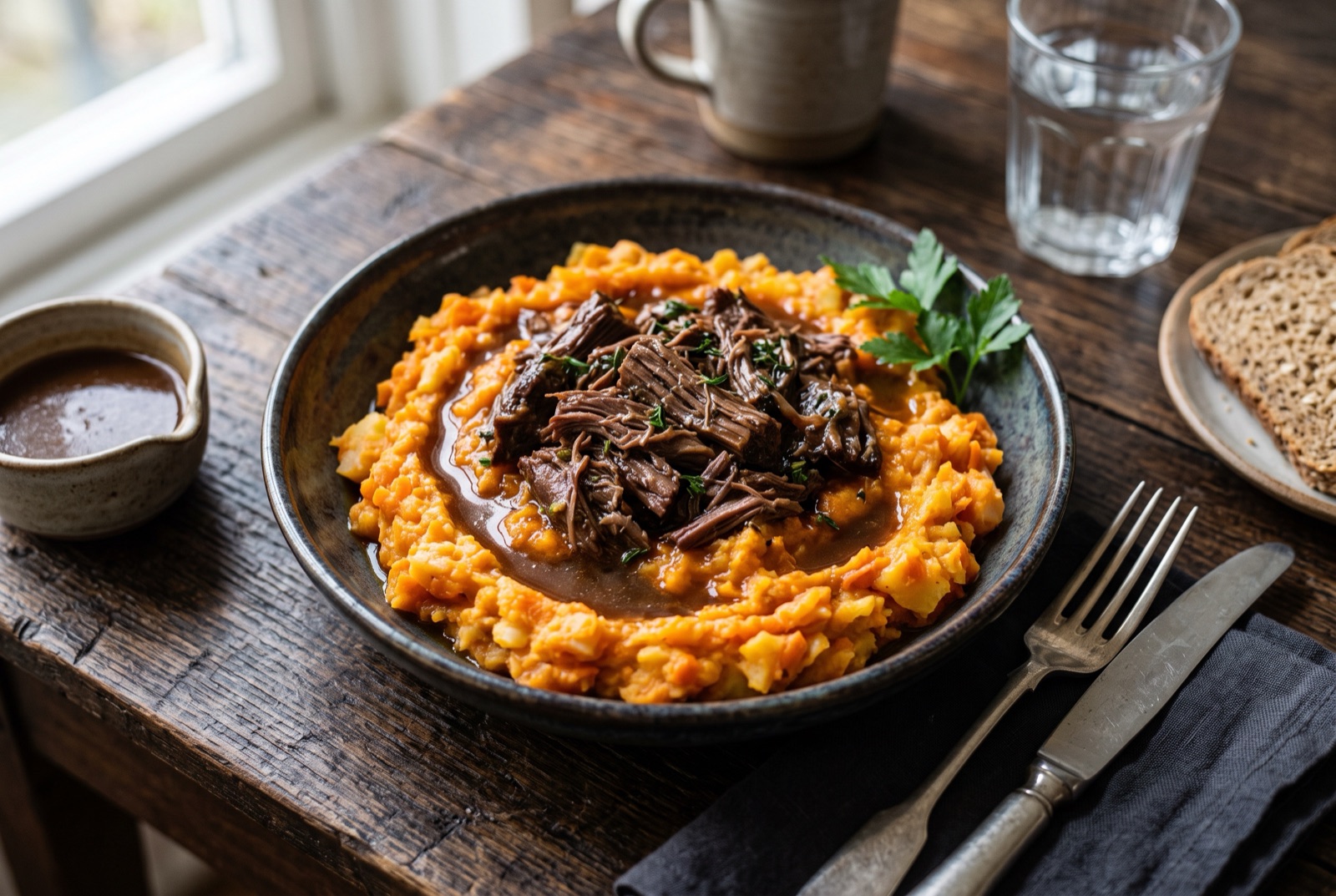
Hutspot is a mash of three cheap things — carrot, onion and potato — cooked in one pot until they collapse into each other. The carrot dominates: the finished mash is orange, faintly sweet and much softer in flavour than any potato mash, with the onion cooked to invisibility and the potato holding it all together. It is traditionally eaten with klapstuk, a cut of beef brisket simmered for hours until it shreds, its dark, clove-scented liquid ladled over the top. The whole plate costs very little, tastes deeply of itself, and belongs to a specific date in the Dutch calendar rather than to any restaurant.

- Gate
- NetherlandsLeiden, South Holland
- Prep
- 25 min
- Cook
- 3 hr
- Total time
- 3 hr 25 min
- Serves
- 4
- Status
- Easy
- Nutrition / serving · estimated
- Calories 690 kcal
- Protein 47 g
- Carbs 51 g
- Fat 33 g
- Fiber 9 g
- Sugar 16 g
Why this recipe works.
- Braises the beef first so its cooking liquid becomes the gravy — no separate stock cube gravy needed.
- Gets the ratio right: more carrot than potato, so the mash actually tastes of carrot instead of being beige mash with orange flecks.
- Cooks the vegetables in one pot and tells you exactly when to stop mashing for the correct coarse texture.
- Works as a weeknight dish too, with a shortcut version that skips the brisket entirely.
Ingredients.
13 itemsFor the beef
For the mash
Equipment
- Heavy lidded casserole or Dutch oven
- Large pot
- Potato masher
Instructions.
Brown the beef
Pat the beef dry and season it well. Melt the butter in a heavy casserole over medium-high heat and brown the pieces on all sides for about 8 minutes total, until the surface is properly dark brown, not grey — this colour is where the gravy gets its depth.
Braise low and slow
Add the quartered onion, bay, cloves, vinegar and stock, bring to a bare simmer, then cover and cook on the lowest heat for 2.5 to 3 hours. The beef is ready when a fork twisted into it pulls the meat apart in threads with no resistance.
Tip Keep the liquid barely trembling. A rolling boil tightens the muscle fibres and the meat turns stringy instead of tender.
Boil the vegetables
About 40 minutes before serving, put the carrots in a large pot with cold salted water to cover and boil for 10 minutes. Add the potatoes and chopped onions and cook a further 20 minutes, until everything is completely soft and a carrot piece crushes against the pot with a spoon.
Reduce the gravy
Lift the beef out and keep it warm. Strain the braising liquid, skim off the surface fat and boil it hard for 5–10 minutes until it has reduced by about a third and tastes concentrated and glossy rather than watery.
Drain and dry the pot
Drain the vegetables, keeping a cupful of the cooking water. Return them to the dry pot over low heat for 30 seconds and shake it once or twice so the last steam escapes.
Mash it coarse
Off the heat, add the butter, warm milk and a tablespoon of the reduced braising liquid, then crush with a masher until the mixture is orange, thick and still visibly textured. Season with salt, plenty of pepper and a pinch of sugar if the carrots taste flat.
Tip Loosen with the reserved cooking water rather than more milk if it is too stiff — you want it soft enough to hold a well of gravy without collapsing.
Serve
Pull the beef into thick shreds or slice it across the grain. Spoon the mash onto warm plates, press a well into each portion, lay the meat alongside and pour the hot gravy into the well and over the beef.
Tips from our kitchen.
- Keep the carrot-to-potato ratio at roughly 1.5 to 1 by weight. Too much potato and the dish loses its sweetness and its colour.
- Cut the carrot smaller than the potato — carrots take noticeably longer to soften, and unevenly cooked carrot leaves hard nuggets in the mash.
- Start the brisket at least three hours ahead, or cook it the day before; reheated braised beef is better, not worse.
- Do not drain the vegetables bone dry. Leave a few tablespoons of liquid in the pot so the mash does not need much milk.
- A tablespoon of the braising liquid stirred into the mash itself deepens it enormously — do this before you add any salt.
- Taste for sweetness before serving: old winter carrots can be flat, and a pinch of sugar or a spoon of the beef juices fixes it.
Substitutions.
- Beef brisket (klapstuk) → Beef chuck, short ribs, or smoked sausage for a quick version
- Chuck shreds just as well in about the same time. If you want hutspot on a weeknight, skip the braise entirely and serve it with rookworst and a jar of good gravy — that is what many Dutch households actually do.
- Whole milk → Beef braising liquid, or the vegetable cooking water
- Using the braising liquid instead of milk makes a darker, more savoury mash and keeps the dish dairy-free if you also swap the butter for the beef fat.
- Red wine vinegar in the braise → Apple cider vinegar or a splash of red wine
- The acid is what keeps the braise from tasting heavy. Do not leave it out entirely, though you can halve it if you dislike sharpness.
Variations.
- Hutspot met klapstuk
- The Leiden standard given here, with brisket braised until it pulls apart in strings and served in its own dark juices.
- Quick hutspot with rookworst
- Mash made in 30 minutes, served with a heated smoked sausage and mustard instead of braised beef. The everyday weeknight version.
- Hutspot with bacon and apple
- Crisp bacon and a grated tart apple stirred through the mash at the end — not traditional in Leiden, but common in the eastern provinces.
Storage & reheating.
The mash keeps 3 days refrigerated and the braised beef 4 days in its liquid, which sets to jelly when cold — a good sign. Reheat the meat gently in its own juices; reheat the mash in a pan with a splash of milk, stirring until it steams. Both freeze well for 3 months, though freeze them separately. Cold leftover hutspot fried in butter until crusted on both sides is a genuine second meal, not a consolation prize.
Serve with
Sharp mustard, a bowl of pickled silverskin onions, and dark beer or buttermilk.
The story behind Hutspot.
Hutspot is tied to the siege of Leiden. The city was surrounded by Spanish forces during the Dutch Revolt and was starving by the autumn of 1574; the siege was broken on 3 October when the surrounding land was deliberately flooded and the fleet reached the walls with bread and herring. The story every Leiden child learns is that an orphan boy climbed over the abandoned earthworks and found a pot of stew left behind by the fleeing soldiers — a hutspot. Whether or not that specific pot existed, the association stuck, and Leiden has eaten hutspot on 3 October every year since, at the Leidens Ontzet festival, with herring and white bread handed out alongside.
The orange colour helps the story survive: carrots and the House of Orange are an easy pairing in Dutch symbolism, though the modern orange carrot was not standardised in the Netherlands until later, and the older versions of the dish were made with parsnip and whatever roots were available. Hutspot literally means shaken pot — it shares a root with the word hotchpotch — and originally it described any mixed stew rather than this specific combination.
Outside Leiden it is simply winter food, one of the four or five stamppotten every Dutch household rotates through between October and March. The pairing with klapstuk, a fatty brisket cut braised long and slow, is what elevates it from side dish to dinner: the meat contributes the gravy the mash needs, and the sweetness of the carrot is exactly what a heavy, savoury braise wants next to it. Vinegar, bay and clove in the braising liquid keep the whole plate from tipping into blandness — the same sweet-sour instinct that runs through Dutch meat cooking generally.
Questions, answered.
What is klapstuk and where do I buy it?
Klapstuk is the Dutch name for a fatty, bone-adjacent cut from the rib end of the brisket, sold specifically for long simmering. Outside the Netherlands, ask a butcher for brisket point, short ribs or chuck — any well-marbled braising cut with connective tissue that breaks down over hours. Lean cuts like topside stay dry and stringy no matter how long you cook them.
Why is my hutspot watery?
Either the pot was not drained properly or the vegetables were boiled too hard, waterlogging the potato. Drain thoroughly, then return the pan to a low burner for half a minute and shake it so the residual steam escapes before you mash. If it is already too loose, cook it uncovered over low heat for a few minutes, stirring, to drive off moisture.
Can I make hutspot ahead for a crowd?
Yes, and the braise gains from the extra day. Cook the beef a day ahead and refrigerate it in its liquid — the fat sets on top and lifts off cleanly, and the flavour deepens. Make the mash on the day, or reheat it in a wide pan with extra milk and butter, stirring until it steams. Both hold well in a low oven for an hour if covered.
What is the difference between hutspot and stamppot?
Hutspot is one particular member of the stamppot family. Stamppot is the general Dutch category of potatoes mashed with a vegetable — kale, endive, sauerkraut, carrot. Hutspot is specifically the carrot-onion-potato version, and unlike most stamppotten the vegetables are cooked together with the potato from the start rather than added later.
Do I need to add sugar?
Not usually. Good winter carrots bring plenty of sweetness on their own, and the onions add more as they collapse. Taste the mash before seasoning: if it falls flat, a pinch of sugar or a spoonful of the beef braising liquid corrects it. A splash of vinegar can also help, since a mash that tastes dull is sometimes short on acid rather than sugar.
You might also like.
All recipes →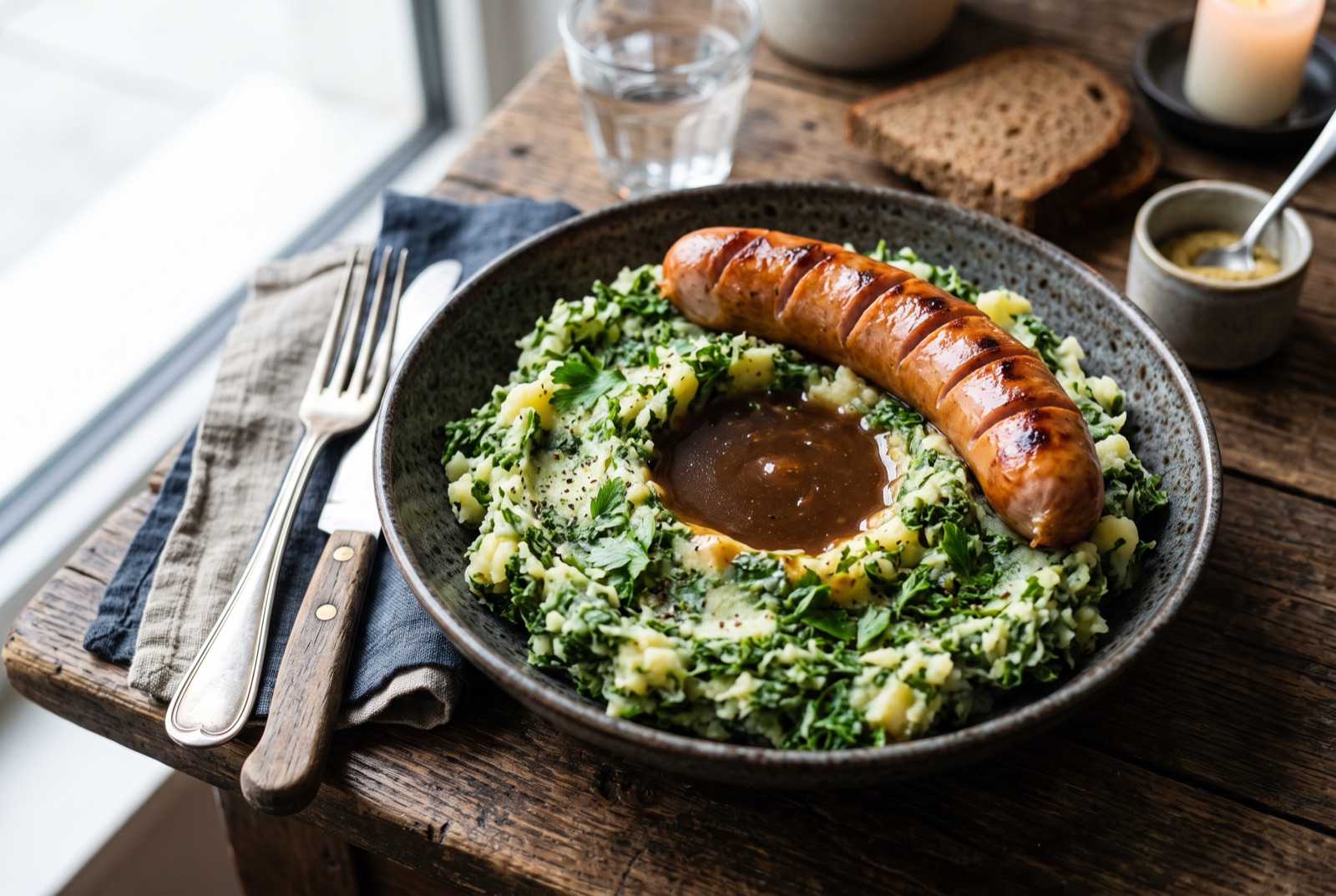
Keep exploring Netherlands.
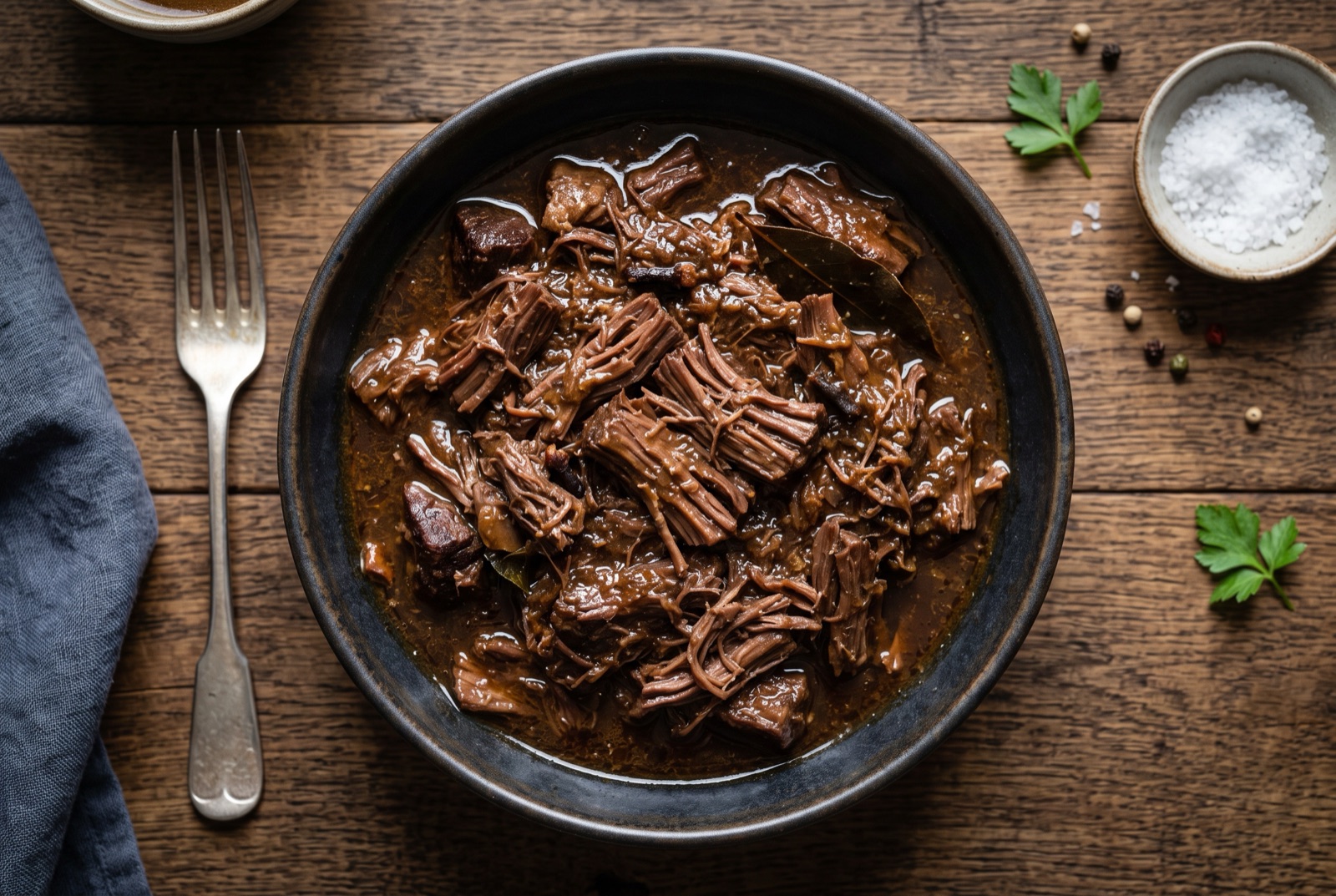
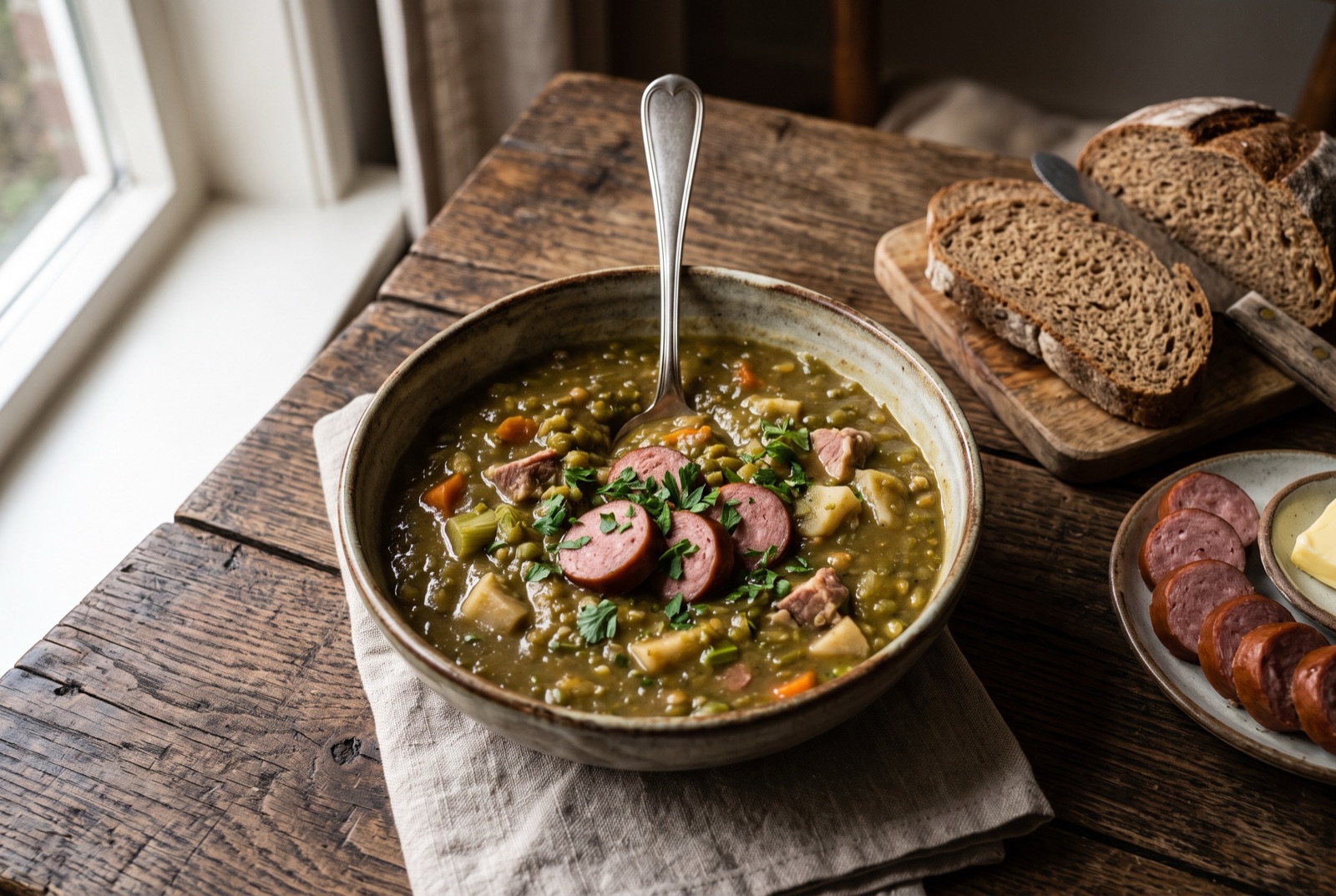
Netherlands has 9 more dishes in the atlas — Bitterballen and Draadjesvlees, and 7 more.
Recipe by The DishRoute Kitchen · published August 19, 2026 · updated August 19, 2026