Bamia.
Iraqi Okra and Lamb Stew
بامية · say it: BAM-ya
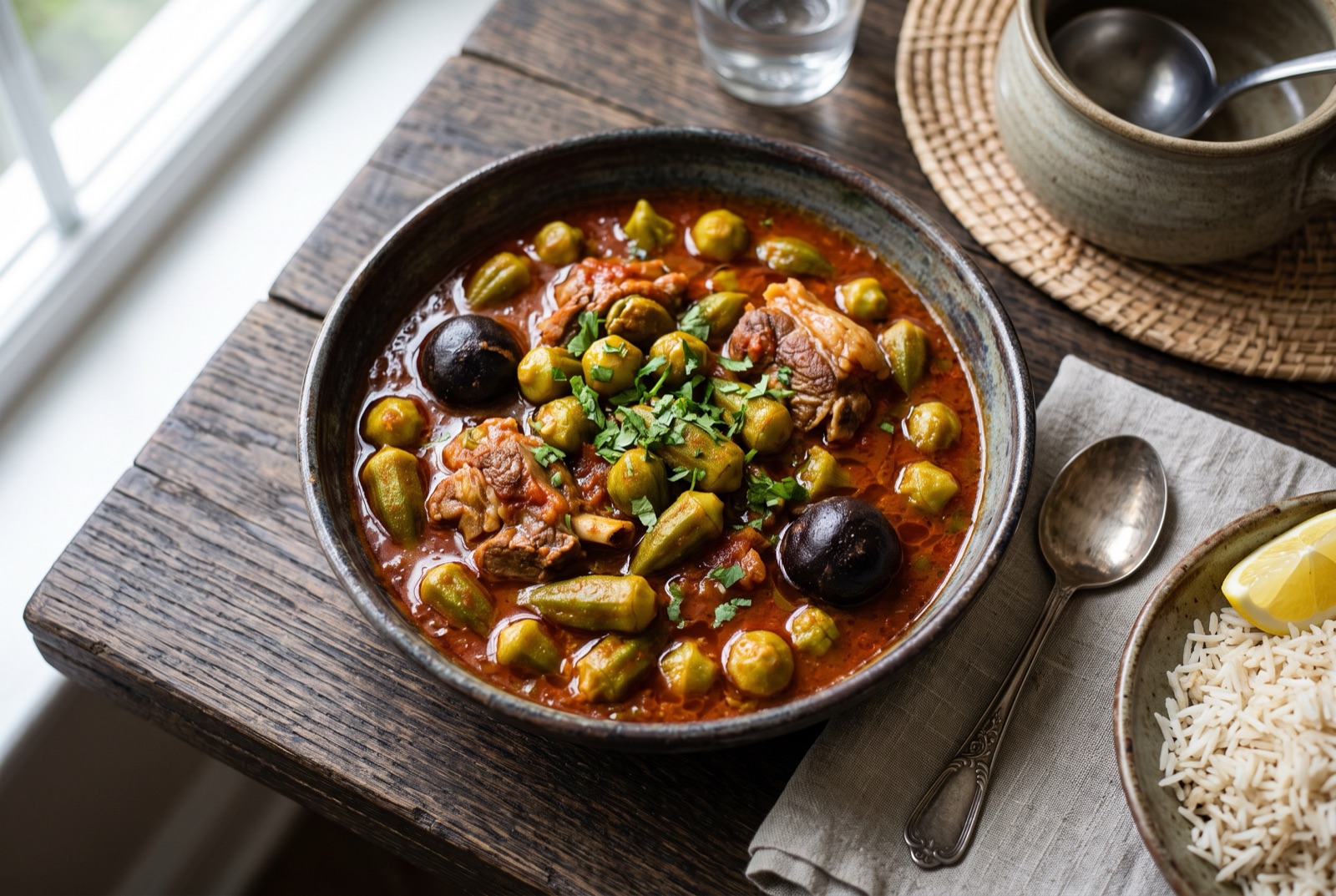
Bamia is the weekday stew of Iraqi kitchens: chunks of lamb browned and simmered until soft, then small whole okra pods slipped into a tomato broth soured with dried lime and lemon and cooked just long enough to go tender. Served over white rice, it tastes savoury and gently sour, with the okra adding a soft, almost creamy body to the sauce rather than any pronounced flavour of its own. The reputation okra has for sliminess is entirely a question of handling — leave the pods whole, keep the knife away from the seed pockets, and treat the pot gently, and the finished stew is clean and glossy rather than ropey.

- Gate
- IraqNationwide
- Prep
- 25 min
- Cook
- 1 hr 35 min
- Total time
- 2 hr
- Serves
- 4
- Status
- Easy
- Nutrition / serving · estimated
- Calories 470 kcal
- Protein 33 g
- Carbs 22 g
- Fat 27 g
- Fiber 9 g
- Sugar 9 g
- Sodium 720 mg
Why this recipe works.
- Pods trimmed by paring around the cap, which is the single technique that decides whether the stew is glossy or ropey.
- Dried lime used properly — pierced, added whole, and fished out before serving so it does not turn the pot bitter.
- The lamb browned and braised to tenderness before the okra goes anywhere near the heat, so nothing is overcooked.
- Practical guidance for frozen okra, which is what most cooks will actually be using.
Ingredients.
14 itemsFor the stew
To finish
Equipment
- Heavy pot or Dutch oven with a lid
- Paring knife
- Slotted spoon
Instructions.
Prepare the okra
Pare a shallow cone around the stem of each pod with a small knife, taking off the cap without cutting into the body. Rinse the pods, spread them on a towel and let them dry completely while you start the meat.
Tip If any pod feels stiff and woody when you bend the tip, discard it — it will stay tough however long it cooks.
Brown the lamb
Heat the oil in a heavy pot over high heat and brown the lamb in two batches until each piece has a dark crust on at least two sides, about 4 minutes a batch. Do not crowd the pot or the meat will steam grey instead of browning.
Build the base
Lower the heat, add the onion to the same pot and cook for 8 minutes until soft and golden at the edges. Stir in the garlic cloves, baharat and turmeric and cook for a minute until the kitchen smells of toasted spice rather than raw powder.
Add tomato and braise
Stir in the tomato paste and cook it for 2 minutes until it darkens to brick red, then add the grated tomatoes, the browned lamb, the pierced dried limes and the hot water. Season, bring to a simmer, cover and cook gently for 1 hour 15 minutes until the lamb pulls apart under a fork.
Tip Keep the limes submerged with a spoon for the first few minutes — they float until they take on liquid.
Slip in the okra
Scatter the dried pods over the surface of the stew and push them just under the liquid with the back of a spoon. Do not stir. Cover and simmer for 20 to 25 minutes until the pods are tender to a gentle squeeze and have faded from bright green to olive.
Sour and finish
Fish out the dried limes and discard them. Add the lemon juice, swirl the pot by its handles rather than stirring, and taste — the broth should be clearly sour behind the meat, with the sourness sitting on top of the richness rather than beside it. Correct the salt.
Rest briefly and serve
Take the pot off the heat and leave it covered for 5 minutes so the broth thickens slightly and stops churning. Scatter with coriander and ladle over plain rice, giving each bowl a fair share of pods and meat.
Tips from our kitchen.
- Buy the smallest okra you can find. Pods longer than about 8 cm are woody and full of tough seeds, and no amount of stewing fixes that.
- Trim the stem by paring a shallow cone around the cap rather than cutting straight across, so the seed chamber stays sealed.
- Rinse the pods and dry them completely before they go into the pot; surface water encourages the mucilage to loosen.
- Once the okra is in, move the pot by swirling it rather than stirring with a spoon — broken pods are what make the stew slippery.
- Pierce the dried limes in two or three places with a knife tip so their flavour gets out, and remove them before serving or the broth turns medicinal.
- If you are using frozen okra, add it straight from the freezer without thawing; thawed pods are soft and collapse the moment they hit the sauce.
Substitutions.
- Dried lime (noomi basra) → 1 tsp dried lime powder, or the juice of one extra lemon plus a strip of lemon zest
- Neither is a match for the whole dried lime, which tastes fermented rather than simply sour. Middle Eastern grocers carry them cheaply and they keep for years.
- Lamb shoulder → Beef chuck, or chickpeas for a vegetarian pot
- Beef needs about 30 minutes longer to become tender. A chickpea version is common in Iraq during fasting periods.
- Fresh okra → Frozen whole okra, added straight from frozen
- Genuinely fine, and often better than out-of-season fresh. Cut the okra cooking time to about 15 minutes.
Variations.
- Bamia with tamarind
- A spoonful of strained tamarind stirred in with the tomato, which pushes the stew further into the sour register typical of southern Iraq.
- Vegetarian bamia
- No meat: chickpeas and a heavier hand with the fried onion and garlic. Use a good vegetable stock, since the lamb was doing most of the seasoning.
- Bamia bil zeit
- A Levantine-influenced version cooked in olive oil without meat and eaten at room temperature with bread rather than hot over rice.
Storage & reheating.
Bamia keeps 3 days refrigerated and the flavour deepens overnight as the dried lime continues to infuse — though for that reason remove the limes before storing. Reheat gently in a covered pan over low heat, without stirring, until it steams; a hard boil breaks the pods and turns the sauce cloudy. It freezes for up to three months and comes out surprisingly well, since the okra is already fully cooked. Thaw in the fridge overnight and reheat slowly rather than from frozen, which tends to overcook the outside before the middle warms.
Serve with
Plain long-grain rice, flatbread, and a plate of raw onion and pickles to cut the richness.
The story behind Bamia.
Okra travelled out of northeast Africa a very long time ago and settled comfortably across the Middle East, where nearly every country has a version of this stew. The Iraqi one is identified by its sourness, and by dried lime in particular — noomi basra, limes boiled in salt water and dried in the sun until they are hollow and rattling, named for the southern port city that traded them. Pierced and dropped into the pot whole, they give off a fermented, slightly bitter citrus note that fresh lemon simply does not have, and once you have eaten a stew made with them the flavour is instantly recognisable.
Bamia is not a special-occasion dish. It is what gets made on an ordinary Tuesday, often from frozen okra in winter, and it belongs to the broad family of Iraqi stews called marag — a pot of meat and one vegetable in a tomato base, ladled over rice. The others in that family follow the same logic: marag fasolia with white beans, marag pachay with courgette, marag with spinach. The vegetable changes and the method does not.
The one genuine argument about bamia is the okra itself. Purists insist on small fresh pods, no longer than a finger, with the stem trimmed by paring around the cap rather than slicing across it, so the interior is never opened. Plenty of Iraqi households use frozen whole okra without apology and get an excellent result, because freezing does not damage the pods and the small pods sold frozen are often better than the large woody fresh ones available out of season. What everybody agrees on is that cut okra makes slimy stew, and that once the pods are in the pot you swirl rather than stir.
Questions, answered.
How do I stop okra from being slimy?
Keep the pods whole and dry. The mucilage sits inside the seed chamber, so as long as you do not cut into it, very little escapes into the sauce. Trim the stem by paring a cone around the cap instead of slicing across it, dry the pods thoroughly after rinsing, and once they are in the pot swirl rather than stir. Acid helps too, which is one reason Iraqi bamia is built on tomato and dried lime.
What is noomi basra and can I skip it?
Noomi basra are limes that have been boiled in salt water and dried in the sun until they are hard, hollow and dark. Pierced and simmered whole, they release a musty, fermented citrus flavour that is one of the defining tastes of Iraqi cooking. You can make the stew without them using extra lemon juice, and it will be good, but it will taste generically Middle Eastern rather than specifically Iraqi.
Fresh or frozen okra — does it matter?
Less than people think. Frozen whole okra is picked small and frozen quickly, and it often beats large, woody fresh pods sold out of season. The rule is to use it straight from frozen without thawing, since thawed pods are limp and fall apart in the sauce, and to cut the simmering time to roughly 15 minutes because freezing has already softened the cell walls.
How do I know when the okra is done?
Lift one pod out and press it gently between finger and thumb. It should yield with no squeak or crunch but still hold its shape and not smear. Visually, the bright green fades to a dull olive and the pods sink and sit in the sauce rather than floating. Push much past that point and they start to break open, which releases the mucilage you spent the whole recipe avoiding.
Can I make bamia in advance?
Yes, and it is better the next day. Cook it fully, fish out the dried limes so they do not go bitter, cool it and refrigerate. Reheat slowly in a covered pan without stirring. If you want the freshest possible pods you can also braise the lamb a day ahead, refrigerate the broth, and add the okra only in the final twenty minutes before serving.
You might also like.
All recipes →
Keep exploring Iraq.
Iraq has 9 more dishes in the atlas — Iraqi Dolma and Kahi wa Geymar, and 7 more.
Recipe by The DishRoute Kitchen · published August 20, 2026 · updated August 20, 2026