Iraq.
العراق
Iraqi cooking is the food of two rivers and a very long memory. It sits between the Levant and Iran and borrows freely from both, but its own signature is a particular kind of sourness — not vinegar-sharp, but deep and fruity, drawn from tamarind, pomegranate molasses, dried limes and green sour plums. That sour thread runs through almost everything savoury, cutting the fat of lamb and the sweetness of long-cooked onion. The second signature is rice: white, long-grain, cooked so each grain stands separate, and prized above all for the crackling toasted crust at the bottom of the pot. Meals are built around a stew or a tray bake, a mountain of rice or a stack of bread, and a plate of raw vegetables and pickles that everyone reaches into. Spicing is warm rather than hot — baharat, cumin, turmeric, cinnamon, cardamom — and chilli heat is largely a matter of the pickle jar. Nothing is delicate about the portions; hospitality here is measured in how much is left on the table at the end.

- Continent
- AsiaMiddle East
- Recipes in atlas
- 10
- Must-try dishes
- 3
- Pantry staples
- 10
Start with the classics.
Must tryThe dishes that explain the Iraq kitchen fastest — if you cook only a few things from this page, cook these.
Inside the Iraq kitchen.
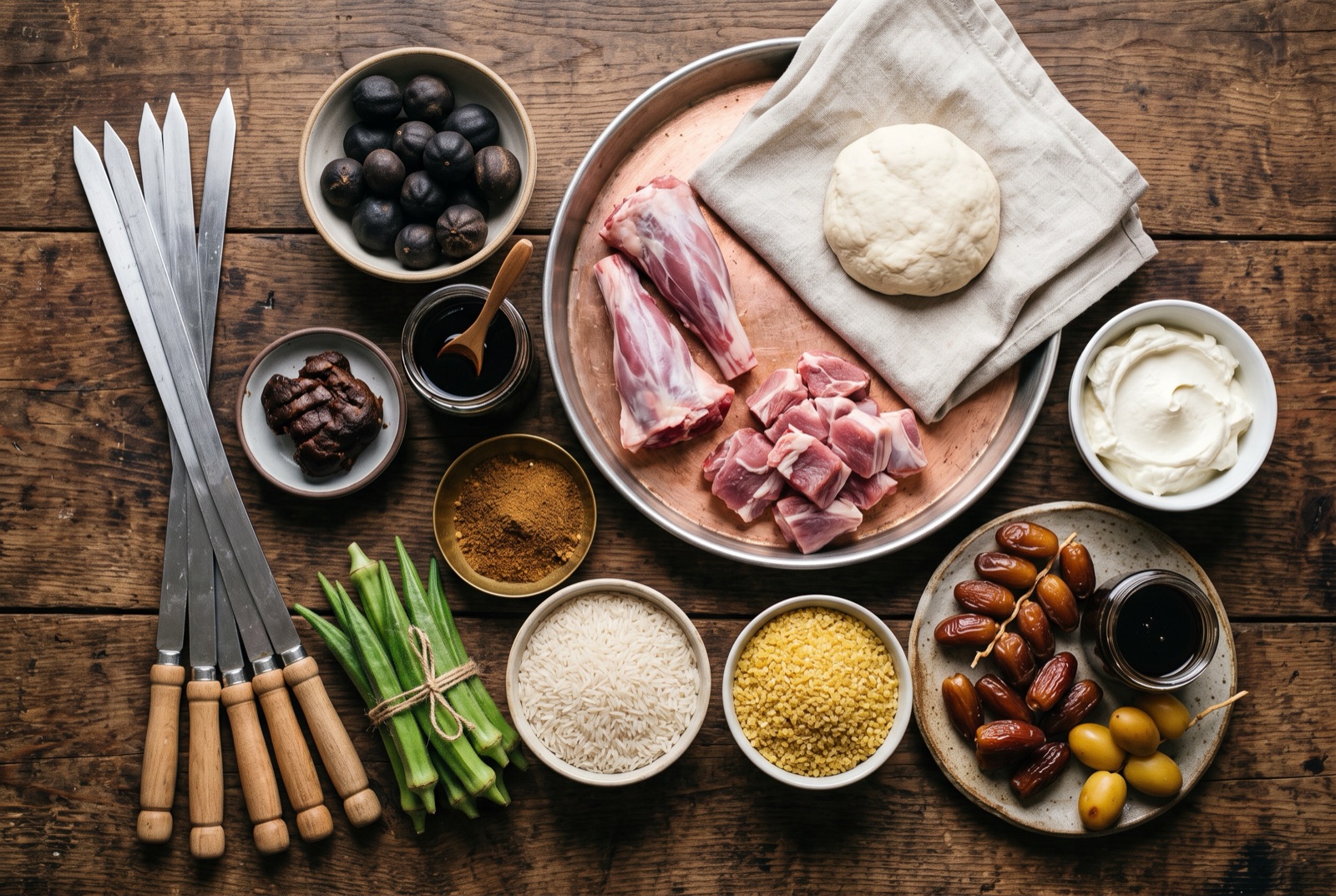
Start with the sour agents, because they are what make a dish taste Iraqi rather than generally Middle Eastern. Tamarind (tamur hindi) is soaked and strained into a brown, fruity liquid that goes into fish marinades and stews. Pomegranate molasses (dibis rumman) adds a darker, sweeter acidity, and in dolma it is the whole personality of the broth. Dried limes — noomi basra, limes boiled in brine and sun-dried until they rattle — are pierced and dropped whole into soups and stews, where they release a musty, almost fermented citrus flavour that fresh lemon cannot imitate. Learn to use these three and half the cuisine opens up.
Rice is treated with real seriousness. The standard method is to parboil long-grain rice in heavily salted water, drain it while still firm, then steam it over a fat-slicked pot bottom under a cloth-wrapped lid so the base sets into a golden sheet. That crust — hikakeh — is fought over. Rice is also the vehicle for the celebration dishes: quzi, where slow-cooked lamb sits on rice studded with raisins, almonds and baharat, and the biryani-adjacent timman bagilla made with fava beans and dill.
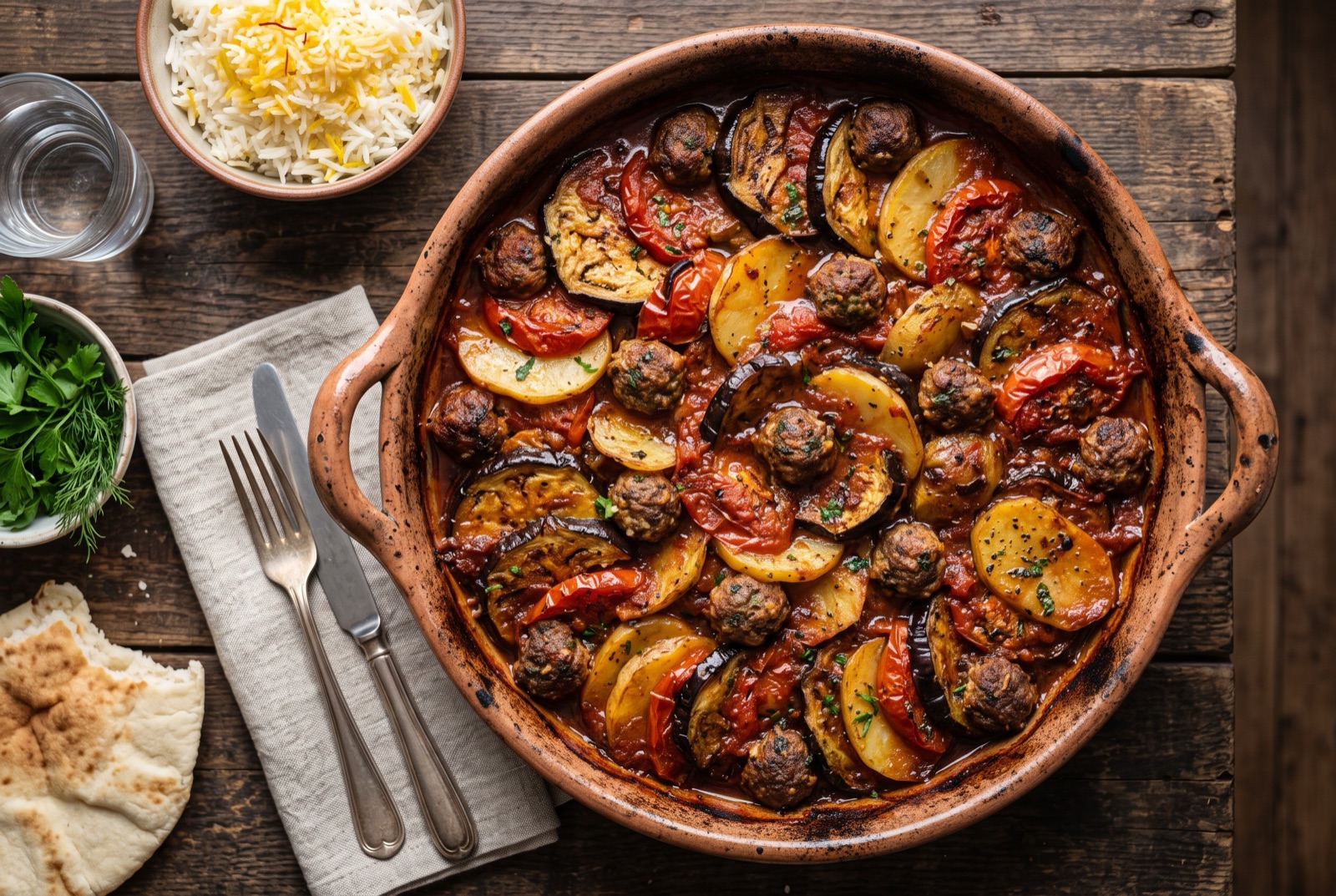
The everyday savoury repertoire divides into stews (marag) served over rice, and tray bakes (tepsi) that go straight from oven to table. Marag bamia with okra, marag fasolia with white beans, and the eggplant-heavy tepsi baytinijan are weekday food. Grilled meat is its own category, cooked over charcoal at riverside restaurants and street stalls: masgouf carp propped upright beside an open fire, kebab of minced lamb worked with onion and parsley, and tikka on skewers.
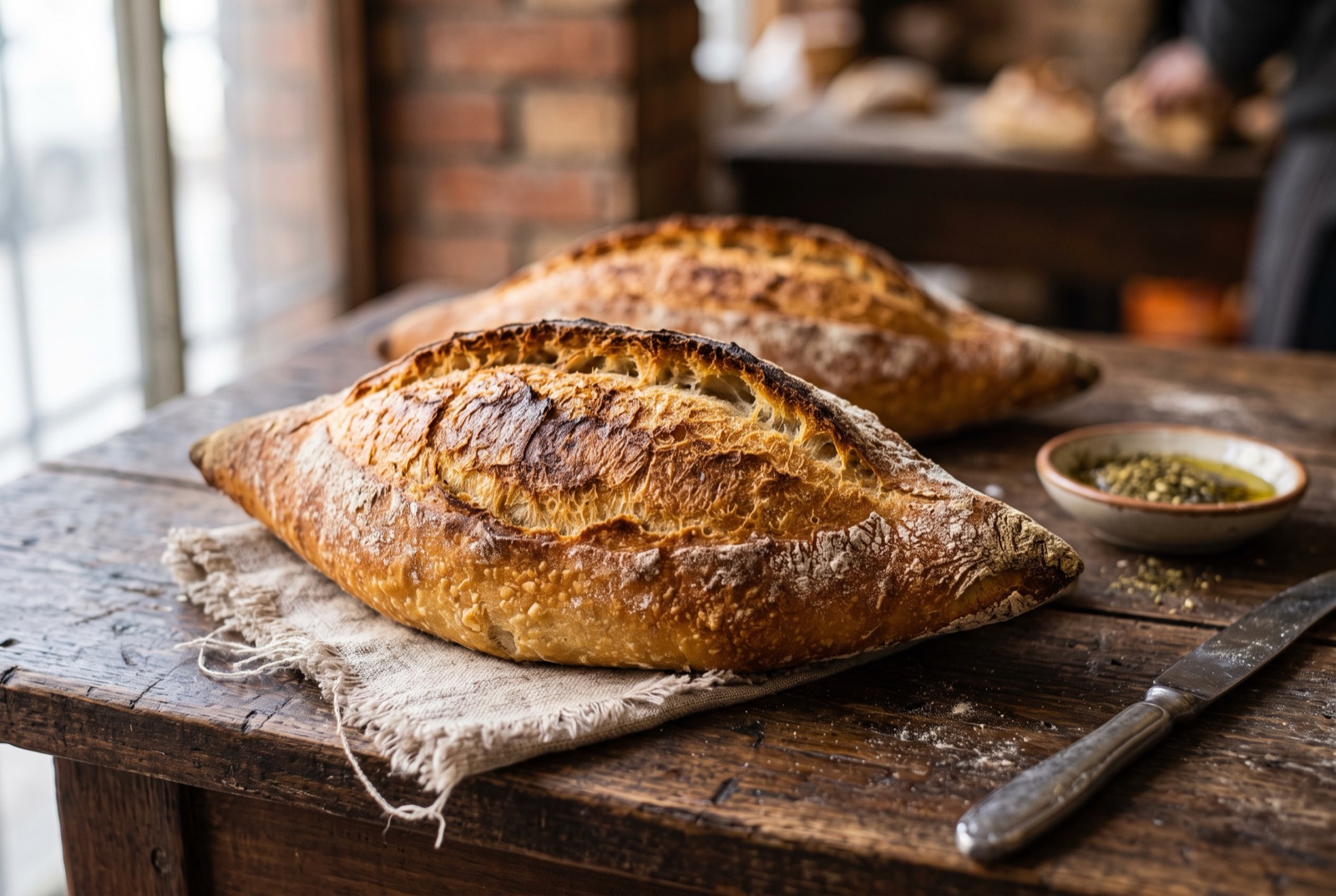
Bread is constant. Samoon, the pointed diamond loaf of Baghdad bakeries, is the urban standard; khubz tannour, slapped onto the wall of a clay oven, is the older village bread. Bread is a utensil before it is a food, and no Iraqi table sets out cutlery without also setting out bread.
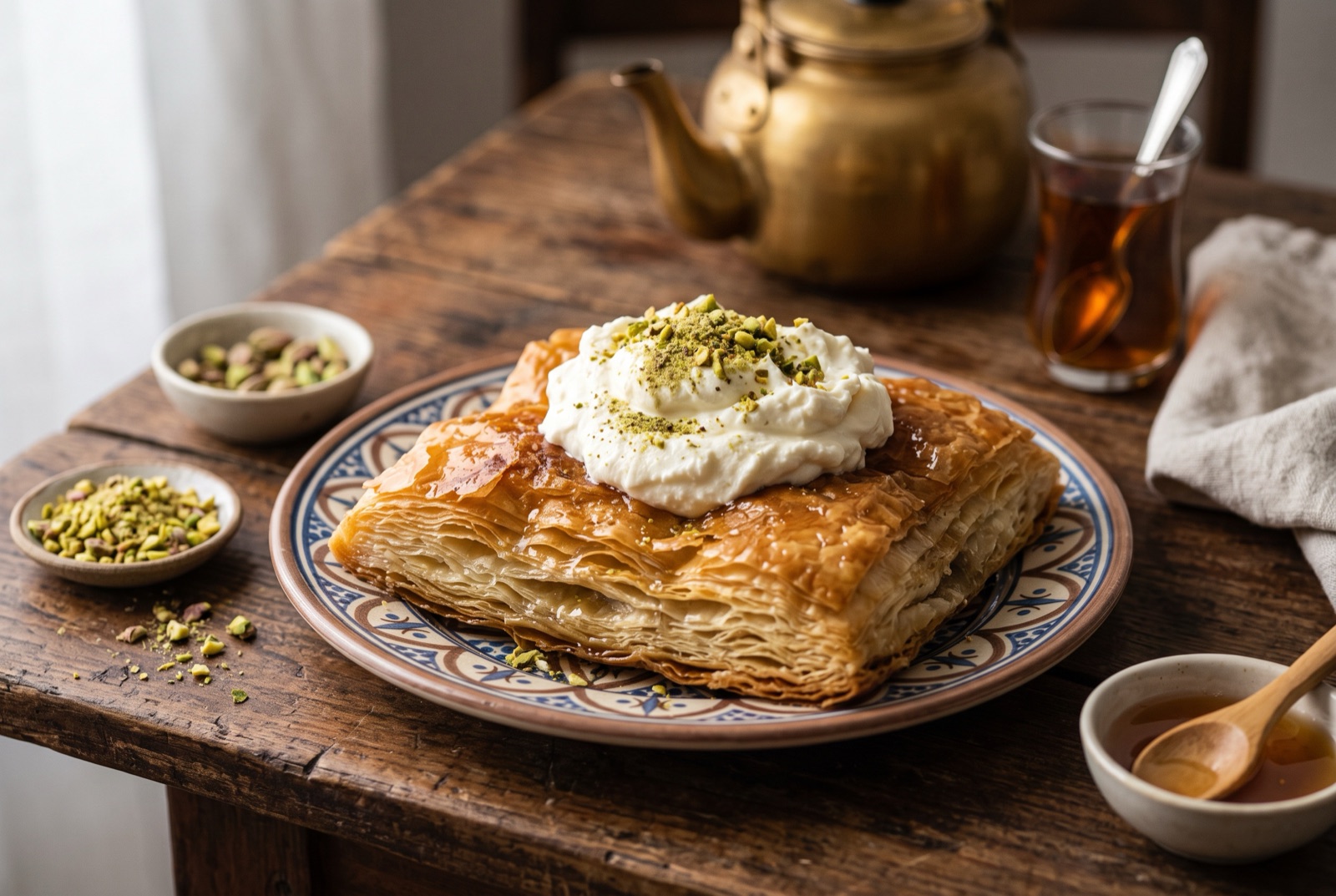
Regional differences are real. Mosul and the north lean on bulgur and wheat — kubba Mosul, a plate-sized disc of bulgur dough around spiced meat, is the emblem. Baghdad and the central Tigris are the home of masgouf, samoon and the dairy breakfast of kahi with geymar. The southern marshes and Basra look toward the Gulf and India, with more fish, more rice, and a taste for the sweet-sour date syrup that grows in the palm groves. Kurdish cooking in the northeast is its own tradition again — more yoghurt, more herbs, more wheat, less of the tamarind sourness of the plains.
Signature pantry.
10 staplesThe ingredients this cuisine cannot function without.
- dried lime (noomi basra)
- tamarind
- pomegranate molasses
- baharat spice blend
- lamb
- long-grain rice
- bulgur
- dates and date syrup
- okra
- geymar clotted cream
How people eat in Iraq.
Lunch is the serious meal, eaten in the early afternoon and often stretched long. Everything arrives at once — stew, rice, bread, salad, pickles, sometimes a whole grilled fish — and people help themselves from shared platters rather than being served plated portions. Bread does most of the work; a torn piece of samoon is spoon, fork and napkin. Guests are pressed to eat far past the point of politeness, and refusing a second helping usually needs to be done three times before it is believed. Tea comes after, not during: small waisted istikan glasses of very strong black tea, poured over a layer of sugar left undissolved at the bottom, drunk through the rest of the afternoon.
Regional kitchens.
Iraq cooks 4 distinctly different ways depending on where you stand — here is what changes between them.
- R1Baghdad and the Central Tigris
- The riverside grill culture: masgouf carp cooked upright beside an open fire, and the bakery bread samoon. Mornings here mean kahi pastry drowned in syrup and topped with buffalo-milk geymar.
- R2Mosul and the North
- Wheat country, where bulgur replaces rice in much of the cooking. Kubba Mosul — a wide flat disc of bulgur dough around spiced lamb, almonds and raisins — is the dish the city is known for across Iraq.
- R3Basra and the Southern Marshes
- Date palms, Gulf fish and river reeds. Cooking here is sweeter and more Indian-inflected, leaning on date syrup, more rice and the brine-cured dried limes that take their name — noomi basra — from the city.
- R4Iraqi Kurdistan
- A mountain kitchen with its own rules: yoghurt and dried-yoghurt soups, wheat and herbs in abundance, and far less of the tamarind-and-pomegranate sourness that defines the plains below.
All Iraq recipes.
10 recipes and counting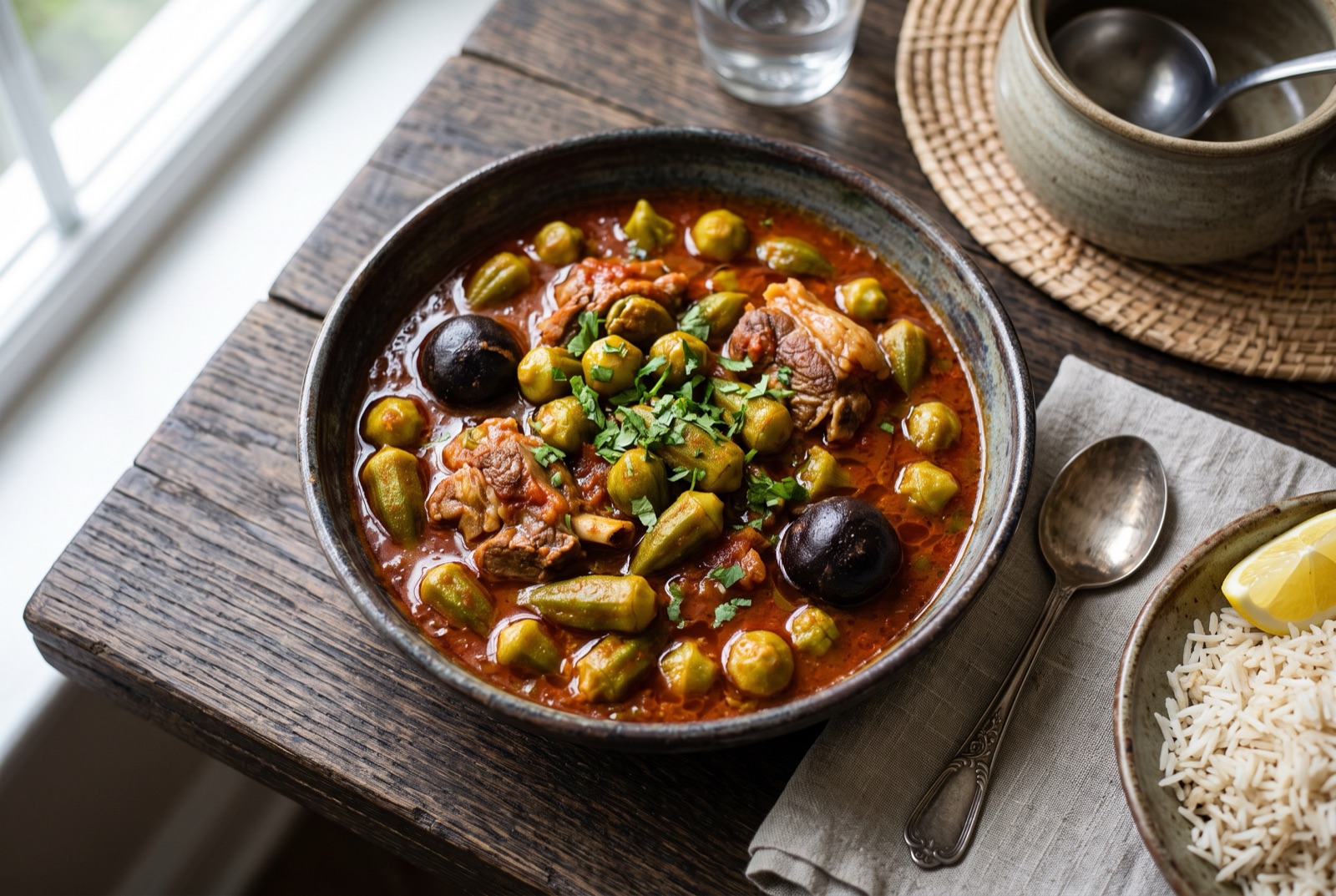
Iraq2 hr
Bamia
Iraqi Okra and Lamb Stew
Iraq3 hr 20 min
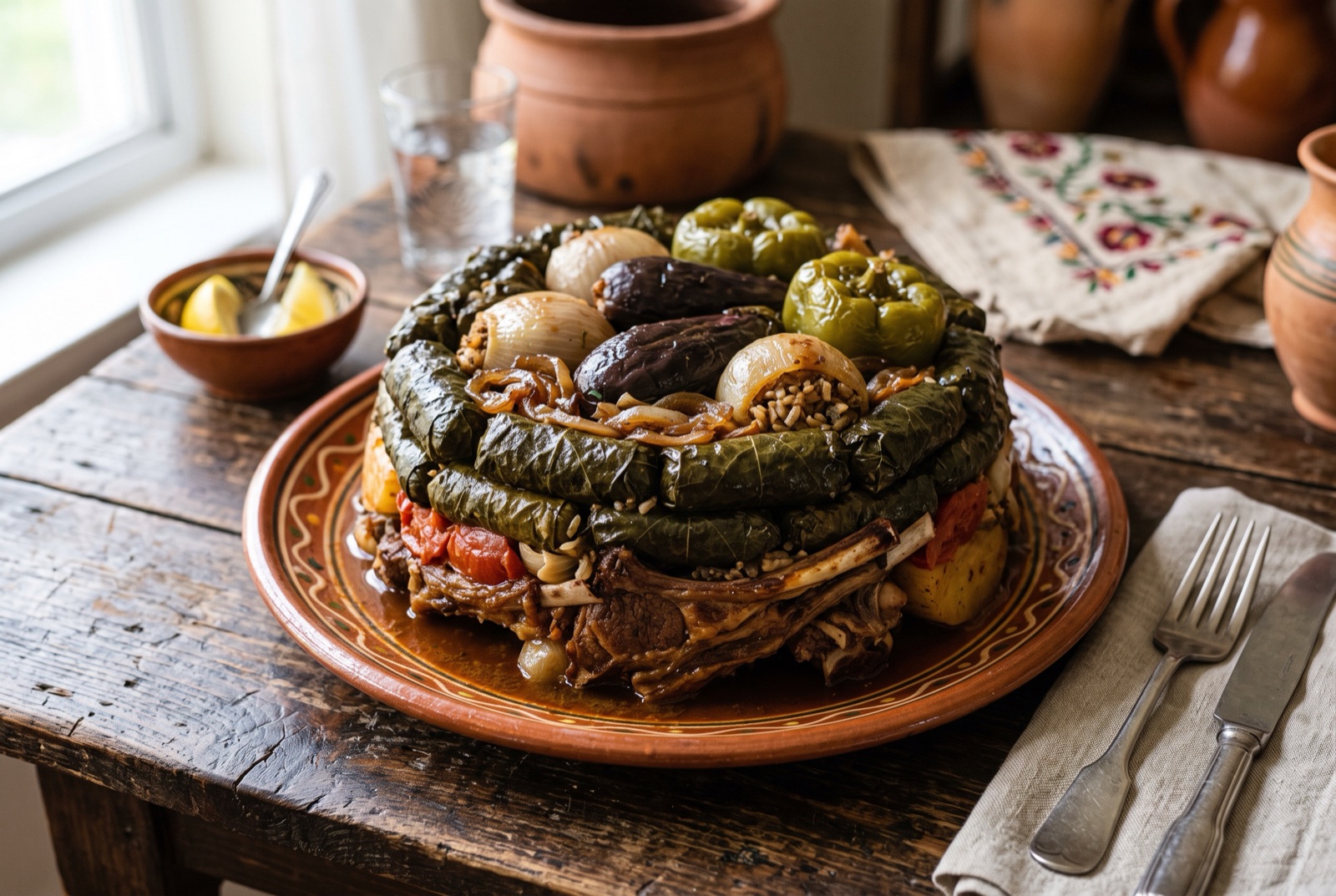
Iraqi Dolma
Mixed Stuffed Vegetables in One Pot
Iraq2 hr 5 min
Kahi wa Geymar
Iraqi Buttery Pastry with Clotted Cream
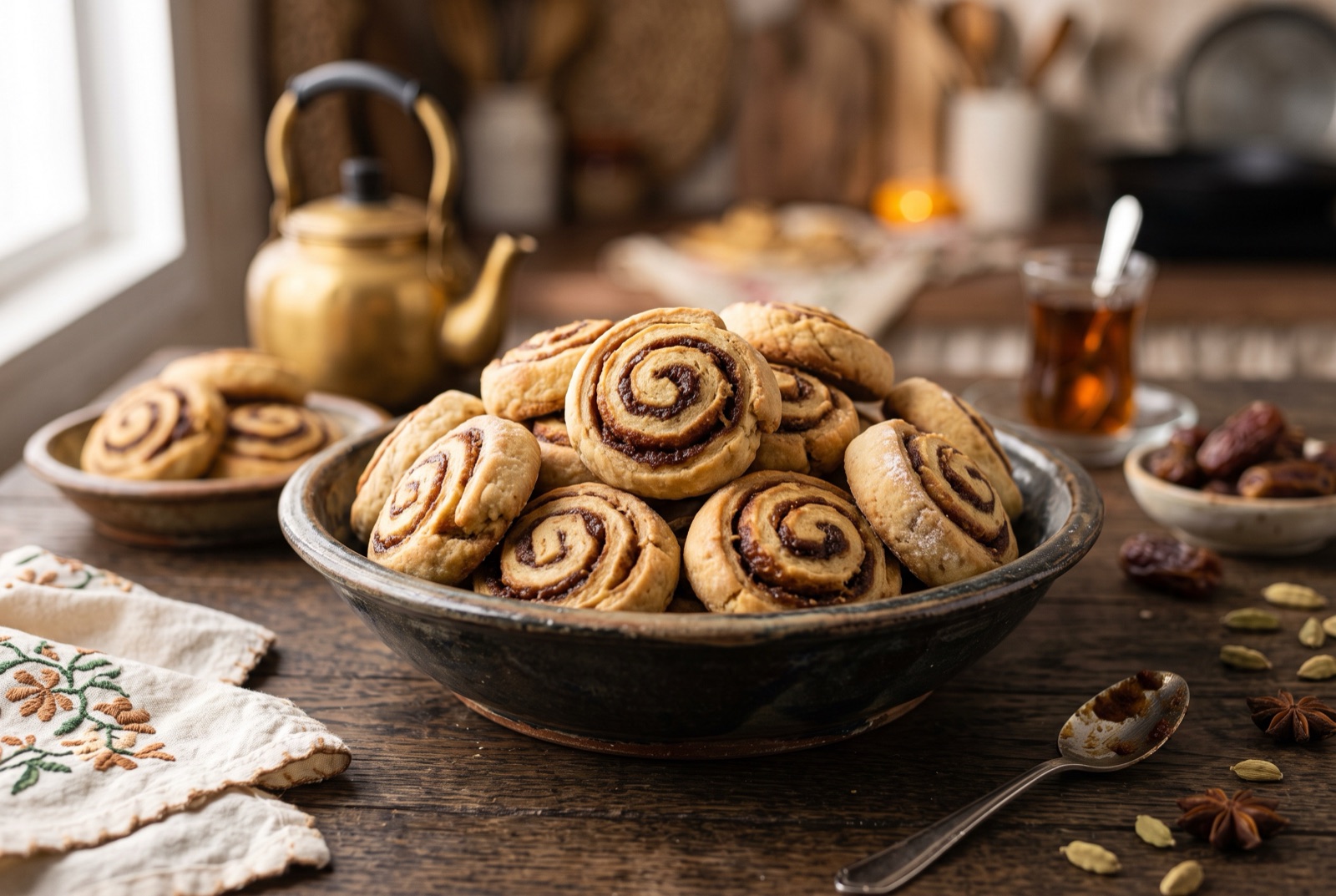
Iraq1 hr 55 min
Kleicha
Iraqi Date and Cardamom Cookies
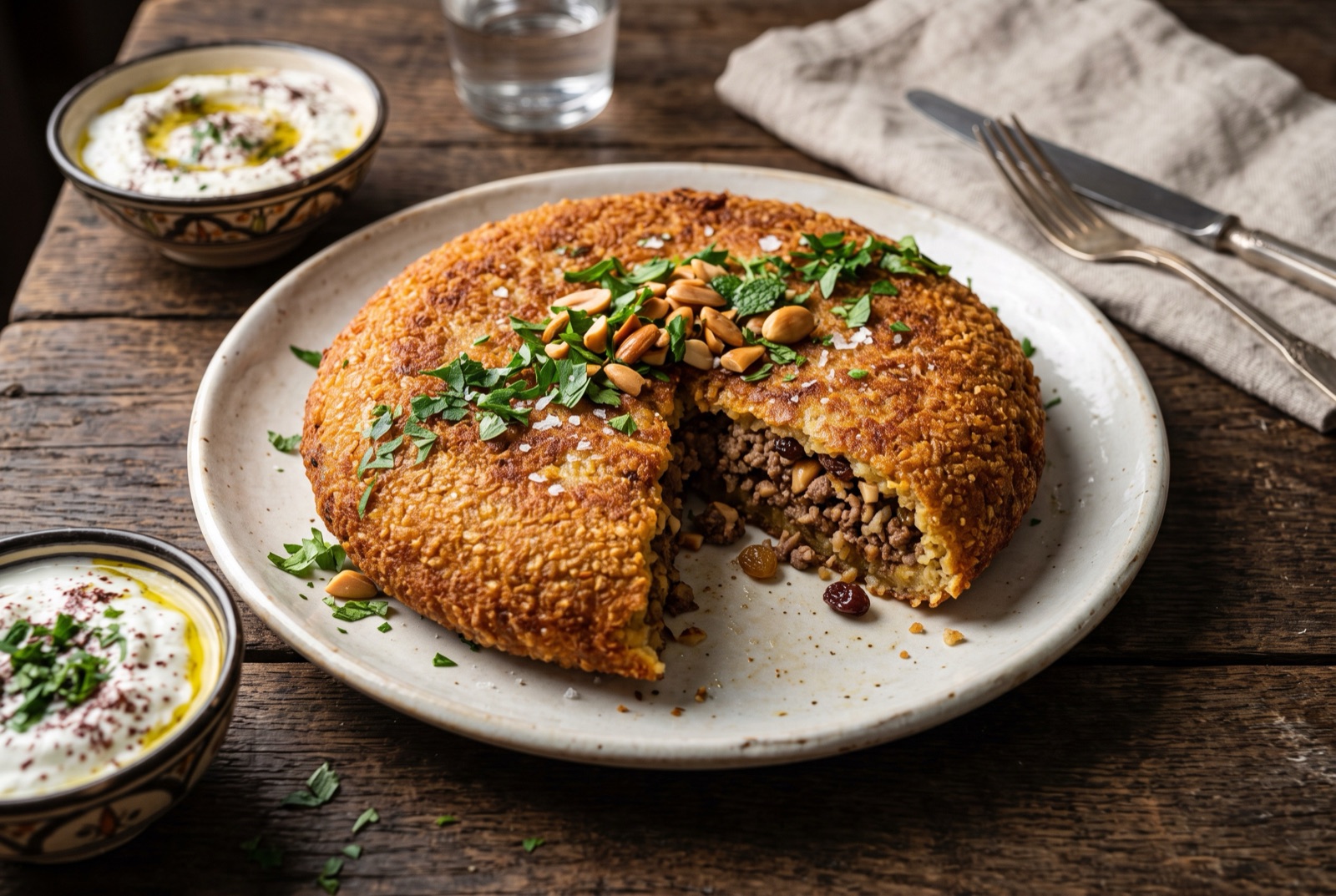
Iraq2 hr 5 min
Kubba Mosul
Bulgur-Shelled Meat Patty from Northern Iraq
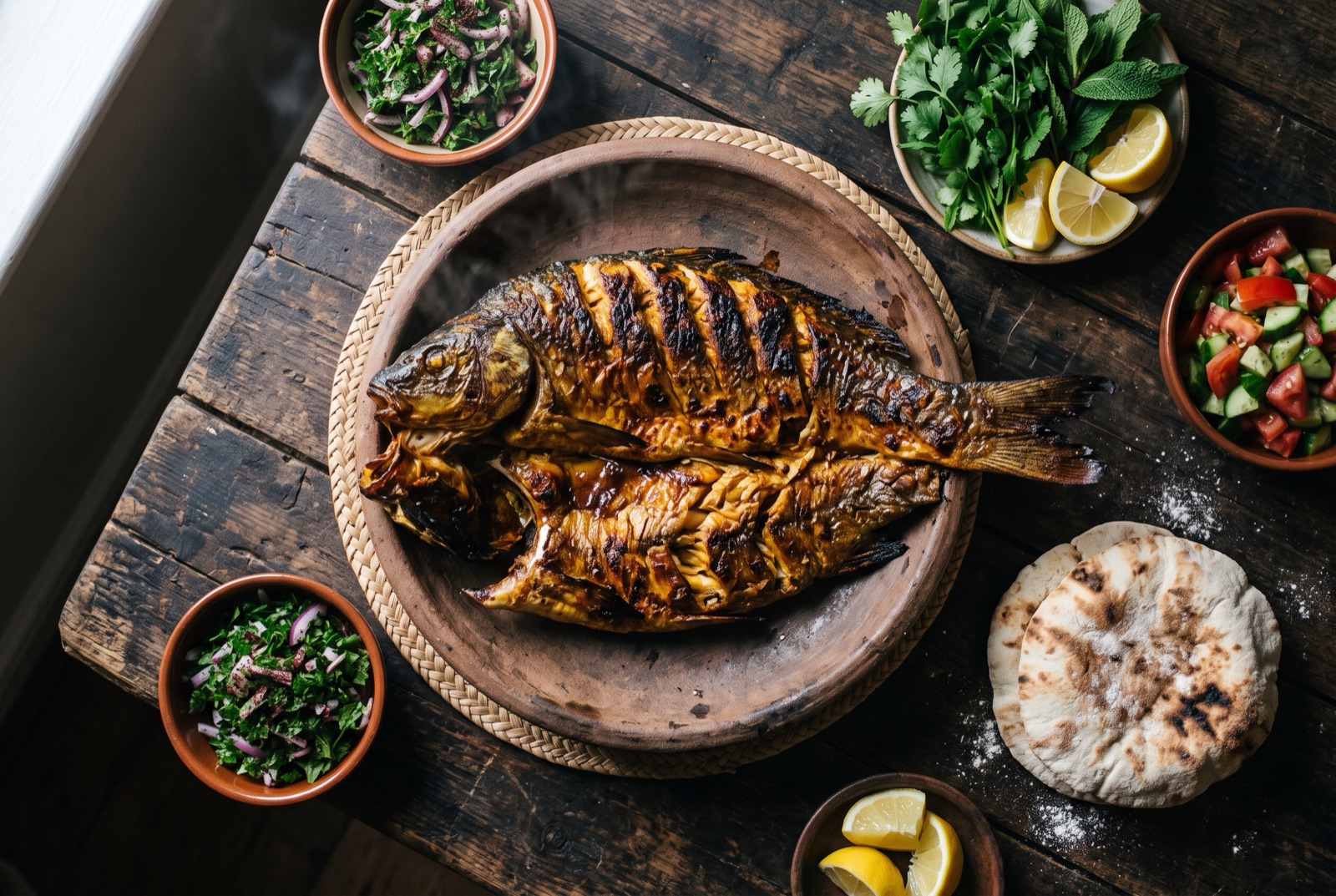
Iraq1 hr 30 min
Masgouf
Iraqi Split-Grilled River Carp
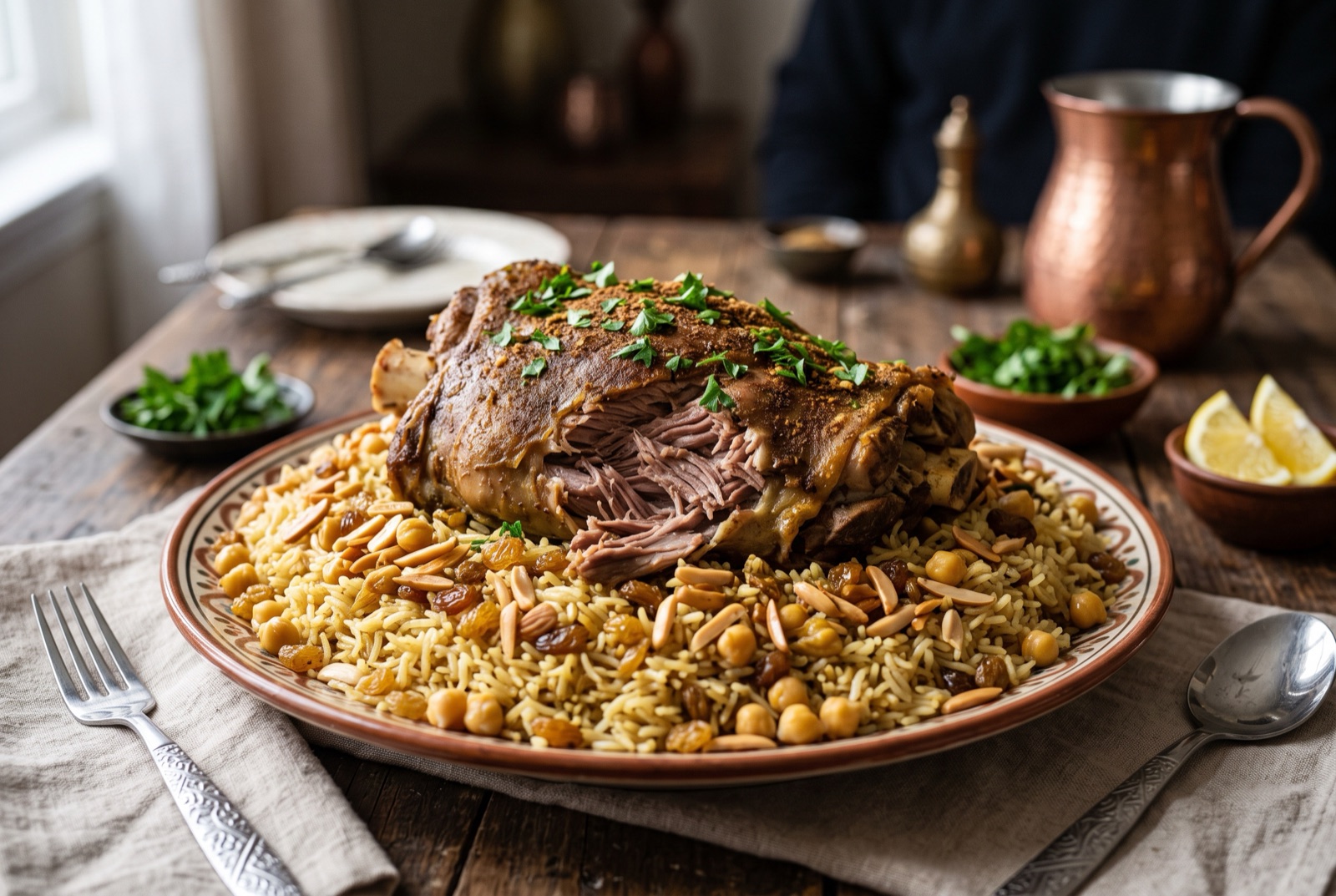
Iraq4 hr 45 min
Quzi
Iraqi Slow-Roast Lamb over Spiced Rice
Iraq3 hr 15 min
Samoon
Iraqi Diamond-Shaped Bakery Bread
Iraq45 min
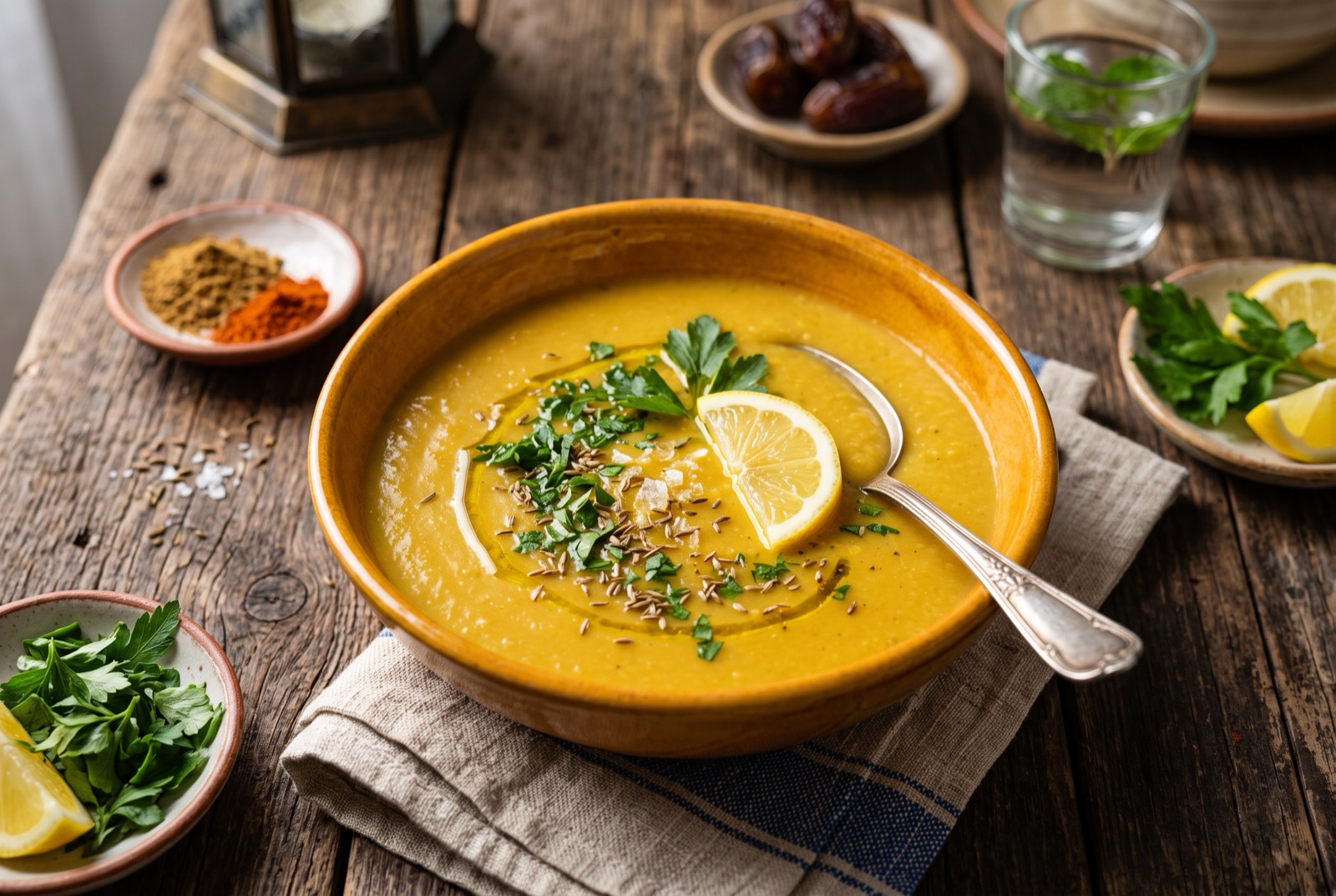
Shorbat Adas
Iraqi Red Lentil Soup
Iraq1 hr 55 min
Tepsi Baytinijan
Iraqi Baked Eggplant Tray
Keep traveling.
Iraq sits in Middle East, and its kitchen shares borders as well as ingredients with Armenia and Bangladesh.
 Armenia
 Bangladesh