Quzi.
Iraqi Slow-Roast Lamb over Spiced Rice
قوزي · say it: GOO-zee
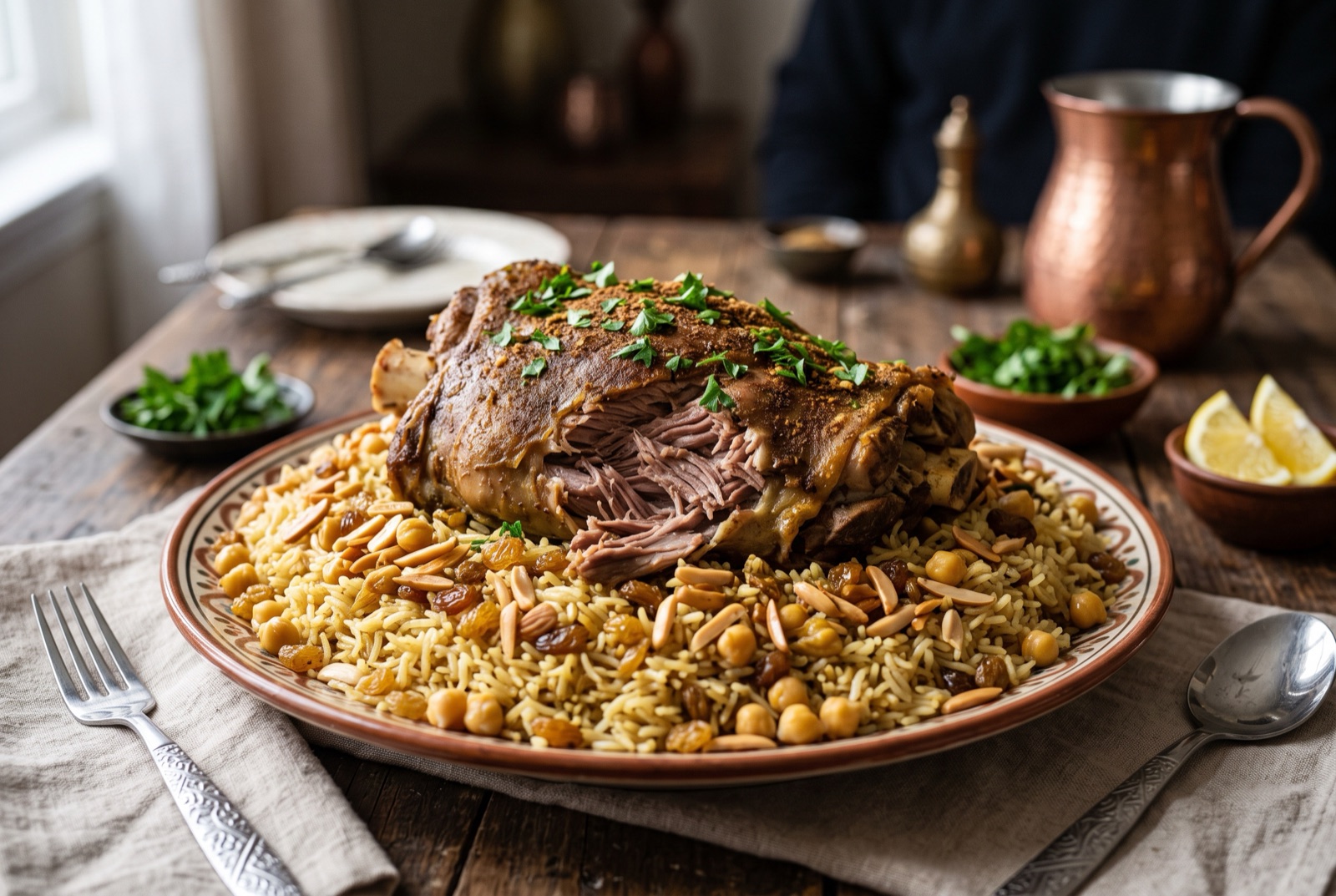
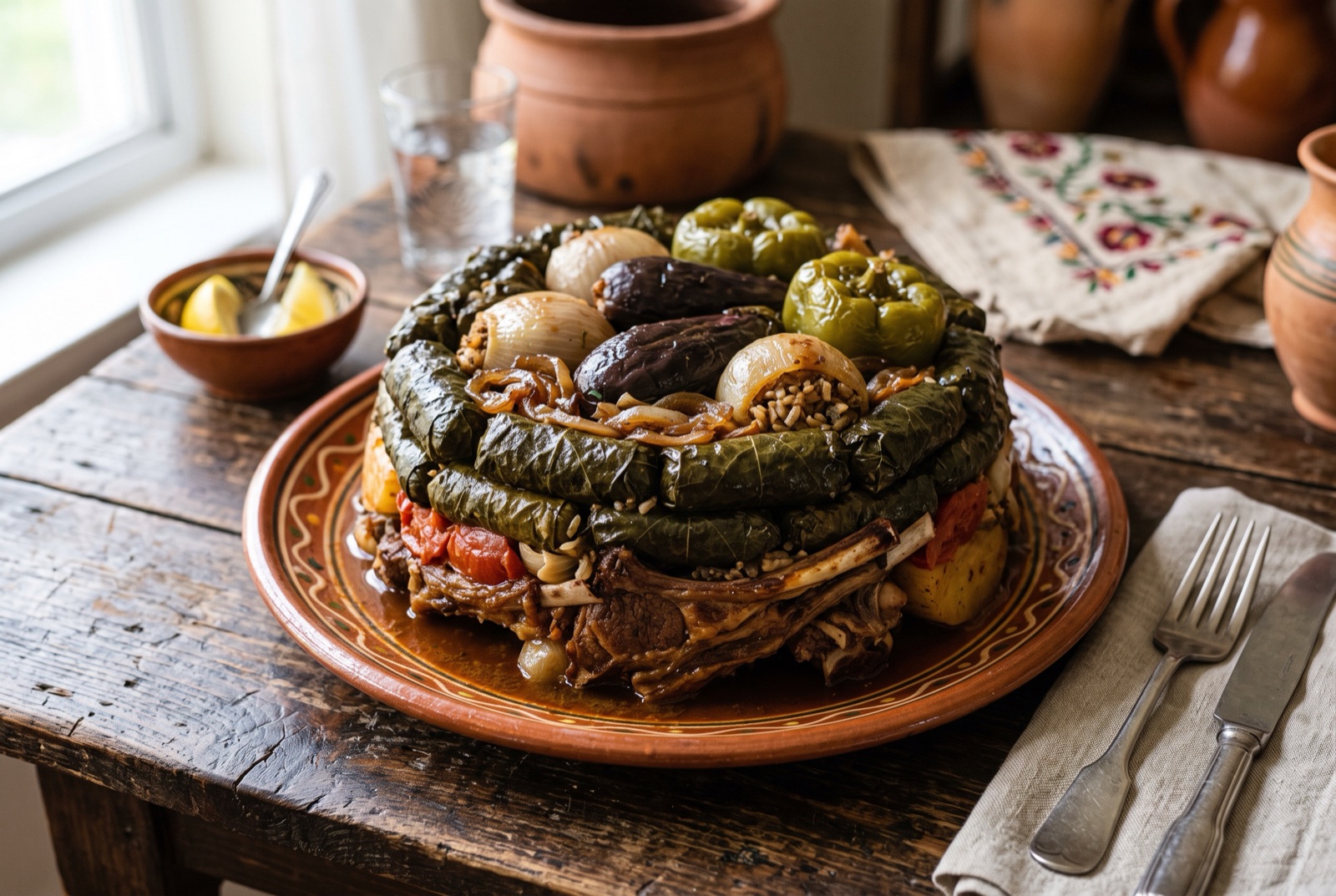
Quzi is a whole piece of lamb — shoulder or leg, and at weddings the entire animal — cooked twice: first steamed or braised for hours with cardamom, cinnamon and bay until it gives way under a spoon, then roasted hard at the end so the outside goes deep brown and crisp. It sits on a mound of long-grain rice worked through with baharat, fried onion, raisins and toasted almonds, and the whole thing is carried out on one enormous platter and pulled apart by hand at the table. The lamb is mild and sweet rather than heavily spiced; the intensity is in the rice underneath, which has taken on the cooking broth. It is the dish Iraqis cook when something important is happening.

- Gate
- IraqNationwide
- Prep
- 30 min
- Cook
- 4 hr
- Total time
- 4 hr 45 min incl. 15 min rest
- Serves
- 6
- Status
- Takes skill
- Nutrition / serving · estimated
- Calories 890 kcal
- Protein 48 g
- Carbs 82 g
- Fat 41 g
- Fiber 5 g
- Sugar 14 g
- Sodium 980 mg
Why this recipe works.
- A true two-stage method — long covered braise, then a hard uncovered roast — instead of a single long roast that only gets you halfway.
- The braising broth is reused to cook the rice, so nothing that came out of the lamb is thrown away.
- Almonds toasted separately from the raisins, so they stay crisp instead of going soft in the pot.
- Scaled to a lamb shoulder and a domestic oven, with honest notes on what the full whole-lamb version does differently.
Ingredients.
17 itemsFor the lamb
For the rice
To finish
Equipment
- Large lidded roasting pan or Dutch oven
- Heavy pot with a tight lid for the rice
- Fine sieve
- Large serving platter
Instructions.
Set up the braise
Put the lamb shoulder in a deep roasting pan with the quartered onions, cardamom, cinnamon, bay, peppercorns, dried limes and salt. Pour in enough water to come a third of the way up the meat.
Cook it covered and low
Seal the pan tightly with foil, put the lid on if it has one, and cook at 150°C for 3 hours 30 minutes. When it is ready a spoon pressed into the shoulder should sink in with no resistance and the meat should shrink visibly back from the bone.
Tip If steam is escaping around the foil, crimp it harder — a leaking seal both dries the surface and slows the whole thing down.
Strain and save the broth
Lift the lamb carefully onto a tray. Strain the cooking liquid through a fine sieve into a jug and let it settle, then skim off about half the fat and keep it — you will fry the onions in it. Measure out 1 litre of broth for the rice.
Parboil the rice
Bring a large pot of heavily salted water to a rolling boil and cook the rinsed rice for 5 to 6 minutes, until a grain crushed between your fingers is soft outside but still has a firm white speck at the centre. Drain immediately and rinse briefly with warm water.
Fry the onions
Heat the ghee and the reserved lamb fat in a heavy pot and cook the sliced onions over medium heat for 12 to 15 minutes, stirring often, until they are deep gold and smell sweet and jammy rather than sharp. Stir in the baharat and turmeric and let them sizzle for 20 seconds.
Steam the rice
Pour 500 ml of the measured broth into the onion pot, bring it to a boil, then pile the drained rice on top in a mound and poke three or four holes down through it with the handle of a spoon. Cover the pot with a cloth-wrapped lid and steam over the lowest heat for 25 minutes without lifting the lid.
Tip The cloth catches condensation that would otherwise drip back and make the top layer wet.
Roast the lamb hard
Meanwhile rub the drained shoulder all over with baharat and a little salt, set it on a rack in a roasting tin and roast uncovered at 220°C for 25 to 30 minutes, until the fat has rendered, the surface is mahogany and the edges are crisp enough to crackle when tapped.
Plump the raisins, toast the almonds
Warm the raisins in a spoonful of the remaining broth until they swell and go glossy. Separately, toast the almonds in a dry pan over medium heat for 3 to 4 minutes, shaking constantly, until they smell nutty and are just turning gold.
Rest, then build the platter
Let the lamb rest for 15 minutes. Fork the rice gently to loosen it, fold through half the raisins and almonds, and spread it over a large platter. Set the whole shoulder on top, scatter the rest of the fruit and nuts and the parsley over everything, and bring the remaining broth to the table in a jug for spooning over.
Tips from our kitchen.
- Choose shoulder over leg. It has more fat and connective tissue, which is exactly what a long braise needs, and it stays juicy through the final roast.
- Keep the braising pot tightly sealed with foil under the lid; escaping steam means a dry surface and a much longer cooking time.
- Do not skim all the fat from the broth — a good amount of it goes into the rice and is what makes quzi taste like quzi rather than plain pilaf.
- Parboil the rice in well-salted water and drain it while still firm at the centre, then steam it. Boiling it all the way through gives you a sticky mound instead of separate grains.
- Toast the almonds in a dry pan, not in butter, and take them off the heat while they are still one shade lighter than you want — they carry on colouring.
- Let the roasted lamb rest a full 15 minutes before it goes on the rice, or the juices run out and soak the mound into a swamp.
Substitutions.
- Lamb shoulder → Lamb leg, goat shoulder or mutton
- Leg is leaner so cover it well and check earlier. Goat and mutton both want an extra 45 minutes of braising.
- Baharat → Equal parts allspice, black pepper, cinnamon and cumin with a little clove
- Iraqi blends lean warmer and sweeter than Levantine ones, so err toward cinnamon over cumin.
- Almonds and raisins → Pine nuts and dried apricots, or leave them out entirely
- Some Iraqi households serve quzi rice plain and put the nuts and fruit in a bowl alongside, which is entirely normal.
Variations.
- Stuffed quzi
- The wedding version: the cavity of a whole lamb is packed with the spiced rice, nuts and raisins before cooking, so the rice steams inside the animal and takes on far more of its fat.
- Quzi with saffron rice
- A pinch of saffron bloomed in hot water and streaked through the finished rice, giving orange threads through the white — common at more formal gatherings.
- Pressure-cooker quzi
- The braise done in 50 minutes under pressure instead of three hours in the oven, then finished with the same hard roast. Faster, and the difference in the finished dish is small.
Storage & reheating.
Pull any leftover meat off the bone and store it separately from the rice, both covered, for up to 3 days in the fridge; kept together the rice draws the moisture out of the lamb. Reheat the meat in a covered dish with a few spoonfuls of the reserved broth at 160°C for 20 minutes, and the rice separately, covered, with a splash of water so it steams rather than dries. Both freeze well for two months. Freeze the rice flat in a bag so it thaws quickly, and refresh the toasted almonds in a dry pan before serving, since they lose their crispness in the freezer.
Serve with
A bowl of plain yoghurt, a sharp tomato-and-onion salad with sumac, and pickles — the platter needs something acidic beside it.
The story behind Quzi.
Quzi is celebration food across Iraq and much of the Gulf, and its logic is the logic of feeding a crowd from one animal. A whole young lamb is seasoned, sometimes stuffed with spiced rice, and cooked slowly in a covered pit or a large steamer until the meat is falling from the bone. It is then set out on a bed of rice big enough to cover a table, scattered with nuts and dried fruit, and everyone eats from the same platter with their hands. At weddings and large gatherings this is still the centrepiece, and the arrival of the tray is an event in itself.
The two-stage cooking is not decoration. Steam or a wet braise does the work of breaking down the connective tissue in an older or tougher cut without drying the surface, and only then does the dry heat go on to build colour and crust. Skip the first stage and you get roast lamb, which is a fine thing but is not quzi; skip the second and you get pale, soft boiled meat with no contrast. The distinction between the two textures — collapsing inside, crackling outside — is the entire point.
The rice is not a side dish. It is cooked in or moistened with the lamb broth, seasoned with baharat and often a little turmeric or saffron for colour, and finished with onions fried until sweet, raisins plumped in the same fat, and almonds toasted separately so they stay crisp. In some households the nuts and raisins are folded through; in others they are scattered over the top so nobody has to eat them if they do not want to. The home version here uses a lamb shoulder, which is the right cut for the method, feeds six generously, and fits in a domestic oven — which a whole lamb, tempting as it is, will not.
Questions, answered.
What cut of lamb should I use for quzi?
Bone-in shoulder is the best home cut. It carries enough fat and connective tissue to survive several hours of braising and comes out genuinely falling apart, whereas leg is leaner and can dry out. If you can only find leg, keep it very tightly covered during the braise and start checking it an hour earlier. A whole lamb is the traditional version but needs a pit or a commercial oven.
Why does the lamb get cooked twice?
The two stages do different jobs. The long, moist, covered cook breaks down collagen so the meat pulls apart, but it leaves the surface pale and soft. The short blast of dry heat afterwards drives off surface moisture and browns the fat into a crust. Doing only one of the two gives you either roast lamb without the collapse, or boiled lamb without the crust — quzi needs both textures at once.
How do I get the rice to stay in separate grains?
Rinse the rice until the water runs clear to wash off loose surface starch, parboil it in plenty of heavily salted water and drain it while the grains still have a firm speck at the centre, then finish it as steam in a covered pot over low heat. The final steaming stage cooks the core through without agitating the grains, which is what breaks them and releases the starch that makes rice claggy.
Can I make quzi ahead for a party?
Yes, and it is the practical way to do it. Braise the lamb a day ahead and refrigerate it in its broth — it improves overnight and the chilled fat is easy to lift off and portion. On the day, bring the meat to room temperature, roast it uncovered for the final browning, and cook the rice fresh in the reheated broth. Only the last 45 minutes then need to happen while guests are there.
Is quzi the same as mandi or ouzi?
They are relatives rather than the same dish. Ouzi is essentially the same word and dish across the Levant and Gulf, often wrapped in pastry in Palestinian and Jordanian versions. Mandi, from Yemen and now common across the Gulf, cooks the meat hanging in a sealed underground oven over the rice so the drippings fall into it, and is usually smokier and less sweet than the Iraqi quzi with its raisins and nuts.
You might also like.
All recipes →
Keep exploring Iraq.
Iraq has 9 more dishes in the atlas — Bamia and Iraqi Dolma, and 7 more.
Recipe by The DishRoute Kitchen · published August 20, 2026 · updated August 20, 2026