Irish Stew.
Lamb, Potato and Onion Stew
Stobhach Gaelach · say it: STOH-vakh GAY-lakh
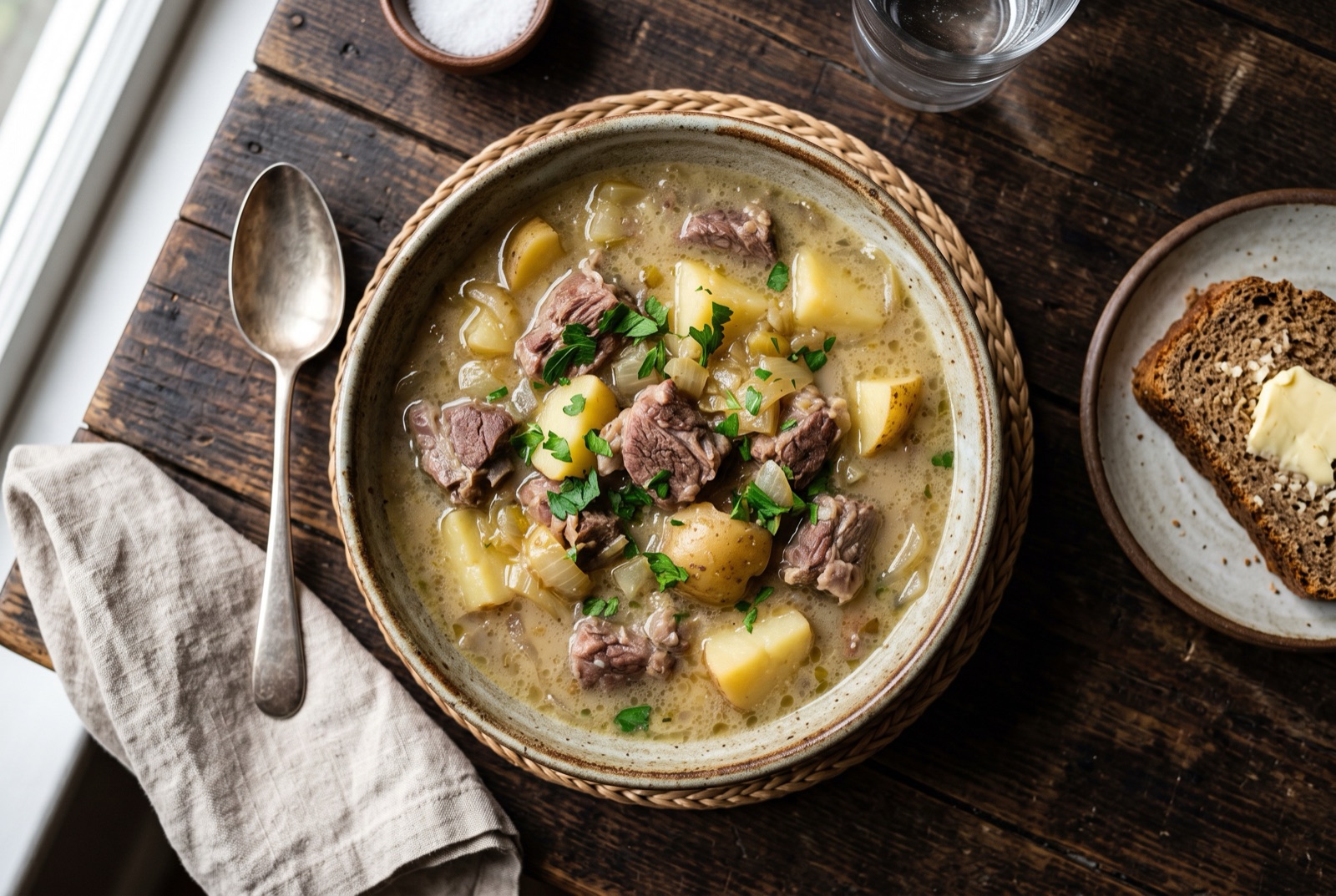
Irish stew is three ingredients and patience: pieces of lamb or mutton on the bone, thick rounds of potato, sliced onion, water to cover, and two hours of the gentlest possible heat. Nothing is browned, nothing is thickened, and there is no stock — the flavour comes out of the bones and the fat, and the broth turns creamy because the topmost potatoes collapse into it while the lower ones stay whole. The result tastes sweet and deeply meaty, with a soft peppery edge from the onion and a fresh lift of parsley at the end. It is the plainest famous dish in Europe, and the reason it survives is that plain works: cheap cuts get soft, cheap vegetables get delicious, and a single pot feeds the table.

- Gate
- Ireland
- Prep
- 25 min
- Cook
- 2 hr 30 min
- Total time
- 2 hr 55 min
- Serves
- 4
- Status
- Easy
- Nutrition / serving · estimated
- Calories 610 kcal
- Protein 42 g
- Carbs 52 g
- Fat 26 g
- Fiber 6 g
- Sodium 980 mg
Why this recipe works.
- Two potato cuts, deliberately: thin slices at the bottom to melt into the broth, thick chunks on top that stay whole.
- Bone-in lamb neck instead of trimmed shoulder, because the bones are the only stock this stew gets.
- No browning and no flour — the method is faithful, and the texture is better for it.
- The disputed extras (carrot, barley, thyme) are listed as optional rather than smuggled in as tradition.
Ingredients.
11 itemsTo finish
Equipment
- Heavy casserole or Dutch oven with a tight lid
- Sharp knife
- Ladle
Instructions.
Cut the potatoes two ways
Slice a third of the potatoes into thin 5 mm rounds and cut the rest into large 5 cm chunks. The thin ones are there to dissolve and thicken the broth; the chunks are there to survive and be eaten.
Tip Keep the cut potatoes in cold water until you build the pot so they do not grey.
Build the layers
Cover the base of a heavy casserole with the thin potato slices, then add half the onion, then the lamb in one layer, seasoning with salt and pepper as you go. Add the remaining onion, the carrot and thyme if using, and finish with the potato chunks on top.
Add water and bring up slowly
Pour in enough cold water to come just level with the top layer of potato, about 1.2 litres. Bring it to the barest simmer over medium-low heat, which takes 15 minutes or so, and skim off the grey foam that rises before it breaks up.
Tip Starting from cold water pulls the scum to the surface in one sheet, so it is easy to lift off.
Simmer, covered and undisturbed
Cover tightly and cook on the lowest heat that keeps a bubble breaking every few seconds for 2 hours, until the lamb pulls off the bone with a spoon. Do not stir — lifting the lid to look is enough movement.
Tip If your hob will not go low enough, move the covered pot to a 150°C oven instead.
Check the broth and thicken it
Uncover and look at the liquid: it should be cloudy and slightly thickened. If it still looks like water, press four or five of the bottom potato slices against the side of the pot with a spoon and stir them in, then simmer uncovered for 10 minutes.
Season properly and serve
Taste the broth and correct the salt — it will need more than you expect — and grind in plenty of pepper. Stir the butter through if using, scatter the parsley over the top, and ladle into deep bowls so each serving gets meat, whole potato and plenty of broth.
Tips from our kitchen.
- Use bone-in lamb neck, shoulder chops or shanks. Boneless diced leg gives you dry meat and thin, characterless broth.
- Pick floury potatoes such as Rooster, Maris Piper or russets. Waxy salad potatoes refuse to break down and the broth stays watery.
- Salt in layers as you build the pot, not all at the end. Water-simmered stew seasoned only at the finish always tastes flat under the surface.
- Keep the liquid barely trembling. A rolling boil turns lamb fat into scum and makes the meat stringy instead of soft.
- If the broth is still thin at the end, crush a few of the bottom potatoes against the side of the pot with a spoon and stir them through.
- Made a day ahead it is better: the fat sets on top and can be lifted off, and the broth tastes rounder.
Substitutions.
- Mutton → Bone-in lamb neck or shoulder chops
- Real mutton is over a year old and far more flavourful, but it is hard to find outside a proper butcher. Lamb needs about 30 minutes less cooking.
- Lamb entirely → Bone-in kid goat, or beef shin
- Goat is closer in character; beef shin makes a good stew but a noticeably different, darker one.
- Floury potatoes → Half waxy potatoes for the top layer, floury for the bottom
- A useful compromise if you only have waxy ones: grate a floury potato into the broth to compensate.
Variations.
- With pearl barley
- Add 60 g of pearl barley with the water. It thickens the broth to a near-porridge and stretches the meat further — a common farmhouse habit rather than a purist choice.
- Ballymaloe-style with carrot and thyme
- The modern restaurant reading: carrots cut in thick batons, a sprig of thyme, and a knob of butter stirred in at the end for gloss.
- Baked in the oven
- Assemble the layers in a casserole, cover, and cook at 150°C for 2½ hours. The top layer of potato browns slightly and the pot needs no attention at all.
Storage & reheating.
Cool quickly and refrigerate for up to 3 days; the flavour improves overnight. Lift the set fat off the top before reheating, and warm it slowly on the hob until it steams, adding a splash of water if the potatoes have drunk the broth. It freezes for 3 months, though the potatoes turn grainy on thawing — some cooks freeze the meat and broth only, and boil fresh potatoes into it when reheating.
Serve with
Buttered soda bread for the broth, and a glass of milk or stout — nothing else needs to be on the table.
The story behind Irish Stew.
Stew like this was cooking on the hearth long before it had a name in a cookbook. For most of Irish history the rural household had one pot hung over an open fire, no oven, and very little meat. What meat there was came from sheep too old to be worth keeping — mutton, tough and strongly flavoured, which repaid slow simmering far better than roasting. Onions and potatoes went in because they were what grew, and water went in because stock is a luxury of kitchens with spare bones and spare fuel. The dish that came out of those constraints is one of the few European stews built with no fat, no flour and no aromatics beyond an onion.
The potato half of the story carries real weight. By the early nineteenth century Ireland's poor were living on potatoes almost exclusively, grown on tiny rented plots while grain and cattle from the same land were exported. When blight destroyed the crop from 1845 onwards, around a million people died and a million more emigrated; the population never recovered to its pre-famine level. Irish stew as it is cooked today belongs to the period after that collapse, when mutton, potatoes and onions together — rather than potatoes alone — became a realistic dinner for a farming family. Cooking it is not a costume; it is a dish that came through something.
Ask what belongs in it and you will start an argument. Purists insist on mutton, potato, onion, water, salt and pepper, and nothing else — carrots, barley, stock and thyme are all accused, by somebody, of being English, modern or a Dublin restaurant invention. In practice carrots and barley have been in Irish home versions for well over a century, and the honest position is that the plain version is the older idea while the enriched one is what most Irish households actually cook. This recipe gives you the strict frame and marks the optional additions clearly, so you can pick your side at the chopping board.
Questions, answered.
Should Irish stew contain carrots?
It depends who you ask, and the argument is genuine. The strict traditional version is mutton, potato, onion, water, salt and pepper only, and adding carrots is seen by purists as a modern or foreign intrusion. In practice carrots have been in Irish home cooking for generations. Cook it plain once to taste what the method actually does, then add carrots forever after if you prefer.
Why is my stew broth watery instead of creamy?
Almost always the potatoes. Waxy varieties hold their shape and never release starch, so the liquid stays thin. Use floury potatoes, slice a portion of them thinly so they sit at the bottom and disintegrate, and if it is still loose at the end, mash a few against the side of the pot. Boiling too hard also emulsifies fat into the broth instead of letting starch thicken it.
Can I brown the lamb first?
You can, and it makes a richer, darker stew — but it is no longer Irish stew in the traditional sense. The defining feature of the dish is that everything goes into the pot raw and pale, so the finished broth is light-coloured and tastes of lamb and onion rather than of caramelisation. If you brown it, you are essentially making a lamb casserole.
What is the difference between lamb and mutton here?
Lamb is under a year old, mild and tender; mutton comes from a sheep over a year old and has a much stronger, almost gamey flavour and tougher muscle that needs longer cooking. Traditional Irish stew was mutton, because young lamb was too valuable to eat. If your butcher has hogget or mutton, use it and add about 30 minutes to the simmering time.
Can I make Irish stew in a slow cooker?
Yes, and it suits the dish well. Layer everything as described, use about a third less water because nothing evaporates, and cook on low for 7 to 8 hours. The only loss is the thick top layer of potato, which stays wetter than it would in a pot with an occasionally lifted lid.
You might also like.
All recipes →
Keep exploring Ireland.
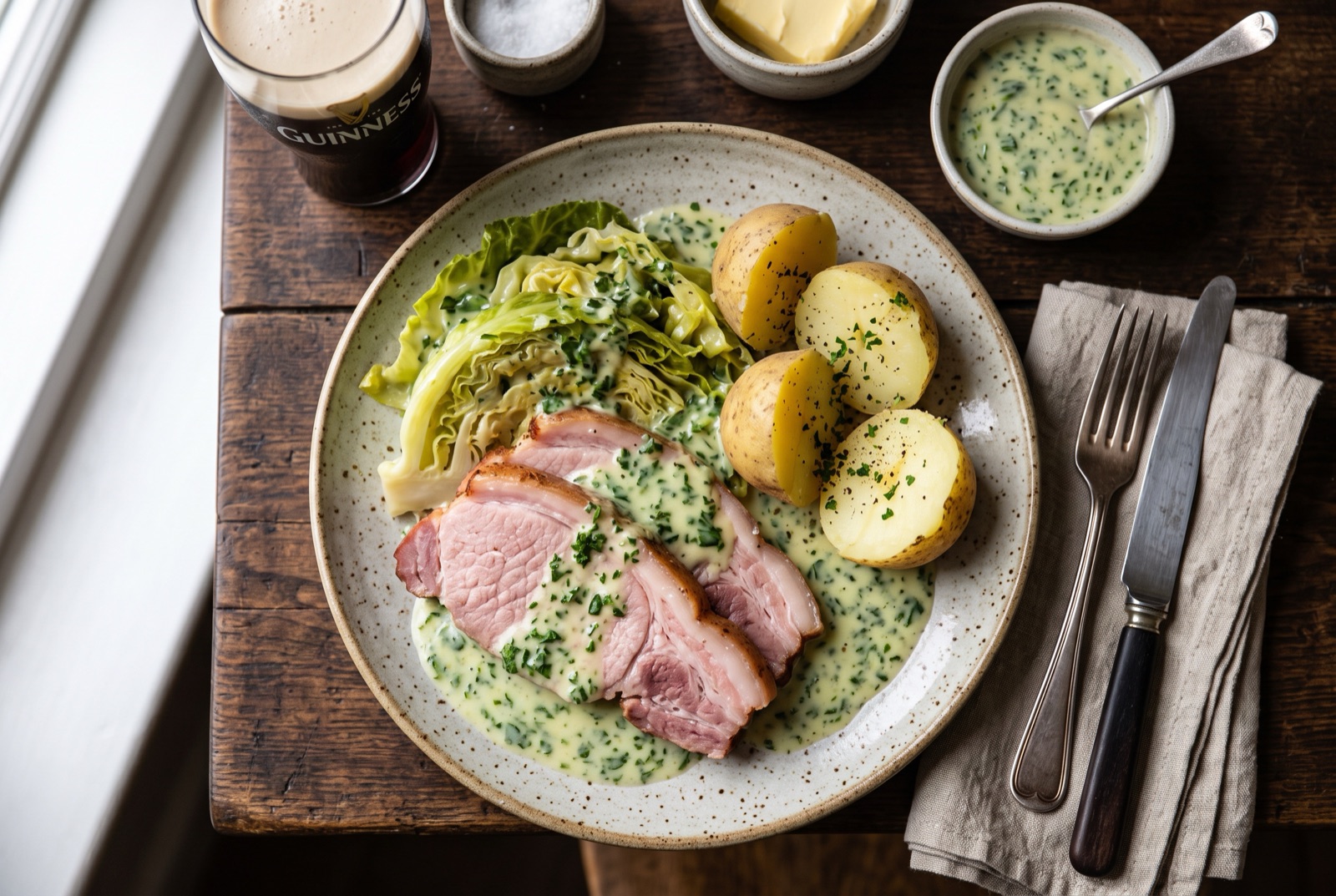
Ireland has 9 more dishes in the atlas — Bacon and Cabbage and Barmbrack, and 7 more.
Recipe by The DishRoute Kitchen · published August 19, 2026 · updated August 19, 2026