Ireland.
Éire
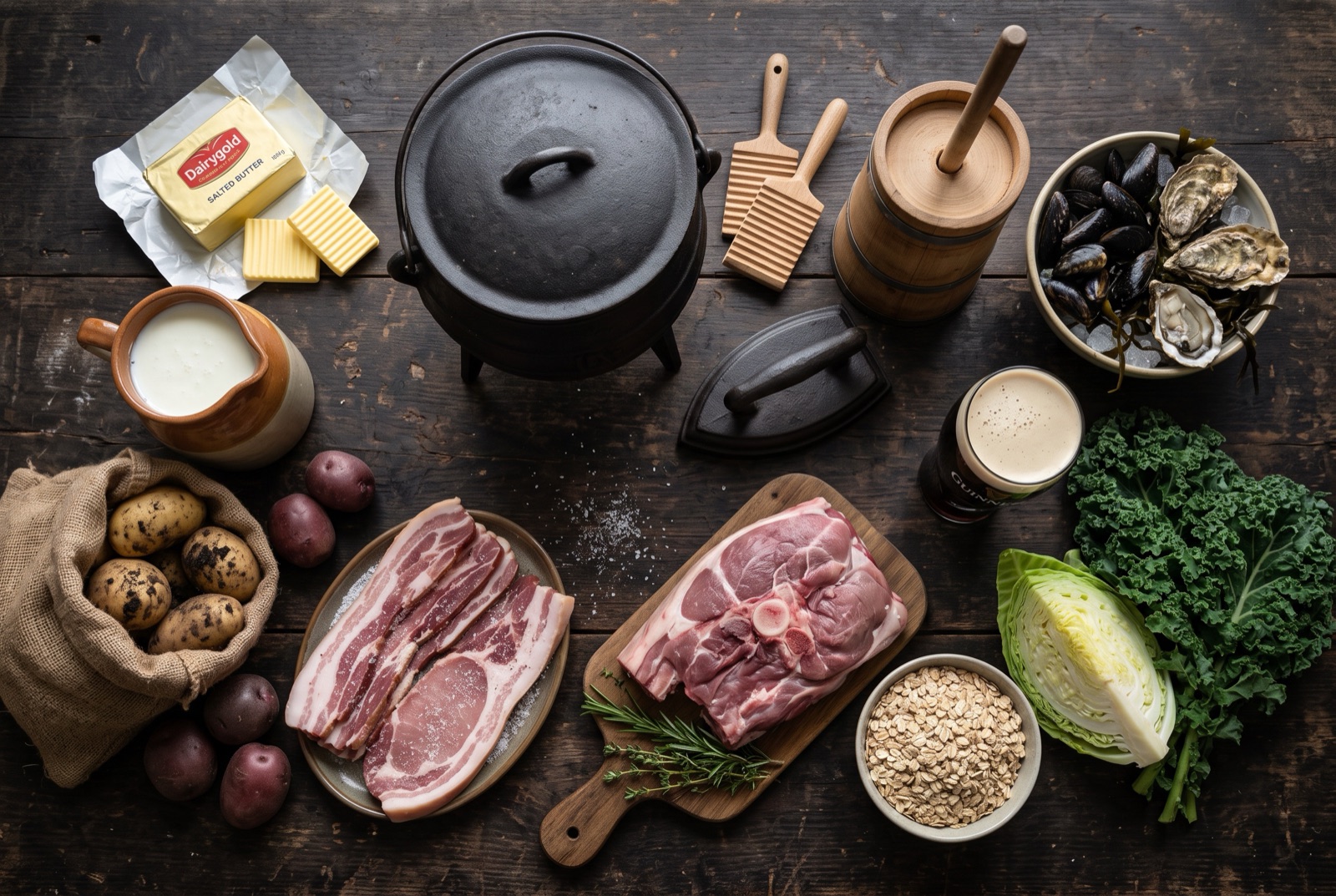
Irish cooking begins from the assumption that the raw material is already good and that the cook's main job is not to ruin it. The island's wet, mild climate grows grass better than it grows anything else, so the kitchen is built on what grass produces: beef and lamb, and above all dairy — butter so central to the culture that casks of it were once buried in bogs for keeping, buttermilk that raises the daily bread, cream that finishes the soup. Around that sit pork in every cured form, oats, root vegetables, the potato, and an Atlantic coastline of mussels, oysters, salmon and white fish. Spice is almost absent. Where other European kitchens reach for paprika, garlic or wine, Irish cooking reaches for salt, pepper, parsley, thyme and more butter, and finds its depth in long gentle simmering, in curing and in smoking instead. This is not restraint chosen as a philosophy; it is the food of a long-poor country, and its best dishes are the ones that made three or four cheap ingredients taste like a full meal.

- Continent
- EuropeBritish Isles
- Recipes in atlas
- 10
- Must-try dishes
- 3
- Pantry staples
- 9
Start with the classics.
Must tryThe dishes that explain the Ireland kitchen fastest — if you cook only a few things from this page, cook these.
Inside the Ireland kitchen.
No ingredient shaped Ireland more, or more painfully, than the potato. Introduced from the Americas in the late sixteenth century, it thrived in poor, wet ground and produced more calories per acre than any grain, and by the early 1800s the rural poor — squeezed onto tiny rented plots while the land around them grew grain and cattle for export — were living on it almost exclusively, often on a single high-yielding variety known as the Lumper. When potato blight arrived in 1845 and returned in the years that followed, that dependence collapsed into catastrophe: roughly a million people died of starvation and disease during An Gorta Mór, the Great Hunger, and around a million more emigrated, while food continued to leave Irish ports. The population fell by a quarter within a decade and kept falling for generations. Irish potato cookery — boxty, colcannon, champ, potato bread — is not quaint peasant nostalgia. It is the surviving craft of people who had to make one crop taste like many, and it is worth cooking with that in mind.
Dairy is the other pillar, and an older one. Ireland has been a cattle economy since prehistory, and milk in its many forms — fresh, soured, buttermilk, curds, butter — was the backbone of the medieval diet. The modern trace of that is everywhere: soda bread rises because the acid in buttermilk reacts with bicarbonate of soda, a discovery that arrived in the 1830s and gave a country with few ovens and little wheat gluten a bread it could bake on a griddle in under an hour. In Ulster the same dough is flattened and quartered into farls; in the south it is a round loaf slashed with a cross so the heat reaches the middle.
The pig fed the household. A cottage pig converted scraps into bacon, ham and pudding, and Irish pork cookery is overwhelmingly about cured meat rather than fresh: back rashers cut thick with a rim of fat, boiling bacon joints simmered whole, black and white pudding sliced and fried. Bacon and cabbage, not corned beef, is the actual national plate — corned beef and cabbage is an Irish-American adaptation made where beef was cheap and Irish bacon was not.
The sea is the underused wealth. The Atlantic coast yields mussels, oysters, crab, lobster, salmon and haddock, yet for centuries most of that catch was exported or eaten only near the shore, and fish carried an association with religious fasting rather than pleasure. That has changed sharply: the creamy seafood chowder now found in every west-coast pub is a genuinely modern dish, not an ancient one, and it is none the worse for it.
Since the 1970s an Irish food revival has rebuilt the cuisine around its own producers — farmhouse cheeses, artisan butter, dry-cured bacon, oysters and seaweed — with Myrtle Allen at Ballymaloe House in County Cork among its most influential figures. The result is a modern kitchen that no longer apologises for boiled bacon, brown bread and stew, but sources them properly.
Signature pantry.
9 staplesThe ingredients this cuisine cannot function without.
- salted butter
- buttermilk
- floury potatoes
- dry-cured bacon
- lamb and mutton
- oats
- cabbage and kale
- mussels and oysters
- stout
How people eat in Ireland.
Tea is the social unit of Irish life. It is offered on arrival, refused once out of politeness, then accepted, and it comes strong with milk and something on a plate beside it. Historically the main meal was dinner at midday and the evening meal was simply called tea, a habit that survives in plenty of households. Courses matter less than what is on the table all at once: the meat, the vegetables and a separate bowl of potatoes that everyone helps themselves from, plus buttered brown bread that appears beside soup, seafood, eggs and almost anything else. Sunday is for a roast and for the long midday meal that follows Mass. Hospitality is emphatic — a guest who leaves unfed is a failure of the house, and second helpings are pressed rather than offered.
Regional kitchens.
Ireland cooks 4 distinctly different ways depending on where you stand — here is what changes between them.
- R1Dublin and the East
- Port-city and pub cooking: coddle simmered on the back of the stove, stout from St James's Gate braising into beef, and the country's densest concentration of butchers, oyster bars and Georgian-era food trade.
- R2Ulster and the North
- Griddle country, where soda dough is baked as flat farls and potato bread is a daily staple. The Ulster fry is its signature plate, and Armagh apples and Lough Neagh eel are its regional prizes.
- R3Connacht and the Atlantic West
- Rugged, sea-facing and Irish-speaking in parts: mussels, oysters and crab from Galway and Clew Bays, mountain lamb from Connemara, and the potato pancake traditions of Leitrim and Cavan.
- R4Munster and the South
- Ireland's richest farmland and dairy heartland. Cork built its wealth on the butter trade and keeps the most distinctive local specialities — spiced beef at Christmas, drisheen, and the farmhouse cheeses that led the country's food revival.
All Ireland recipes.
10 recipes and counting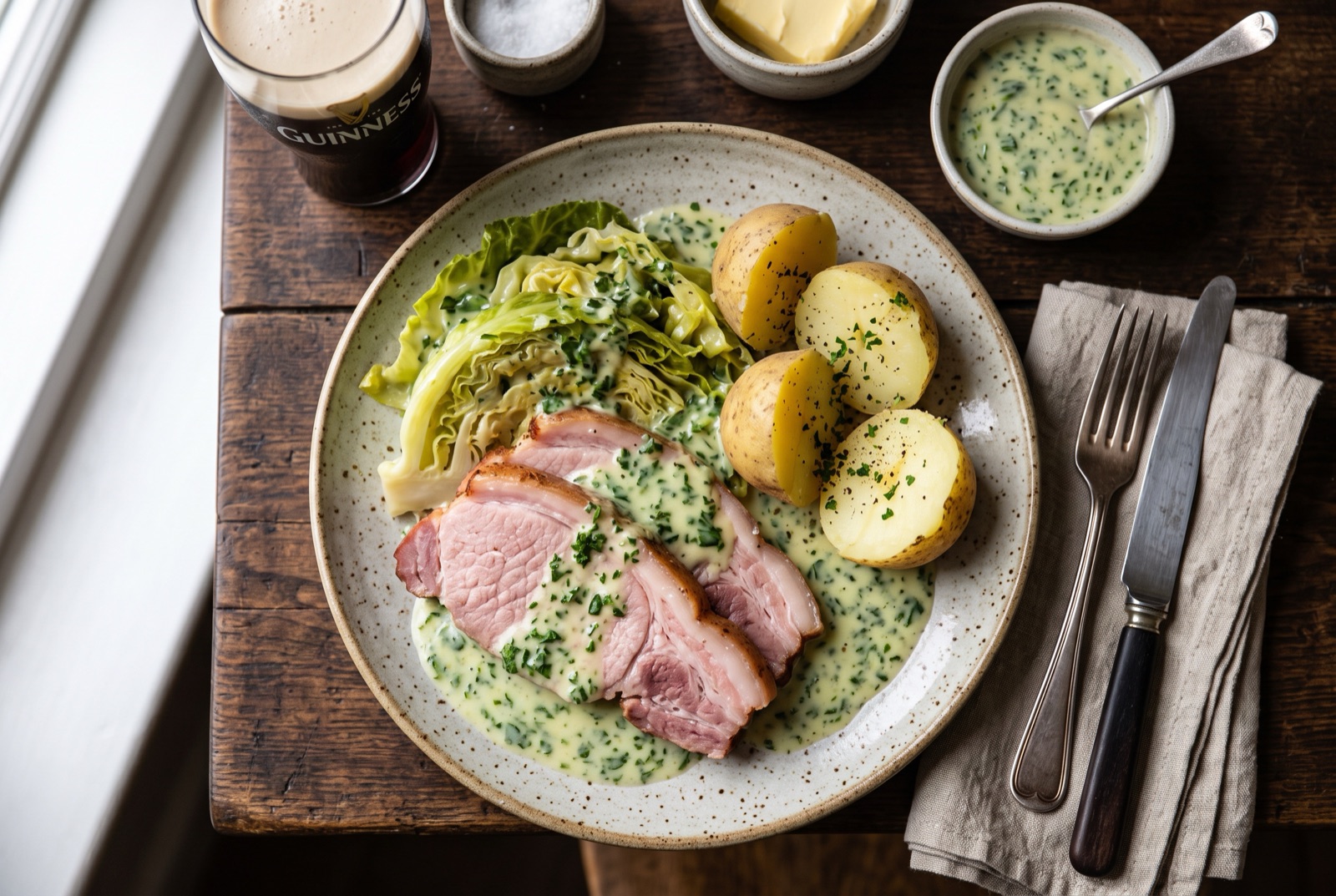
Ireland2 hr
Bacon and Cabbage
Boiled Bacon Joint with Parsley Sauce
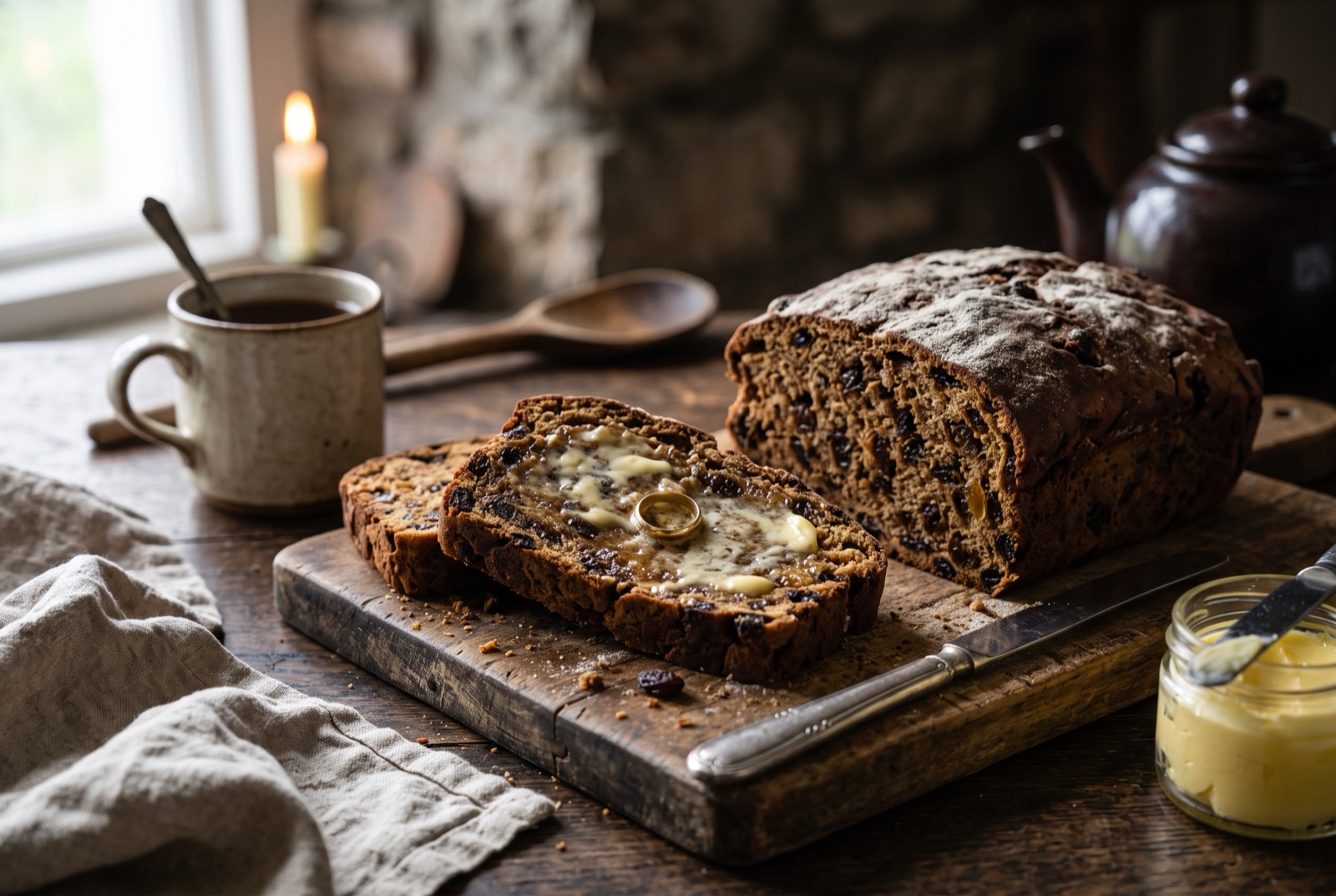
Ireland13 hr 35 min
Barmbrack
Irish Tea-Soaked Fruit Loaf
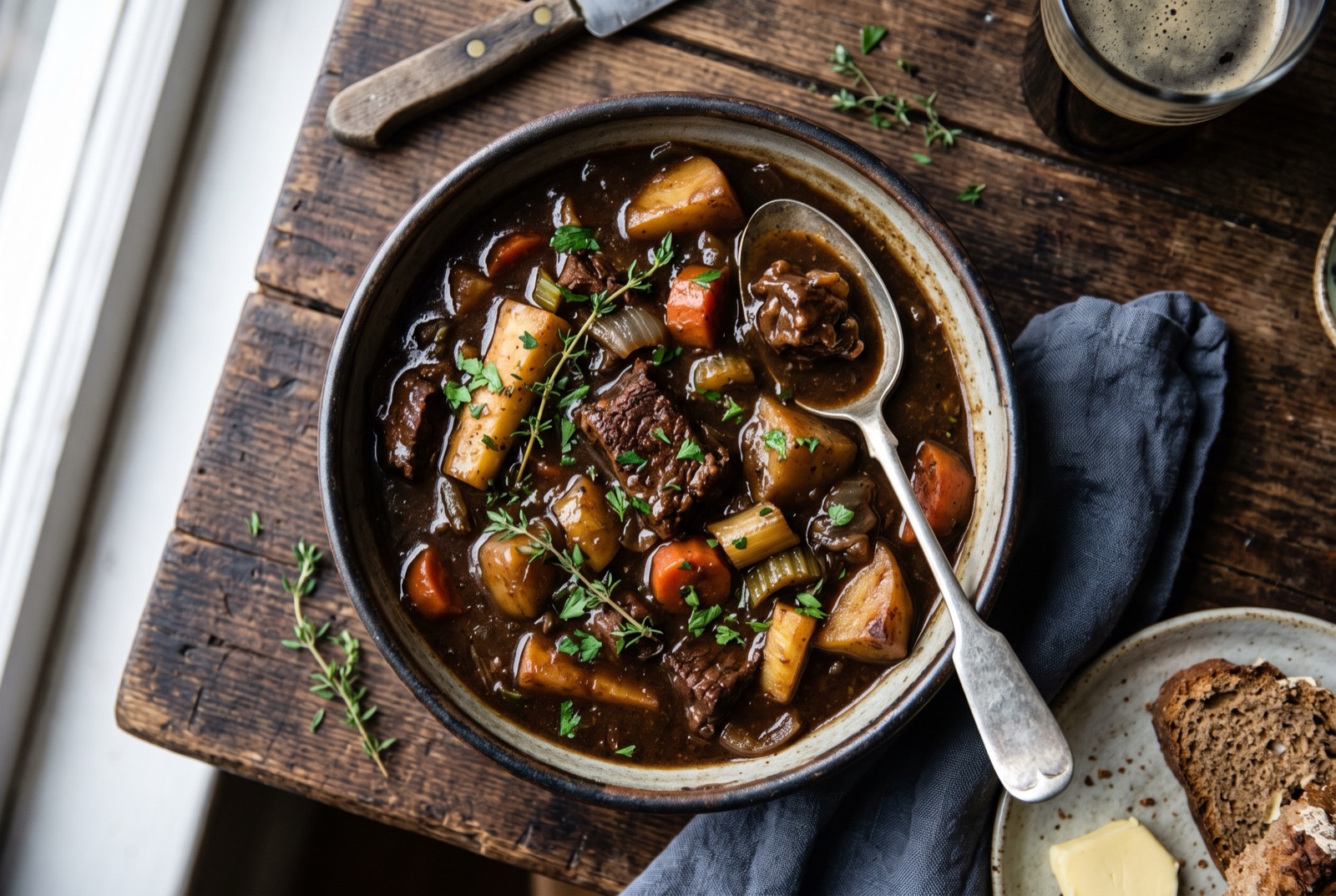
Ireland3 hr 35 min
Beef and Guinness Stew
Stout-Braised Beef
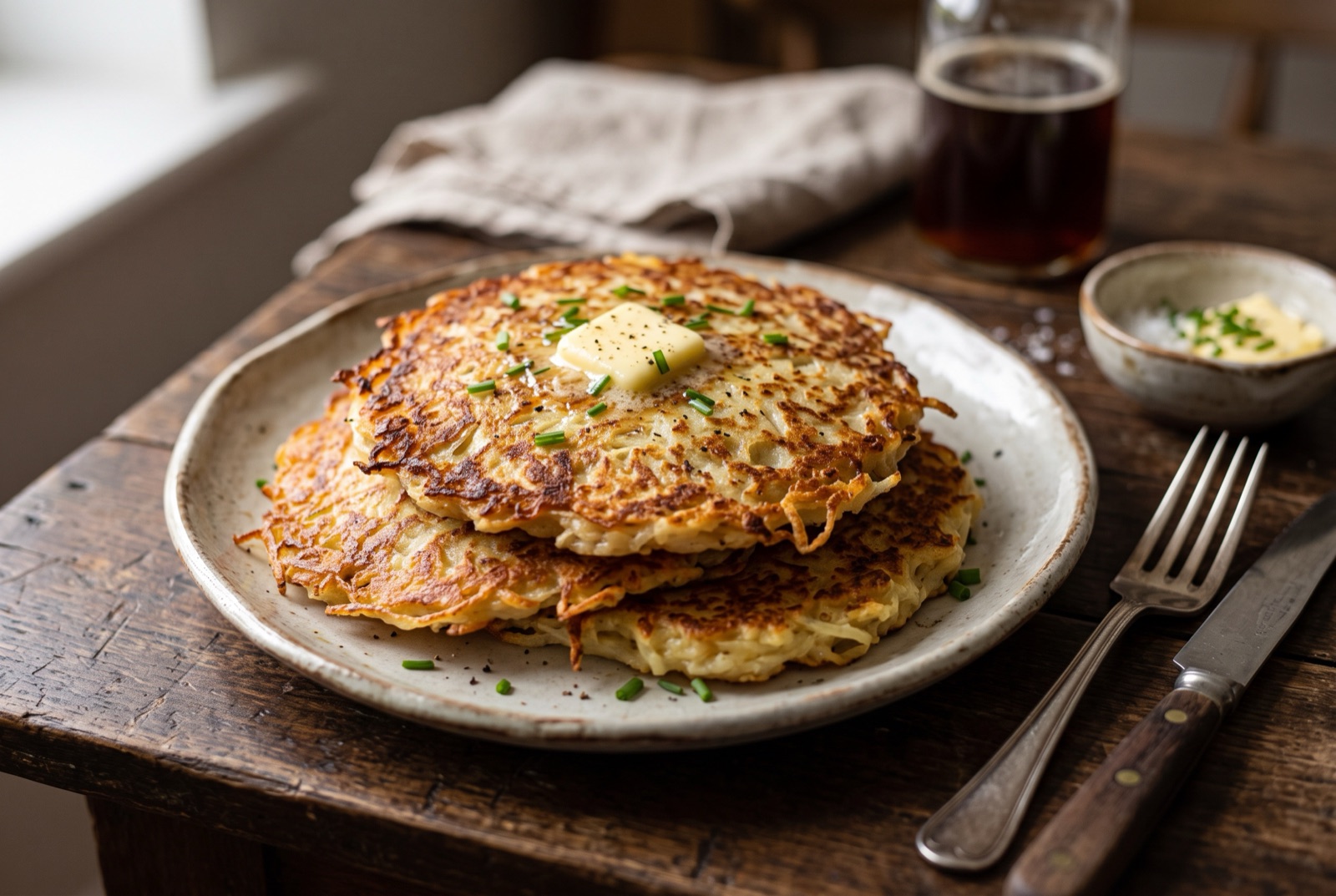
Ireland55 min
Boxty
Raw and Mashed Potato Pancake
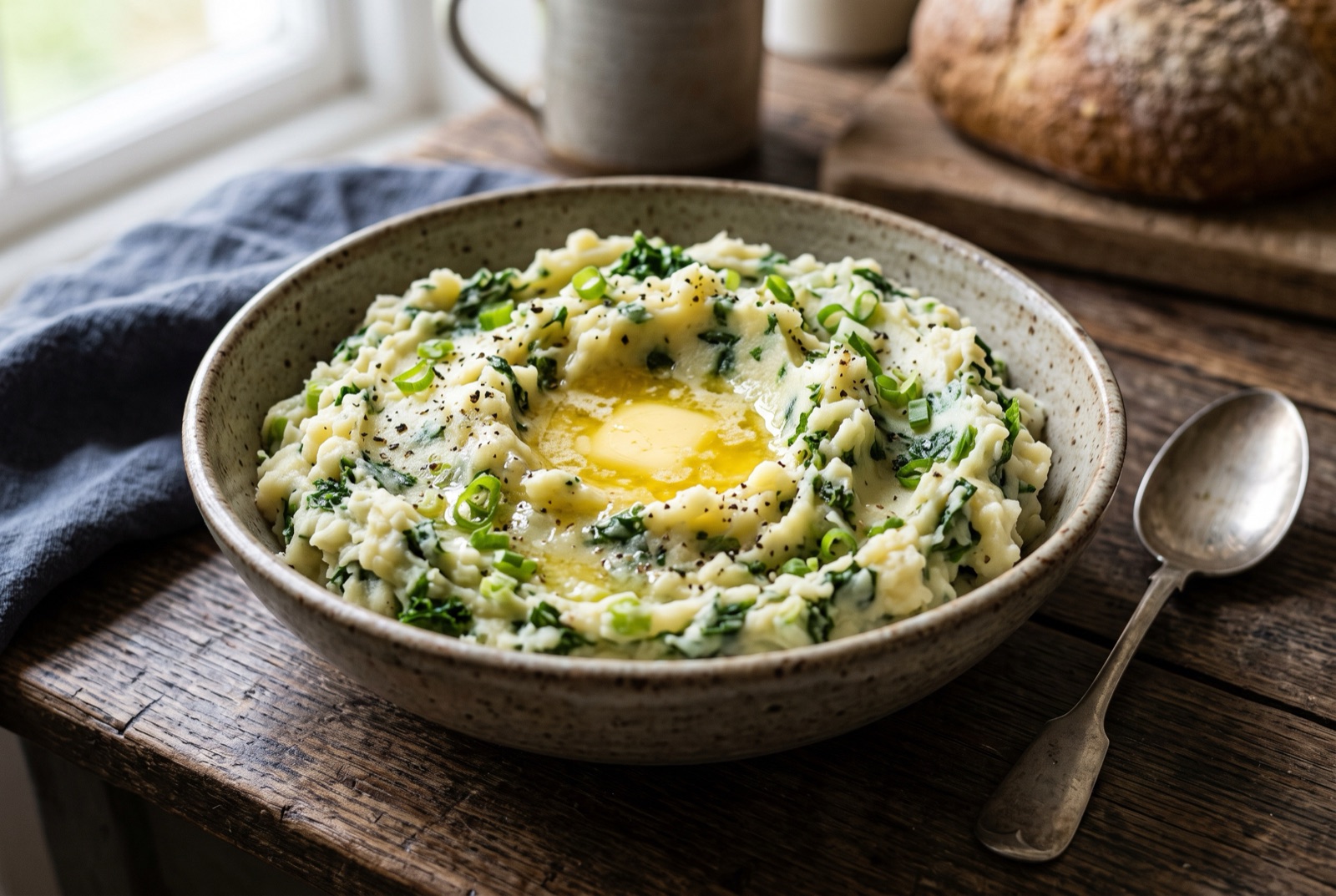
Ireland45 min
Colcannon
Mash with Kale and Scallions
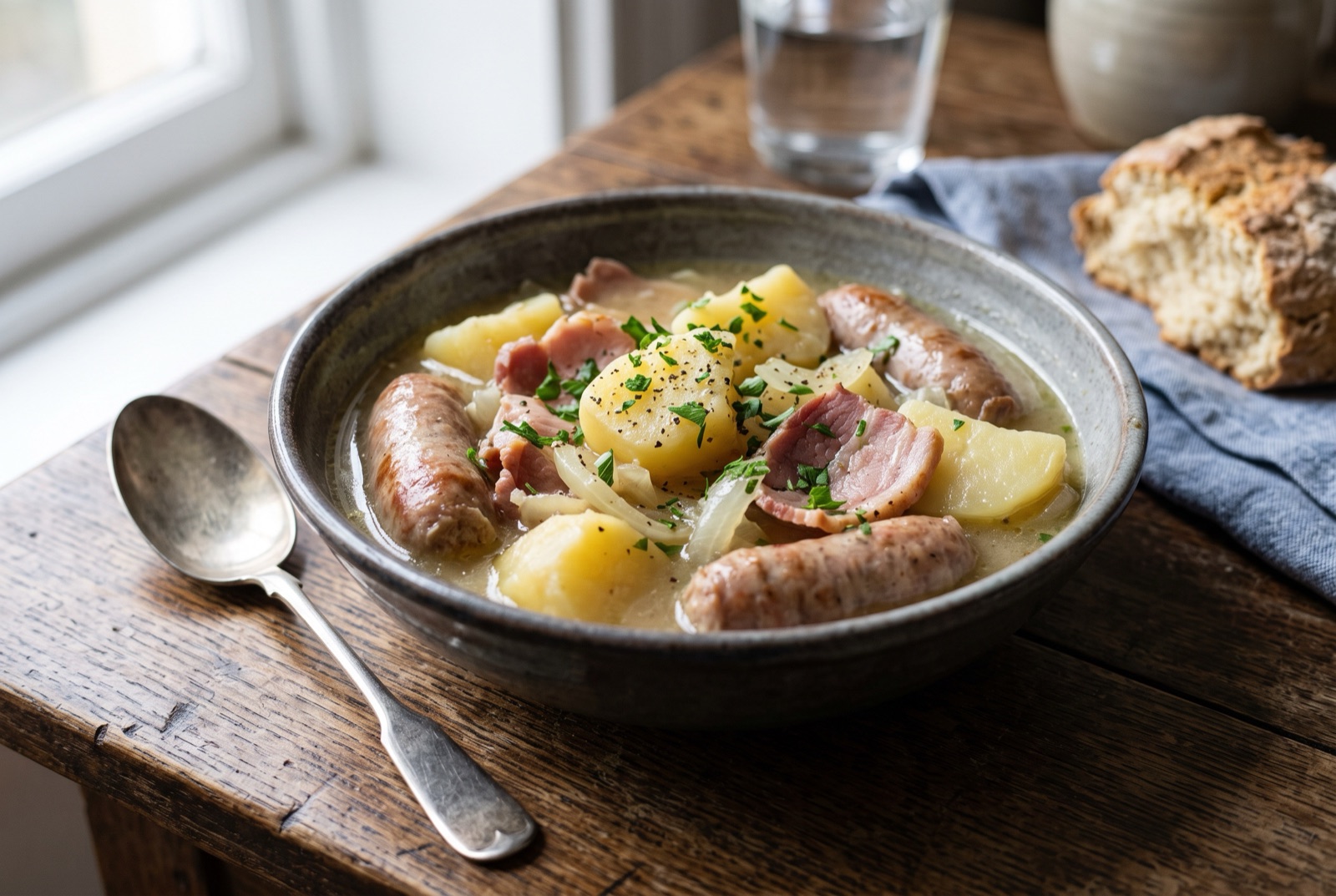
Ireland1 hr 50 min
Dublin Coddle
Sausage and Rasher Potato Pot
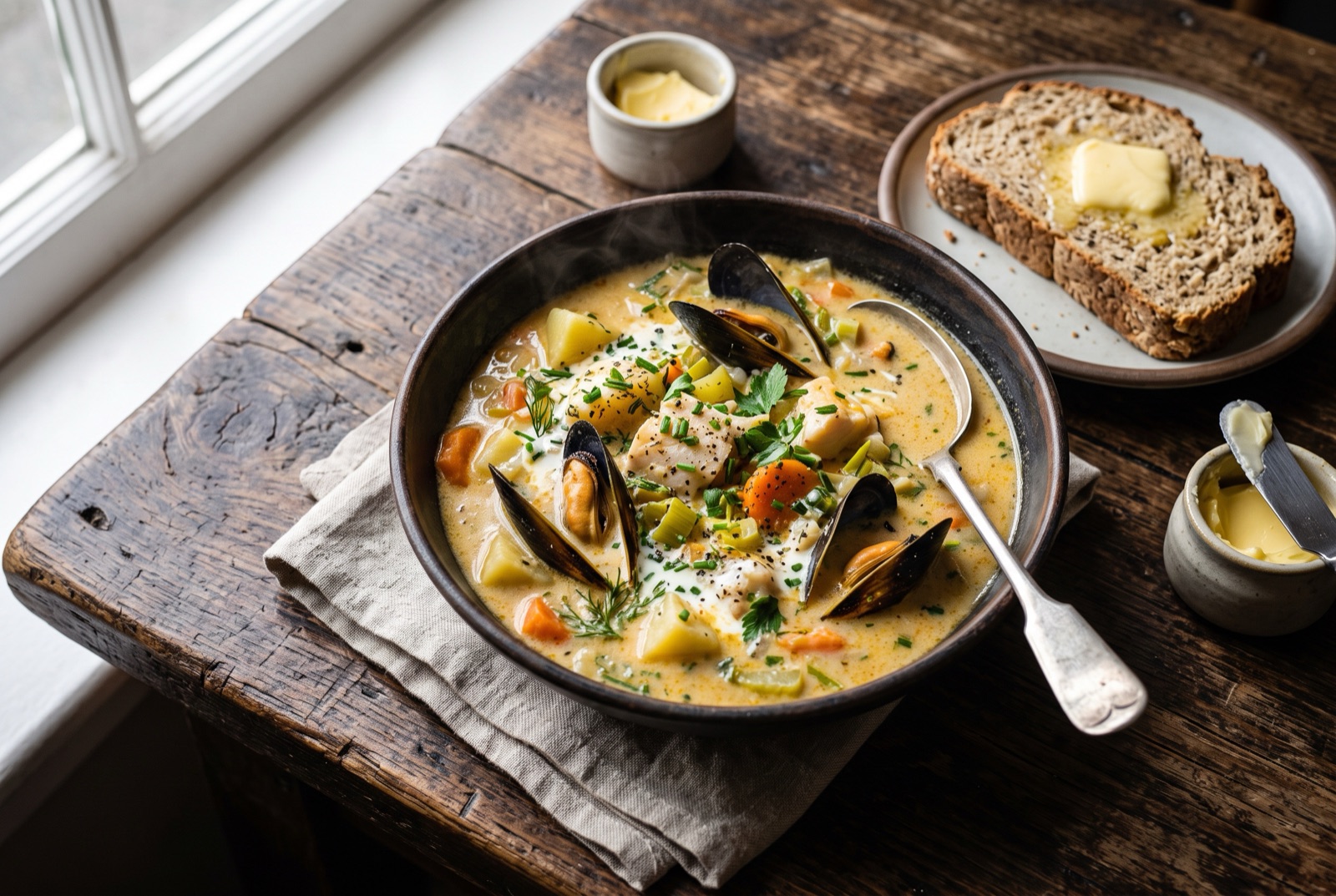
Ireland1 hr
Irish Seafood Chowder
Creamy Fish and Shellfish Soup
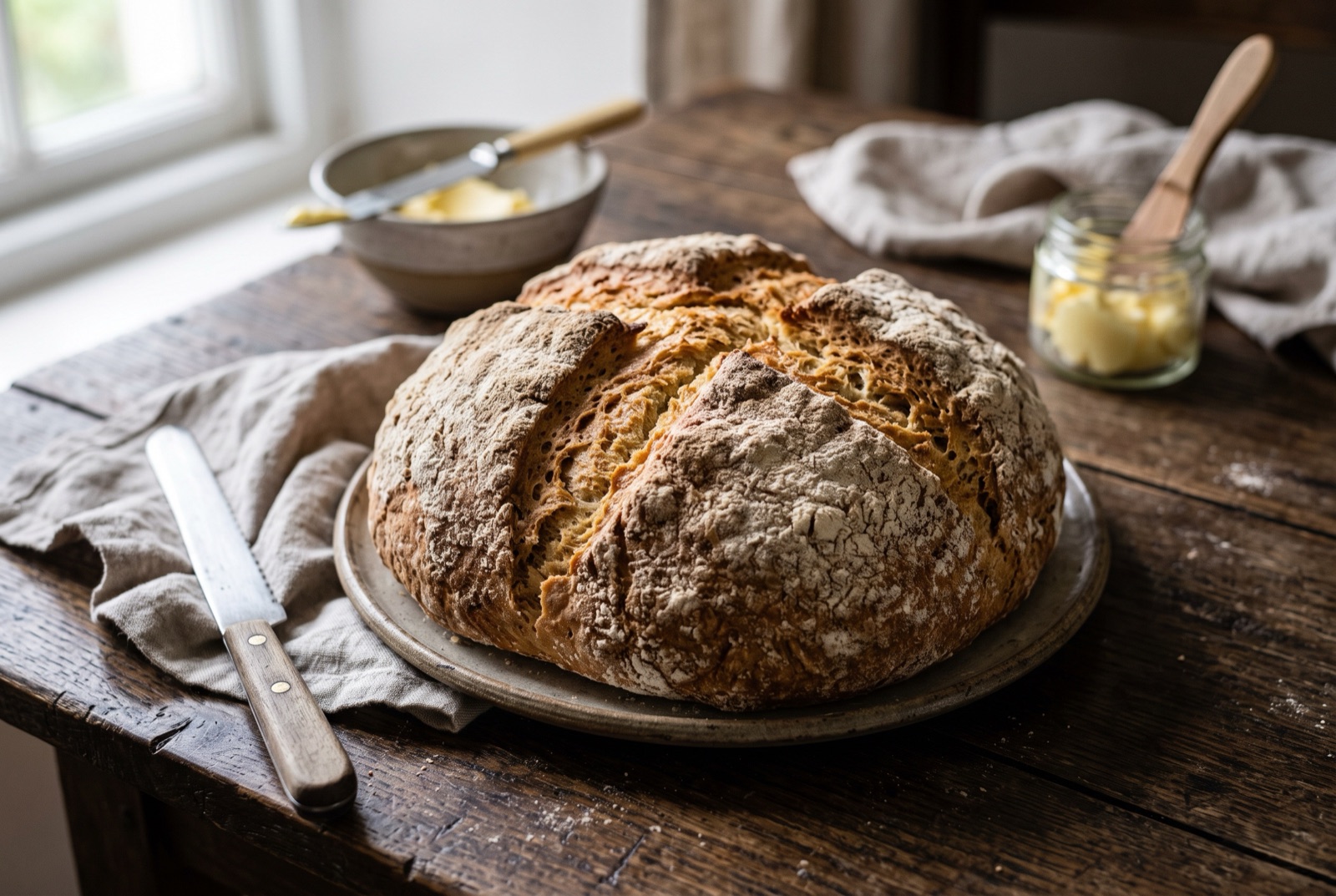
Ireland1 hr 15 min
Irish Soda Bread
Buttermilk Quick Bread
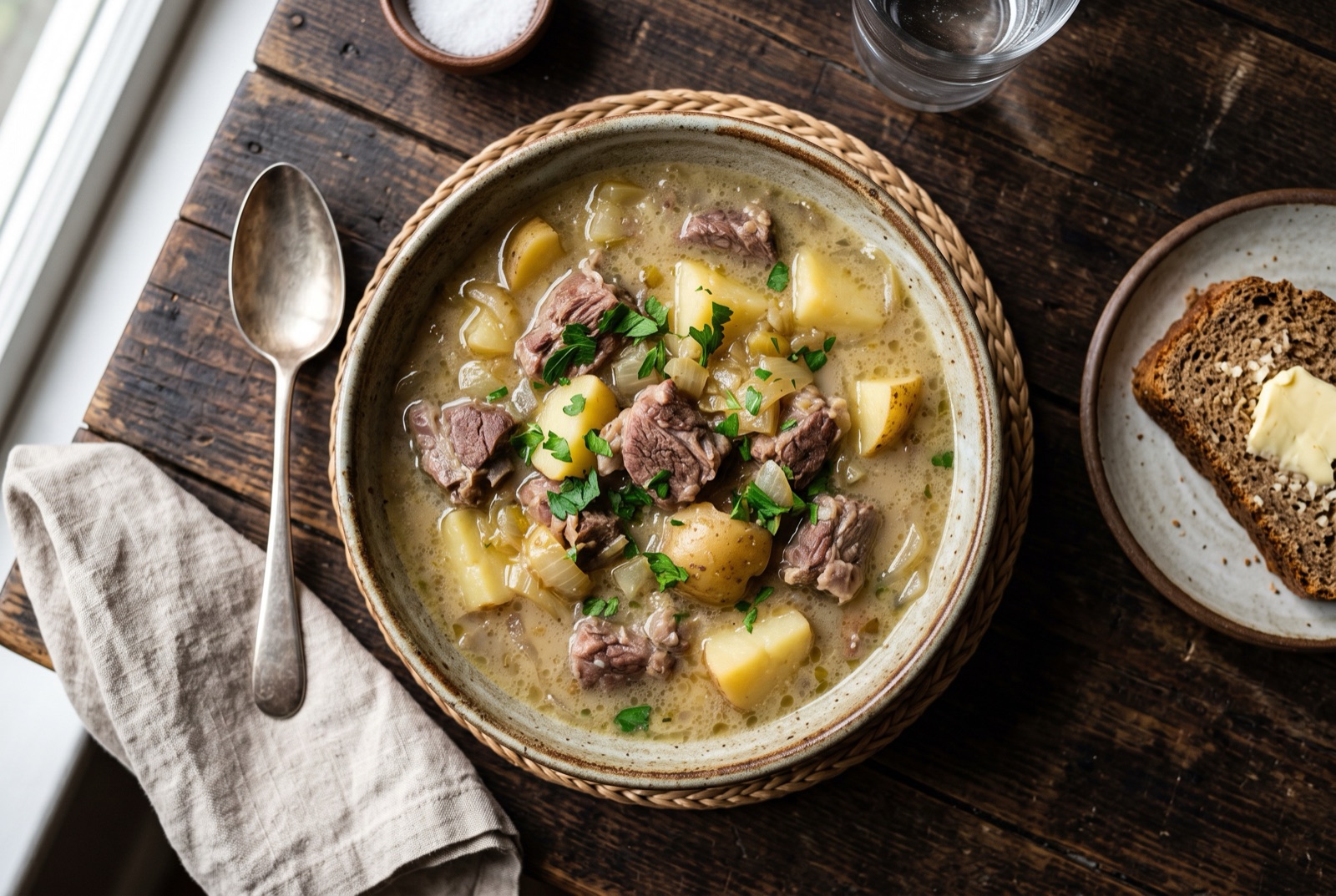
Ireland2 hr 55 min
Irish Stew
Lamb, Potato and Onion Stew
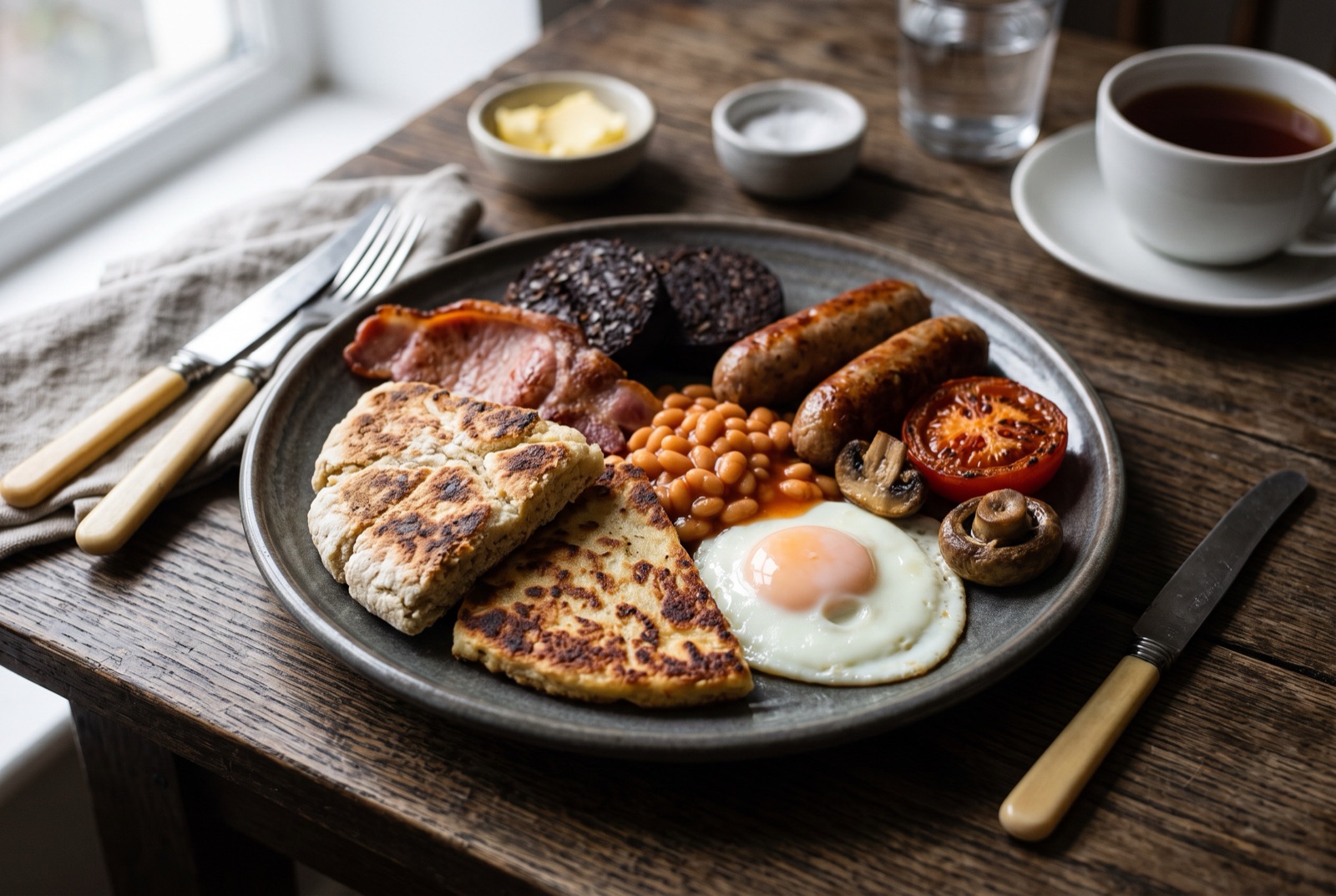
Ireland50 min
Ulster Fry
Northern Irish Fried Breakfast
Keep traveling.
Ireland sits in British Isles, and its kitchen shares borders as well as ingredients with Albania and Austria.
 Albania
 Austria