Colcannon.
Mash with Kale and Scallions
Cál ceannann · say it: kawl KAN-un
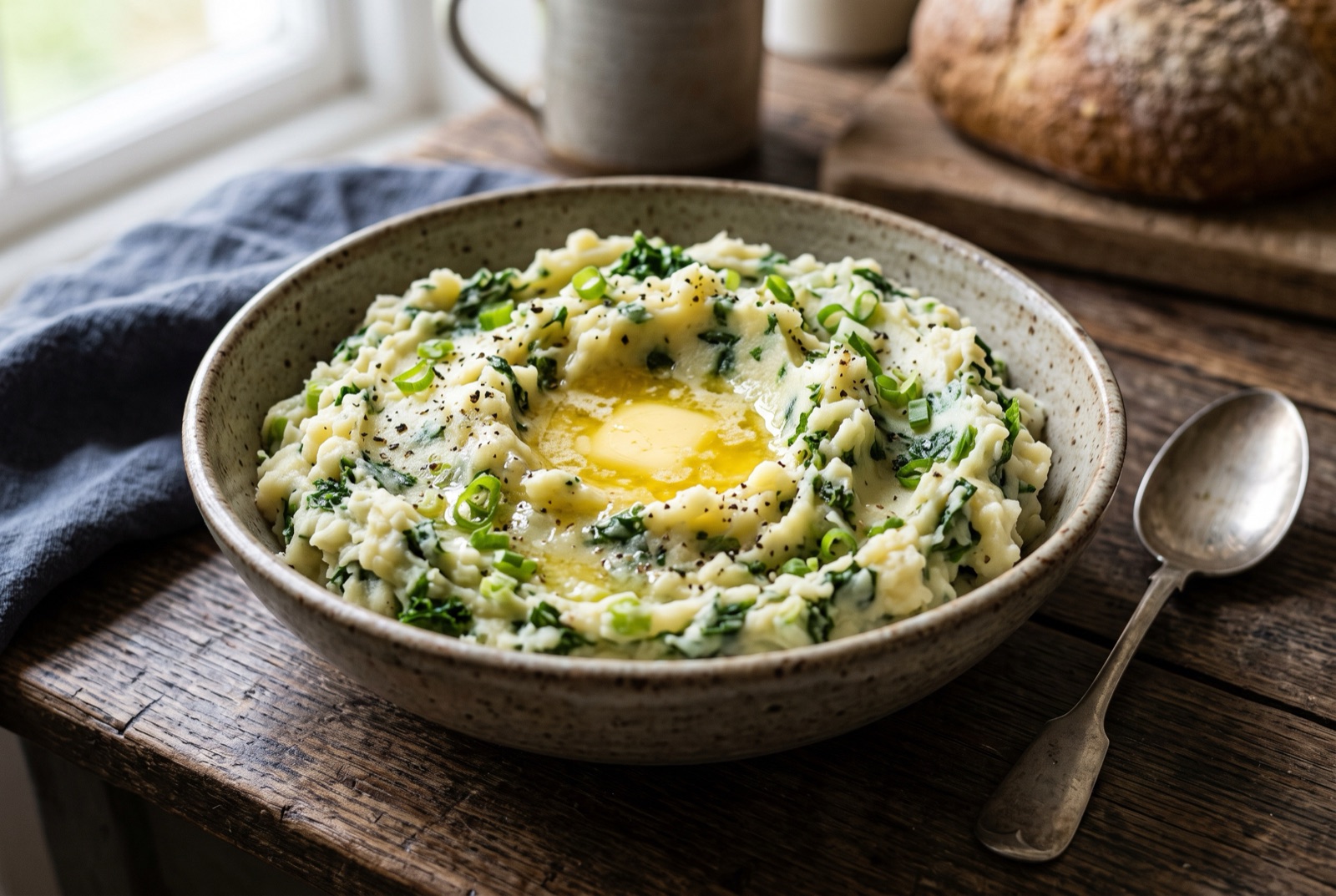
Colcannon is mashed potato with green in it, and the details are what make it worth a recipe. Floury potatoes are mashed with milk that has been warmed with sliced scallions so their flavour goes right through the mash instead of sitting on top, then kale or cabbage — cooked separately and buttered — is folded in at the last moment so it stays green. A hollow is pressed into the middle of the serving bowl and filled with melted butter, and everyone dips each forkful into it as they eat. The taste is sweet, mild and grassy against soft potato, with the scallion supplying a gentle onion bite. It is a side dish that regularly outshines whatever it is served beside.

- Gate
- Ireland
- Prep
- 15 min
- Cook
- 30 min
- Total time
- 45 min
- Serves
- 4
- Status
- Easy
- Nutrition / serving · estimated
- Calories 430 kcal
- Protein 8 g
- Carbs 48 g
- Fat 23 g
- Fiber 6 g
Why this recipe works.
- Steeps the scallions in hot milk instead of scattering them raw, so the onion flavour is in the mash rather than on it.
- Cooks the kale separately and folds it in at the end, which keeps it green instead of grey.
- Uses a ricer or thorough hand mashing and explains why a food processor ruins potato permanently.
- Gets the milk-to-potato ratio right for a mash that is soft enough to hold a well of butter without collapsing.
Ingredients.
9 itemsTo serve
Equipment
- Large pot
- Potato ricer or masher
- Small saucepan
- Colander
Instructions.
Boil the potatoes
Put the potatoes into a pot, cover with cold salted water, bring to a boil and simmer for 18 to 20 minutes until a knife goes through the centre with no resistance at all. Underdone potato leaves lumps that no amount of mashing will fix.
Steep the scallions in hot milk
While the potatoes cook, put the milk and sliced scallions in a small pan and heat until it just steams and the greens soften and turn a deeper colour. Take it off the heat and let it sit — the milk should smell distinctly of onion.
Tip Do not boil the milk; it catches on the base and the mash will taste scorched.
Cook the greens separately
Boil the kale in salted water for 4 minutes, or cabbage for 2 to 3, until it is tender but still vivid green. Drain, run cold water over it briefly, and squeeze it dry in your hands.
Dry and mash the potatoes
Drain the potatoes and return them to the dry hot pot for a minute, shaking occasionally, until the surfaces look chalky and steam stops rising. Mash or rice them until completely smooth.
Bring it together
Beat in the hot scallion milk and 100 g of butter until the mash is glossy and soft enough to fall slowly from the spoon, then fold in the squeezed greens with a light hand so they stay in distinct strands.
Tip Fold, do not beat, once the greens are in — overworking now dulls both the colour and the texture.
Season and make the well
Season with salt, pepper and nutmeg if using, tasting twice; it will take more salt than you expect. Pile it into a warm serving bowl, press a deep hollow in the centre with the back of a spoon, and drop in the remaining butter to melt.
Tips from our kitchen.
- Floury potatoes only — Rooster, Maris Piper, King Edward or russets. Waxy potatoes turn to glue the moment you mash them.
- Steam-dry the drained potatoes in the empty hot pan for a minute before mashing; wet potatoes need more milk and taste diluted.
- Warm the milk. Cold dairy hitting hot potato makes the mash stodgy and cools the whole dish down.
- Never use a blender or food processor. It ruptures the starch cells and you get potato glue with no way back.
- Squeeze the cooked kale dry before folding it in, or its water will loosen the mash into soup.
- Season at the end and taste twice — potato swallows salt, and colcannon is bland exactly one teaspoon before it is delicious.
Substitutions.
- Kale → Savoy cabbage, spring greens or collard greens
- Cabbage is at least as traditional as kale and slightly sweeter. Shred it finely and cook it a minute or two less.
- Scallions → Leeks, finely sliced and softened in butter
- A common variation, milder and sweeter. Use one medium leek in place of the bunch of scallions.
- Milk and butter → Oat milk and a good plant-based block butter
- Makes a genuinely decent vegan colcannon. Increase the salt slightly, since dairy is doing seasoning work as well as enrichment.
Variations.
- Champ
- The Ulster cousin: the same scallion-steeped milk and mash, with no greens at all and an even larger well of butter in the middle.
- Colcannon with bacon
- Fry 150 g of diced bacon until crisp and fold it in with the greens, using the rendered fat instead of some of the butter.
- Fried colcannon cakes
- Shape leftovers into patties, dust with flour and fry in butter until deeply crusted on both sides — the best possible second life for the dish.
Storage & reheating.
Keeps 3 days refrigerated in a covered container. Reheat in a saucepan over low heat with a splash of milk, stirring gently, or covered in a 180°C oven for 20 minutes; the microwave works but dries the top. It freezes for 2 months and is best refreshed with extra butter and milk when reheated, since freezing dulls both. Leftovers make excellent fried cakes, which is arguably a better outcome than reheating it as mash.
Serve with
Boiled bacon, sausages or a piece of roast lamb — anything with juices that will run into the mash.
The story behind Colcannon.
Cál ceannann — white-headed cabbage — is where the name comes from, and the dish is exactly what its ingredients suggest: the two things a cottage garden could be relied on to produce, cooked together with whatever dairy the household had. Kale in particular held its own through an Irish winter, standing in the ground long after everything else had gone, which is why the older versions lean on kale rather than cabbage. Colcannon existed as an everyday food, but it attached itself firmly to Halloween — Samhain — and the harvest, and it survives in an old song that lists its parts, the melted butter included.
Like barmbrack, colcannon carried the Halloween fortune-telling business. Charms were stirred into the bowl before serving: a ring for marriage within the year, a coin for wealth, a thimble or button for staying single. Unmarried women in some places were said to hang the first spoonful in a stocking on the door. These customs were still alive within living memory in parts of the country and are being revived more as a game than a prophecy.
The potato in colcannon carries the weight it carries in all Irish cooking. Ireland's rural poor of the early nineteenth century lived on the crop almost exclusively, on rented plots too small to grow anything else, and when blight destroyed it from 1845 onwards roughly a million people died and a million more left the country. Dishes like colcannon, champ and boxty are the practical inheritance of a cuisine that had to make one ingredient into many different meals — and colcannon, with its careful separation of green and mash and its ceremonial pool of butter, shows what that inventiveness looked like when there was finally butter to spare.
Questions, answered.
What is the difference between colcannon and champ?
Champ is mashed potato beaten with milk and a large quantity of scallions, and nothing else. Colcannon adds cooked greens — kale or cabbage — folded through the mash. Champ is most associated with Ulster, colcannon with the country generally, and both are traditionally served with a well of melted butter in the centre of the bowl.
Why did my colcannon turn gluey?
Either the wrong potatoes or the wrong tool. Waxy potatoes hold too much moisture and not enough starch, and any blade appliance — blender, food processor, stick blender — bursts the starch cells and turns mash into wallpaper paste within seconds. Use floury potatoes, a ricer or a hand masher, and stop working the mash as soon as it is smooth.
Why is colcannon eaten at Halloween?
It is a harvest-season dish made from crops that come in around then, and it became attached to Samhain and Halloween along with barmbrack. Charms were traditionally hidden in the bowl — a ring meaning marriage within the year, a coin meaning wealth — and served up as a fortune-telling game. The custom faded through the twentieth century but is being revived, mostly for children.
Can I make colcannon ahead for a big dinner?
Yes. Make it fully, spread it in an ovenproof dish, dot the top with butter and refrigerate for up to two days. Reheat covered at 180°C for 25 to 30 minutes until steaming, then stir before serving. Hold back a little of the greens and fold them in after reheating if you want the colour to look freshly made.
Should the greens be cooked with the potatoes?
Some old recipes boil them in the same pot, and it is not wrong, but the result is duller. Cooking the kale or cabbage separately for a few minutes keeps it bright green and slightly firm, and lets you squeeze out the water that would otherwise loosen the mash. It is one extra pan for a noticeably better dish.
You might also like.
All recipes →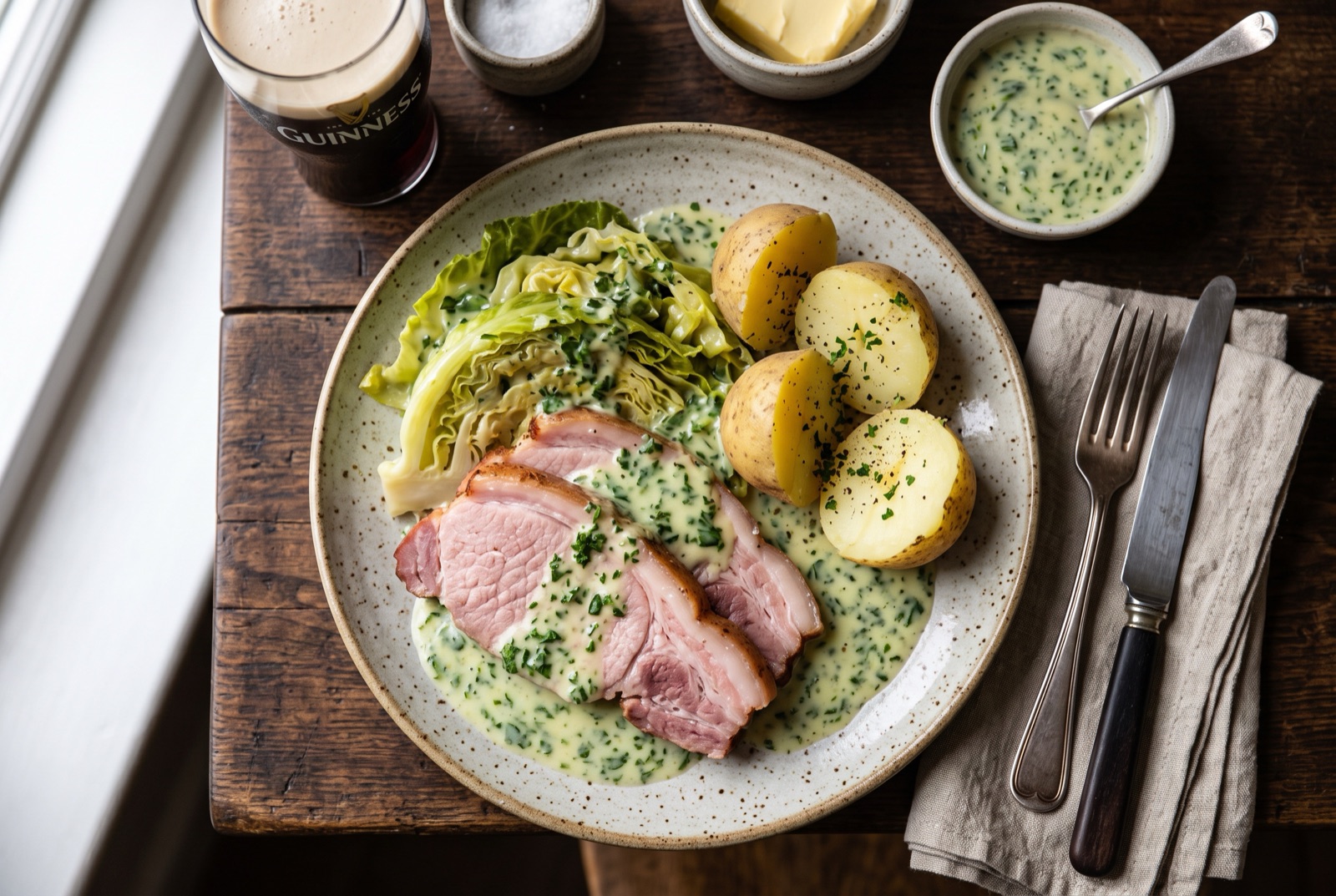
Keep exploring Ireland.
Ireland has 9 more dishes in the atlas — Bacon and Cabbage and Barmbrack, and 7 more.
Recipe by The DishRoute Kitchen · published August 19, 2026 · updated August 19, 2026