Ulster Fry.
Northern Irish Fried Breakfast
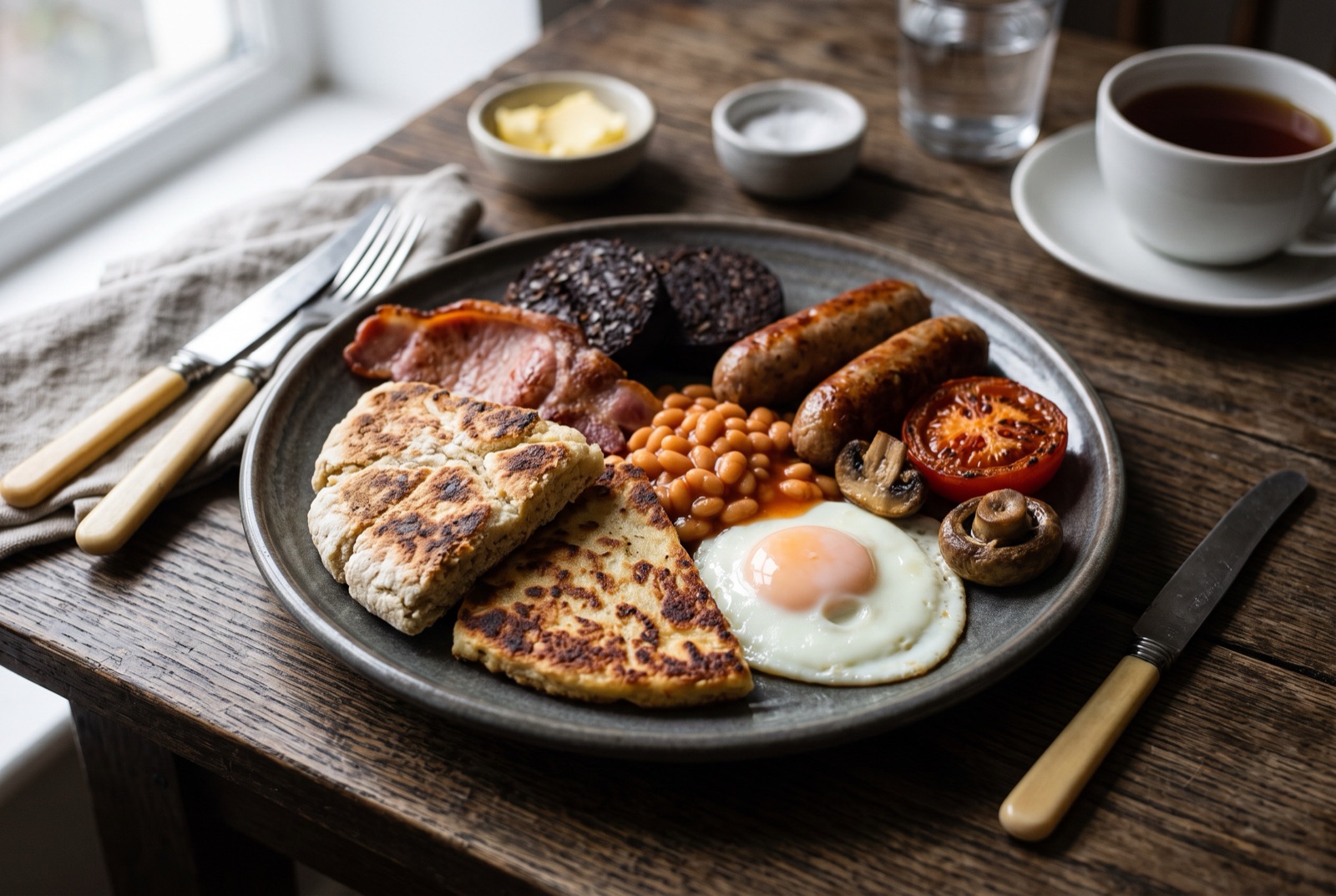
An Ulster fry is a plate of bacon, sausage, egg, black and white pudding, tomato and mushrooms — and, crucially, two kinds of griddle bread fried in the fat that comes off the bacon. The soda farl goes in first and soaks up the rendered fat until its cut faces turn deep brown and crunchy while the inside stays soft; the potato bread follows and crisps at the edges. That bread is the whole difference between this and any other fried breakfast in these islands. Everything is cooked in one pan in a deliberate order, so each element is hot and correctly done at the same moment. It is heavy, salty and immensely satisfying, and it is a weekend and hangover institution across Northern Ireland.

- Gate
- IrelandUlster
- Prep
- 15 min
- Cook
- 35 min
- Total time
- 50 min
- Serves
- 4
- Status
- Medium
- Nutrition / serving · estimated
- Calories 1050 kcal
- Protein 48 g
- Carbs 62 g
- Fat 66 g
- Fiber 5 g
- Sodium 2600 mg
Why this recipe works.
- Sets out a cooking order and timings, which is the actual difficulty of a fry — not any individual item.
- Fries the soda farl and potato bread in the rendered bacon fat, the one step that makes it Ulster rather than generic.
- Uses the oven as a holding station so nothing sits cold while something else finishes.
- Explains what black and white pudding are and how to buy them, rather than assuming you grew up with them.
Ingredients.
12 itemsEquipment
- Large heavy frying pan or griddle
- Wire rack and baking tray
- Fish slice or spatula
- Tongs
Instructions.
Set up the holding oven
Heat the oven to 100°C and set a wire rack over a baking tray inside it. Everything you cook goes onto that rack, where air circulates underneath and keeps fried food crisp instead of sweating on a warm plate.
Sausages first
Put the sausages in the pan with the oil over medium-low heat and cook for 12 to 14 minutes, turning every few minutes, until browned all round and firm to a squeeze. Move them to the rack in the oven.
Tip Low and slow. Hot sausages split their skins and stay pink inside.
Bacon, and collect the fat
Lay the rashers into the same pan and cook for 3 to 4 minutes a side, until the fat rim turns golden and translucent and the meat has taken colour at the edges. Keep every drop of rendered fat in the pan — the bread depends on it.
Puddings, tomatoes and mushrooms
Fry the black and white pudding slices for 2 to 3 minutes a side, until a dark crust forms and the centres are soft. Add the tomatoes cut-side down for 5 minutes and the mushrooms until browned and squeaky-dry, seasoning both, then move everything to the oven.
Fry the breads in the bacon fat
Add the butter to the pan and press the split soda farls cut-side down into the fat. Fry for 2 to 3 minutes a side until deeply browned and crisp, then do the potato bread the same way, 2 minutes a side until the edges crisp and blister.
Tip If the pan looks dry at this point, add a little more butter — the bread should be frying, not toasting.
Eggs last, then plate
Wipe the pan lightly, add a spoonful of fat and fry the eggs over gentle heat for 3 minutes, spooning hot fat over the whites until they set but the yolks still wobble. Bring everything out of the oven and plate at once, egg on top of the potato bread.
Tips from our kitchen.
- Start the bacon in a cold pan. The fat renders out gradually instead of seizing, and you end up with the fat you need for the bread.
- Cook in batches and hold everything in a 100°C oven on a wire rack over a tray, so nothing steams itself soft.
- Split the soda farl through its thickness and fry the cut sides — that is the surface that goes crisp and absorbs the most fat.
- Score black pudding slices lightly before frying so they do not curl into domes in the pan.
- Fry the eggs last in a clean spoonful of fat over gentle heat, basting the whites, so the yolk stays liquid for the bread.
- Halve and salt the tomatoes and give them a full five minutes cut-side down; undercooked tomato is watery and adds nothing.
Substitutions.
- Soda farl → A thick slice of soda bread, split, or a plain English muffin at a push
- Make your own farls by rolling soda bread dough to 2 cm, cutting into quarters and cooking on a dry griddle for 8 minutes a side.
- Potato bread (fadge) → Boxty, or a flat potato cake made from 300 g mashed potato, 60 g flour, salt and a knob of butter
- Roll the mixture 1 cm thick, cut into triangles and cook on a dry griddle for 4 minutes a side before frying.
- Black and white pudding → Extra sausage, or a slice of vegetable roll
- Both puddings are widely available in Irish and British shops and freeze well, so buy once and keep a supply.
Variations.
- Ulster fry bap
- Everything folded into a soft floury bap: bacon, sausage, egg and potato bread pressed together in one hand-held version, standard takeaway fare.
- Vegetarian fry
- Skip the meat and cook the farls and potato bread in butter with a spoon of oil, adding halloumi, portobello mushrooms and a well-fried tomato.
- Oven-tray fry
- Cook sausages, bacon, pudding, tomatoes and mushrooms on a single tray at 200°C for 25 minutes, then fry only the breads and eggs. Far less work for a crowd.
Storage & reheating.
A fry is made to be eaten immediately and does not keep in any satisfying way — the eggs and fried breads are unrecoverable once cold. What does keep is the raw stock: bacon, sausage, black and white pudding all freeze for 2 to 3 months, and soda farls and potato bread freeze well and can go straight into the pan from frozen. If you do have cooked leftovers, dice the meats and pudding into a hash with the potato bread the next day rather than reheating the plate.
Serve with
Strong tea with milk, and brown sauce or ketchup depending on which side of that argument you are on.
The story behind Ulster Fry.
The fried breakfast is a shared inheritance across Britain and Ireland, and every region has argued its own version into existence. Ulster's claim rests on the griddle. Northern Irish baking traditionally happened on a hot flat plate rather than in an oven — soda bread rolled flat and cut into four triangular farls, potato bread made from mashed potato and flour and cooked the same way — so both breads existed in the house daily and both were ideal for reheating in a pan. Frying them alongside the meat was not an invention so much as an obvious use of what was on the bread board.
The pudding on the plate deserves a word. Black pudding is a blood sausage, usually with oatmeal, and white pudding is its bloodless relative made with pork, fat and oats; both are older than the fry itself and belong to the same whole-pig thrift that produced Ireland's bacon and ham traditions. Vegetable roll — spiced minced beef with vegetables, sliced and fried — turns up on plenty of Northern Irish plates as well, and is one of the region's more local additions.
The fry became a fixed cultural object in the twentieth century: café food, hotel food, and above all Saturday food. Beans and hash browns are late arrivals and provoke strong opinions; the presence or absence of tomato is negotiable; the soda farl is not. What the dish is not, historically, is an everyday breakfast — a plate this substantial was for people doing physical work, or for weekends. Cooking it well is mostly a matter of sequencing and of resisting the urge to crowd the pan.
Questions, answered.
What makes an Ulster fry different from a full Irish or full English breakfast?
The bread. An Ulster fry includes soda farl and potato bread, both fried in the pan alongside the meat, which no English version has. A full Irish typically includes both black and white pudding but usually toast rather than griddle bread, and a full English leans on baked beans and fried bread. The rest of the plate overlaps heavily between all three.
What are black pudding and white pudding?
Black pudding is a sausage made with pork blood, fat and oatmeal, which sets firm and slices; it tastes rich and mineral rather than bloody once cooked. White pudding is essentially the same thing without blood — pork, fat, oats and seasoning — and is milder and more oaty. Both are sold in rolls to be sliced and fried, and both are staples on Irish breakfast plates.
In what order should I cook everything?
Sausages first, since they take longest, then bacon in the same pan so its fat renders, then the puddings, then the tomatoes and mushrooms, then the soda farl and potato bread in the accumulated fat, and finally the eggs. Hold each finished item in a 100°C oven on a wire rack. Sequencing is the only real skill in the dish.
Can I make potato bread and soda farls at home?
Yes, and both are quick. Potato bread is mashed potato mixed with about a fifth of its weight in flour, salt and butter, rolled 1 cm thick, cut into triangles and cooked on a dry griddle for around 4 minutes a side. Soda farls are soda bread dough rolled flat, quartered and griddled for 8 to 10 minutes a side. Both freeze well.
How do I keep everything hot without overcooking it?
Use the oven at 100°C with a wire rack set over a baking tray, and move each item onto the rack as it finishes. The rack keeps air circulating so bacon and fried bread stay crisp instead of sweating on a plate. Cook the eggs last and plate immediately, since they are the one thing that cannot wait.
You might also like.
All recipes →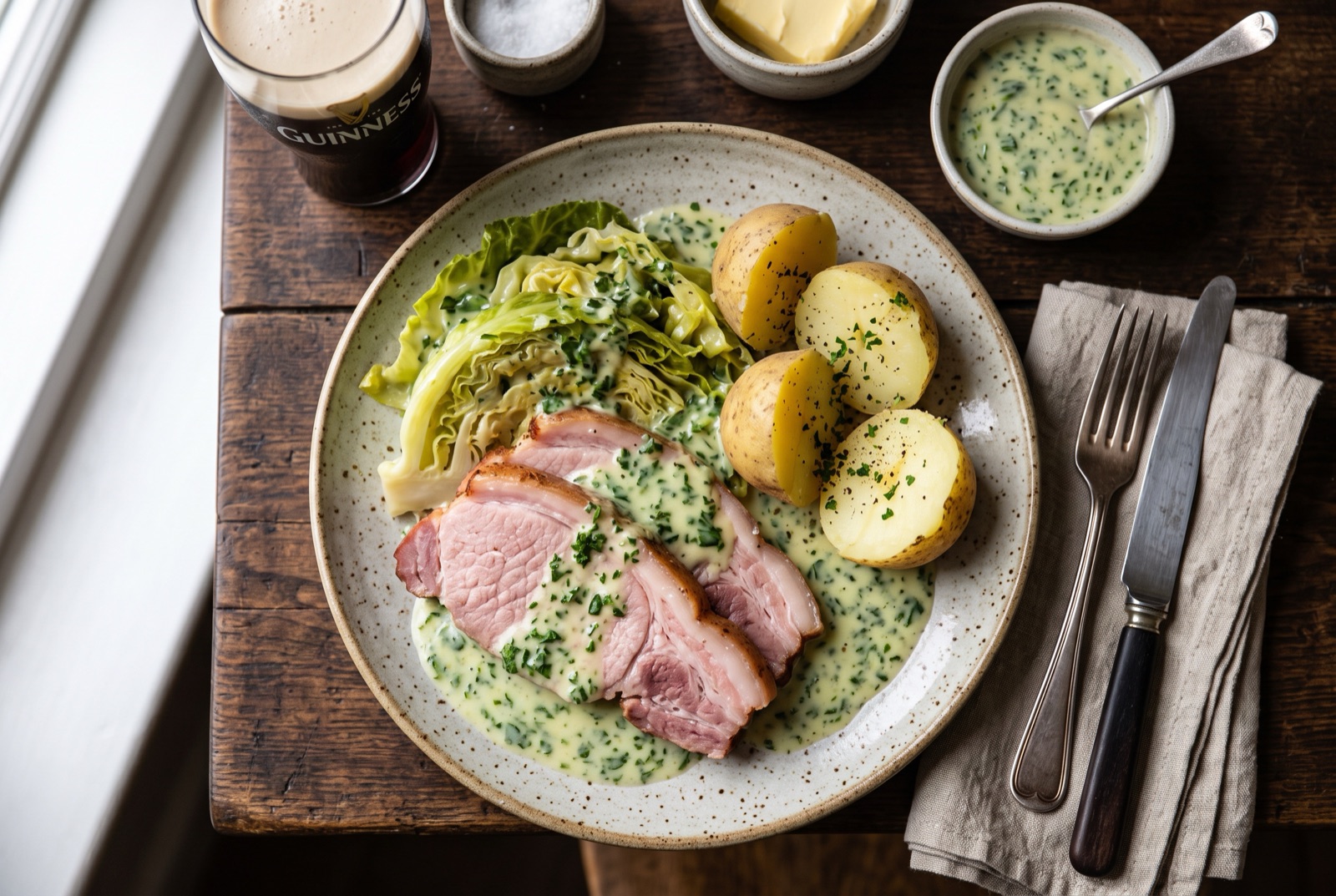
Keep exploring Ireland.
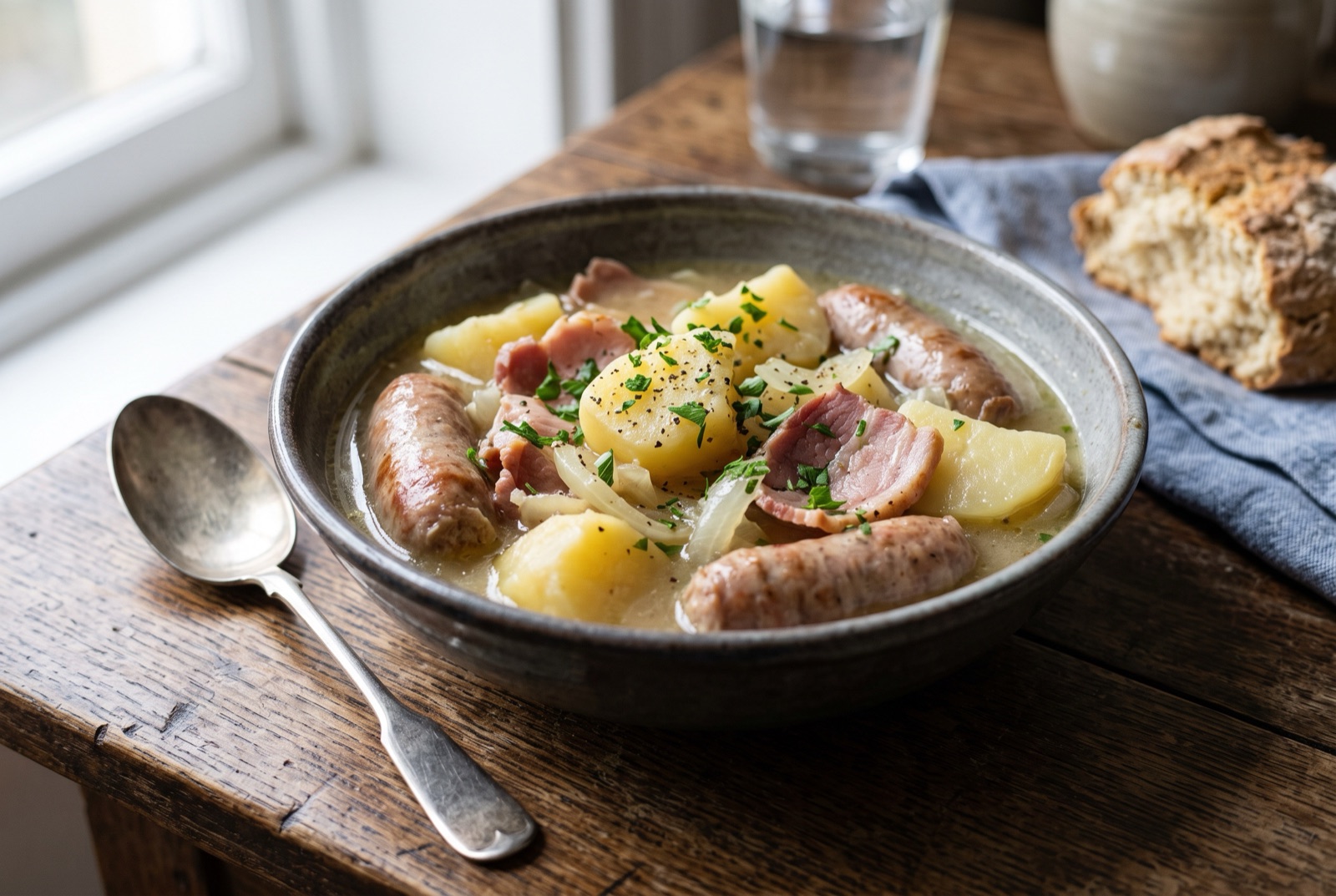
Ireland has 9 more dishes in the atlas — Bacon and Cabbage and Barmbrack, and 7 more.
Recipe by The DishRoute Kitchen · published August 19, 2026 · updated August 19, 2026