Kdam Chaa Mrech Kchei.
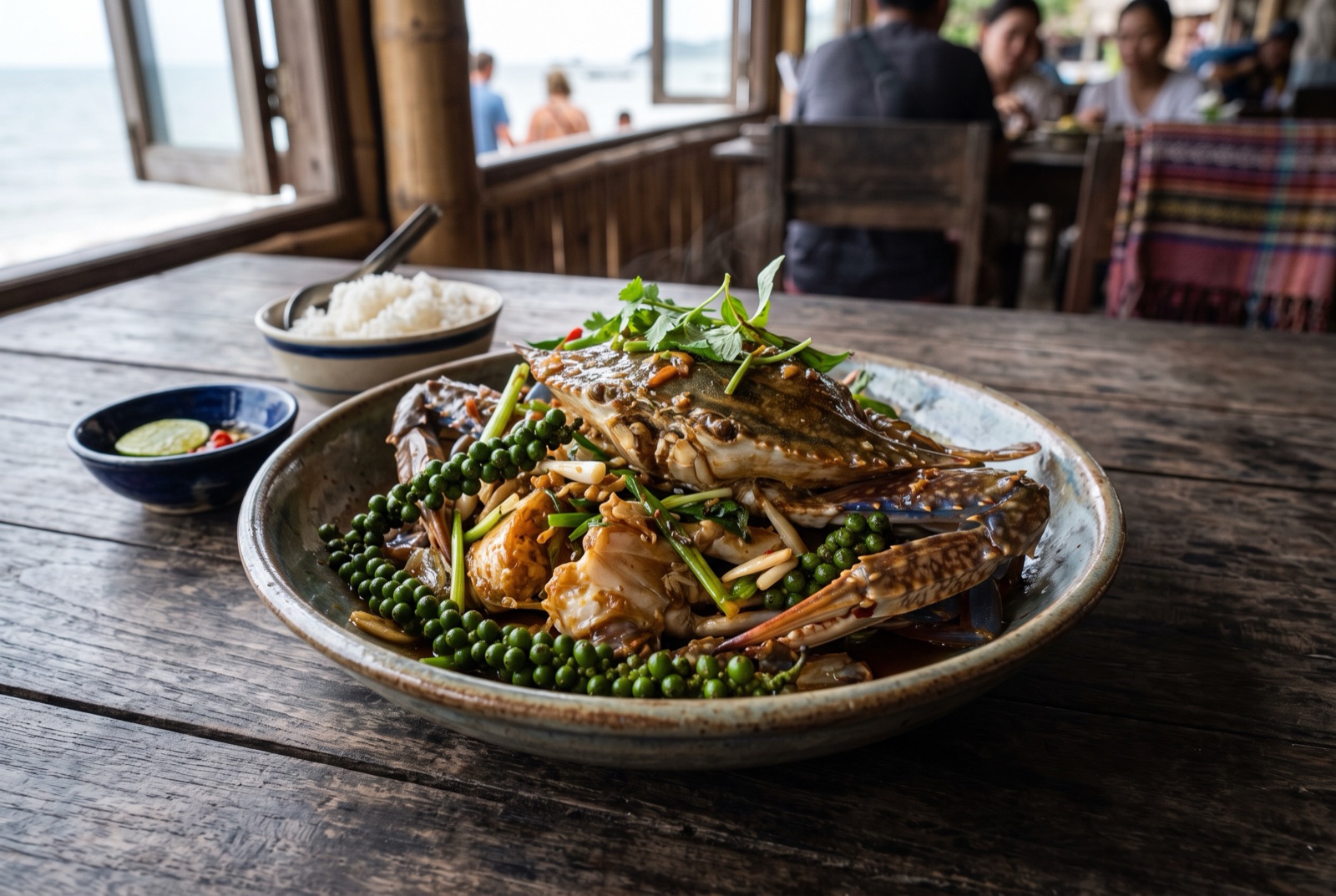
Kampot Green Pepper Crab
ក្តាមឆាម្រេចខ្ចី · say it: kdahm chah m-RECH k-CHEY
Fried crab with green pepper is what people travel to the Cambodian coast for. Whole blue swimmer crabs are cracked, dropped into a screaming wok with garlic and a fistful of fresh green peppercorns still on their stems, and tossed with fish sauce, oyster sauce and a little sugar until the shells turn orange and the sauce reduces to a glaze. The peppercorns are the shock: soft, juicy, bursting between your teeth with a heat that is bright and citrusy rather than dry and dusty like ground pepper. You eat them by the handful, stripped off the stem, alongside the crab meat. It is messy, loud food that needs a pile of napkins, a stack of bread and no cutlery worth the name.

- Gate
- CambodiaKampot and Kep
- Prep
- 25 min
- Cook
- 15 min
- Total time
- 40 min
- Serves
- 4
- Status
- Medium
- Nutrition / serving · estimated
- Calories 340 kcal
- Protein 34 g
- Carbs 12 g
- Fat 16 g
- Fiber 2 g
- Sodium 1600 mg
Why this recipe works.
- Treats green peppercorns as an ingredient in their own right, in quantities that would look alarming in any other recipe.
- Two-stage cooking so the crab shells sear and colour before the sauce goes in and reduces to a glaze.
- Clear guidance on buying, killing and cracking crab rather than pretending it is a boneless stir-fry.
- The sauce is deliberately short and sticky, made to be mopped with bread and not poured over rice.
Ingredients.
13 itemsFor the crab
For the sauce
To finish
Equipment
- Large wok or wide heavy pot with a lid
- Heavy knife or crab cracker
- Kitchen scissors
Instructions.
Prepare the crab
Lift off the top shells, pull away the feathery gills and rinse the bodies. Cut each crab into halves or quarters with a heavy knife and crack the claws and thick leg joints so the sauce can reach the meat inside.
Tip Chill live crabs in the freezer for 20 minutes before handling — they go dormant, which is both safer and kinder.
Mix the sauce
Stir the fish sauce, oyster sauce, soy sauce, palm sugar and stock together in a small bowl until the sugar has dissolved. Having it premixed matters, because once the crab hits the wok there is no time to measure.
Bloom the pepper and aromatics
Heat the oil in a large wok over high heat until it shimmers. Add the garlic, shallots and chiles and stir for 30 seconds, then add the whole peppercorn stems and toss for another 30 seconds, until the kitchen smells sharply green and citrusy.
Sear the crab
Tip in the crab pieces and stir-fry hard for 3 minutes, pressing the cut faces against the hot metal, until the shells turn from grey-blue to bright orange and the exposed meat is opaque at the edges.
Steam and glaze
Pour in the sauce mixture, cover the wok and cook for 4–5 minutes, shaking the pan every minute. Uncover and keep tossing over high heat for another 2 minutes, until the liquid has reduced to a sticky glaze that clings to the shells rather than pooling underneath.
Tip If the sauce reduces before the crab is cooked, splash in 2 tablespoons of water and cover again.
Finish and serve
Throw in the scallions, toss twice and tip everything into a wide dish, scraping out every stem and drop of sauce. Serve immediately with lime wedges, torn baguette and a bowl for the shells.
Tips from our kitchen.
- Buy live crab if you can, or good frozen whole crab — pre-cooked dressed crab falls apart in the wok and turns woolly.
- Crack the claws and knuckles with the back of a heavy knife before frying so the sauce gets inside the shell where the meat is.
- Fry the peppercorns in the garlic oil for thirty seconds before anything else goes in — their aroma blooms in hot fat and fills the kitchen.
- Get the wok as hot as your hob allows and cook in one batch only if the crab fits in a single layer; otherwise use a large pot and work in two.
- Keep the sauce short. This is a glaze, not a gravy — it should cling to the shell rather than pool in the dish.
- If your peppercorns are brined, rinse them twice and taste one before deciding how much fish sauce the dish needs.
Substitutions.
- Fresh green Kampot peppercorns on the stem → Frozen green peppercorns, or brined green peppercorns rinsed twice
- Frozen are closest and Asian grocers usually stock them. Brined ones are softer and saltier — rinse them well and cut back on the fish sauce. Ground black pepper is not a substitute for this dish.
- Whole blue swimmer crab → Dungeness, brown crab, or 600 g large shell-on prawns
- Prawns cook in 3 minutes rather than 8, so add them after the sauce goes into the pan.
- Oyster sauce → An extra tablespoon of fish sauce plus 1 tsp sugar
- You lose a little body in the glaze; a teaspoon of cornflour slaked in water restores it.
Variations.
- Squid with green pepper
- The same wok treatment with scored squid rings, cooked in under two minutes. Common along the same coast and much quicker on a weeknight.
- Dry-fried version
- Skip the stock entirely and fry the crab with just garlic, pepper and fish sauce for a drier, more intensely peppery result.
- Chicken with green peppercorns
- An inland adaptation using chicken thigh, cooked the same way. It needs a few minutes longer and takes on more of the pepper heat.
Storage & reheating.
Eat this the day it is cooked. Crab reheated a second time goes stringy and the delicate sauce turns cloudy and fishy. If you have leftovers, pick the meat from the shells while it is still warm, refrigerate it and use it cold within a day in a salad or folded through fried rice. Do not freeze cooked crab in its shell — the texture collapses on thawing. Green peppercorns freeze well on the stem and can be used straight from frozen.
Serve with
A crusty baguette for the sauce, plain rice for anyone who wants it, and cold beer.
The story behind Kdam Chaa Mrech Kchei.
Kep and Kampot sit side by side on Cambodia's southern coast, and between them they supply both halves of this dish. The Kep crab market is a row of shacks built over the water where women wade out to wicker baskets of live crab kept submerged offshore; the pepper comes from trellised vines a short drive inland in Kampot province. Pepper has been grown there for centuries and became a French colonial export prized in Paris kitchens by the early twentieth century. The plantations were destroyed during the Khmer Rouge years, when farmers were forced into rice production and the vines were left to die, and the crop was rebuilt from a few surviving farms during the 1990s. Kampot pepper now holds a protected geographical indication, the first Cambodian product to do so.
Green peppercorns are simply unripe berries picked on the stem and used immediately, before they are dried into black pepper or ripened into red. Fresh, they are wet, mildly hot and intensely aromatic, and they behave like a vegetable rather than a spice — Cambodians and Thais both cook with them by the handful. This is why the dish cannot be honestly recreated with black pepper: swapping in ground pepper produces a peppery crab, but not this dish, where you are eating the pepper as much as the shellfish.
At the Kep shacks the crab goes from basket to wok in minutes, still fighting, and the whole thing arrives at the table in a metal dish with a baguette and a saucer of lime and pepper. Nobody attempts elegance. You crack shells with your hands, suck the sauce out of the legs, mop the wok juices with bread, and strip the peppercorn stems bare. Frozen green peppercorns from an Asian grocer, or brined ones rinsed well, get a home version surprisingly close.
Questions, answered.
What are green peppercorns and where do I buy them?
They are ordinary pepper berries picked unripe, before they are dried into black pepper. Fresh, they are soft, juicy and aromatic with a bright heat. Asian grocers sell them frozen on the stem, which is the closest option to fresh; jarred brined peppercorns are the fallback but need rinsing because they carry a lot of salt and a vinegary edge.
Can I use black pepper instead?
You can make a good peppery crab that way, but it is a different dish. Green peppercorns are eaten as a component, several at a time, and dried black pepper is far too concentrated to eat in that quantity. If black pepper is your only option, use a tablespoon of coarsely crushed peppercorns in the sauce and accept that the result is inspired by the original rather than the same thing.
How do I prepare a live crab humanely?
Chill the crab in the freezer for 20 minutes first, which makes it dormant, then dispatch it quickly by inserting a sturdy knife point into the two nerve centres — one under the tail flap, one behind the eyes. Remove the top shell and the feathery gills, rinse, and cut the body in half or quarters. Any fishmonger will kill and clean a crab for you if you ask and cook it the same day.
Is this dish very spicy?
It is pungent rather than fiery. Green peppercorn heat arrives suddenly, is quite sharp and fades within seconds, so it does not build the way chile does. Most Cambodian versions also include a couple of fresh chiles for a second, slower kind of heat, which you can leave out.
What do I serve with it to soak up the sauce?
A baguette, which is what the Kep crab shacks put on the table. Cambodia inherited French bread and it suits this glaze far better than rice, because you tear off pieces and wipe the dish. Steamed rice is a fine second choice if you want a fuller meal.
You might also like.
All recipes →
Keep exploring Cambodia.
Cambodia has 9 more dishes in the atlas — Amok Trey and Bai Sach Chrouk, and 7 more.
Recipe by The DishRoute Kitchen · published August 20, 2026 · updated August 20, 2026