Lok Lak.
Khmer Beef with Kampot Pepper-Lime Dip
ឡុកឡាក់ · say it: lok-LAK
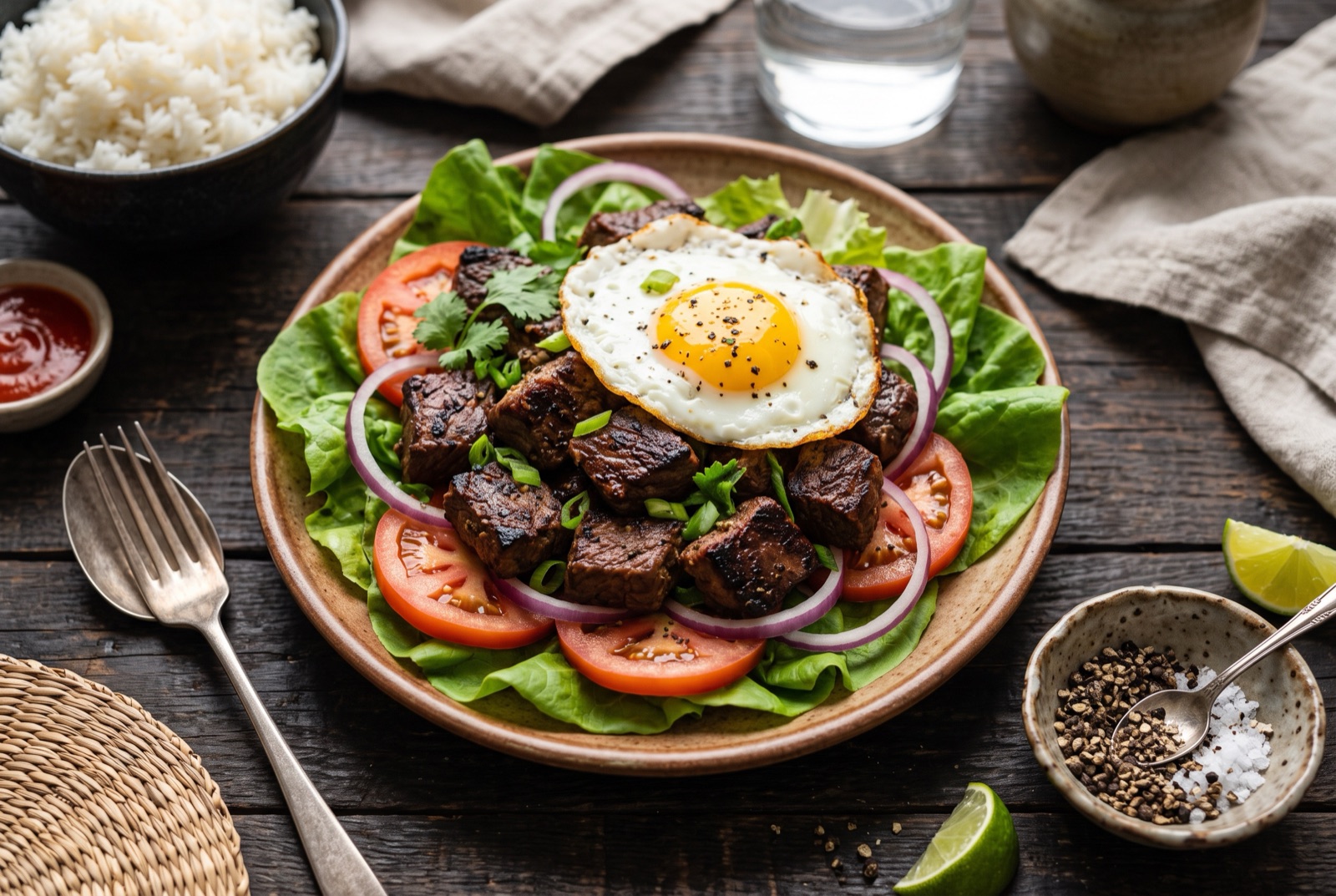
Lok lak is Cambodia's answer to a steak dinner: beef cut into rough cubes, marinated briefly in oyster sauce, soy and palm sugar, then thrown into a scorching pan and tossed until the outsides are dark and the centres still pink. It lands on a bed of lettuce, cucumber and tomato with a fried egg on top and a saucer of tuk meric alongside — coarsely crushed Kampot black pepper mashed into lime juice with a pinch of salt, sharp and hot in a way chile is not. The point of the dish is contrast: hot charred beef, cold raw vegetables, molten yolk, and a dip that resets your mouth after every bite. It takes fifteen minutes of actual cooking and is the easiest way into Khmer flavours.

- Gate
- CambodiaPhnom Penh
- Prep
- 20 min
- Cook
- 15 min
- Total time
- 1 hr 5 min incl. 30 min rest
- Serves
- 4
- Status
- Easy
- Nutrition / serving · estimated
- Calories 480 kcal
- Protein 41 g
- Carbs 13 g
- Fat 30 g
- Fiber 3 g
- Sugar 8 g
Why this recipe works.
- Tuk meric made properly — pepper crushed to order, so it tastes floral and alive rather than dusty.
- A short marinade and a genuinely hot pan, so the beef browns instead of stewing in its own juices.
- Cooks in two batches for a reason, explained rather than assumed — crowding the pan is what ruins this dish at home.
- Fifteen minutes of cooking from a standard supermarket shop, with no specialist equipment.
Ingredients.
17 itemsFor the beef
For the tuk meric
To serve
Equipment
- Heavy frying pan or wok
- Mortar and pestle for the pepper
- Small frying pan for the eggs
Instructions.
Marinate the beef
Toss the beef cubes with the oyster sauce, soy, fish sauce, sugar, garlic and crushed pepper until every cube is glossy. Cover and leave at room temperature for 30 minutes, or refrigerate up to 12 hours.
Make the tuk meric
Crush the whole peppercorns in a mortar to a coarse, uneven grind — some pieces should still be visibly cracked halves. Stir in the lime juice, salt and chile if using, and divide between small dipping saucers.
Tip Taste it. It should make you blink: aggressively sour, salty and peppery, because it is only ever eaten a drop at a time.
Build the vegetable base
Arrange the lettuce, tomato, cucumber and red onion on a large platter or on four plates. Spoon a teaspoon of the tuk meric over the vegetables so the base is seasoned before the beef lands on it.
Sear the beef
Heat the oil in a heavy pan over the highest heat until it shimmers and smokes faintly. Add half the beef in a single layer and leave it undisturbed for 45 seconds, until a dark crust forms, then toss and cook 1 minute more. Tip onto a warm plate and repeat with the rest.
Tip If the pan hisses and then goes quiet and wet, it was too cold or too full — pull the beef out, reheat the pan and go again.
Fry the eggs
Wipe the pan, add a little more oil and fry the eggs over medium-high heat until the whites are set with lacy, browned edges and the yolks are still liquid. Season with a pinch of salt and pepper.
Plate and serve
Pile the beef and any pan juices over the dressed vegetables, slide a fried egg on top of each portion and take it to the table immediately with the saucers of tuk meric and a bowl of rice. Break the yolk over the beef as you eat.
Tips from our kitchen.
- Crush the peppercorns coarsely in a mortar just before serving. Pre-ground pepper has already lost the volatile aromatics that make tuk meric interesting.
- Get the pan properly hot — a drop of water should skitter and vanish instantly. A lukewarm pan releases the meat juices and you end up boiling the beef grey.
- Sear in two batches even if it feels fussy. Crowding drops the pan temperature and no amount of extra time will bring back the crust.
- Cut the beef into 2.5 cm cubes, not slices. Cubes take a hard sear on two or three faces and still keep a pink centre.
- Dress the lettuce and tomato base with a spoonful of the lime dressing just before plating so the leaves stay crisp under the hot beef.
- Take the beef off the heat when it looks slightly underdone — it carries on cooking on the hot plate under the egg.
Substitutions.
- Kampot black pepper → Any good whole black peppercorn — Tellicherry, Sarawak or Malabar
- Freshness matters more than origin here. Whole peppercorns crushed at the last minute beat expensive pre-ground pepper every time.
- Beef sirloin or tenderloin → Rump, flat iron or chuck eye, sliced across the grain
- Cheaper cuts work if you cut smaller and cook faster. Add 15 minutes to the marinade to help tenderise them.
- Oyster sauce → Vegetarian mushroom stir-fry sauce, or an extra tablespoon of soy plus 1 tsp sugar
- Oyster sauce contributes body and a mild sweetness as much as flavour, so keep the sugar if you swap it out.
Variations.
- Lok lak with gravy
- The restaurant version: after searing, deglaze the pan with stock, a spoonful of tomato ketchup and a little cornflour slurry for a glossy brown sauce poured over everything.
- Chicken lok lak
- Thigh meat cut into cubes and cooked through rather than pink. Marinate 30 minutes and expect a slightly sweeter result.
- Lok lak with chips
- A Phnom Penh habit inherited from the French — the beef and egg served over a pile of thick-cut fried potatoes instead of rice.
Storage & reheating.
Lok lak is a cook-and-eat dish and does not reheat well — reheated beef goes from pink to grey and rubbery in under a minute. If you have leftovers, slice the beef thin and use it cold in a salad rather than warming it again. The marinade can be mixed and the beef left in it, covered in the fridge, for up to 12 hours before cooking. Tuk meric must be made fresh: lime juice and crushed pepper turn dull and bitter within a couple of hours.
Serve with
Steamed jasmine rice, and a second saucer of tuk meric because the first one always runs out.
The story behind Lok Lak.
The name comes from the Vietnamese bò lúc lắc, "shaking beef" — a reference to shaking the pan so the cubes turn and sear on all sides. Both countries were part of French Indochina, both took the idea of cubed beef seared in a pan and ran with it, and neither has a clean claim to inventing it. What separates the Khmer version is the dip. Vietnamese shaking beef leans on a soy-and-vinegar sauce; lok lak stands or falls on tuk meric, and tuk meric stands or falls on the pepper.
That pepper is the reason this dish is worth taking seriously. Kampot province in southern Cambodia has grown pepper on trellised vines since at least the colonial era, and by the 1930s it was the pepper French chefs asked for by name. Decades of war and the Khmer Rouge period destroyed the plantations almost entirely; the vines were replanted from a handful of surviving farms in the 1990s and Kampot pepper now carries a protected geographical indication. It is floral and warm rather than merely hot, and in a dip made of nothing but pepper, lime and salt, there is nowhere for a dull peppercorn to hide.
In Phnom Penh every restaurant makes lok lak slightly differently. Some serve it over rice, some with a pile of chips in a nod to the French, some drown it in a thick brown gravy, some keep the pan sauce almost dry. The fried egg is near-universal and the raw vegetable base is non-negotiable. Cambodians break the yolk over the beef and let it run into the rice, then dip each piece in tuk meric — which means the seasoning happens at the table, mouthful by mouthful, rather than in the pan.
Questions, answered.
What exactly is tuk meric?
Tuk meric is the Khmer pepper-lime dipping sauce: coarsely crushed black pepper mashed with fresh lime juice and salt, sometimes with a little sugar or fresh chile. It is served in a small saucer for each diner and used to season the beef bite by bite. Nothing is cooked and there are only three ingredients, so the quality of the pepper and the freshness of the lime decide how good it tastes.
Why is my beef tough and grey instead of browned?
The pan was not hot enough or was too crowded. Beef needs a surface hot enough to evaporate moisture instantly; if the juices pool, the meat simmers rather than sears and the proteins tighten into rubber. Use a heavy pan, heat it until it smokes faintly, cook in two batches, and resist stirring for the first 45 seconds so a crust can form.
Can I make lok lak without a fried egg on top?
Yes, though you lose the runny yolk that acts as a sauce for the rice. If you skip it, add a little more of the pan juices over the beef, or serve the gravy variation instead so there is still something to moisten the rice.
Which cut of beef is best?
Sirloin or tenderloin gives the classic result — tender enough to serve pink in cubes. Rump, flat iron and chuck eye are good cheaper options, but cut them a little smaller and slightly across the grain. Avoid stewing cuts like shin or brisket, which need hours of moist cooking and will be tough however hot the pan is.
How spicy is lok lak?
It is peppery rather than chile-hot. Black pepper heat is sharper and shorter-lived than chile heat, and it fades quickly, which is why the dip works as a per-bite seasoning. Add sliced fresh chile to the tuk meric if you want actual burn.
You might also like.
All recipes →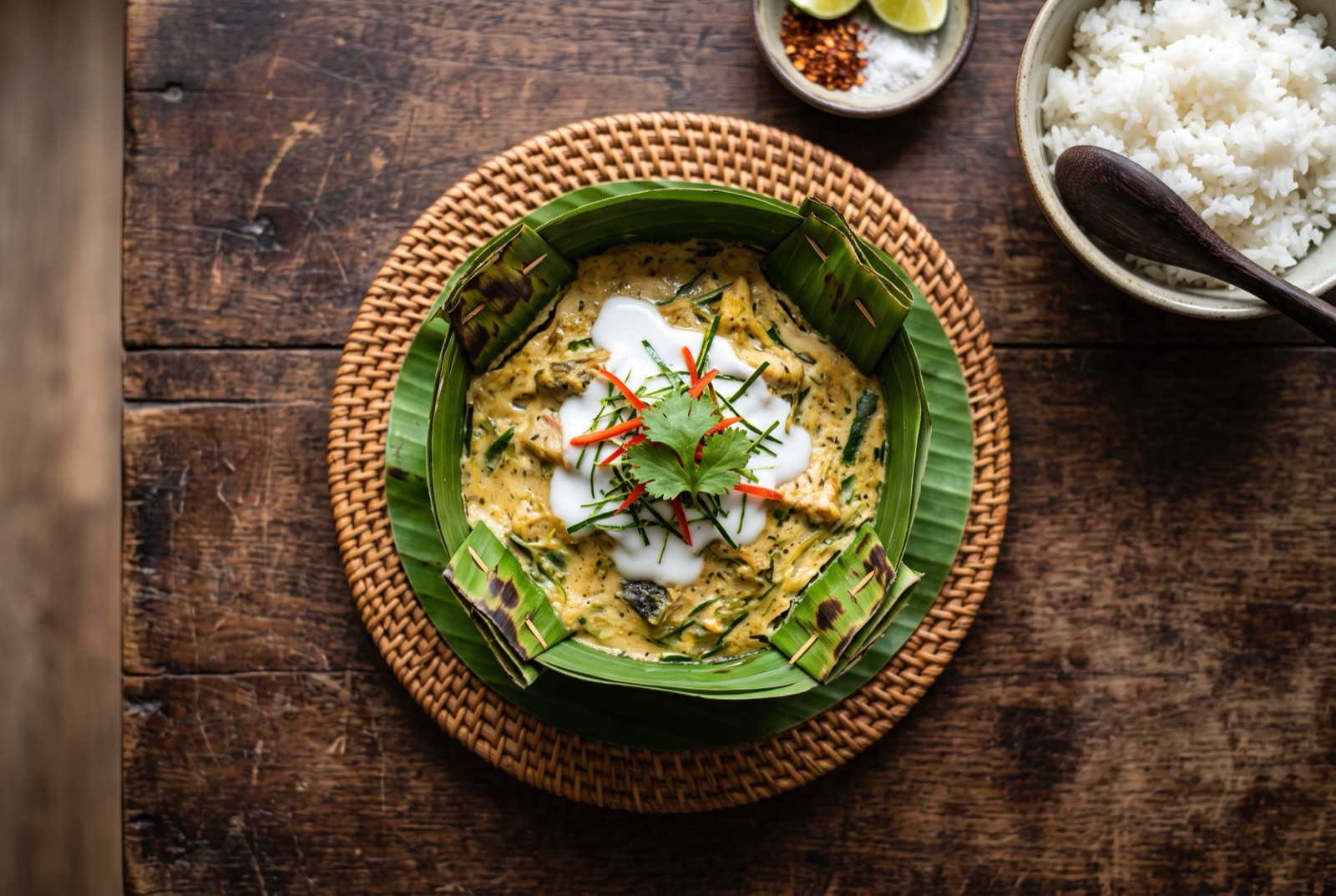
Keep exploring Cambodia.
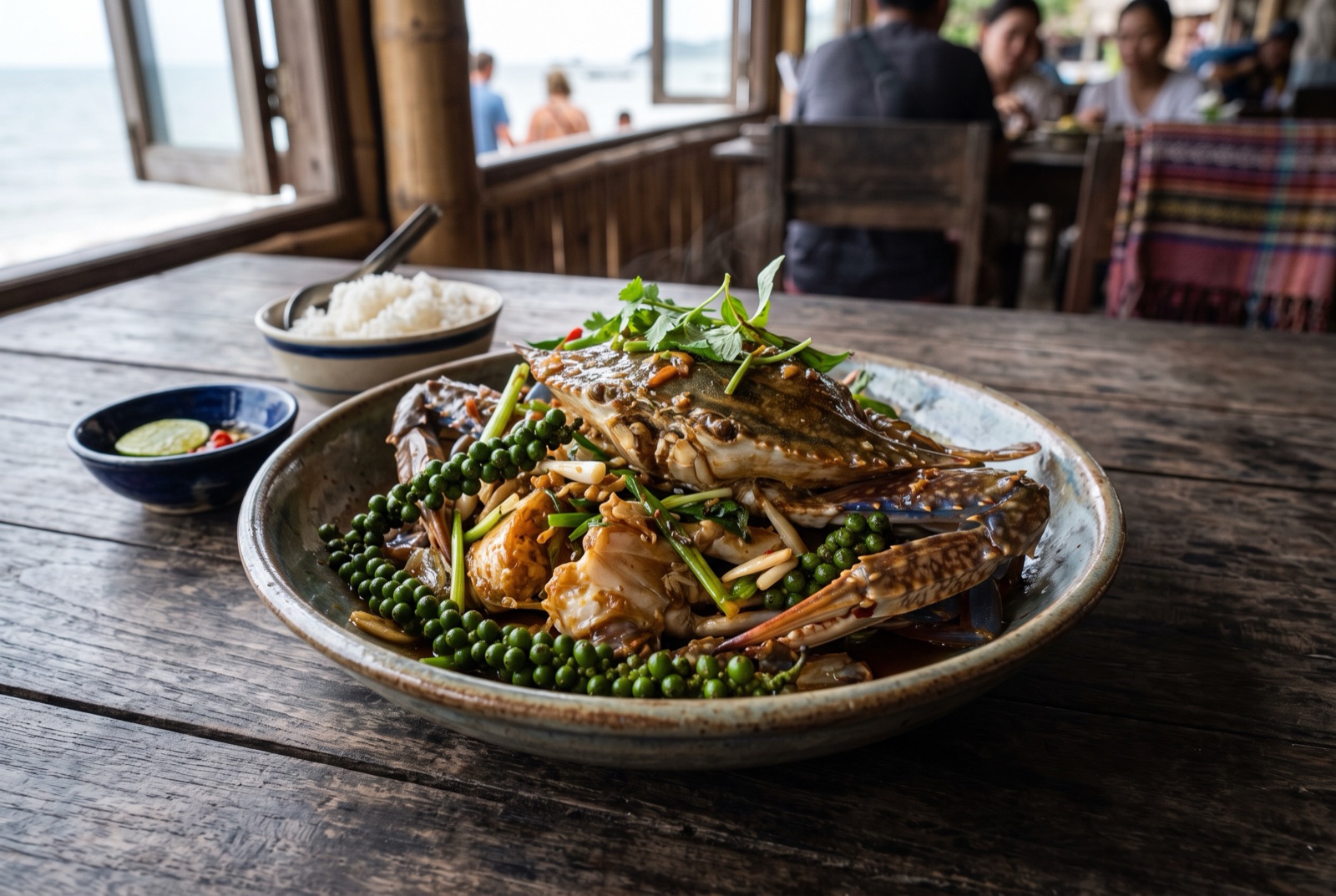
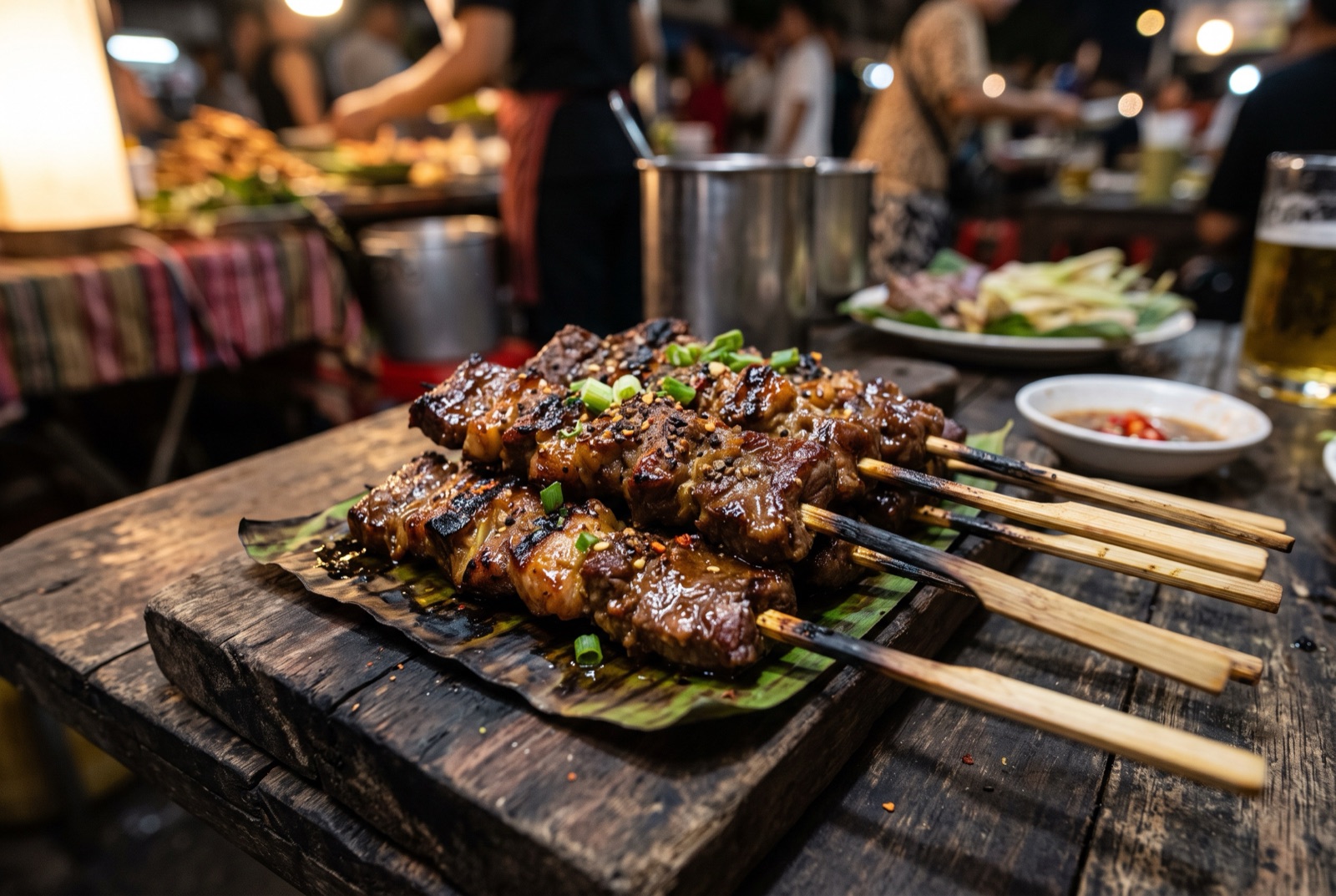
Cambodia has 9 more dishes in the atlas — Amok Trey and Bai Sach Chrouk, and 7 more.
Recipe by The DishRoute Kitchen · published August 20, 2026 · updated August 20, 2026