Sach Ko Ang.
Khmer Lemongrass Beef Skewers
សាច់គោអាំង · say it: sahk koh ahng
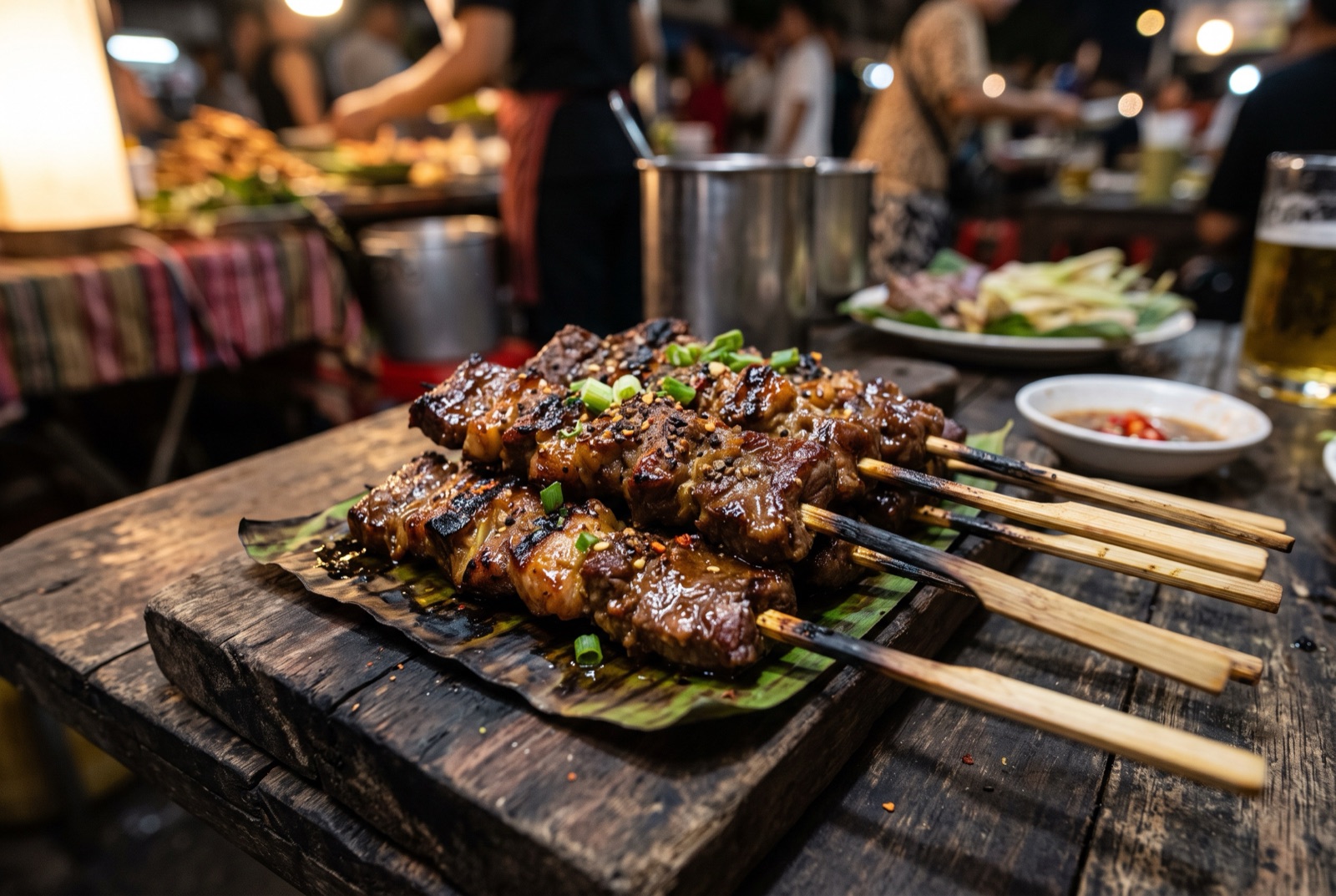
Sach ko ang is the smell of a Cambodian night market — beef on bamboo skewers over a low charcoal grill, the marinade dripping and flaring, lemongrass smoke going everywhere. The meat is cut thin and marinated in a pounded paste of lemongrass, garlic, shallot, palm sugar and fish sauce, which does two things at once: the lemongrass perfumes the beef right through, and the sugar caramelises into a dark, sticky crust in the four minutes the skewers spend over the fire. They come off charred at the edges and juicy in the middle, eaten straight from the stick with pickled vegetables, a wedge of lime and either rice or a fistful of herbs. Nothing about them is complicated, which is why they are everywhere.

- Gate
- CambodiaPhnom Penh
- Prep
- 25 min
- Cook
- 10 min
- Total time
- 2 hr 35 min incl. 2 hr rest
- Serves
- 4
- Status
- Easy
- Nutrition / serving · estimated
- Calories 390 kcal
- Protein 38 g
- Carbs 18 g
- Fat 18 g
- Fiber 2 g
- Sugar 14 g
Why this recipe works.
- A pounded lemongrass paste rather than chopped lemongrass, so the flavour goes into the meat instead of sitting on it.
- Marinade balanced so the sugar caramelises without burning at grill temperature.
- Cuts and slicing angle specified, so a cheap piece of beef comes off the skewer tender.
- Works over charcoal, on a gas grill or under a broiler, with the trade-offs spelled out.
Ingredients.
15 itemsFor the beef
For the marinade
To serve
Equipment
- Charcoal grill or cast-iron grill pan
- Bamboo skewers, soaked
- Mortar and pestle
Instructions.
Pound the marinade
Pound the lemongrass in a mortar until it stops looking like slices and starts looking like wet fibre, then work in the garlic and shallots. Stir in the fish sauce, soy, oyster sauce, palm sugar, pepper, turmeric and oil until the sugar has dissolved.
Tip The paste should smell sharply of lemongrass oil. If it just smells green and grassy, keep pounding.
Marinate the beef
Pour the marinade over 700 g of sliced beef and massage it in with your hands for a minute so every strip is coated. Cover and refrigerate at least 2 hours, ideally overnight, and no longer than a day.
Soak and thread
Soak bamboo skewers in cold water for 30 minutes. Thread the beef strips onto them in loose concertina folds, three or four pieces per skewer, leaving small gaps so heat can reach both faces. Reserve any marinade left in the bowl.
Build a low fire
Spread the coals into a low, even bed and wait until they are entirely coated in grey ash — you should be able to hold your hand 10 cm above the grate for five or six seconds. On a gas grill or grill pan, use medium heat, not high.
Grill and baste
Lay the skewers on the grate and cook for 4–5 minutes total, turning every 40 seconds and brushing with the reserved marinade for the first two minutes. They are done when the edges are dark and crisp, the surface is lacquered and the meat springs back lightly to a press.
Tip Move skewers away from any flare-up rather than letting flames lick the meat — the marinade drips and soot tastes bitter.
Rest and serve
Pile the skewers on a warm plate and rest for 2 minutes so the juices settle. Serve with lime wedges, cucumber, pickles and a handful of herbs, and eat straight from the stick.
Tips from our kitchen.
- Slice the beef across the grain at a shallow angle into strips 3–4 mm thick, then thread them in loose folds so heat reaches both faces.
- Pound the lemongrass rather than chopping it. Chopped lemongrass leaves woody splinters and gives up far less of its oil.
- Soak bamboo skewers in water for at least 30 minutes, and lay a strip of foil under the exposed ends on the grill.
- Build a low, even bed of coals. High heat scorches the palm sugar long before the beef is done.
- Brush leftover marinade on at every turn for the first two minutes only, then stop so the last coat cooks through properly.
- Pull the skewers when the edges are dark and crisp but the flat surfaces still look glossy — they carry on cooking for a minute off the heat.
Substitutions.
- Beef flank or skirt → Sirloin, rump, or chicken thigh
- Chicken thigh takes the marinade beautifully and needs a minute or two longer on the grill to cook through.
- Palm sugar → Light brown sugar, or honey
- Honey caramelises faster and burns more readily, so drop the grill heat further if you use it.
- Charcoal grill → Gas grill on medium, or a broiler with the rack 12 cm from the element
- You lose the smoke, which is a genuine part of the dish. A cast-iron grill pan gives better colour than a broiler but no smoke either.
- Fish sauce → Light soy sauce plus a pinch of salt
- The marinade loses some depth but the lemongrass and sugar still carry it.
Variations.
- Chicken skewers (sach moan ang)
- The same marinade on boneless thigh, grilled a little longer. The most common variation at night markets.
- Pork neck skewers
- Pork neck sliced thin takes the marinade well and stays juicier than lean pork thanks to its fat marbling.
- Skewers with tuk meric
- Served with the pepper-lime dip used for lok lak instead of pickles, which suits beef especially well.
Storage & reheating.
Marinated raw beef keeps 2 days refrigerated and freezes for a month, which makes this a good batch job — marinate a large quantity, freeze in portions and grill straight from thawed. Grilled skewers keep 2 days and are best revived in a hot dry pan or under a broiler for a minute, not in a microwave, which turns the caramelised crust soft and grey. Leftover meat pulled off the stick is excellent cold in a herb salad or rolled into rice paper.
Serve with
Pickled carrot and daikon, lime wedges, and either steamed rice or a plate of lettuce and herbs to wrap the meat in.
The story behind Sach Ko Ang.
Grilling on a stick is the oldest street food format there is, and every country in mainland Southeast Asia has a version: Thai moo ping, Vietnamese thit nuong, Indonesian and Malay sate. What identifies the Khmer one is the marinade, which leans on lemongrass and palm sugar rather than on turmeric, peanut or five-spice, and which contains no coconut milk — that belongs to the pork breakfast, not to the beef skewer. The beef itself is usually a working cut, sliced thin against the grain so that a cheap piece of meat eats tender.
Skewers occupy a specific slot in Cambodian eating. They are not dinner; they are what you eat standing up between other things, from about six in the evening onwards, along the river in Phnom Penh or around any provincial market. Vendors keep the coals low and the grill crowded, brushing on more marinade as the skewers cook, and sell them by the stick with a small bag of pickles. The same marinade goes on chicken, pork and, in the countryside, on beef offal, which is grilled the same way and eaten with the same pepper-lime dip.
The grill technique is worth copying exactly. Cambodian vendors use a low, wide bed of coals rather than a fierce fire, and they turn constantly. With this much sugar in the marinade a hot fire produces black skewers with raw centres in under two minutes. Low and slow, with a brush of leftover marinade every turn, builds up layers of caramelisation instead — the difference between beef that tastes grilled and beef that tastes burnt. Soaking the bamboo first keeps the sticks from becoming part of the fire.
Questions, answered.
Which cut of beef works best for skewers?
Flank, skirt, bavette or rump all work well: they have enough fat and flavour to survive fast grilling and are cheap enough to use generously. Slice them thinly across the grain so the muscle fibres are short. Very lean cuts like eye of round dry out, and stewing cuts like shin stay tough no matter how thin you cut them.
How long should I marinate the beef?
Two hours is the minimum for the lemongrass to penetrate, and overnight is better. Do not go beyond about 24 hours, because the fish sauce and lime start to cure the surface of the meat and the texture turns mealy. If you are short of time, pound the marinade finer and cut the beef thinner, which speeds up absorption.
Why do my skewers burn on the outside?
Too much heat. The marinade contains palm sugar, which begins to burn well below the temperature that a roaring charcoal fire reaches. Spread the coals into a low, even bed, wait until they are covered in grey ash, and turn the skewers every 30 to 45 seconds. If the flames flare from dripping marinade, move the skewers aside rather than trying to smother the fire.
Can I cook these indoors?
Yes. A cast-iron grill pan on medium-high gives good caramelisation, and a broiler with the rack about 12 cm from the element works if you turn the skewers frequently. Neither gives you charcoal smoke, which is a real part of the flavour. Cooking them in a well-ventilated kitchen matters, because the sugar in the marinade smokes heavily.
Do I need to soak the bamboo skewers?
Yes, for at least 30 minutes in cold water. Dry bamboo catches fire over coals and the ends burn through, which is both annoying and unsafe when you are trying to turn twelve skewers at once. Covering the exposed ends with a folded strip of foil gives extra protection over a hot grill.
You might also like.
All recipes →
Keep exploring Cambodia.
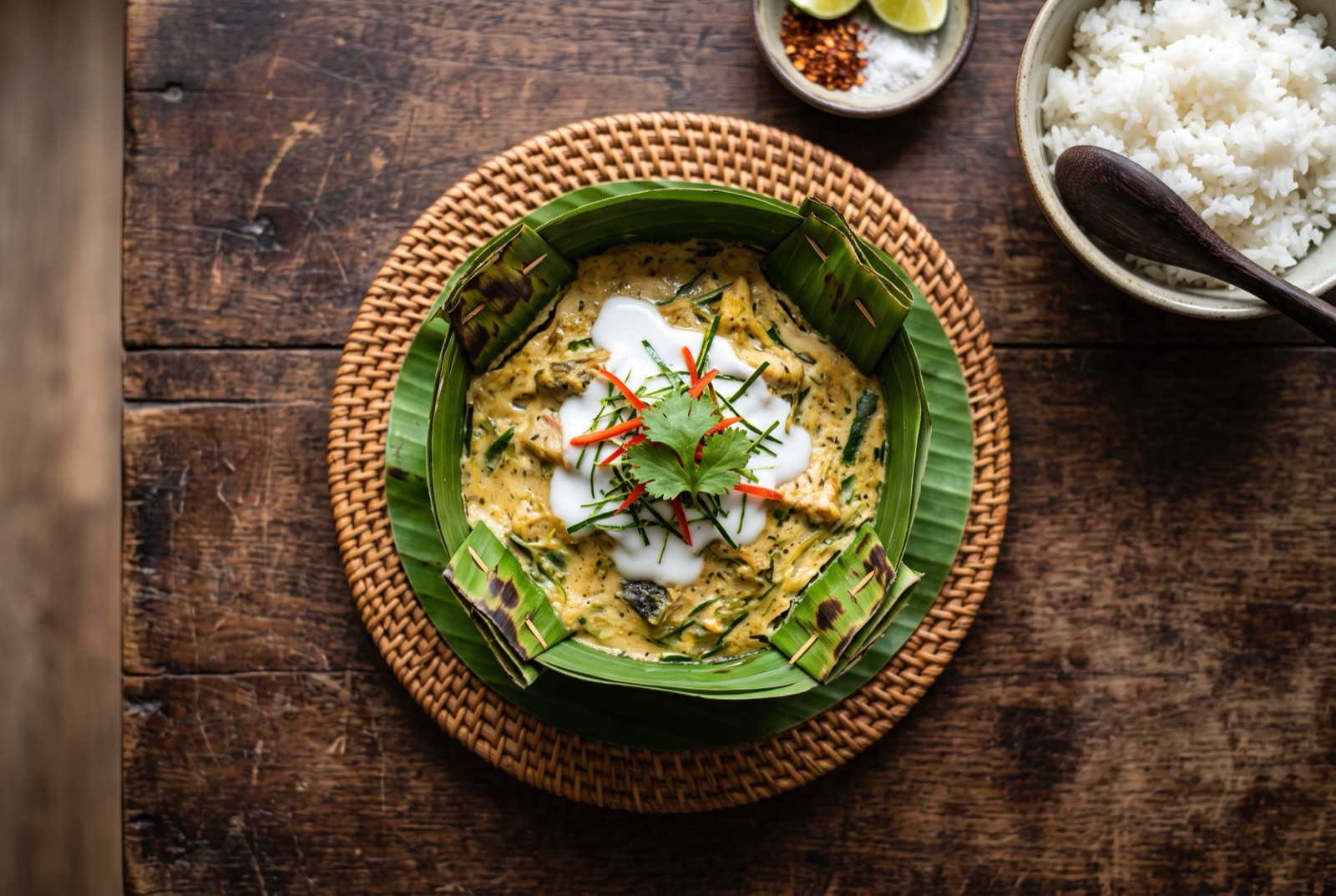
Cambodia has 9 more dishes in the atlas — Amok Trey and Bai Sach Chrouk, and 7 more.
Recipe by The DishRoute Kitchen · published August 20, 2026 · updated August 20, 2026