Koulouri Thessalonikis.
Sesame-Crusted Bread Ring
Κουλούρι Θεσσαλονίκης · say it: koo-LOO-ree theh-sah-loh-NEE-kees
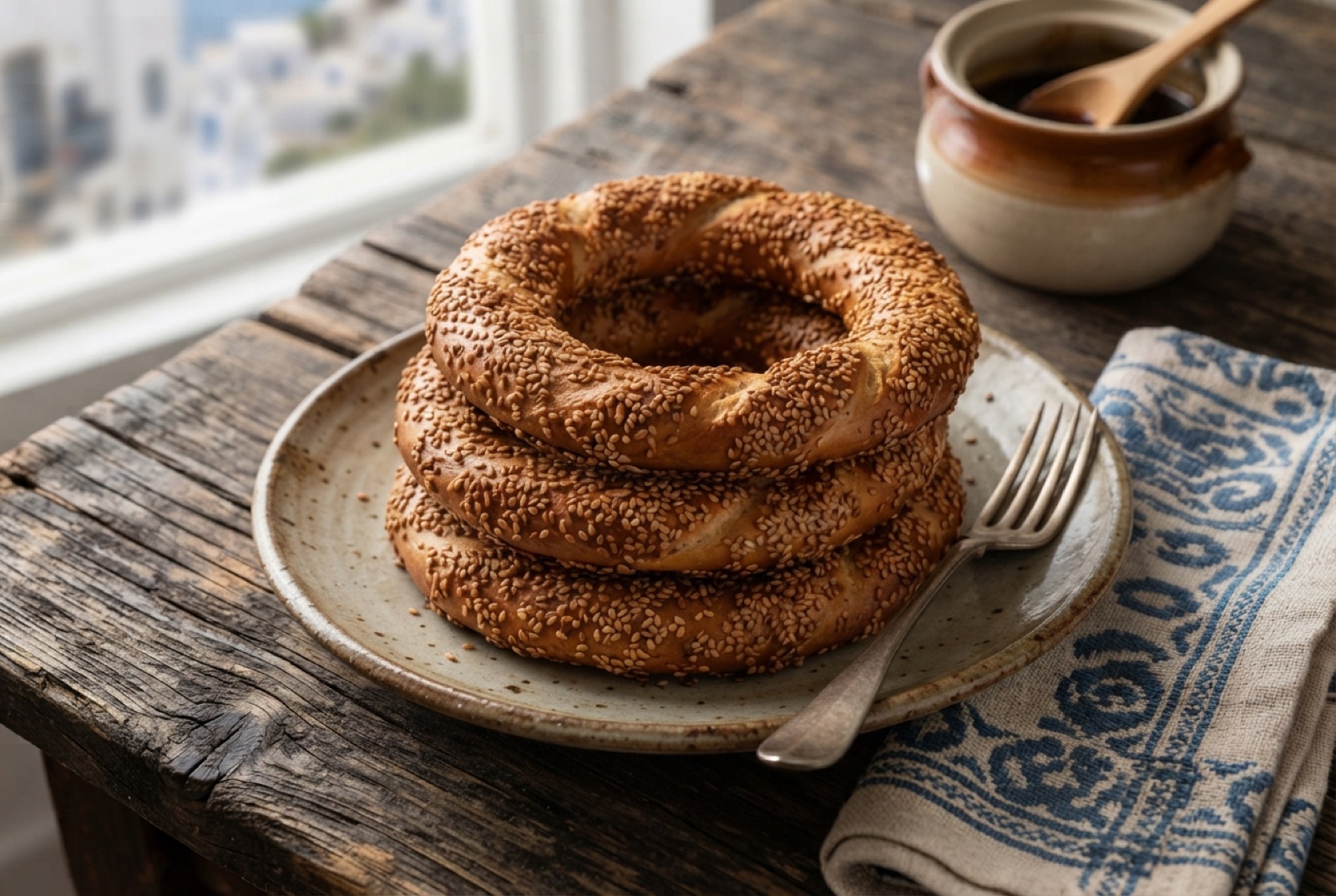
Koulouri is a bread ring about the width of a saucer, rolled thin, coated so heavily in sesame that you cannot see the dough underneath, and baked until the crust turns the colour of old copper. The inside is chewy rather than fluffy — closer to a lean baguette crumb than to a bagel — and the flavour comes almost entirely from toasted sesame and the faint caramel tang of petimezi, the boiled-down grape must it is dipped in before coating. It is not sweet. It is street food you buy from a cart on the way somewhere, eaten dry and plain, and its whole appeal rests on being eaten while the sesame is still warm.

- Gate
- GreeceThessaloniki, Macedonia
- Prep
- 35 min
- Cook
- 18 min
- Total time
- 2 hr 53 min incl. 2 hr rest
- Serves
- 8
- Status
- Medium
- Nutrition / serving · estimated
- Calories 385 kcal
- Protein 12 g
- Carbs 52 g
- Fat 14 g
- Fiber 4 g
- Sugar 3 g
Why this recipe works.
- Uses the petimezi dip that gives the ring its colour and its faint caramel note, rather than shortcutting to plain water.
- A long, slow shaping method that keeps the rings thin and even so they bake through in under twenty minutes.
- Honest about the sesame quantity — you need far more than feels reasonable, and most of it goes back in the bowl.
- A short cold rest builds flavour without turning a breakfast bread into a two-day project.
Ingredients.
9 itemsFor the dough
For the dip and coating
Equipment
- Large mixing bowl or stand mixer
- Two baking sheets
- Wide shallow tray for the sesame
- Shallow bowl for the dip
Instructions.
Mix and knead
Combine the flour, yeast, sugar and salt, keeping the salt away from the yeast at first. Add the olive oil and lukewarm water, bring together into a shaggy mass, then knead for 10 minutes until the dough is smooth, firm and springs back slowly when pressed with a finger.
Tip This dough should feel tighter than a pizza dough. Resist adding water — a slack dough will not hold a thin ring shape.
First rise
Oil the bowl lightly, return the dough, cover and leave in a warm spot for about 90 minutes, until roughly doubled and full of small bubbles visible against the side of the bowl.
Divide and rest the ropes
Knock the dough back gently and divide into 8 equal pieces. Roll each into a short fat cigar, cover them all, and rest for 10 minutes — this relaxes the gluten so the ropes will stretch instead of snapping back.
Roll long and shape the rings
Roll each piece into a rope 50–60 cm long and no thicker than your index finger, working from the middle outwards. Join the ends by overlapping 3 cm and pressing firmly, then roll the join under your palm until it disappears.
Tip If a rope fights you, leave it and roll another. Come back after two minutes and it will stretch easily.
Dip and coat
Whisk the petimezi into the warm water until fully dissolved. Dip each ring so it is wet all over, let the excess drip for a second, then press it into the tray of sesame on both sides until no dough shows through. Set on lined baking sheets, well spaced.
Tip The dip should look like weak coffee. Too concentrated and the rings burn before they bake through.
Short second proof
Cover the trays loosely and leave for 25 minutes, until the rings look slightly puffed and feel airy rather than dense when lifted. Meanwhile heat the oven to 220°C.
Bake hot
Bake for 16–18 minutes, swapping the trays halfway, until the sesame is toasted golden and the exposed dough at the join is a deep bronze. Tap the underside — it should sound hollow and dry. Cool for 10 minutes on a rack and eat while the sesame is still warm.
Tip Pale rings are underbaked rings. Push the colour further than instinct tells you; the sesame protects the crust.
Tips from our kitchen.
- Roll the ropes long and thin — 50 to 60 cm. A fat rope bakes into a bread roll shape and loses the chew entirely.
- Toast the sesame lightly before coating if yours has been in the cupboard a while. Old sesame tastes of dust and the whole ring depends on it.
- Use a wide shallow tray for the sesame so you can roll each ring in one motion instead of patting seeds on by hand.
- Bake hot and fast. A long bake at moderate heat dries the crumb out before the crust has a chance to colour.
- These stale within hours, which is not a flaw. Bake half the batch and freeze the shaped rings raw for tomorrow.
Substitutions.
- Petimezi (grape molasses) → Pomegranate molasses, or 1 tbsp dark molasses thinned with warm water
- Pomegranate molasses is more acidic but colours just as well. Plain honey water is the weakest option — it browns quickly but adds a floral note that is not right.
- Strong bread flour → Plain flour with an extra 10 minutes of kneading
- You lose some of the chew but the rings still work. Do not use cake or self-raising flour.
- White sesame seeds → A mix of white and black sesame
- Not traditional in Thessaloniki, but it looks striking and the flavour is unchanged.
Variations.
- Athens-style koulouri
- Slightly softer and marginally sweeter, with a little sugar or oil in the dough and a less punishing sesame coating. Kinder to eat cold, which is the point.
- Cheese-filled koulouri
- A modern bakery version: a thin rope of feta or kasseri sealed inside the dough rope before shaping. Eat these warm or the cheese turns rubbery.
- Wholemeal koulouri
- Replace a quarter of the flour with wholemeal and add an extra 20 ml water. Nuttier, denser, and it stales even faster, so eat it the same morning.
Storage & reheating.
Koulouri is at its best within four hours of baking and noticeably worse the next day — the sesame goes soft and the crumb turns dry. Keep them in a paper bag at room temperature, never plastic, which sweats the crust. To bring day-old rings back, spritz with water and refresh in a 200°C oven for 4 minutes. Better still, freeze the shaped, coated rings before their final proof: bake them straight from frozen at 220°C, adding about 5 minutes.
Serve with
Nothing, in Thessaloniki. If you insist: a plain Greek coffee, or a wedge of feta and a tomato for a proper sit-down breakfast.
The story behind Koulouri Thessalonikis.
Thessaloniki runs on koulouri. Carts and glass-fronted trolleys stand at tram stops, university gates and church corners from around six in the morning, and the vendor sells them by the piece to people who eat them walking. It is the cheapest breakfast in the city and one of the few that has resisted being upgraded: no butter, no filling, no coffee-shop version with seeds and sourdough — just the ring, the sesame, and the paper napkin it comes in. Athenians make and sell a version too, usually softer and slightly sweeter, and the northern city is quietly firm that the Thessaloniki one is the correct one.
The ring itself belongs to a much wider family. Sesame-crusted bread hoops are made all over the former Ottoman space — simit in Turkey, gevrek in Bulgaria and among Greek speakers in Asia Minor, ka'ak in the Levant — and they are close enough that arguing about which came first is a national sport with no possible referee. What is documented is the movement of people: after the 1923 population exchange, hundreds of thousands of Greek refugees from Asia Minor and the Black Sea settled in and around Thessaloniki and brought their baking with them, and the city's koulouri culture is inseparable from that arrival. The word gevrek is still used interchangeably with koulouri by older residents of the city.
What distinguishes the Thessaloniki ring technically is the dip. Before sesame, the shaped rings go through a thin solution of water and petimezi — grape molasses, one of the oldest sweeteners in the Greek kitchen, made by reducing grape must until it is dark and syrupy. The sugars in the dip do two things: they glue on an absurd quantity of sesame, and they push the crust to a deep, even bronze in a short, hot bake. Skip it and use plain water and you get a pale, patchy ring that tastes of nothing much — which is exactly what most home attempts get wrong.
Questions, answered.
What is the difference between koulouri and Turkish simit?
They are close relatives and in some bakeries virtually the same bread. Simit is more often twisted from two ropes and is typically dipped in a grape molasses solution as well, while the Thessaloniki koulouri is usually a single rope joined into a ring. Which came first is not settled and both belong to a wider Ottoman-era family of sesame bread rings that includes Bulgarian gevrek and Levantine ka'ak.
Is koulouri the same thing as a bagel?
No. A bagel is boiled before baking, which gelatinises the crust and gives it that dense, shiny chew. Koulouri is dipped briefly in a thin molasses solution, not boiled, so the crumb stays much lighter and the crust is thin and crackly. A koulouri is also considerably thinner and wider than a bagel, and carries far more sesame.
What is petimezi and do I really need it?
Petimezi is grape must boiled down to a dark syrup, an ancient Greek sweetener still sold in Greek and Middle Eastern shops. It is what makes the crust bronze rather than pale and adds a faint caramel edge behind the sesame. You can substitute pomegranate molasses or ordinary dark molasses thinned with water, but plain water gives a visibly disappointing ring.
Why does my sesame fall off after baking?
Either the dip was too thin or the rings were too dry when they hit the sesame. The surface should be genuinely wet and slightly sticky when it goes into the seed tray, and you should press the ring into the seeds rather than just rolling it. A firm press with both hands after coating also helps the seeds bed into the dough surface.
Can I make the dough the night before?
Yes, and it improves the flavour. Mix and knead the dough, then refrigerate it covered for 8 to 12 hours. Take it out an hour before shaping so it comes back to room temperature, then continue from the shaping step. The cold rest also makes the dough easier to roll into long thin ropes without it springing back.
You might also like.
All recipes →
Keep exploring Greece.
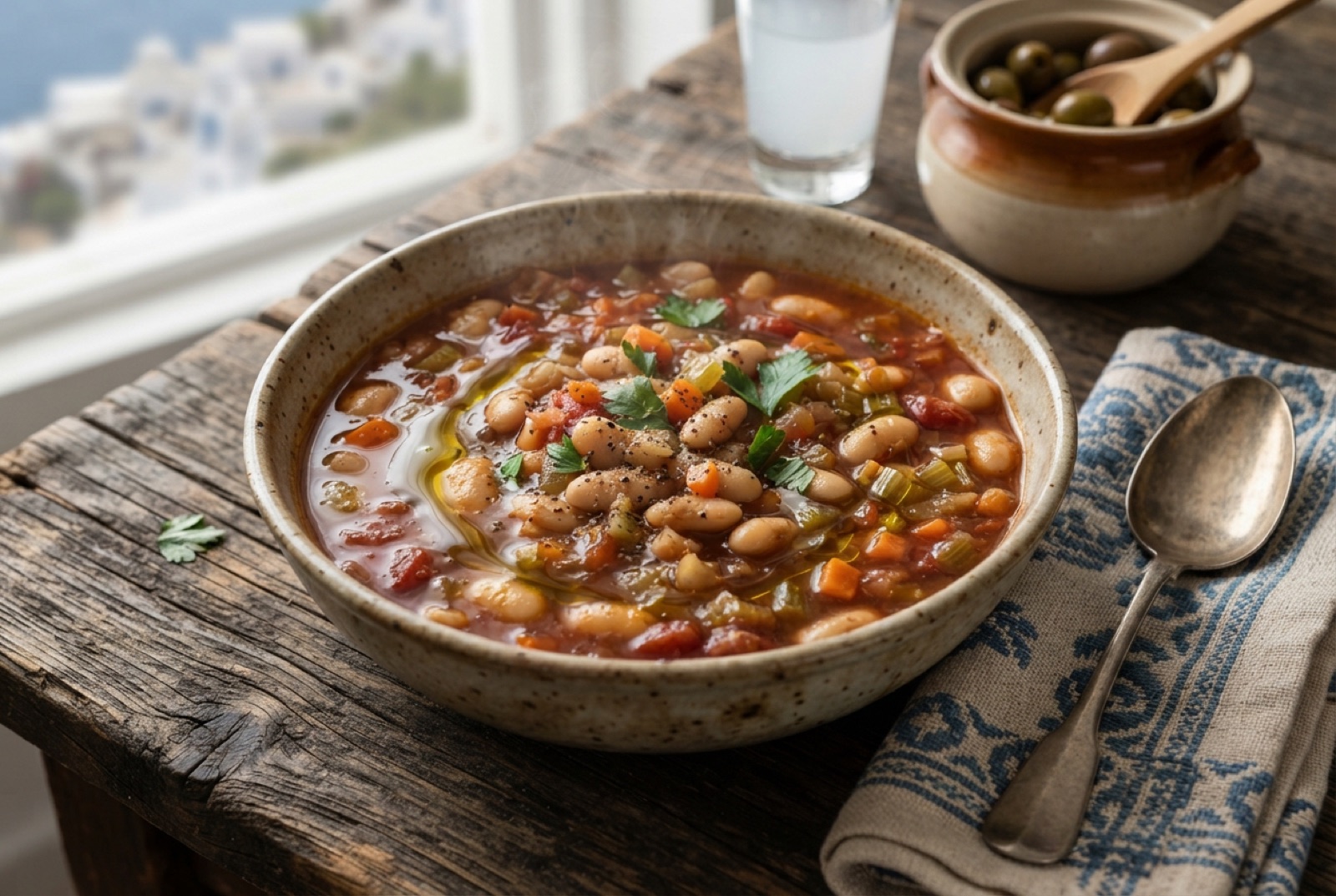
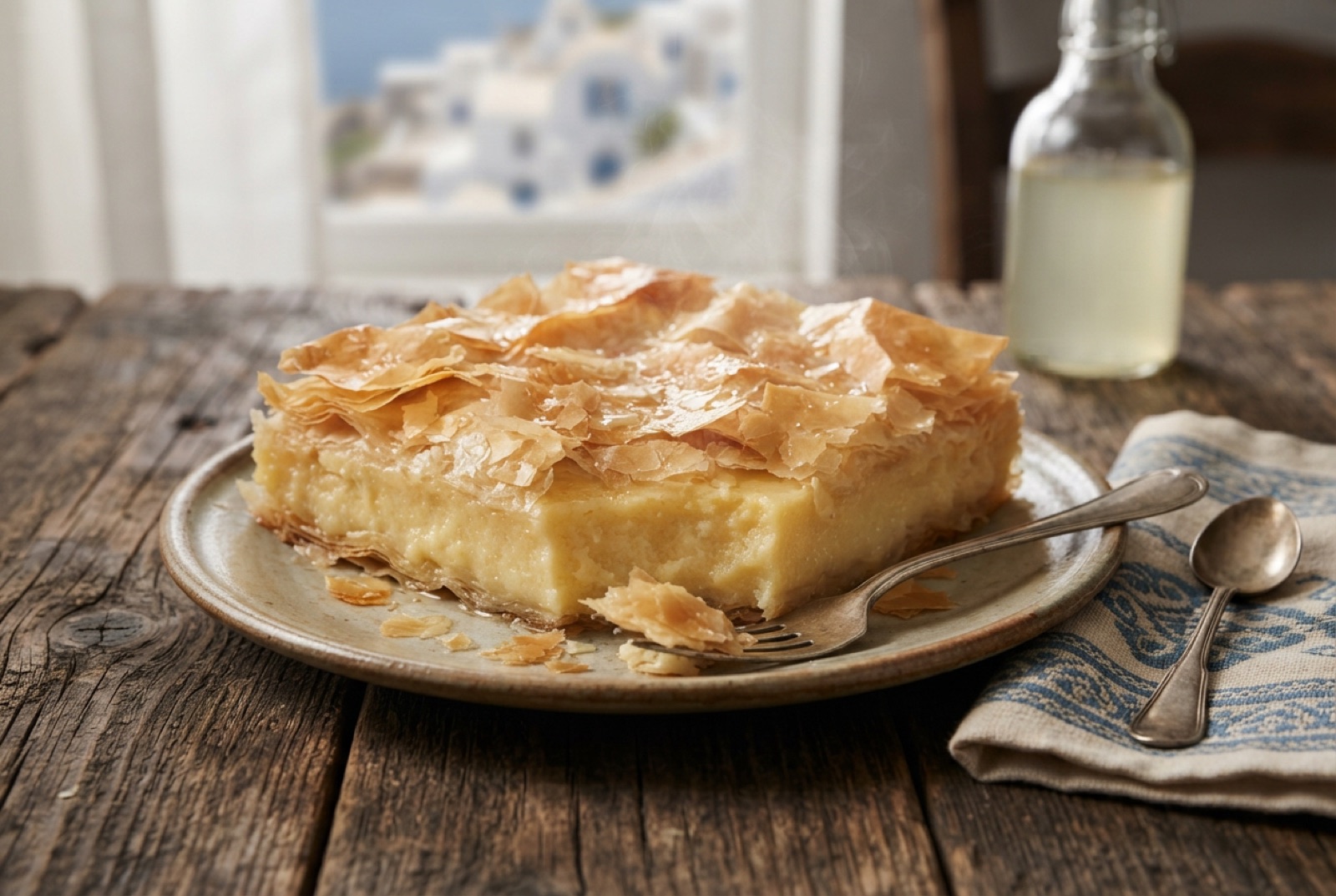
Greece has 9 more dishes in the atlas — Fasolada and Galaktoboureko, and 7 more.
All Greece recipes Flour recipes Yeast recipes Sesame seeds recipes breadbreakfaststreet foodvegandairy freeRecipe by The DishRoute Kitchen · published August 19, 2026 · updated August 19, 2026