Greece.
Ελλάδα
Greek cooking is the Mediterranean diet before anyone called it that: olive oil used in quantities that alarm visitors, vegetables treated as main courses, sheep's and goat's milk cheeses, mountain herbs, and fish where the sea allows. It is a frugal cuisine at heart — shaped by rocky soil, Orthodox fasting calendars that produced a huge repertoire of vegan dishes (ladera, beans, greens), and centuries of trading and occupation that left Ottoman fingerprints on the pastry and the coffee. The flavors are direct rather than layered: ripe tomato, oregano, lemon, garlic, brined olives and feta doing their work without disguise. Meat was historically for Sundays and feast days, which is why the lamb on the spit at Easter still feels like an event. What holds it together is the table itself — shared plates, bread for the oil, and no hurry whatsoever.

- Continent
- EuropeMediterranean
- Recipes in atlas
- 10
- Must-try dishes
- 3
- Pantry staples
- 8
Start with the classics.
Must tryThe dishes that explain the Greece kitchen fastest — if you cook only a few things from this page, cook these.
Inside the Greece kitchen.
Olive oil is the non-negotiable foundation — Greece has among the highest per-capita olive oil consumption in the world, and it is a cooking fat, a dressing and a finishing sauce all at once. An entire category of dishes, ladera ("the oily ones"), consists of vegetables — green beans, okra, peas, artichokes — braised in olive oil and tomato until silky, eaten warm or at room temperature with bread and feta. These are mains, not sides, and they are the everyday backbone of the cuisine.
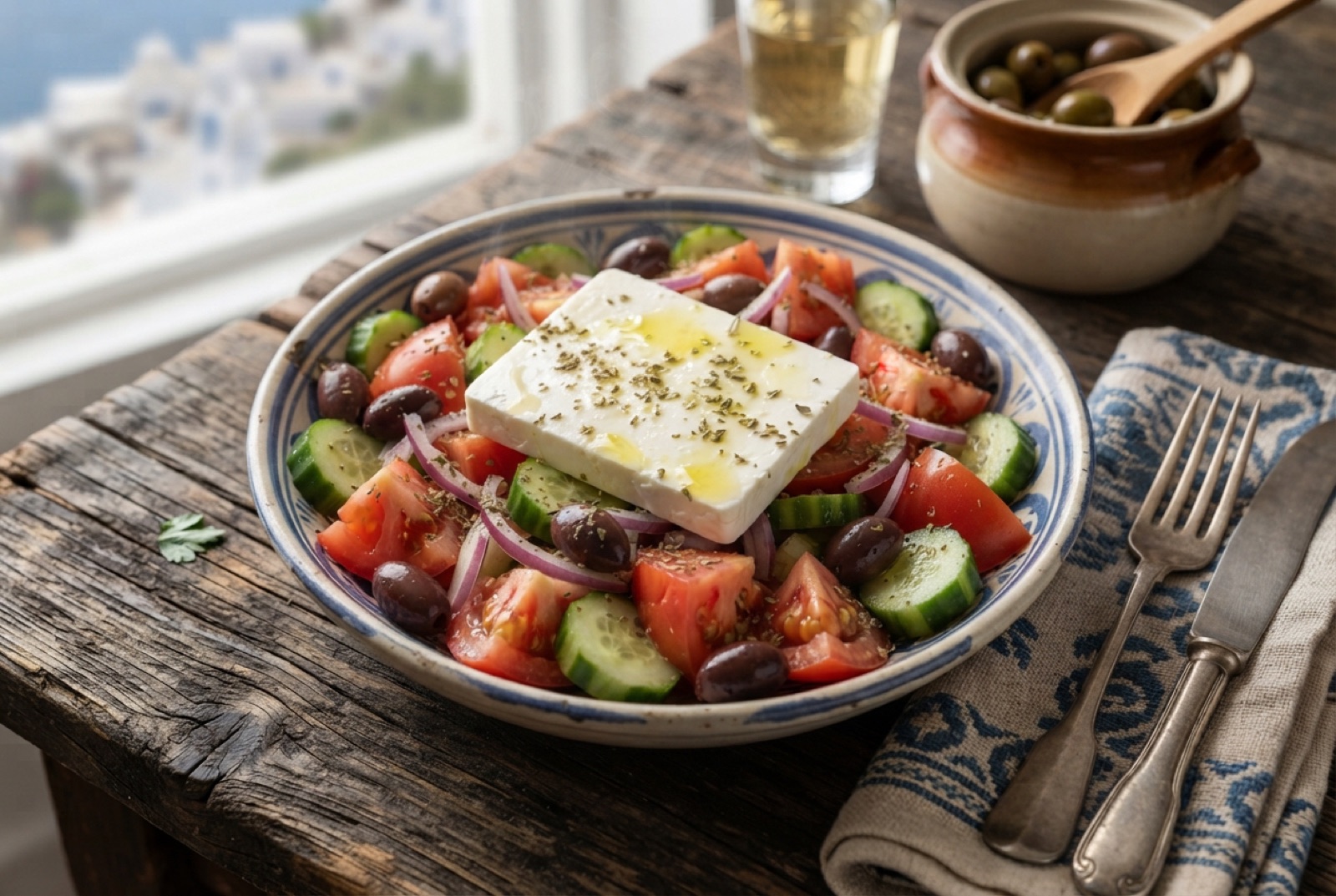
The dairy is sheep and goat, not cow: feta brined in barrels, hard salty kefalotyri and graviera for grating and frying (saganaki), and thick strained yogurt that anchors both breakfast and sauces like tzatziki. Cheese appears at nearly every meal, most famously as the slab of feta laid over a horiatiki salad.
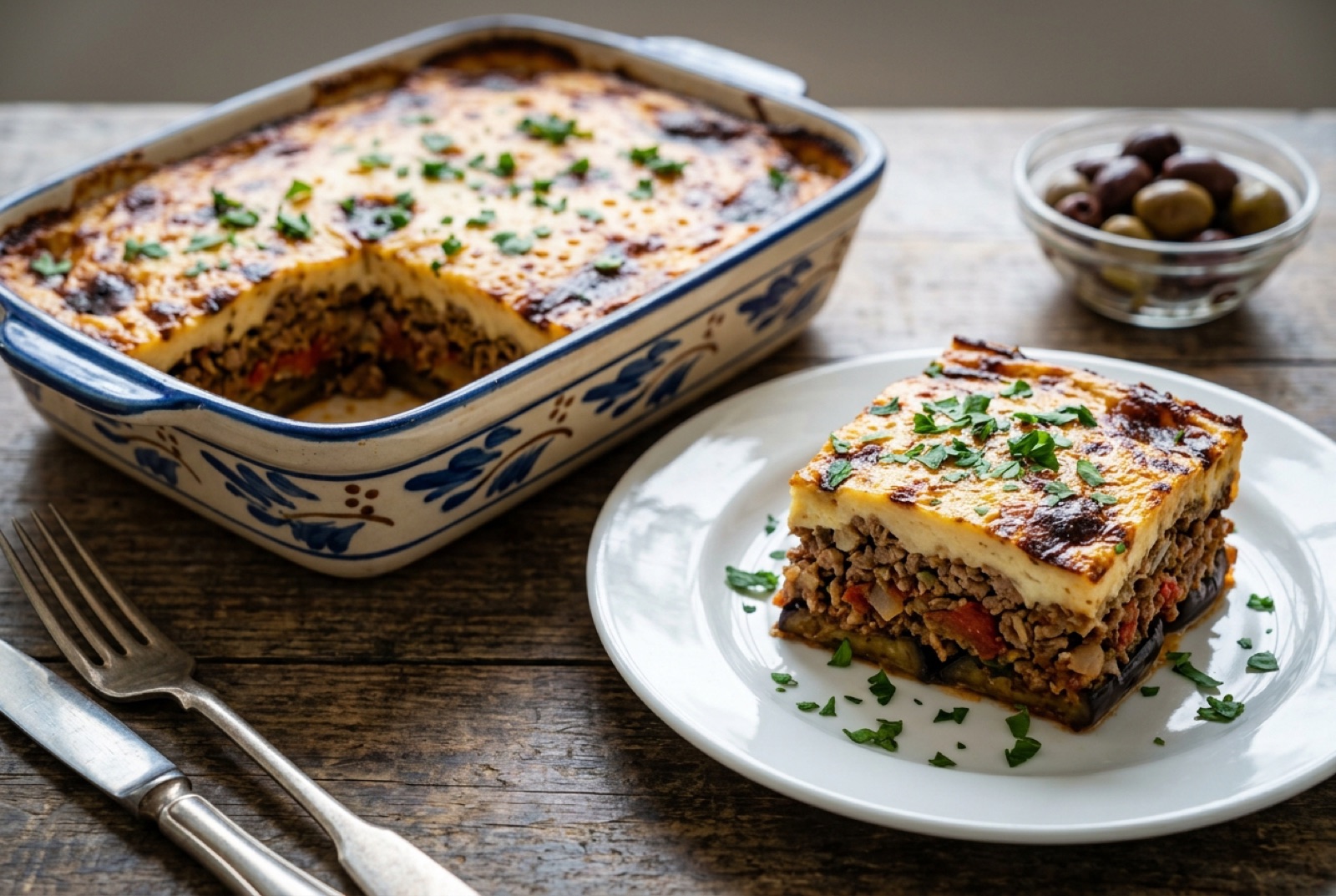
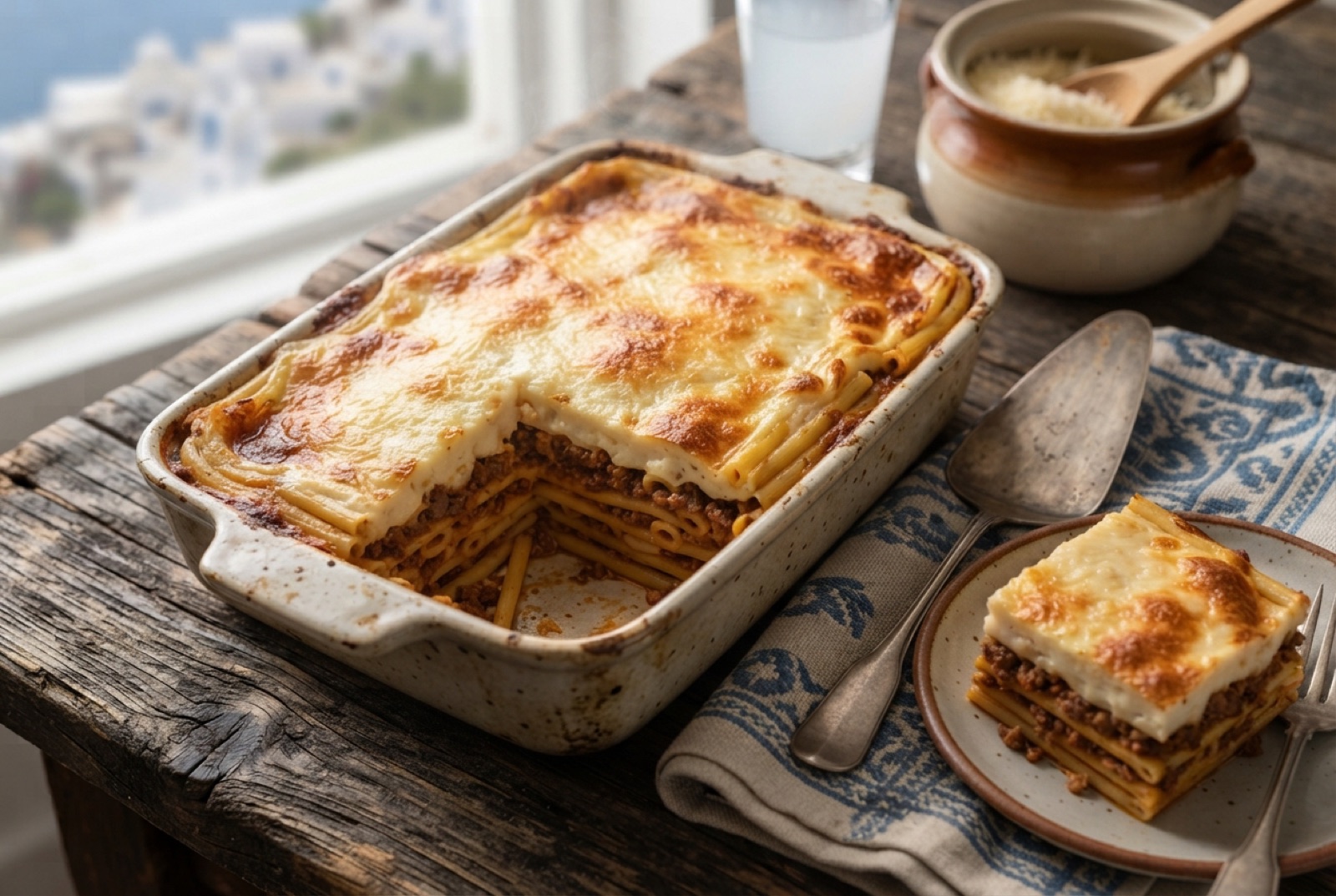
Herbs are used dried as often as fresh, and that is a feature, not a shortcut — Greek oregano (rigani) is picked wild on hillsides and is far more pungent dried than most fresh oregano abroad. Dill, mint and parsley go into fillings and fritters; cinnamon and allspice, an Ottoman inheritance, warm the tomato-based meat sauces of the mainland, which is why moussaka and pastitsio taste faintly of sweet spice.
Technique is unhurried: whole fish grilled with lemon and oil, lamb or goat roasted slowly with potatoes that soak up the juices, pies (pites) of greens or cheese wrapped in phyllo, pulses simmered into fasolada and gigantes. The grill and the baking dish matter more than the sauté pan.
Meals are structured around mezedes — small shared plates of dips (tzatziki, taramosalata, fava), fried cheese, olives and seafood — that can either precede a main or simply become the meal, always with bread and usually with ouzo, tsipouro or wine. Lunch is late, dinner later; eating alone and quickly is regarded as a minor tragedy. The kafeneio and the taverna are social institutions as much as places to eat, and the check never arrives until you ask for it.
Signature pantry.
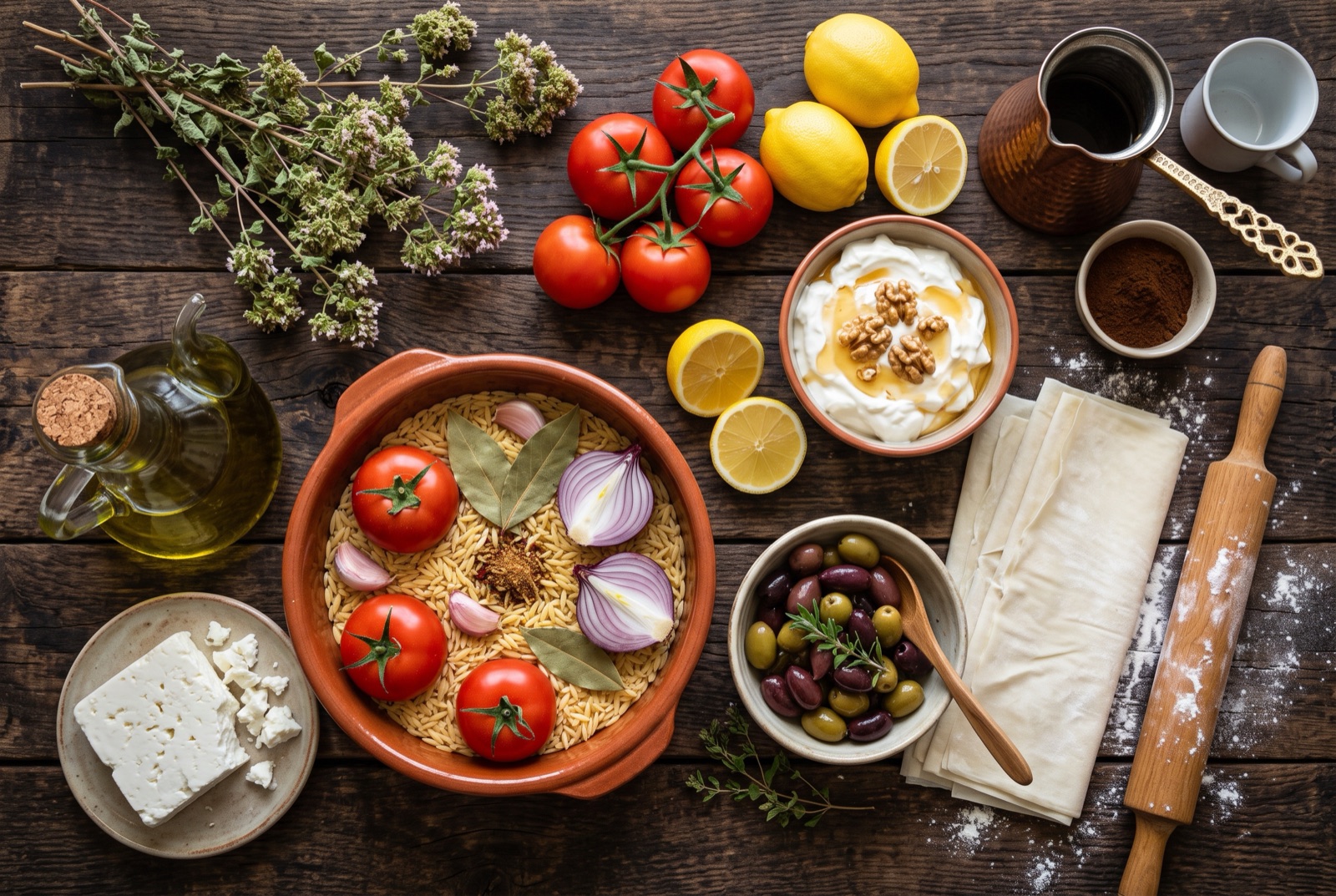
8 staplesThe ingredients this cuisine cannot function without.
- olive oil
- feta
- oregano
- lemon
- tomato
- yogurt
- olives
- phyllo
How people eat in Greece.
Meals run late — lunch around two or three, dinner rarely before nine in summer — and last as long as the conversation does. Food arrives to the middle of the table for everyone's fork; ordering individual plates at a taverna is possible but slightly misses the point. Bread appears automatically and is used to mop olive oil and sauces without apology. A short glass of ouzo or tsipouro with mezedes is an institution, always taken with food, never alone. Coffee is its own ritual: a Greek coffee or a cold frappé can legitimately occupy an entire afternoon. Guests are fed insistently, and refusing a second helping usually just delays it.
Regional kitchens.
Greece cooks 4 distinctly different ways depending on where you stand — here is what changes between them.
- R1Crete
- The island whose diet launched a thousand studies — raw olive oil in serious quantities, wild greens (horta), dakos rusks with tomato and mizithra cheese, snails, and slow-cooked goat. The most distinct and self-sufficient regional kitchen in Greece.
- R2Peloponnese
- Olive country — Kalamata olives and much of Greece's best oil come from here — with a hearty inland tradition of roast pork, pasta dishes like the wedding noodles of Mani, and citrus from the coastal plains.
- R3The Islands (Cyclades & Aegean)
- Wind-dried tomatoes, capers, barley rusks, local cheeses from tiny herds, and fish grilled the day it was caught. Santorini's fava and cherry tomatoes and Naxos's graviera show how much flavor thin volcanic soil can concentrate.
- R4The North (Macedonia & Thessaloniki)
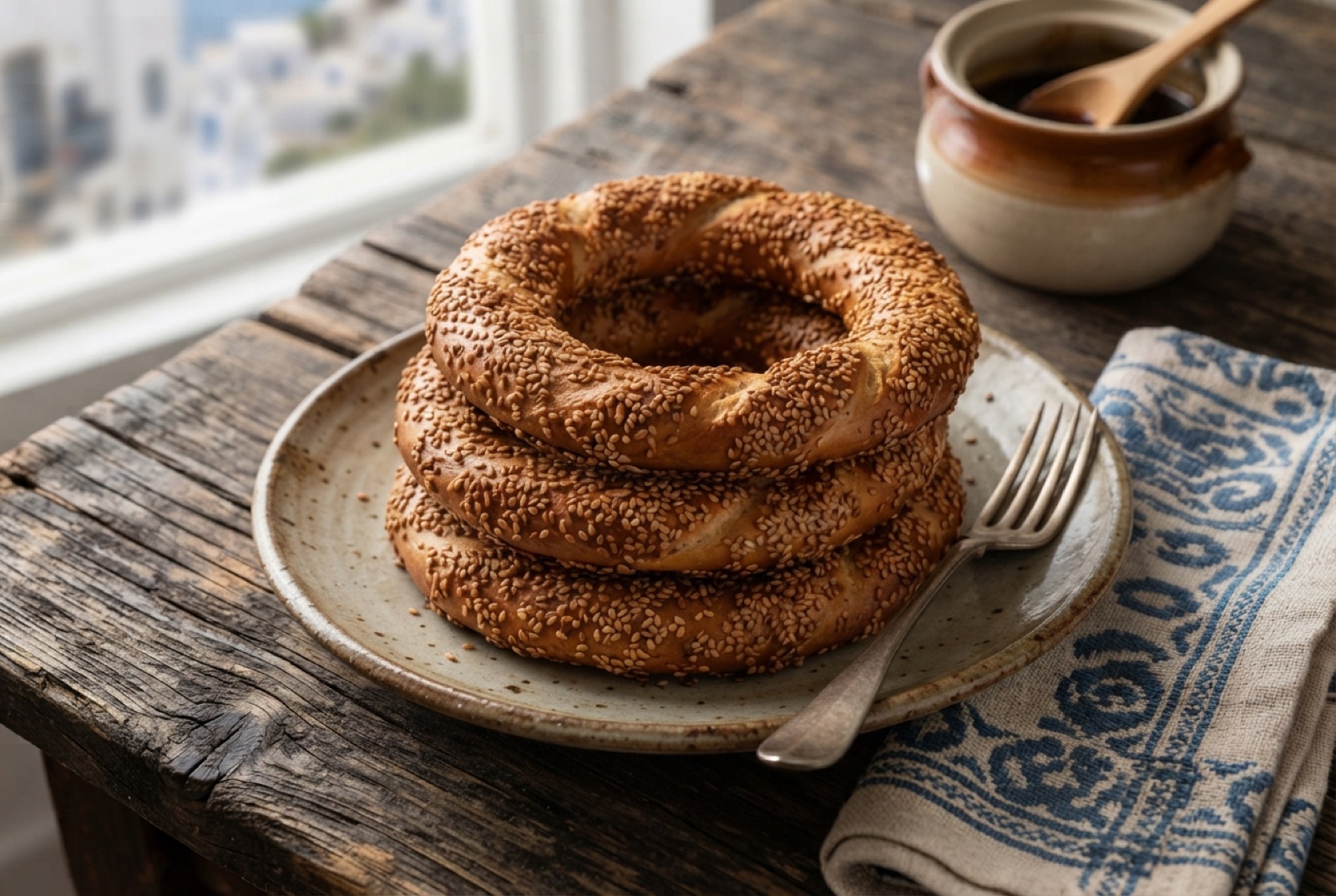
- Greece's food capital by many accounts — Thessaloniki's bougatsa, koulouri and mezedes culture carry strong Ottoman and Sephardic Jewish influences, with more butter, more peppers (including sweet-hot boukovo flakes) and richer pies than the south.
All Greece recipes.
10 recipes and counting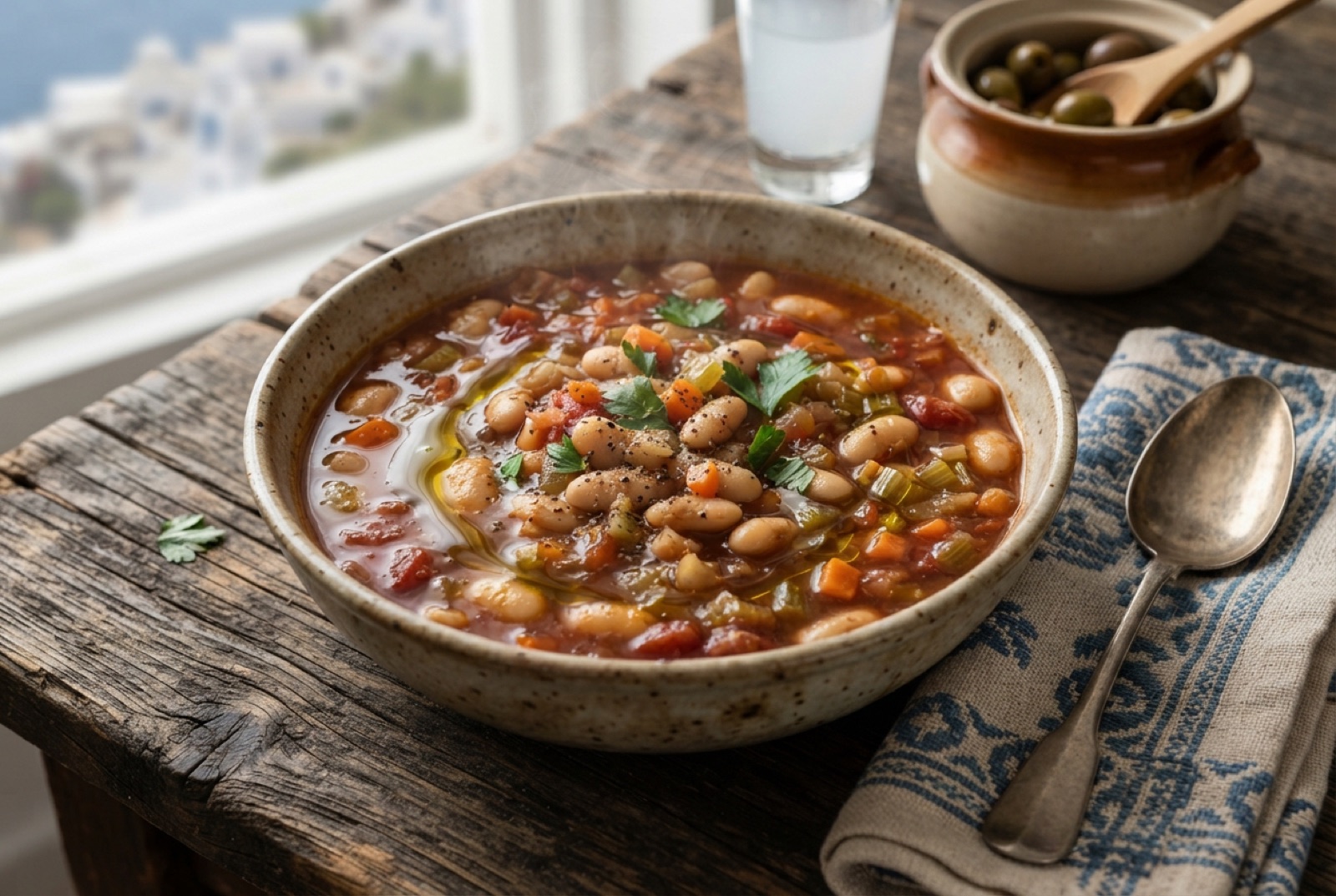
Greece9 hr 50 min
Fasolada
Greek White Bean Soup
Greece5 hr 30 min
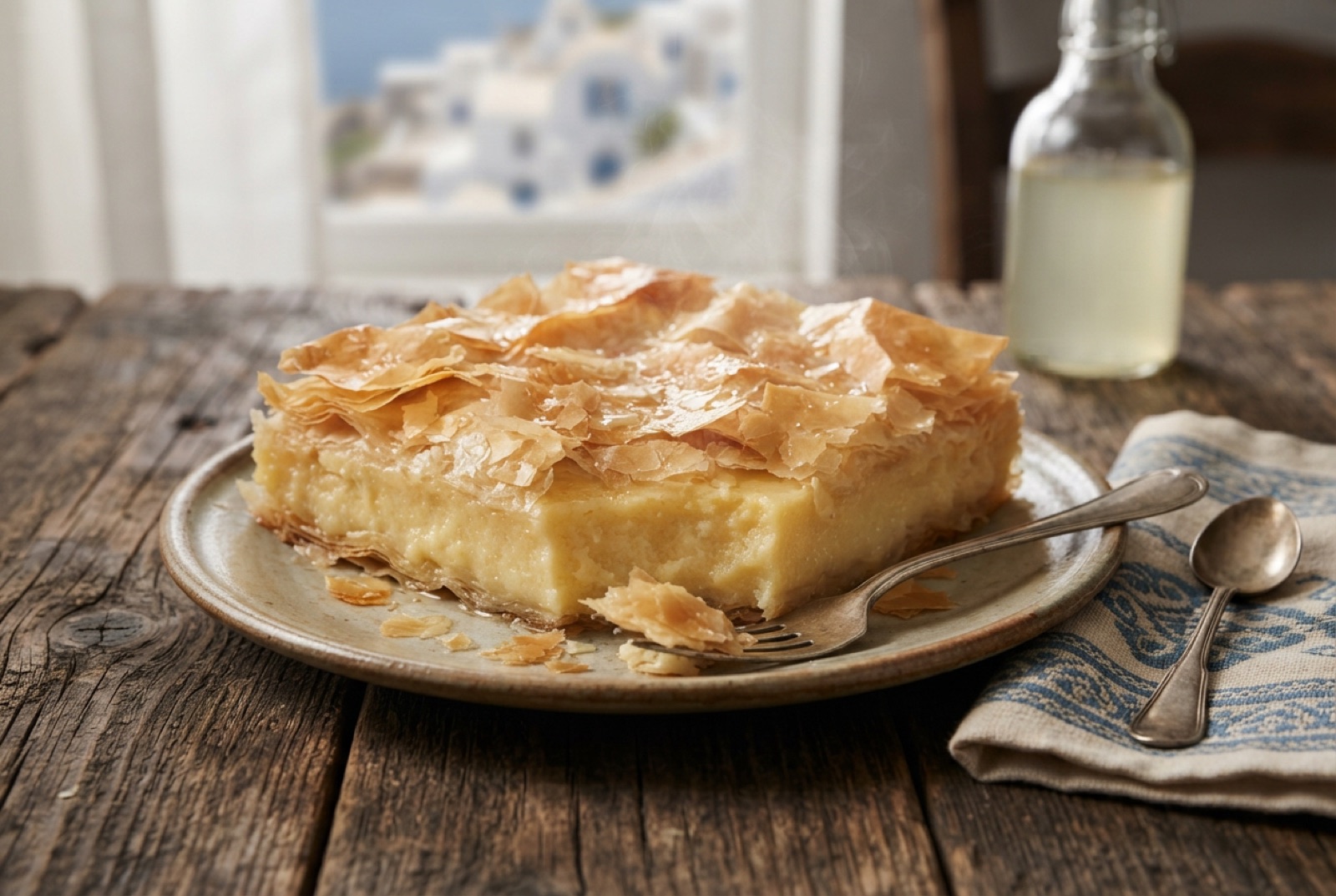
Galaktoboureko
Greek Semolina Custard Filo Pie
Greece2 hr 35 min
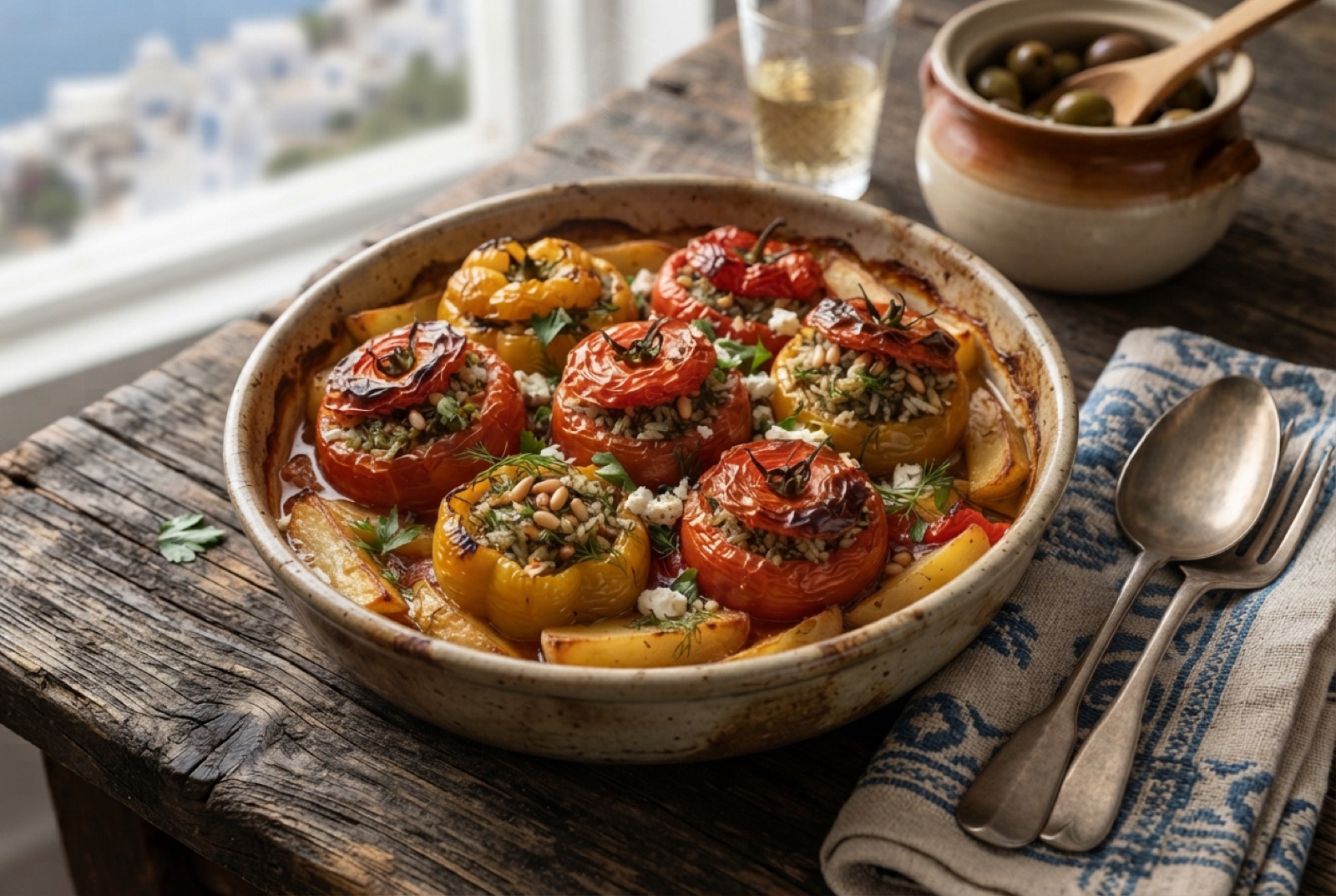
Gemista
Greek Stuffed Tomatoes and Peppers
Greece3 hr 15 min
Greek Moussaka
Eggplant and Béchamel Bake
Greece15 min
Horiatiki, the Real Greek Village Salad
Greece2 hr 53 min
Koulouri Thessalonikis
Sesame-Crusted Bread Ring
Greece2 hr 40 min
Pastitsio
Greek Baked Pasta with Béchamel
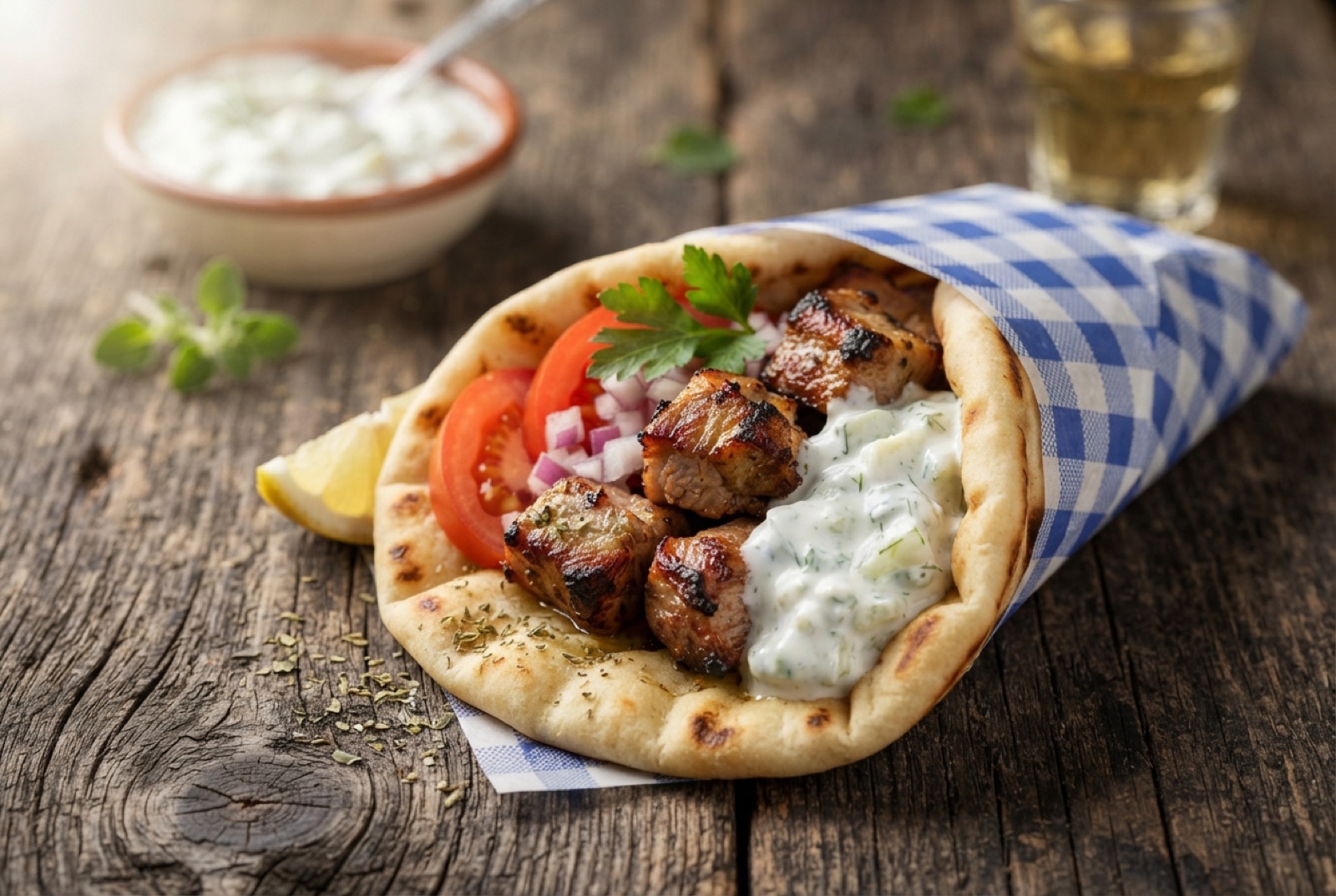
Greece2 hr 32 min
Souvlaki
Greek Grilled Pork Skewers
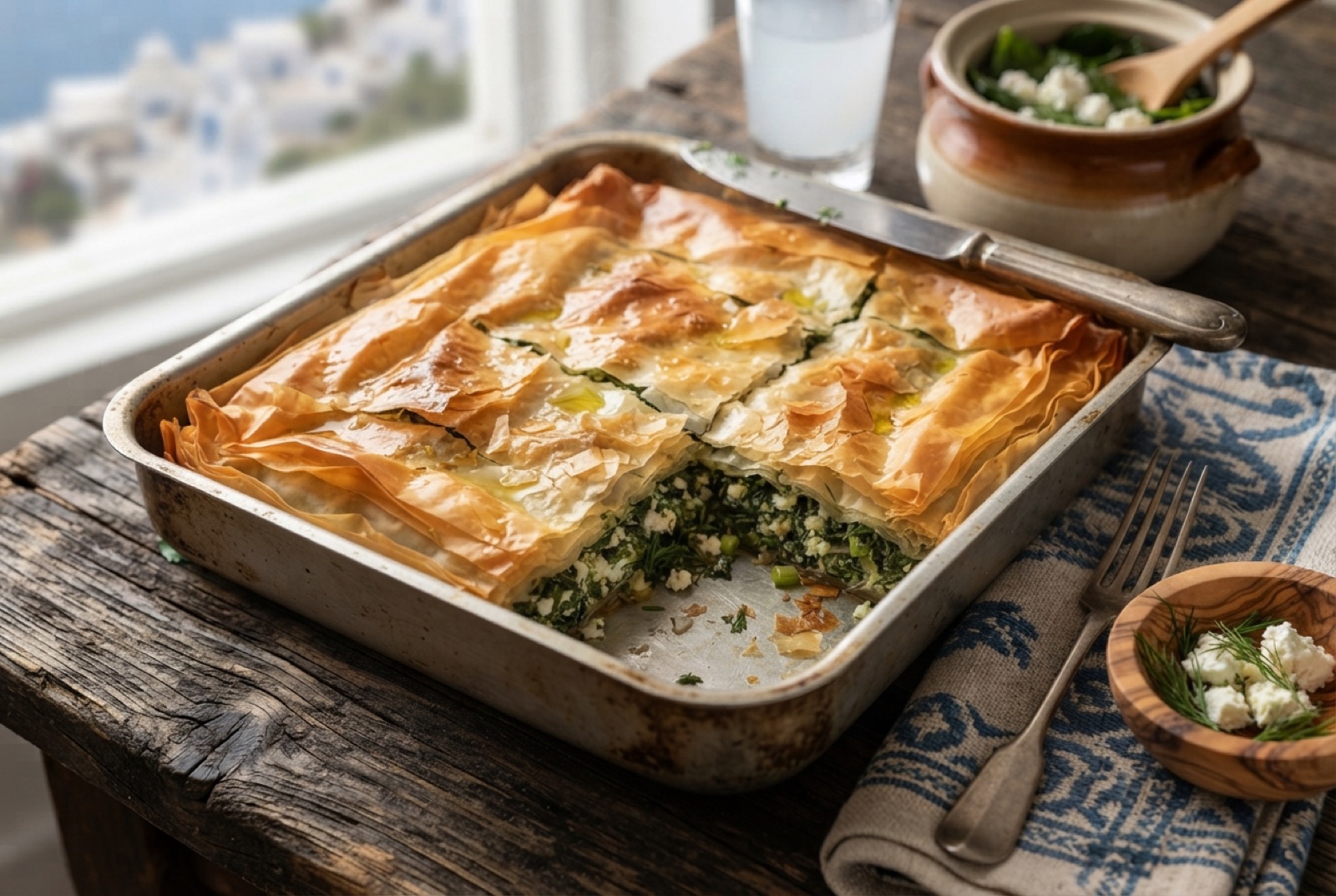
Greece1 hr 50 min
Spanakopita
Greek Spinach and Feta Filo Pie
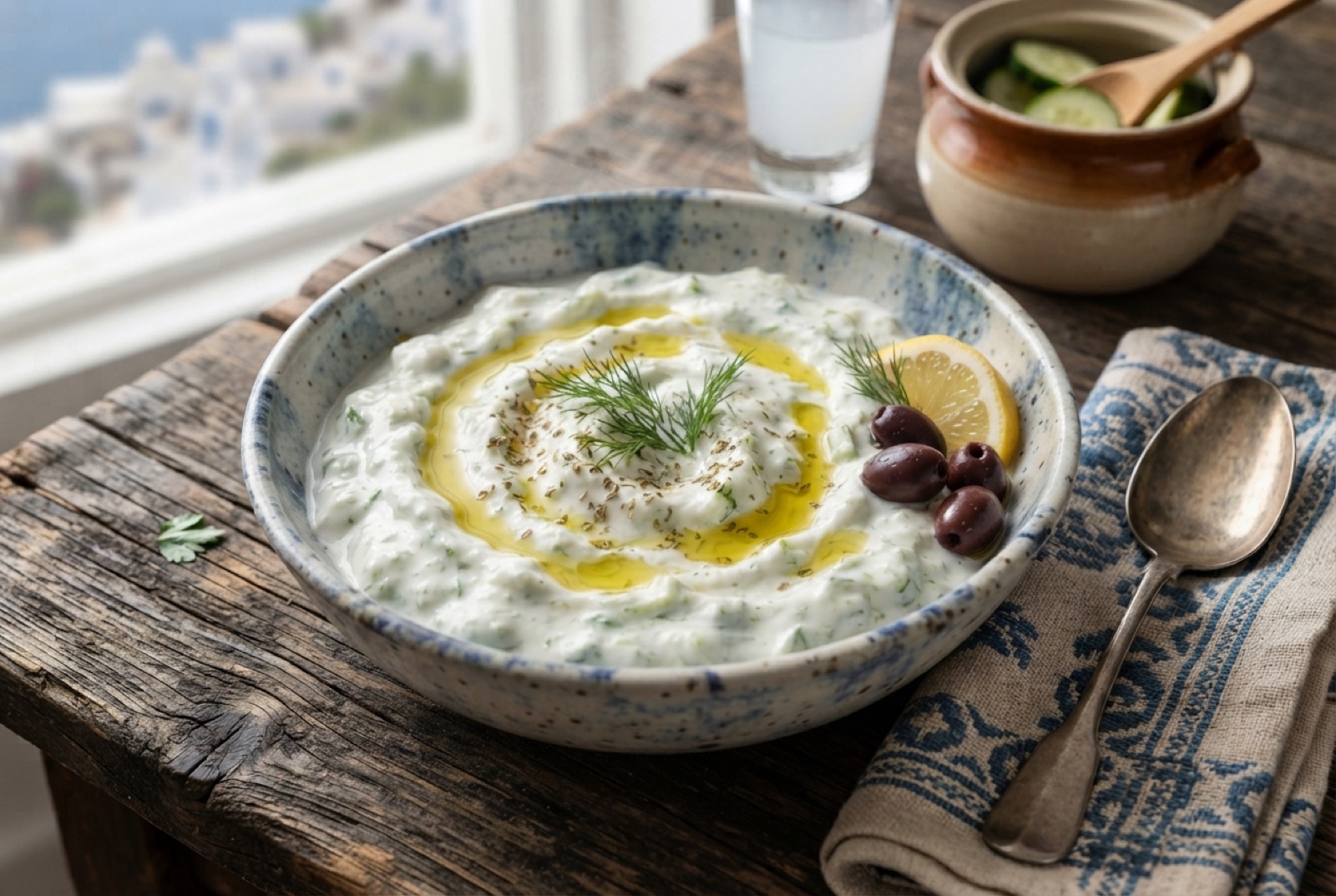
Greece1 hr 15 min
Tzatziki
Greek Yogurt, Cucumber and Garlic Dip
Keep traveling.
Greece sits in Mediterranean, and its kitchen shares borders as well as ingredients with Albania and Austria.
 Albania
 Austria