Spanakopita.
Greek Spinach and Feta Filo Pie
Σπανακόπιτα · Spanakopita · say it: spah-nah-KOH-pee-tah
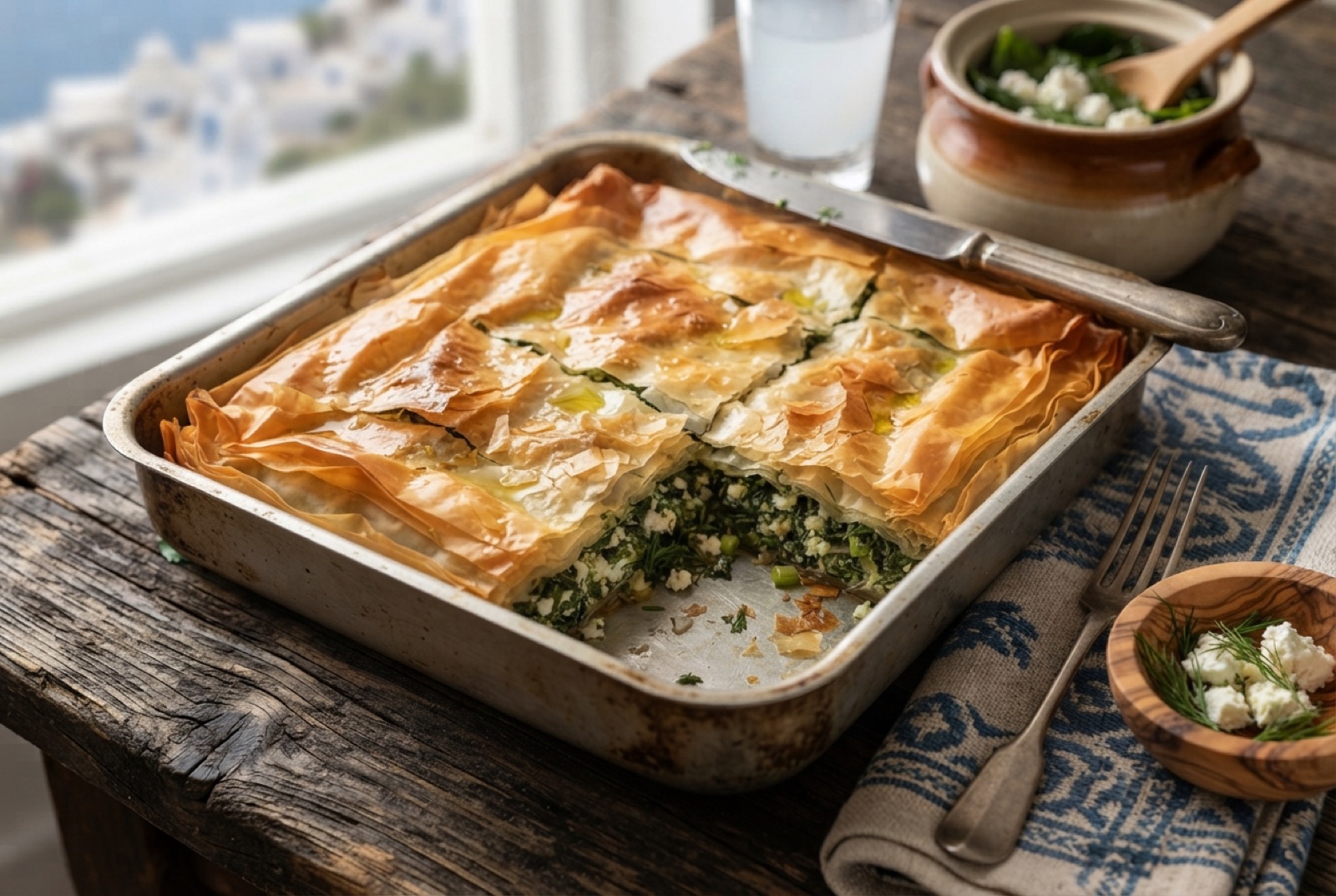
Spanakopita is a spinach pie built in a tray: a bed of filo brushed with olive oil, a thick layer of wilted spinach mixed with crumbled feta, dill and spring onion, then more filo on top, scored and baked until the surface blisters into brittle golden shards. The filling is savoury and sharp rather than creamy — feta does the seasoning, dill does the perfume, and there is no cheese sauce anywhere near it. Cut into squares it is picnic food, lunchbox food and bakery-window food all at once, eaten warm or at room temperature but almost never hot from the oven. The single technique that decides everything is squeezing the spinach dry, and it is not optional.

- Gate
- Greece
- Prep
- 40 min
- Cook
- 50 min
- Total time
- 1 hr 50 min incl. 20 min rest
- Serves
- 8
- Status
- Medium
- Nutrition / serving · estimated
- Calories 420 kcal
- Protein 14 g
- Carbs 31 g
- Fat 27 g
- Fiber 4 g
- Sodium 780 mg
Why this recipe works.
- The spinach is salted and wrung out properly, which is the difference between a crisp pie and a soggy grey one.
- Feta seasons the filling, so there is almost no added salt to overshoot — you taste before the eggs go in.
- Olive oil rather than butter between the sheets, as in Greek home baking, giving a lighter and more brittle crust.
- The top is scored before baking so the finished pie cuts into clean squares instead of shattering everywhere.
Ingredients.
13 itemsFor the filling
For the pastry
Equipment
- Roughly 30 x 24 cm baking tray or dish
- Large pot or deep frying pan
- Clean tea towel for wringing spinach
- Pastry brush
Instructions.
Wilt and drain the spinach
Pile the wet spinach into a large dry pot over medium-high heat and turn it with tongs until it collapses to a fraction of its volume and turns deep green, about 4 minutes. Tip it into a colander, press with a spoon, and leave until cool enough to handle.
Wring it truly dry
Working in handfuls, twist the spinach inside a clean tea towel over the sink until water stops running out and the bundle feels dense and almost dry. Chop it roughly and pull the strands apart so it is not one solid clump.
Tip A kilo of fresh spinach gives up at least 300 ml of water. If barely anything comes out, you are not squeezing hard enough.
Soften the alliums
Warm 3 tablespoons of olive oil in a pan and cook the chopped onion over medium heat until translucent and sweet-smelling but not coloured, around 6 minutes. Add the spring onions and cook 2 minutes more, just until they lose their raw edge. Cool completely.
Tip Hot alliums added to raw egg will scramble it — wait until the pan is only just warm to the touch.
Mix the filling
Combine the spinach, cooled onions, crumbled feta, dill, parsley and pepper in a large bowl and taste before seasoning — feta is salty enough that many batches need no salt at all. Stir in the beaten eggs last so the mixture just holds together.
Build the base
Brush the tray with olive oil and lay in half the filo sheets one at a time, stippling each with oil and letting the edges hang over the sides. Spread the filling evenly across the base and press it flat with the back of a spoon so there are no domes.
Tip Keep the unused filo under a barely damp tea towel while you work.
Top, score and finish
Layer the remaining sheets over the filling, oiling each, then fold the overhanging edges inward and tuck them down the sides like sheets on a bed. Brush the top generously with oil, scatter sesame seeds if using, and score the surface into squares cutting only through the upper layers.
Tip Flick a few drops of water over the top before baking — it helps the surface blister into shards rather than baking flat.
Bake until it shatters
Bake at 180°C (fan 165°C) for 45–55 minutes, until the top is deep golden brown, visibly puffed in ridges, and sounds papery when tapped with a knife. If the surface colours before the time is up, drop the heat by 10 degrees rather than covering it.
Rest, then cut
Let the pie stand at least 20 minutes so the filling sets, then cut down through the scored lines to the base with a serrated knife. Serve warm or at room temperature, with lemon wedges for anyone who wants to cut the richness.
Tips from our kitchen.
- Squeeze the wilted spinach in a clean tea towel until no more water comes out, then squeeze again. Nearly every failed spanakopita is a wet-filling problem.
- Keep the filo you are not using under a barely damp tea towel. Uncovered sheets go leathery and start cracking within a couple of minutes.
- A torn sheet is not a disaster. Lay it in place, patch it with the next one, and no one will find the seam once it is baked.
- Brush oil in dabs rather than sweeping strokes — a loaded brush dragged across thin filo tears it, while a stippling motion barely moves the sheet.
- Score only through the top layers before baking, not down into the filling, or juices bubble up and soften the crust.
- Let the pie sit at least 20 minutes out of the oven. Cut straight away and the filling slumps out of every square.
Substitutions.
- Fresh spinach → 600 g frozen leaf spinach, thawed and wrung out very hard
- Frozen works genuinely well here and saves a lot of washing. Use leaf spinach rather than chopped, which turns to purée, and expect to squeeze out a startling amount of water.
- Feta → A mix of feta and ricotta, or crumbled goat cheese
- Adding ricotta softens the tang for people who find feta too salty. Straight ricotta alone makes the filling bland — keep at least half feta.
- Filo pastry → Puff pastry, top and bottom
- Not traditional and not the same pie — puff is richer and does not shatter the same way — but it is a reliable fallback if filo is unavailable. Roll it thin and bake a little longer.
Variations.
- Hortopita
- The older village pie made with wild greens — dandelion, nettle, sorrel, wild fennel — instead of spinach. Bitterer, more aromatic, and worth making if you can forage or find a mixed greens bunch at a market.
- Nistisimi spanakopita
- The fasting version: no feta and no egg, bound instead with a handful of rice or fine bulgur and carried by olive oil, dill and spring onion. Naturally vegan and genuinely traditional.
- Strifti spanakopita
- Filling rolled into long filo ropes, then coiled into a spiral in a round tin so every slice has both crust and filling running through it.
Storage & reheating.
Spanakopita keeps 3 days in the fridge, covered loosely so steam can escape; airtight containers turn the crust limp overnight. Reheat squares in a 180°C oven or an air fryer for 8–10 minutes to bring the filo back — a microwave makes it soft and sad. Unbaked pie freezes very well: assemble in the tray, score the top, freeze solid, then bake from frozen at 180°C for about 60 minutes. Baked and frozen slices reheat acceptably but never regain full crispness.
Serve with
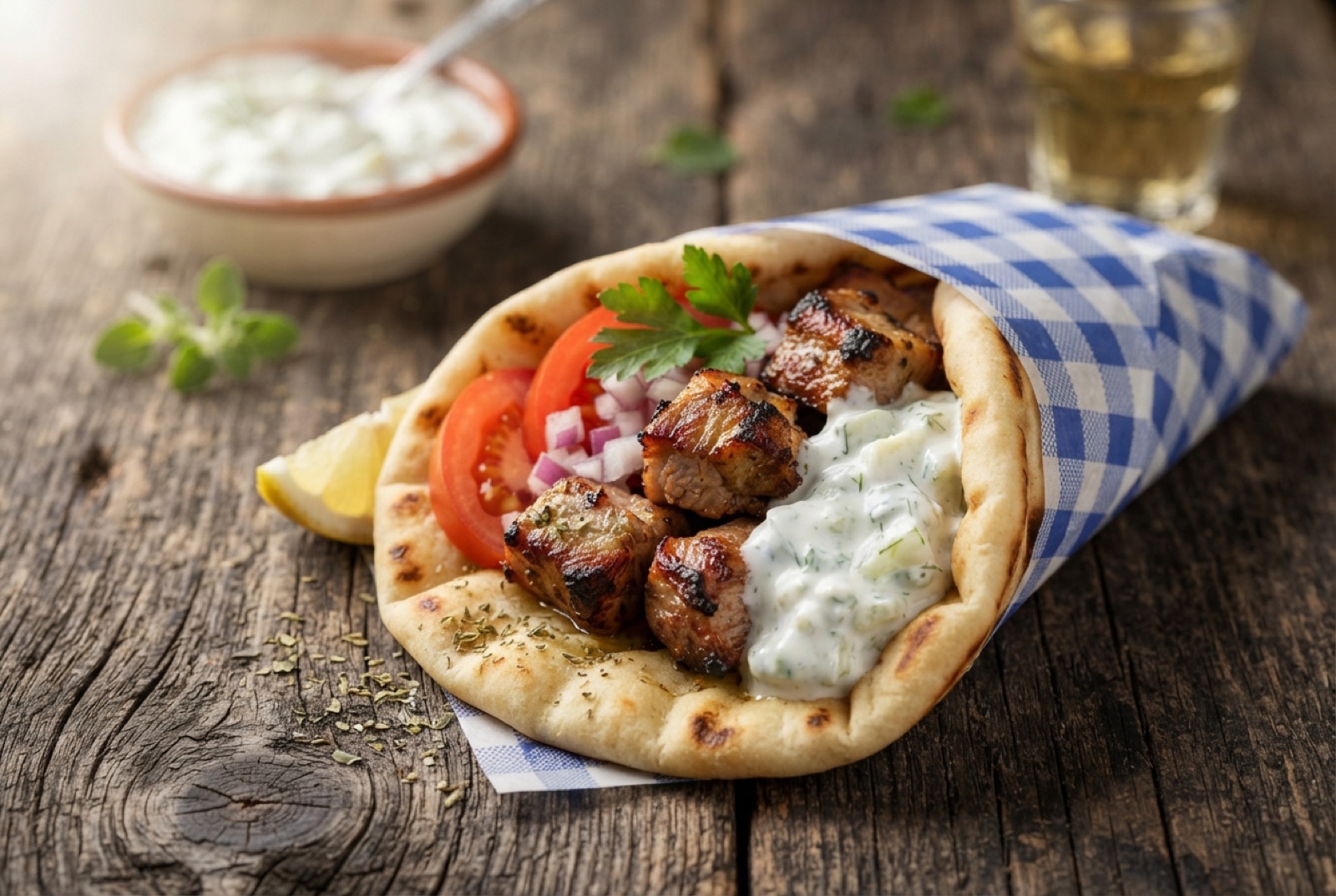
A wedge of lemon, plain thick yogurt, and a tomato salad — or nothing at all, wrapped in paper and eaten in the street.
The story behind Spanakopita.
Greece is a country of pies. In Epirus, the mountainous northwest, pie-making is close to a regional identity: households there roll their own filo by hand with a long thin dowel called a plastis, and the repertoire runs to dozens of fillings — wild greens, leeks, pumpkin, cheese, cornmeal, whatever the hillside and the pantry offered. Spanakopita is the most travelled member of that family, but it belongs to a much wider tradition of feeding people cheaply and well by wrapping something green in something starchy.
The greens themselves matter more than the spinach implies. Rural Greek pies were, and often still are, made with horta — foraged wild greens gathered in spring, from dandelion and nettle to sorrel and wild fennel — which are bitterer, more mineral and more interesting than cultivated spinach. Cultivated spinach became the default because it is available year-round and predictable, and the dill and spring onion in the modern filling partly compensate for the wild aromatics that were lost. Cooks who can get a handful of chard or nettles into the mix will taste immediately why the older version had a following.
The pie also has a calendar. Because a version can be made entirely without dairy or eggs, it slots neatly into the long Orthodox fasting periods when animal products are off the table — those pies rely on olive oil, rice or bulgur and a heavy hand with herbs. The rest of the year, feta returns and the pie becomes what most people know. In bakeries it is sold by weight, in squares or as coiled strudels, wrapped in paper and handed over still warm; on Greek tables at home it is more likely to appear as a whole tray in the middle, cut in front of everyone, with the corners fought over because that is where the filo is crispest.
Questions, answered.
Why did my spanakopita turn out soggy?
Almost always because the spinach was not squeezed dry enough. Spinach is over 90 percent water, and any moisture left in the filling steams into the pastry from underneath during baking. Wilt it, cool it, then wring it hard in a tea towel until it stops dripping. A second cause is brushing on too much oil, which pools at the base of the tray.
Can I use frozen spinach for spanakopita?
Yes, and many Greek home cooks do. Use frozen leaf spinach rather than chopped, thaw it completely, then squeeze out the water in batches — you will typically remove several hundred millilitres. Because it is already blanched, you skip the wilting step and go straight to mixing with the cheese and herbs.
How do I stop filo pastry from cracking?
Thaw it slowly in the fridge overnight rather than on the counter, and keep the stack covered with baking paper and a barely damp tea towel while you work, uncovering one sheet at a time. Cracks and tears in the inner layers do not matter at all — layer over them and they disappear during baking.
Is spanakopita served hot or cold?
Warm or at room temperature, rarely piping hot. Straight from the oven the filling is loose and the squares fall apart; after 20 to 30 minutes the pie sets and the flavours of dill and feta come forward. Greeks happily eat it cold the next day, which is why it is standard picnic and travel food.
Can I make spanakopita ahead of time?
Yes. Assemble the whole pie, score the top, cover and refrigerate for up to a day, then bake as normal. It also freezes unbaked for up to 3 months — bake from frozen, adding about 15 minutes. What does not work well is preparing the filling days ahead, since it slowly weeps liquid in the fridge and needs draining again.
You might also like.
All recipes →
Keep exploring Greece.
Greece has 9 more dishes in the atlas — Fasolada and Galaktoboureko, and 7 more.
Recipe by The DishRoute Kitchen · published August 19, 2026 · updated August 19, 2026