Torta tal-Lampuki.
Maltese Dorado and Cauliflower Pie
Torta tal-lampuki · say it: TOR-ta tal-lam-POO-kee
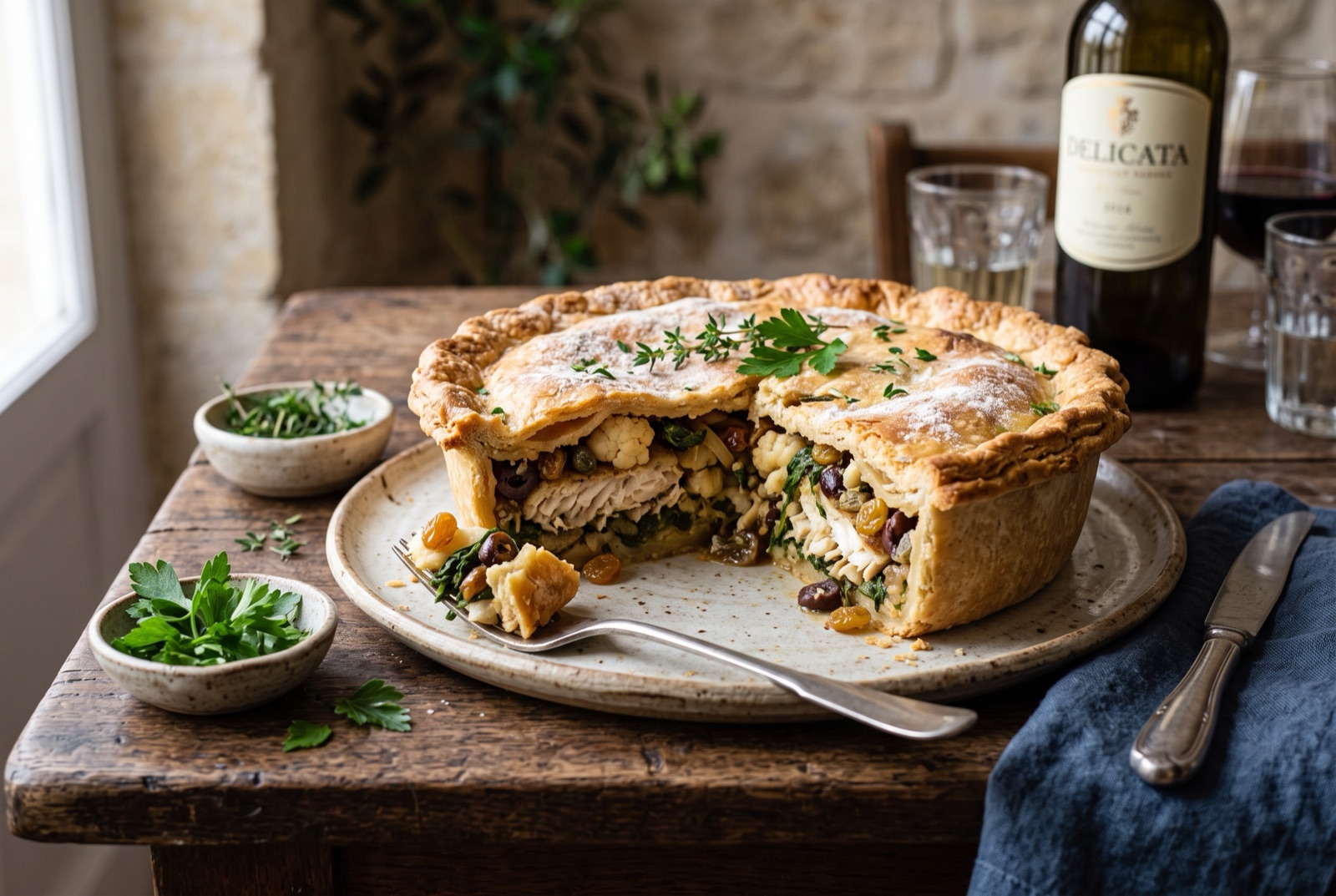
Torta tal-lampuki is a savoury fish pie made in Malta only during the lampuki season, roughly late August to December, when dorado shoal past the islands. Fillets are floured and fried, then layered into a pastry case with cauliflower, spinach, onions cooked down with tomato, black olives, capers, sultanas and a scatter of walnuts, and sealed under a lid of short pastry. The eating is unexpected: mild sweet fish, bitter greens, salty capers and small bursts of sweetness from the sultanas, all in a crust that is more biscuity than flaky. It is a big, generous, deliberately old-fashioned pie, and it is the single dish Maltese people most associate with autumn.

- Gate
- Malta
- Prep
- 55 min
- Cook
- 1 hr 10 min
- Total time
- 2 hr 35 min incl. 30 min rest
- Serves
- 6
- Status
- Takes skill
- Nutrition / serving · estimated
- Calories 640 kcal
- Protein 34 g
- Carbs 54 g
- Fat 33 g
- Fiber 6 g
- Sodium 890 mg
Why this recipe works.
- Fish fried first, so it holds its shape in the pie instead of dissolving into the vegetables.
- Filling is cooled and drained before assembly — the reason most fish pies end up with a soggy base.
- Keeps the traditional sultana, caper and olive balance instead of quietly modernising it away.
- Tells you honestly what to use out of season and what changes when you do.
Ingredients.
21 itemsFor the pastry
For the filling
Equipment
- 23–25 cm deep pie dish or springform tin
- Large frying pan
- Rolling pin
- Baking beans for blind baking
Instructions.
Make the pastry
Rub the cold butter into the flour and salt until the mixture looks like coarse breadcrumbs with a few larger flecks. Mix in the whole egg and just enough ice water to bring it together, knead briefly, then wrap and chill for 30 minutes.
Tip Stop adding water as soon as the dough holds when squeezed — wet short pastry shrinks and toughens.
Fry the fish
Season the fillets, dust them in flour and shake off the excess. Fry in 3 tablespoons of the oil over medium-high heat for about 2 minutes a side, until the coating is pale gold and the flesh has just turned opaque at the edges. Lift out and let cool, then break into large flakes.
Cook the onion base
In the same pan, soften the onions in the remaining oil over low heat for 15 minutes until sweet and collapsing. Add the garlic, then the tomato paste, and cook for 2 minutes before adding the tomatoes. Simmer until thick and jammy with no watery liquid left, about 10 minutes.
Blanch the vegetables
Boil the cauliflower florets in salted water for 5 minutes until just tender at the edge of a knife, then drain thoroughly. Wilt the spinach in the residual heat of the pan, squeeze it hard in a clean cloth to remove every bit of water, and chop roughly.
Tip Squeeze the spinach until it stops dripping entirely. Wet spinach is the main cause of a collapsed base.
Mix and cool the filling
Combine the tomato-onion base with the cauliflower, spinach, olives, capers, sultanas, walnuts, parsley and mint, then fold the flaked fish through gently so it stays in pieces. Season carefully and leave to cool completely.
Tip Taste before salting — capers and olives may have done the job already.
Blind-bake the base
Heat the oven to 190°C. Roll out two-thirds of the pastry and line the dish, leaving an overhang. Prick the base, line with paper and baking beans and bake for 15 minutes, then remove the beans and bake 5 minutes more until the surface looks dry and sandy.
Fill and seal
Spoon the cold filling into the case and level it without pressing down hard. Roll the remaining pastry into a lid, lay it over, trim and crimp the edges firmly, and cut two slits in the centre for steam. Brush all over with beaten yolk.
Bake and rest
Bake for 45–50 minutes until the pastry is deep golden and firm and you can see steam escaping steadily from the slits. Let the pie rest for 20 minutes before cutting so the filling settles and the slices hold together.
Tips from our kitchen.
- Dry the fish thoroughly and season it before flouring, or the coating slides off in the pan and the flesh stays bland.
- Fry the fish just until barely opaque. It gets a second cooking in the oven, and overcooked dorado turns cottony.
- Cook the onion and tomato base down until it is genuinely thick and jammy — any free liquid ends up under the pastry.
- Let every component cool to room temperature before assembling. Warm filling melts the fat in the pastry and you lose the crust.
- Blind-bake the base for 15 minutes. It is the difference between a crisp bottom and a pale, damp one.
- Rinse the capers if they are salt-packed and taste an olive before committing — Maltese capers are aggressively salty and the filling is already seasoned.
Substitutions.
- Lampuki (dorado / mahi-mahi) → Any firm white fish — hake, cod loin, sea bass or kingfish
- Nothing tastes exactly like lampuki, which is mild and slightly sweet with dense flakes. Frozen mahi-mahi fillets are the closest option outside Malta.
- Homemade short pastry → Shop-bought shortcrust for the base and puff pastry for the lid
- This is what many Maltese bakeries do. Puff on top gives a lighter finish; keep shortcrust underneath or the base will not hold the filling.
- Sultanas → Raisins or chopped dried apricots
- The point is small bursts of sweetness against the capers. Leave them out and the pie loses the contrast that makes it distinctive.
Variations.
- On-the-bone lampuki pie
- The older village version leaves the fish in steaks rather than fillets, giving more flavour and requiring more attention at the table.
- Open-topped torta
- Baked without a pastry lid so the top browns and dries slightly — quicker, and easier if you are nervous about a soggy crust.
- Lenten vegetable torta
- The same filling built entirely from cauliflower, spinach, peas and olives with no fish, a version made in Malta during Lent.
Storage & reheating.
Keeps 3 days covered in the fridge and is good at room temperature the next day, which is how leftovers are usually eaten. Reheat whole or in slices at 170°C for 20 minutes to re-crisp the pastry; a microwave turns the crust to leather. It freezes acceptably for 6 weeks once baked, though the cauliflower softens further on thawing. Do not freeze it unbaked, as the wet filling will soak into the raw pastry.
Serve with
A simple tomato and onion salad with olive oil, and a cold Maltese white wine or a lager.
The story behind Torta tal-Lampuki.
Lampuka — dorado, mahi-mahi, dolphinfish, depending on who is naming it — arrives around Malta in late summer and is caught using a method that has changed remarkably little: kannizzati, rafts of palm fronds floated offshore to create shade that the fish gather under, marked and tended by fishermen from Marsaxlokk and other harbour villages. The rights to particular fishing spots are allocated by lottery, and the season is short and intense. Because the fish is abundant, cheap and available only for a few months, Maltese cooking treats it as a seasonal event rather than a staple, and the pie is its culmination.
The filling looks eccentric until you place it historically. Sweet-and-savoury combinations — dried fruit and nuts alongside fish or meat — run through medieval Mediterranean cooking and survive strongly in Sicilian food, where sultanas and pine nuts appear in sardine pasta and countless vegetable dishes. Malta kept the habit long after most of Europe abandoned it. The cauliflower and spinach are practical rather than decorative: they bulk out the pie, absorb the fish juices and stop the filling from being either too rich or too dry.
Traditionally the pie belongs to the same bakery culture as imqarrun il-forn — assembled at home, carried to the village oven, collected browned. Some versions leave the fish on the bone and let people negotiate it at the table; the home version below uses fillets, which is easier and loses very little. What varies most is the crust: bakeries often use puff pastry for the lid, while households make a plain short pastry with lard or butter that stays firm enough to hold a wet filling. Outside the season, Maltese cooks either skip the pie entirely or make it with other fish and refuse to call it lampuki pie — a small point of seasonal honesty worth respecting.
Questions, answered.
What is lampuki and when is it in season?
Lampuki is the Maltese name for dorado, also sold as mahi-mahi or dolphinfish. It is a fast-growing, mild, firm-fleshed fish that migrates past Malta from roughly late August to early December, caught using floating palm-frond rafts. Outside that window Maltese cooks either skip the pie or make it with other white fish and say so.
Why are there sultanas in a fish pie?
Sweet dried fruit alongside savoury fish is a long-standing Mediterranean combination that survives in Sicilian and Maltese cooking. The sultanas are not there to make the pie sweet — they give occasional bright bursts that play against the salty capers and olives, in the same way that sardine pasta uses raisins and pine nuts.
How do I stop the bottom crust going soggy?
Three things: blind-bake the base for 15 minutes before filling it, cook the tomato and onion base down until it is thick with no free liquid, and let all the filling components cool completely before assembling. Warm, wet filling poured into raw pastry is the standard way this pie goes wrong.
Can I make it with tinned fish?
Tinned tuna is sometimes used as a shortcut in Maltese homes and it works, though the texture is much finer and the pie loses the flakes of fried fillet. Drain it well and reduce the salt elsewhere, since tinned tuna is already seasoned and the capers and olives bring plenty of their own.
Can I prepare the pie in stages?
Yes, and it is easier that way. Make the pastry and the vegetable filling up to two days ahead and keep them refrigerated separately. Fry the fish on the day, assemble cold and bake. The one thing you should not do is assemble it and leave it sitting raw for hours, as the base softens.
You might also like.
All recipes →
Keep exploring Malta.
Malta has 9 more dishes in the atlas — Aljotta and Bigilla, and 7 more.
Recipe by The DishRoute Kitchen · published August 20, 2026 · updated August 20, 2026