Lomo Saltado.
Peruvian Beef Stir-Fry
Lomo saltado · say it: LOH-moh sal-TAH-doh
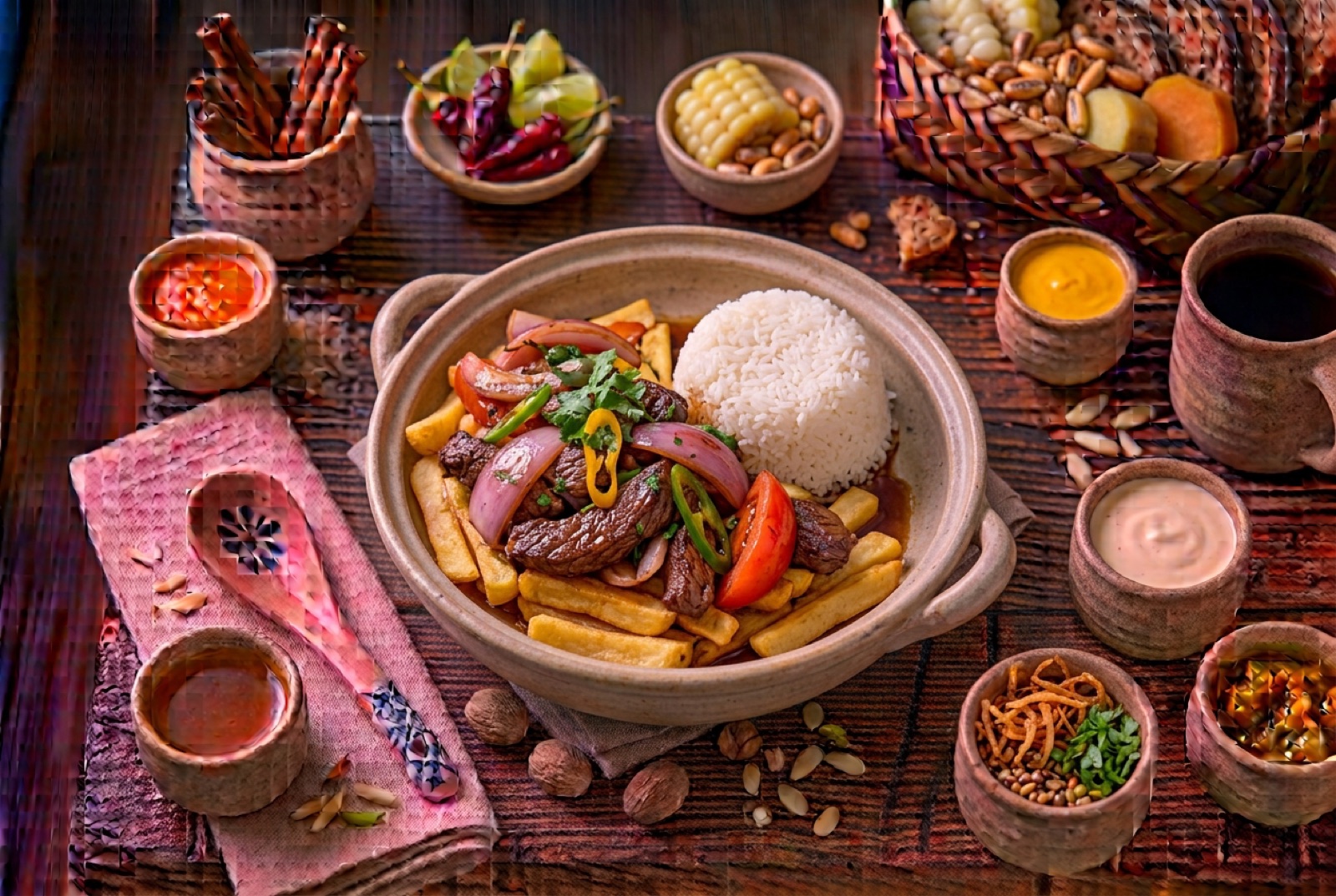
Lomo saltado is strips of beef seared hard in a smoking-hot pan, then tossed with red onion, tomato wedges, ají amarillo chile, soy sauce and vinegar until everything is glossy and just softened — and the whole thing is piled over french fries, with white rice alongside. It tastes like a great stir-fry that took a detour through South America: smoky beef, sweet-sharp onion, juicy tomato, and a pan sauce that soaks into the fries. Yes, fries and rice together; that double carbohydrate is not a mistake, it is the dish. It comes together in under half an hour once everything is cut.

- Gate
- PeruLima
- Prep
- 25 min
- Cook
- 25 min
- Total time
- 50 min
- Serves
- 4
- Status
- Medium
- Nutrition / serving · estimated
- Calories 740 kcal
- Protein 40 g
- Carbs 78 g
- Fat 28 g
- Fiber 6 g
Why this recipe works.
- True Chifa method: small batches in a smoking-hot pan so the beef chars instead of stewing.
- The tomato and onion stay in distinct wedges, just softened — never cooked to a sauce.
- A balanced jugo of soy, vinegar and ají amarillo that seasons the fries underneath.
- Weeknight-fast once the cutting is done: about 15 minutes of actual cooking.
Ingredients.
14 itemsFor the saltado
For serving
Equipment
- Wok or large heavy skillet
- Sharp knife
- Tongs or a wok spatula
- Oven or fryer for the fries
Instructions.
Cook the rice and fries
Steam the rice, and fry or bake the fries until deep golden and crisp at the edges — they should rustle when shaken. Hold both warm; the stir-fry itself takes barely ten minutes.
Tip A low oven (around 100°C) keeps fries crisp for 20 minutes without drying them out.
Season the beef and stage everything
Pat 600 g of beef strips completely dry, then season with salt, the cumin and black pepper. Line up the onion, tomato, ají, garlic, and the soy sauce and vinegar within reach of the stove — once the pan is hot there is no time to fetch anything.
Sear the beef in batches
Heat the oil in a wok or heavy skillet until it just begins to smoke. Sear the beef in two or three batches, leaving it untouched for the first minute, until deeply browned at the edges but still pink inside, about 2 minutes per batch. Transfer each batch to a plate.
Tip If the pan stops sizzling loudly, it is overcrowded — pull some meat out and let the heat recover.
Flash the vegetables
In the same smoking pan, toss the onion wedges and ají strips for about 90 seconds, until the onion edges char in spots but the layers stay crunchy. Add the garlic and toss just until fragrant, a few seconds — it must not brown.
Bring it together
Return the beef and its juices, add the tomato wedges, and pour the soy sauce and vinegar down the hot side of the pan so they hiss and steam. Toss everything for under a minute, until the tomato is warmed and barely slumping and a glossy dark jugo pools at the bottom.
Assemble and serve
Pile the fries onto plates or fold them straight into the pan, tip the saltado and all its juices over them, and shower with cilantro. Serve immediately with the rice alongside, while the fries still have crunch under the jugo.
Tips from our kitchen.
- Get the pan genuinely smoking before the beef goes in. Lomo saltado made over timid heat is beef stew with fries — the char is the dish.
- Cook the beef in two or three batches. Crowding the pan drops the temperature and the meat releases liquid instead of searing.
- Cut the onion and tomato into thick wedges, not slices, so they hold their shape through the tossing and stay juicy inside.
- Have everything cut, mixed and within arm's reach before you turn on the heat — the cooking moves too fast to chop mid-way.
- Add the tomato last and toss for less than a minute; it should warm through and barely slump, never collapse.
- If your fries are ready early, hold them in a low oven so they stay crisp under the jugo.
Substitutions.
- Beef sirloin or tenderloin → Flank or skirt steak, sliced thin against the grain
- Cheaper and very flavorful; just slice thinner and do not cook past medium or it toughens.
- Ají amarillo → A yellow bell pepper strip plus a pinch of cayenne, or 1 tbsp ají amarillo paste from a jar
- The jarred paste (sold in Latin groceries) is much closer to the real fruity heat than any fresh substitute.
- Homemade fries → Good frozen fries, oven-baked or air-fried
- A completely accepted shortcut in busy Peruvian kitchens — crispness matters more than pedigree.
Variations.
- Pollo saltado
- The same stir-fry made with chicken thigh strips — a standard Chifa menu item and slightly lighter.
- Lomo saltado a lo pobre
- "Poor man's style," which paradoxically adds more: a fried egg on top and often fried plantain alongside.
- Tacu tacu con lomo
- The saltado served over tacu tacu — a griddled cake of refried beans and rice — instead of fries.
Storage & reheating.
The beef mixture keeps 2–3 days refrigerated in a sealed container; reheat it fast in a hot pan so the vegetables do not turn to mush. Store fries separately and re-crisp them in a hot oven or air fryer — a microwave makes them limp. The assembled dish does not freeze well because tomato and fries both suffer.
Serve with
Steamed white rice on the side and a spoon of ají sauce, with chicha morada or a cold beer.
The story behind Lomo Saltado.
Lomo saltado is the flagship dish of Chifa, Peru's Chinese-Peruvian cooking tradition — and unlike many fusion stories, this one is well documented. Beginning around 1849, tens of thousands of Cantonese laborers arrived in Peru under contract to work plantations, guano fields and railways. When their contracts ended, many settled in Lima and opened small restaurants. They cooked the way they knew — over ferocious heat, in woks, with soy sauce and quick tossing — but stocked their kitchens with what Peru's markets sold: beef, red onions, tomatoes, ají amarillo chiles, and the potato, which is native to the Andes and grown there in thousands of varieties.
Out of that collision came lomo saltado: a Cantonese stir-fry technique — "saltado" describes the tossing, the ingredients literally jumping in the pan — applied to a criollo flavor base, finished with soy sauce, and served over fried potatoes with rice. Even the word Chifa is generally traced to Cantonese roots meaning roughly "to eat rice," and Lima's Barrio Chino, its Chinatown, remains one of the oldest in the Americas. Chifa restaurants today number in the thousands across Peru, and lomo saltado long ago escaped them into home kitchens, criollo restaurants and hotel menus alike — it is one of the first dishes Peruvians name when asked what to eat.
The dish rewards the same discipline as any stir-fry: a screaming-hot pan, meat in small batches, and vegetables cooked so briefly they keep their shape. The reward for that restraint is the jugo — the smoky, soy-sharpened pan juice that runs down into the fries and turns them into the best part of the plate.
Questions, answered.
Why does lomo saltado have both french fries and rice?
Because the dish is a genuine hybrid. The rice comes from its Cantonese side — Chifa cooking serves nearly everything with rice — and the fried potato from its Peruvian side, potatoes being native to the Andes. The fries also do a job: they catch the smoky soy pan juices, which Peruvians consider the best part of the plate.
What is Chifa cuisine?
Chifa is Peru's Chinese-Peruvian cooking tradition, created by Cantonese immigrants who began arriving as contract laborers around 1849 and later opened restaurants in Lima. It applies wok technique and seasonings like soy sauce and ginger to Peruvian ingredients. Chifa restaurants are found in nearly every Peruvian town, and lomo saltado is the tradition's most famous dish.
What cut of beef is best for lomo saltado?
"Lomo" means loin, so sirloin or tenderloin is traditional — tender cuts that stay juicy through a fast, violent sear. Flank or skirt steak sliced thin against the grain is a fine cheaper option. Whatever the cut, strips should be thick enough (about 1 cm) to char outside while staying pink inside.
Is lomo saltado spicy?
Only mildly. Ají amarillo, the yellow Peruvian chile that flavors it, is fruity and gently warm rather than hot, and it is used in strips or as a spoonful of paste, not by the handful. Most of the dish's punch comes from soy sauce, vinegar and char. Diners who want real heat add ají sauce at the table.
Can I make lomo saltado without a wok?
Yes — most Peruvian home cooks use a large heavy skillet. What matters is heat and space, not the vessel: get the pan smoking, cook the beef in batches so it sears instead of steaming, and keep the vegetables moving. Cast iron or carbon steel works especially well because it holds heat between batches.
You might also like.
All recipes →
Keep exploring Peru.
Peru has 9 more dishes in the atlas — Ají de Gallina and Anticuchos de Corazón, and 7 more.
Recipe by The DishRoute Kitchen · published August 18, 2026 · updated August 18, 2026