Pollo a la Brasa.
Peruvian Charcoal-Style Roast Chicken
Pollo a la brasa · say it: POH-yoh ah lah BRAH-sah
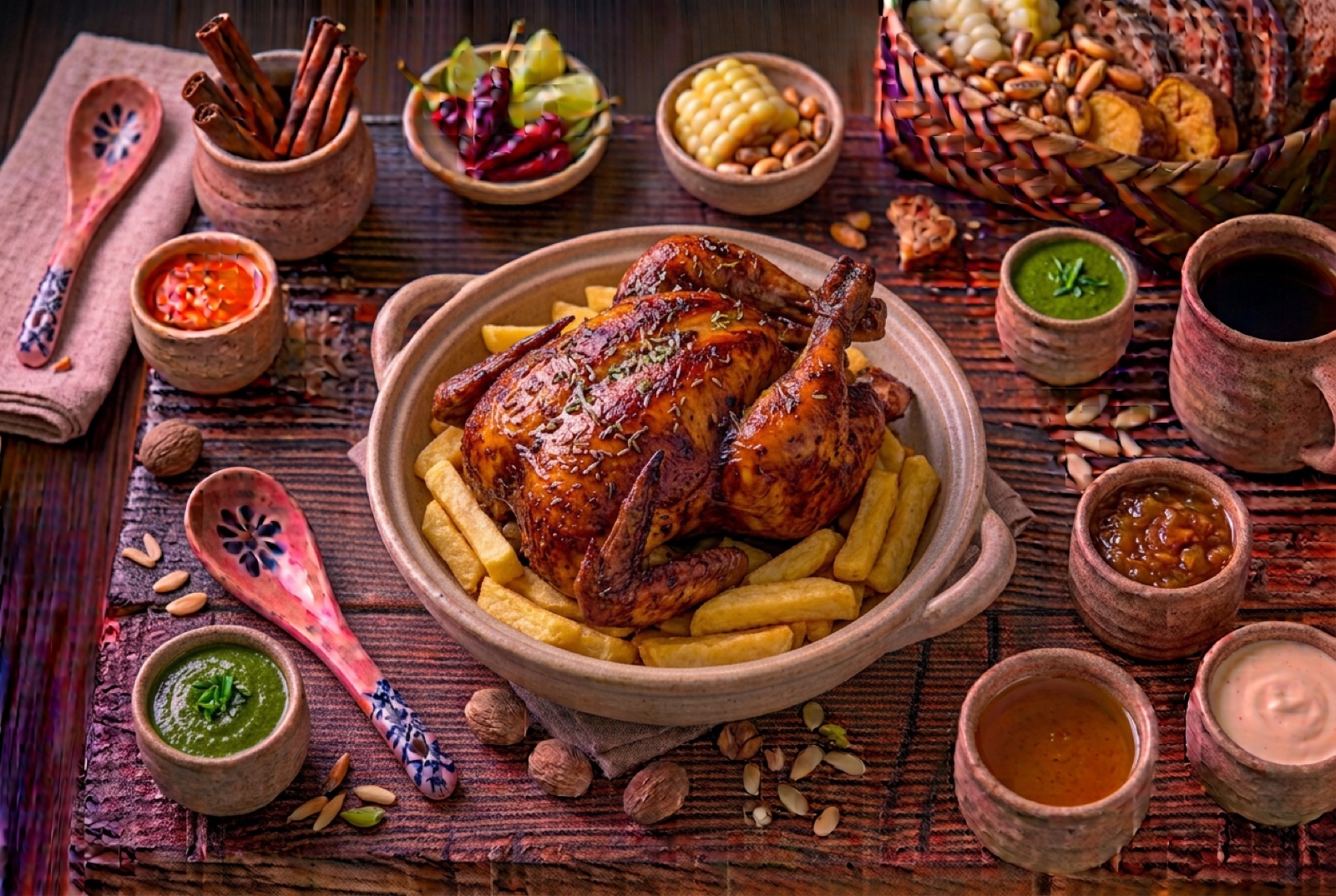
Pollo a la brasa is Peru's national roast chicken: a whole bird soaked overnight in a dark marinade of soy sauce, beer, garlic, cumin and ají panca, then cooked until the skin turns glossy and almost black at the edges and the meat underneath stays wet. The flavour is deeply savoury and slightly sweet, more umami than spicy, with cumin as the note you notice on the second bite. It is never served alone — there are always fries, a plain salad, and a bowl of ají verde, the green sauce of huacatay and chilli that Peruvians take more seriously than the chicken. This version adapts the rotisserie to a home oven without pretending the result is identical.

- Gate
- PeruLima
- Prep
- 25 min
- Cook
- 1 hr
- Total time
- 13 hr 25 min incl. 12 hr rest
- Serves
- 4
- Status
- Easy
- Nutrition / serving · estimated
- Calories 780 kcal
- Protein 52 g
- Carbs 41 g
- Fat 45 g
- Fiber 4 g
- Sugar 3 g
- Sodium 1180 mg
Why this recipe works.
- Marinade quantities balanced so the soy sauce seasons deeply without turning the meat salty or the skin bitter.
- Spatchcock method that cooks breast and thigh evenly in a home oven, no rotisserie required.
- Ají verde built with a workable huacatay substitute and a clear note on what you gain from the real thing.
- A high-heat finish that gets the skin genuinely lacquered rather than merely browned.
Ingredients.
20 itemsFor the chicken
For the marinade
For the ají verde
To serve
Equipment
- Kitchen shears or a heavy knife
- Roasting tray with a rack
- Blender
- Instant-read thermometer
- Large zip bag or non-reactive bowl
Instructions.
Spatchcock the bird
Set the chicken breast down and cut along both sides of the backbone with shears to remove it. Turn the bird over and press hard on the breastbone with the heel of your hand until it cracks and the chicken lies flat, then prick the thighs a few times with a knife tip.
Tip Keep the backbone — it makes excellent stock and takes no extra effort to freeze.
Mix and apply the marinade
Whisk the soy sauce, beer, garlic paste, cumin, ají panca, oregano, pepper, vinegar, lime juice, oil and salt into a dark, slightly thick marinade. Rub it over the chicken on both sides and push some directly under the breast and thigh skin with your fingers.
Marinate overnight
Seal the chicken in a bag or covered dish and refrigerate for 12 to 24 hours, turning once. The skin will darken noticeably and the flesh at the thickest part of the thigh should look faintly stained when you peek.
Dry and set up
Take the chicken out an hour before cooking, scrape off excess marinade and pat the skin thoroughly dry with paper towel. Set it skin side up on a rack over a roasting tray and heat the oven to 200°C.
Tip Reserve the scraped-off marinade — boil it for 2 minutes in a small pan and use it to baste.
Roast until the juices run clear
Roast for 45–50 minutes, basting twice with the boiled marinade, until the skin is deep brown and the thickest part of the thigh reads 74°C on a thermometer. The joint between thigh and body should move freely when you wiggle the leg.
Blast the skin
Turn the oven up to 230°C for a final 8–10 minutes, watching closely, until the skin tightens, darkens to mahogany and takes on a hard shine with a few near-black patches at the edges of the wings and drumsticks.
Blend the ají verde
While the chicken roasts, blend the mayonnaise, huacatay, ají amarillo, cilantro, jalapeño, queso fresco and lime juice until the sauce is uniformly bright green and thick enough to hold a ridge from the spoon. Season with salt and chill until serving.
Rest, carve and serve
Let the chicken rest on the rack for 10 minutes, then cut it into quarters through the joints. Serve with hot thick-cut fries, a simple lettuce and tomato salad, and the ají verde in a bowl on the table.
Tips from our kitchen.
- Dry the chicken thoroughly before marinating and again before it goes in the oven. Wet skin steams and stays pale no matter how long you cook it.
- Marinate 12 to 24 hours. Under 6 hours the soy and cumin sit only on the surface, and past 36 hours the salt starts to cure the breast into something firm and ham-like.
- Spatchcock the bird — cut out the backbone and press it flat. It cooks in about 50 minutes instead of 80 and the breast stops drying out while you wait for the thighs.
- Roast on a rack over a tray, not directly in the tin. Sitting in its own juices, the underside of the bird will never crisp.
- Blend the ají verde cold and use it within a day. The herbs oxidise and the vivid green fades to olive by the second afternoon.
- Rest the chicken 10 minutes before carving. Cut immediately and the juices you spent a day building end up on the board.
Substitutions.
- Huacatay paste → A large handful of mint plus a larger handful of cilantro, blended into the sauce
- Huacatay is a black-mint marigold with no true equivalent. Latin groceries sell it as a jarred paste and it keeps for months once opened, so it is worth seeking out.
- Ají panca paste → 1 tbsp smoked paprika + 1 tsp tomato paste + a pinch of cayenne
- Ají panca is dark red, fruity and barely hot at all. It contributes colour and a raisin-like depth rather than heat, which is what the substitute is trying to mimic.
- Ají amarillo paste (in the green sauce) → Two jalapeños, seeds removed, plus a pinch of turmeric for colour
- Ají amarillo is fruity and moderately hot with a distinctive floral note. Jalapeño lands close enough in heat, though the sauce will taste greener and less sunny.
- Dark beer → Cola, or strong black coffee with a teaspoon of sugar
- You are after malt sweetness and colour, not alcohol. Peruvian pollerías vary here and several use cola, so this is a substitution with precedent.
Variations.
- Pollo a la brasa on the grill
- Cook the spatchcocked bird over indirect charcoal with the lid on for 45 minutes, then move it over the coals to finish. This is the closest a home cook gets to the real thing.
- Alitas a la brasa
- The same marinade on chicken wings, roasted hot for 30 minutes. Standard bar food in Lima and far quicker on a weeknight.
- Pollo broaster
- The pressure-fried cousin sold in the same pollerías, breaded and crisp rather than roasted, and ordered by people who came for the fries.
Storage & reheating.
Carved chicken keeps 3 days refrigerated. Reheat it uncovered in a 190°C oven for 10 minutes so the skin recovers some crispness; a microwave turns it flabby. The meat freezes acceptably for 2 months, though the skin does not survive. Ají verde is the weak link — mayonnaise-based and full of fresh herbs, it should be eaten within 2 days and never frozen. Leftover chicken is excellent shredded into sandwiches with a heavy spread of the green sauce.
Serve with
Thick-cut fries, a plain lettuce and tomato salad, ají verde, and a bottle of Inca Kola.
The story behind Pollo a la Brasa.
This is a young dish with a documented birthplace, which is rare. It emerged in the 1950s at Granja Azul in Chaclacayo, in the hills east of Lima, where the Swiss immigrant Roger Schuler was raising poultry and began roasting whole birds over wood embers; the mechanical rotisserie that made it scalable was developed by another Swiss resident, Franz Ulrich. What started as a country restaurant where diners ate chicken with their hands became, within two decades, the most widespread restaurant food in Peru. The pollerías that sell it are everywhere, from Lima strip malls to Andean market towns, and in 2010 the state formally recognised pollo a la brasa as cultural heritage of the nation. There is even an official day for it, the third Sunday in July.
What makes it Peruvian rather than simply good roast chicken is the layering of imported flavours over local ones. Soy sauce — sillao in Peruvian Spanish — comes straight from chifa, the Chinese-Peruvian cooking established by Cantonese labourers who arrived from the mid-nineteenth century and whose vocabulary is now completely domestic. Ají panca, the mild, raisin-dark dried chilli, is Andean and pre-Columbian. Cumin and vinegar are Spanish. Dark beer is a twentieth-century addition that most pollerías guard as part of a secret recipe they will not discuss. The result belongs to the same fusion logic that produced lomo saltado in a wok and nikkei ceviche in a Japanese-Peruvian kitchen: Peru absorbs a technique whole and then seasons it entirely on its own terms.
The accompaniments are not negotiable in practice. Fries came with the format from the start, the salad exists mainly to be ignored, and the cremas — usually a green ají sauce, sometimes with a mayonnaise-based golden ají amarillo alongside — are what people actually argue about. The green one is built on huacatay, a pungent Andean marigold herb with a flavour somewhere between mint, basil and tarragon that has no real substitute; the honest workaround is a mix of mint and cilantro, which is not the same but is much better than leaving it out. As for the fire: a real polleria bird turns over hot charcoal in a sealed rotisserie, dripping and self-basting for the better part of an hour. A home oven gets you the lacquer and the seasoning but not the smoke, and there is no point pretending otherwise.
Questions, answered.
Can I make pollo a la brasa without a rotisserie?
Yes, and this recipe is built for it. A hot oven with the chicken spatchcocked on a rack reproduces the marinade, the lacquered skin and the texture very well. What you cannot reproduce indoors is the charcoal smoke and the constant self-basting of a turning spit, so the flavour is slightly cleaner and less smoky than a polleria bird.
What is huacatay and do I have to use it?
Huacatay is an Andean herb, sometimes called black mint, from a marigold relative. It smells like mint crossed with basil and tarragon and is the defining flavour of Peruvian ají verde. You do not have to use it, and a mint-and-cilantro blend makes a good green sauce, but it will taste like a Peruvian-style sauce rather than the real one.
Is pollo a la brasa spicy?
The chicken itself is not spicy at all — ají panca is a mild, fruity dried chilli used for colour and depth. All the heat is in the ají verde served on the side, and even that is usually moderate. Adjust the chilli in the sauce to taste and serve it separately so everyone controls their own.
Why is my chicken skin pale instead of dark and glossy?
Almost always moisture. Pat the bird dry after marinating, let it sit uncovered in the fridge for an hour if you have time, and do not crowd the oven. The final 10 minutes at high heat matter too — the sugars in the soy sauce and beer need that burst to caramelise into a lacquer.
Can I use chicken pieces instead of a whole bird?
Yes. Bone-in thighs and drumsticks work beautifully and take about 40 minutes at 200°C; they are also more forgiving than breast. Keep the skin on regardless, since it carries the marinade, and reduce the marinating time to around 8 hours for smaller pieces.
You might also like.
All recipes →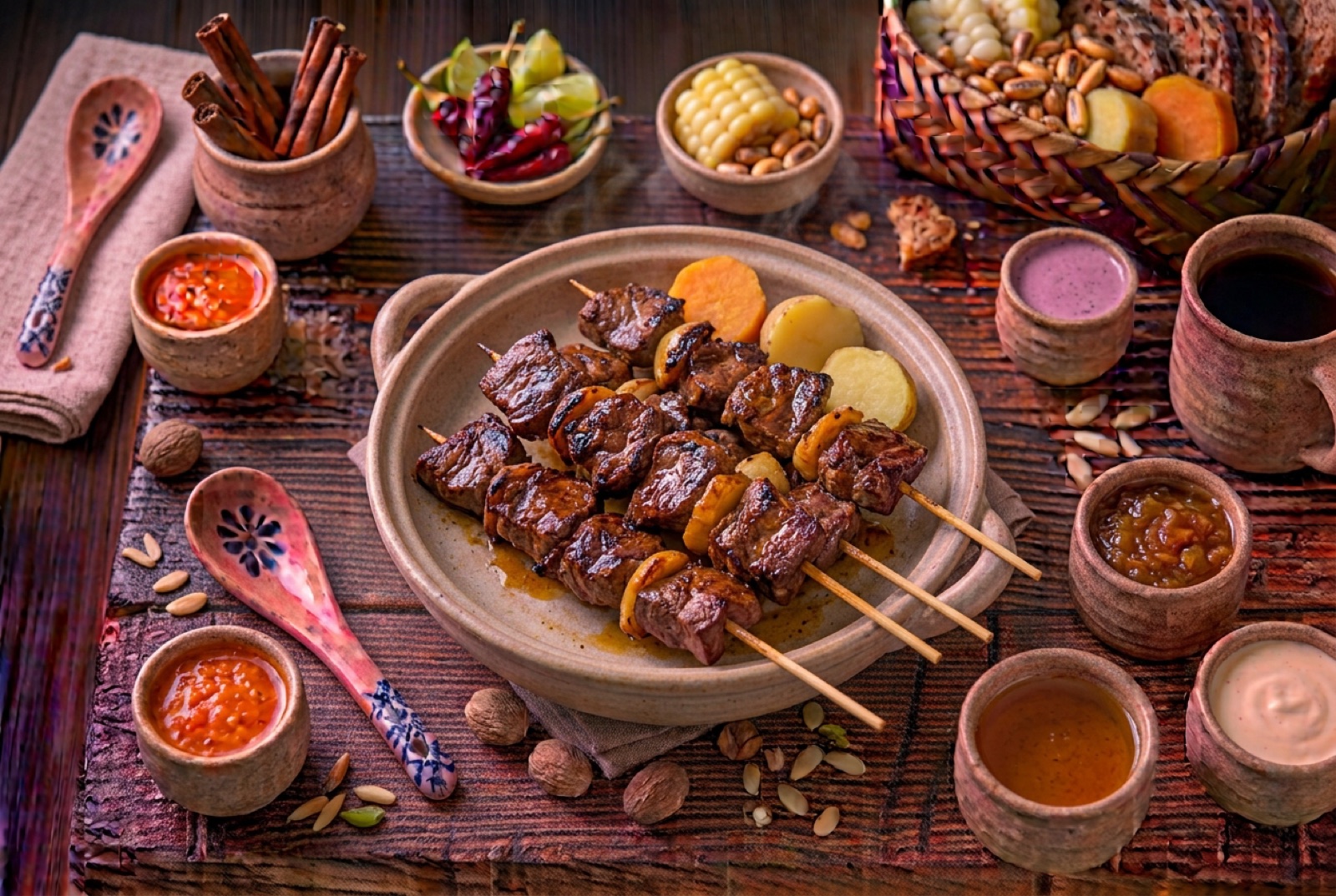
Keep exploring Peru.
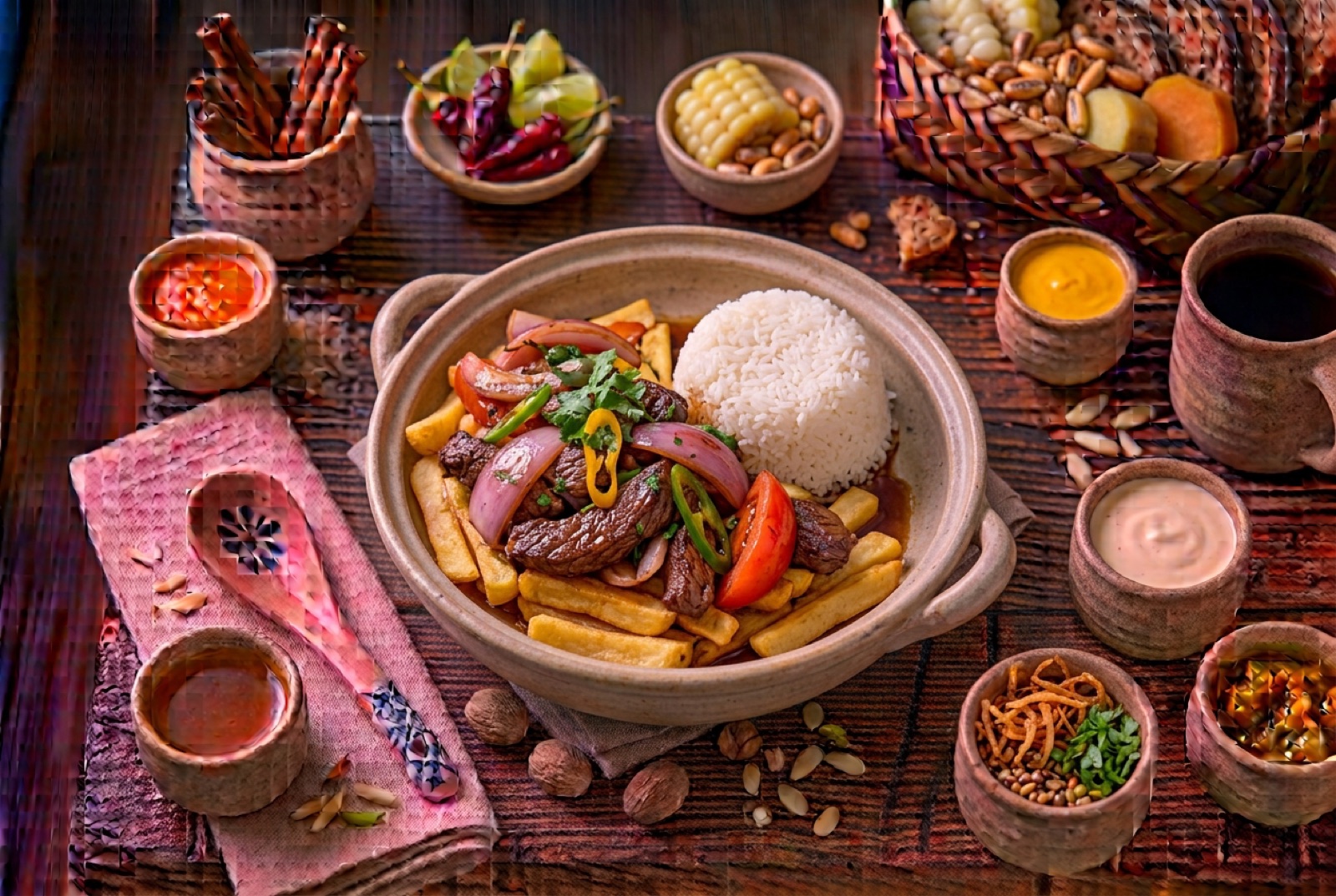
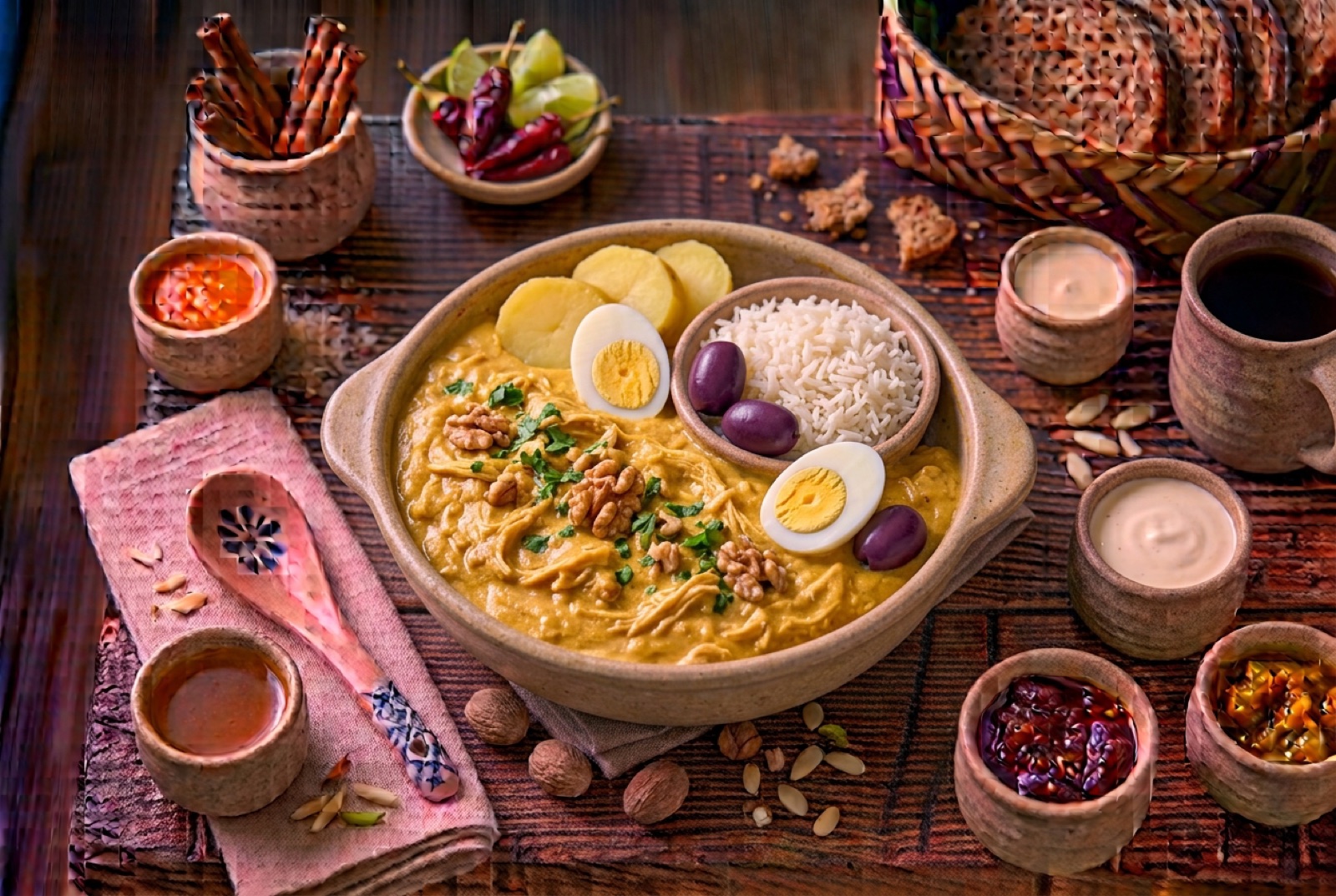
Peru has 9 more dishes in the atlas — Ají de Gallina and Anticuchos de Corazón, and 7 more.
Recipe by The DishRoute Kitchen · published August 19, 2026 · updated August 19, 2026