Anticuchos de Corazón.
Grilled Beef Heart Skewers
Anticuchos de corazón · say it: an-tee-KOO-chos deh koh-rah-SOHN
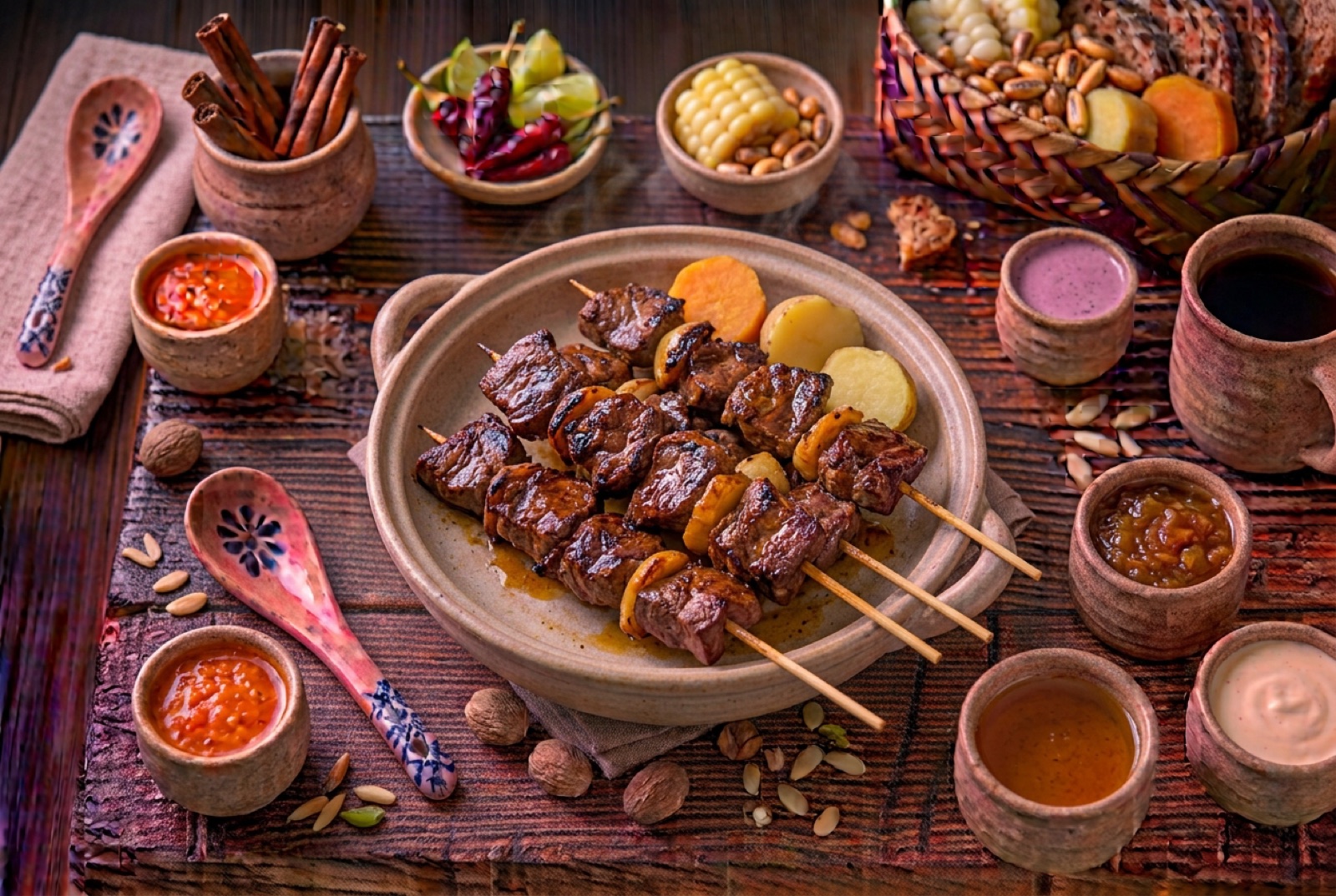
Anticuchos are cubes of beef heart threaded onto skewers, soaked overnight in a dark red marinade of ají panca, red wine vinegar, garlic and cumin, and cooked over coals in about four minutes flat. Heart is a muscle, not an organ in the offal sense — it is lean, dense and iron-rich, closer in texture to a good steak than to liver, with none of the mineral bitterness people brace themselves for. The vinegar tenderises, the ají panca gives smoky raisin-like depth without much heat, and the fast fire chars the edges while the inside stays pink. Peruvians eat them standing up, from a grill on a street corner, with a boiled potato and a chunk of corn.

- Gate
- PeruLima and the Andes
- Prep
- 30 min
- Cook
- 15 min
- Total time
- 12 hr 45 min incl. 12 hr rest
- Serves
- 4
- Status
- Easy
- Nutrition / serving · estimated
- Calories 390 kcal
- Protein 42 g
- Carbs 24 g
- Fat 13 g
- Fiber 3 g
- Sodium 820 mg
Why this recipe works.
- A full overnight marinade — heart needs the vinegar time, and four hours genuinely is not the same thing.
- Clear instructions on trimming heart, which is the one part of the recipe that intimidates people unnecessarily.
- The reserved basting marinade is boiled before it touches cooked meat, which most recipes forget to mention.
- Timings and visual cues for both a charcoal grill and a cast-iron pan indoors.
Ingredients.
14 itemsFor the skewers
For the marinade
To serve
For the sauce
Equipment
- Charcoal grill or heavy cast-iron pan
- Skewers (metal, or wooden and soaked)
- Blender, if making the chile paste from dried chiles
Instructions.
Trim the heart
Lay the heart flat and cut away the outer layer of fat, the pale silverskin and any tubes or valves at the top, so you are left with clean, deep-red muscle. Cut it into 3 cm cubes, roughly the size of a large dice.
Tip The silverskin will not soften on the grill and turns chewy, so take the time to slide a knife under it and strip it off.
Mix the marinade
Whisk the ají panca paste, vinegar, garlic, cumin, oregano, pepper, oil and salt together until it forms a loose, dark red slurry with no lumps of paste left. It should taste aggressively sharp and salty on its own — the meat will absorb most of it.
Marinate overnight
Turn the heart cubes through the marinade until every surface is coated, cover, and refrigerate for at least 6 hours and ideally 12. Turn the meat once if you remember.
Prepare the fire and the baste
Light the coals and wait until they are covered in grey ash with no flames licking up — you should be able to hold a hand 10 cm above the grate for only two seconds. Meanwhile lift the meat out, pour the leftover marinade into a small pan and boil it for one minute; this is your basting liquid.
Skewer and grill
Thread three or four cubes onto each skewer, pressed tightly together, and lay them straight over the hottest part of the fire. Grill 2–3 minutes per side, basting once on each turn, until the outside is glossy with charred edges and the meat feels firm but still springs back when pressed.
Tip Flare-ups are the enemy. If fat drips and flames rise, move the skewers to the side of the grill for a few seconds rather than letting them burn.
Grill the sides
Push the boiled potato halves and corn rounds onto skewers, brush them with the boiled marinade and lay them on the grill for 3–4 minutes, turning until they are streaked with colour and lightly blistered.
Blend the ají sauce and serve
Blitz the ají amarillo paste, cilantro, lime juice and a tablespoon of oil into a loose green sauce, and season with salt. Serve the skewers hot off the grill with the potato and corn, and the sauce in a bowl for dipping.
Tips from our kitchen.
- Ask the butcher for a cleaned beef heart, or buy it whole and trim it yourself — you want only the deep red muscle, with all fat, silverskin and any tubes cut away.
- Cut the cubes 3 cm and no larger. Bigger pieces need longer on the fire and heart goes from juicy to rubbery within about a minute of overcooking.
- Thread three or four pieces per skewer and press them close together, so the sides insulate each other and only the outer faces char.
- The grill must be genuinely hot — coals with a grey ash coating and no flame, or a cast-iron pan smoking lightly. A moderate fire steams the meat grey.
- Boil any marinade you plan to baste with for a full minute before using it, since it has been sitting in raw meat overnight.
- Soak wooden skewers for half an hour, or use metal ones. Sugar in the marinade means the exposed wood chars fast.
Substitutions.
- Beef heart → Beef sirloin, chicken thigh, or thick slices of king oyster mushroom
- Not traditional, but the marinade is the point and it works on all of them. Sirloin needs the same fast cooking; chicken thigh needs about seven minutes; mushrooms need to be pressed onto the grill to drive off water.
- Ají panca paste → 3 dried guajillo chiles plus 1 ancho, soaked in hot water for 20 minutes and blended
- Ají panca is dark red, mild and smoky with a dried-fruit sweetness. Guajillo plus ancho gets remarkably close in both colour and character.
- Choclo (Andean corn) → Regular sweetcorn cut into thick rounds
- Choclo has enormous, starchy, barely sweet kernels and a chewy bite. Sweetcorn is sweeter and softer, but grilled alongside the skewers it does the same job on the plate.
Variations.
- Anticuchos de pollo
- Chicken thigh in the same marinade — the most popular non-heart version in Peru, and the usual gateway for anyone unsure about corazón.
- Anticuchos de pescado
- Firm white fish cubes, marinated for only 30 minutes so the vinegar does not break the flesh down, then grilled for two minutes a side.
- Anticuchos with huancaína
- Served with a spoonful of salsa huancaína alongside the classic ají sauce — creamy against smoky, and standard at many Lima grills.
Storage & reheating.
Raw marinated heart keeps 2 days refrigerated in its marinade — beyond that the vinegar starts breaking the muscle down into a soft, faintly mealy texture. Cooked anticuchos are best eaten within minutes, but leftovers keep a day and are good cold, sliced into a salad. Reheating is a losing game: any pan hot enough to warm them through cooks them further and turns them tough, so if you must, do it for thirty seconds in a very hot pan and accept the trade. The raw marinated meat freezes well for a month, which is worth doing deliberately.
Serve with
Boiled yellow potato and a chunk of choclo skewered alongside, plus a green ají sauce made from ají amarillo, huacatay and a little oil.
The story behind Anticuchos de Corazón.
Skewered, marinated meat cooked over fire is pre-Hispanic in the Andes — the Quechua word anticuchu points to Andean roots, and llama meat seasoned with chile and cooked on sticks was eaten long before Europeans arrived. What changed the dish was the colonial period. Cattle came with the Spanish, and so did vinegar and garlic; and beef heart, the cheapest cut of a newly available animal, ended up in the kitchens of enslaved Africans and their descendants on the coast, where the offcuts were what you got. Afro-Peruvian cooks in and around Lima are generally credited with shaping anticuchos into the dish Peru now knows: heart, ají panca, vinegar, cumin, and fire.
That lineage is still visible in where and how they are sold. Anticuchos are evening food, cooked on charcoal grills wheeled onto street corners at dusk, and the anticuchera — traditionally a woman, working a grill she has worked for years — is a recognised figure in Lima. Fans of specific grills travel across the city for them. The district of Barranco has a particular reputation; so does the annual Señor de los Milagros procession in October, when the streets around it fill with anticucho smoke. The classic accompaniment is not a garnish but part of the plate: boiled potato and a section of choclo, the big-kernelled Andean corn, both grilled briefly on the same skewer.
Outside Peru the dish has spread as far as its Andean neighbours, though the meat changes: Bolivian anticuchos are also heart, while in much of the world anticucho now just means marinated skewer, made with beef sirloin, chicken or even mushroom. Purists in Lima will tell you those are anticuchos de something-else and that corazón is the default and the standard. They are right, and it is also worth saying plainly that the marinade is spectacular on any of them, which is why the substitution below is offered without apology.
Questions, answered.
What does beef heart actually taste like?
Like a lean, dense, slightly mineral steak — much closer to sirloin than to liver or kidney. It has none of the strong bitterness people associate with offal, because heart is a working muscle rather than a filtering organ. Marinated and grilled fast it tastes mostly of smoke, chile and vinegar, with a beefy richness underneath.
Can I make anticuchos without a charcoal grill?
Yes. A cast-iron griddle or heavy frying pan heated until it just starts to smoke gives you a genuine sear, and a gas grill on maximum works too. You lose the charcoal aroma, which is a real loss, so compensate with a pinch of smoked paprika in the marinade and do not crowd the pan.
How long should the meat marinate?
Overnight, ideally 12 hours, and at least 6. Heart is a tight, dense muscle and the vinegar needs time to loosen it. Do not push past 24 hours, though — at that point the acid has done its work and starts turning the surface soft and pasty.
How do I know when they are done?
Two to three minutes per side over a hot fire, total. The edges should be blackened in spots and the surface glossy from the baste, while the centre stays pink. Cut one open on the first batch to calibrate — heart overcooks fast, and past medium it becomes noticeably chewy and dry.
Where do I buy beef heart?
Any full-service butcher can order it, usually cheaply, and Latin American and halal butchers often keep it in stock. Ask for it cleaned and trimmed if you would rather skip that step. It is also sold frozen in many Asian and African grocers, which works perfectly well here since the meat is marinated anyway.
You might also like.
All recipes →
Keep exploring Peru.
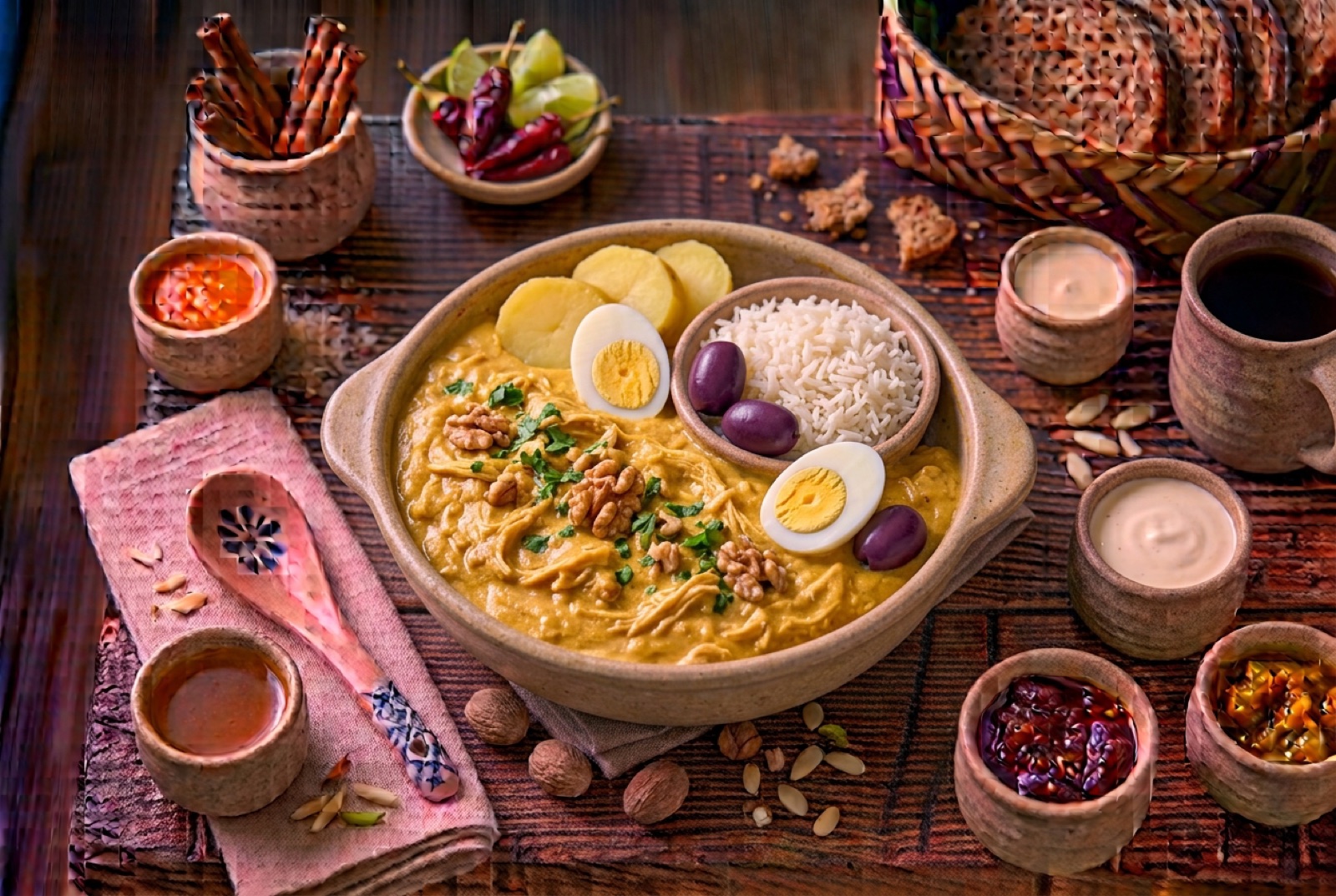
Peru has 9 more dishes in the atlas — Ají de Gallina and Causa Limeña, and 7 more.
Recipe by The DishRoute Kitchen · published August 19, 2026 · updated August 19, 2026