Rocoto Relleno.
Arequipa Stuffed Hot Peppers
Rocoto relleno · say it: roh-KOH-toh reh-YEH-noh
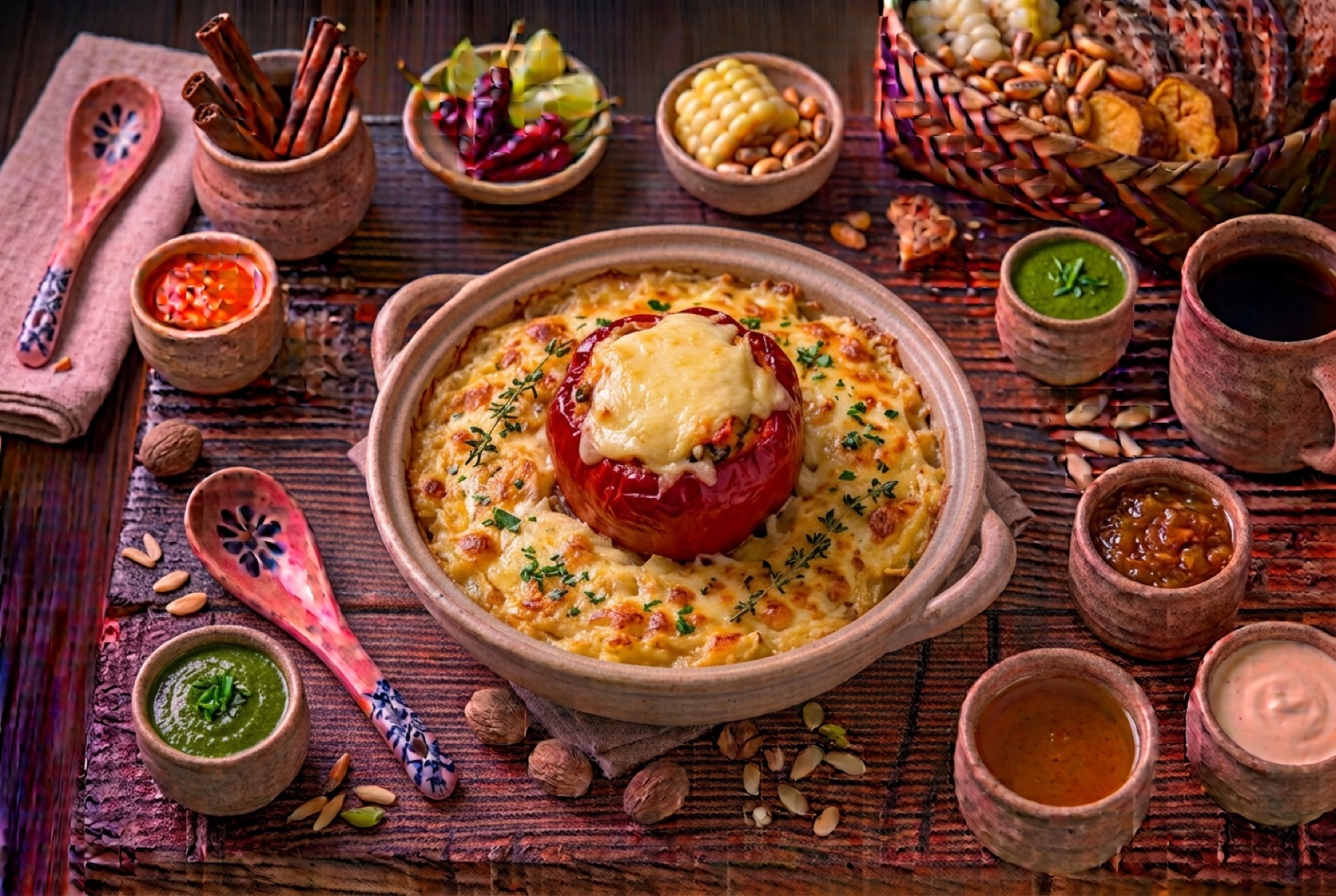
Rocoto relleno is a whole hot pepper turned into a main course. The rocoto looks like a small red bell pepper and hits like a habanero, so the entire first act of this recipe is subduing it: three changes of boiling water sweetened with sugar and sharpened with vinegar, which pulls out enough capsaicin to make the pepper edible while leaving its distinctive fruity, almost apple-like flavor intact. Stuffed with beef browned with ají panca, peanuts, raisins, egg and olive, capped with melting cheese and baked sitting on a slab of potato gratin, it comes out sweet, savory, salty and still unmistakably hot. It is Arequipa's signature dish and the city takes it personally.

- Gate
- PeruArequipa
- Prep
- 45 min
- Cook
- 1 hr
- Total time
- 1 hr 45 min
- Serves
- 4
- Status
- Takes skill
- Nutrition / serving · estimated
- Calories 640 kcal
- Protein 34 g
- Carbs 52 g
- Fat 32 g
- Fiber 6 g
- Sugar 14 g
- Sodium 720 mg
Why this recipe works.
- The triple sugared-vinegar blanch is spelled out properly, including how to judge when the pepper is tame enough to eat.
- Filling and potato gratin cook together, so the whole plate arrives as one dish the way a picantería serves it.
- Realistic sourcing advice: what to do when fresh rocotos are simply not available where you live.
- The sweet-savory balance is measured, not guessed — enough raisin and peanut to register without turning the beef into dessert.
Ingredients.
19 itemsFor the peppers
For the filling
For the potato gratin
Equipment
- Large pot for blanching
- Baking dish
- Gloves for handling chilies
- Mandoline or sharp knife
Instructions.
Hollow out the peppers
Wearing gloves, cut a lid off the top of each rocoto and keep it. Scrape out every seed and all the pale internal ribs with a small spoon — the ribs carry most of the heat, so be thorough — and rinse the cavities under cold water.
Tip Do not touch your face until you have washed your hands with soap twice. Rocoto oil is stubborn.
Blanch three times
Bring a large pot of water to a boil with 2 tbsp sugar and 50 ml vinegar, drop in the peppers and lids, and boil 5 minutes. Discard the water entirely, refill the pot with fresh water, sugar and vinegar, and repeat twice more.
Tip The water will turn cloudy and smell aggressively of chili — that is the heat leaving. Never reuse it.
Check the heat and drain
Taste a small sliver cut from the edge of one lid. It should read as warm and fruity rather than painful; if it still burns hard, do a fourth round. Drain the peppers upside down on a rack while you cook the filling.
Cook the aderezo and beef
Heat the oil in a pan and cook the onion for 8 minutes until soft and golden at the edges. Add the garlic, ají panca paste, cumin and oregano and fry 2 minutes, until the paste darkens and the oil turns red. Add the beef and brown it hard, breaking it up, until no liquid is left in the pan.
Tip Cook the filling drier than feels right. Any moisture left will pool inside the pepper and make the gratin soggy.
Finish the filling
Off the heat, stir the raisins, chopped peanuts, chopped boiled egg and olives through the beef and season well with salt and pepper. Taste it on its own — it should be clearly savory with sweet flashes from the raisin, since the pepper will add heat but no salt.
Layer the potato gratin
Whisk the milk, beaten eggs, crumbled cheese, salt and pepper together. Layer the potato slices in a buttered baking dish, pouring some of the milk mixture over every layer, and press the top down flat so the liquid rises to just below the surface.
Stuff and assemble
Pack the filling into each drained pepper right to the top, lay a slice of cheese over the opening and set the lid back on at an angle. Nestle the four peppers into the potato gratin so they sit upright and partly sunk into it.
Bake until blistered
Bake at 190°C for 35–40 minutes, until the potato is tender to a knife tip, the custard has set around the edges, and the cheese caps are browned and bubbling. Let it stand 10 minutes before serving so the gratin firms up enough to cut.
Tips from our kitchen.
- Wear gloves. Rocoto capsaicin transfers readily to hands and then to eyes, and it lingers through several washes.
- Change the water completely between each blanch and use fresh sugar and vinegar each time. Reusing the water defeats the entire purpose — the heat you removed is in it.
- Taste a sliver of the blanched pepper after the third boil. It should be warm and fruity, not painful. If it is still fierce, do a fourth round; if it has gone limp, stop immediately.
- Keep the pepper caps and set them back on after stuffing. They keep the filling moist and they are how the dish is meant to look.
- Slice the potatoes for the gratin about 3 mm — thick enough to hold their shape under the pepper, thin enough to cook through in the same 35 minutes.
- Bake until the cheese on top is browned and blistered and the pepper walls have slumped slightly. A rocoto that still stands perfectly upright is undercooked.
Substitutions.
- Fresh rocoto peppers → Frozen whole rocotos from a Latin grocer, or large red jalapeños / small red bell peppers with a whole habanero minced into the filling
- Frozen rocotos are the honest substitute and are widely sold — thaw them fully before blanching, and shorten the blanching since freezing already breaks down the flesh. Bell peppers give you the right shape and none of the character.
- Ají panca paste → 2 dried guajillo chiles soaked and blended, plus ½ tsp smoked paprika
- Ají panca is smoky and mild rather than hot; guajillo is the closest widely available dried chile.
- Queso fresco or Andean cheese → Edam, mild mozzarella or a young gouda
- Arequipa uses local fresh cheese; Peruvian home cooks abroad most often reach for edam because it melts into a smooth cap without weeping oil.
Variations.
- Rocoto relleno de camarones
- Arequipa also stuffs the peppers with chopped river prawns bound in a little of the same aderezo — a picantería version usually made when the shrimp season is on.
- Vegetarian rocoto relleno
- Replace the beef with finely chopped mushrooms browned hard, plus the same raisins, peanuts, egg and olive. The stuffing needs the mushrooms cooked dry or the pepper floods.
- Rocoto relleno without the gratin
- Served on plain white rice instead of pastel de papa. Faster, lighter, and how the dish often turns up outside Arequipa.
Storage & reheating.
Assembled and baked, rocoto relleno keeps 3 days refrigerated. Reheat covered in a 160°C oven for 20 minutes rather than in a microwave, which makes the pepper watery and the cheese rubbery. The blanched peppers and the cooked filling can both be prepared a day ahead and refrigerated separately, which is how most cooks handle the workload — stuff and bake on the day. Freezing is possible for a month but the pepper walls collapse noticeably on thawing.
Serve with
The pastel de papa built into the recipe, and a glass of chicha morada or a cold beer to blunt the residual heat.
The story behind Rocoto Relleno.
Arequipa, the white volcanic-stone city in southern Peru, has its own restaurant institution: the picantería, a lunchtime place traditionally built around chicha de jora, the fermented corn drink, with a limited menu that changes by the day of the week. Rocoto relleno is the picantería's flag. Arequipeños are famously proud of their regional identity — the running joke about needing a passport to enter the city is one they tell themselves — and their cooking is treated as a distinct tradition rather than a variant of Lima's.
The rocoto itself is an old Andean domesticate, Capsicum pubescens, a species apart from most chilies people know: it has black seeds, hairy leaves, thick juicy flesh, and it tolerates cold mountain nights that other peppers do not. It is genuinely hot, and Arequipeños say rocoto no pica, sabe — rocoto does not burn, it has flavor — which is a boast rather than a description. The blanching ritual with sugar and vinegar exists precisely because the raw pepper is otherwise punishing, and the number of boilings is a legitimate matter of household disagreement.
What sits under the pepper matters almost as much as the filling. The pastel de papa — thin potato slices layered with milk, egg and cheese and baked into a dense gratin — is the traditional partner, and in a picantería the two arrive on the same plate as one dish. The stuffing follows the sweet-savory logic that runs through Peruvian criollo cooking: minced beef seasoned with ají panca and cumin, but also raisins for sweetness, peanuts for crunch, chopped boiled egg and black olive. Cheese goes on top and melts down over the pepper as it bakes. Home cooks outside Peru face one obstacle the recipe cannot solve: fresh rocotos are hard to find abroad, and frozen ones from Latin grocers are the realistic option.
Questions, answered.
How hot is rocoto relleno after all the blanching?
Still hot, but eatable — think a strong jalapeño to mild habanero rather than the raw pepper, which is genuinely punishing. The three blanches in sugared vinegar leach out a large share of the capsaicin while keeping the fruity flavor. Arequipeños would say it should still make you pause; if yours has no heat left at all, you blanched it too many times.
Where can I buy rocoto peppers?
Fresh ones are rare outside the Andes because they do not travel or store well. Latin American grocers and online Peruvian food shops sell them frozen whole, and that is the realistic option almost everywhere. Some also sell rocoto paste, which is useful for sauces but obviously cannot be stuffed.
Why do I have to boil the peppers three times?
Capsaicin dissolves into the hot water, so each fresh change of water carries away another share of the heat, and the sugar and vinegar help draw it out while seasoning the flesh. Boiling once in the same water quickly saturates it and the pepper reabsorbs what came out. Three changes is the traditional count; taste after the third and add a fourth if the pepper is still too fierce.
What is pastel de papa and do I need it?
It is the Arequipa potato gratin — thin potato slices layered with milk, egg and cheese, then baked until set. It traditionally sits under the stuffed pepper and soaks up the juices, and a picantería serves the two as one plate. You can skip it and serve rice instead, but you lose the part that makes the dish feel complete.
Can I prepare rocoto relleno in advance?
Yes, in stages. Blanch the peppers and cook the beef filling up to a day ahead and keep them refrigerated separately. Assemble and bake on the day you serve, since the pepper walls soften and the cheese cap is only good fresh from the oven. A fully baked one also reheats well in a covered oven dish.
You might also like.
All recipes →
Keep exploring Peru.
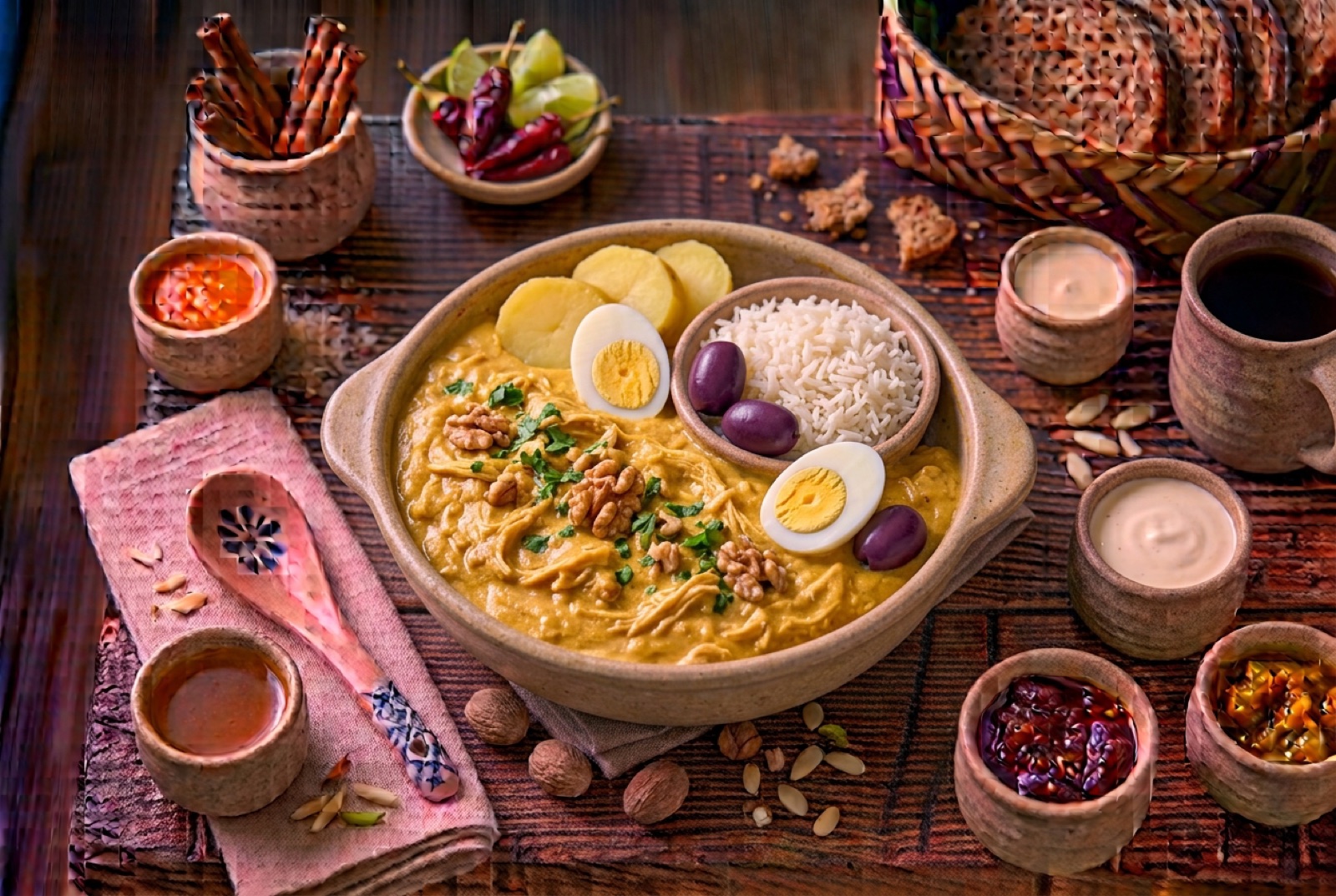
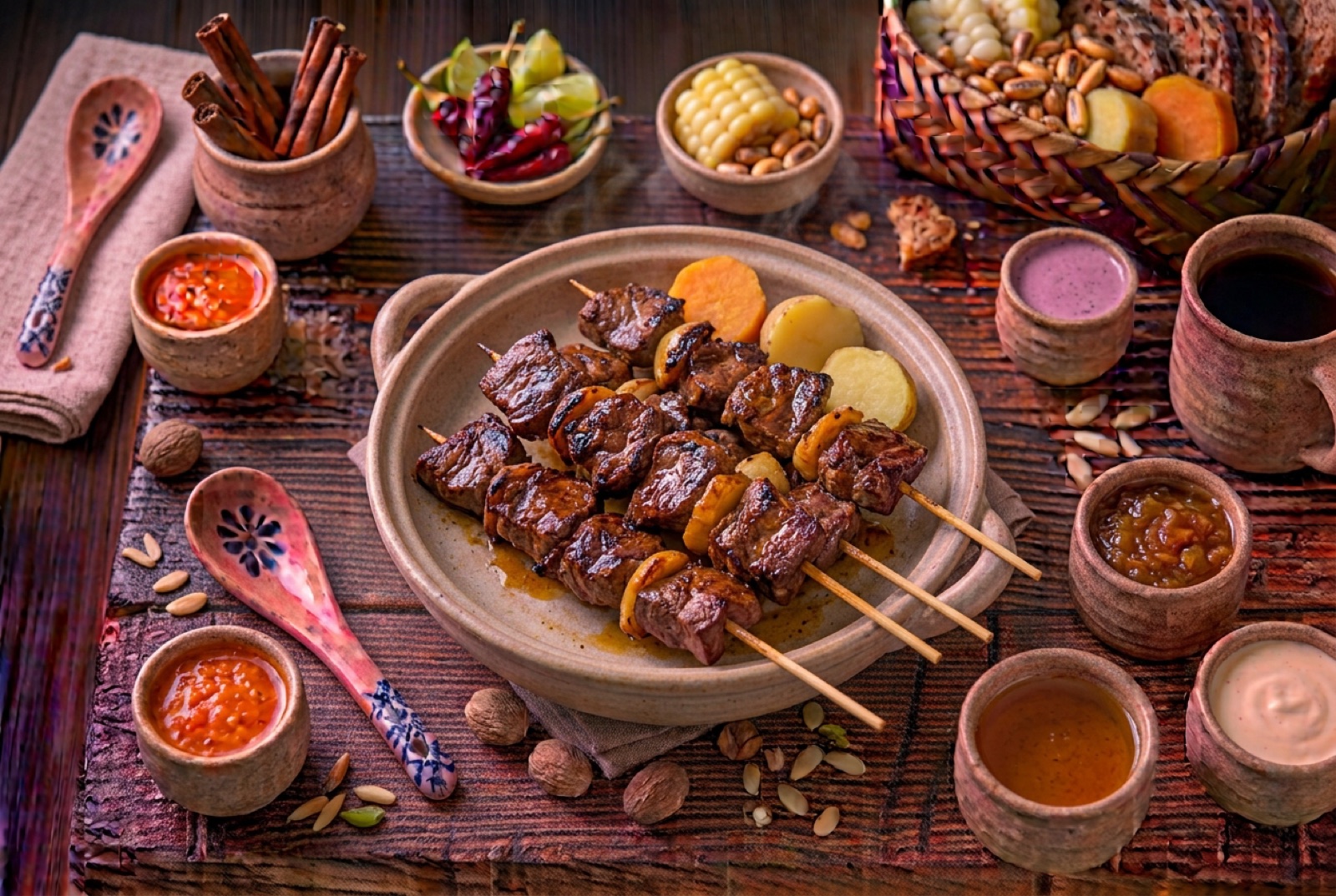
Peru has 9 more dishes in the atlas — Ají de Gallina and Anticuchos de Corazón, and 7 more.
Recipe by The DishRoute Kitchen · published August 19, 2026 · updated August 19, 2026