Ají de Gallina.
Creamy Yellow Chili Chicken
Ají de gallina · say it: ah-HEE deh gah-YEE-nah
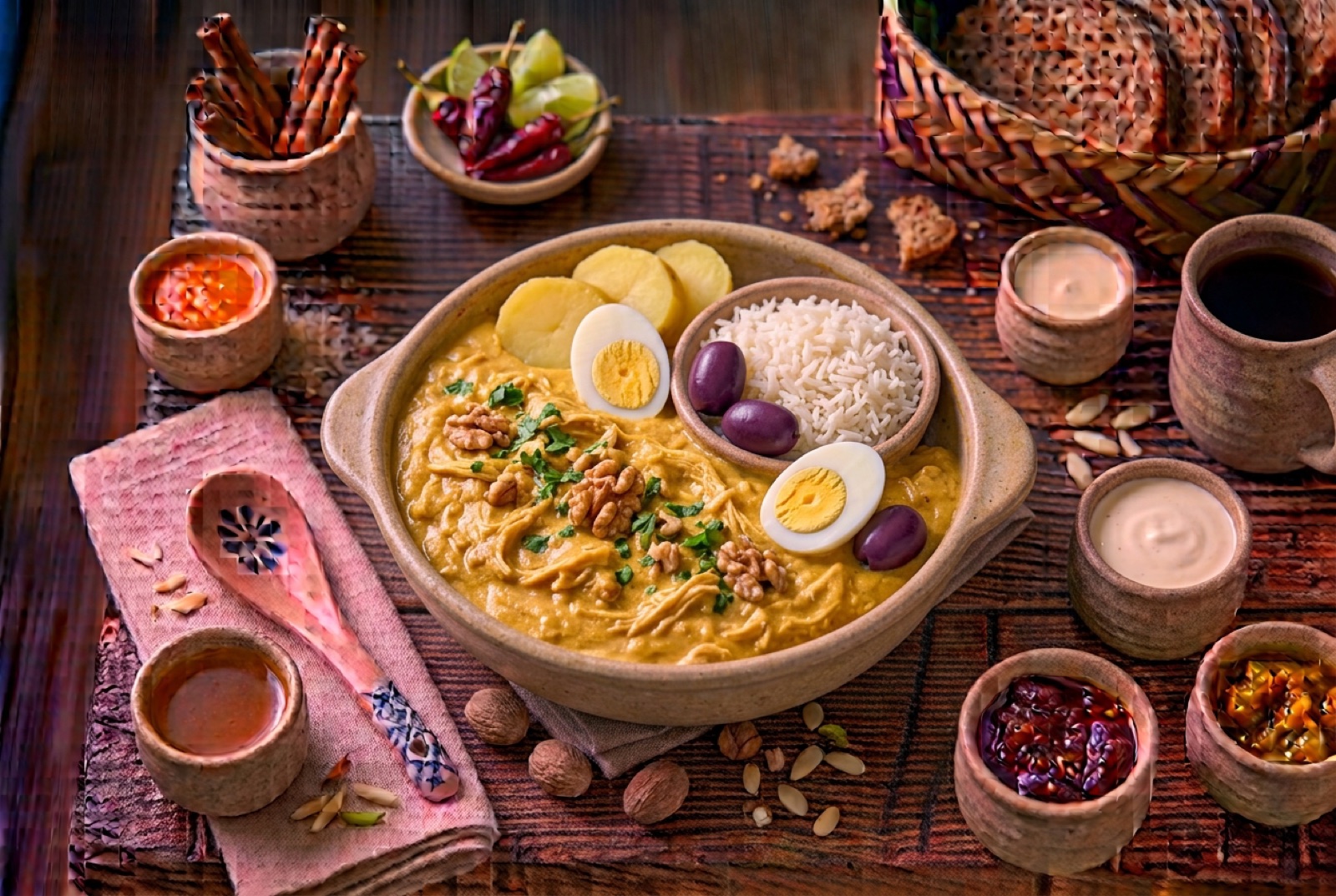
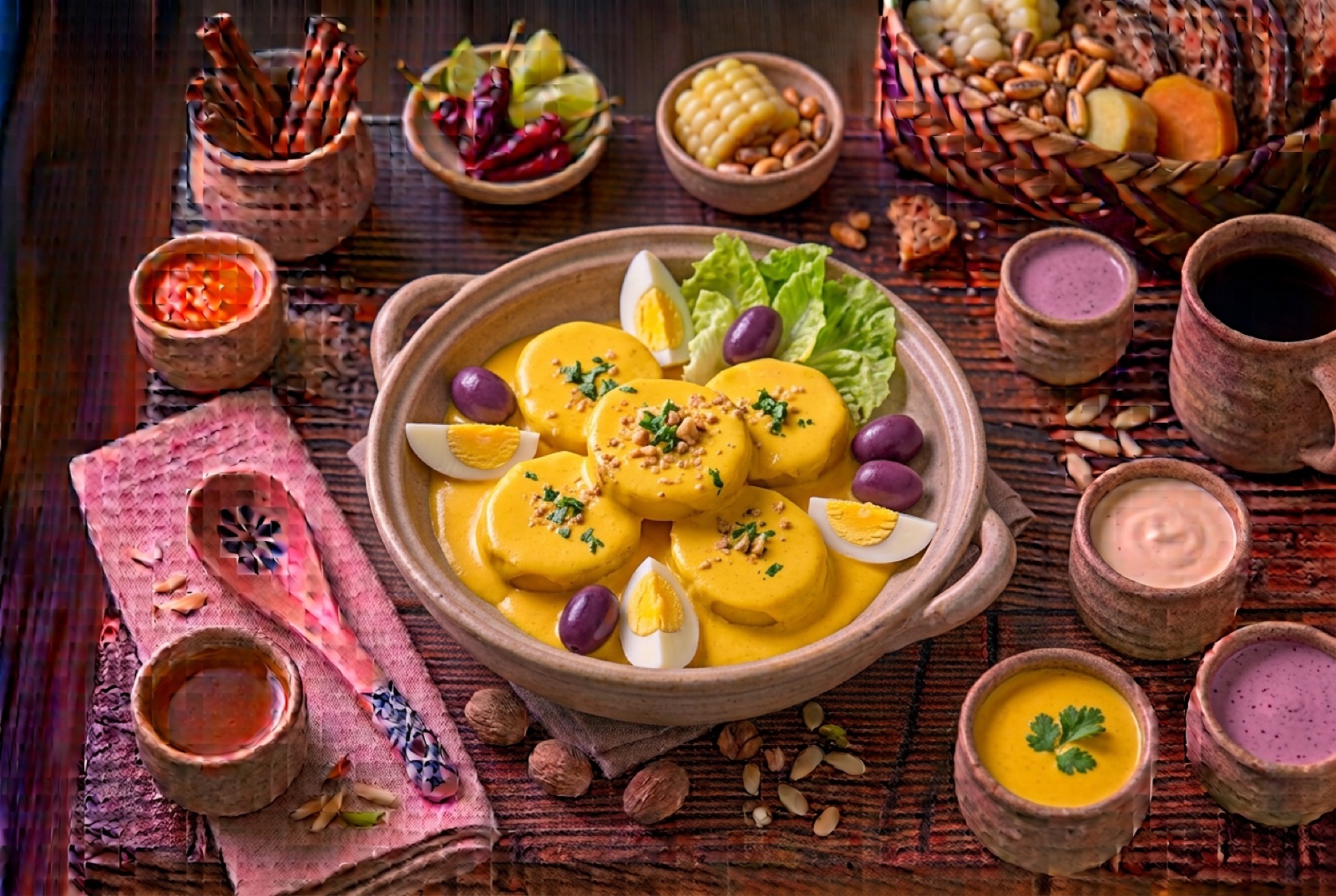
Ají de gallina is shredded poached chicken bound in a sauce so thick it holds the mark of the spoon: stale bread soaked in milk, blended smooth with ground walnuts and sautéed ají amarillo, then loosened with the poaching broth and sharpened with grated parmesan. It tastes gently sweet and nutty first, then the fruity warmth of the yellow chile arrives at the back — comfort food rather than fiery food. Peruvians serve it poured over a slice of boiled potato with white rice alongside, topped with a wedge of hard-boiled egg and a black olive. It is a dish built to feed a family from one small hen.

- Gate
- PeruLima
- Prep
- 20 min
- Cook
- 45 min
- Total time
- 1 hr 5 min
- Serves
- 4
- Status
- Medium
- Nutrition / serving · estimated
- Calories 620 kcal
- Protein 45 g
- Carbs 52 g
- Fat 26 g
- Fiber 4 g
- Sodium 780 mg
Why this recipe works.
- The bread is soaked in milk and blended, not crumbled in dry — the difference between a silky sauce and a grainy one.
- Ají amarillo is fried in oil with the onion until the paste darkens, which removes its raw edge and deepens the colour.
- Chicken is poached and shredded by hand along the grain, so it stays in threads instead of turning to mush.
- The poaching broth is used to control thickness at the very end, so the sauce lands exactly where you want it.
Ingredients.
18 itemsFor the chicken
For the sauce
To serve
Equipment
- Blender or food processor
- Wide heavy saucepan
- Slotted spoon
Instructions.
Poach the chicken
Put 700 g of chicken in a pan with the water, halved onion and bay leaf, bring to a bare simmer and cook uncovered for 25 minutes, until a piece pulls apart easily when pinched. Lift the chicken out and keep the broth — you will need about 400 ml of it.
Tip Never let it boil hard. Rolling water tightens the muscle and gives you dry, stringy threads.
Soak the bread, shred the meat
Tear the bread into a bowl and pour the evaporated milk over it; leave for 10 minutes until it collapses into a soft mush. Meanwhile pull the warm chicken into fine threads with your fingers, following the grain of the meat.
Build the aderezo
Heat the oil in a wide pan over medium heat and cook the finely chopped onion for 8 minutes, until it is completely soft and translucent with no crunch left. Add the garlic and cook one minute more, until it smells sweet rather than sharp.
Fry the ají
Stir in the ají amarillo paste and the turmeric and fry for 4–5 minutes, stirring often. The paste will darken from bright yellow to a deeper amber and a thin film of orange oil will separate at the edges of the pan — that is the signal it has lost its raw taste.
Blend the sauce base
Scrape the ají mixture into a blender with the soaked bread and milk and the walnuts, and blitz until completely smooth, about a minute. If the blender labours, add a ladle of the reserved chicken broth to get it moving.
Bring it together
Return the blended sauce to the pan over low heat, add the shredded chicken, and stir in the reserved broth a little at a time until the sauce coats the meat and flows slowly off the spoon. Simmer gently for 10 minutes so the flavours knit, stirring so nothing catches on the base.
Finish off the heat
Pull the pan off the heat, stir in the grated parmesan until it melts, then season with salt and black pepper. Taste it now — it should be nutty and creamy with the chile arriving a beat later, and it will taste flat if underseasoned.
Plate it properly
Lay two thick rounds of boiled potato on each plate, spoon the ají de gallina generously over them, and add a scoop of white rice to the side. Finish each plate with a quarter of hard-boiled egg and a black olive.
Tips from our kitchen.
- Shred the chicken with your fingers while it is still warm — it separates along the grain into proper threads, which a fork or knife will never manage.
- Ají amarillo paste varies enormously in heat and salt between brands. Start with half, taste, and add the rest only if the sauce needs it.
- Stale, crustless white bread absorbs milk best. If yours is fresh, dry the slices in a low oven for ten minutes first.
- Grind the walnuts with a little of the milk rather than dry, or they turn oily and clump instead of dissolving into the sauce.
- The sauce thickens noticeably as it cools, so finish it slightly looser than you want to serve it.
- Add the parmesan off the heat. Boiled hard cheese in a milk sauce goes stringy and can make the whole thing grainy.
Substitutions.
- Ají amarillo paste → 2 large yellow bell peppers blended with 1 habanero or 2 tsp sriracha, reduced in a pan until thick
- This gets you close on colour and sweetness, but ají amarillo has a distinctive fruity, almost apricot-like aroma that nothing fully replaces. Latin grocers and online shops sell the jarred paste, and it keeps for months in the fridge.
- Walnuts → Blanched almonds or pecans, same weight
- Almonds are arguably the older choice, given the dish's Spanish ancestry, and give a milder, sweeter sauce.
- Parmesan → Any hard aged cheese — grana padano, pecorino or aged manchego
- Peruvian cooks use whatever hard cheese is in the fridge. Reduce the salt slightly if you use pecorino.
- Evaporated milk → Whole milk, or whole milk with 2 tbsp cream
- Evaporated milk is the Peruvian default and gives a slightly richer, faintly caramelised note, but plain milk works.
Variations.
- Ají de gallina de atún
- The same sauce built around drained canned tuna instead of chicken — a Lenten and pantry version common in Peruvian homes, ready in twenty minutes.
- Vegetarian ají de setas
- Torn king oyster mushrooms, roasted until chewy, stand in for the shredded hen. Use a good vegetable stock and add a splash of soy sauce for depth.
- Ají de gallina in a causa
- Limeños use leftover ají de gallina as the filling between layers of seasoned yellow potato, turning one dish into another entirely.
Storage & reheating.
Refrigerated in a sealed container the sauce keeps 3 days and genuinely improves on the second day as the bread and walnuts settle. It thickens hard when cold, so reheat gently over low heat with a splash of milk or the reserved broth, stirring until it flows again. It freezes acceptably for a month, though the sauce can look slightly separated on thawing — a minute of brisk stirring over low heat brings it back together.
Serve with
White rice, a thick slice of boiled yellow potato underneath the sauce, hard-boiled egg wedges and black olives — the plate is not considered complete without all four.
The story behind Ají de Gallina.
Ají de gallina belongs to Lima's criollo kitchen, and its bones are older than Peru's independence. The technique — poultry shredded into a thick sauce thickened with bread, nuts and milk — travelled from medieval Spain, where similar almond-and-bread dishes were staples of convent and court cooking, and which in turn owed a great deal to Moorish Andalusia. Manjar blanco, the ancestor most often cited, was a pounded chicken-and-almond preparation that appeared in one form or another across late medieval Europe, sometimes as a savoury dish and sometimes sweetened. In Lima that idea met the Andean pantry, and the almonds gave way to walnuts, the mild seasoning gave way to ají amarillo, and the plate gained a boiled potato underneath. The result is neither Spanish nor pre-Hispanic; it is criollo, which is exactly what Lima means by the word.
The name is worth explaining, because it confuses people. Gallina is a stewing hen, not a young chicken — an older bird with tougher meat, more flavour and enough collagen to make a proper broth. Traditionally the whole point was that a hen past her laying days could be simmered for a long time and then pulled into threads, feeding a household for a fraction of the cost of tender meat. Most home cooks today, in Peru and everywhere else, use chicken breast or thigh and shorten the poaching to half an hour, which works perfectly well. If you can find a real stewing hen, the broth it gives you will be noticeably richer, and that broth is half the sauce.
The dish is a fixture of the almuerzo criollo — the set lunch that Peruvian workers eat on weekdays — and of home cooking on quiet Sundays. It also has a genuinely useful second life: the sauce reheats better than almost any other stew, thickening as it sits, so Peruvian households routinely make a large batch on purpose. Restaurants serve it with a spear of boiled potato and a scoop of rice; grandmothers serve it in a bowl with a spoon and no ceremony at all.
Questions, answered.
Is ají de gallina spicy?
Not particularly. Ají amarillo is a fruity, aromatic chile with moderate heat, and in this dish it is diluted by milk, bread and nuts, so the result is warm rather than hot — most children in Peru eat it happily. If you want more punch, Peruvians add a spoonful of ají amarillo paste or hot sauce at the table rather than to the pot.
Why is my sauce grainy instead of smooth?
Almost always one of three causes: the bread was crumbled in dry instead of soaked and blended, the walnuts were ground dry and clumped, or the cheese was added while the sauce was boiling. The fix for all three is a blender — pour the sauce in and blitz it for thirty seconds, then return it to the pan over low heat.
Can I use chicken breast instead of a stewing hen?
Yes, and most people do. Poach breast or thigh for about 25 minutes rather than the 90 a real hen needs. Thigh gives more flavour and stays juicier when shredded; breast gives whiter, neater threads. Either way, keep the poaching liquid — it becomes the broth that thins the sauce.
How thick should the finished sauce be?
Thick enough to hold a channel when you drag a spoon across the bottom of the pan, but still pourable — it should slump slowly over a slice of potato rather than sit on it like a paste. Remember it tightens as it cools, so stop while it is a touch looser than your target.
What can I do with leftover sauce?
Peruvians treat it as a base. Thin it with broth and toss it through pasta, spoon it over boiled yuca or rice, use it as the filling in a layered causa, or pile it onto toast with a fried egg. It also freezes in portions specifically so you can do this later.
You might also like.
All recipes →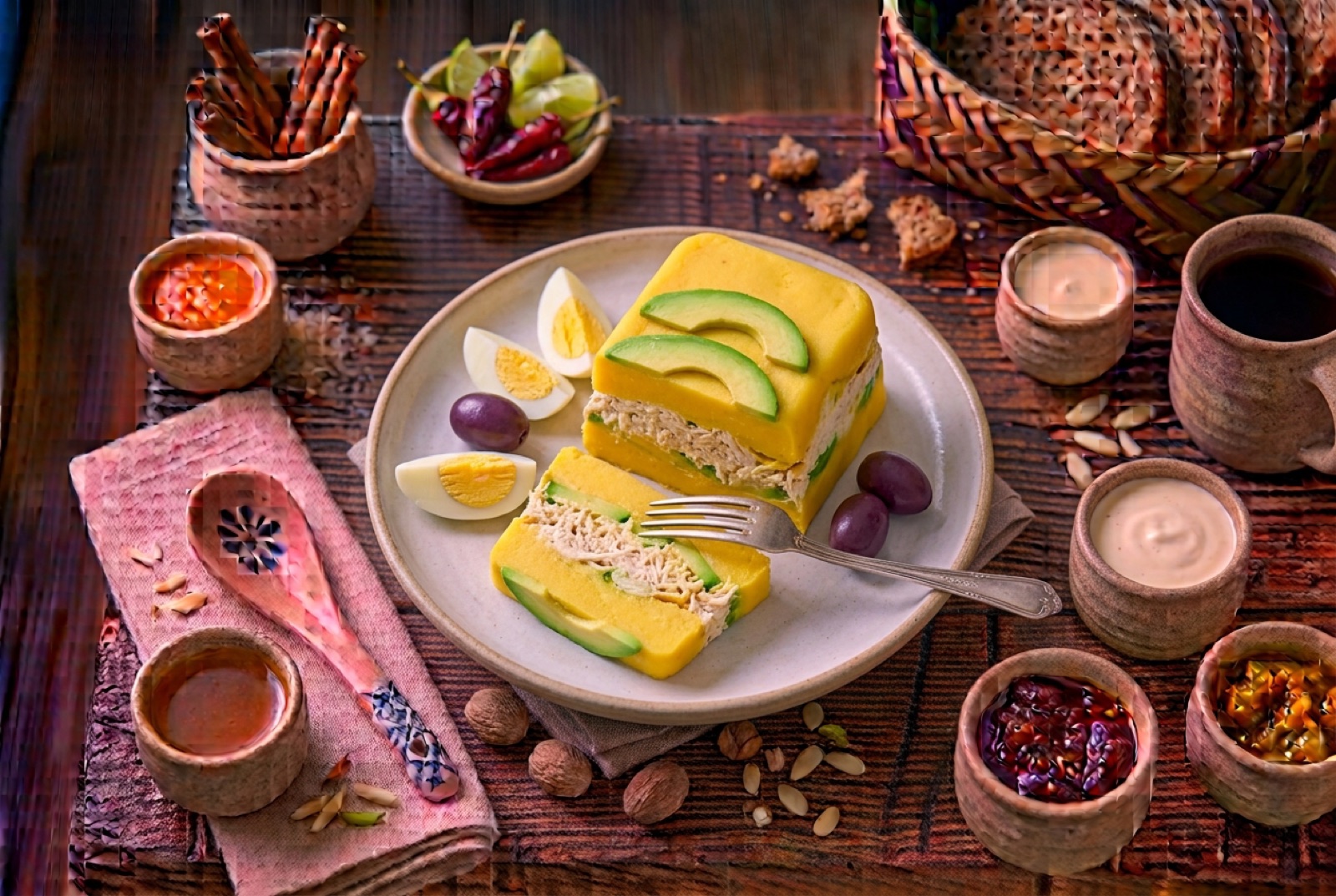
Keep exploring Peru.
Peru has 9 more dishes in the atlas — Anticuchos de Corazón and Causa Limeña, and 7 more.
Recipe by The DishRoute Kitchen · published August 19, 2026 · updated August 19, 2026