Causa Limeña.
Chilled Layered Potato Terrine
Causa limeña · say it: KOW-sah lee-MEH-nyah
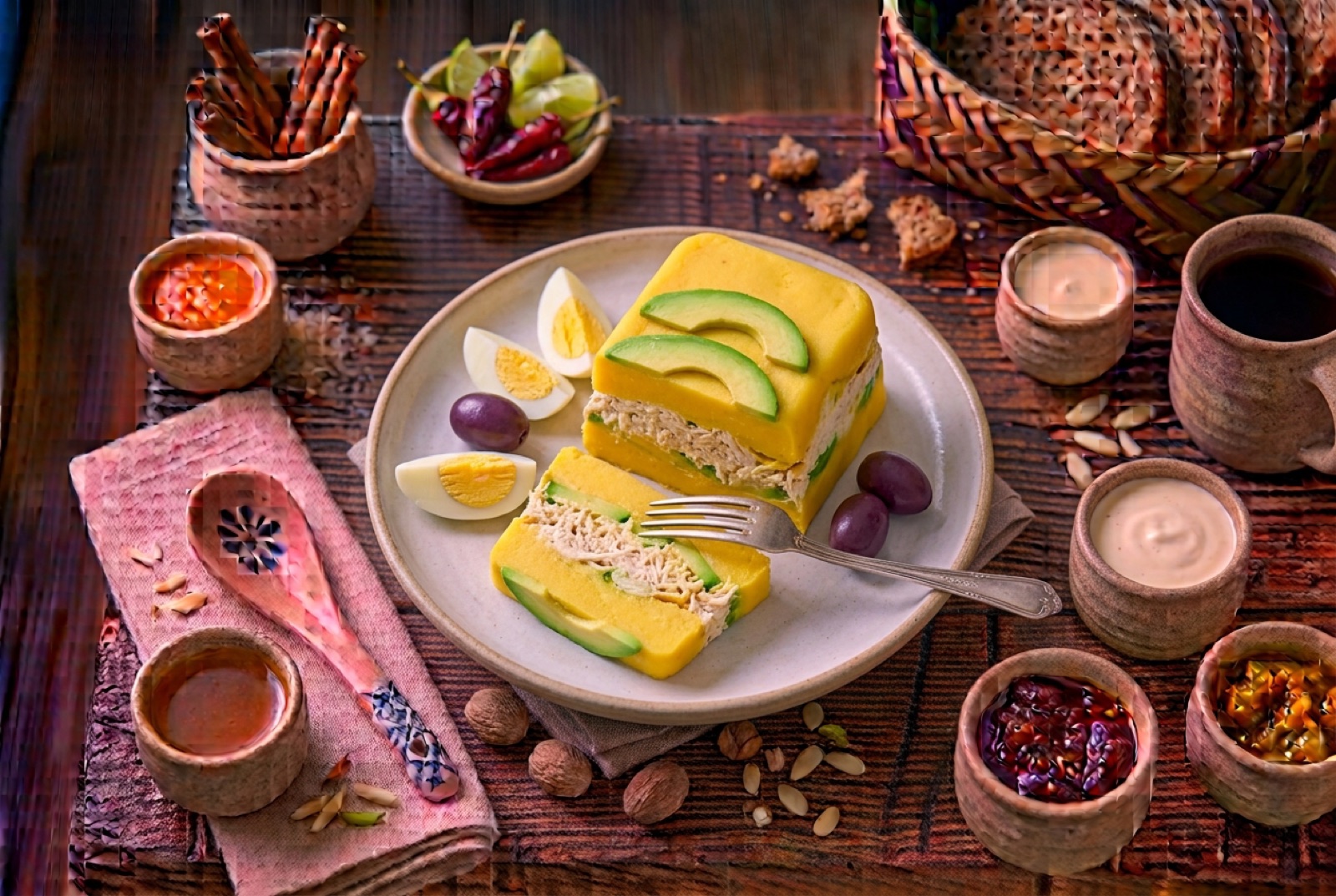
Causa is a cold potato dish that behaves like a terrine. Boiled yellow potato is passed through a ricer while hot, then worked with lime juice, oil and ají amarillo paste until it turns into a dense, pliable, sunshine-coloured dough — closer to mashed potato that has been kneaded than to anything fluffy. That dough is pressed into layers with a filling in between: chicken or tuna bound with mayonnaise, sheets of avocado, sometimes both. The whole thing chills, firms up, and is cut into neat squares or turned out of a ring. It is sharp, cool and savoury, and it is one of the very few great potato dishes that is meant to be eaten cold.

- Gate
- PeruLima
- Prep
- 35 min
- Cook
- 25 min
- Total time
- 3 hr incl. 2 hr rest
- Serves
- 4
- Status
- Easy
- Nutrition / serving · estimated
- Calories 430 kcal
- Protein 22 g
- Carbs 38 g
- Fat 22 g
- Fiber 6 g
- Sodium 560 mg
Why this recipe works.
- Potato is riced while hot but seasoned once cool, which keeps the dough dense and stops the lime tasting cooked.
- Precise ratios of lime, oil and ají so the dough holds a clean edge when cut instead of slumping.
- A make-ahead dish by design: it needs chilling time, so it is finished before your guests arrive.
- Works as a full vegetarian centrepiece with avocado alone — that version is a Lima classic, not a compromise.
Ingredients.
13 itemsFor the potato dough
For the filling
To layer
To finish
Equipment
- Potato ricer or fine sieve
- Loaf tin or square dish, about 20 cm
- Cling film
Instructions.
Boil the potatoes whole
Put 1 kg of unpeeled potatoes in cold salted water, bring to the boil and cook for about 25 minutes, until a knife slides into the centre with no resistance. Drain them and leave for two minutes so the surface steam escapes.
Tip Whole and skin-on is not fussiness — cut potatoes soak up water and the dough will never hold together.
Rice them hot
Peel the potatoes while they are still too hot to hold comfortably, using a cloth, and pass them straight through a ricer into a wide bowl. Spread the riced potato out and let it cool to just warm, about 15 minutes.
Work in the seasoning
Add the lime juice, ají amarillo paste, oil and a generous pinch of salt, and knead with your hands for two or three minutes until the mixture turns an even yellow and comes together into a smooth, pliable dough that no longer sticks to your palms. Taste and correct — it should be distinctly limey and properly salted.
Mix the filling
Fold the shredded chicken with the mayonnaise, red onion and celery, and season with salt, pepper and a squeeze of lime. It should be moist enough to spread but not runny, or it will soak into the potato layer.
Layer it up
Line a 20 cm tin with cling film, leaving a good overhang. Press in half the potato dough in an even layer about 1.5 cm thick, spread the filling over it, lay the avocado slices on top and season them, then cover with the remaining potato and smooth the surface flat.
Tip Press with wet fingertips or the back of a wet spoon — the dough sticks to dry hands and tears.
Chill until firm
Fold the cling film over the top, press down gently to compact the layers, and refrigerate for at least 2 hours, until the block is cold all the way through and feels solid when pressed.
Turn out and slice
Lift the causa out by the cling film onto a board, peel the film back and cut into squares with a long thin knife, wiping the blade clean between cuts. Top each square with a slice of egg and an olive and serve straight from the fridge.
Tips from our kitchen.
- Boil the potatoes whole in their skins, then peel them hot. Peeled and cubed potatoes take on water and give you a wet dough that will never hold a layer.
- Use a ricer or a fine sieve, never a food processor. Processed potato turns gluey and elastic within seconds and there is no way back.
- Season the dough only once it is cool enough to handle — hot potato flashes off the lime aroma and the ají tastes muddy.
- Line the tin with cling film with plenty of overhang so you can lift the finished causa out cleanly and slice it on a board.
- Brush the avocado layer with lime juice before covering it, or it browns visibly through the pale top layer by the second day.
- Chill at least two hours. Warm causa collapses when cut and tastes bland — cold is not just a serving temperature here, it is part of the recipe.
Substitutions.
- Papa amarilla (yellow Peruvian potato) → Yukon Gold, or any floury yellow potato such as Agria or King Edward
- You want a dry, floury potato with yellow flesh. Waxy salad potatoes will not mash into a dough, and red-skinned boiling potatoes give a wet, sticky result.
- Ají amarillo paste → 1 roasted yellow bell pepper blended with a pinch of cayenne, reduced until thick
- The colour will be right and the sweetness close; the fruity aroma of real ají amarillo is the part you lose. Jarred paste is widely available online and lasts months.
- Chicken filling → Drained canned tuna, cooked crab meat, or nothing but sliced avocado
- All three are standard in Lima. Tuna causa is the everyday version; crab is the restaurant one; avocado alone makes it vegetarian.
Variations.
- Causa de atún
- The most common household version: canned tuna mixed with mayonnaise, finely diced red onion and a squeeze of lime, layered with avocado.
- Causa de cangrejo
- Crab meat folded with mayonnaise and a little ají, often served as a tall individual cylinder — the version Lima restaurants built their reputations on.
- Causa acevichada
- Topped with cubes of fish dressed ceviche-style in lime and ají, so the cold potato sits under a bright, acidic crown.
- Purple causa
- Made with Peruvian purple potato instead of yellow, which turns the dough a deep violet. The flavour is earthier and the effect on a table is considerable.
Storage & reheating.
Causa keeps 2 days covered in the refrigerator and should never be served at room temperature. Press cling film directly onto the exposed surface so the potato does not dry out and the avocado does not brown. Do not freeze it: potato dough turns watery and grainy on thawing, and the mayonnaise in the filling splits. If you need to prepare further ahead, make the potato dough a day early, refrigerate it wrapped, and assemble on the day — it will need a few minutes at room temperature to become workable again.
Serve with
Black botija olives, a wedge of hard-boiled egg, and a spoonful of salsa criolla — thin red onion tossed with lime, salt and ají.
The story behind Causa Limeña.
The potato was domesticated in the Andes thousands of years ago, and Peru still grows it in a variety that startles visitors — several thousand named cultivars, in colours from cream to near-black. Causa uses one in particular: papa amarilla, a small yellow potato with a floury, almost buttery flesh that mashes into a dough rather than a puree. Cold seasoned potato preparations are old in Peru, and pre-Hispanic coastal peoples ate potato dressed with chile and salt long before Lima existed as a city.
The name has attracted one very popular origin story: that during the War of the Pacific in 1879, women sold potato to raise money for the Peruvian troops, calling out that it was "para la causa" — for the cause. It is a story every Peruvian has heard, and it is repeated confidently in restaurants and cookbooks. It is also almost certainly folk etymology, since the word causa appears in Peruvian food writing before the war. The likelier explanation runs through Quechua, where kausay refers to sustenance and, specifically, to the potato as the food that sustains life. Nobody has proven either version, and it is more honest to leave it unsettled than to pick a side.
What is not disputed is how far causa has travelled in the last few decades. The traditional Lima version was potato with lime and chile, sometimes with nothing but olives and egg on top. Then the mayonnaise-bound filling arrived, then avocado, and then Peru's restaurant boom turned causa into a canvas: causa filled with crab, with octopus in olive sauce, with smoked trout, built into tall cylinders and topped with a quenelle of something. All of it starts from the same yellow dough. Home cooks build it in a loaf tin or a glass dish and cut it into squares, which is faster, uses less equipment, and tastes exactly the same.
Questions, answered.
Why did my potato dough turn sticky and gluey?
You almost certainly used a food processor or blender. Potato starch cells rupture under fast blades and release a glue-like paste within seconds, and no amount of extra oil will reverse it. Use a potato ricer, a food mill, or push the hot potato through a sieve with the back of a spoon.
Can I make causa the day before?
Yes — causa is one of the few layered dishes that prefers a night in the fridge. Assemble it fully, cover the surface with cling film pressed directly onto the potato, and refrigerate overnight. The layers set firmly and cut much more cleanly than causa chilled for only an hour. Add any fresh garnish just before serving.
Is causa served hot or cold?
Cold, always. It comes out of the refrigerator and goes straight to the table. The chilling is what firms the potato dough enough to hold its layers, and the lime and ají read as bright and sharp when cold in a way they simply do not when warm.
What kind of potato should I use if I cannot find papa amarilla?
Any floury yellow-fleshed variety: Yukon Gold is the easiest to find, and Agria, King Edward or Maris Piper all work. Avoid waxy salad potatoes such as Charlotte or new potatoes, which stay in lumps rather than becoming a dough, and avoid red-skinned boiling potatoes, which turn wet.
How do I get clean slices instead of a collapsed pile?
Three things: chill it for at least two hours, line the tin with cling film so you can lift the whole block out onto a board, and cut with a long thin knife wiped clean between every slice. A serrated knife tears the layers; a warm blade drags the potato.
You might also like.
All recipes →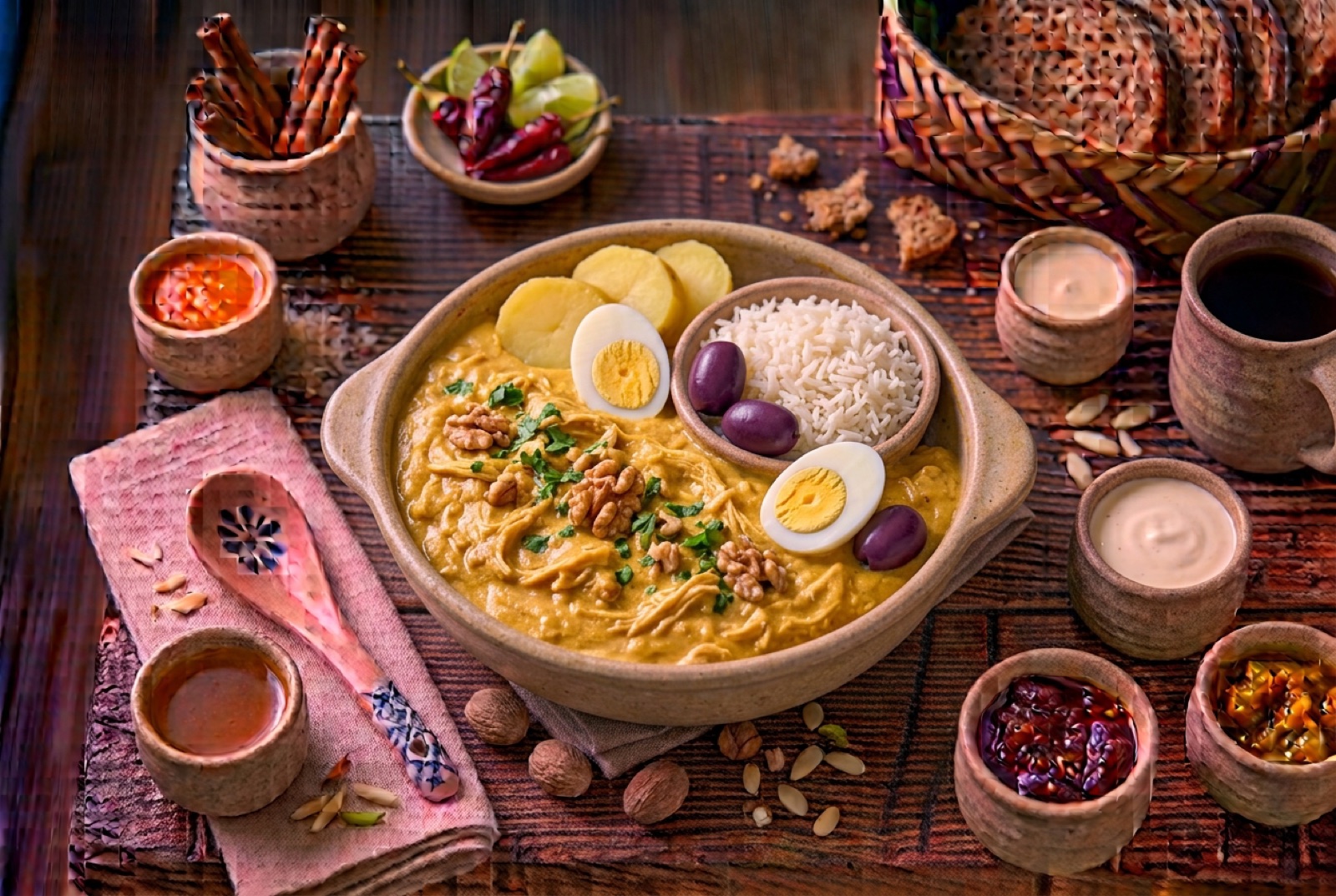
Keep exploring Peru.
Peru has 9 more dishes in the atlas — Ají de Gallina and Anticuchos de Corazón, and 7 more.
Recipe by The DishRoute Kitchen · published August 19, 2026 · updated August 19, 2026