Boil Up.
Māori Pork and Watercress Broth
Pōhā / boil up · say it: boyl-up
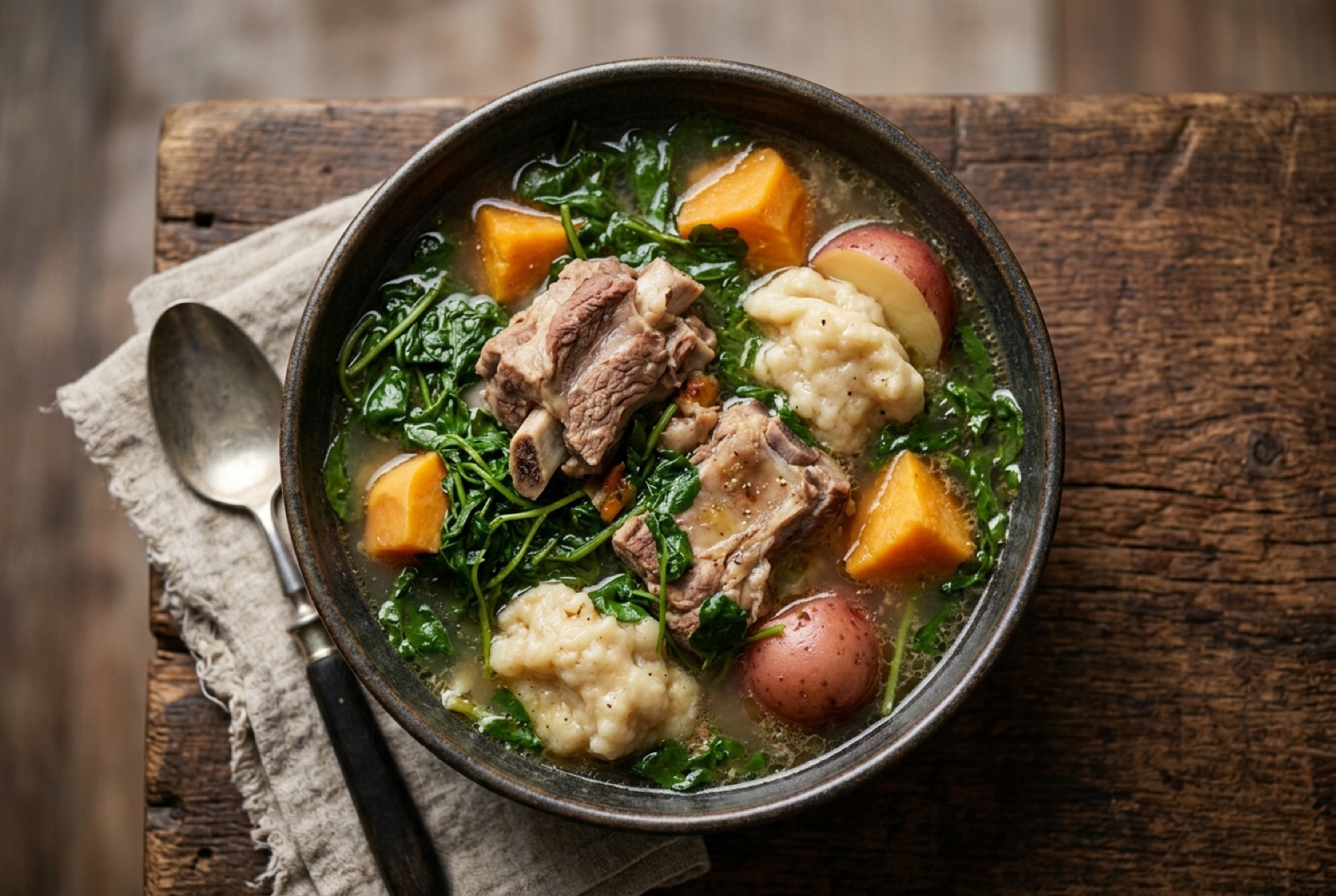
Boil up is a one-pot broth of pork bones, root vegetables and a great pile of watercress, thickened at the end by doughboys — soft flour dumplings dropped straight into the liquid to steam. The broth is clean and porky rather than rich, the watercress goes silky and slightly peppery, the kūmara half dissolves and sweetens everything, and the doughboys come out spongy enough to soak the lot up. It is deliberately unfancy food: cheap cuts, whatever greens are growing, one pot, and enough of it to feed a household twice. Every Māori family that makes it makes it slightly differently, and everyone is convinced their version is correct.

- Gate
- New ZealandMāori home kitchens, nationwide
- Prep
- 20 min
- Cook
- 2 hr 10 min
- Total time
- 2 hr 30 min
- Serves
- 6
- Status
- Medium
- Nutrition / serving · estimated
- Calories 520 kcal
- Protein 30 g
- Carbs 58 g
- Fat 18 g
- Fiber 7 g
- Sodium 760 mg
Why this recipe works.
- Builds the broth from bones first, so the liquid actually tastes of pork instead of tasting of water with vegetables in it.
- Explains the pūhā versus watercress question honestly, including how to handle the bitterness if you find pūhā.
- Doughboys go in at the right moment, with the lid on, so they steam into light dumplings rather than sodden lumps.
- One pot, cheap cuts, and enough for six with leftovers that are better the next day.
Ingredients.
13 itemsBroth
Vegetables
Doughboys
Equipment
- Large stockpot with a tight lid
- Slotted spoon
- Ladle
Instructions.
Start the broth
Put 1.5 kg of pork bones in a large pot with the onion, peppercorns and cold water. Bring slowly to a simmer and skim off the grey foam that rises in the first ten minutes until the surface is clear.
Simmer the bones
Cook at a bare simmer, lid ajar, for 90 minutes, until the meat is falling off the bones and the broth tastes clearly of pork rather than of hot water. Top up with boiling water if the level drops below the bones.
Add the root vegetables
Drop in the kūmara, potato and pumpkin and simmer for 20 minutes, until a knife slides into the kūmara without resistance and a few edges have started to break down and thicken the broth.
Mix the doughboys
Stir the flour, baking powder and salt together, add the melted butter and cold water, and mix with a fork only until a shaggy, sticky dough forms. Stop while it still looks rough — overworked dough gives heavy dumplings.
Drop and steam the doughboys
Drop tablespoon-sized lumps of dough onto the surface of the simmering broth, spaced apart so they can swell. Cover tightly and cook for 15 minutes without lifting the lid; they are done when puffed to twice the size and dry in the centre.
Tip Lifting the lid to look releases the steam that is doing the work. Trust it.
Wilt in the greens
Push the watercress down into the broth around the doughboys, cover again and cook 8–10 minutes, until the leaves are dark and silky and the stems bend easily. Taste and add salt only now — smoked bones may need none.
Serve straight from the pot
Ladle broth, vegetables, a doughboy and a piece of bone into each bowl so everyone gets some of everything. Put the pot on the table for seconds and provide a spare bowl for the bones.
Tips from our kitchen.
- Skim the grey foam off in the first ten minutes of simmering. Left in, it makes the broth cloudy and slightly muddy-tasting.
- Wash the watercress in several changes of water. It grows in streams and will hide grit in the stems no matter how clean it looks.
- Do not lift the lid while the doughboys cook. They rise on trapped steam and collapse if you let it out.
- Add the watercress in the last ten minutes only. Long boiling turns it khaki and bitter and wastes the best thing in the pot.
- Season at the end, not the start. Smoked pork bones can be salty enough that the broth needs nothing at all.
- If you find pūhā, rub the leaves under running water until the milky sap stops coming out, or the bitterness will dominate.
Substitutions.
- Pork bones → Smoked pork hock, bacon bones, or lamb neck
- Lamb neck makes a heavier, sweeter broth but is completely accepted in plenty of households.
- Watercress → Pūhā (sow thistle), silverbeet, or spinach with a handful of rocket
- Rocket restores some of the pepperiness that spinach lacks. Pūhā is the older, more bitter traditional green.
- Kūmara → Orange sweet potato, or extra potato and a chunk of pumpkin
- Kūmara is what sweetens the broth, so if you use plain potato only, add pumpkin to make up for it.
Variations.
- Pūhā boil up
- Made with sow thistle instead of watercress — more bitter, more traditional, and the version most older cooks will insist on.
- Smoked bacon bone boil up
- Smoked bones instead of fresh give a much deeper, hammier broth. Reduce or omit the added salt entirely.
- Chicken boil up
- A whole chicken cut up in place of pork bones. Lighter, quicker, and common in households that do not eat pork.
Storage & reheating.
Boil up keeps 3 days refrigerated and genuinely improves overnight as the broth sets to a light jelly and the flavours settle. Reheat gently on the stove; the doughboys will have absorbed liquid and gone denser, which most people consider an improvement. Freeze the broth and meat for up to 3 months, but leave the watercress and doughboys out of anything you freeze — both turn to mush. Make fresh doughboys when you reheat.
Serve with
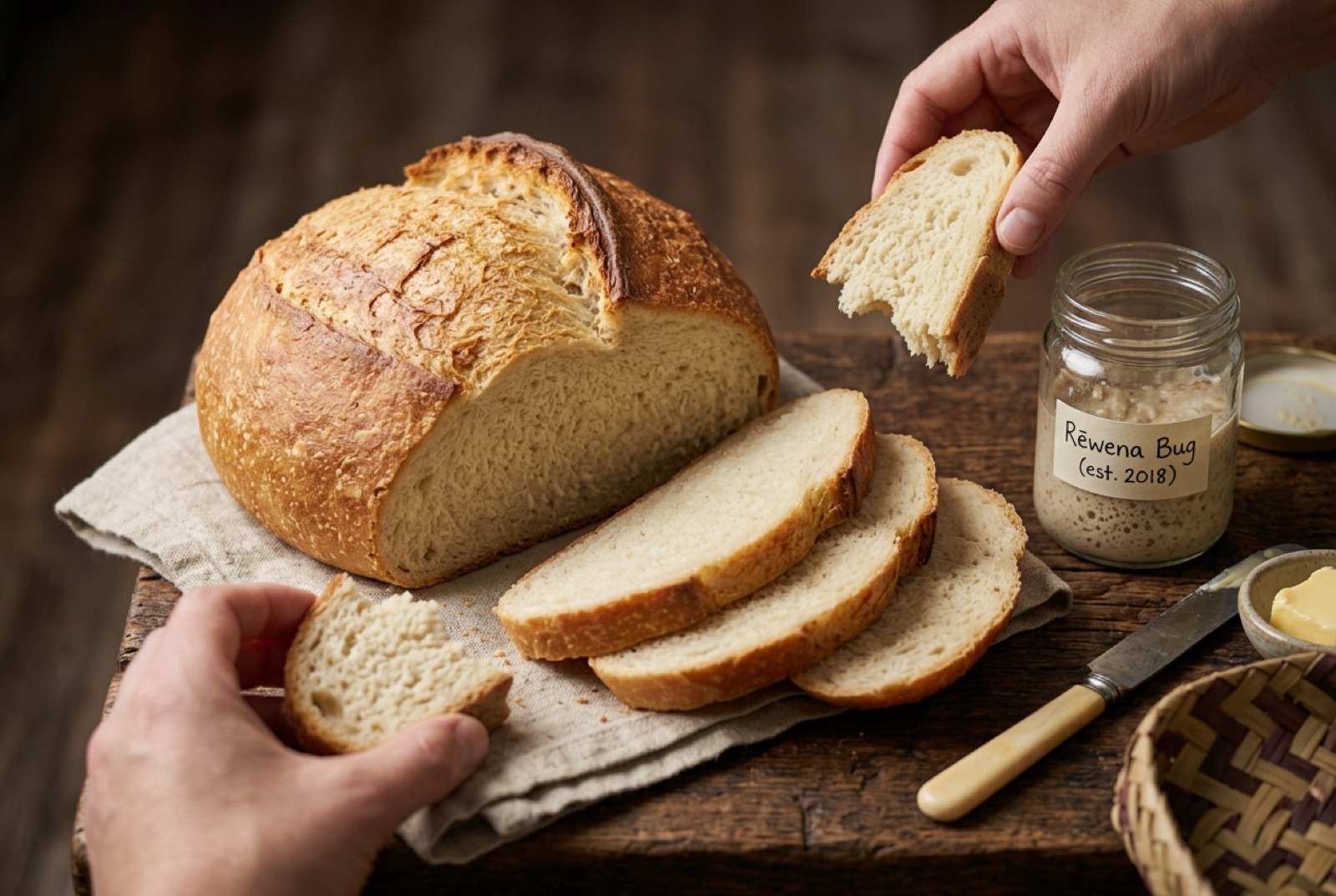
Rēwena bread and butter, and a bowl for the bones.
The story behind Boil Up.
Boil up is what Māori cooking looks like on an ordinary Tuesday rather than at a hāngī. Boiling as a technique arrived with metal pots after European contact, and the dish that grew around them married introduced ingredients — pork, potatoes, flour for dumplings — with the wild greens Māori had always gathered. Watercress is the classic, picked from stream banks and creek edges, and knowing a good watercress spot is genuinely a piece of family knowledge that gets handed down and guarded. Pūhā, or sow thistle, is the other traditional green and arguably the more authentic one: it is bitter, needs its milky sap rubbed and rinsed out before cooking, and is what many people mean when they say boil up.
The cut of meat matters less than the bones. Pork backbones, brisket bones and smoked pork bones all get used, and butchers in areas with big Māori populations sell them specifically as boil up bones. The point is collagen and marrow: the meat is a bonus and the broth is the meal. Doughboys — flour, baking powder, water, sometimes a bit of fat — are the last thing in, cooked with the lid on so they steam and puff rather than dissolve.
It is also a dish that carries some weight. Boil up is what gets made when there is not much money, when someone is sick, when a lot of people need feeding out of a small budget. It has been eaten through periods of real hardship, and it is still cooked in plenty of homes for exactly the same reasons it always was. Treating it as a rustic novelty misses that entirely — it is a good broth, but it is also a practical answer to a practical problem, and that is why people are affectionate about it.
Questions, answered.
What is a doughboy?
A doughboy is a plain flour-and-baking-powder dumpling dropped raw into simmering broth and steamed under a lid until puffed and cooked through. It is the New Zealand name for what other cooking traditions call a suet dumpling or drop dumpling, and it is what turns a boil up from a soup into a full meal.
What is the difference between pūhā and watercress?
Pūhā is sow thistle, a wild green with a distinctly bitter edge and a milky sap that has to be rubbed out under water before cooking. Watercress is milder and peppery. Both are traditional in boil up, but pūhā is the older choice and the one most associated with the dish in Māori households.
Why are my doughboys heavy and gluey?
Usually overmixing or a lifted lid. Stir the dough only until it just comes together — lumps are fine — and keep the pot covered the whole time they cook so they rise on steam. A rolling boil also knocks them apart, so keep the broth at a gentle simmer.
Can I make boil up without pork?
Yes. Lamb neck, beef brisket bones or a cut-up chicken all make a good broth, and plenty of families use whichever is cheapest that week. What matters is bones with some collagen in them, since that is what gives the liquid body rather than leaving it thin.
Is boil up meant to be a soup or a stew?
Somewhere in between, and it varies by household. The liquid should be brothy enough to drink from the bowl but full of soft vegetables, meat pulled off the bones and dumplings, so it eats as a complete meal rather than as a starter. If it looks thin, mash a chunk of the cooked kūmara into it.
You might also like.
All recipes →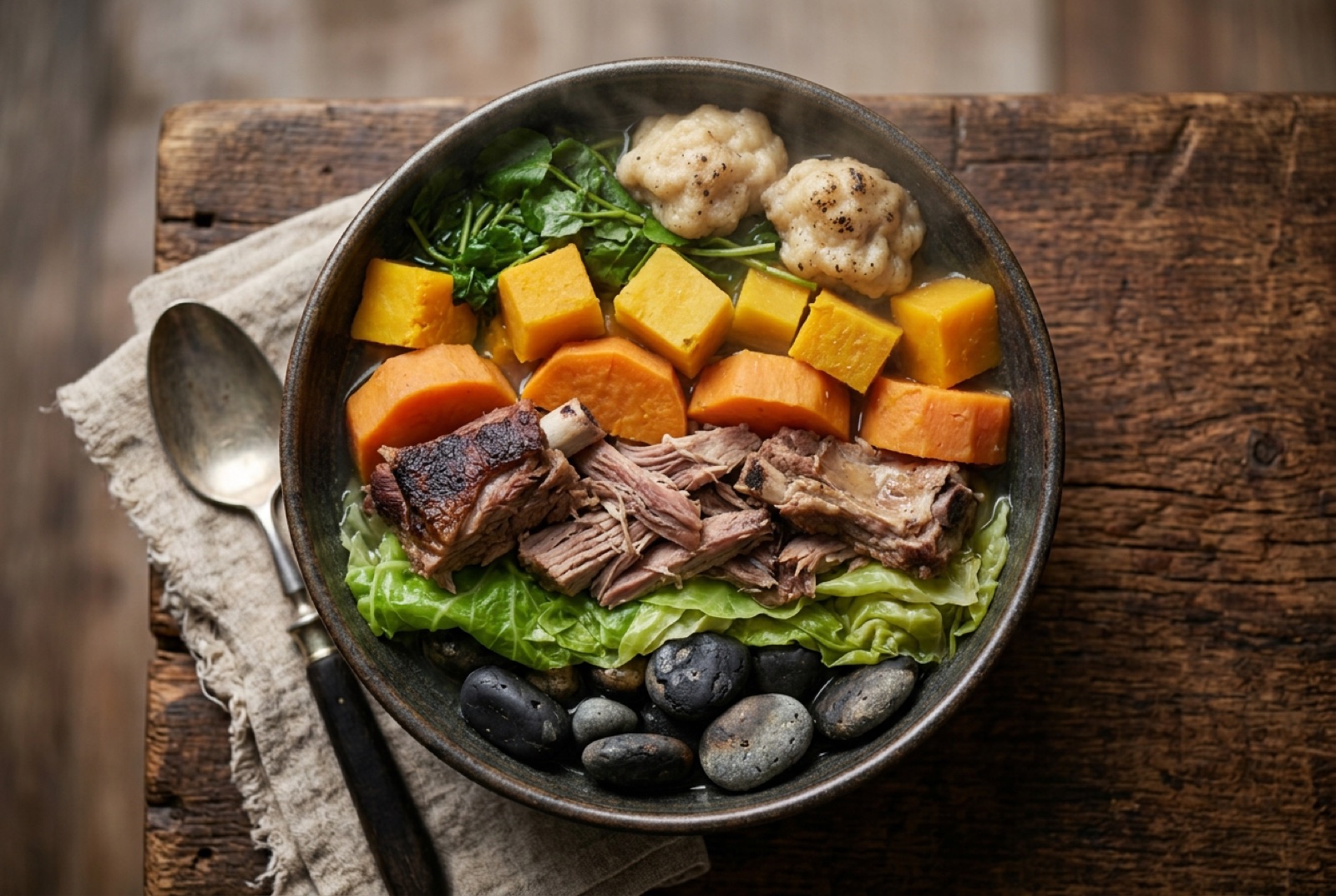

Keep exploring New Zealand.
New Zealand has 9 more dishes in the atlas — Afghan Biscuits and Hāngī, and 7 more.
All New Zealand recipes Pork shoulder recipes Sweet potato recipes Potato recipes soupmaindairy freeRecipe by The DishRoute Kitchen · published August 20, 2026 · updated August 20, 2026